Blog

The Dorflinger Factory Museum, White Mills, Pennsylvania

What is the Dorflinger Factory Museum?

Some of you are saying, “Well, duh, it is a museum about the Dorflinger Factory.”

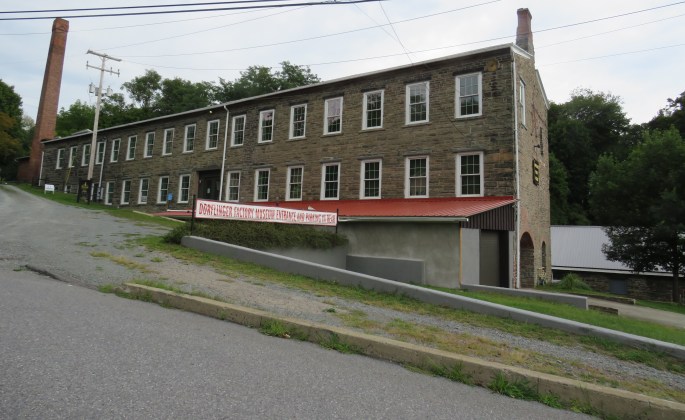
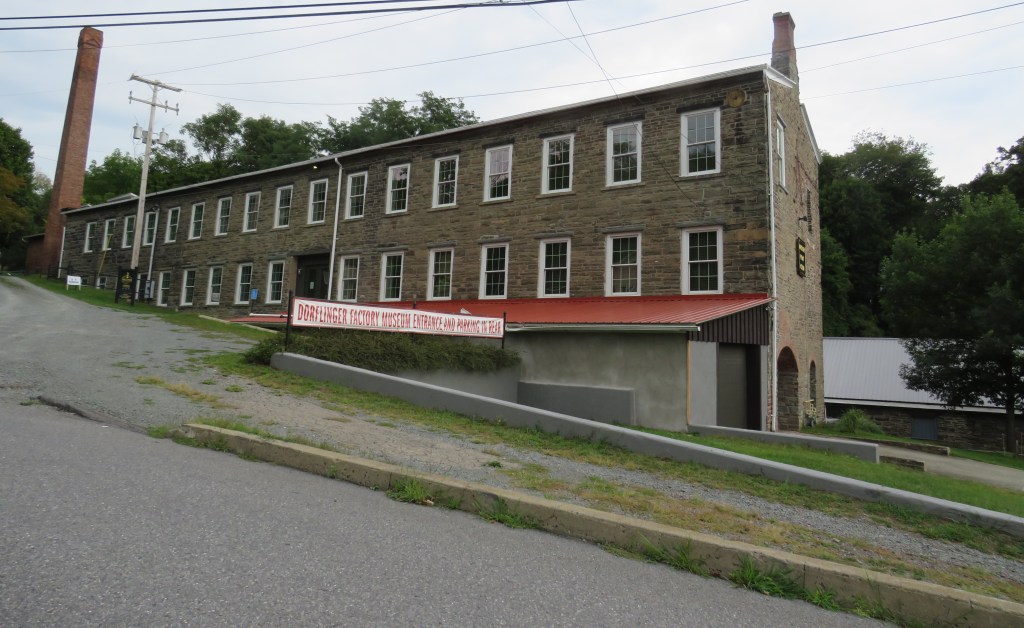
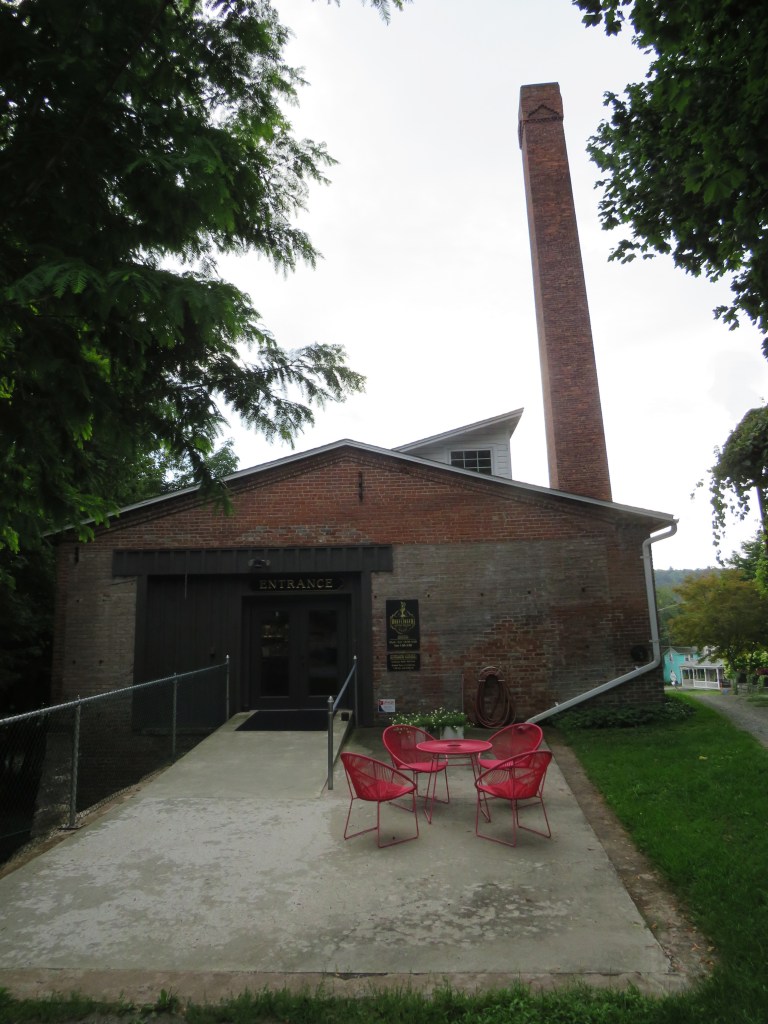
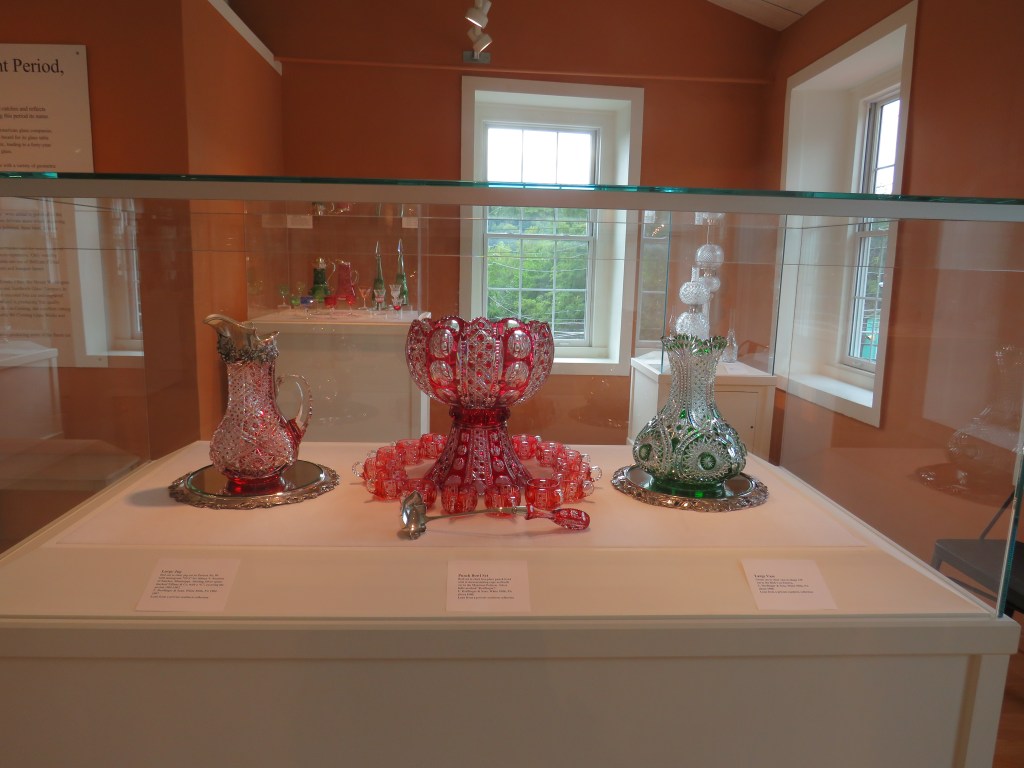
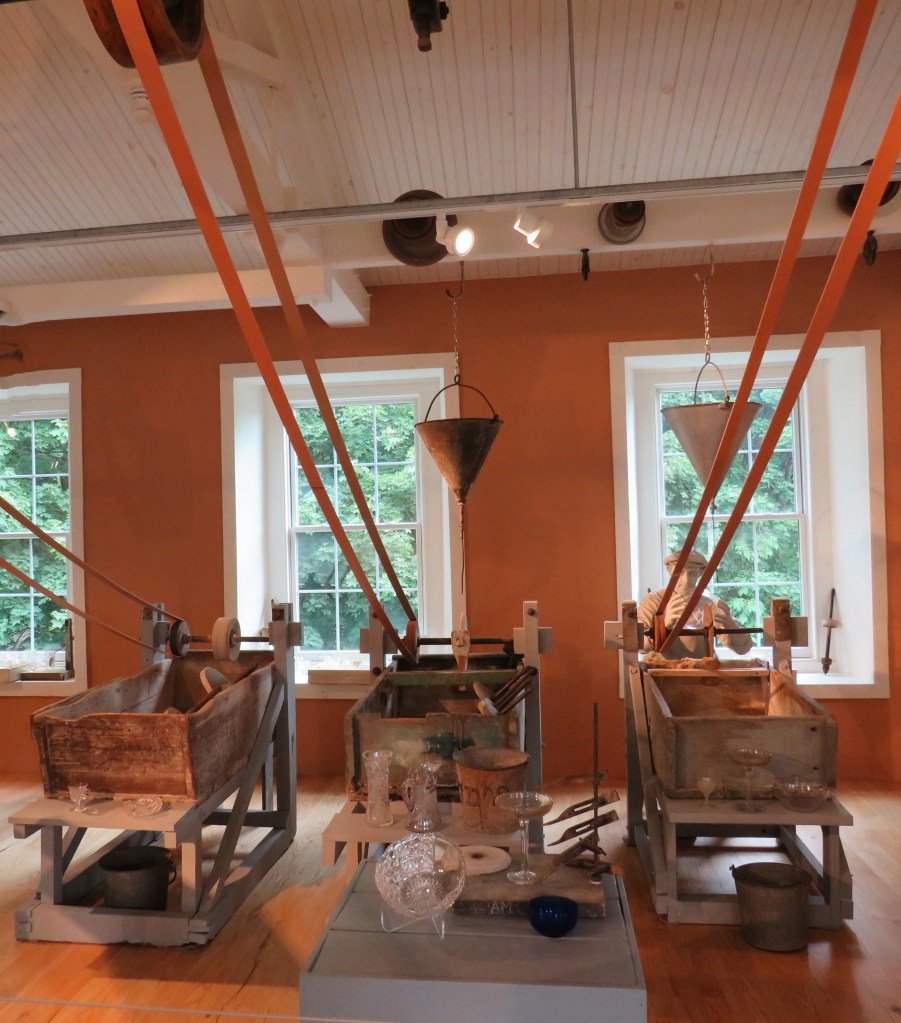
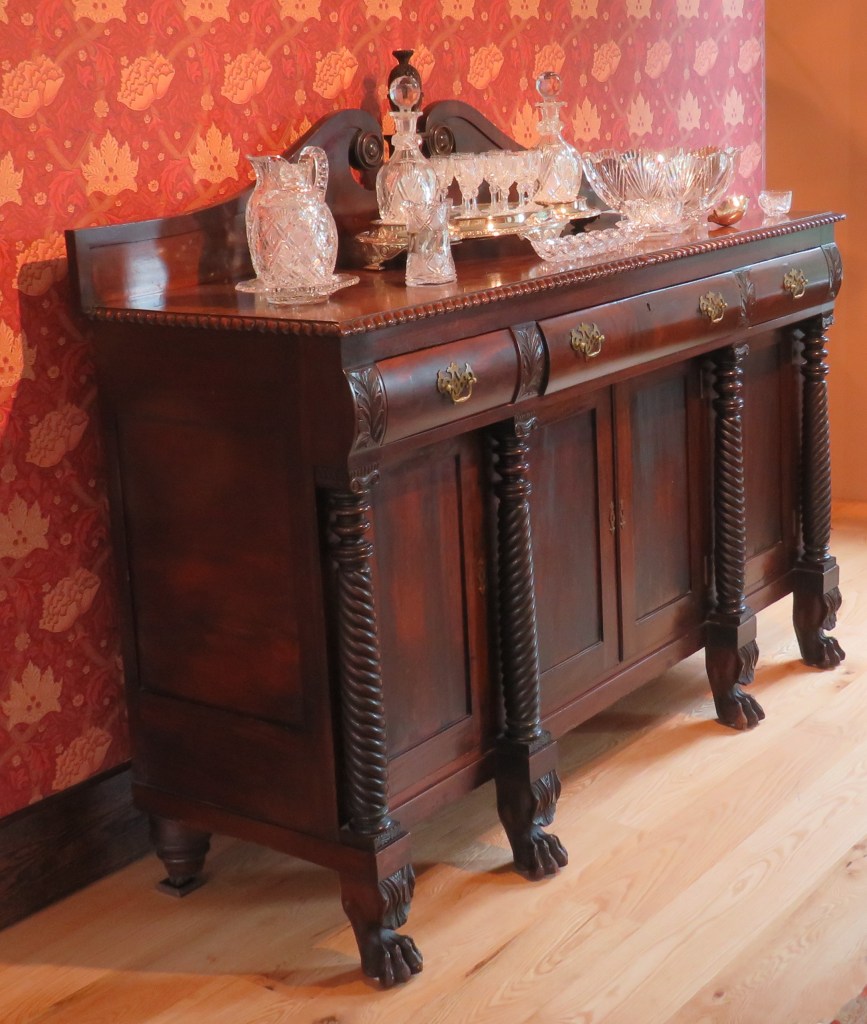
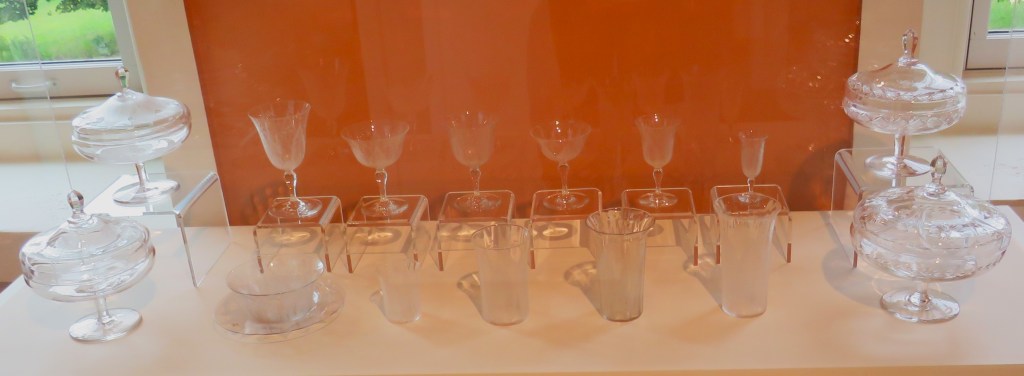
It is, but what is special about the museum?  The Dorfinger Factory was the home of Dorfinger Glass Works that was founded in 1865 by Christian Dorfinger.  Who were some of his buyers?  Some of his glass ended up in a special house called the White House.  Yes, that White House in Washington D.C.  Today, the old factory in the small town of White Mills in the U.S. state of Pennsylvania is now a museum, and you can see the old structure that once made glass is now where you can see the works of the factory on display.

Now some of you are saying, “This is nice.  Here is a factory where great glass was made and sent to many places to include the home of the President of the United States of America.  There is one very big problem.  This factory has nothing to do with the railroad.  Therefore, I will not be visit this museum.”

Why visit the Dorflinger Factory Museum?

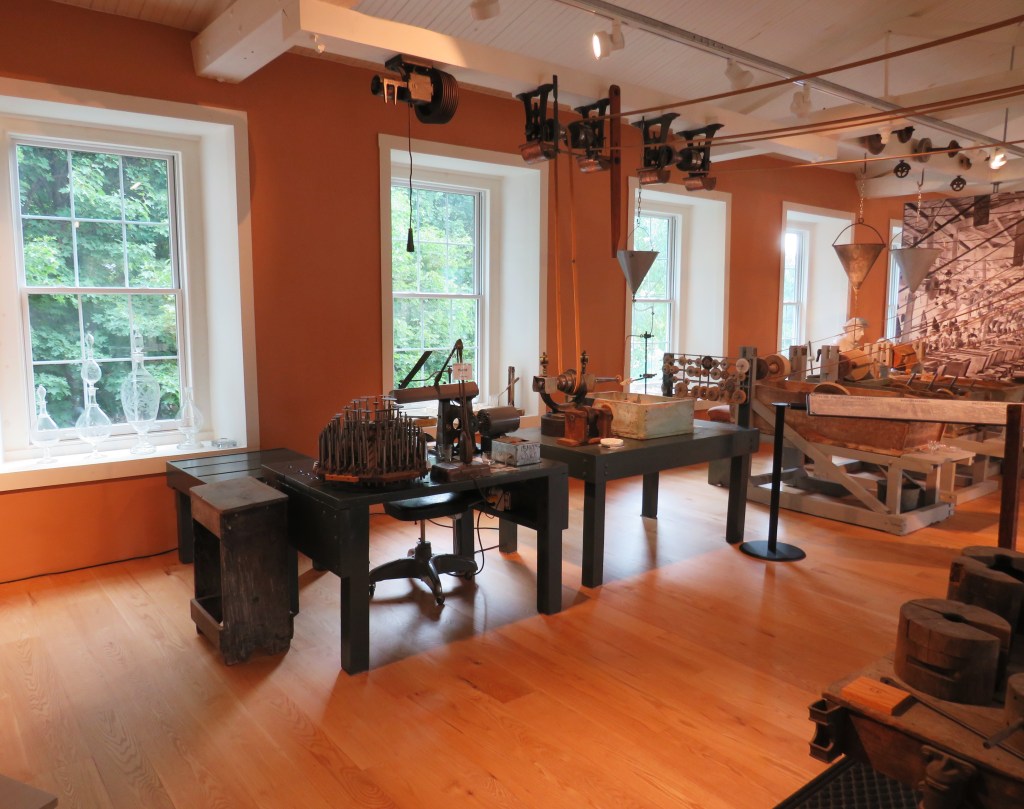
As you arrive at the museum, you park your car.  You enter the old factory, and you see the many glassworks on display.  Many of the glass were sold to others who eventually returned the glass to be put on display in the museum.  A few of the items were owned by John B. Smith.  Who was John B. Smith?  He just happened to be the president of the Erie and Wyoming Valley Railroad.  The collection included a goblet with an engraved locomotive.  It is said that the goblet was a gift from Christian Dorflinger to John Smith who created a special locomotive that ran in the valley.  Other items of John Smith’s collection is also on display here.

If you think that is not enough, the factory needed heat in order to create the glass.  The heat was created by coal.  How did the coal get to the factory?  The nearby Erie and Lackawanna Railroad brought the coal to the factory.

The Dorflinger Factory Museum is located at 670 Texas Palmyra Highway, commonly known as U.S. Route 6, the Grand Army of the Republic Highway, in White Mills, Pennsylvania.  It is open from April to December from Wednesday to Saturday from 10:00am to 5:00pm and on Sunday from 1:00pm to 5:00pm.  Parking is on site, and the museum is wheelchair accessible.  You can get more information on admission and read more into the history of the Dorfinger Glass Works at https://dorflingerfactorymuseum.com/.

Why visit the Dorfinger Factory Museum?  It is not just to see the John B. Smith collection, but to also see the great craftsmanship of the glassmakers of the Dorfinger Factory.

My Train Watching Spot

You see me there

In my comfy chair

At my train watching spot

Even when it’s hot

I will watch the train

Even in the pouring rain

I will still go

When there is falling snow

Leave, I will not

From my train watching spot

As I see engineer Dave

I give him a wave

My oh my

As the train goes by

I do see a lot

From my train watching spot

Oakland Grove Presbyterian Church, Selma, Virginia

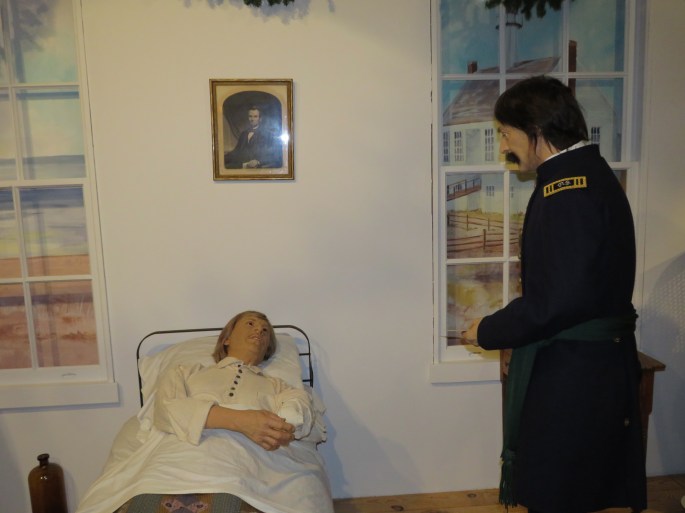
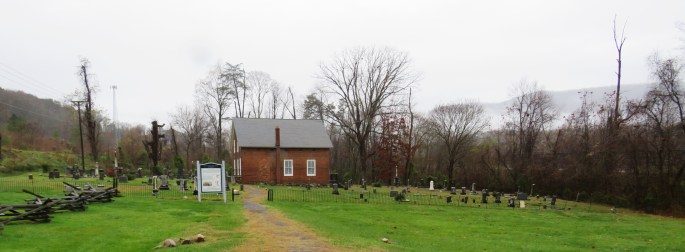
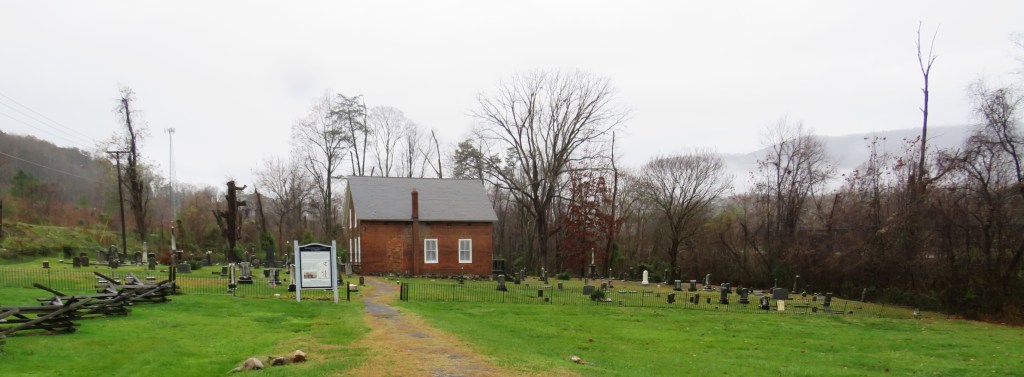
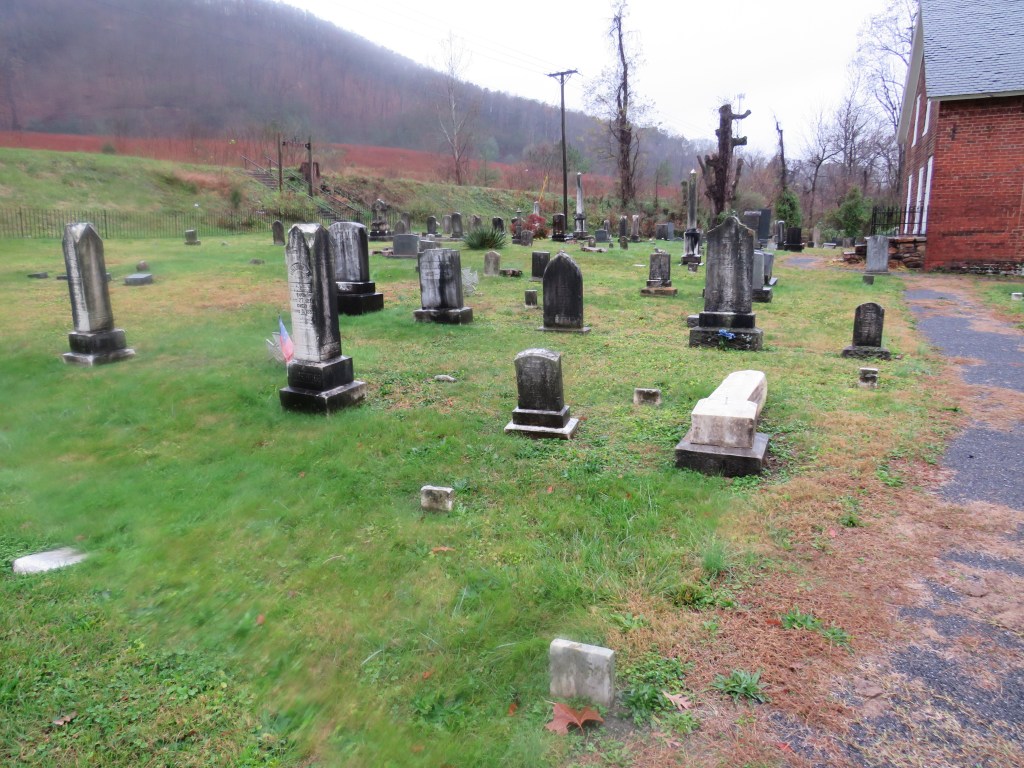
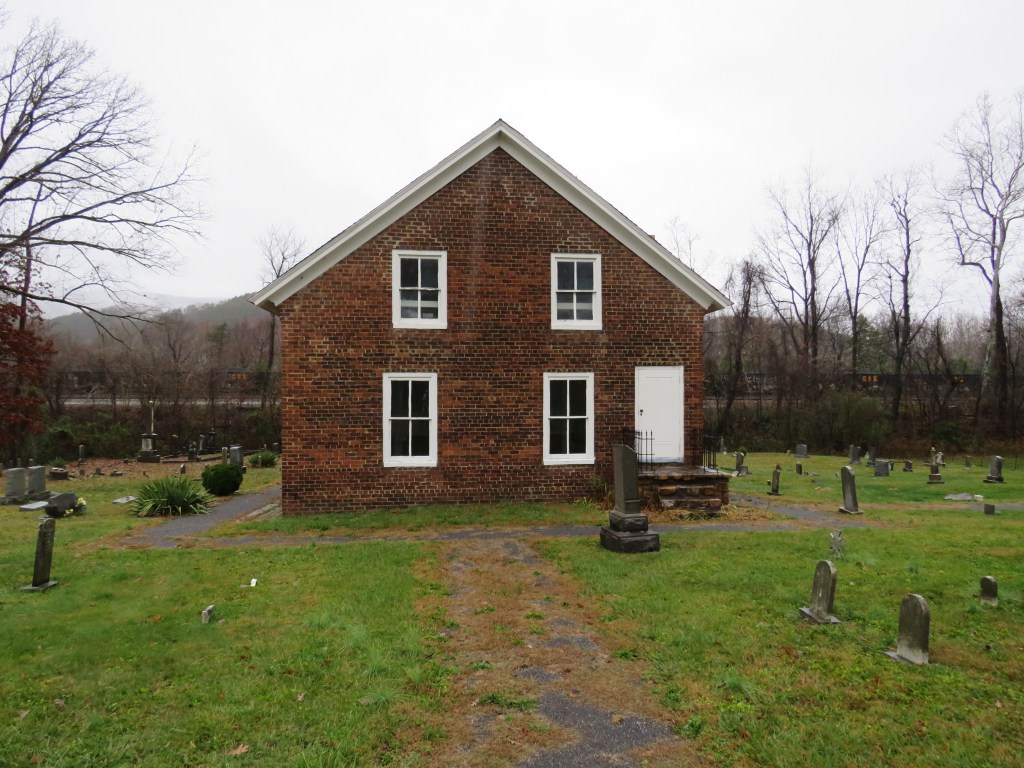
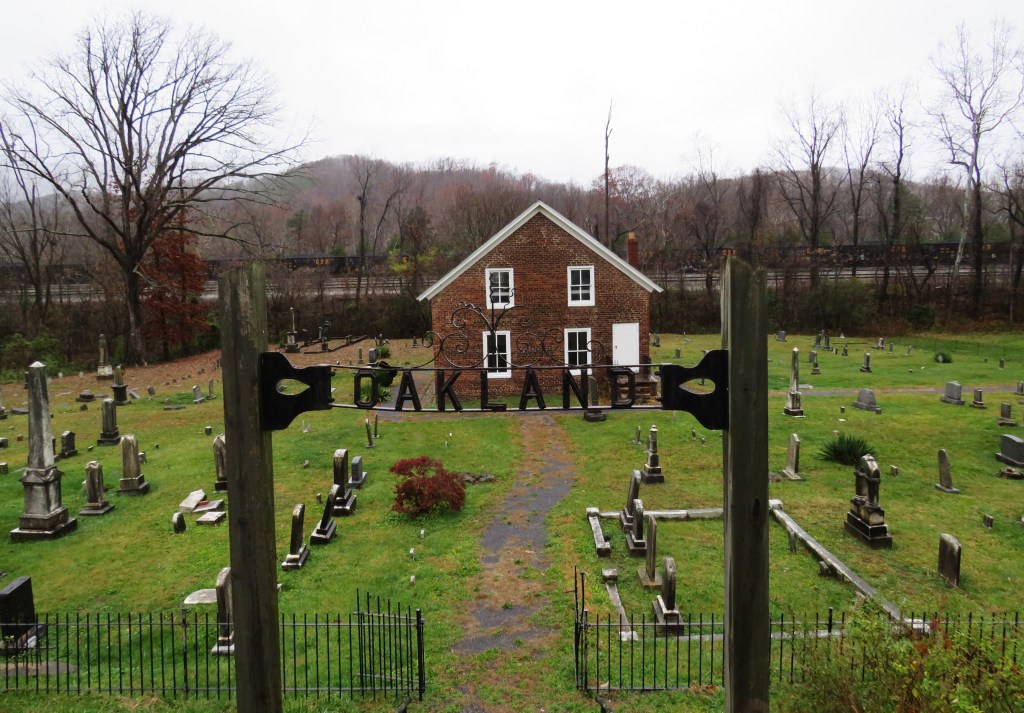
The U.S. state of Virginia is a state full of historic cities like Richmond, Alexandria, Manassas, Williamsburg, Norfolk, Charlottesville, Lynchburg, Jamestown, Yorktown, and many more.  It is a state with many historic sites from the first English settlement, numerous Civil War battlefield to include the battlefield that hosted to major wars, and the many homes of U.S. Presidents.  Among these sites is the Oakland Grove Presbyterian Church in the small town of Selma in the western region of the state.  What is special about this church?  Originally called ‘The Church of the Springs’, it was used as a hospital during the American Civil War.  Today, you can visit the church and the surrounding cemetery and see this great historic site.

Some of you are saying, “This is nice.  I love these little churches and their cemeteries.  The problem is that there is no railroad history here.  Therefore, I will not be paying a visit here.”

What is special about this church?  As mentioned, it was a hospital during the American Civil War.  Some of you are wondering where this place is.

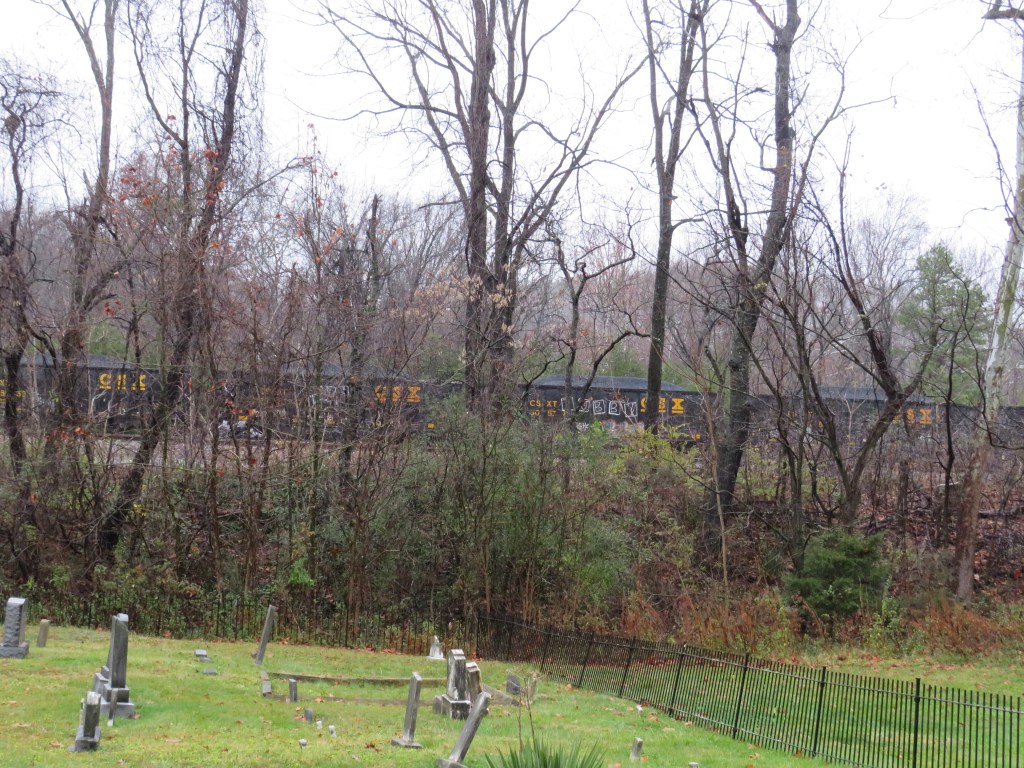
Selma, Virginia is a very small town, and it is very small.  You can say that it is a suburb of Clifton Forge, a major railroad town that was the home of the Virginia Central Railroad and Chesapeake and Ohio Railway which have been taken over by CSX who still has a big yard here.  It is also the home of the Chesapeake and Ohio Railway Heritage Center.  The small town of Selma is just west of Clifton Forge, and the railroad passes by the Oakland Presbyterian Church.

Some of you are saying, “The railroad passes by the church.  However, the church has nothing to do with the railroad.”

That is where you are wrong.

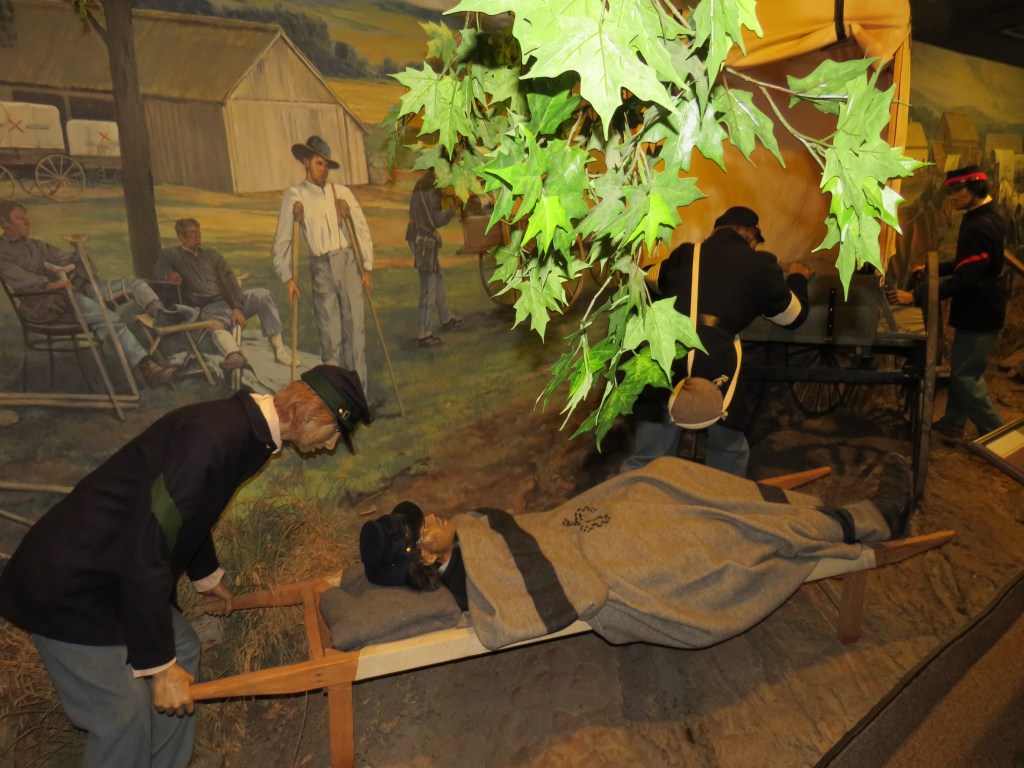
If you visit the site today, you will see the church.  What you will not see is the Jackson River Depot.  Many structures were on the property.  One of them was the church which is in its original location, and another was an old train station called the Jackson River Depot.  The church was located at the western terminus of the Virginia Central Railroad.  The passengers who needed to continue west continued from this location on horseback.  Also, as the church was being used as a war hospital, wounded soldiers were brought here by train and transported a short distance to the church.  As with many train depots, they were no longer used, and they were eventually demolished.  The church is the only standing structure on this site today.

The Oakland Grove Presbyterian Church is located west of the town of Selma on Selma-Low Moor Road west of the town of Clifton Forge, and it is just minutes from Interstate 64 and U.S. Routes 60 and 220.  There is a small gravel parking area.  (Not recommended for large vehicles like motor homes and busses.)  The site of the depot is next to the parking area but is not open to the public.  The church itself is also not open to the public.  Although there is handicap parking, the grounds may be difficult for wheelchairs.

Not you have a reason to visit the Oakland Grove Presbyterian Church.  You can tell your mother that you went to church.

The Steamtown National Historic Site, Scranton, Pennsylvania

It was quiet in the town.  There was not even a peep until… toot!  Toot!  The train is coming.  You see a column of black and white steam rising into the sky.  Yep!  The steam train is coming.

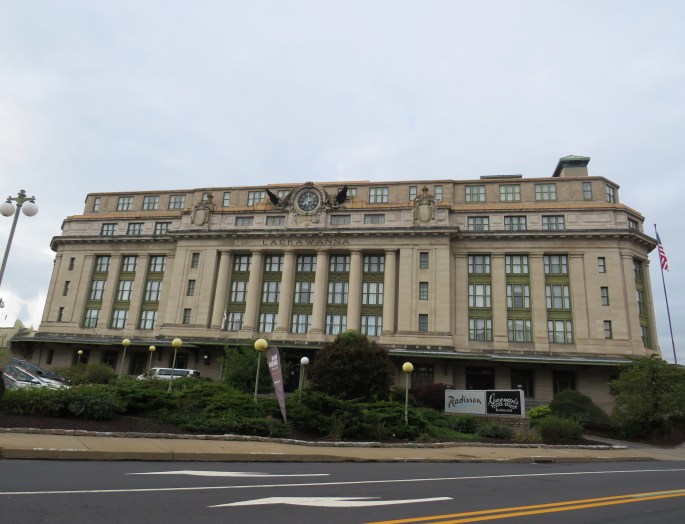
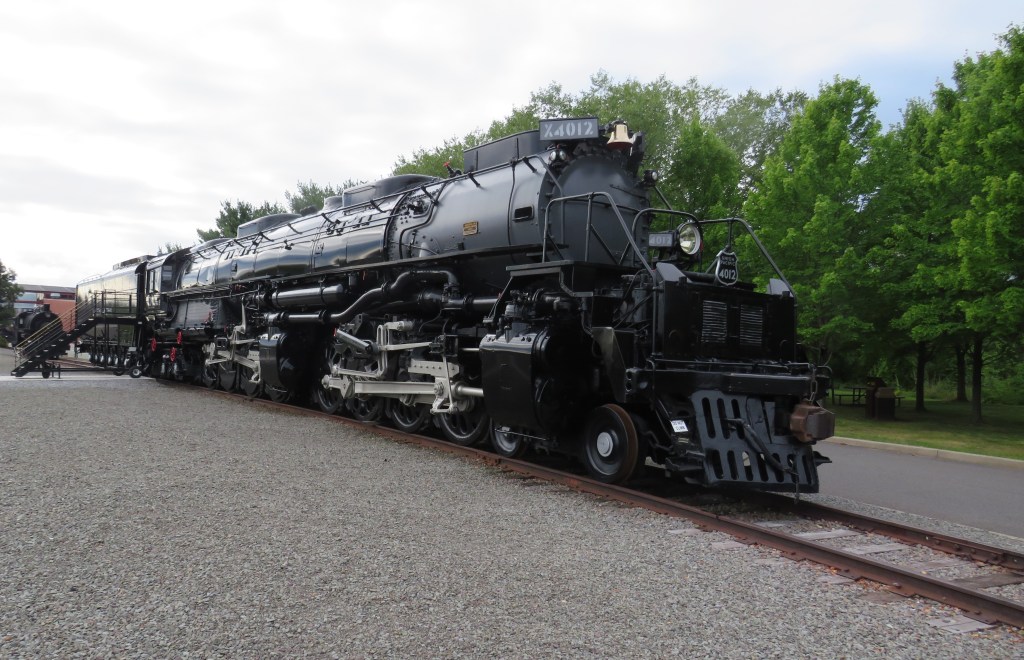
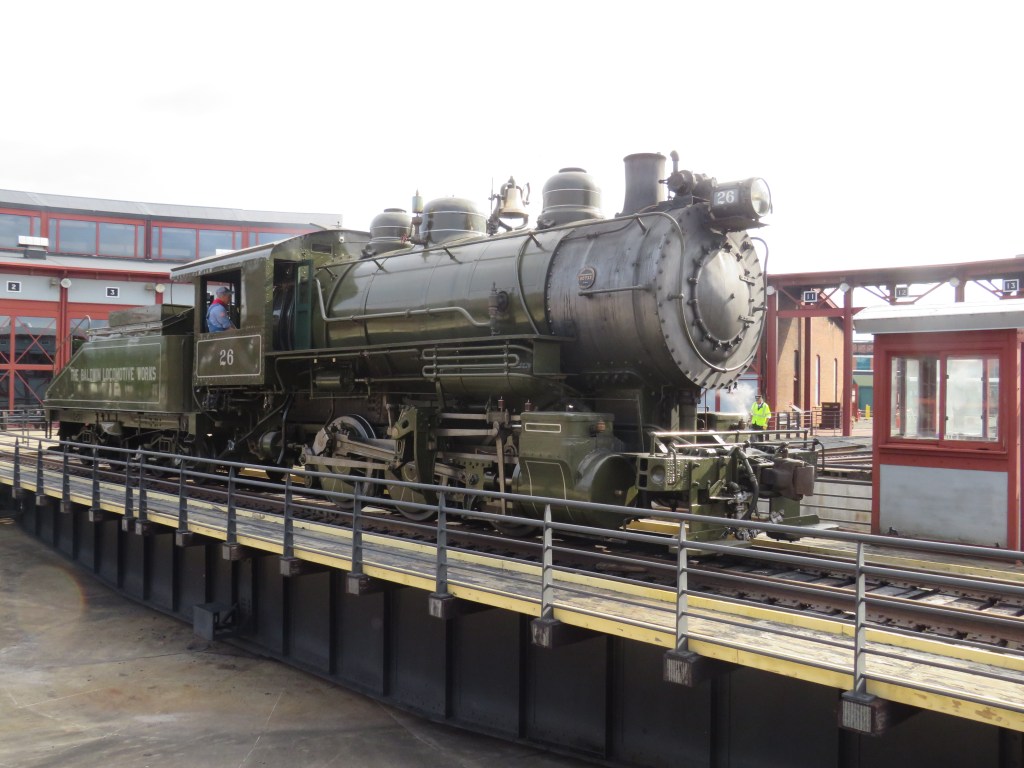
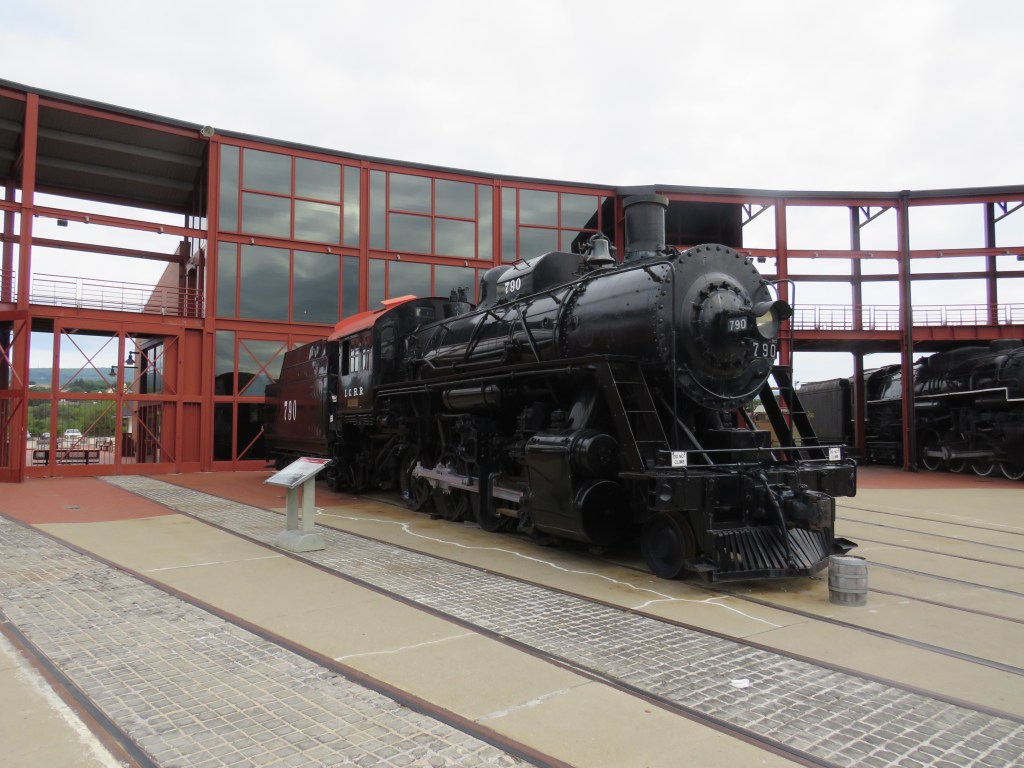
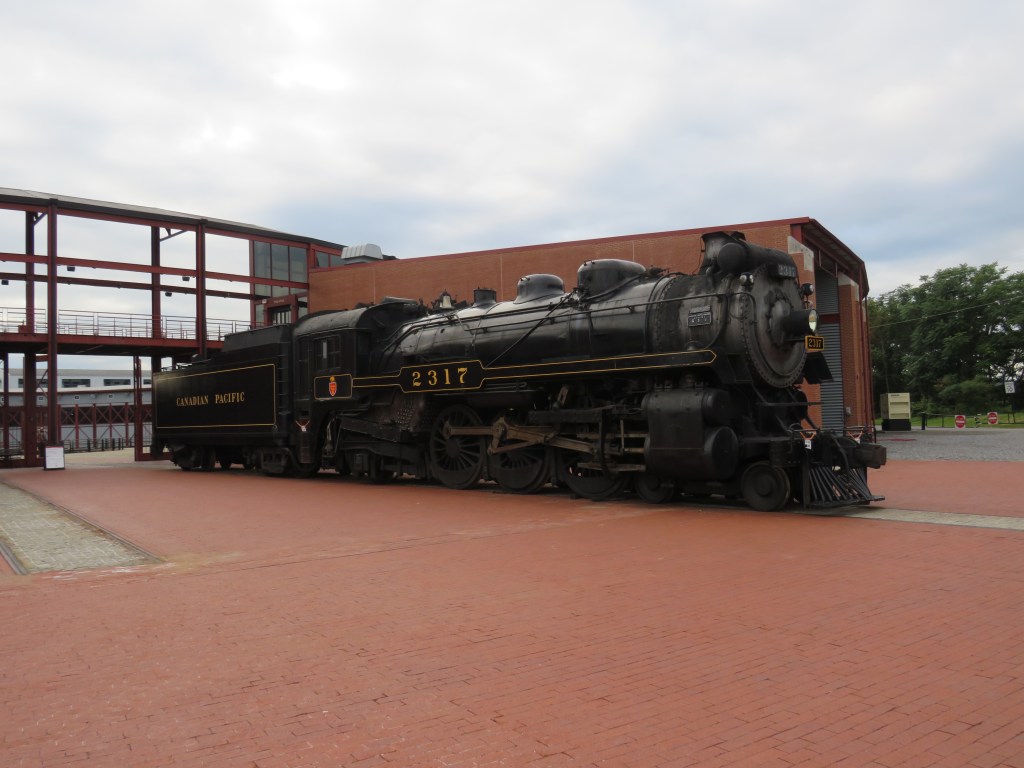
Welcome to the Steamtown National Historic Site in Scranton, Pennsylvania also known as Steamtown U.S.A.  Built on forty acres of the old Delaware, Lackawanna and Western Railroad Yard, Steamtown, operated by the National Park Service, is a collection of locomotives, freight and passenger cars and maintenance equipment from the various eras of railroading.  As you enter the parking lot, you are greeted by the Reading 2124 Steam Locomotive.  You make your way to the ticket office, and you see a huge roundhouse, a roundhouse that houses the museum.  After you pay your admission, you walk around the different locomotives and rolling stock from numerous railroads from across the nation.  You walk through the numerous exhibits and the old maintenance shops.  If that is not enough, you can take a walk outside along the walkways and see more rolling stock sitting in the rail yard to include a locomotive that is over one hundred years old.  If that is not enough, you can even take a ride on a train.  Yes, you can take a train ride through the rail yard, or you can take one of their rail excursions to one of the many towns in northern Pennsylvania.  (A schedule is available on the website.)

The Steamtown National Historic Site is a must for any rail fan.  It located in downtown Scranton with its entrance at Lackawanna Avenue and Cliff Street.  The park is open all year round, but the train rides are seasonal.  Go to http://www.nps.gov/stea/index.htm for directions, hours and for a schedule of events.  If the Steamtown National Historic Site is not on your bucket list, it should be.

Myersville Community Library, Myersville, Maryland

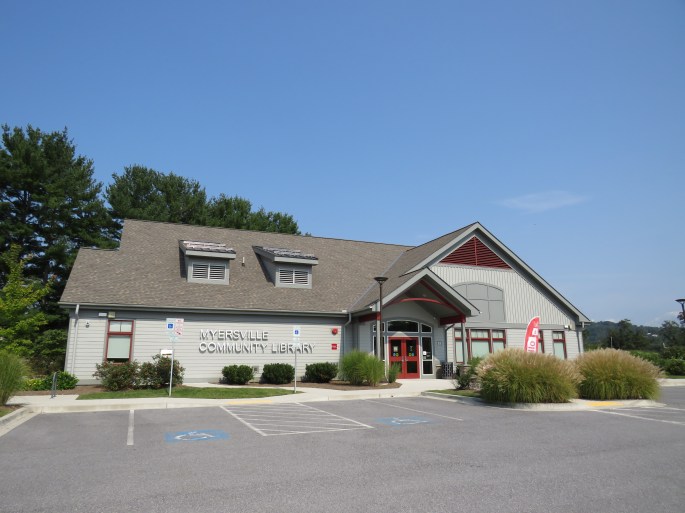
The town of Myersville in the U.S. state of Maryland is a small town northwest of Washington D.C. off of the famed National Road.  It is not a popular town, but it is a town, nevertheless.  This town has its own library.  If you are ever in Myersville, you will want to visit the Myersville Community Library.

Some of you are saying, “It is a library.  Many towns and cities around the world have libraries.  Why in the world should anybody come to this town to see a library that is just like the library in their neighborhood?”

Well, that is a very good question.

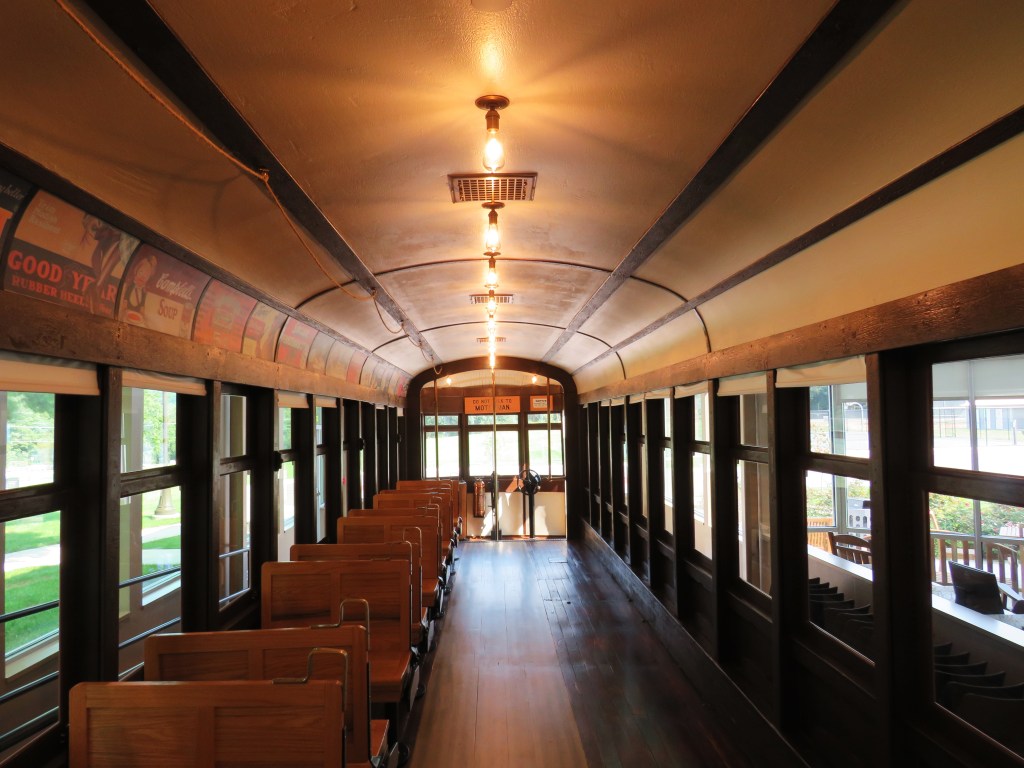
The Myersville Community Library is… well, a library.  It has books.  It has a place to read books.  It has rooms where you can read books.  It has a trolley that you can sit in a read a book.

Some of you are saying, “A what?”

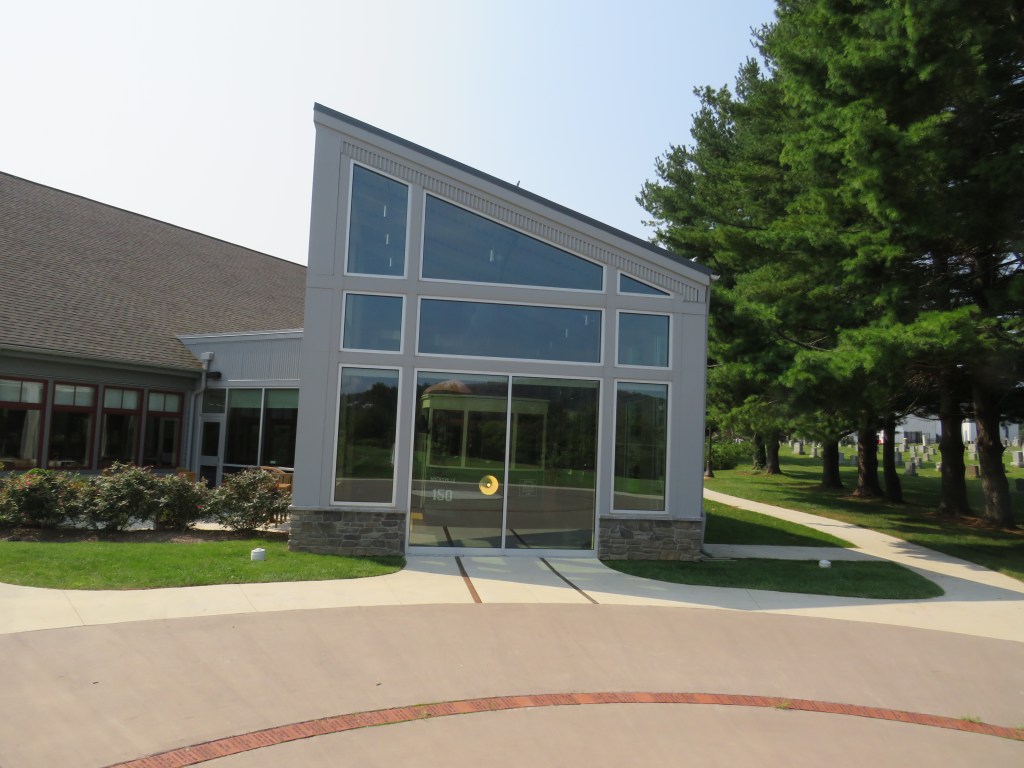
Oh, you asked why you should visit the Myersville Community Library in Myersville, Maryland.  Yes, it has books like any other library, but how many libraries have a trolley that you can sit and read your book?  No.  It is not a fake trolley.  This trolley actually carried passengers.

Trolley Number 150 was built in 1918 by the Perley A. Thomas Car Works and was originally used in Columbia, South Carolina before being acquired by Hagerstown and Frederick Railway in 1923 on the line that once connected the town of Myersville to Hagerstown until 1938 when service ended and replaced by the modern routing of U.S. Route 40.  It was privately owned until it was purchased by the town of Myersville in 2017.  It was restored and was placed in the Myersville Community Library where it remains today.  It is one of only four surviving trolleys from the Hagerstown and Frederick Railway, and, today, you can sit on the seat on a trolley that ran through the countryside of Maryland and read your favorite book.

The Myersville Community Library is located at 8 Harp Place in Myersville, Maryland.  It is just of Maryland Route 17 north of Interstate 70 and U.S. Route 40.  The library is free to visit.  It is open from 10:00am to 6:00pm on Monday and Wednesday, 10:00am to 8:00pm on Tuesday and Thursday, and 10:00am to 5:00pm on Saturday.  Parking is on site.  For those in wheelchairs, there is a ramp that you can use to access the trolley.

So, you have the local library, and then you have the Myersville Community Library in Myersville, Maryland.  It is a place where you can read in a trolley.

The Train to Freedom

In the town of Bondage, people were lined up at the train station.  They were in chains.  They were dirty.  They were hungry.  The mayor came out in front of them and said, “Why do you want to leave Bondage?  You have everything you want here.  You have food.  You have goods.  Stay!  I will give you everything you want.”

            There were those who departed the train station, but there were those who stayed.

            “Come on.  What will you find in Freedom?  In Freedom, you have to go and get the things you want.  I am giving you everything you want.  Why leave?”  The mayor pleaded.

            The train arrived.  The people boarded.  Their chains were removed.  When everyone was on the train, the train departed… for Freedom.

Wishing everyone a HAPPY INDEPENDENCE DAY!!!

Cover photo is Number 1776 of the Norfolk and Western Railway on display at the Virginia Museum of Transportation in Roanoke Virginia, U.S.A.

First photo is of the Western Maryland Scenic Railway Number 1309 at the Train Station in Cumberland, Maryland, U.S.A.

Second photo is of the old Central Railroad of New Jersey Train Station in Jim Thorpe, Pennsylvania, U.S.A. It is a stop for both the Lehigh Valley Scenic Railway and the Reading, Blue Mountain and Northern Railroad, it is houses the town Visitor Center and a small museum.

Third photo is a railroad line in Frankfort, Kentucky, U.S.A. next to what was once Frankfort Union Station.

Fourth photo is the East Broad Top Railroad in Rockhill, Pennsylvania, U.S.A. being pulled by Number 16.

Fifth photo is the Potomac Eagle Scenic Train in Petersburg, West Virginia, U.S.A.

Final photo is the American flag over Fort McHenry in Baltimore, Maryland, U.S.A.

The King Barn Dairy ‘MOOseum’, Boyds, Maryland

You have the museum, and you have the ‘MOOseum’.

Some of you are saying, “What in the world is a ‘MOOseum’?”

If you think that it has something to do with cows, you are mostly right.  Located in the Maryland suburbs of Washington D.C., it is housed in a barn that was once state of the art that was originally part of a working farm.  James and Macie King bought the farm in 1913 from another family.  In 1926, the farm was destroyed by a fire.  James King rebuilt the farmhouse, and he rebuilt the barn that currently houses the museum.  Sadly, he passed away in 1962 leaving the farm to his wife and son.  Macie sold the farm to land speculators who rented the land to local farmers.  The land eventually came under the ownership of the Maryland National Capital Park and Planning Commission.  The farm buildings went into disrepair, and the land that was once farmland would eventually become the Maryland Soccerplex.  Was all lost?  No.  Although the farmhouse and other buildings were destroyed, the barn was repaired, and the silo was rebuilt, and it became the home of the King Barn Dairy ‘Mooseum’.  Today, you can see the life of a dairy farmer.

Some of you are saying, “It is nice that they were able to save this barn and turn it into a museum, and it is nice that the farm was made into soccer fields and not houses as what normally happens in the Washington D.C. suburbs, but this is about a dairy farm.  It is not a railroad museum.  Therefore, I do not find this place very ‘MOOving’ and will not be visiting here.”

Well, you do have a good point.  Why would somebody who enjoys trains want to visit a museum that is about dairy farming?  It is unknown is a railroad ever passed through or by this farm with the nearest access in Germantown on the original Baltimore and Ohio Railroad Line (now CSX), but it is many miles from the farm.  Even with the automobile, that is still a great distance away.  Why visit?

The King Barn Daily ‘MOOseum’ was erected on the site of a dairy farm.  It tells the life of dairy farming in the region which, if you have recently visited Montgomery County, Maryland, mostly developed into housing communities with very little agricultural land.  As you enter the barn, you will see it set up like a dairy barn with the cows in stalls being milked.  (In case you are wondering, they are not real cows.)  You see depicted the like of the farmers as well as the life of the dairy industry.  Then you see a model train display.

Some of you are saying, “A what?”

There is a model train display with a locomotive, a tank car, and a caboose painted in cow colors surrounding a farm.  There is along a display of the rail line from Union Station and the old train station on New Jersey Avenue (now gone) and the old train station in Eckington (also gone) to the train station at Point of Rocks, Maryland.

As you can see.  The ‘MOOseum’ not only shows you the story of dairy life in Montgomery County, Maryland, but it tells the life of the county itself, and you do not have to be a resident of Montgomery County to appreciate what this museum is all about.  It is open from May to October from 10:00am to 3:00pm on Saturday and 1:00pm to 4:00pm on the fourth Sunday of the month.   It is located at 18028 Central Park Circle inside the South Germantown Recreational Park next to the Maryland Soccerplex.  Admission is free, but they will gladly accept donations to keep this museum open for many generations to come.  Parking is on site, and the ‘mooseum’ is wheelchair accessible. You can get more information at https://www.mooseum.org/.

Be warned.  As you visit the King Barn Dairy MOOseum, you will not realize that you are in the suburbs of Washington D.C.  You will see the life of a dairy farmer.

Eckley Miners Village, Weatherly, Pennsylvania

The U.S. state of Pennsylvania is a state known for so many things.  It was in this state where at the Pennsylvania State House in Philadelphia where the Declaration of Independence was signed, and the national of the United States of America was founded and established, and, later, the United States Constitution was established limiting the powers of the government.  It was in a town called Gettysburg that was the site of the largest battle of the American Civil War where the tide was turn in favor of the Union, and, months later, President Abraham Lincoln delivered his famous Gettysburg Address.  As for chocolate lovers, a suburb of the state capital, Harrisburg, is named for Milton Hershey, the founder of Hershey Chocolate that is still headquartered there today.  One of the biggest things the state is known for is coal mining.  As they did their daily mining, they also had a place to live.  Many of them lived in villages set up for miners and their families.  Among these villages is the Eckley Miners’ Village in Weatherly, Pennsylvania.  As you walk through this village, you will see how the miners and their families lived.

Some of you are saying, “This must be a nice village, but without the railroad, this is not a railroad site.  Therefore, I will not be paying a visit here.”

So you do not want to visit because this is not a railroad site.  Here is a reason to visit the Eckley Miners’ Village.

As you arrive, you enter the visitor center to pay your admission.  You enter the museum that displays the history of the village and the coal industry.  One of the things you will see is a model of the Delaware, Susquehanna, and Schuylkill Number 4, a steam locomotive.  The mine owner traveled by train from his mansion to the mines.  Sadly, he was also killed while riding a train.

Well, you did not come to see a museum.  You want to see the village itself.

The first building you see is the Church of the Immaculate Conception, the primary church where many of the miners worshipped.  From there, you walk down the main street.  You walk past the different houses many of which are still lived in today (and not open to the public).  You come upon the Company Store.  As you look around, you will notice a rail line on the side of the store.  Across from the store is the mine itself where the coal was mined and placed onto coal cars.  You will see old coal cars on display.  Sadly, you cannot enter the mine (due to safely regulations), but you can get a glimpse of what the miners had to work through.
The Eckley Miners’ Village was once an actual miners’ village with many of the original structures from the day that it was an active village.  Some of the homes are lived in today although the no longer are miners from the mine.  As you walk or drive through, you may find yourself going back in time.

The Eckley Miners’ Village is owned and operated by the Pennsylvania Historical and Museum Commission.  It is located at 2 Eckley Back Road in Weatherly, Pennsylvania.  It is open from Thursday to Sunday from 10:00am to 5:00pm.  Please note that the street is gravel, and the structures are not wheelchair accessible.  You can get more information and learn more about the different structures at http://eckleyminersvillage.com/.

Come to the Eckley Miners’ Village.  Enter the life of a coal miner.  Go back in time.

Cumberland Railroad Museum, Cumberland, Maryland

The city of Cumberland in the panhandle region of the U.S. state of Maryland has been a railroad city for many years, and CSX has a large railroad yard here.  It is also famous for the Western Maryland Scenic Railroad with Number 1309, the largest operating locomotive in the world.  It was a major town on the National Road (present day U.S. Route 40), and it was the western terminus of the doomed Chesapeake and Ohio Canal.  Being a railroad city, this town does has a little treasure that is often overshadowed by everything else this city has to offer, and it is just a short walk the city’s biggest treasure.

Most people who visit the city of Cumberland, Maryland come to ride the Western Maryland Scenic Railroad, but a short walk from the Western Maryland Train Station and the end of what remains of the Chesapeake and Ohio Canal is the Cumberland Railroad Museum.  When you arrive at the museum, you see this small space, and you ask yourself, “What can be inside this little space?”

Ladies and gentlemen do not be mistaken about this little space.  It looks little on the outside, but there is much to see on the inside.

The museum shows the history of the railroad in Cumberland.  You see model trains and artifacts to include the bell from Number 455 of the Baltimore and Ohio Railroad.  As you walk around, you will see that this little space has so much to see.

The Cumberland Railroad Museum is owned and operated by the Western Maryland Chapter of the National Railroad Historical Society and is a joint venture with the Western Maryland Scenic Railroad.  It is located inside Canal Place at 17 Howard Street in Cumberland, Maryland just a short drive from Interstate 68 and U.S. Routes 40 and 220.  It is open Thursday to Sunday from 10:00am to 4:00pm.  The nearest parking is at the Western Maryland Scenic Railroad Parking.  Walking is required, but the walkways are level with no hills or steps.  Admission is free, but donations are gladly accepted.

When in Cumberland, ride the Western Maryland Scenic Railroad.  While there, see the Cumberland Railroad Museum.

The Stourbridge Line, Honesdale, Pennsylvania

The town of Honesdale in the mountains of the northeastern region of the U.S. state of Pennsylvania is not a town that is well known to travelers.  The only major road through here is U.S. Route 6, famously called the ‘Grand Army of the Republic Highway’.  As you pass through the town of Honesdale, you will pass by the town’s little treasure.  What is this little treasure?

Although the railroad did not begin in Pennsylvania, the state has many railroad sites.  Among these sites is the Stourbridge Line in the town of Honesdale.  What is the Stourbridge Line?  Not many people in America or the world or even in Pennsylvania even know about this place, but it has a significance in the history of the railroad in the United States of America.

Let us begin in the U.S. state of Maryland in the city of Baltimore.  The month is February.  The year is 1827.  Just blocks away from the harbor and miles away from Fort McHenry, railroad tracks were laid, and the first railroad in the Western Hemisphere began.  The Baltimore and Ohio Railroad was born.  The railroad in the United States of America had begun.

Now we go back to the town of Honesdale, Pennsylvania.  It was here where the first railroad was built in the state of Pennsylvania.  What is significant about this rail line?  Although the Baltimore and Ohio Railroad in Baltimore was the first railroad in the nation, the trains were powered by a specific locomotive.  What is that locomotive?  Instead of feeding coal in the firebox, you fed it… hay.  Yes, the kind of hay that you would feed a horse.  Why?  America’s first trains were powered by horses.  The Baltimore and Ohio Railroad really began with ‘horsepower’.  The railroad did not use steam power until the first American built locomotive, the ‘Tom Thumb’, was began on August 28, 1830, taking the train from the Mount Clare Station in Baltimore to the town of Ellicott Mills, Maryland.  (It is now Ellicott City.  The train station is the oldest surviving train station in the U.S. and is now a museum.)

Now we go back to Honesdale, Pennsylvania.  Yes, it is not the first railroad in the nation, but it was the first railroad in the nation… to have a steam locomotive.

As mentioned, the first steam locomotive was used on the Baltimore and Ohio Railroad in August of 1830.  In August of 1829, the ‘Stourbridge Lion’ arrived from Great Britain to the town of Honesdale.

Now some of you are saying, “Wait a minute.  I have never seen a lion pull anything.  The only thing I have seen a lion do anything but eat other animals and sometimes people.  How is was a lion going to do better than a horse that was made to pull carts and to be ridden?”

The ‘Stourbridge Lion’ is the name of a steam locomotive that was built in Great Britain.  It was then brought to the town by canal boats, and it began its first run in August of 1829 predating the ‘Tom Thumb’ in August of 1830.  This makes the Stourbridge Line the first railroad to use a steam locomotive.

Sadly, the ‘Stourbridge Lion’ was eventually dismantled, but a replica is on display in a local museum.  However, you can ride the Stourbridge Line which runs along the Lackawaxen River between Honesdale and the town of Hawley.  You can board the vintage passenger cars.  You can look out over the Lackawaxen River and see remnants of the old canal where barges brought goods to and from the town of Honesdale.  The train may not roar like a lion, but you can still enjoy the sounds of the train horn as it passes each stop.
The Stourbridge Line runs different excursions between Honesdale and Hawley.  The main station is located at 812 Main Street (U.S. Route 6 East/ Pennsylvania Route 191) in Honesdale, Pennsylvania.  You can get more information about their different excursions and purchase tickets at https://www.thestourbridgeline.net/.

The U.S. state of Pennsylvania has many railroad treasures.  The Stourbridge Line is one of them.  Take a ride.  You will treasure it for years to come.