This is a text widget, which allows you to add text or HTML to your sidebar. You can use them to display text, links, images, HTML, or a combination of these. Edit them in the Widget section of the Customizer.
It is the day when people arrived at the New World. They had very little, and they had little to eat. They encountered a few Indians who taught them how to plow the land and to provide for themselves. They later had a huge feast. This was called the First Thanksgiving as they were thankful for the great feast.
Thanksgiving is a day that is set aside to be thankful for the things we have. When it comes to the railroad, we have many things we need to be thankful for.
We have the many track workers who look over and repair the tracks to keep the trains rolling. We have the engineers who operate the trains to and from their destinations hauling freight and passengers across the country. We have the mechanics and repair men who make sure everything is in working order. We have the porters and conductors who make the passengers feel comfortable as the trains roll on. We have the baggage handlers who make sure your luggage arrives at the station when you do. For those who are traveling on Thanksgiving, think of those who are sacrificing their Thanksgiving so that you can get to yours. Their work will not be in vain on this very day.
So, let us take the time to be thankful to those who keep the trains running not only on Thanksgiving and but all year round. To everyone else, I wish you all a very Happy Thanksgiving. May you have plenty, and may you thank the freight trains that brought your meals to you.
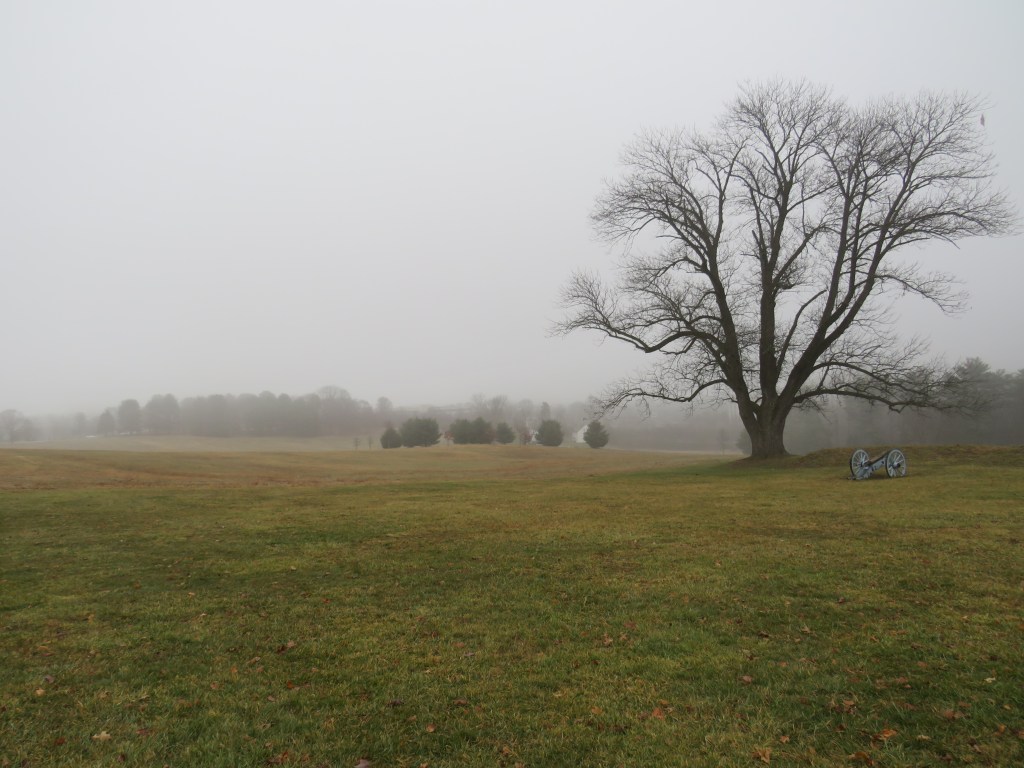
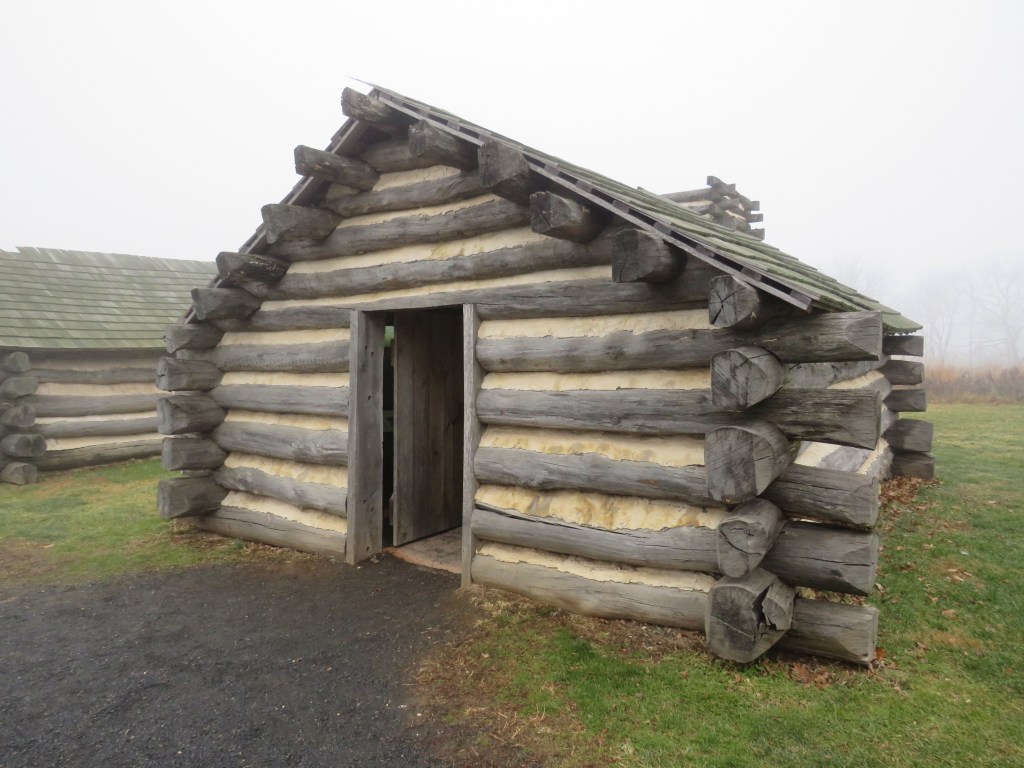
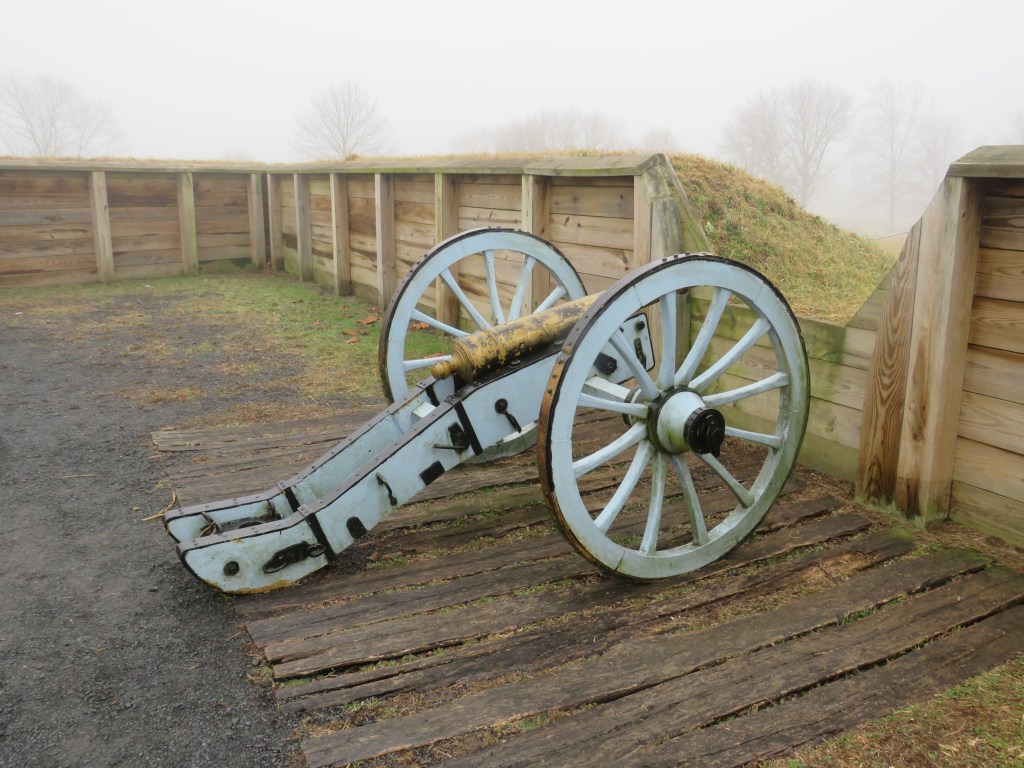
The Declaration of Independence has been signed in the Pennsylvania State House in Philadelphia in the colony of Pennsylvania declaring independence for the thirteen colonies from Great Britain. The American Revolutionary War was still being fought. Great Britain had captured the city of Philadelphia. In December of 1777, the Continental Army under the command of General George Washington established an encampment west of the city in an area called Valley Forge. Most of you have heard the stories of the brutal cold winter in December of 1777 in Valley Forge that made many of the roads impassable, which also disrupted supplies to the army. Today, when you visit the Valley Forge National Historical Park, you can visit the sites when the men were encamped. You can visit replica cabins and see replica cannons. By the way, if you do not enjoy cold weather, it is good to know that you can visit the park in the summer as it is open year round.
Some of you are saying, “I remember hearing about Valley Forge. Those conditions must have been very bad. Those soldiers had to be very brave. There are numerous big problems with Valley Forge. First, there was no railroad in Valley Forge when the men were here. George Washington died before the railroad began. Because Valley Forge, the American Revolutionary War, the Continental Army, and George Washington have no history with the railroad, I will not be making my brutal visit here.”
Let us take a look at this. The encampment at Valley Forge was established in December of 1777, and it lasted until the summer of 1778. The American Revolutionary War ended in 1783, and that was also the end of the Continental Army. General George Washington who later was elected the first President of the United States of America died in 1799. The railroad did not begin in North America until February of 1827. So, you do have a point when you say that the Valley Forge National Historic Park has no connection to the railroad. Ladies and gentlemen, there is more to the story of Valley Forge.
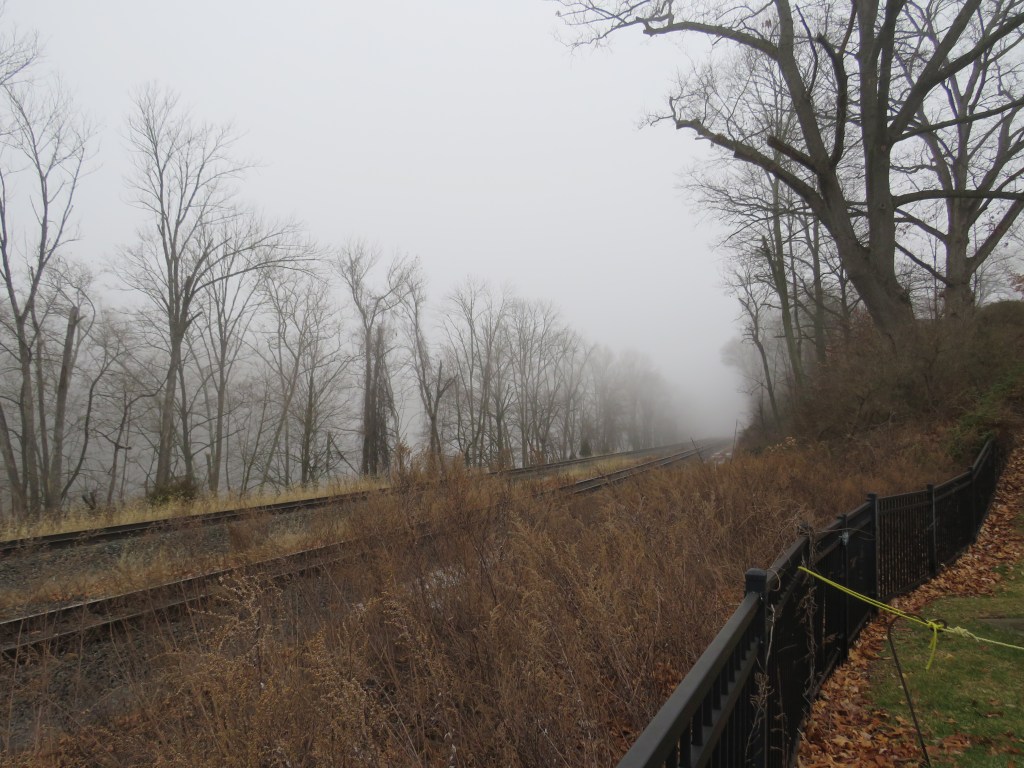
As mentioned, the railroad did not begin in North America until February of 1827. The first railroad line was built in the city of Baltimore in the U.S. state of Maryland by the Baltimore and Ohio Railroad Company. As with many other industries, other railroad companies began. Among them was the Reading Railroad who built a railroad to bring the coal from the coal mines of the northern and central regions of the state of Pennsylvania to the ships docked at the ports of Philadelphia. In the year 1842, they built a rail line along the Schuylkill River. This brought the line to pass by Valley Forge. (The Schuylkill River runs on the northwest side of the park. It is not accessible from the park itself.) The Valley Forge National Historical Park was established in 1893. A small train station was built allowing visitors to travel by train to the park. At the time, the train was the only way to get to and from the park. As more visitors came to visit, a larger train station was needed.
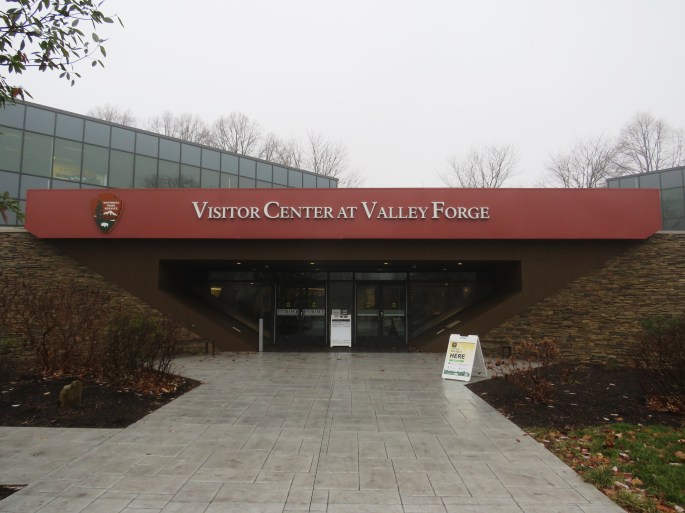
In 1911, a grander train station was built. The train station was built in a Colonial Revival style. It was built in the same style as George Washington’s Valley Forge Headquarters was built using the same materials. The station was also the visitor center for the historical park. As the passengers stepped off the train, they looked down into a valley overseeing the historical park. When the current visitor center was built in the 1960’s, the train station ceased as the only entrance to the park, but train service continued until the 1980’s.
Now some of you are saying, “I know. The train station was demolished, and the train tracks were taken up. It is the same old story.”
Wrong! The elegant train station remains. It may no longer be an active train station, but it has been preserved as a museum. You can walk the old train platforms. The ticket office and waiting rooms are exhibit space showing the story of not just the train station but the happenings at Valley Forge. As for the train tracks, the Reading Railroad no longer runs along here, but, if you are fortunate enough, Norfolk Southern Railway may reward you with a passing train.
Yes, the Valley Forge National Historical Park has a history with the railroad, but that is not the only reason to visit. It is a place where freedom loving patriots endured great hardship to fight a war to make the United States of America the Land of the Free.
The Valley Forge National Historical Park is open year round. It is located near U.S. Route 422 and Interstate 76 (Pennsylvania Turnpike). You can get information on the hours and get directions and how to get to the park by public transportation at https://www.nps.gov/vafo/index.htm.
The next time you hear or think about Valley Forge, think about the harsh conditions the soldiers and families lived under. Think about the man, George Washington. Think about how the railroad brought visitors to see American history.
What is special about the Carrahee Military Museum? Well, it tells the history of the nearby Camp Toccoa where paratroopers were trained. The camp was opened during World War II to train the new type of soldier known as the paratrooper. A visit to the museum tells the history of the camp and the uniforms and weapons they used. What is special about Camp Toccoa? It was the original home of the ‘Band of Brothers’, a group of soldiers who fought during World War II. If you are in the northern region of the U.S. state of Georgia, you must make your way to the town of Toccoa to visit the Carrahee Military Museum.
Some of you are saying, “Well is this something? Here is a museum that is specifically about paratroopers, and I do remember the HBO series on the Band of Brothers. I love the military and have great respect for them, but being a military museum, it is about the military and not about the railroad. Therefore, I will not be jumping in to visit this place.”
Yes. It is a military museum. Yes. It is about Camp Toccoa. Yes, you will see military history on display here. Yes, this was the home of the ‘Band of Brothers’. However, you are wrong when you say that this place has no railroad history.
What does the Carrahee Military Museum have to do with the railroad? Well, you will notice this as soon as you arrive. How will you notice? First of all, the Carrahee Military Museum is housed in the old train station. You arrive at the old train station, and you notice the train platform. Amtrak does make stops here.
Now you are saying, “That is nice, but many museums are housed in old train stations. The museum itself has nothing to do with the railroad nor does it have any railroad history.”
Ladies and gentlemen, you are wrong again.
As soldiers came to Camp Toccoa to train as paratroopers during World War II, they arrived by train. Yes, the railroad played a great role in the training by bringing the soon to be paratroopers to their training.
If you still need another reason to visit the Carrahee Military Museum, the old train station is also the home of the Stephens County Historical Museum of which the town of Toccoa is located in. The museum tells the history of the county to include the history of the railroad. There is a scale from the Southern Railroad and a small model of a Southern Railroad Train on display. You can read the speech made by Franklin Delano Roosevelt, former President of the United States of America from the platform on the rear of a train in Toccoa.
Now you have many reasons to visit the Carrahee Military Museum. It is one of many great reasons to visit the great state of Georgia.
The Carrahee Military Museum is located inside the old train station in Toccoa, Georgia along with the Stephens County Historical Museum and the town visitor center. It is located at 160 Alexander Street. The museum is wheelchair accessible. You can get more information about admission, get directions to the museum, and read more into the history of Camp Toccoa and how you can get a tour at https://www.toccoahistory.com/.
Visit the Carrahee Military Museum. Come and see how the railroad played a major role in helping soldiers jump out of planes.
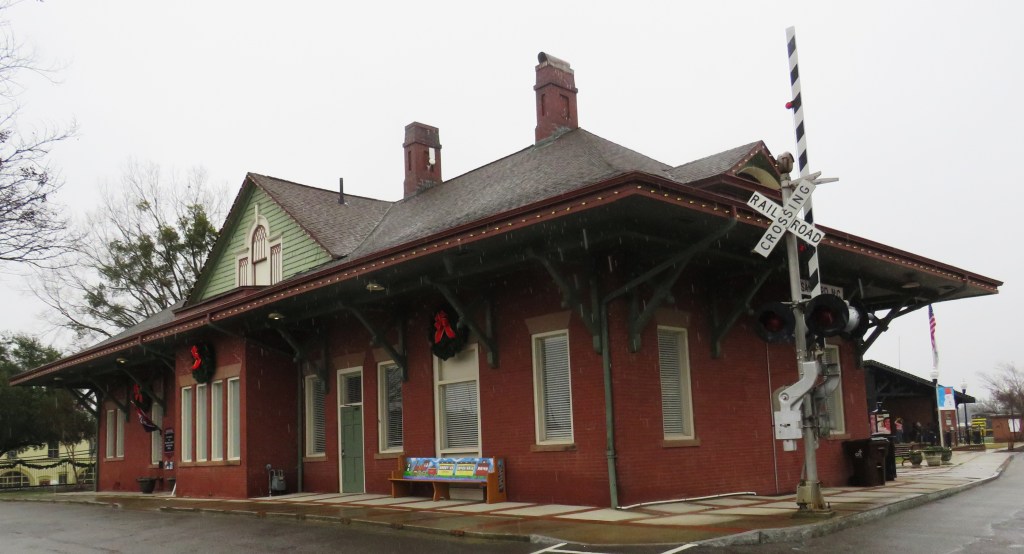
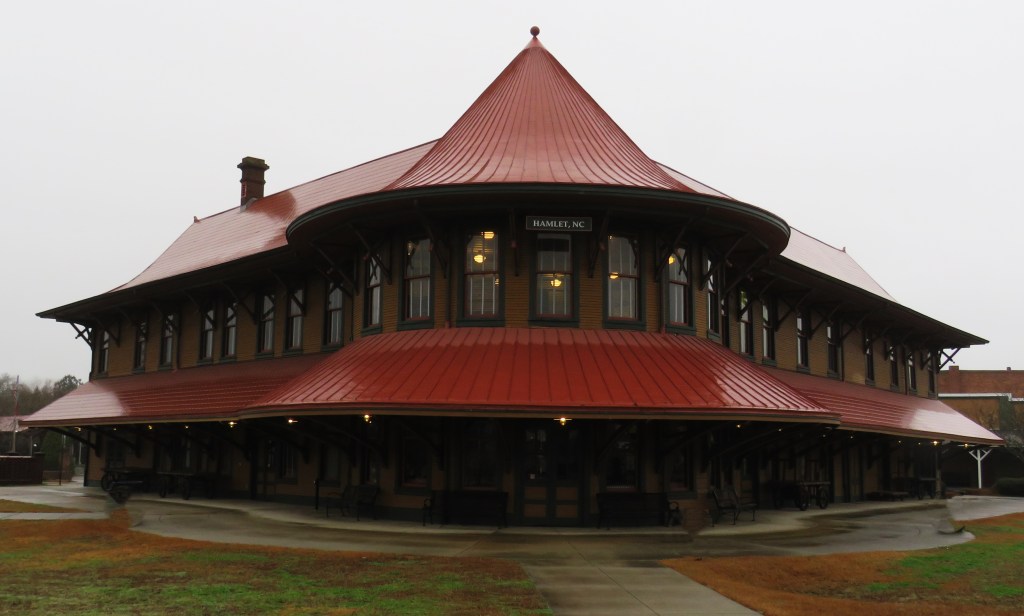
The town of Hamlet in the south central region of the U.S. state of North Carolina was once the hub of the Seaboard Airline Railroad. Today, CSX has a small yard in the town, and you can see the trains pass through town. The old train station, built in a Victorian Queen Anne style, is still an active train station, but it sees fewer passenger trains at only two Amtrak train pass through here each day. The old train station is now the home of the Hamlet Depot Museum.
The Hamlet Depot sits at the crossing of two tracks, one running north and south and the other running east and west. A railroad hotel once stood across the tracks north of the depot, but it was destroyed by a fire. The waiting area in the depot remains a waiting area for Amtrak passengers today, but the rest of the depot houses artifacts from the heydays of the railroad in Hamlet.
Some of you are saying, “This is nice, but many town depot museums do this.”
This is true, but the Depot Museum in Hamlet, North Carolina is much more.
As you walk around inside the old depot, you will walk through the old ticket office and baggage room, but then you go downstairs. Here, you will see a model train display set up in the way that the town looked in the heyday of the Seaboard Airline Railroad. You see where the many tracks once were that are no longer there.
Now you are saying, “And that is the end of the visit. You have seen everything.”
Not exactly.
As mentioned, the Depot Museum in Hamlet, North Carolina is not just inside the old depot. The visit also includes a visit to the Hamlet Visitors Center. This is not your ordinary visitors center, but it is a museum telling the story of the town of Hamlet and how the railroad was a major factor to the town’s growth.
If you think that this is all, there is more.
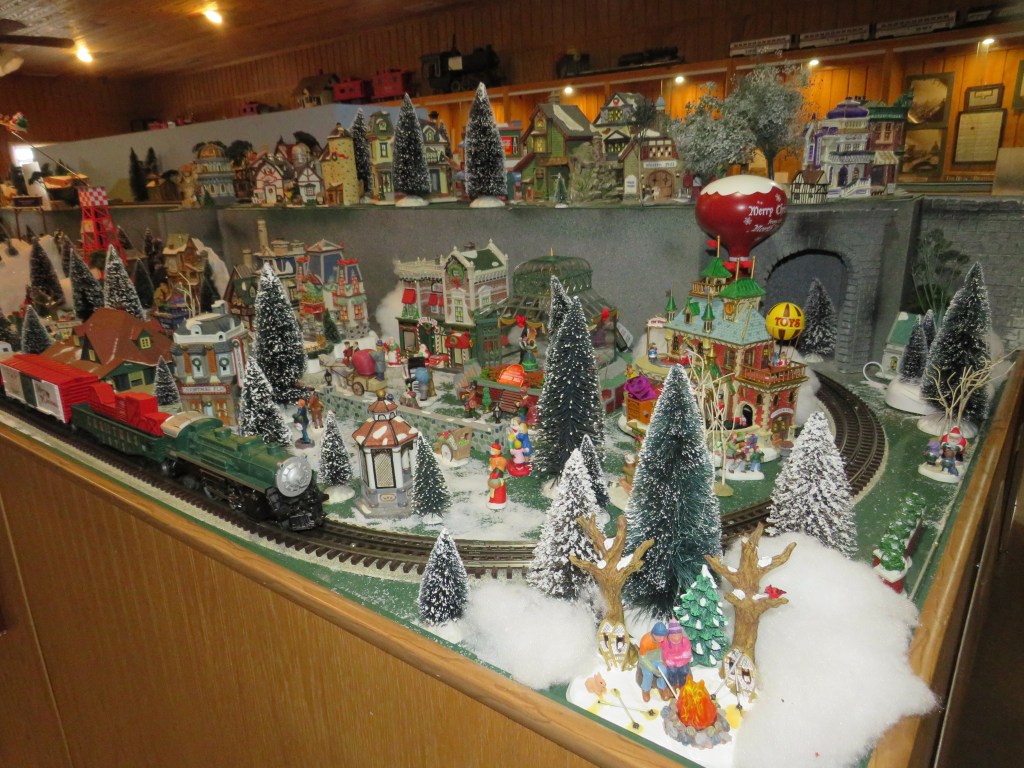
You then have the Tornado Building. No. There is not an actual tornado inside. It is an old railroad warehouse that houses a replica of a steam locomotive called the ‘Tornado’. It also has a model train displays, old cars, and an old fire engine.
If that is not enough, you have the Main Street Park. The first thing you notice in the park is the Seaboard Airline Railroad Number 1114 of which the locomotive and Seaboard Airline Railroad Caboose Number 5241 are the centerpieces of the part. The park was built where railroad lines once were. There is also an old railroad crossing light and an old railroad bridge over a creek.
The Hamlet Depot Museum is located at 2 Main Street in Hamlet, North Carolina. Admission is free, and the buildings are wheelchair accessible. Parking is on site. You can learn more about the history of Hamlet, North Carolina at https://hamlethistoricdepot.org/.
Visit Hamlet, North Carolina. See a town engulfed with the history of the railroad.
On Thursday, October 26, 2023 in the small town of Prince, West Virginia, U.S.A. (near Beckley), a bridge on West Virginia State Route 41 crossing a railroad line that was owned by the Chesapeake and Ohio Railway (now owned by CSX) was named in honor of Private Harold Richard Plumley, a soldier who fought in the Korean War and was killed in a major battle near the end of the war. He worked for the Chesapeake and Ohio Railway before he was drafted into the war. He departed from the train station in Prince, and his casket was returned by train back to the train station he departed from. Seventy years after his remains was brought home, with help from the family and a West Virginia State Senator, the bridge was named the Private Harold Richard Plumley Bridge. (The bill to rename the bridge passed with a unanimous vote in the State Capitol of Charleston.) If you are ever in Beckley or visiting the New River Gorge, take a drive on West Virginia Route 41 through the town of Prince and remember a soldier who lost his life so that many of us today can live ours.
The Private Harold Richard Plumley Bridge in Prince, West Virginia, U.S.A.
Marvin Plumley, the brother of Harold Richard Plumley.
Reporter Jillian Risberg of WOAY speaking to West Virginia State Senator Jack Woodrum who sponsored the bill to rename the bridge.
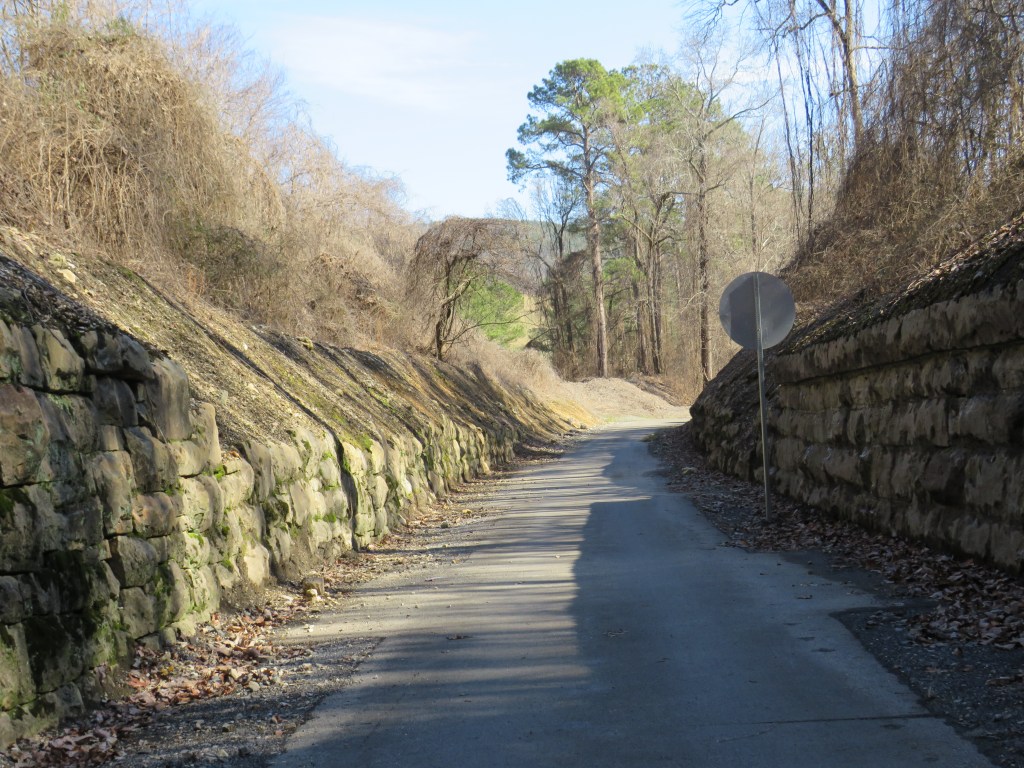
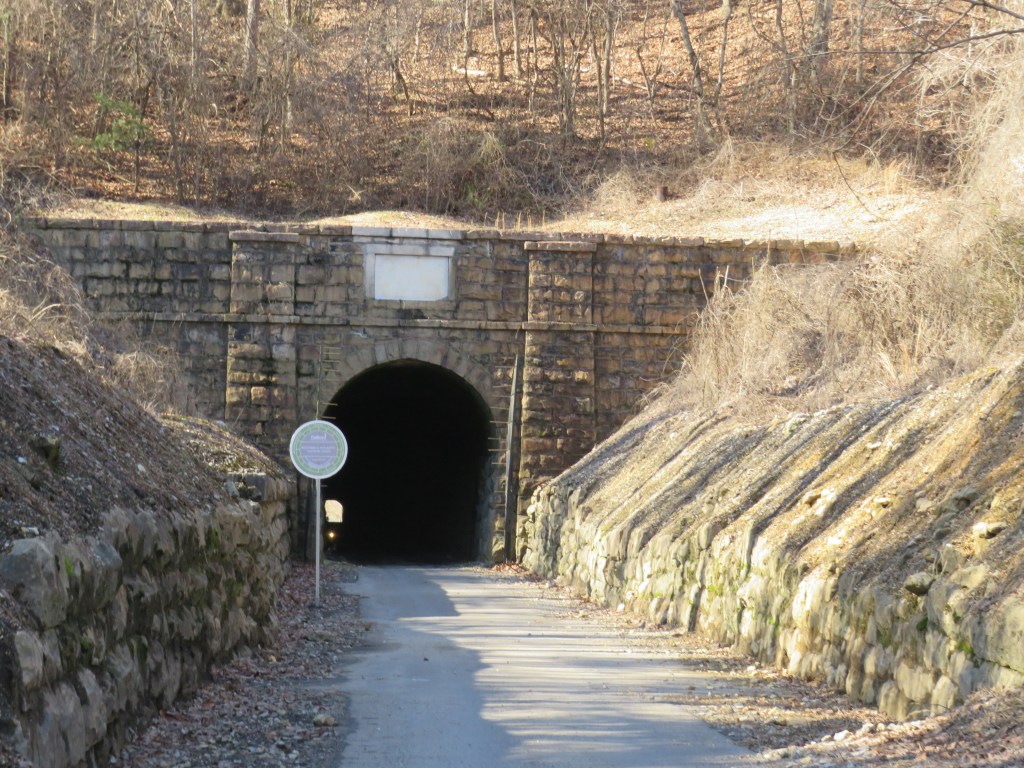
The rail trail is a trail where trains once ran. Today, the rail trail no longer sees trains, but it sees hikers, walkers, runners, bicyclists, and the occasional horse rider.
As you travel on the trail, you may just see the scenery. You may feel the spirits of the trains that once were on this trail. What is blacktop or dirt was where wooden railroad ties and steel rails once where. If you walk or hike, you feel the old railroad bed with your feet. You feel the ground where people travel on, but then you feel the trains roll along.
Although the trains no longer run on the tracks that were once on the trail, if you are a railroad person, you will feel the trains that were once on the rail trail that you tread upon today.
The Sautee Nacoochee Center is a community located in a very small town called Sautee Nacoochee in the northern mountainous region of the U.S. state of Georgia. How famous is this place? Well, it is not really famous as it is overshadowed by a more famous town known as Helen which is a few miles west of here. However, you can visit the Sautee Nacoochee Center and see the artwork of local artists as well as the Folk Pottery Museum and the Valley Heritage and History Museum. If that is not enough, they event have a theater where performing arts take place, and there are also classes you can take. If you are in the northern region of Georgia, you will enjoy a visit to the Sautee Nacoochee Center.
Some of you are saying, “This is interesting. When you hear about Georgia, you rarely hear about its mountains and its mountain towns. This could be a great place to visit. There is one very big problem. What is the very big problem? This place has nothing to do with the railroad. Therefore, I will not make an art of visiting this place.”
You do have a good point. Why visit the Sautee Nacoochee Center?
As you arrive, you see the Sautee Nacoochee Center. What you do not see any sign of the railroad here. Neither the property nor the structure has any connection to railroad history. You enter and you notice the numerous galleries. Unless you see a picture of a train, you will see nothing about the railroad here. You then enter the Folk Pottery Museum of Northeast Georgia. You see how pottery is made, and you see the great works of pottery on display. What does this have to do with railroad history? Well, absolutely nothing. You can also tour an old African American Heritage site which also has no history with the railroad.
So why visit the Sautee Nacoochee Center?
This brings us to the Valley Heritage and History Museum which is also located inside the center. What is significant about this museum? Well, as most of you have figured out, it tells the history of the region in northern Georgia to include the nearby town of Helen. If you were to visit the town of Helen, you would feel as if you were in Germany. Well, they try to make you feel as if you were in Germany. What will you not see in the town of Helen? You will not see a railroad. You will not see an old train station. You will not see a rail trail.
So why see the Valley Heritage and History Museum?
The town of Helen, Georgia was founded as a saw mill town in 1914, and it had one of the largest saw mills in the eastern United States of America. At the Valley Heritage and History Center, you will see how the railroad was used to transport lumber as well as gold from the mills and the mines to the town of Gainesville, a major town south of here where it connected to other railroads. The town of Helen as a railroad town was short lived as mining for gold ceased. Through the years, the town would eventually be transformed into what it is today.
The Sautee Nacoochee Center is owned and operated by the Sautee Nacoochee Community Association. It is located at 283 Highway 255 North in Sautee Nacoochee, Georgia. It is open Monday through Saturday from 10:00am to 5:00pm and on Sunday from 1:00pm to 5:00pm. Parking is on site. Admission is free to visit the museums and galleries, but admission may be required to attend the shows. The facility is wheelchair accessible. You can get more information and directions at https://www.snca.org/snc/home.php.
As you enjoy the mountains of northern Georgia, make a trip to the Sautee Nacoochee Heritage Center. Visit the Valley Heritage and History Museum. See how the railroad once transformed this region.
The city of Wilmington in the U.S. state of North Carolina is a city located on the Atlantic Ocean. It is the home of the U.S.S. Battleship North Carolina. It is a town with historic houses. Being a coastal city, nobody would think of this city as a railroad town, but it was the home of the Wilmington and Weldon Railroad where, in 1840, it was the longest continuous railroad line in the world. The Wilmington and Weldon Railroad merged to become a part of the Atlantic Coast Line Railroad, and the headquarters was in Wilmington. (Many of the Atlantic Coast Railroad Lines are owned by CSX today.) During its heyday, Wilmington was a major railroad hub despite its location. The railroad declined in the region, but the town freight houses remain. One of the freight houses was converted into a hotel. The other is the home of the Wilmington Railroad Museum.
As you enter the Wilmington Railroad Museum, you see the hotel on the left, and you see the Atlantic Coast Line Railroad Locomotive Number 250 on the right next to another freight house originally owned by the Atlantic Coast Line Railroad. It is here where the museum is housed.
You enter the museum. The gift shop has a small model train display. It is the first of many model train displays you will see. You also see a model train above you. You begin to see that this is not your average railroad museum.
You enter the museum and see displays of the offices and the ticket offices. You see the tools on display. You see artwork of the Atlantic Coast Line. The best part of a visit to the Wilmington Railroad Museum is the numerous model train displays. Yes, you see many model trains here at the museum. One of the displays feature a certificate by the Guinness Book of World Records for the longest model train ever assembled which happened at a train show in Wilmington by modelers at the museum.
If you think that this is your average railroad museum, think again. The museum not only tells the history of the railroad in Wilmington, but it tells the story of the Atlantic Coast Line Railroad through the region of the southeastern United States of America.
The Wilmington Railroad Museum is located at 550 Nutt Street in downtown Wilmington, North Carolina. Parking is on site, and it is wheelchair accessible. You can get information about days when the museum is open and admission at https://www.wrrm.org/#/.
There are many reasons to visit the city of Wilmington, North Carolina. The Wilmington Railroad Museum is one of many. You will be glad that you came.
The U.S. state of Georgia is the largest state eastern United States of America. Its capital city, Atlanta, is known as the ‘Capital of the South’. It is a major hub with one of the busiest airports in the world. It is home to many major businesses like Coca Cola. It is the birthplace and burial site of Martin Luther King Jr. It hosted the 1996 Olympic Games. Then you have the city of Augusta which home to the Augusta National Golf Course, home of ‘The Masters’, one of the biggest golf events in the Professional Golf Association Tour (commonly known as the PGA Tour). The state is known for its major city, Atlanta, and it smaller cities, Savannah, Augusta, and Macon, but you seldom hear about the state’s small towns. In the northern region of the state in the Appalachian Mountains is the town of Clarksville. No. The town is not famous, but it is here where you will find the Miles Through Time Automotive Museum. What is special about the Miles Through Time Automotive Museum? It is very you can find 100 years of automobile history. If you love classic cars, this is a must see museum.
Some of you are saying, “It is nice that you have a museum in a small mountain town that displays old automobiles. The problem is that this is an automobile museum and not a railroad museum. Therefore, I will not spend my miles to visit this museum.”
So, why visit the museum?
The Miles Through Time Museum in Clarksville, Georgia is a classic car museum with cars that have been donated to the museum. Some cars are owned by the museum while other cars are on loan to the museum to be displayed by the owners. As mentioned, the museum features 100 years of automotive history.
Some of you are saying, “This is nice, but most automobile museums feature classic cars.”
That is true, but this museum changes out their exhibits so that every time you visit, you will see something new. As mentioned, this is an automobile museum. Why visit this museum?
As you arrive at the museum, you see a Volkswagen Bug on a pedestal, a decorated bus, a truck and car as part of a fountain, and a fire truck. Be advised that this is just the beginning. You enter the gift shop to pay the admission, and then… you enter the first of four galleries. Yes, the museum has four galleries of classic cars. You see full sized cars from the 1910’s, 1920’s, 1930’s. Of course, many classic car museums feature these cars.
How many classic car museums feature a replica of ‘The General’?
What is ‘The General’? The General was a locomotive that was involved in a locomotive chase during the American Civil War. The classic movie ‘The Locomotive Chase’ tells the story of the General during the chase. Much of the chase took place in the state of Georgia. Even though the locomotive never passed through the town of Clarksville, the Miles Through Time Automotive Museum was chosen as the place to display a wooden one-half scale of this locomotive. Designed by Gary Russeth, you can see this locomotive on display at the museum.
Is that all? No. The area behind the ‘General’ is dedicated to the work of Gary Russeth. Along with the General, he designed a train wooden cars which took him five years to complete. If that is not enough for you, there is a ‘O’ Scale train display featuring the General and the Texan reenacting ‘The Locomotive Chase’. If that is not enough, there is a train display diorama and HO Scale train on display.
So you refuse to visit a classic car museum because it is not a railroad museum. You now have a reason to visit the Miles Through Time Automotive Museum. With exhibits changing constantly, you may need to plan many more visits.
The Miles Through Time Automotive Museum is located at 583 Grant Street (Georgia Route 385) just minutes front the town center of Clarksville, Georgia. It is 85 miles north of Atlanta. It is open seven days a week. The museum is wheelchair accessible. You can purchase tickets at Vintage Garage Antiques, an antique store located next to the museum. You can get information about the museum to include admission and to read more into the history and founding of the museum and museum events to include car shows and other events and changing exhibits at https://milesthroughtime.com/, and you can read more into the model of ‘The General’ and the history of the locomotive at https://milesthroughtime.com/project/1855-the-general/.
Can and see the Miles Through Time Automotive Museum. Go back in time. Make a visit even if it is for a ‘general’ reason.
In the United States of America, you have universities and you have colleges. You have colleges and universities that have students from across the nation and around the world, and you have community colleges that mainly have students from their particular region. Montgomery County Community College in Montgomery County, Pennsylvania has campuses throughout the county. One of their campuses in located in Pottstown. It is a place where students go to learn and get an education.
Some of you are saying, “This is very nice. You have a college that has education. The problem is that every college and university has education. Therefore, I see nothing special about this place, and I will not be going to school here.”
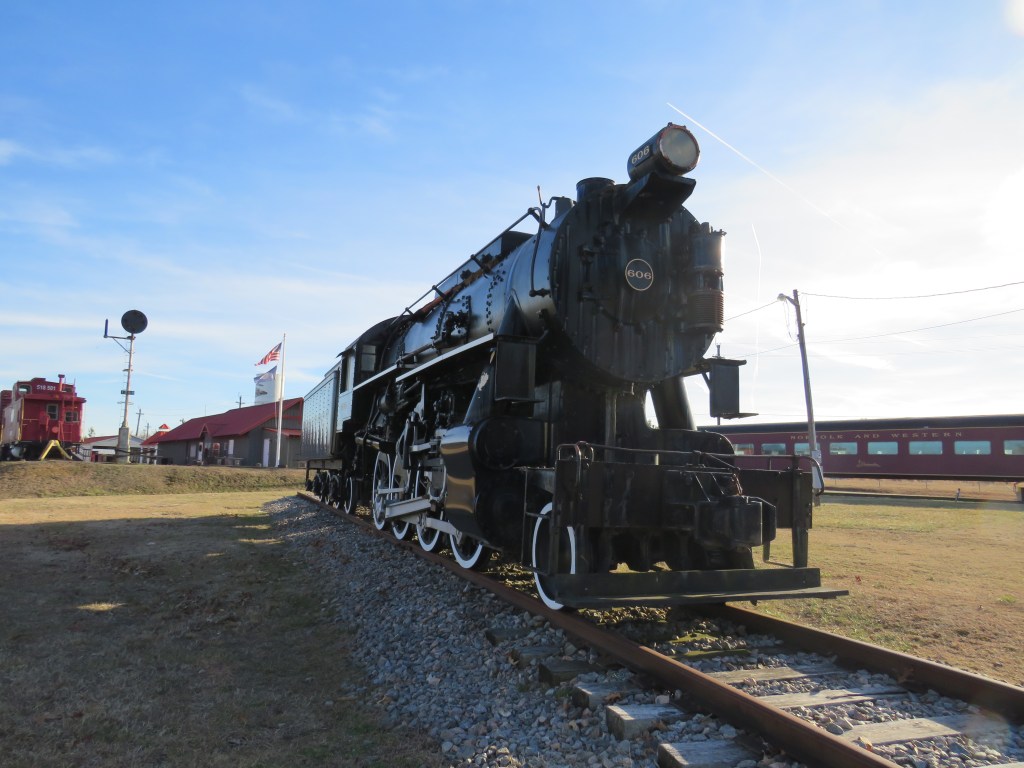
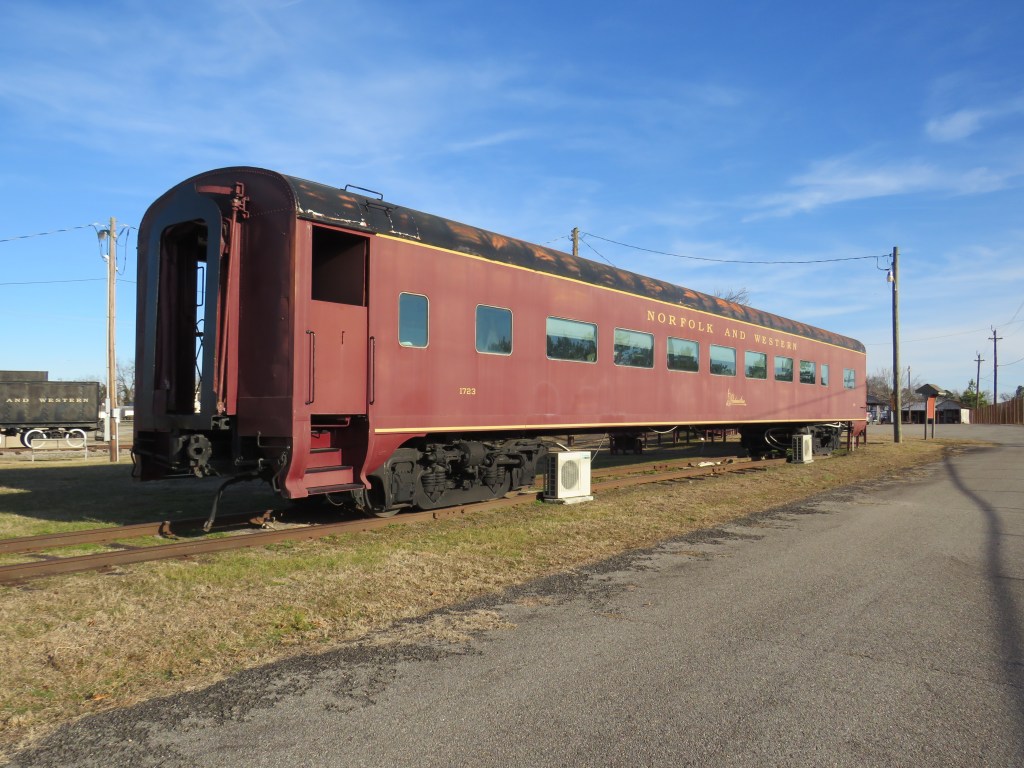
So, what is special about the Pottstown Campus of Montgomery County Community College? It gives students an education just like all of the other colleges and universities. What is special about this college? It is next to the main rail line now owned by Norfolk Southern Railway, and it is next to the old passenger train station, but many colleges and universities are next to old train stations and active rail lines. So, what is special about this college?
The Pottstown Campus of the Montgomery County Community College is housed in four structures. You have the South Hall which is the main building housing most of the classrooms. You have the North Hall that is housed in a landmark structure that was a shoe polish factory, a mattress factory, a knitting mill, and a brewery before it housed classrooms. You have an electricity generation station that houses lecture halls, labs, and the print shop. Then you have the Hanover Street Hall. What is special about Hanover Street Hall? You see something special about this building. Before it housed classrooms and offices, it was a baggage a baggage claim facility for the railroad. As you walk around, you can see where the trains pulled up and where the baggage was loaded onto the train. (Be advised that the building is not open to the public.) Today, the old trains that come here are the trains of the Norfolk Southern Railway.
So, now you have a reason to visit the Pottstown Campus of the Montgomery County Community College in Pottstown, Pennsylvania. See a school where students get an education at a place where trains once stopped.