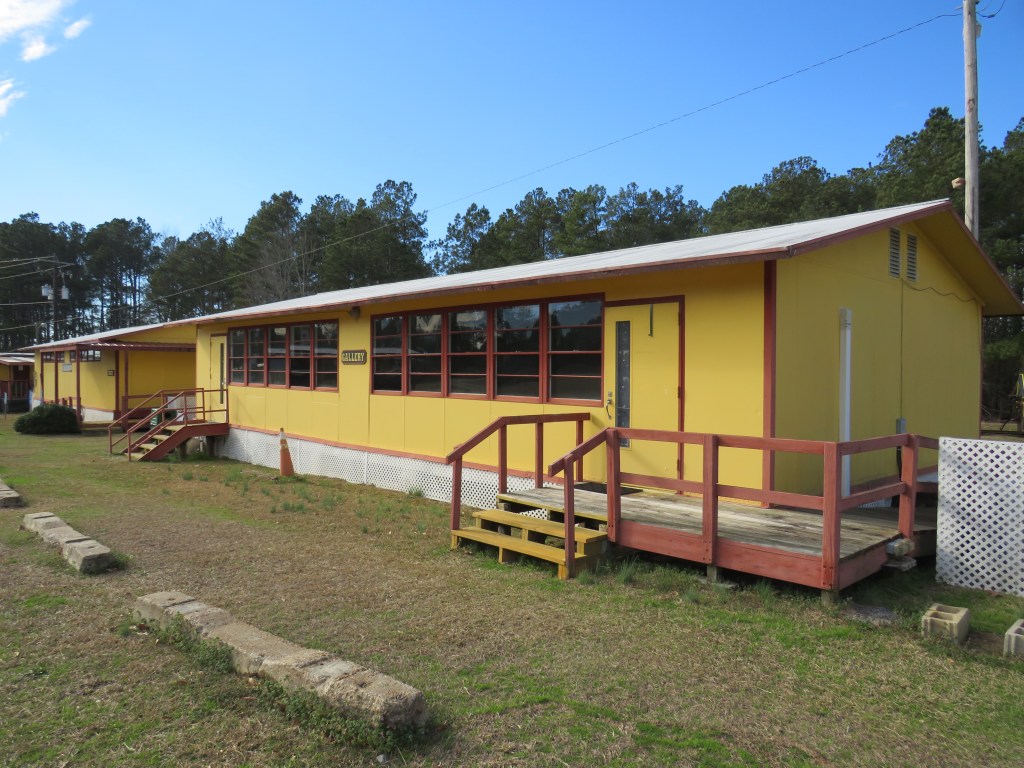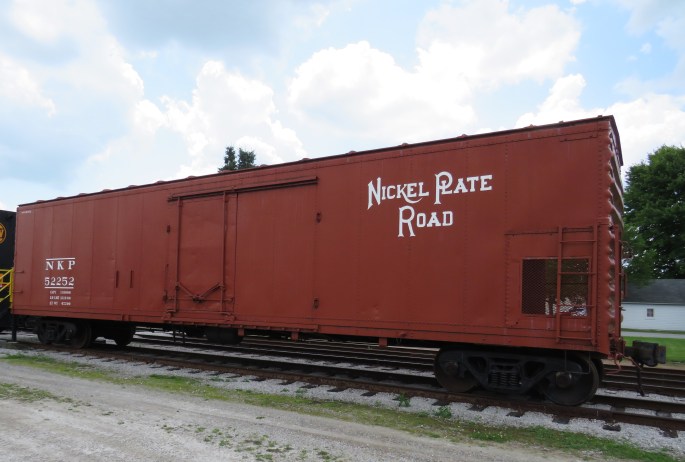
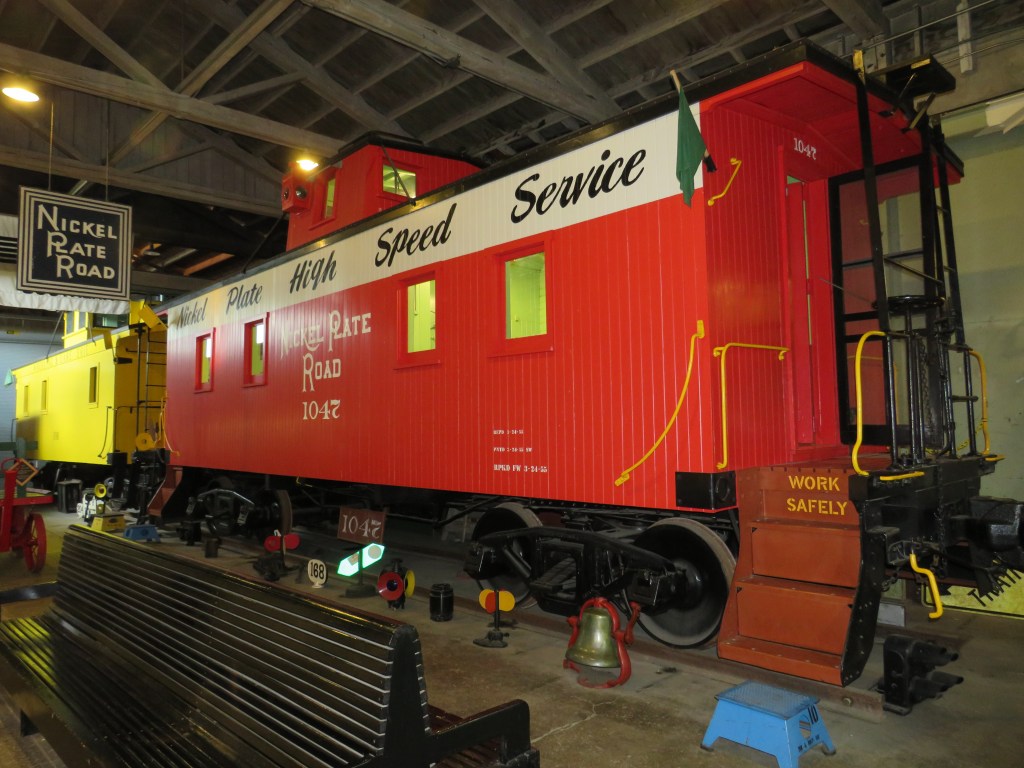
The Mad River and NKP Railroad Museum, Bellevue, Ohio

The U.S. state of Ohio has many cities as well as small towns.  Among these towns is the town of Bellevue.  Located in the north central region of the state, it is not a popular town with only U.S. Route 20 being the only major route through the town and the Ohio Turnpike (Interstates 80 and 90) running north of the town, but it is a town centered on the railroad.
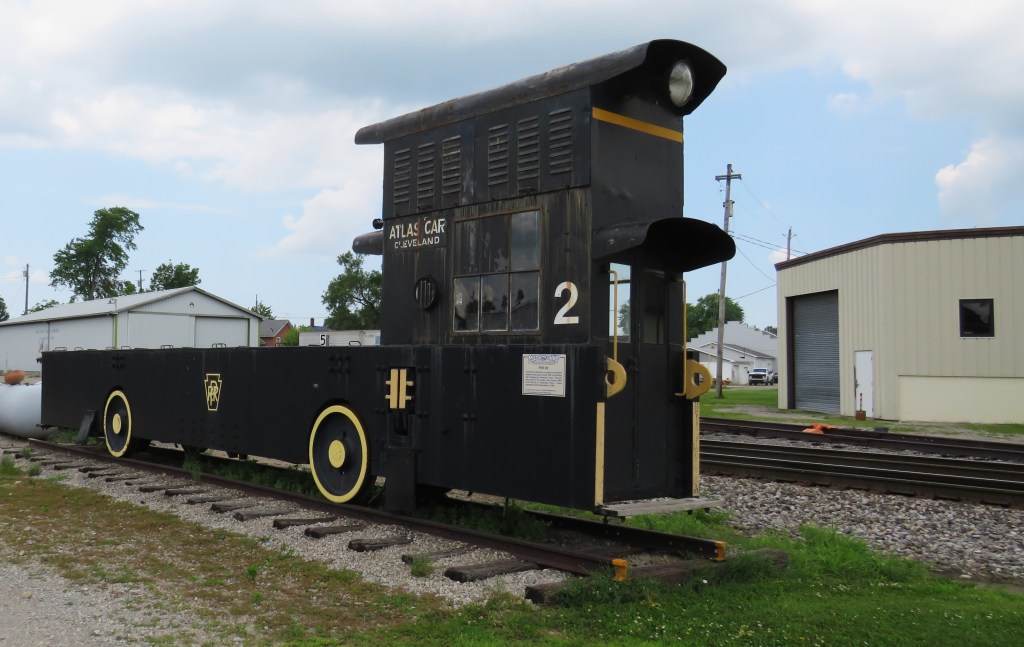
Welcome to the Mad River and NKP Railroad Museum.  (For those who are wondering, NKP stands for the Nickel Plate Road, a railroad that ran on many routes in the northern region of the United States of America.)  The mission of the museum is to preserve the heritage of the railroad in the region.

Some of you are saying, “Oh yeah!  I have been to these small town museums.  They have a caboose and a small model train display.  It is a waste of time to visit an out of the way town to see this.”

Ladies and gentlemen, be advised that the Mad River and NKP Railroad Museum is not a museum that has just a caboose and small model train.  Be warned that as soon as you arrive here, you will be totally amazed at what you will see.

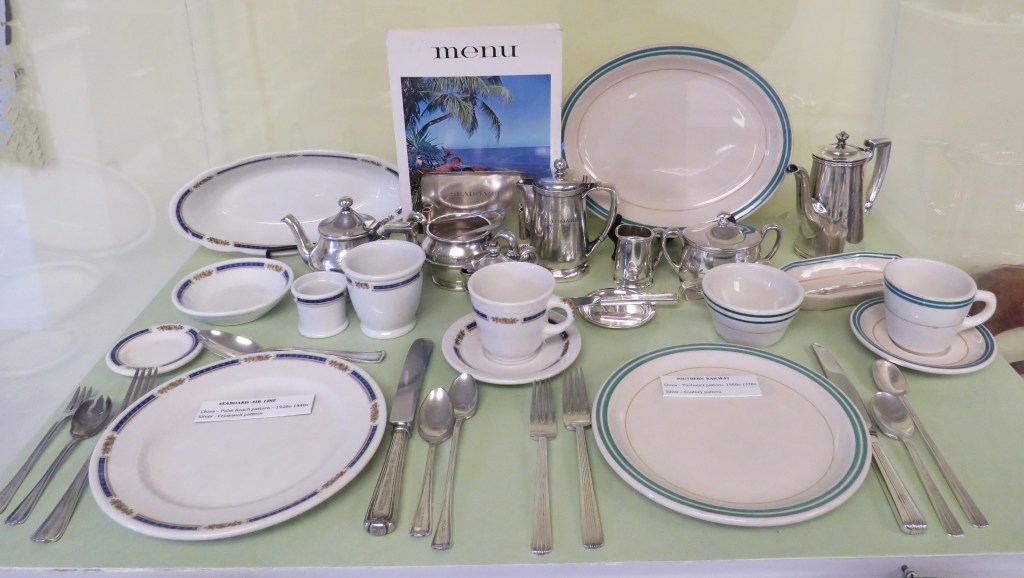
Let us begin with the main building.  Well, it may be hard to go to the main building after seeing after what you see, but it is here where you will need to pay your admission before seeing the rest of the museum.  You enter the gift shop to pay your admission, and then you enter the exhibits.  The very first thing you will see is a replica of a steam locomotive called the ‘Sandusky’, the first locomotive run by the Mad River Railroad between Bellevue and the port town of Sandusky located on Lake Erie.  In the same room is a bell that was used on the Lincoln Funeral Train, the train that carried the remains of President Abraham Lincoln from Washington D.C. to his final resting place in Springfield, Illinois.  Other items include China (dishes) used on passenger cars.

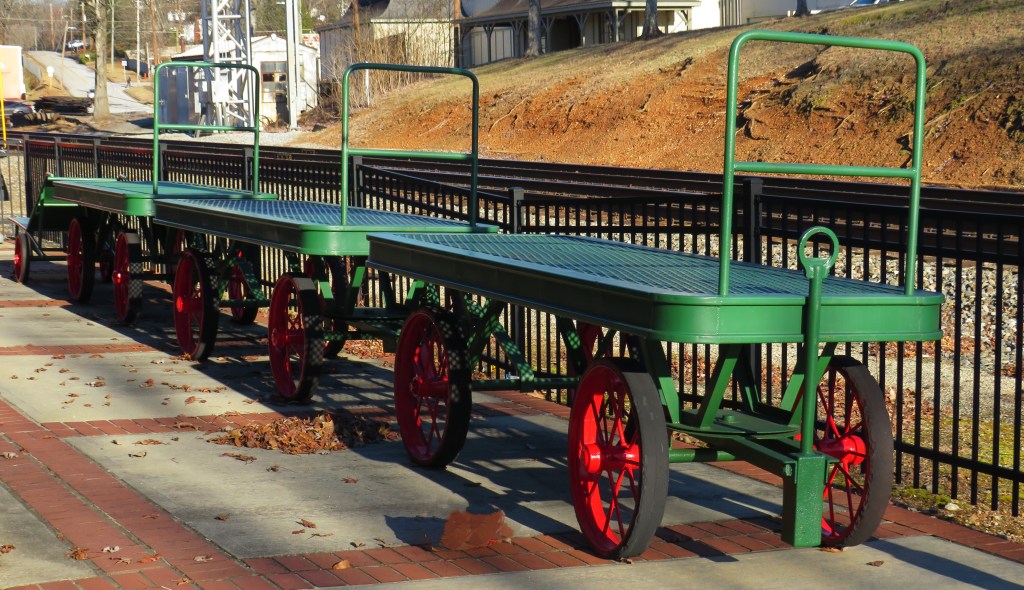
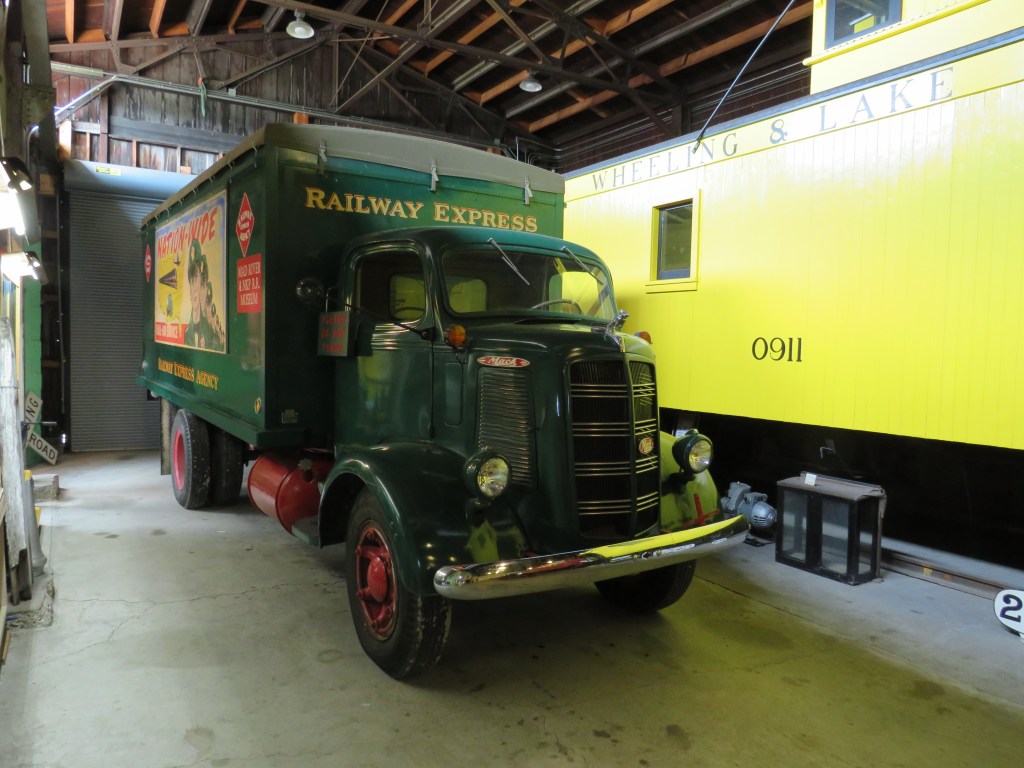
From here, you enter into the next room which has two cabooses.  The one caboose is from the Nickel Plate Road, and the other caboose is from the Wheeling and Lake Erie Railroad, another railroad that ran through the town.  There is also a Mack truck from the Railway Express and a luggage cart.
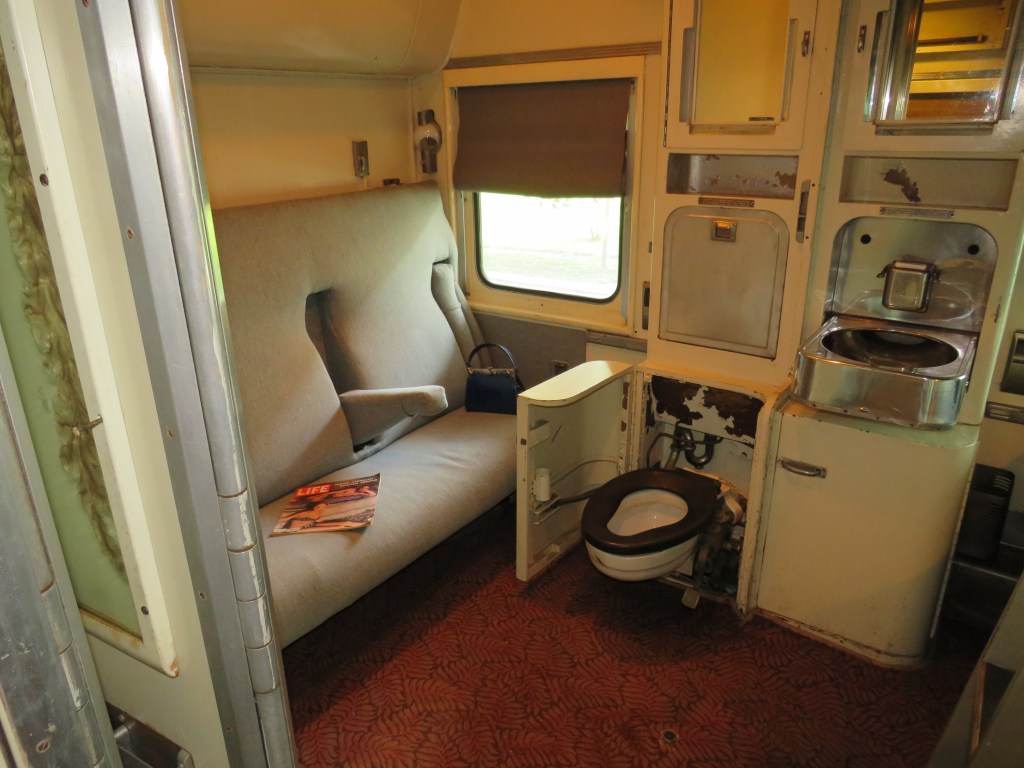
Then you have a third room.  What is in this room?  It is here where you really go back in time to the days before Amtrak.  You enter into old passenger cars.  You see the passenger seats and the private rooms and the dining area.
Ladies and gentlemen, this is only a small part of the museum.
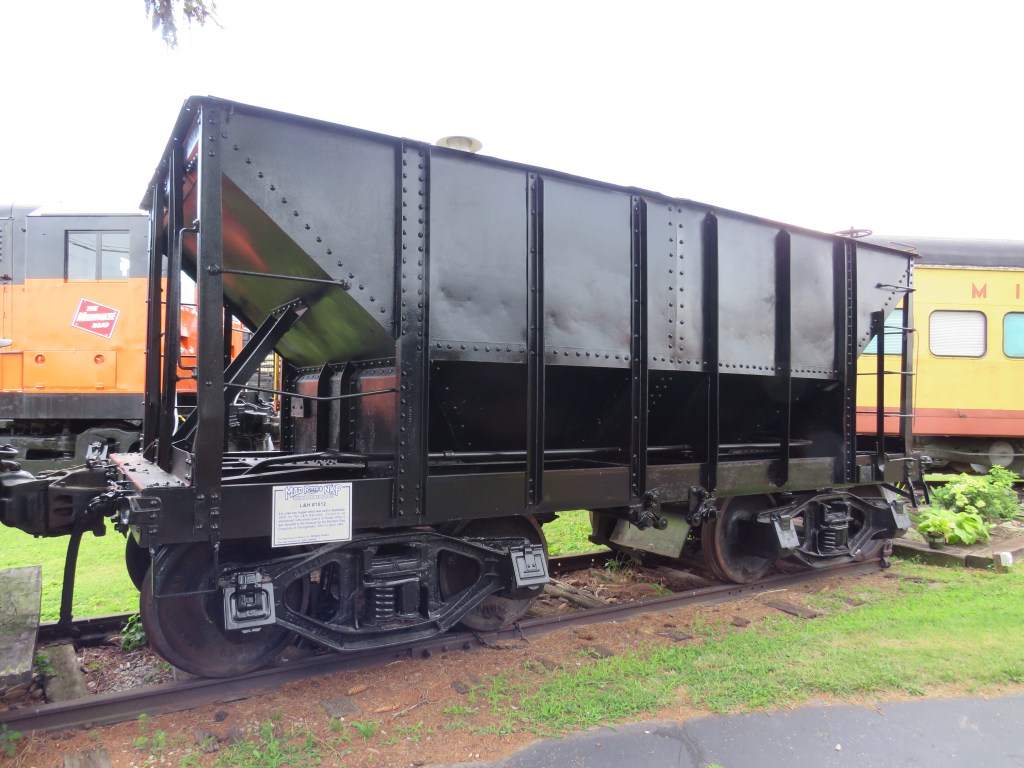
From here, you go outside and across the street to the very thing that kept you here at the museum.  You see the rolling stock.  You have the switcher locomotive.  You have a hopper.  You have a tank car and many box cars.  You have numerous diesel locomotives, cabooses, and more passenger cars and baggage cars.  Then you have the old Bellevue Train Station.

Some of you are saying, “Alright!  That is everything.”

Ladies and gentlemen, there is more.  Yes, there is more.

Across the main rail line from the museum is the Kemper Rail Park.  Yes, there is more things to see.  What is here?  You  have Locomotive  Number  2  from the Pennsylvania Railroad.  You have more locomotives, a crane, the freight house from the New York Central System, and you have the star attraction.  What is the star attraction?  Nickel Plate Road Locomotive Number 757 sits here in the park.

So you think that this it.  There is more.  The town of Bellevue was served by many railroads back in the day.  Today, the Norfolk Southern Railway is the only railroad in town, and, if you are fortunate enough, a freight train may pass by. 

The Mad River and NKP Railroad Museum was established by people who wanted to keep the heritage of the railroad in Bellevue alive.  It is an all-volunteer operation including restoration of old rolling stock, and the museum receives no public funding.  When you come here, be advised that it is not a waste of your time.
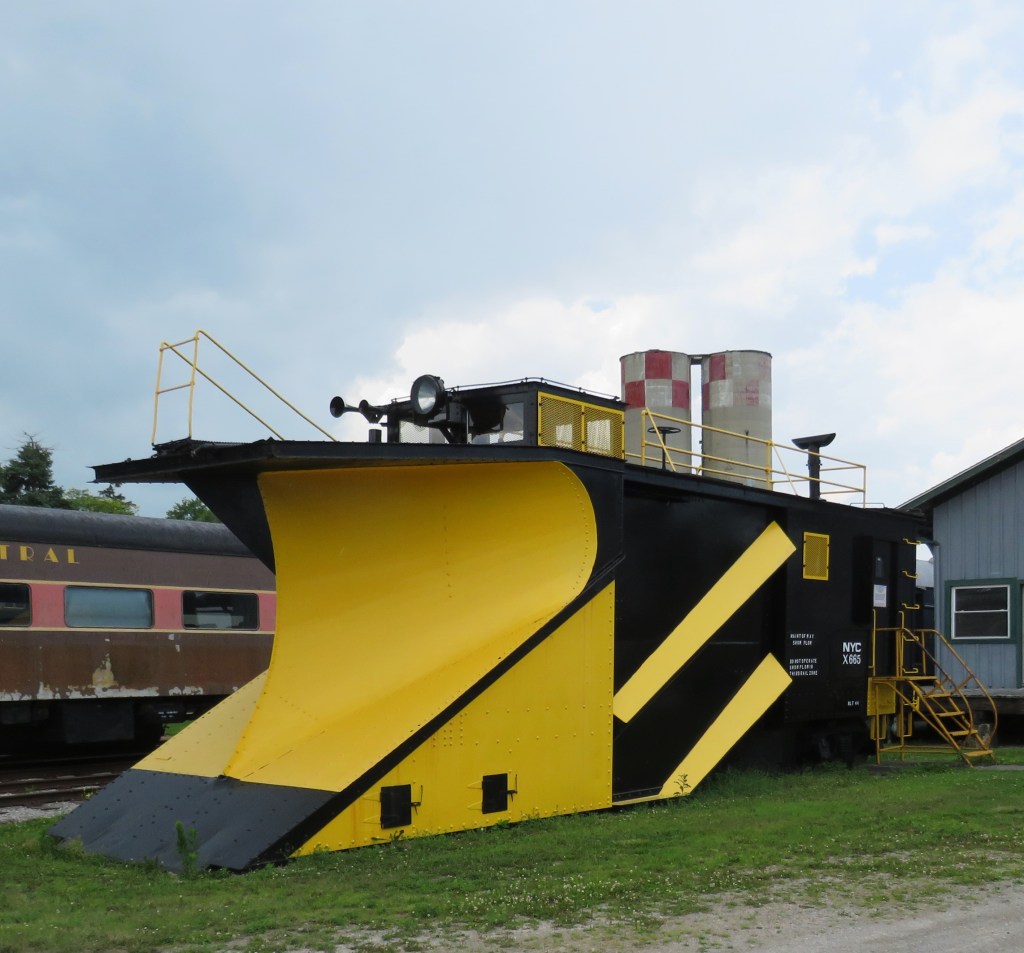
The Mad River and NKP Railroad Museum is located at 253 Southwest Street in Bellevue, Ohio.  It is just a few blocks from U.S. Route 20 and Ohio State Routes 18 and 269, and it is easily accessible from the Ohio Turnpike (Interstates 80 and 90).  It is open from May through October from 12:00pm to 4:00pm.  (Open weekends only in May, September, and October.  Open daily from Memorial Day to Labor Day.  The Rail Park is open year round from sunrise to sunset.)  Please note that due to the age of the structures, not all areas are wheelchair accessible, but the rail park is completely accessible.  You can get information in admission, directions, and to read more into the history of the museum and the railroad at https://madrivermuseum.org/.
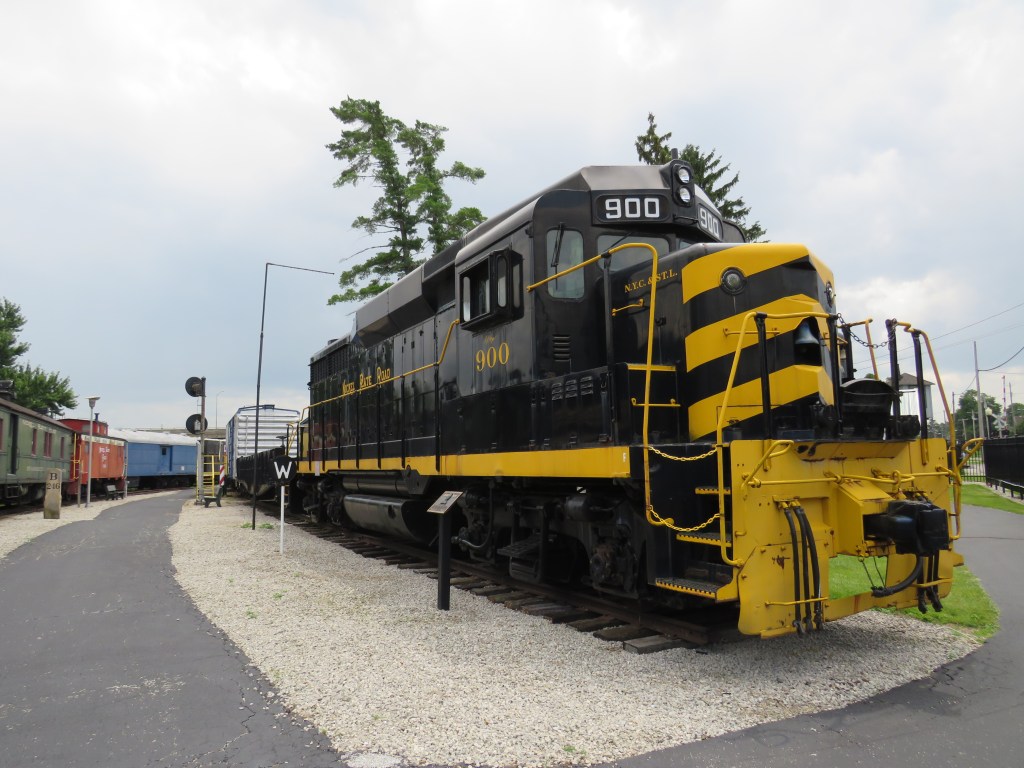
The Mad River and NKP Railroad Museum is an amazing place.  There is much here.  It is definitely worth making the journey.

Mitchener Station, Selma, North Carolina

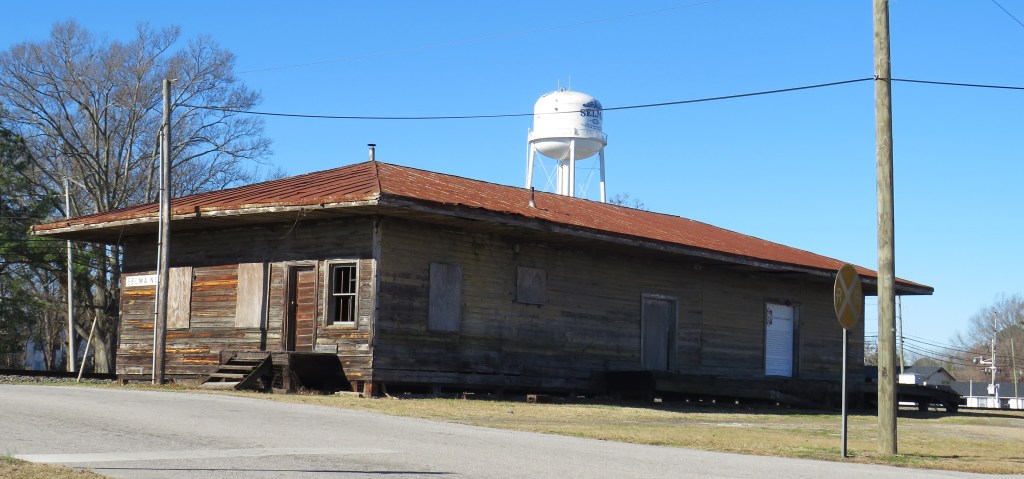
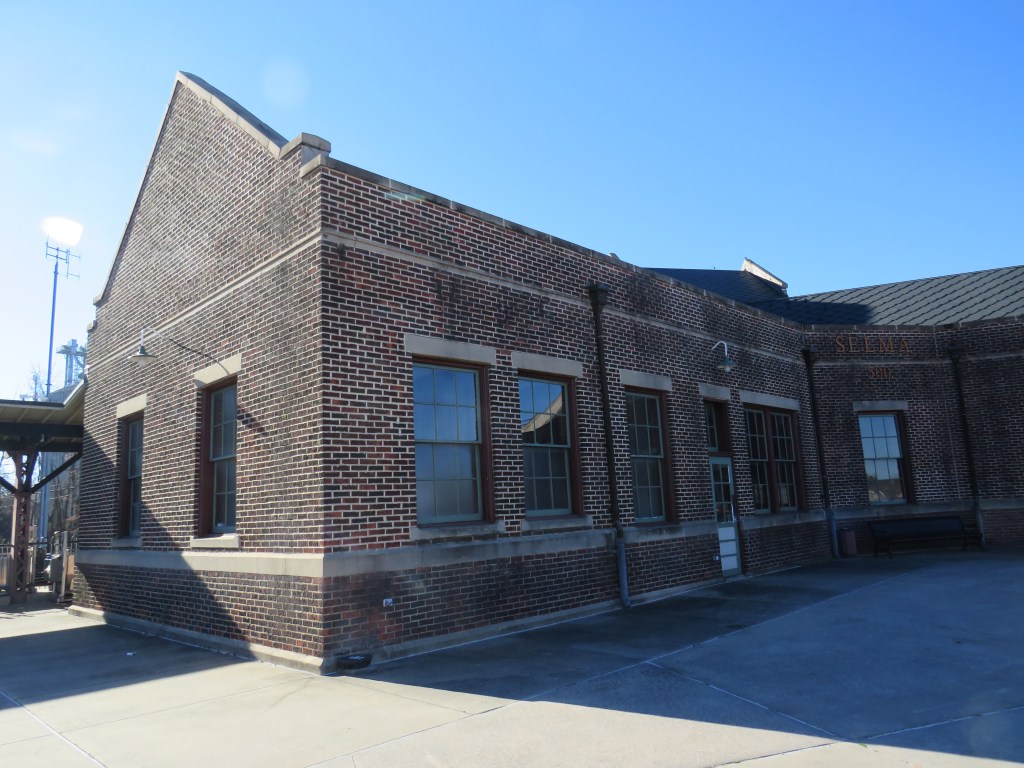
The town of Selma in the U.S. state of North Carolina is home to a train station that sits at the crossing of two major railroad lines.  The town has a history with the railroad that goes back to before Selma became an official town.  Mitchener Station, the town’s original train station, was built in 1855.  Today, it is currently abandoned as it rests just a short ways from the current Union Station where Amtrak stops today.
Some of you are saying, “If it is abandoned, why do they not just demolish it?”

It is an old train station.  Many do get demolished.  However, Mitchener Station in Selma, North Carolina is not just a rotting train station.

What is special about Mitchener Station?  As mentioned, it was built in 1855 long before the town was chartered.  It is also the oldest surviving train station in North Carolina.  Is that it?  The answer is no.  The train station was also controlled by the Confederate Army during the American Civil War.  The North Carolina Governor met with the soldiers.  They occupied the station until the Union Army attacked the station causing the Confederate Army to flee.

Today, there are attempts to restore the train station.  As for now, it is not open to the public.  It is in its original location at Railroad Street and Railford Street one block east of U.S. Route 301 and minutes from Interstate 95.

Alberta Caboose, Alberta, Virginia

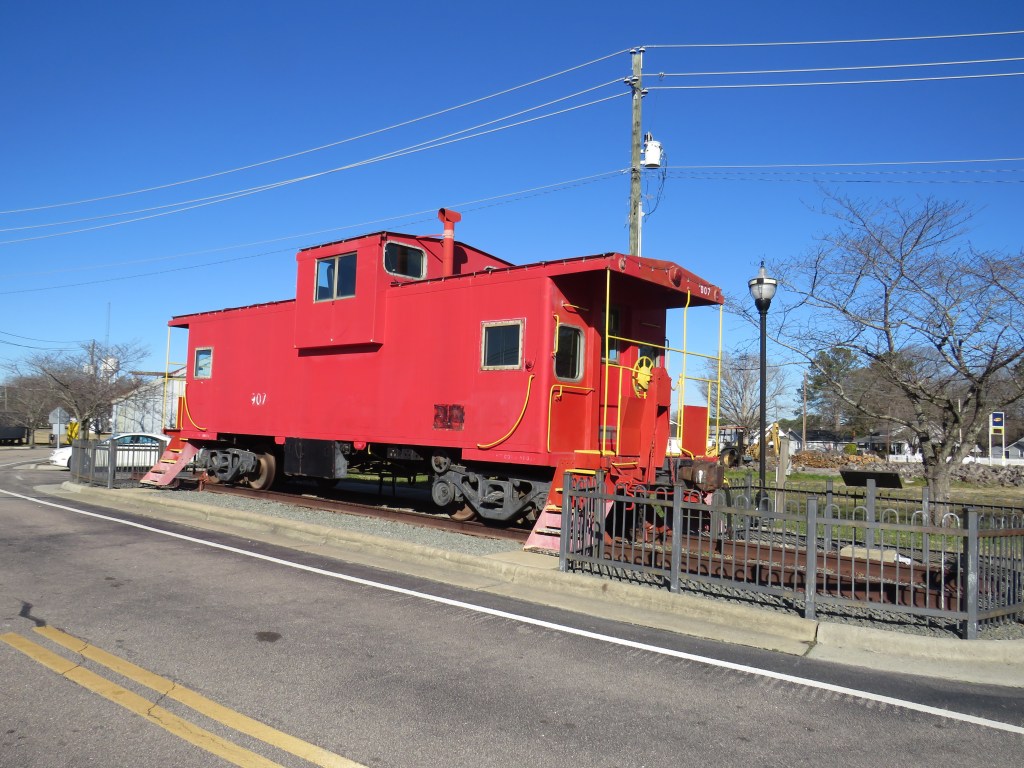
The small town of Alberta is located in the southern region of the U.S. state of Virginia.  Yes, the name of the town is Alberta.  (Whether it is named after the Canadian province is unknown.)  In this small town in the center of the town is a caboose.  How is the caboose here?  This town has no railroad.  Well, the town was once served by two railroads, and there was heavy rail traffic in its heyday.  Like many small towns, service declined, and the railroads were forced to abandon the town.

Some of you are saying, “This is nice, but many small towns in the United States of America have declined from the lack of the railroad.”

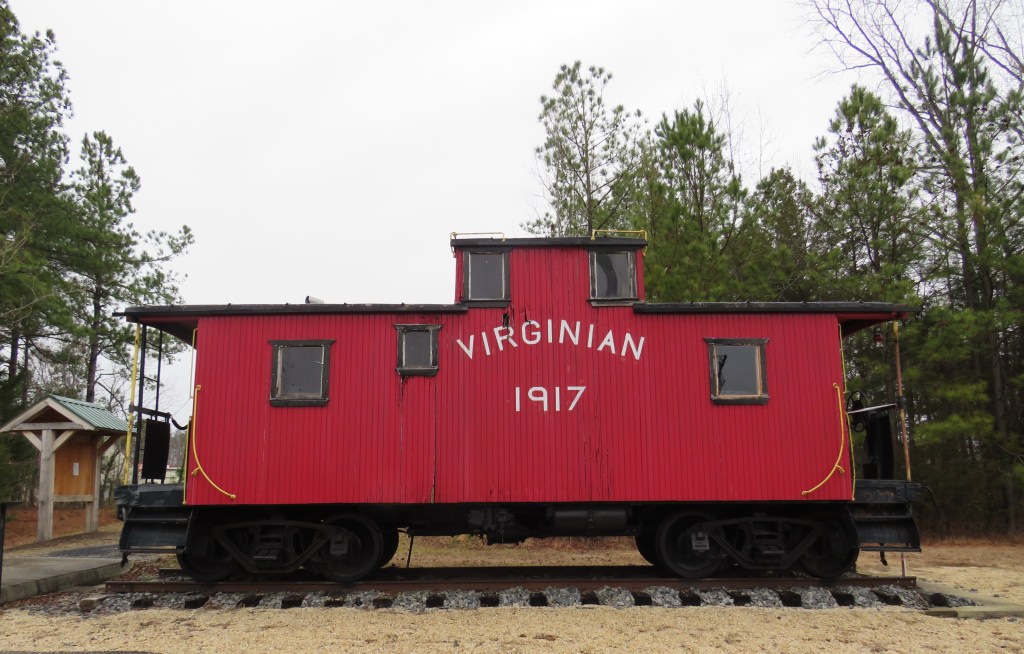
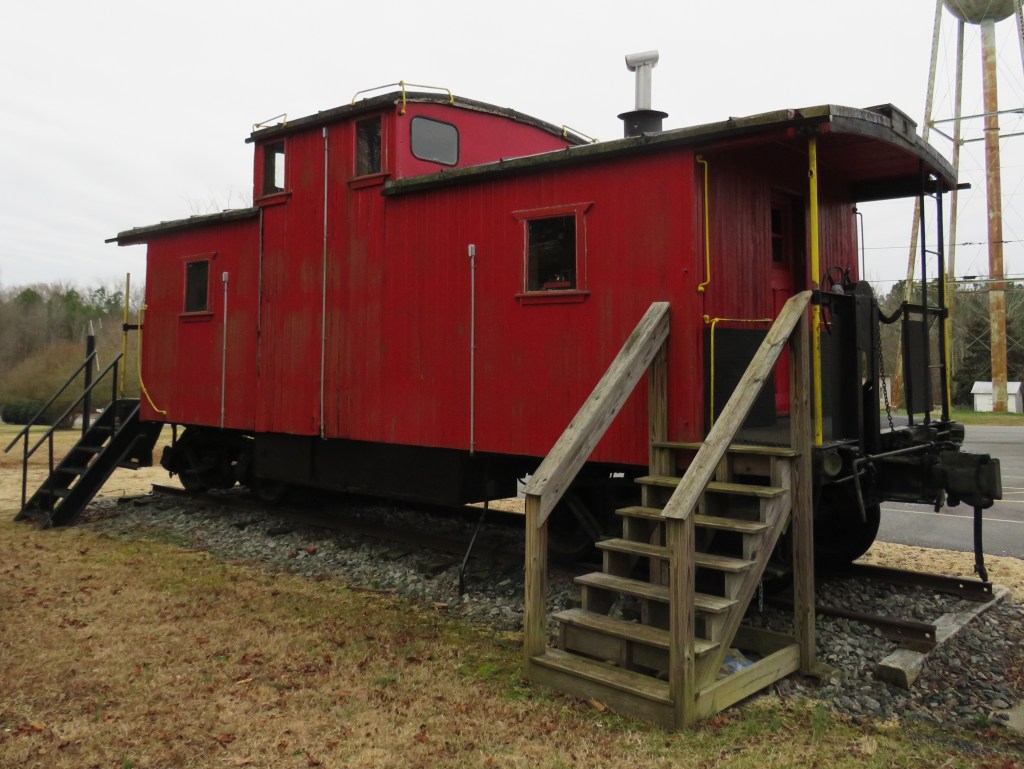
Even though Alberta, Virginia looks like a ghost town today, the Alberta Caboose reminds everyone about the railroad heritage.  The caboose is from the Virginian Railway and sits near the old railroad bed of the Virginian Railway which is now the Tobacco Heritage Trail which runs across the southern region of Virginia as a reminder of how the Virginian Railway and, later, the Norfolk and Western Railway was a big part of the tobacco industry.

What about the caboose itself?  As mentioned, it was used by the Virginia Railway.  It was donated to the town in memory of Earl Walter Wilkinson.  Who is Earl Walter Wilkinson?  He was a devoted employee of the Norfolk and Western Railway.  Like many cabooses that you once saw on the end of freight trains, it was preserved and put on display.

The Alberta Caboose is located in the Town Square in Alberta, Virginia at 123 First Avenue.  It is one block from Virginia Route 136 and minutes from U.S. Route 1 and Interstate 85.  There is a small parking lot for parking.

If you ever visit the town of Alberta, Virginia, it may appear to be a ghost town, but it comes alive with the memory of the railroad.

Historic Union Station, Selma, North Carolina

The U.S. state of North Carolina is one of the original states in the United States of America.  The state is famous for its coastline to include Kitty Hawk where two brothers from Ohio who worked on bicycles successfully made the first successful airplane flight.  It is also the home of the eastern half of the Smoky Mountains National Park, one of the most visited national parks in the nation.  The state has some of the most successful college basketball teams in the nation from Duke University, the University of North Carolina, and North Carolina State University.  In Ashville, you have Biltmore, one of the finest mansions in the nation.  When it comes to railroad history, the state has some great railroad sites.  You have the Great Smoky Mountains Railway in Bryson City, and you have the North Carolina Museum of Transportation in Salisbury that was erected in an old railroad roundhouse, and it is here where the Norfolk and Western Railway’s Number 611, the most photographed steam locomotive in the world, is often serviced.  It is also home to the National Railroad Hall of Fame in Hamlet.  There is a small town that has a little treasure of its own.

Welcome to the town of Selma, North Carolina.  What is in Selma, North Carolina?  It was in this town where Vicks Vaporub was invented in a local drug store.  When you enter the town, you will see that it is a definitely a railroad town.  Mitchner Station, built in 1855, is the oldest surviving train station in North Carolina.  As you arrive at the station, you will see that it is currently not in use.  It was spared from demolition by locals.  You then look down the tracks and see another treasure of the town.

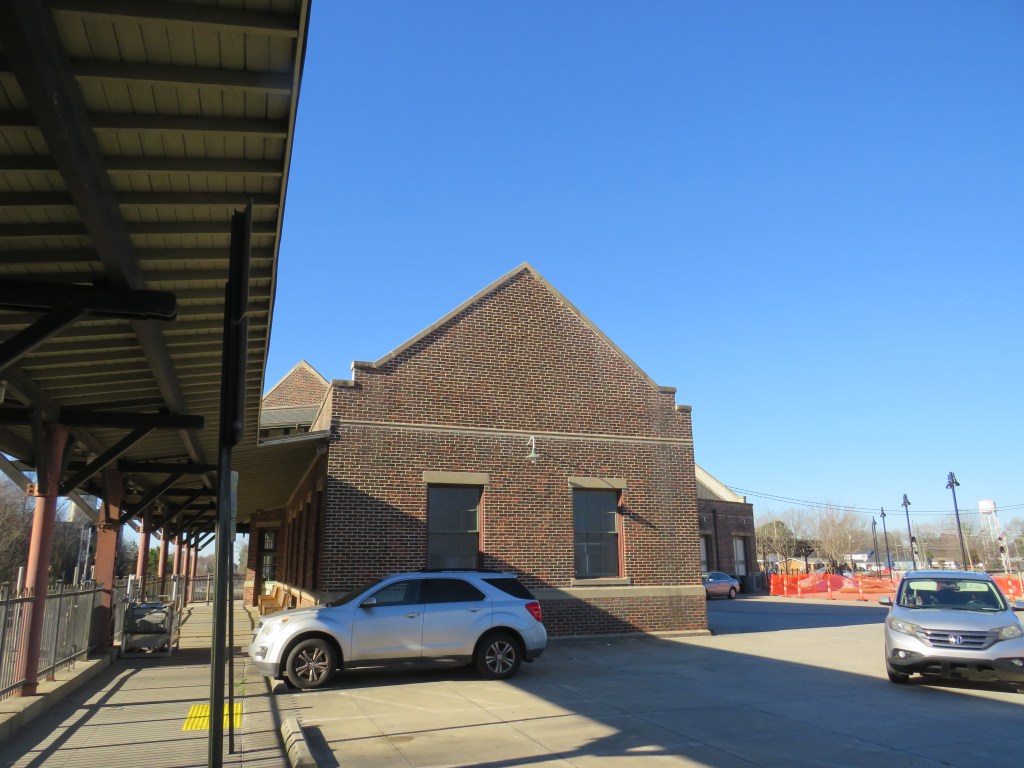
Welcome to Union Station in Selma, North Carolina.

Some of you are saying, “Wait a minute.  Union Station?  This is a small town.”

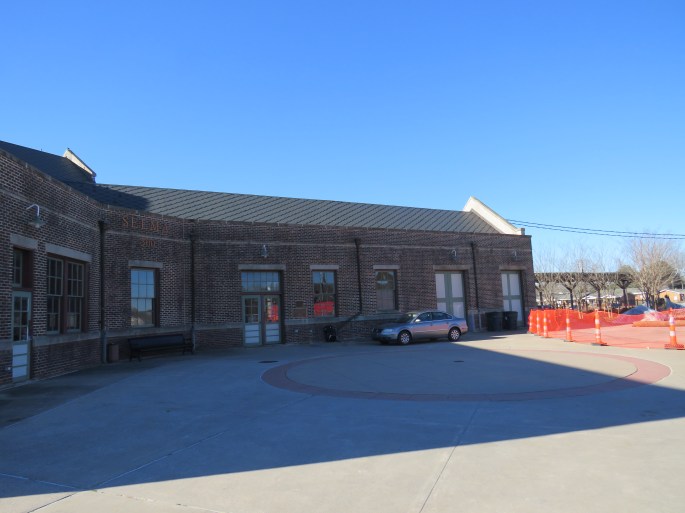
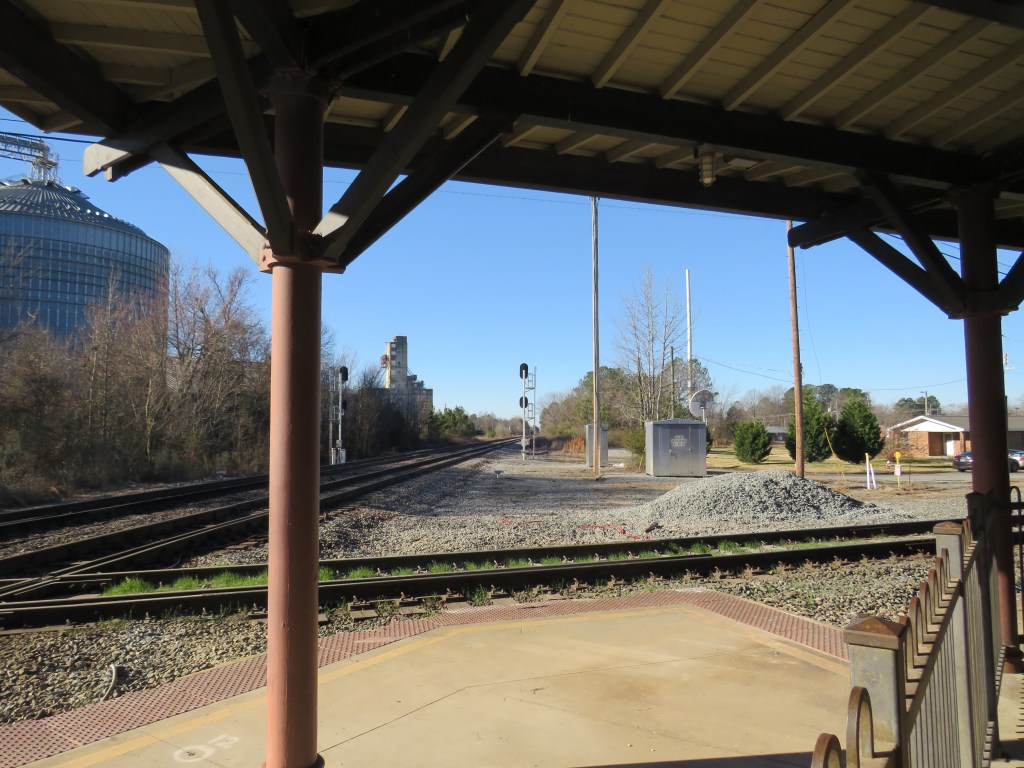
Selma is a small town, but it is a railroad town, and Union Station, built in 1924, is located at a cross track with a single track line crossing a double track line with a connecting track.  Did any famous people visit here?  If the name “Lady Bird Johnson”, the wife of Lyndon Johnson sounds familiar, she came here to campaign for her husband in 1964 after the Democratic National Convention to campaign for her husband.  During its heyday, this station saw much passenger traffic, but as railroad passenger service declined, service at this station ceased.

Some of you are saying, “And now this train station rots into ruin.”

It did, but a restoration of the station gave it new life.  It houses a museum that tells the story of the town of Selma and the rich history of the town as a major railroad town.

Some of you are saying, “Sadly, it is a museum, and it is no longer an active train station.”

You are wrong.  When the train station was restored, Amtrak restored passenger service to Selma with the Carolinian Route and the Palmetto Route serving the station.  An actual station attendant is in the ticket office on hour before the trains arrive.

No more excuses.  You now have a reason to visit the town of Selma, North Carolina.

The Historic Union Station of Selma, North Carolina is located at 500 Railroad Street, just minutes from Interstate 95 and U.S. Route 301.  The passenger waiting room that houses the museum is open daily from 10:00 a.m. to 5:00pm.  Parking is available on Railroad Street.  The museum and the old passenger platforms is completely wheelchair accessible.  Most important, admission is free.  Plus, you many be rewarded with a passing train.

The South Carolina Railroad Museum, Winnsboro, South Carolina

When people think about the U.S. state of South Carolina, they mainly think about the beaches.  You have Charleston and Fort Sumpter where the first shot of the American Civil War was fired.  You have the beach towns of Myrtle Beach and Hilton Head.  As many treasure the beaches, this state has a history with the railroad as well.

Welcome to the South Carolina Railroad Museum in Winnsboro, South Carolina.  Yes.  It has railroad cars on display.  As you arrive, the first thing you will notice is the train with steam locomotive number 44 on the front, freight cars, a baggage car, rail post office, and the ‘Norfolk’ parlor car.  There is also a caboose.  Yes, many railroad museums have that, but there is also a gallery with railroad artifacts and model trains.

I know.  Many railroad museums have all of this.  Oh, they have train rides.

You have all of this at a museum that is listed on the National Register of Historic Places.  Yes, it is a National Historic Site.  Therefore, if you think that this is just another railroad museum, you will discover that it is not.

The South Carolina Railroad Museum is located at 110 Industrial Park Road in Winnsboro, South Carolina just off of U.S. Route 321 and South Carolina Route 34.  It is open from Wednesday to Saturday from 10:00am to 4:00pm.  Trains rides take places from June to September plus on Easter, Halloween, and Christmas.  The museum is free, but there is a cost to ride the train.  Parking is on site.

Next time you think of South Carolina, do not just see the beach.  May your way to the South Carolina Railroad Museum, another state treasure.

Cornelia Depot Railroad Museum, Cornelia, Georgia

The United States of America began with thirteen states.  Among those states is Georgia, the largest state east of the Mississippi River.  The state is famous for some of its cities like Atlanta and Savannah, both of which are big railroad cities, but the state has small towns that were shaped by the railroad.  Among these towns is a town in the northern region of the state known as Cornelia.

Some of you are saying, “Here we go again.  It is another one of those small towns that has this old train station that just sits there and it not used anymore, or it has a tiny little museum to let everyone know that trains came to the station.  This is just what these small train stations are.  They are nothing special.  I will not waste my time visiting here.”

Ladies and Gentlemen, welcome to the town of Cornelia, Georgia, the home of the Cornelia Depot Railroad Museum.  Be advised.  If you enjoy boring typical railroad station museums that do not have much to see or have any history to them, then this museum is not for you.

So what is special about the Cornelia Depot Railroad Museum?  When the town was established as a settlement in 1860 and became a town in 1865, there was no railroad here.  The railroad came to the town in 1872 bringing passenger and freight service to the town.  In 1882, another railroad line was built that took passengers to the Tallulah Falls, and it became known as the Tallulah Railway as it passed through the Tallulah Gorge in the northern region of the state.  The town grew around the two railroads.  Sadly, the Tallulah Railway ceased service after World War II, but the original line that brought service to the town remained, and it remains in service today under ownership of the Norfolk Southern Railway.

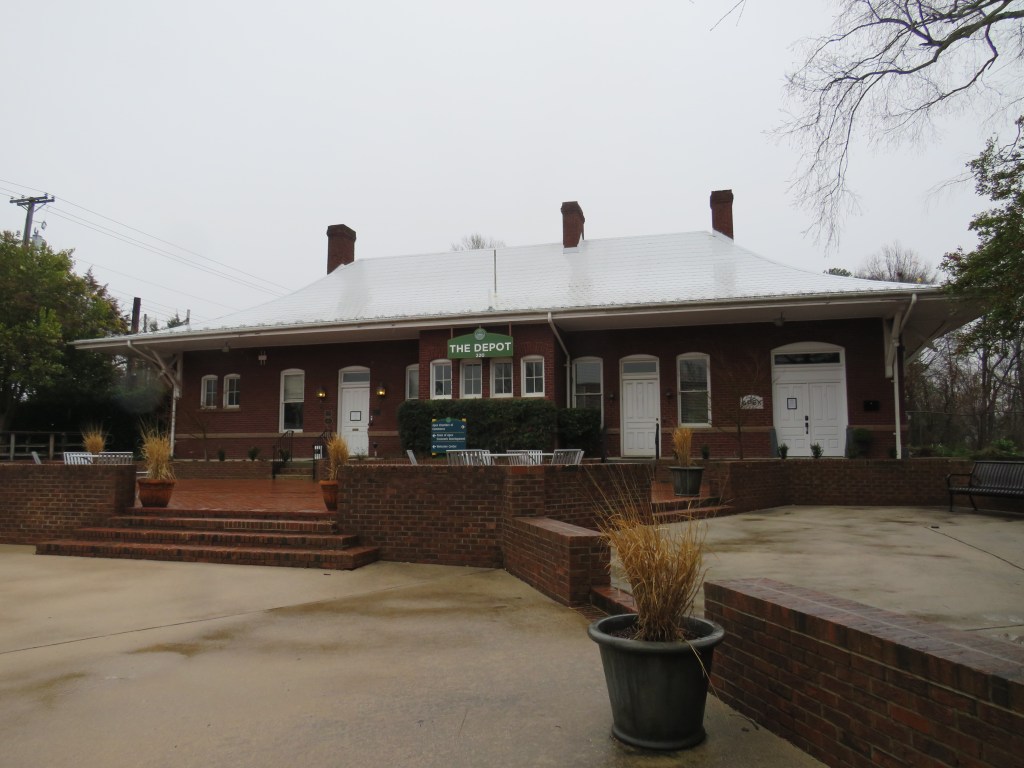
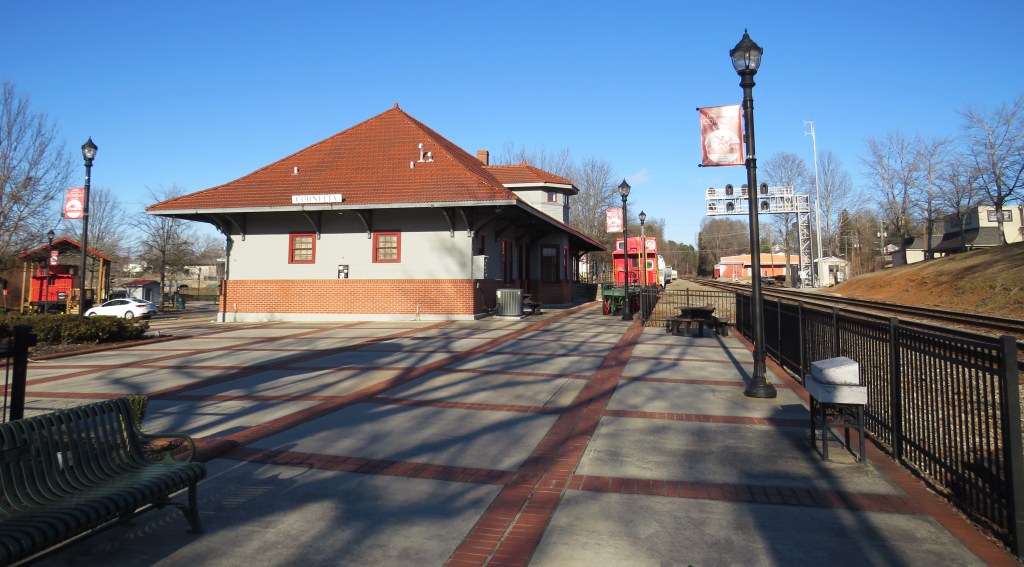
Today, the train station is no longer active but now houses the museum.  As you arrive, the first thing you will see is a big red apple on an eight foot high pedestal.

Some of you are saying, “Well, it is an apple on a pedestal.  There is nothing special about it.”

Oh, there is something special about this apple.  The town of Cornelia is known as ‘The Home of the Big Red Apple’.  Where does this name come from?  The town is the center of a region where apples are grown, but that is only part of the story.  The apple itself was designed in Winchester, Virginia.  It was brought to the town by way of the Southern Railway who donated the Big Red Apple to the town.

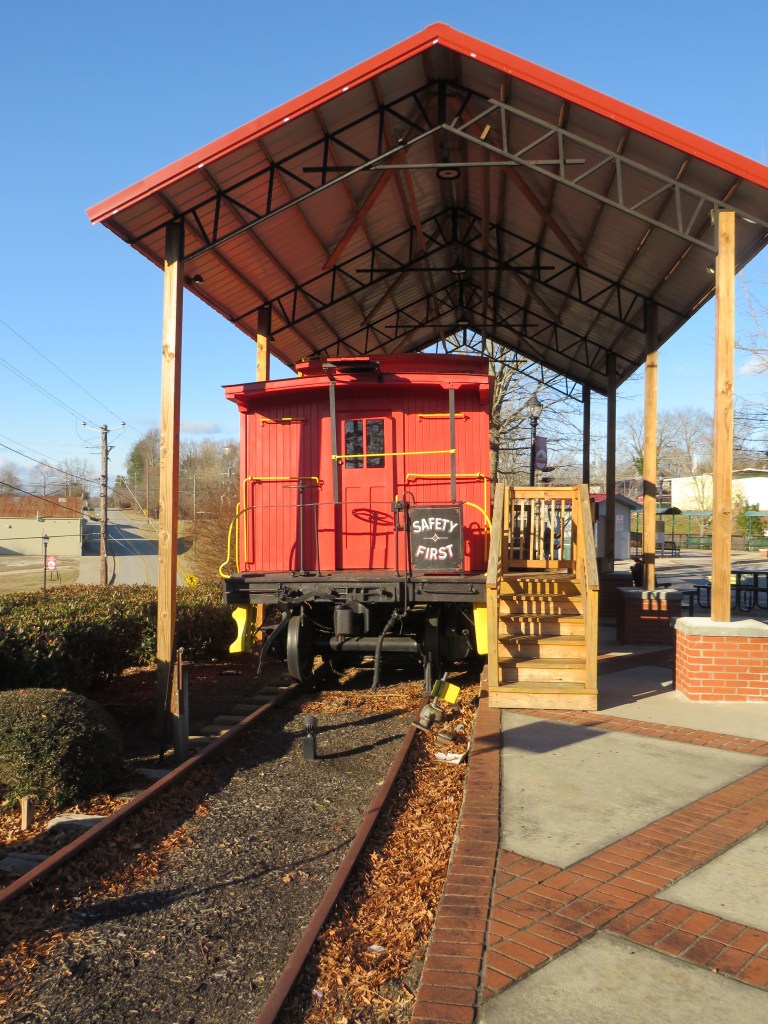
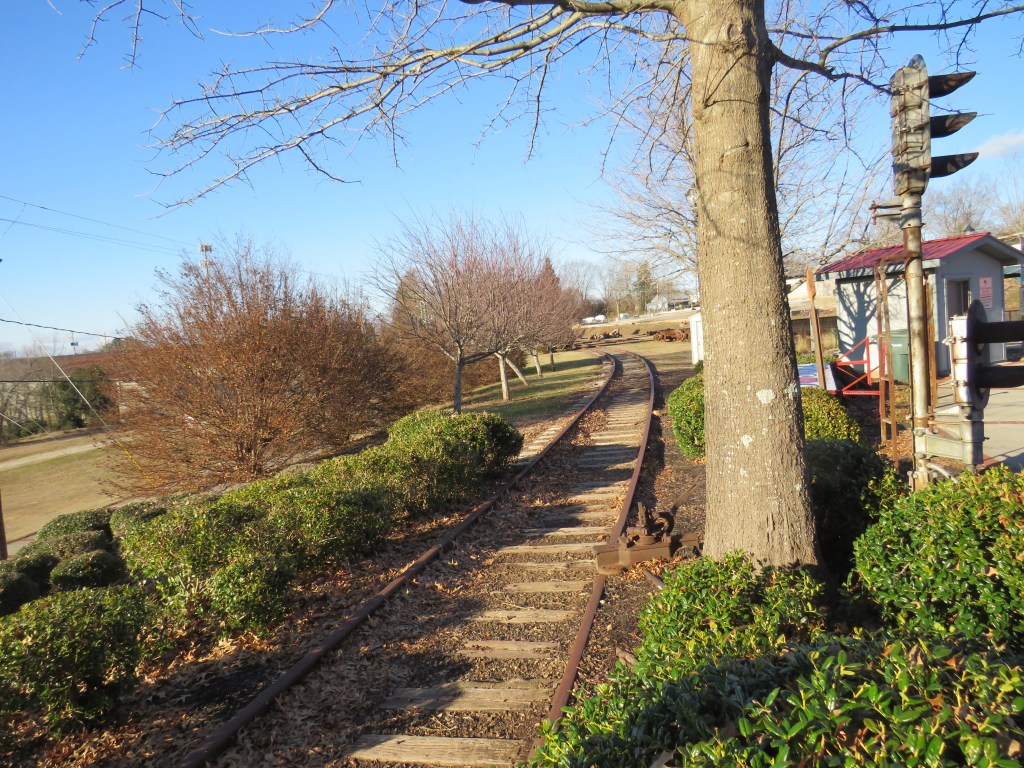
The next thing you will see is a red caboose.  Well, there are two red cabooses, but this one is resting on a track under an overhang.  What is special about this caboose?  It has Tallulah Falls one the side of it.  The caboose is on the old railroad bed of the Tallulah Railway.  A small monument was erected by the caboose showing the route of the Tallulah Railway all the way to Franklin, North Carolina.  The second caboose sits next to the main railroad line.

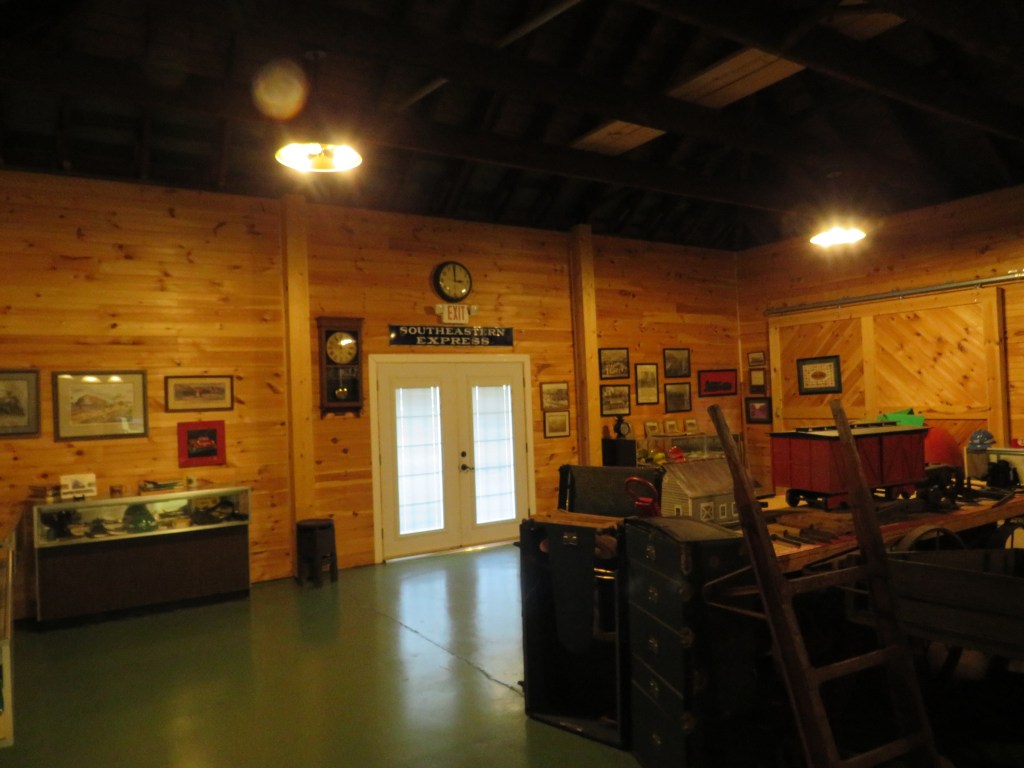
Enough about seeing the outside.  It is time to go into the train depot itself.  You enter the museum and look ahead at the ticket window where the ticket master sat and looked for trains and sold tickets to passengers.  As you look around, you notice that on October 20, 1992, a famous visitor visited the town.  He said to the people, “You made my day.”  Who was this visitor?  His name was George Herbert Walker Bush, the President of the United States of America who came to Cornelia by train.

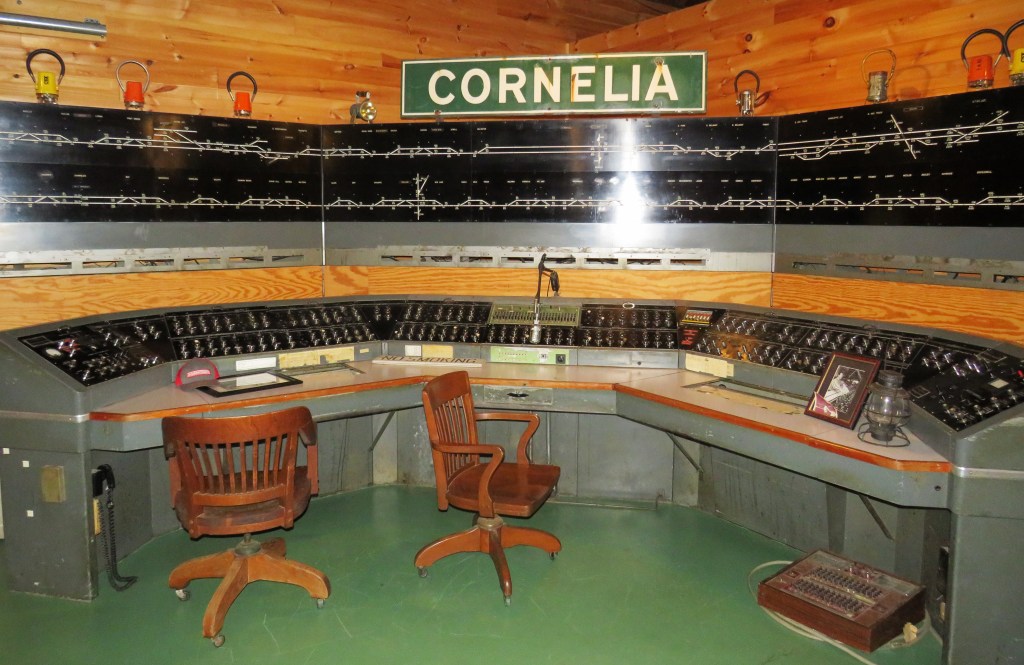
The passenger waiting room and the freight room are full of artifacts from the Southern Railway and the Tallulah Railway.  Among the artifacts is the original switchboard used to switch tracks in the region.

So you think that the Cornelia Depot Railroad Museum is just another small town museum?  You will be surprised when you visit here.

The Cornelia Depot Railroad Museum is located in downtown Cornelia at 102 Grant Street just minutes from U.S. Routes 23 and 441.  Parking is located at the museum, and the museum is wheelchair accessible.  Most important is that admission is free, but they gladly accept donations.  You can get more information about the museum, the museum hours, the history of the town, the other attractions in the region at https://www.corneliageorgia.org/living-visiting/places-of-interest/cornelia-depot-railroad-museum/.

If you are ever in the northern region of the state of Georgia, you will sure want to have Cornelia, Georgia on your mind.  You will be glad you visited.  Maybe get some apple pie or apple juice at ‘The Home of the Big Red Apple’.

The Old Train Station

In the glory days of the passenger railroad, you had the grand train stations in the big cities, and you had the train station in the small town.  As fewer people took the train, the train made fewer stops.  Many of the small towns were served by the passenger train.  In those small towns, the train stations were abandoned.  Some were demolished, but some were spared.  In some towns, the train no longer goes there.

You visit the small town, and you see the old train station.  It is a visitor center or museum or a business.  Some that are within major metropolitan areas are used as commuter train stations.  Some were kept in their place while some were relocated to be preserved.  Some that are next to an active rail line have had a fence between the depot and the tracks.  You have stations that have remained next to rail trails.  Regardless, you feel the need to see the train station.

As you walk around, it appears lonely.  As you look through the windows, you see the waiting room.  You can imagine the people sitting on the benches waiting for their train to come.  You look into what was the ticket office.  You imagine the ticket master selling tickets.  You see him collecting the mail to send to citizens of the town.  You see him sending a telegraph.  He is at the window watching for the trains.  You look into the freight room and imagine the freight being prepared to be put on the next train and the freight that had arrived to be sent somewhere in the region.  You walk out to the empty platform.  The tracks are currently empty but wait.  You imagine the passengers standing awaiting for their train to come.  The train comes, and the passengers board and deboard the train.  Their loved ones hug them and take their luggage to the car, or horse pending on the time period.  Then, you are back to the present as a train, an actual train comes and rolls by the station.  You stand, and you watch.

But you are at a station where the tracks are no longer there.  You see a rail trail, or you just see the old railroad bed.  You set your mind back in time, and you see the trains coming.  You watch each hiker and biker, and you think of them as a passenger on a train.

The old train station may still be used as a train station or not.  As you see the station, it will remind of how the railroad was a part of the town and how it made many towns what they are today.

The Cover Photo is Point of Rocks, Maryland.

The First Photo is Apex, North Carolina.

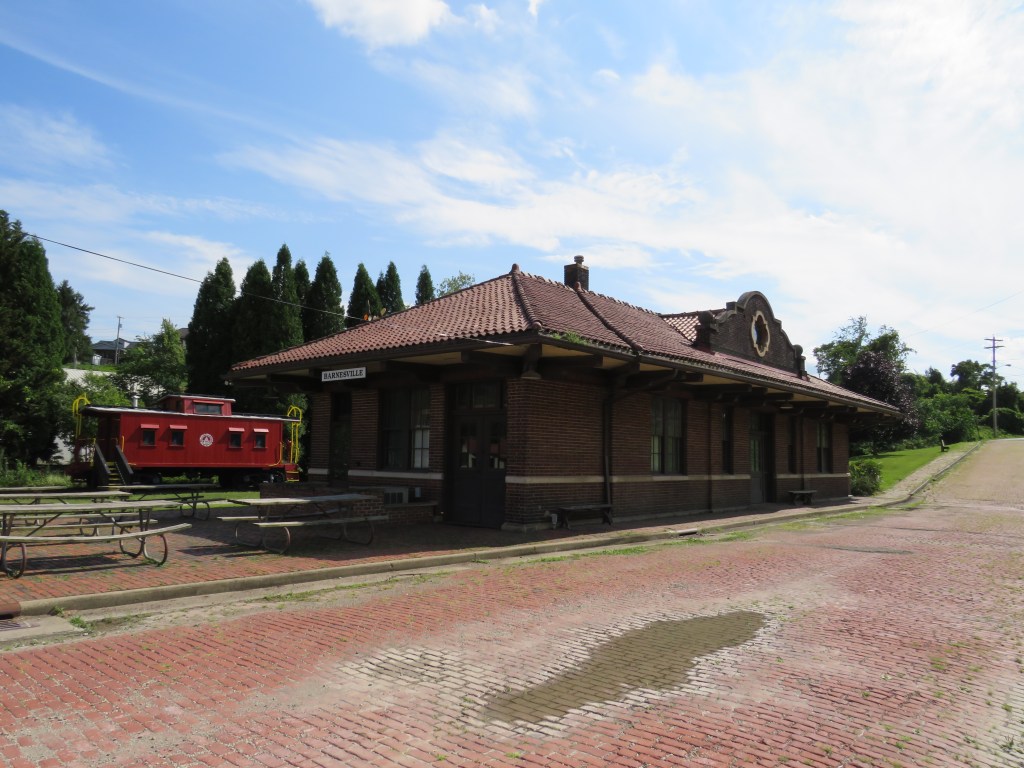
The Second Photo is Barnesville, Ohio.

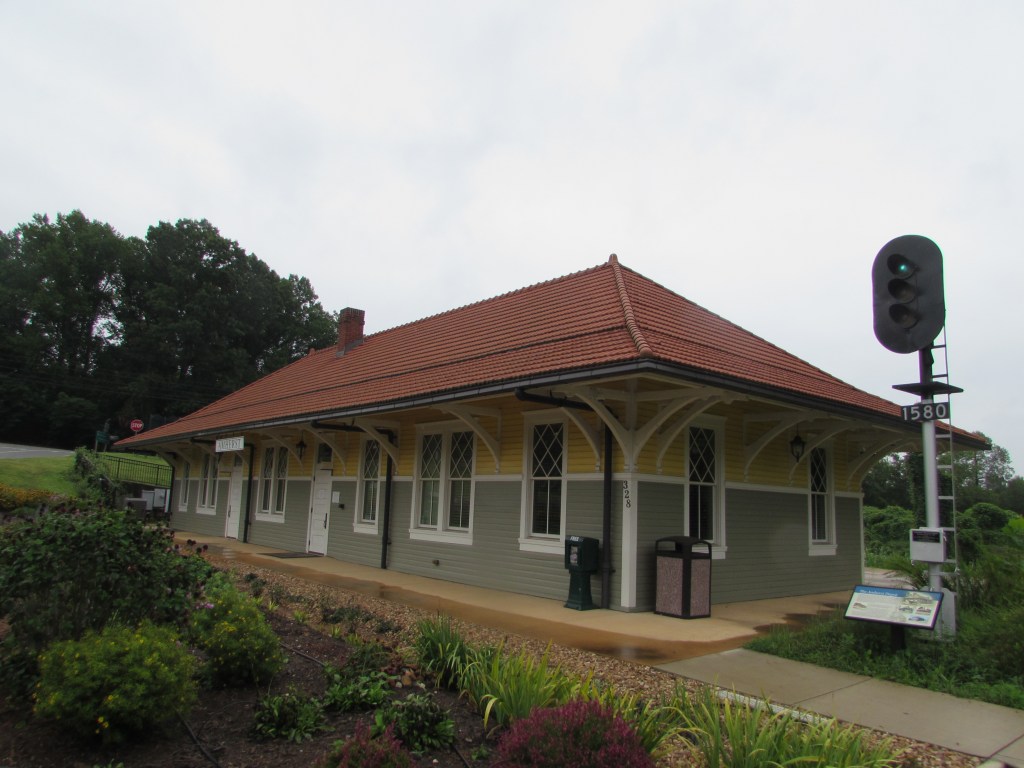
The Third Photo is Amherst, Virginia.

The Fourth Photo is Marlinton, West Virginia.

The Fifth Photo is Quakerstown, Pennsylvania.

The Final Photo is Brunswick, Maryland.