

Many people who live in the Washington D.C. Metropolitan Area are very familiar with a place called Fort Belvoir. It is a United States Army military base located in the U.S. state of Virginia on the Potomac River near Mount Vernon, the home of George Washington, the first President of the United States of America. The military base was built on the site of the Belvoir Mansion. (The mansion was destroyed many years ago.) The base is not open to public visitors and is under very tight security, but U.S. Route 1 goes through the base as it leaves Washington D.C. and Alexandria, Virginia and continues south into Virginia and the U.S. states south. As you pass by Fort Belvoir, you pass by a place that employs many people who work for the United States Army.
Some of you are saying, “That is nice. I have never heard of Fort Belvoir. I am a great supporter of the United States Armed Forces. Sadly, this is not a railroad site. Therefore, there is nothing really special about this base.”
Ladies and gentlemen, you are about to learn something about a Washington D.C. area United States Military base.

As mentioned, Fort Belvoir is a base for the United States Army in the southern region of the Washington-Baltimore Metropolitan Area. It was erected on the site of an old mansion of the same name in a region where there were many plantations of which many are still standing. (Nearby Woodlawn and Mount Vernon are two of those mansions.) As you drive along U.S. Route 1, you see the fences that protect the base from unwanted visitors. What you will not notice is anything that has anything to do with the railroad. Most people are unaware of the fact that the railroad was a big part of Fort Belvoir.
Before it was called Fort Belvoir, it was called Camp A. A. Humphreys named after General Andrew Atkinson Humphreys. The camp was erected in 1918 to train soldiers to fight during World War I. The soldiers were taught to build roads, bridges, trenches, and… railroads. Twenty miles of a narrow gauge railroad was built in the camp. Sadly, it was a short lived railroad as the tracks were taken up in 1920, and the locomotives were bought by mining companies who used them to transport coal around the mines. (It is unknown if any of these locomotives exist today.)
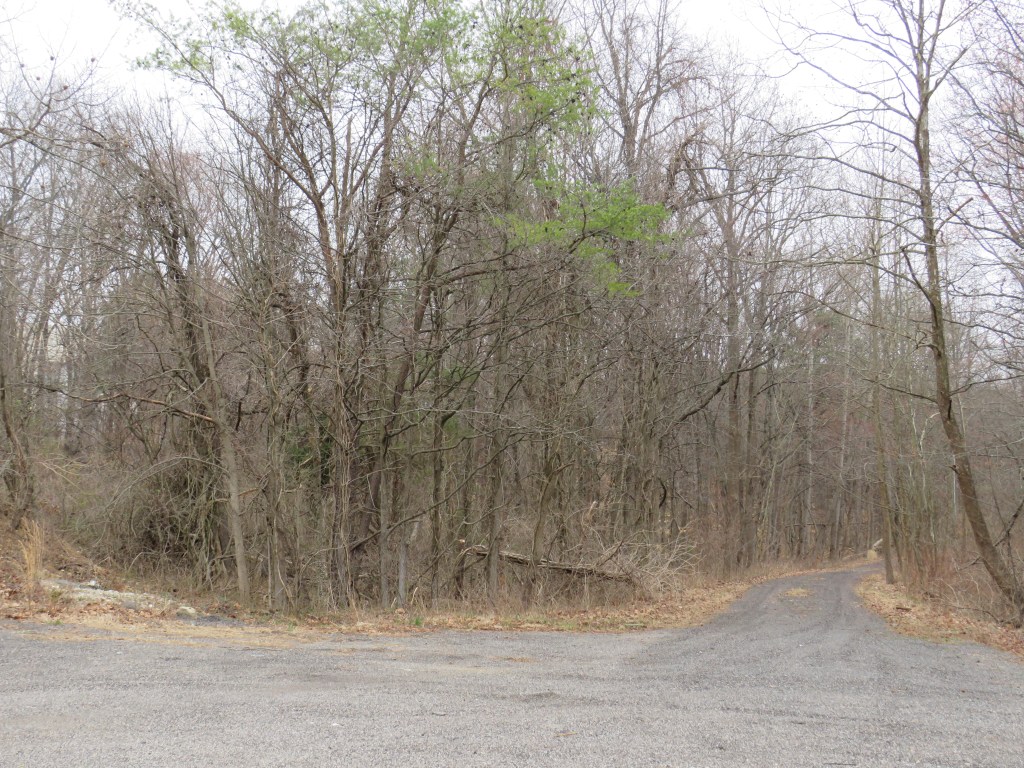
The base was renamed Fort Belvoir in the 1930’s. About four miles west of the base was a major railroad line that was owned by the Richmond, Fredericksburg, and Potomac Railroad. The Fort Belvoir Military Railroad was born connecting the base to a major railroad line. (The main railroad line is owned by CSX Transportation today.) The railroad supplied the base with supplies and even had passenger service. Passenger service ceased after the Korean War, but the railroad continued to run until 1993.
Today, the railroad bridge that crossed U.S. Route 1 is long gone and replaced with a street bridge. Although much of the old railroad bed remains, it is either part of the military base or is on private property and is not open for the public to be walked upon, but sections of the old railroad bed called be viewed from the old Backlick Road and from Virginia Route 286. (Please note that much of the original Backlick Road has been rerouted or dismantled by Virginia Route 286 and the interchange with Interstate 95.) One of the original bridges can be viewed from Backlick Road between U.S. Route 1 and Virginia Route 286. (It must be viewed from Backlick Road as it is behind a fence.) You can also drive under one of the original railroad bridges on Cinder Bed Road north of Backlick Road and Virginia Route 286.
The next time you are driving along U.S. Route 1 or along Interstate 95 and see signs for Fort Belvoir, do not think of it as another military base. Think of it as a military base with a railroad past.

 John Cowgill: Stories of the Railroad