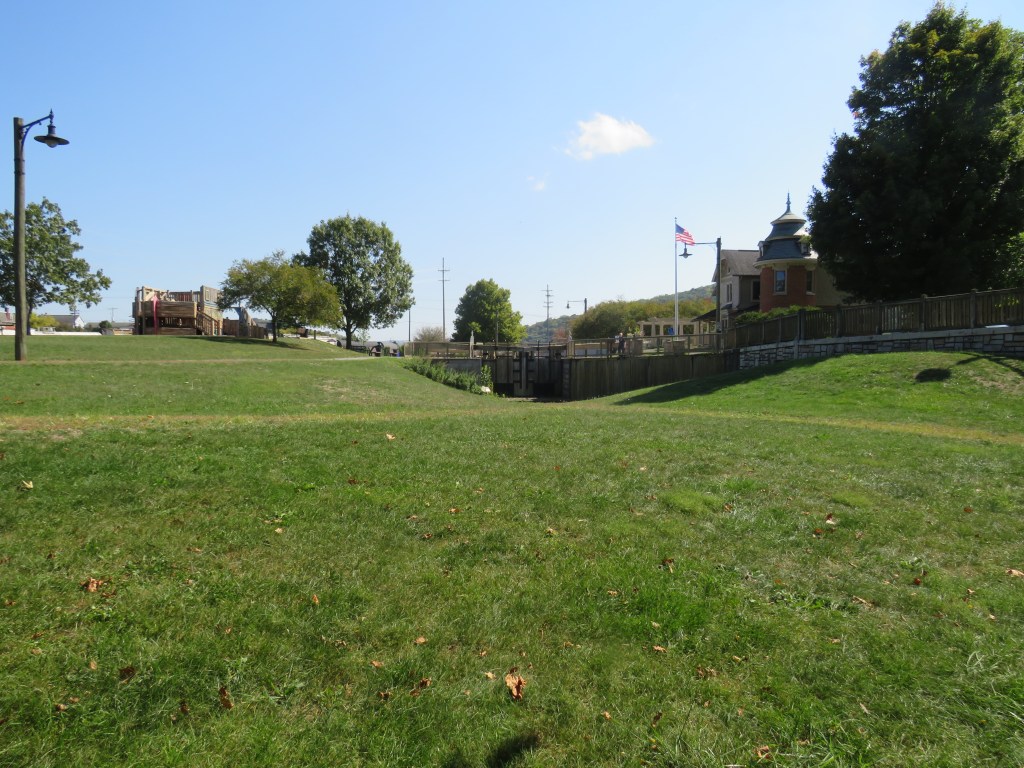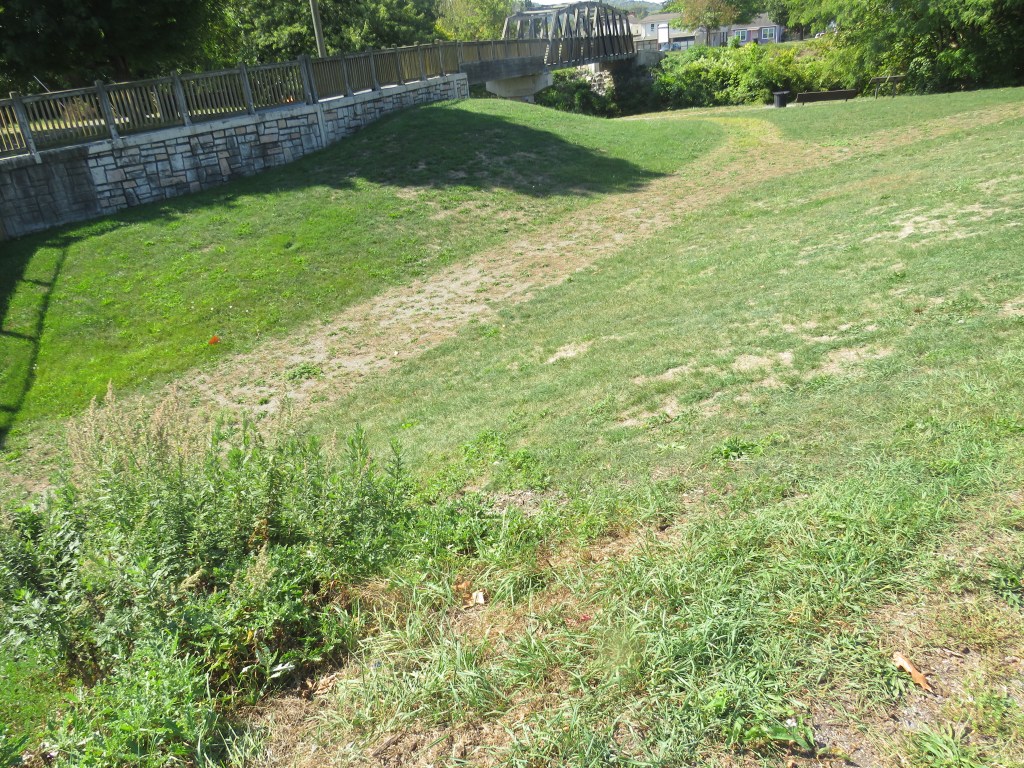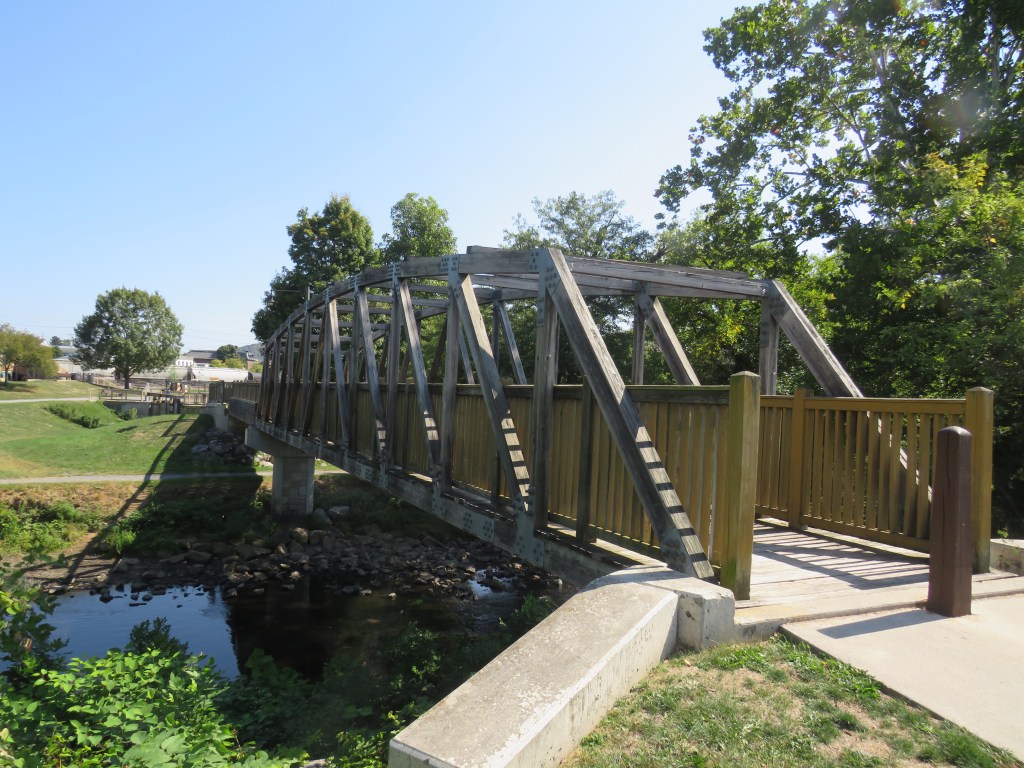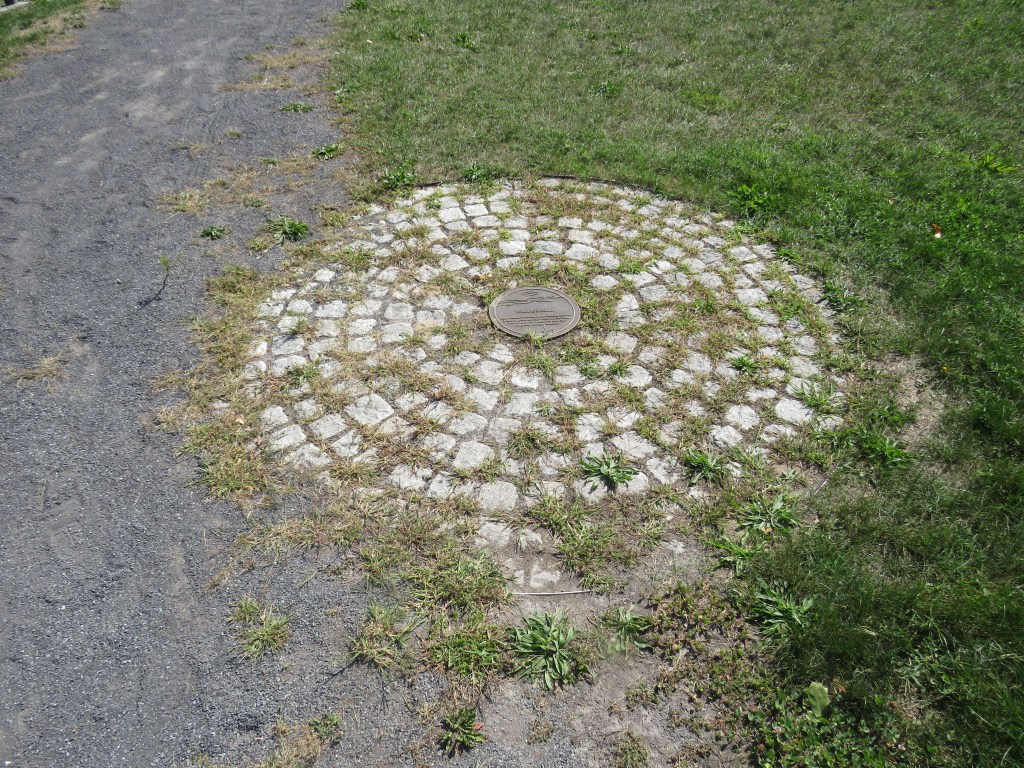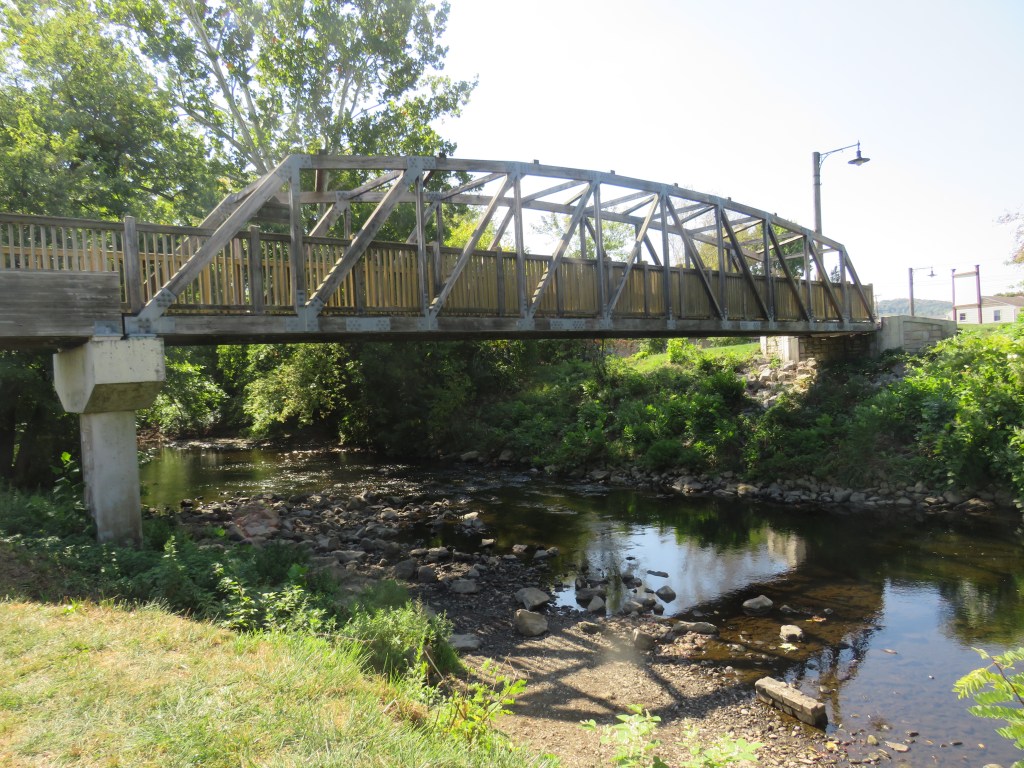
Canal Basin Park, Hollidaysburg, Pennsylvania

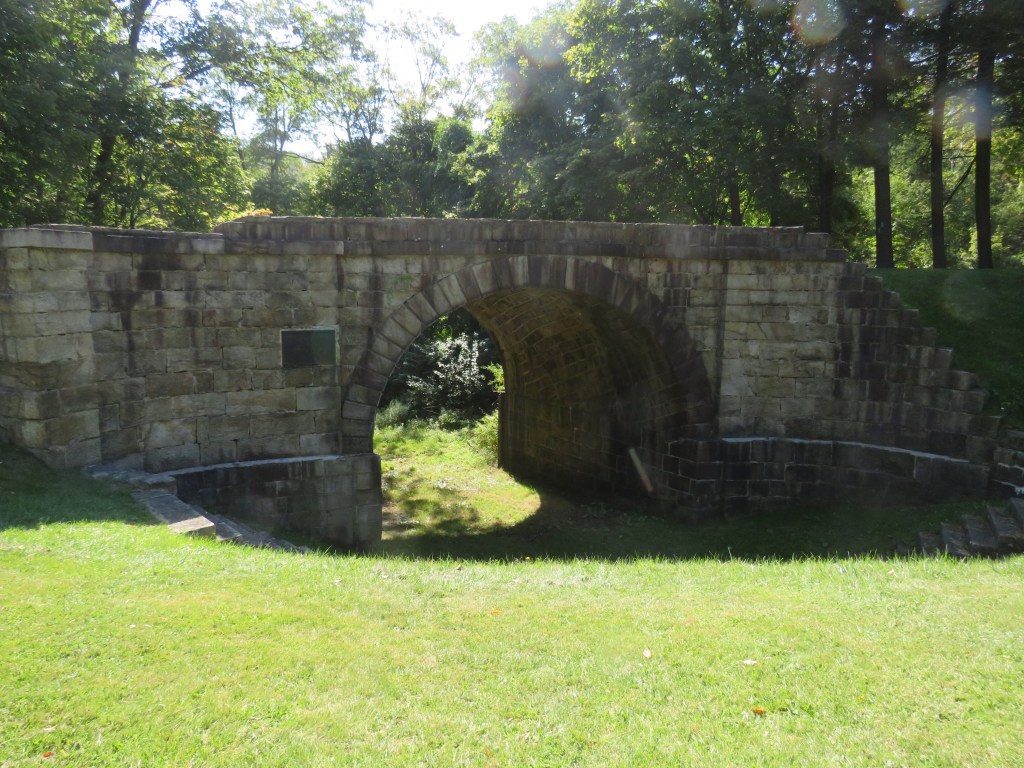
The town of Hollidaysburg in the U.S. state of Pennsylvania is a suburb of Altoona, the city famous for the World Famous Horseshoe Curve.  Hollidaysburg is also the home of the Everett Railroad.  Not far from the Everett Railroad is a park called the Canal Basin Park.  What is the Canal Basin Park?

Some of you are saying, “Well, it is a park designed around a canal basin.”

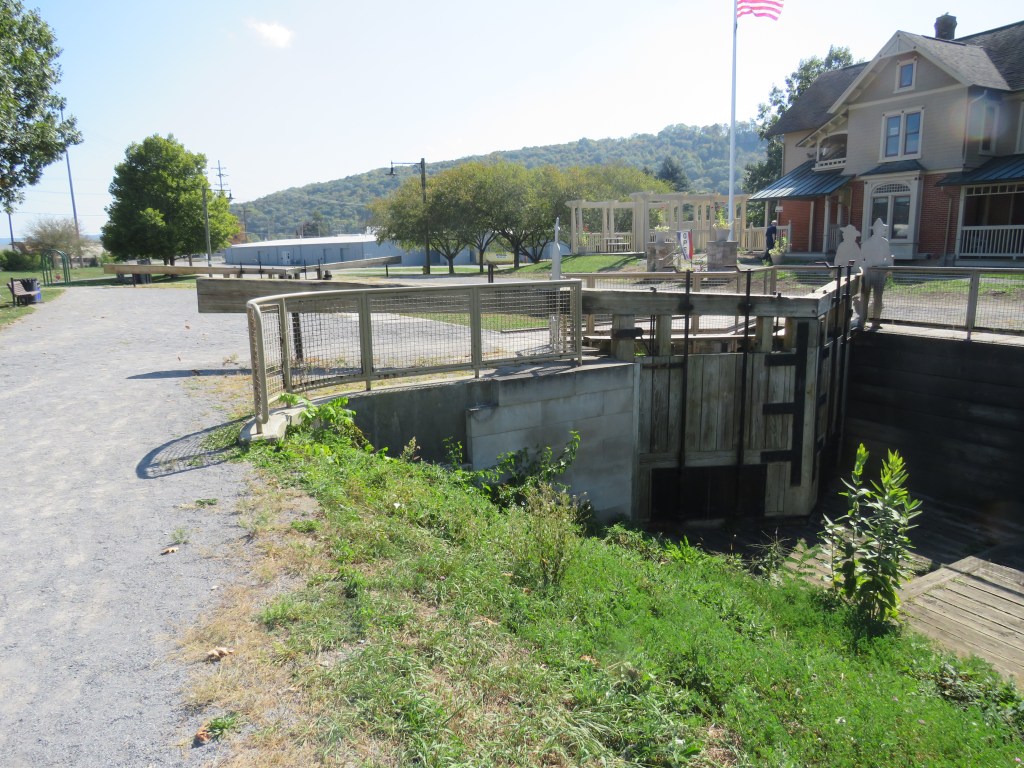
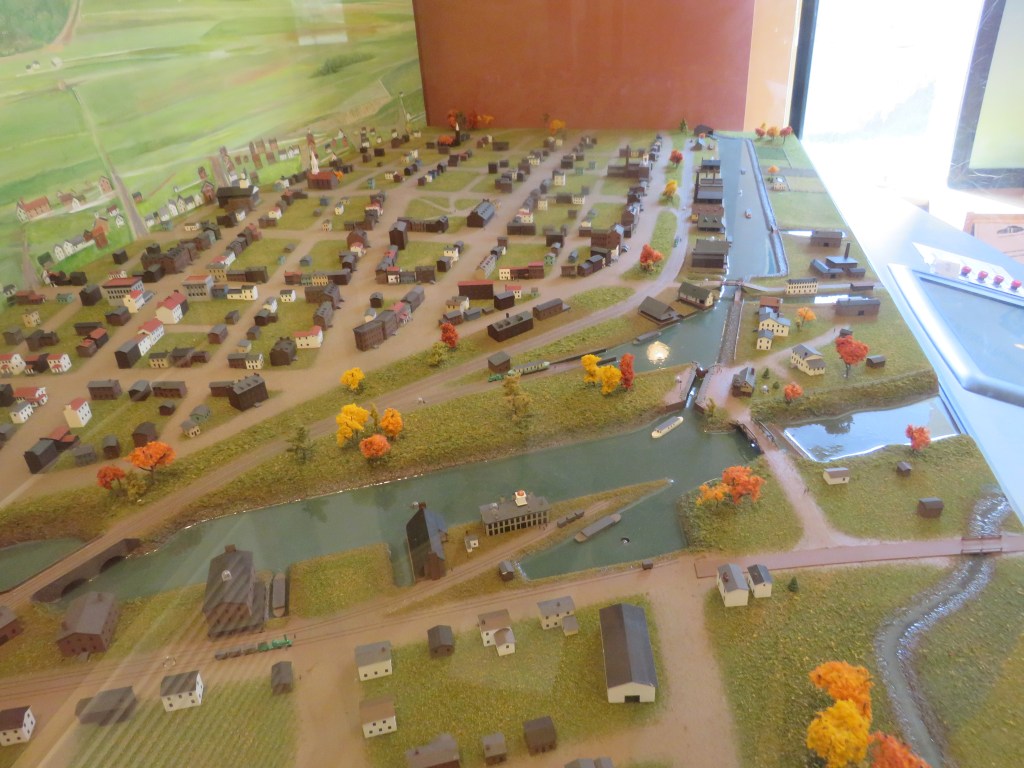
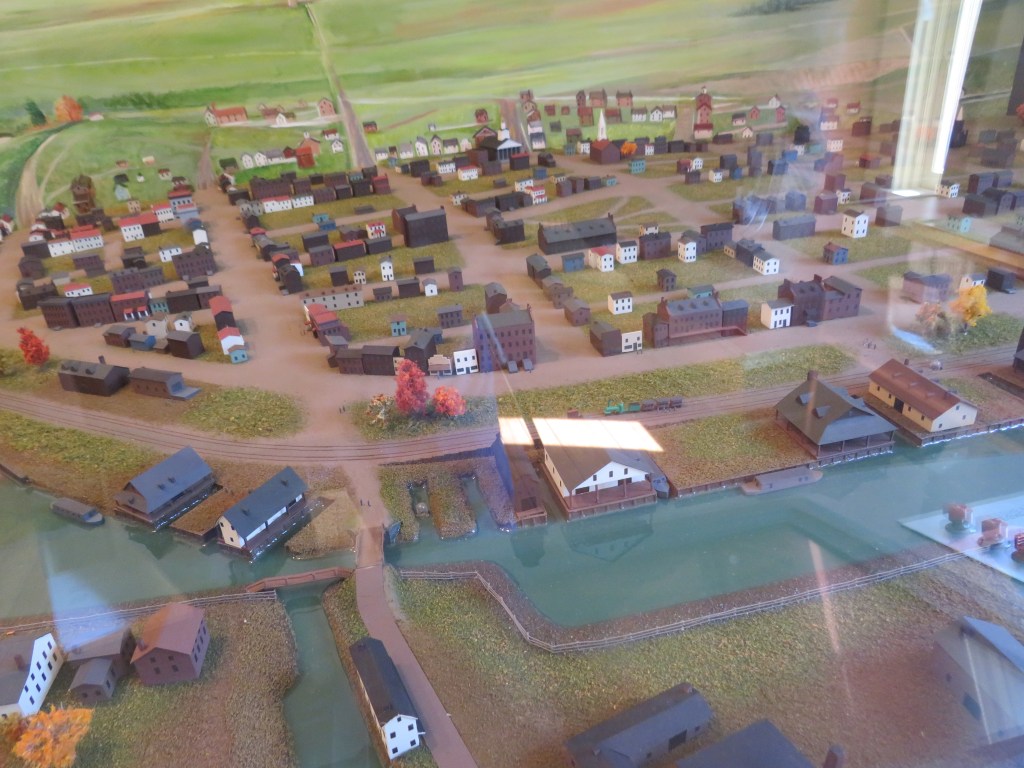
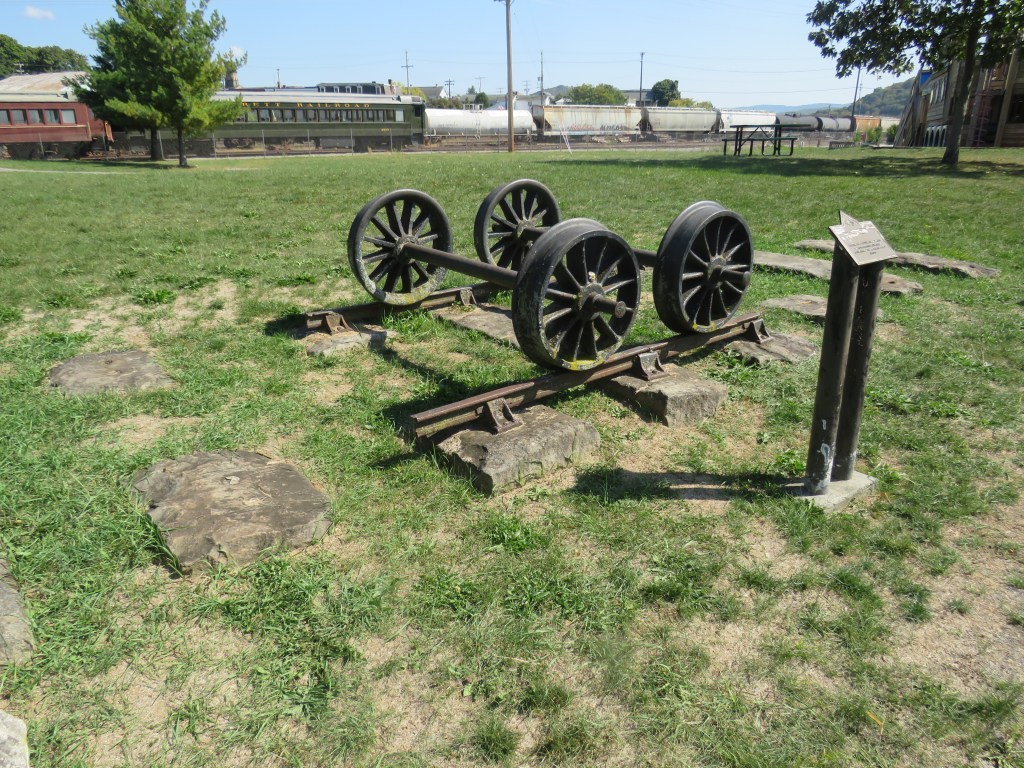
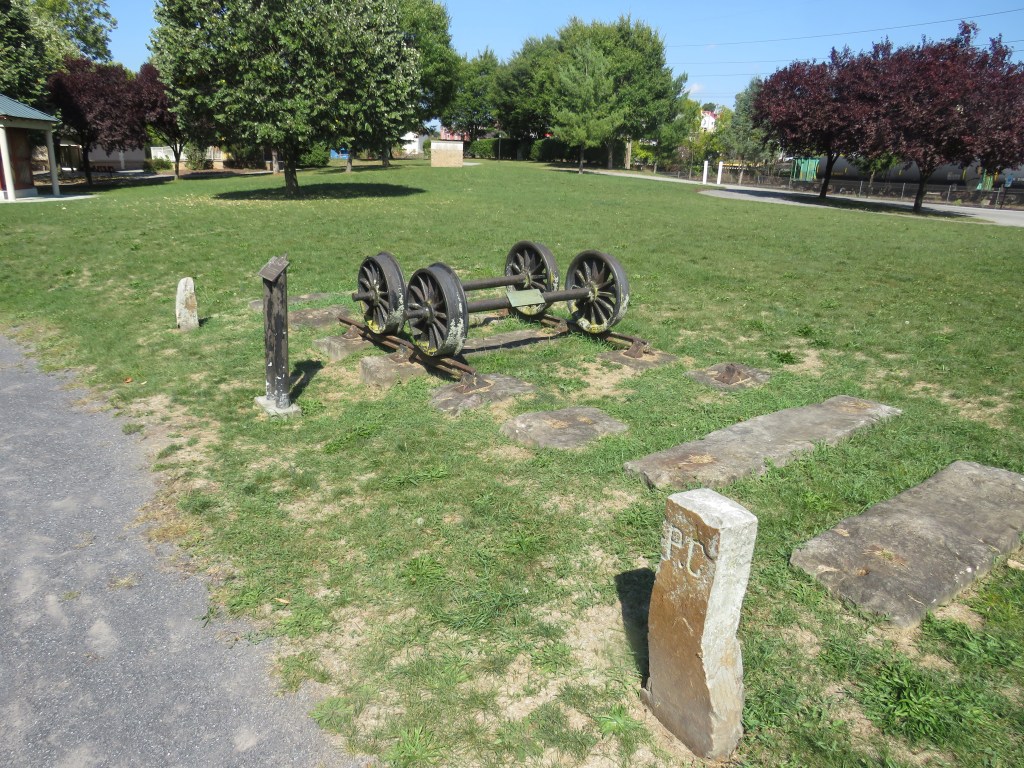
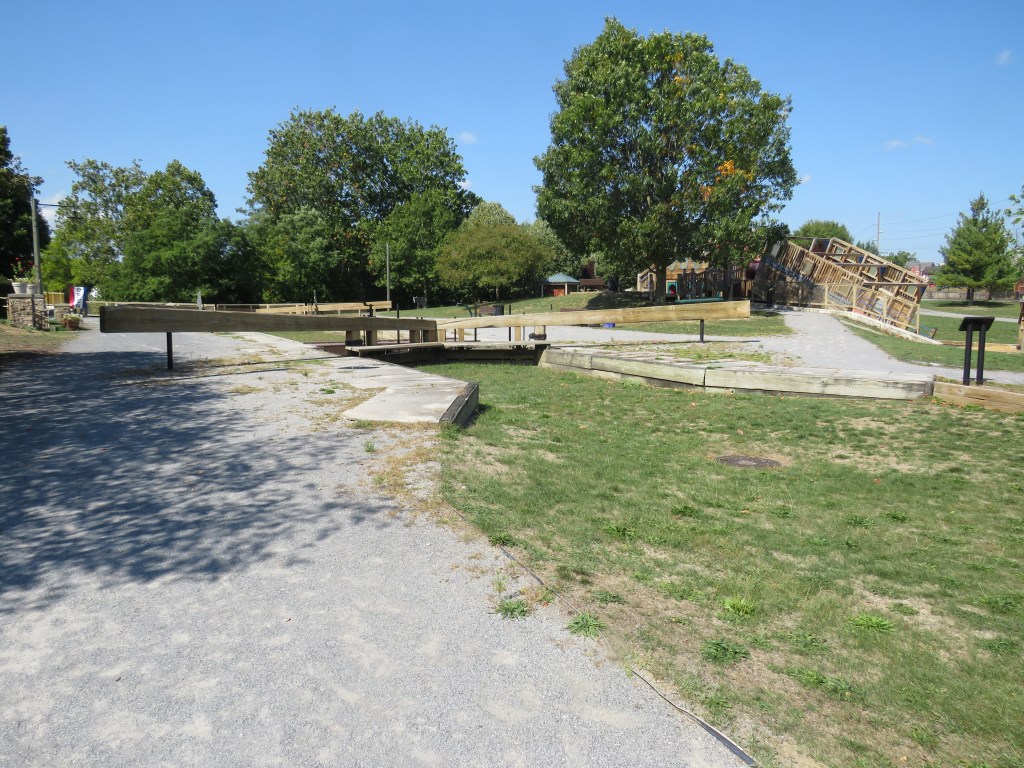
You are correct.  Well, you are mostly correct.  The park was designed around an old canal basin of the Pennsylvania Main Line Canal.  Canal basins was an area where boats would wait until the canal channel was cleared, and then they continued on.  The canal, like many of the old canals, was destroyed by flooding.  Today, the Canal Basin Park consists of the remains of the basin, a replica canal lock, and a museum housed in an old Victorian home.  The Canal Basin Park is a site that preserves American history.

Some of you are saying, “This is great.  They take an old canal basin and build a park around it.  There is a problem.  This is not a railroad site.  Therefore, you will not see me here.”

So why visit the Canal Basin Park in Hollidaysburg, Pennsylvania?

The Pennsylvania Main Line Canal was one of many canals built to allow boats to bring goods from the ocean port cities to the inland cities and towns.  Each canal was built with a channel wide enough for a boat that was pulled by either mules or horses through the channels and the canal locks which allowed the boats to climb different elevations along the landscape.  The Pennsylvania Main Line Canal was built connect the cities of Philadelphia and Pittsburgh.  Along these canals, small towns were erected.

Then they came to the Allegheny Mountains.  How in the world are you going to build a canal over the high mountain range.

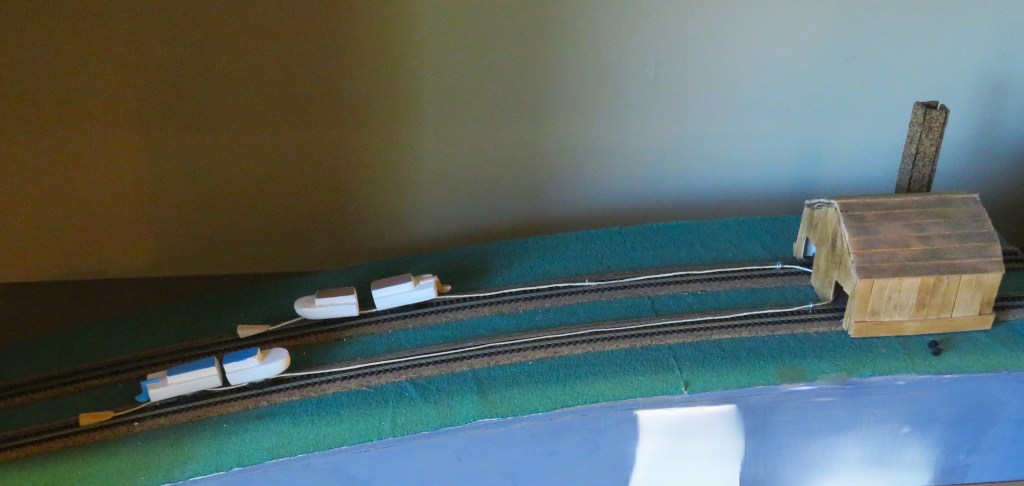
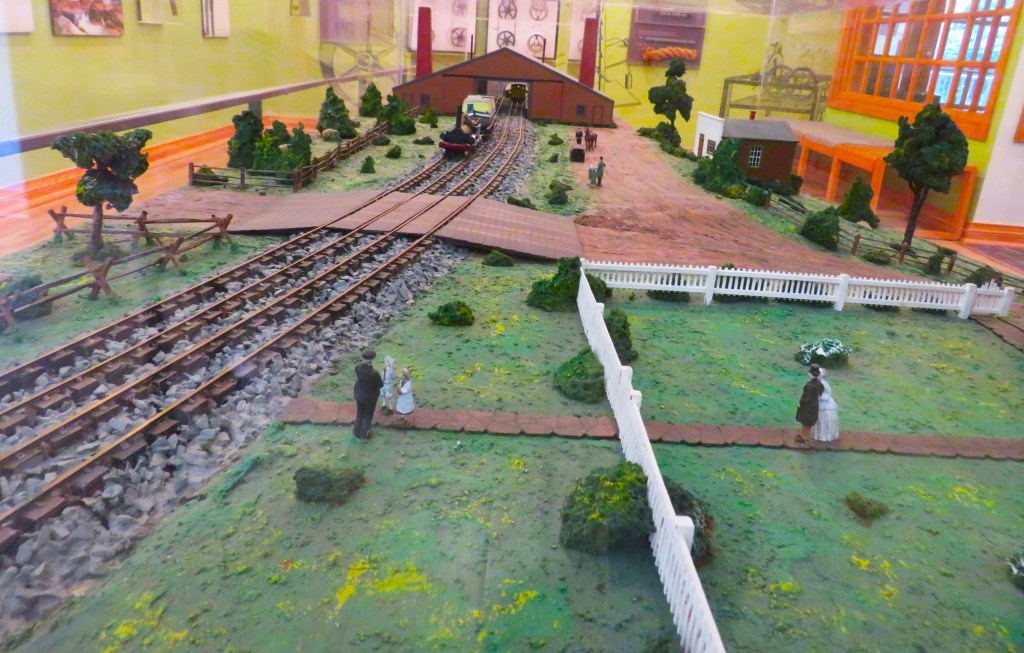
This brings us to Canal Basin Park.  Yes, it was a basin where boats waited.  It was not for the channel to be clear of boat.  It was for the boats to be placed on a flatcar on a train.  It was here in Hollidaysburg where the canal boats were put on the Allegheny Portage Railroad.  The Pennsylvania Main Line Canal used the Allegheny Portage Railroad to carry the canal cars over the mountain range and then placed back into another canal basin where it continued along its way.

You see.  You think that Canal Basin Park is about boats.  It is, but it is boats combined with the railroad.

Canal Basin Park is located at 101 Canal Street in Hollidaysburg, Pennsylvania.  It is a short drive from U.S. Route 22 and the Everett Railroad.  The park is open from sunrise to sunset.

Next time you are in Hollidaysburg and riding the Everett Railroad, take a little time to visit Canal Basin Park.  The boats and the railroad are long gone, but you can see a place where American history took place.

The Allegheny Portage Railroad National Historic Site, Gallitzin, Pennsylvania

The Declaration of Independence has been signed, and the United States of America is a new nation.  People come on ships across the Atlantic Ocean to arrive in the port cities to live in the new nation, but when they arrive, some stay along the Atlantic Coast, but some decide to go farther inland.  They first travel by the famous horse and wagon, but then came the canals allowing boats to go farther inland.  Then came the railroad.  It was a race between the railroad and the canals to bring people west from the coast.  The kept building west… but then they came to the Allegheny Mountains.  Part of the Appalachian Mountain Range, the Allegheny Mountains became a big barrier to transportation.  The railroad and the canals did have some success building tunnels and curves.  In the U.S. state of Pennsylvania, they came up with a unique idea, and there was nothing like it anywhere in the world.

The Allegheny Portage Railroad was born.  What was the Allegheny Portage Railroad?

The Allegheny Portage Railroad was not the first railroad in the United States of America, but it was the first railroad to do something that the Baltimore and Ohio Railroad and the Pennsylvania Railroad were not the first to do.  It was the first railroad to cross the Allegheny Mountains.  Yes, it was the very first railroad to take goods from the ports of the Atlantic Ocean to the inland of the United States.

Some of you are saying, “Wait a minute.  We have heard about the Baltimore and Ohio Railroad.  We have heard of the Pennsylvania Railroad.  We have heard of the New York Central System Railroad.  We have never heard of the Allegheny Portage Railroad.”

The Allegheny Portage Railroad had a unique purpose.  What was its purpose?  The Allegheny Portage Railroad was actually part of a canal system.

Some of you are saying, “Wait a minute.  It is called the Allegheny Portage Railroad.  How can it be part of a canal?”

That is a great question.  As mentioned, it was a unique railroad.  How?  Unlike the major railroads that focused on getting passengers and goods from the coast to the midland, the Allegheny Portage Railroad had a special kind of cargo.

The Allegheny Portage Railroad was only thirty-six miles long.  It began in the canal town of Hollidaysburg on the east side of the mountains and went up a steep grade over the ridge and then continued on the west side of the mountain range to the city of Johnstown.

Some of you are saying, “Well, that is not very far.  The big railroads went from Boston, Massachusetts, New York City, New York, Philadelphia, Pennsylvania and Baltimore, Maryland to Buffalo, New York, Pittsburgh, Pennsylvania, and Cleveland, Ohio and Columbus, Ohio.”

That is true, but, in 1834, the Allegheny Portage Railroad was a unique railroad.  There were many canals still in service.  The state of Pennsylvania had its own canal system that would transport goods from Philadelphia to Pittsburgh.  The canals were operable on hills and flat land, but they were not operable over mountain ranges.

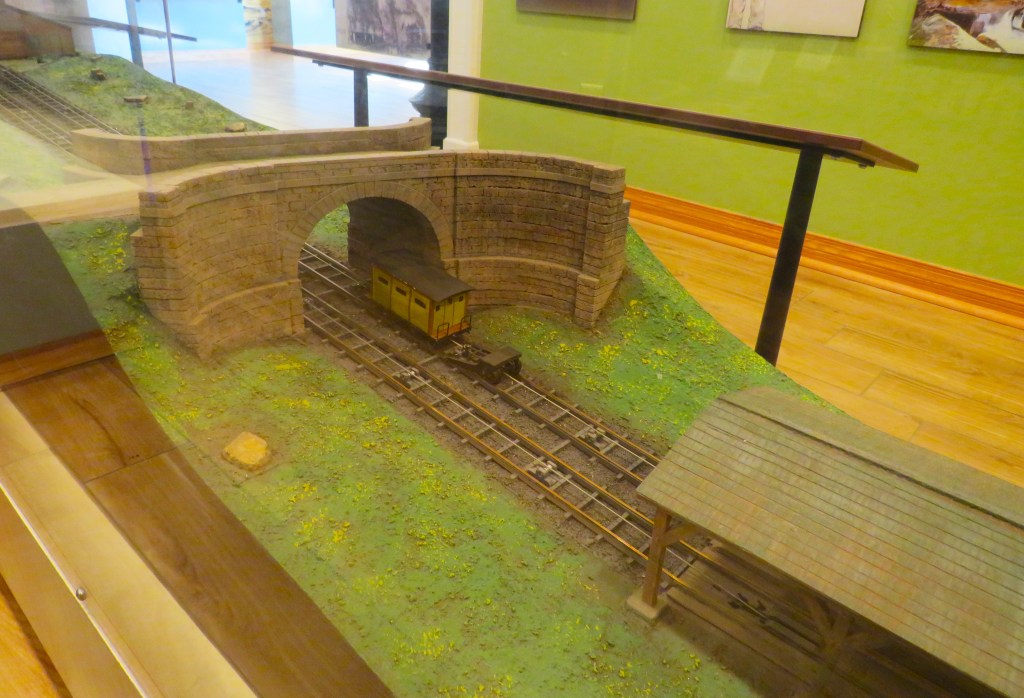
A canal boat would arrive in Hollidaysburg.  From there, it was loaded onto the Allegheny Portage Railroad.  The train, which consisted of two or three flatbed railroad cars, were they pulled along the rails by a pulley system that was built at the top on the mountain ridge.  It was then lowered on the other side of the mountain ridge by the same pulley system to Johnstown.  In Johnstown, the boats were taken off of the railroad cars and put into a canal, and the boats continued to Pittsburgh and points west.  For canal boats going from Pittsburgh to Philadelphia, the reverse process was done.

Sadly, the Allegheny Railroad only ran from 1834 to 1854.

Some of you are saying, “I bet that the railroad is long gone to history and that the railroad bed is long gone and overgrown.”

Nope.

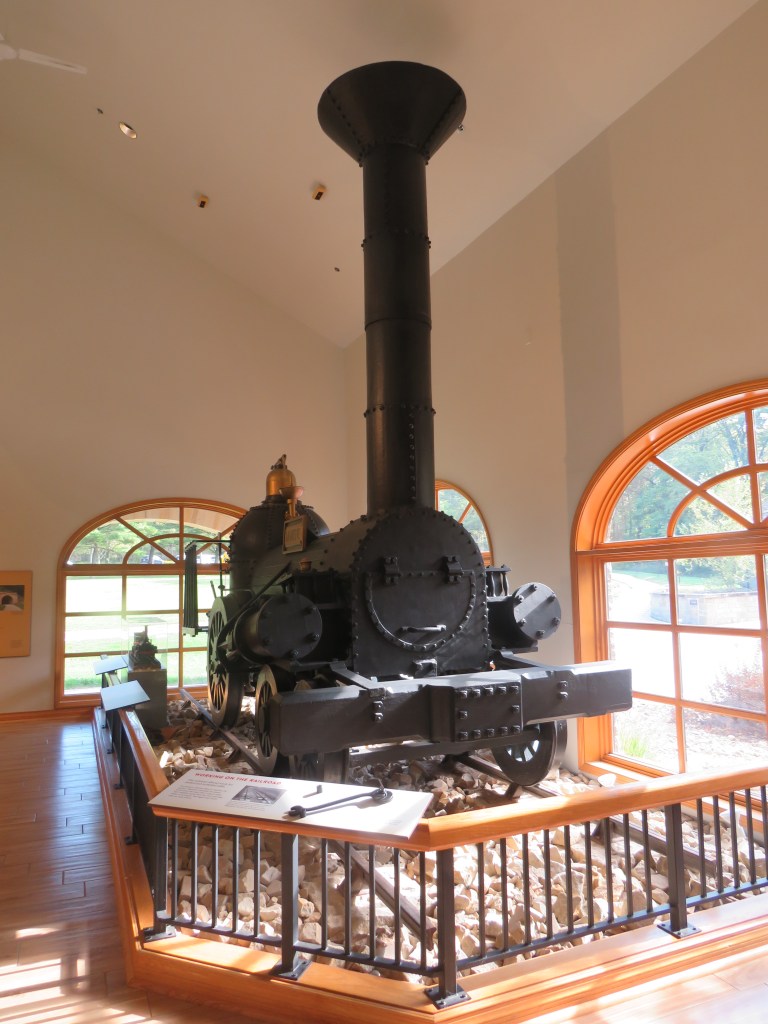
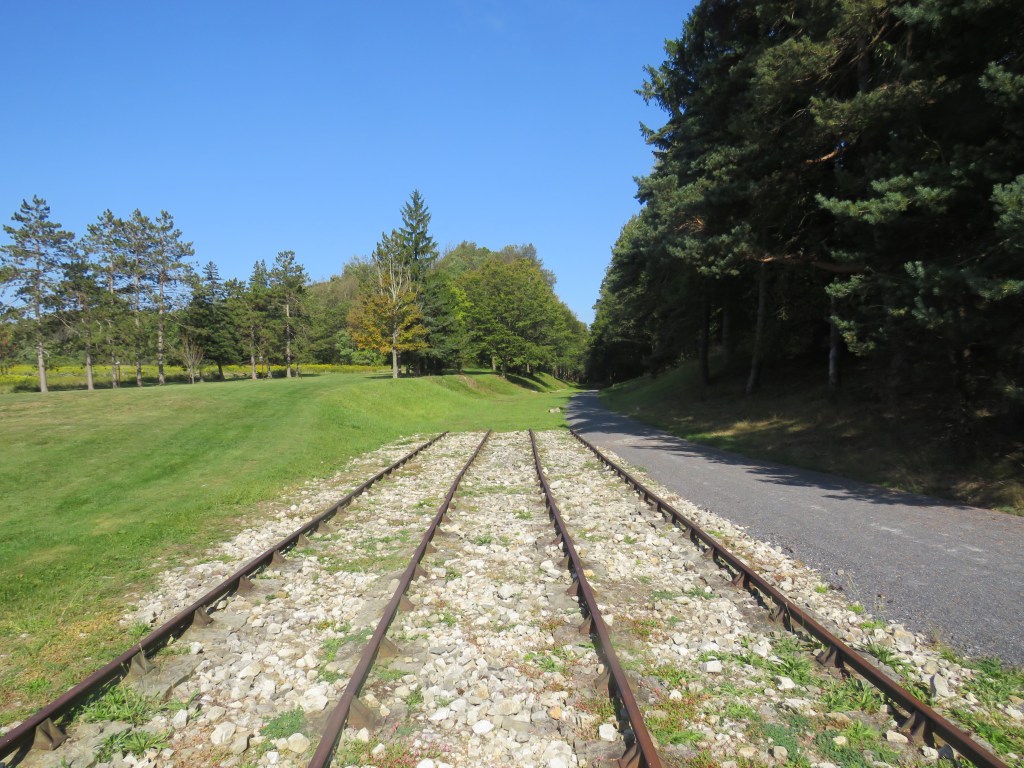
Welcome to the Allegheny Portage Railroad National Historic Site.  The Allegheny Portage Railroad National Historic Site preserves the history and the site of the pulley railroad system.  The site, owned and operated by the National Park Service, consists of the Visitor Center which houses a museum that shows the working of the railroad and how the railroad was built and how it operated.  There is also a replica of the Number 6 Engine House where the pulley system pulled the train up the mountainside and lowered the trains on the other side.  You can also visit the Lemon House.  No, it is not made from actual lemons.  It served as a tavern for those using the railroad.  There are also hiking trails along the old railroad bed.

The Allegheny Portage Railroad Historic Site is located at 110 Federal Park Road in Gallitzin, Pennsylvania just off of U.S. Route 22.  It is open year round from 9:00am to 5:00pm.  (Closed on Wednesday and Thursday.)  Parking is on site.  The Visitor Center, the Engine House, and the Lemon House are wheelchair accessible, but the hiking trails are not.  The great part is that there is no admission fee to visit the site.  You can get more information about at Allegheny Portage Railroad National Historic Site (U.S. National Park Service).

The next time you are in Altoona, Pennsylvania, you can see the World-Famous Horseshoe Curve.  You can see the National Railroaders Memorial Museum.  You can ride the Everett Railroad.  You can see the Gallitzin Tunnels.  The Allegheny Portage Railroad Historic Site is another great reason to visit Altoona.  It is truly a railroad site unlike any other in the world.

Old Train Station: La Plata, Maryland

The U.S. state of Maryland is one of the original states in the United States of America.  It was the state that donated the land that would become the Nation’s Capital.  It is where the ‘Star Spangled Banner’ the National Anthem, was written.  It was where a woman named Harriet Tubman created ‘The Underground Railroad’, an escape network for enslaved people in slave states to escape to the free states in the north, and this escape network is used in other parts of the world today.  It is where the first balloon flight took place, and the oldest continuously operating airport in the world is located here.  The largest estuary in the United States of America divides the state.  The oldest Catholic church is also here.  The eastern end of ‘The National Road’, is located here.  The first tracks of the railroad were laid in this state.  The Western Maryland Railway Locomotive Number 1309, the largest operating locomotive in the world that was originally owned by the Chesapeake and Ohio Railway, pulls excursion trains out of Cumberland.  You have the coastline at the east end.  You have the plains east of the Chesapeake Bay.  You have the rolling hills west and north of the state with the mountains at the western end.

You then have a forgotten part of the state known as Southern Maryland.  The region on the western shore of the Chesapeake Bay south of Annapolis, the State Capitol, is a region not too many people know about.  It is the home of Point Lookout where the Point Lookout Lighthouse is one of the most haunted lighthouses in the world.  The Patuxent Naval Air Station has one of the longest airport runways in the world being one of the few runways where the space shuttle could land.  The Patuxent River, sadly, was used by the British during the War of 1812 as they sailed up to a town called Upper Marlboro and then marched on to Washington D.C. to burn the city.  The state was also settled down here, and it is where Saint Mary’s City, one of the oldest cities in the United States of America, is located.

You see all of this about Southern Maryland, but you wonder anything about the railroad.  Well, there is some railroad history in the region of this state.  Because of the Chesapeake Bay and the wideness of the Potomac River south of Washington D.C., most of the railroad lines ended here.  The defunct Chesapeake Beach Railway brought vacationers from Washington D.C. to the then resort town of Chesapeake Beach, Maryland.  Sadly, the tracks are gone, and much of the railroad bed is on private property.  The old train station in Chesapeake Beach is the only surviving train station on that line, and it is a museum today.

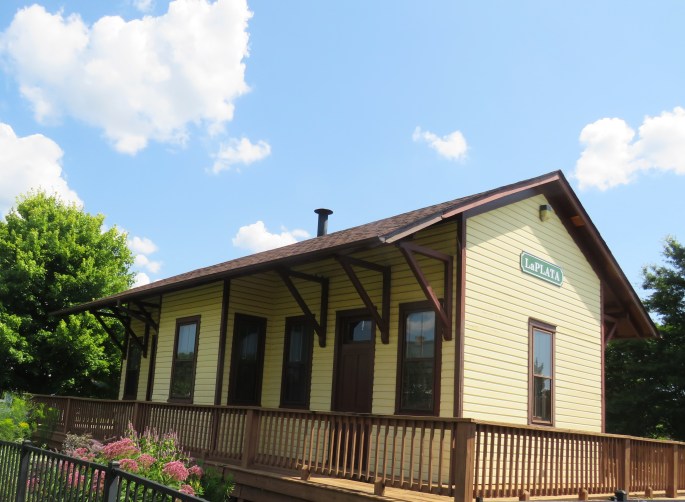
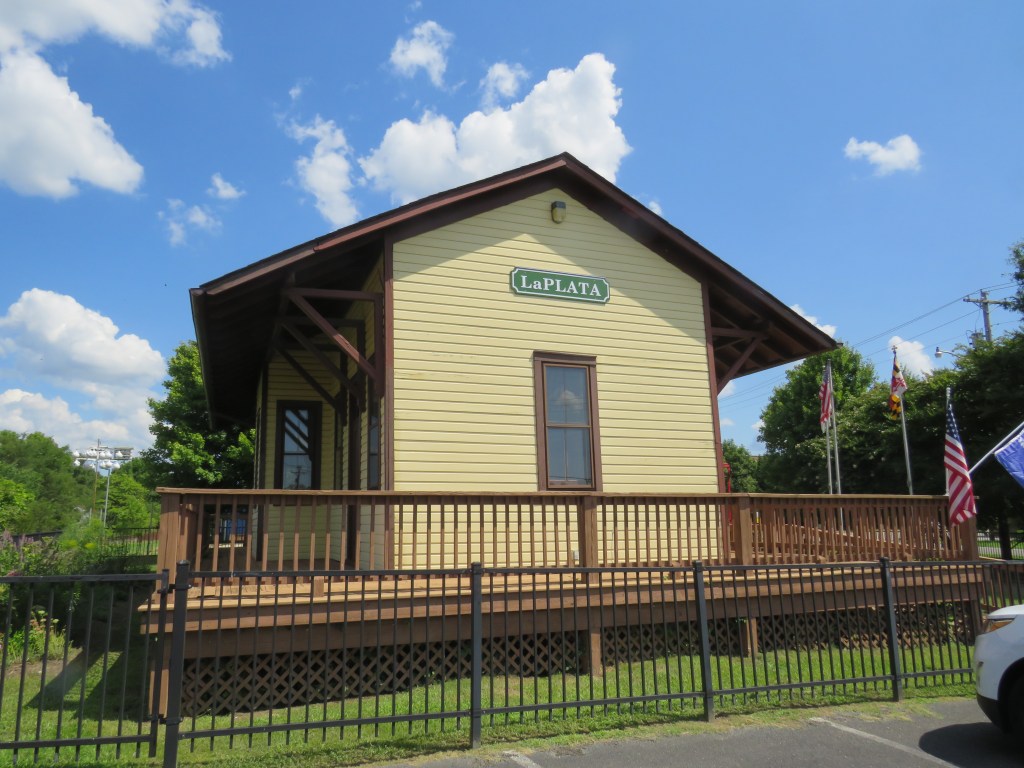
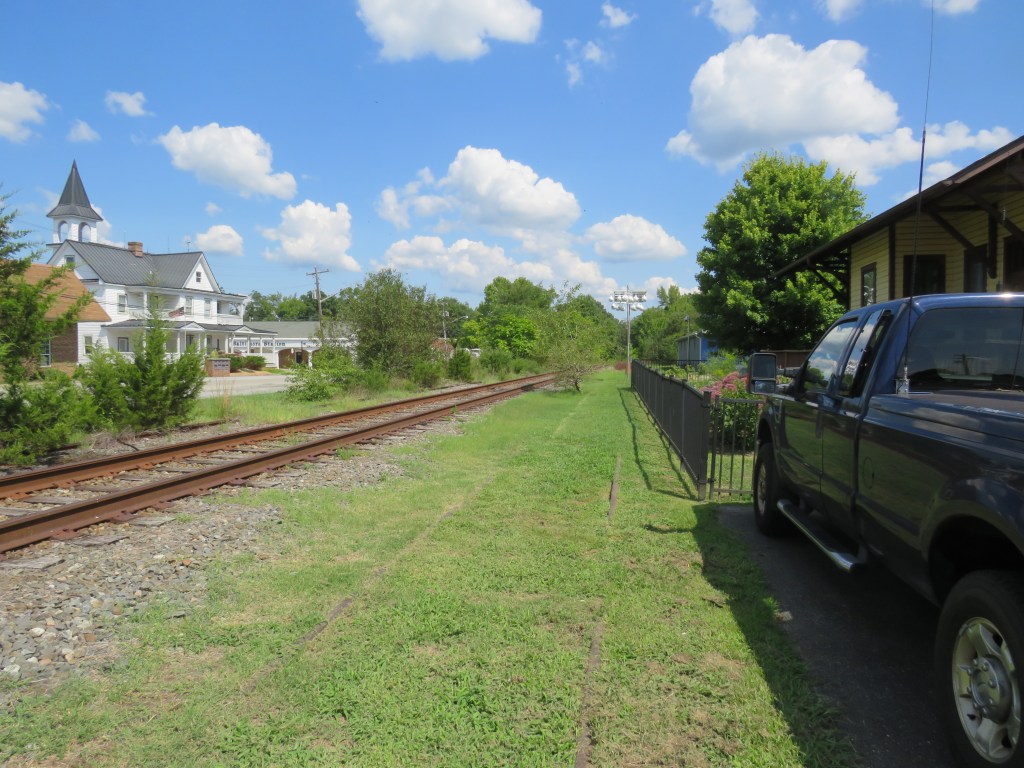
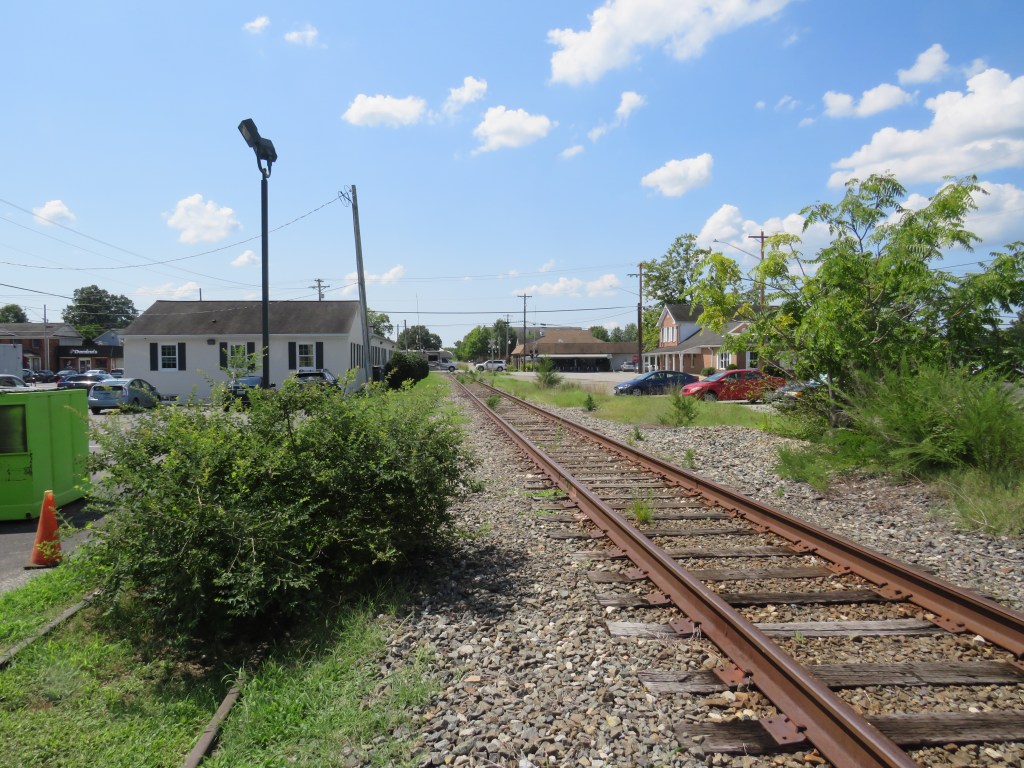
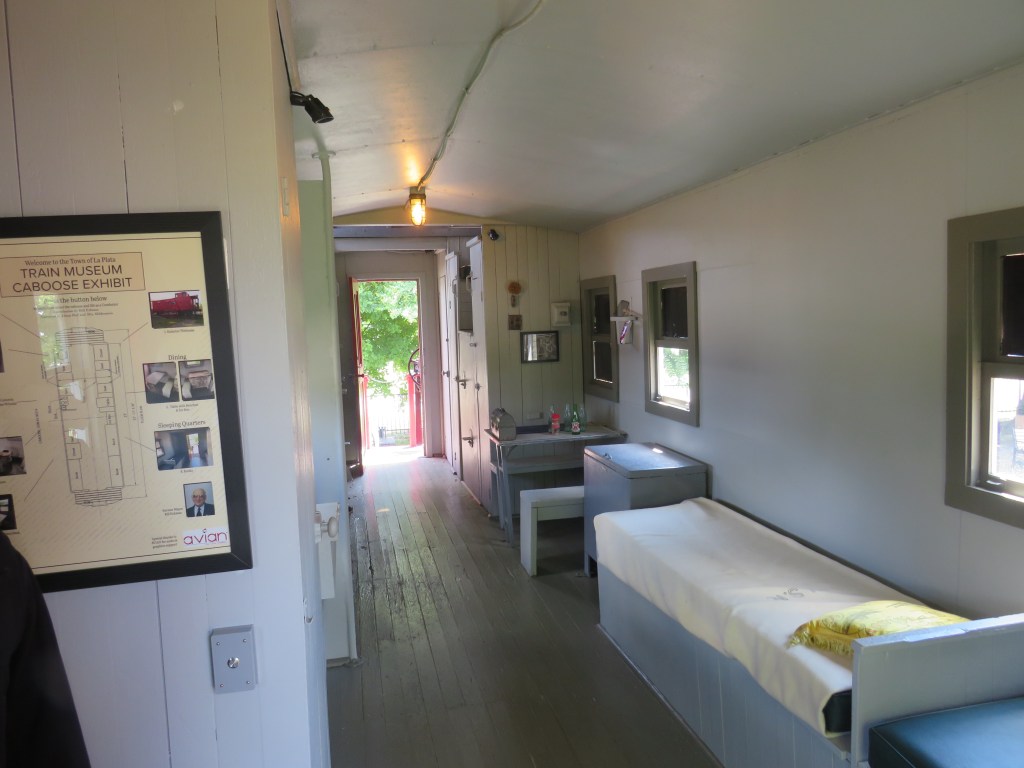
There is another railroad line that went south from the town of Bowie.  It was originally built by the Baltimore and Potomac Railroad, and it is owned by Chessie Seaboard Transportation (CSX) today.  It connects with the Amtrak line in Bowie and winds its way through the southern region of the state to a coal plant on the Potomac River.  One of the towns it passes through is the town of La Plata.  What is special about La Plata?  Well, it is the home of the only surviving train station on the line.  Today, that train station is now a museum.

Some of you are saying, “This is nice.  The train station is still there.  It is not a major railroad line.  Why do they not demolish the train station?”

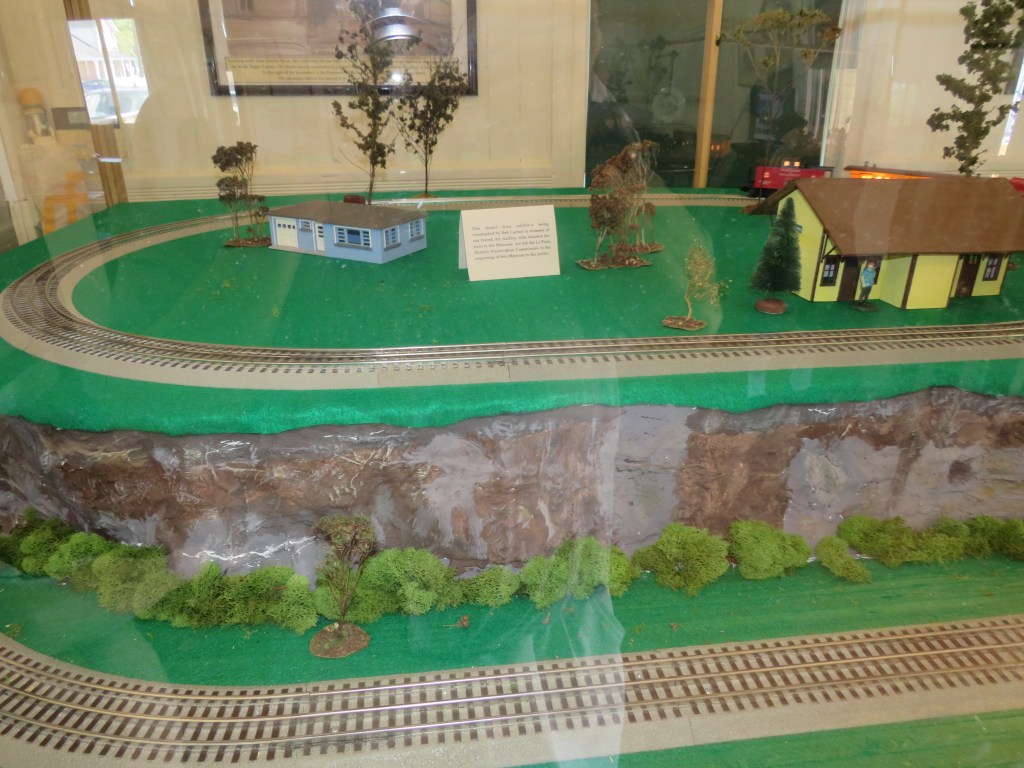
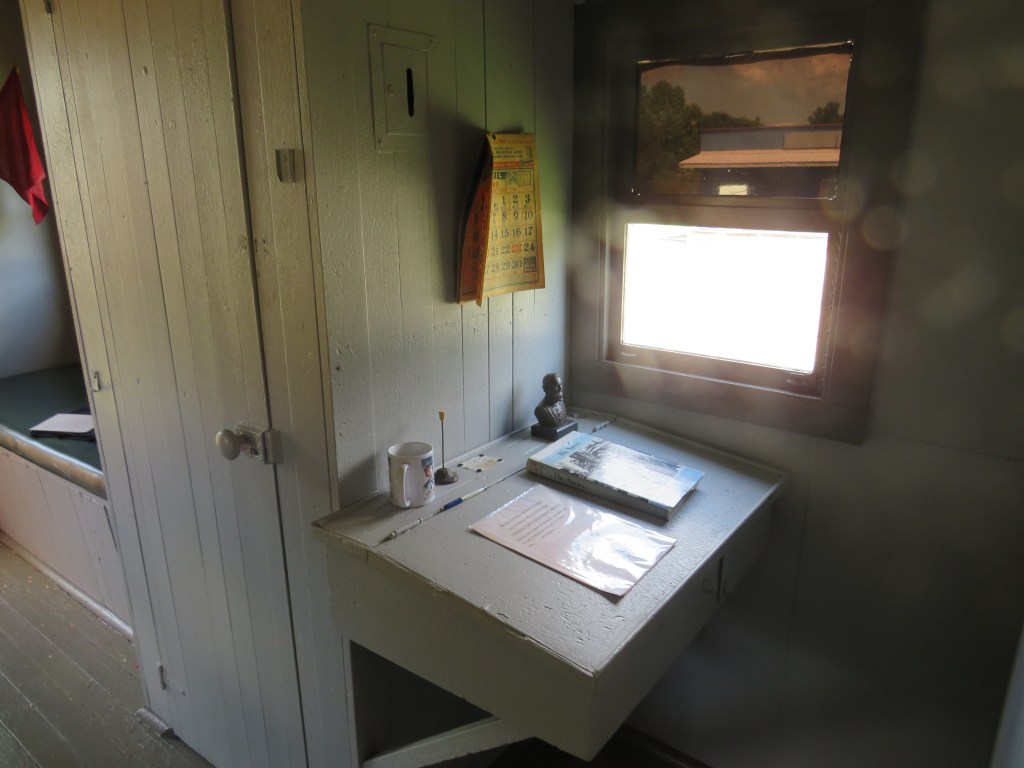
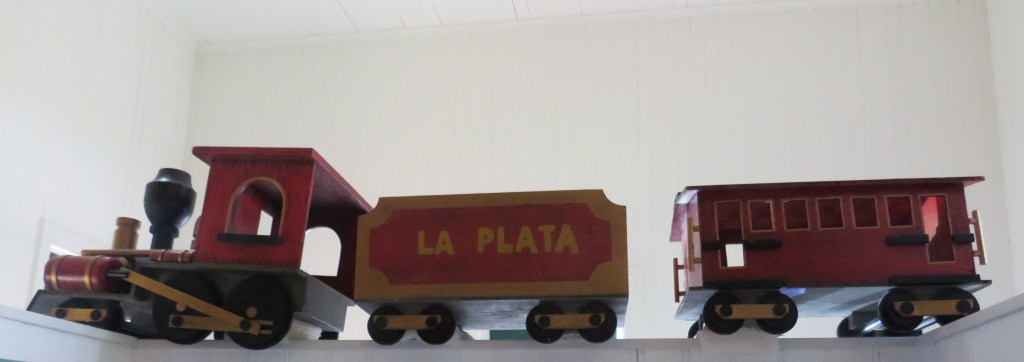
La Plata, like many small towns in the railroad era, owes must of its history to the railroad.  Before the automobile, the railroad was the fastest mode of transportation.  Sure.  It took a long while to ride the train to Washington D.C. and points south, but it played a major role in the development of the town.  When you visit the old train station during its opening hours, you will see model trains, and you will see many photos of the railroad in the town.  This includes photos of passenger trains that served the station.  You can also see some of the old schedules.

Need a reason to visit Southern Maryland?  The old train station in La Plata, Maryland, it a good reason.  It really tells the story of the railroad in the region.

The Old Train Station is located at 101 Kent Avenue just north of Maryland Route 6 and less than one mile west of U.S. Route 301.  Admission is free, but they could use your donations to keep the museum open for many years to come.  The museum is owned by the town of La Plata and run by volunteers.  Parking is on site, and the station is wheelchair accessible.  You can get information on the opening hours on their Facebook page and on their website at Facilities • La Plata Train Station Museum.

The next time you think of the state of Maryland, think of a small southern town of La Plata.  It is a town that keep the history of the railroad in the region alive.

The New Bedford Whaling Museum, New Bedford, Massachusetts

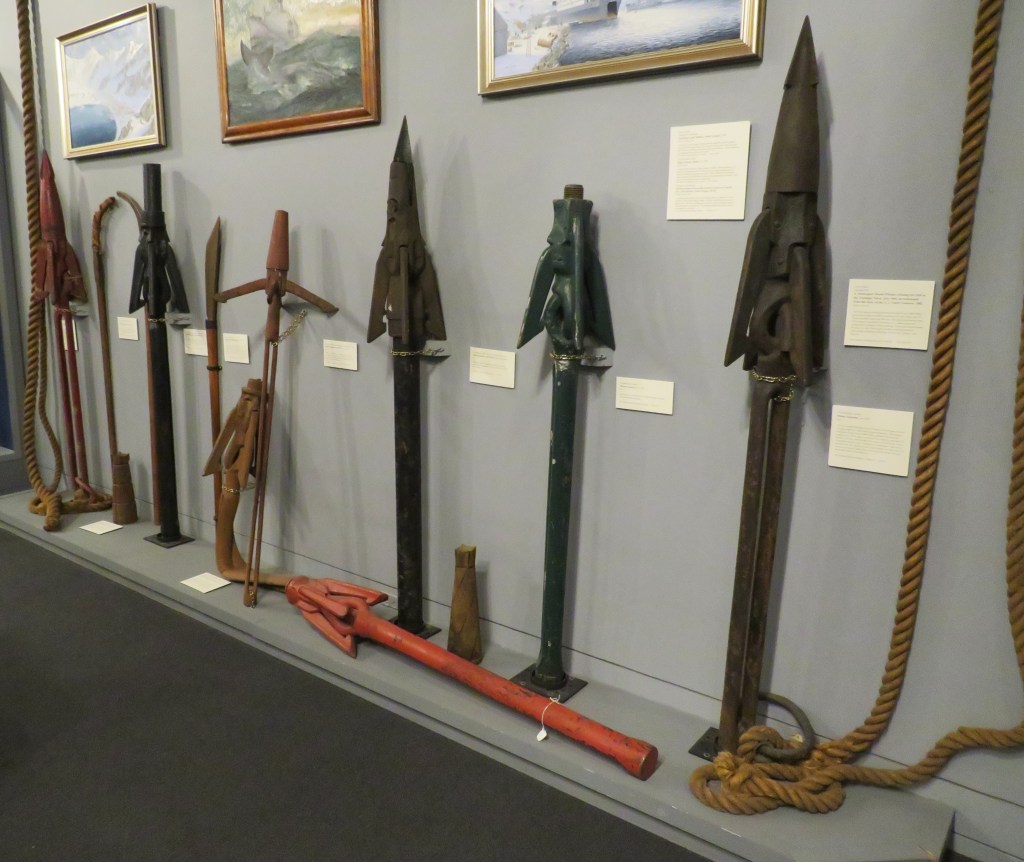
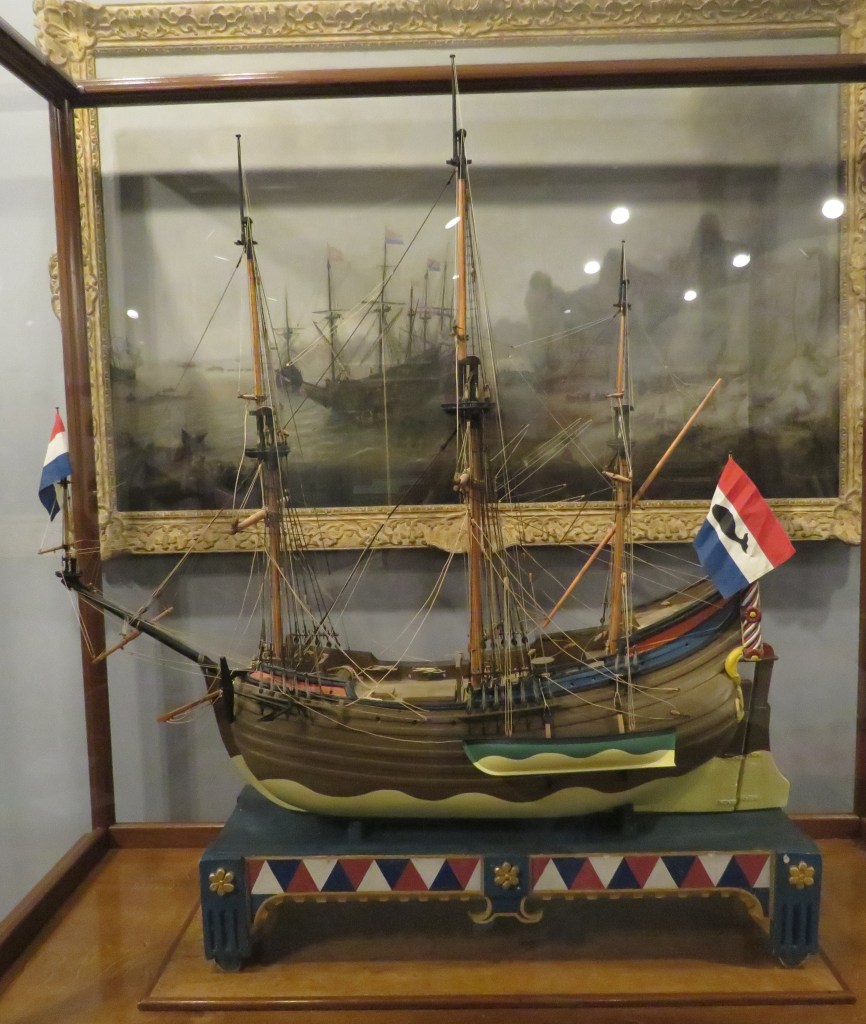
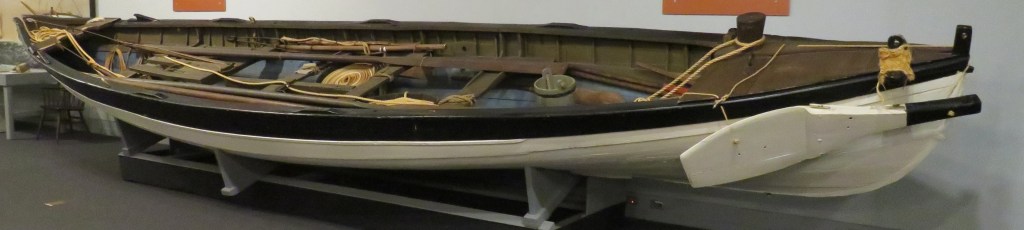
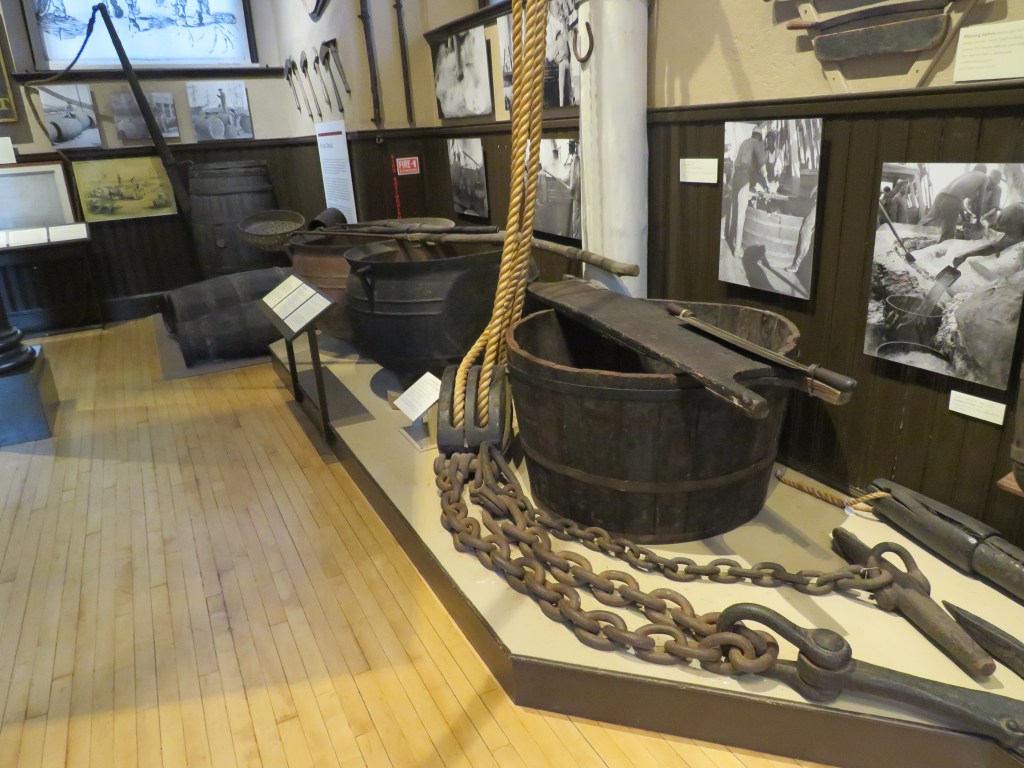
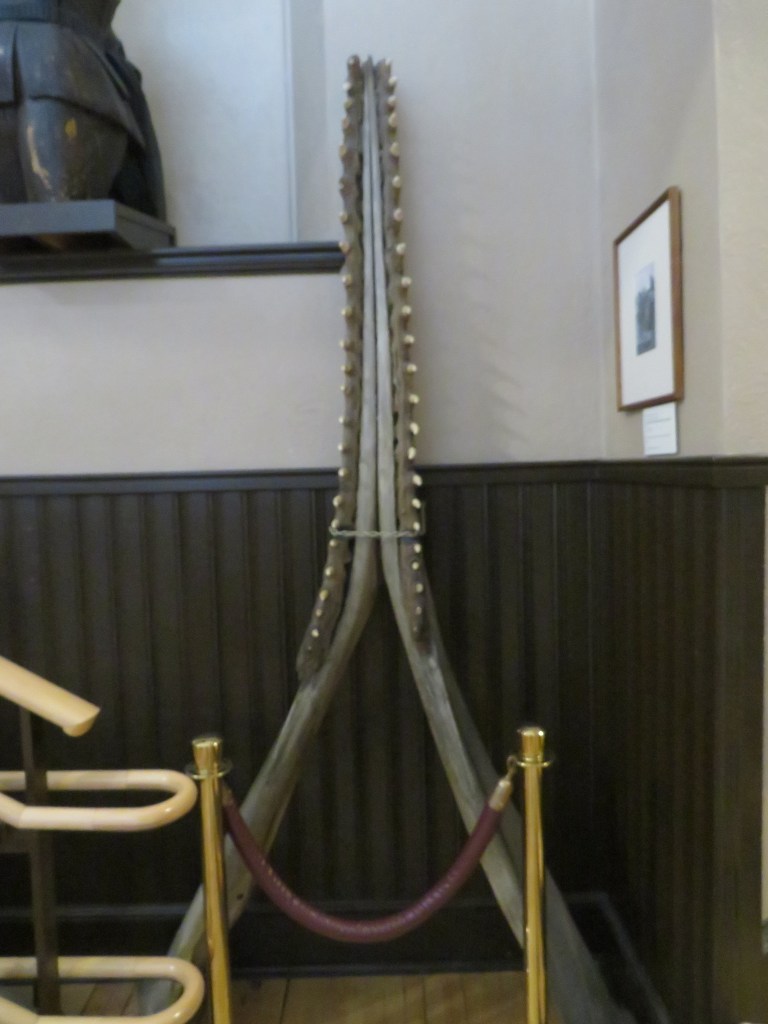
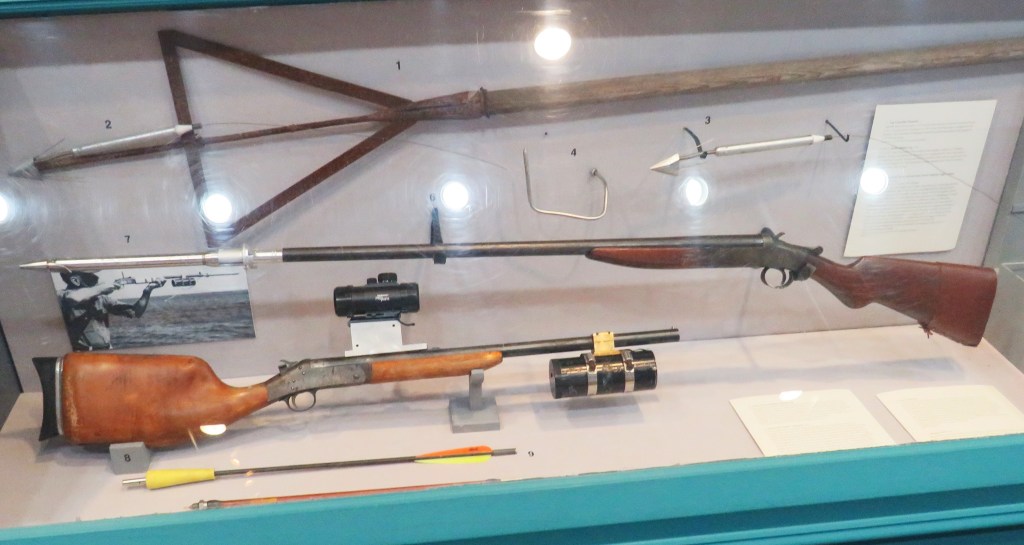
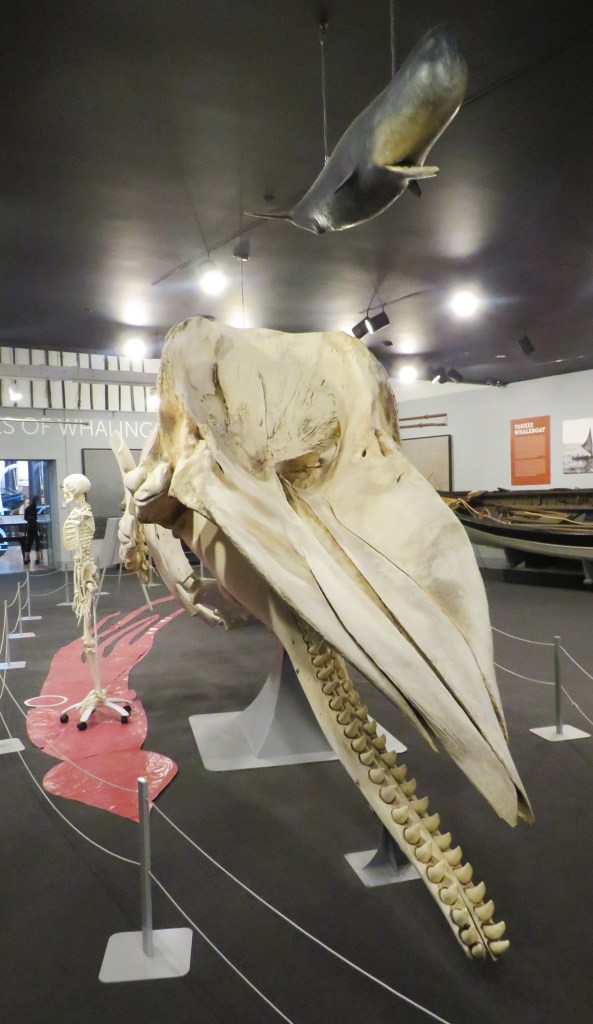
In the early years of the United States of America, whaling was a way of life.  What is whaling?  Men would step aboard ships, and they would head out to sea.  Why?  They were hunting whales.  They would take harpoons and throw them at the whales.  (Harpoons are basically a specific kind of spear mainly used to pierce the thick skin of animals.)  The whales were pulled onto the ship, and they were processed at sea and turned into lubrication and oil used for lighting.  Back in the day, it was the main source of income particularly in the New England States.  The story of Moby Dick is a story that was inspired by the whaling industry.  (Moby Dick was the name of a fictional whale.)  Today, the hunting of whales has been banned in the United States of America.  (It is still legal in some countries but with limitations.)  Although the whaling industry is no more, you can learn more about the industry at the New Bedford Whaling Museum in the city of New Bedford in the U.S. state of Massachusetts.  In the heyday of the whaling industry, New Bedford was an international port city.  Today, you can see the waterways where the whalers (whale hunters) would depart and return each day.  The New Bedford Whaling Museum tells the story of the whalers, the industry, and the life of a whaling town.

Some of you are saying, “Wow!  This is great.  There is a museum that is dedicated to whaling.  I do have a problem with this museum.  What is the problem?  This is a whaling museum, not a railroad museum.  Therefore, I will not have a whale of a time visiting this place.”

You do have a point.  It is called the New Bedford Whaling Museum.  It is about the whaling industry and not a railroad museum.  Why should somebody who is a railroad fan visit this museum?

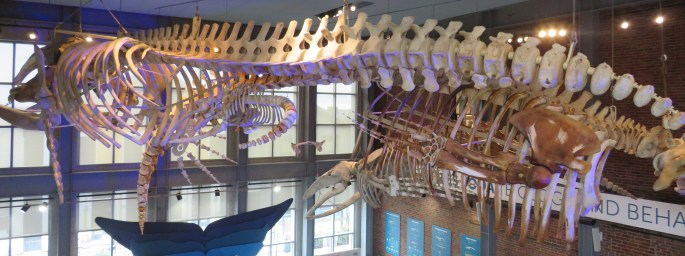
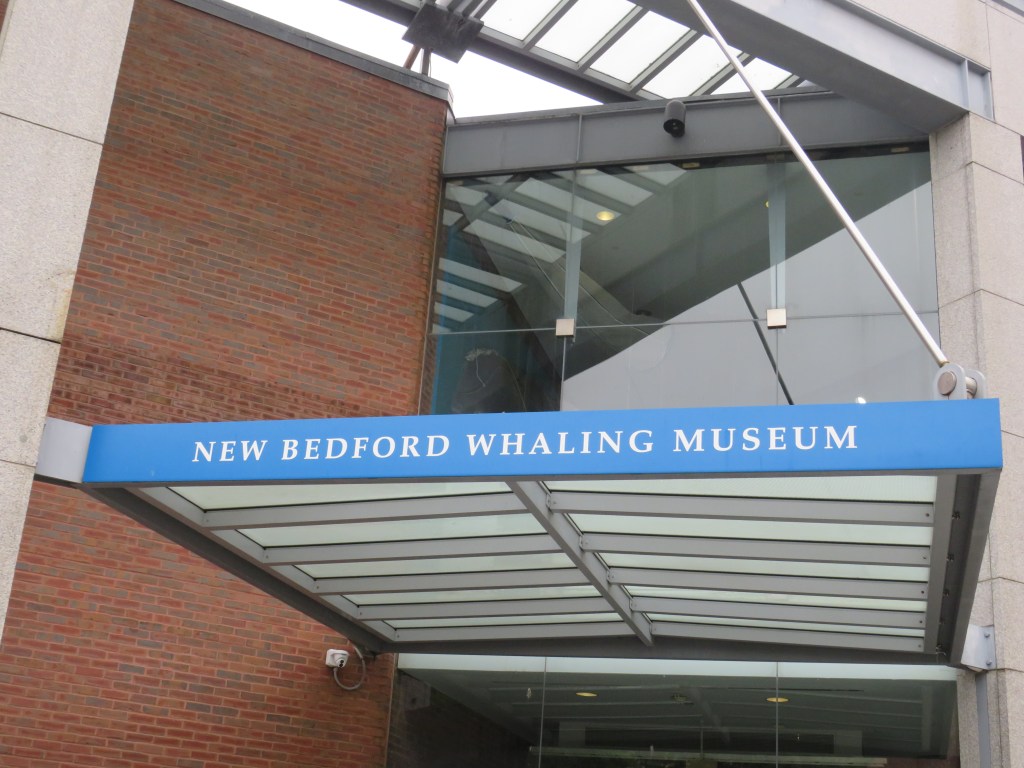
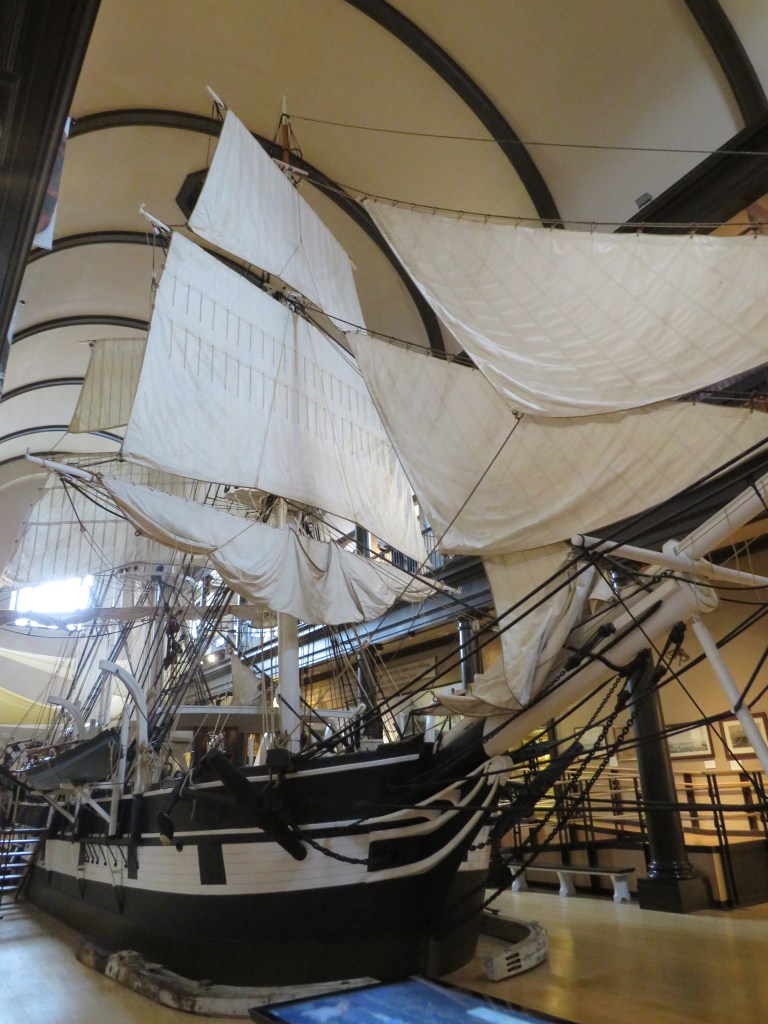
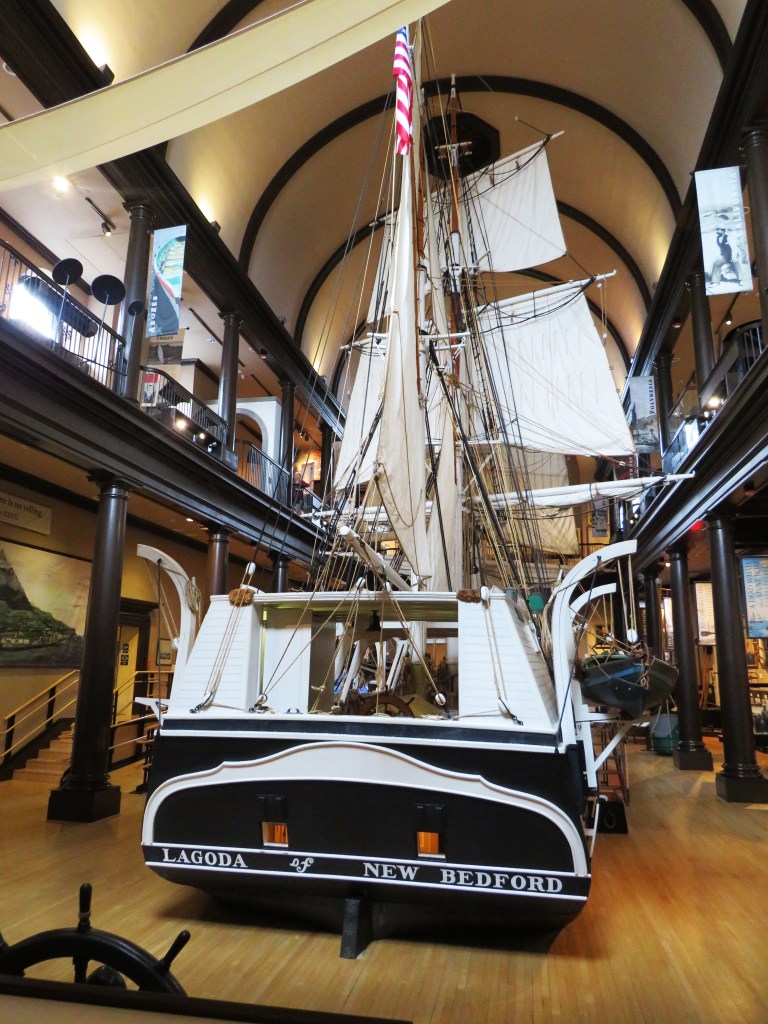
The museum, founded in 1903 as the Old Dartmouth Historical Society but operates under the name ‘New Bedford Whaling Museum’, features different galleries and exhibits exhibiting the life in the whaling industry.  One exhibit displays a half scale model of a whaling ship called the ‘Lagoda’.  What is special about this ship?  It is the largest scale model ship in the world.

Some of you are saying, “That is nice.  However, there is nothing about the railroad here.”

What does this have to do with the railroad?  Well, there is no connection with the railroad and the whaling industry.  Why visit this museum?

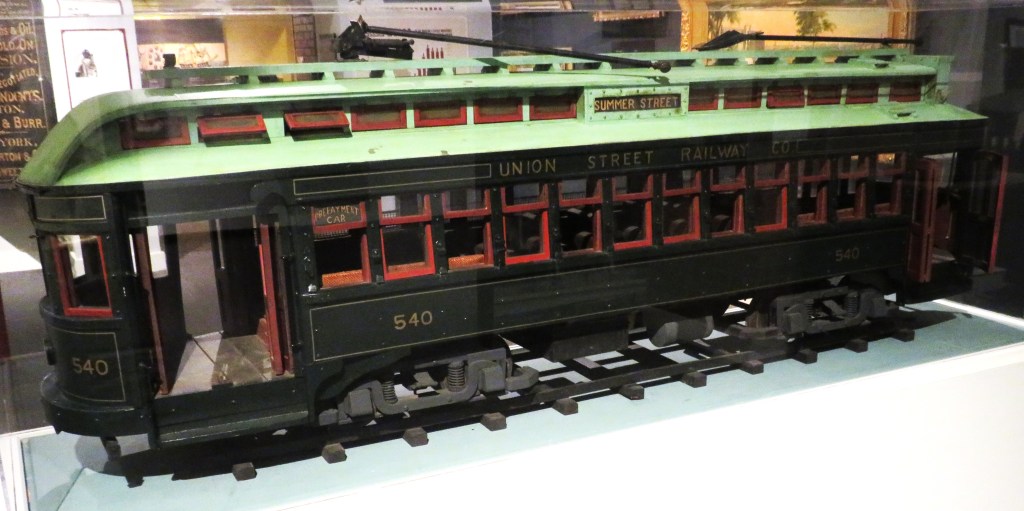
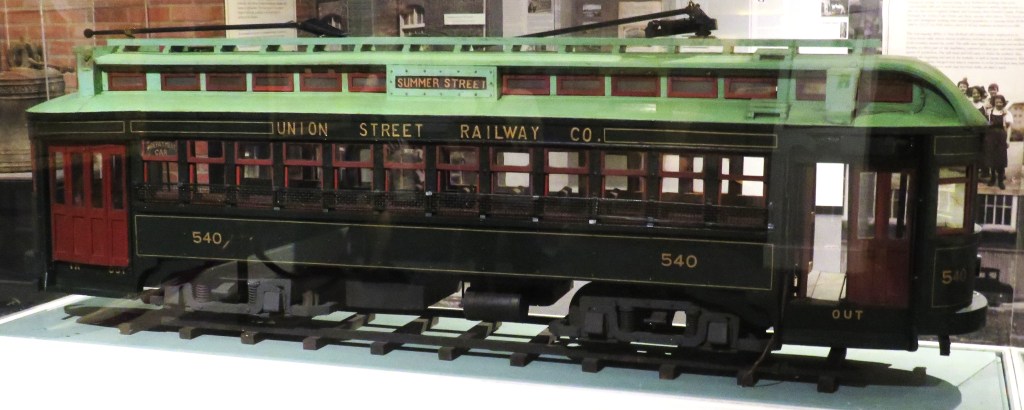
The museum tells the story of the whaling industry in New Bedford, but New Bedford also had other industries like glass and textiles and other industries in the town.  One of the exhibit halls is the ‘Energy and Enterprise’ exhibit.  Yes, it displays the industries in the city.  As you look around, you see a model of a streetcar.  Streetcars began in New Bedford from 1872 by the New Bedford and Fairhaven Street Railway Company.  The Union Street Railway Company took over in 1887, and it ran until 1947.  A model of Streetcar Number 540 is in a glass display.

Is that all?  No.

Another display tells the story of how the railroad connected the city of New Bedford to the rest of the nation.  In 1840, the railroad came to town.  Being a major international port at the time, items were transported from the ships onto railroad cars and transported to various towns throughout the United States of America.

Yes, it is called the New Bedford Whaling Museum, but it also tells the history of the city and how the railroad was a big part of the city.  The museum also has collections that are related to the Old Colony Line, the New Bedford Railroad Company, and the Union Street Railway Company.

The New Bedford Whaling Museum is located at 18 Johnny Cake Hill in New Bedford, Massachusetts.  It is located off of Interstate 195, U.S. Route 6, and Massachusetts Route 18.  It is open Tuesday to Sunday (closed Monday) from 9:00am to 5:00pm.  The museum is fully wheelchair accessible.  Please note that the museum does not have its own parking.  You can get information on parking, buy tickets, look more into their intensive collection to include those about the railroads and streetcars, and get more information at Home – New Bedford Whaling Museum.

Yes, it is called the New Bedford Whaling Museum.  It is a whaling museum that also tells the story of how the railroad was a major contributor to the industry of this town.

Pacific, Missouri, Train Town, U.S.A.

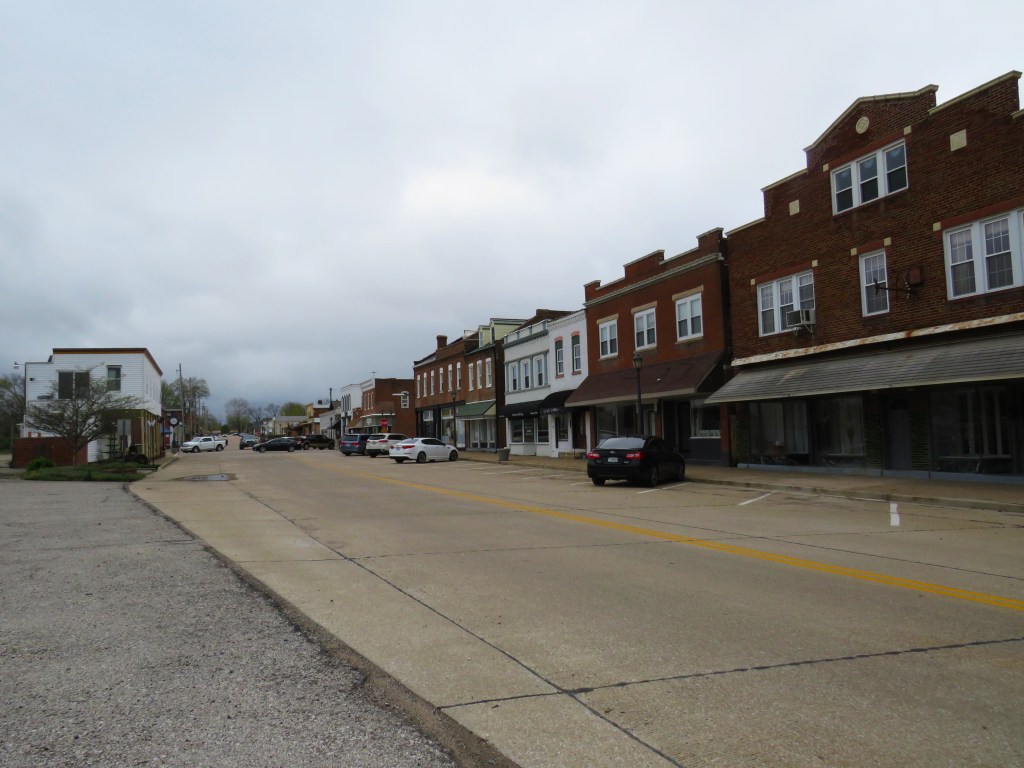
The U.S. state of Missouri is located in the middle of the United States of America.  It is famous for its two major cities: Saint Louis, commonly called the ‘Gateway of the West’, and Kansas City, a city known as ‘The City of Fountains’ for having more fountains than any other city in the world.  The Mississippi River makes up the eastern border of the state while the Missouri River flows through the central region of the state.  One of the most famous routes in the nation, U.S. Route 66, passed through the state.  One of the towns along this route is the town of Pacific.  Located 30 miles (50 kilometers) southwest of the city of Saint Louis, many travelers passed through the town until Interstate 44 was built which is far more used today.  The town was the site of a battle during the American Civil War.  The town of Pacific, Missouri is an American Midwestern small town that tells the story of Midwest America.

Some of you are saying, “Wait a minute.  Pacific, Missouri?  The state of Missouri does not border any ocean nor is it anywhere near the Pacific Ocean.  Besides, this is not a railroad town.  With Missouri being the ‘Show Me State’, do not waste my time showing me the town of Pacific, Missouri.”

Well, not too many people know about the town of Pacific, Missouri.  Before the Interstate Highways were built, many travelers passed through here.  It is not near any ocean to include the Pacific Ocean.  Why would anybody what to visit this town?

Well, the town was not always known as Pacific.  It was originally called Franklin, Missouri.  It started out as a town of log cabins, but it then evolved into a regular town.  In 1853, the Pacific Railroad came to the town.  A railroad depot was built, and a post office was established.  In 1864, ‘The Battle of Pacific’ a battle of the American Civil War, took place.  The Confederate Army burned many structures to include the train depot.  The Confederate Army attacked the railroads around the town.  The Union Army eventually were able to force out the Confederate Army.  A new railroad depot was built in 1882, and in was in use until 1961 when passenger service declined.  The depot was demolished in 1976.

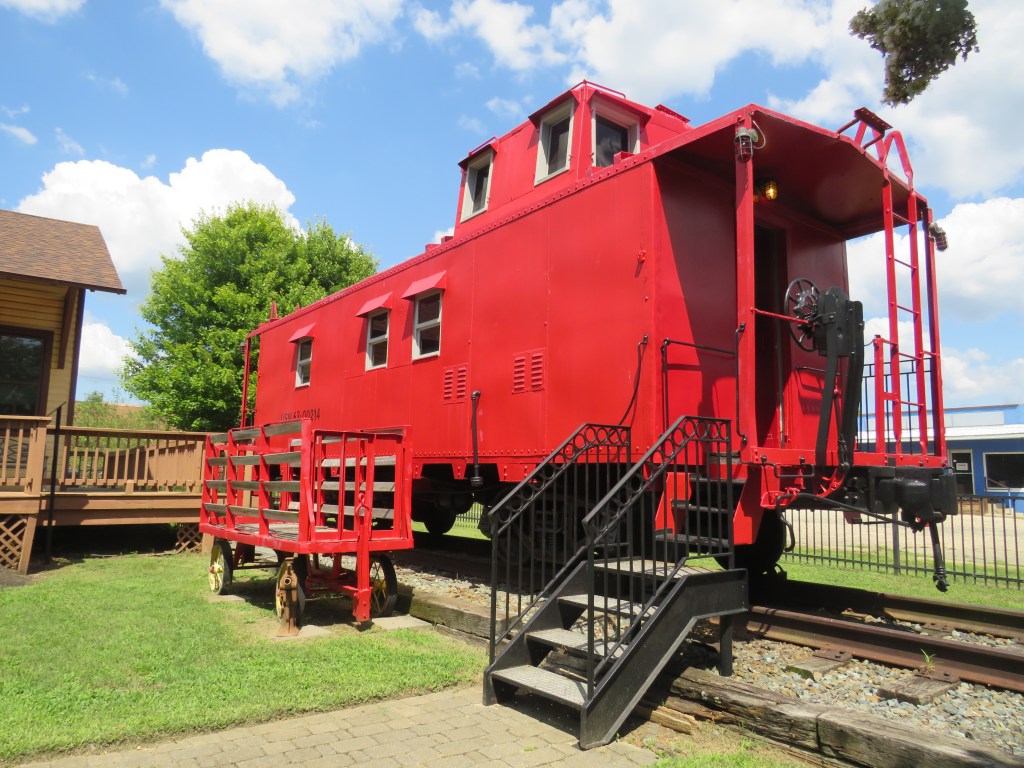
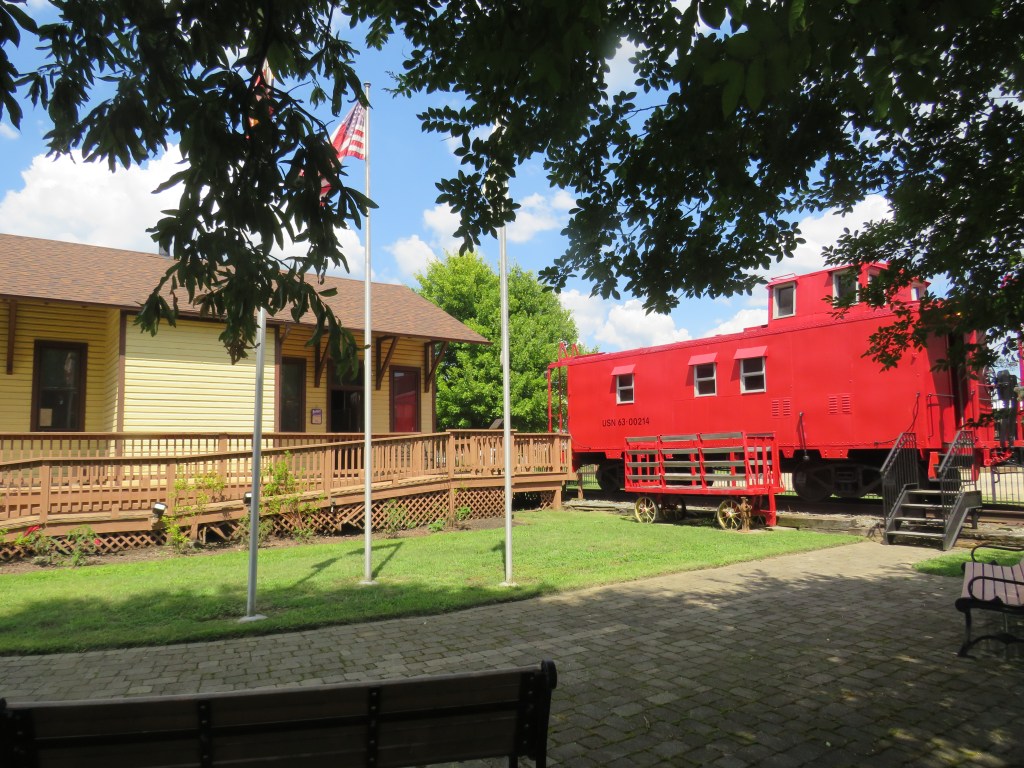
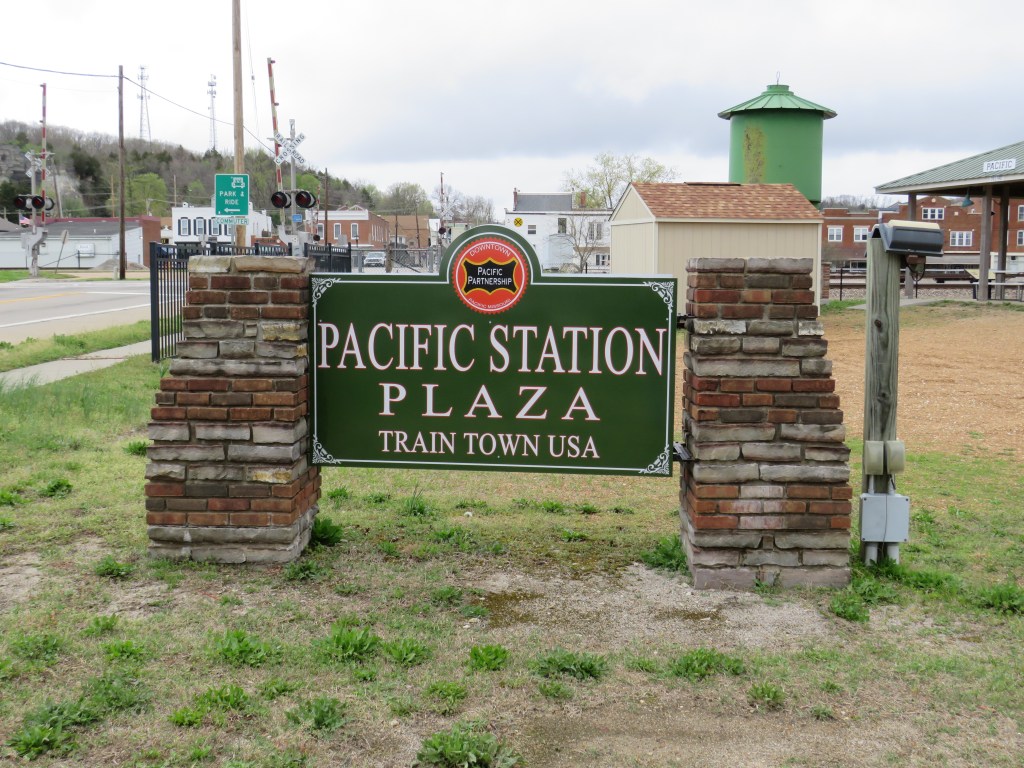
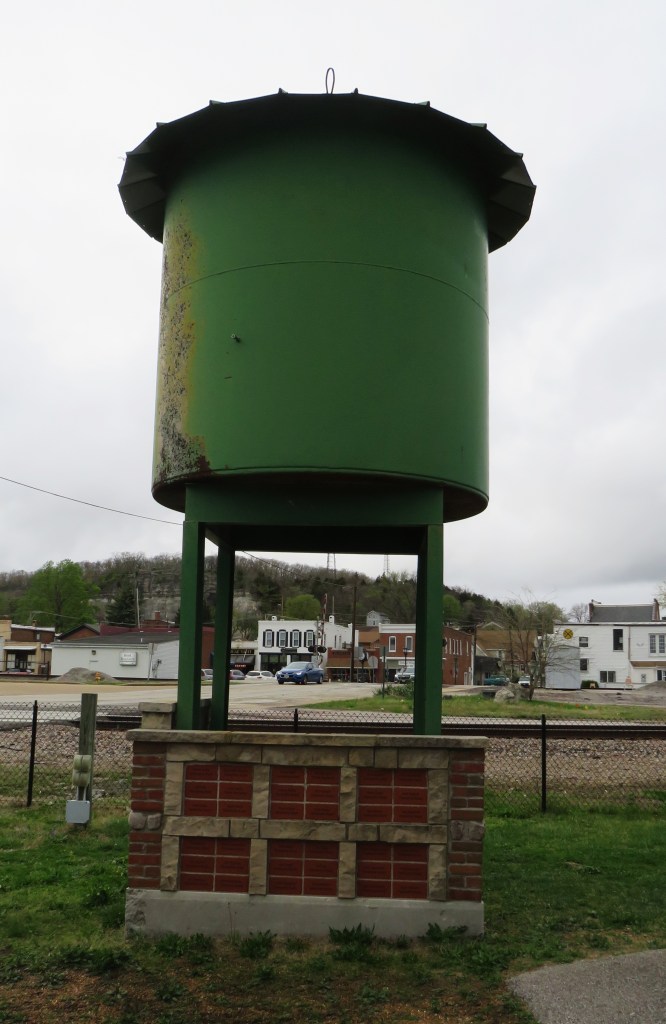
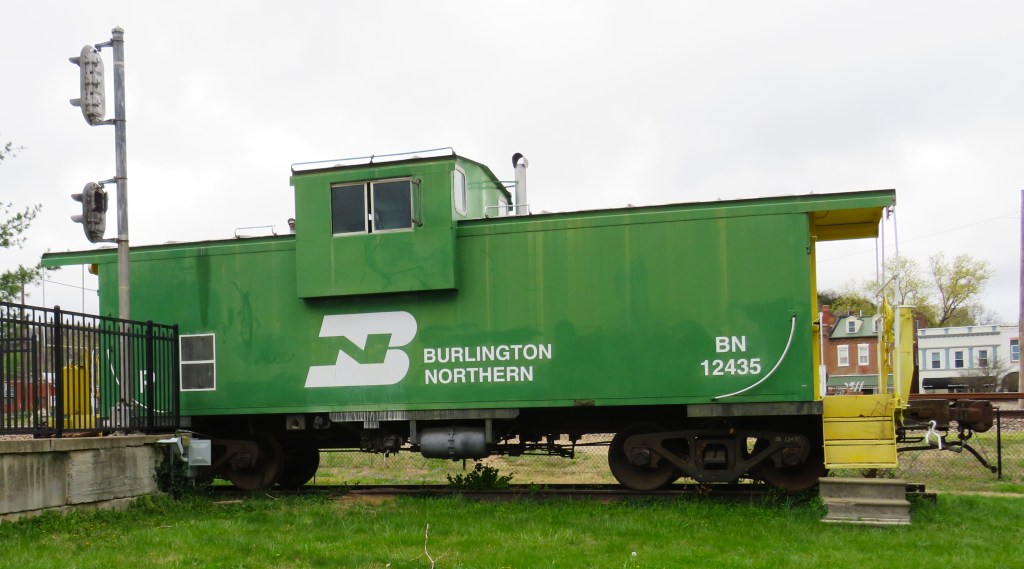
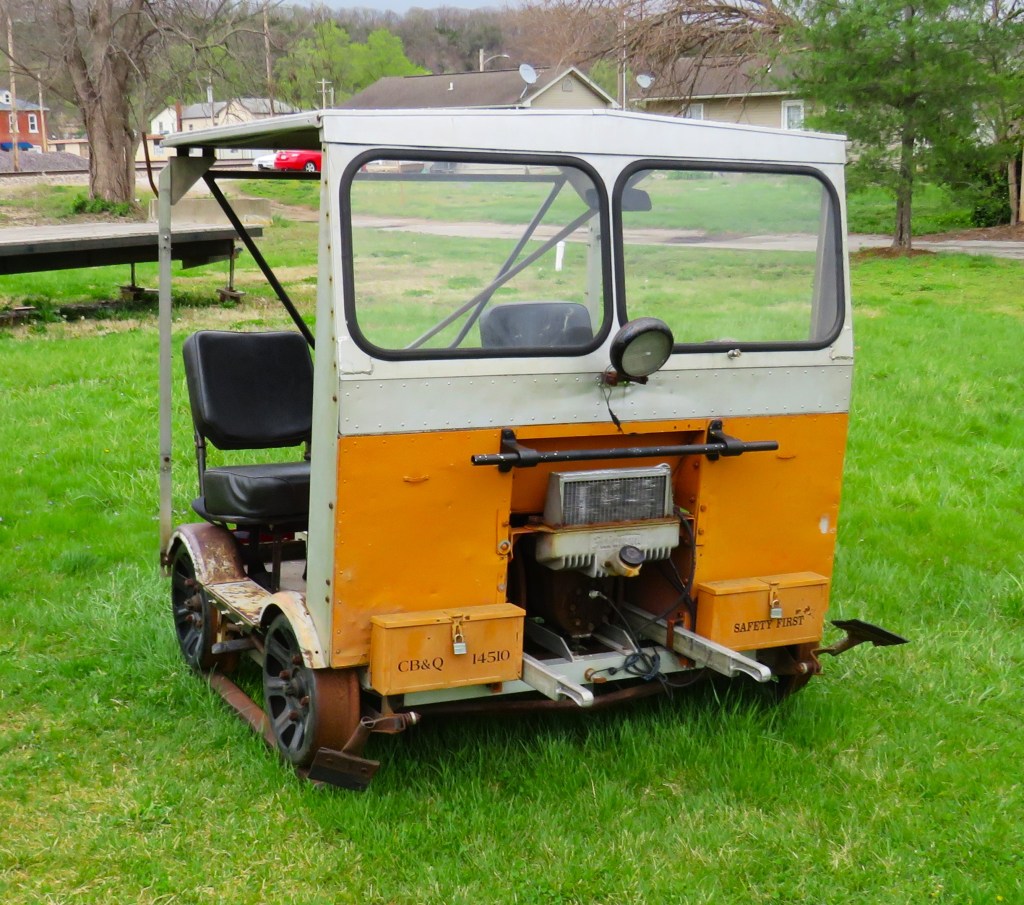
Today, you can follow the original route of U.S. Route 66 through the town.  The Union Pacific Railroad and the Burlington Northern Santa Fe Railroad (BNSF) roll through the town today, and the Union Pacific Railroad have offices here.  Located on S. First Street just south of the railroad crossing is Pacific Station Plaza.  Located at the original site of the train depot, you will see an inspector’s car and a caboose from the Burlington Northern Railroad.  The town is located off of Interstate 44 and U.S. Route 50.

The named time you here about a town called Pacific, Missouri, it is not just a town on the old U.S. Route 66.  It is a town that got its name from the railroad.

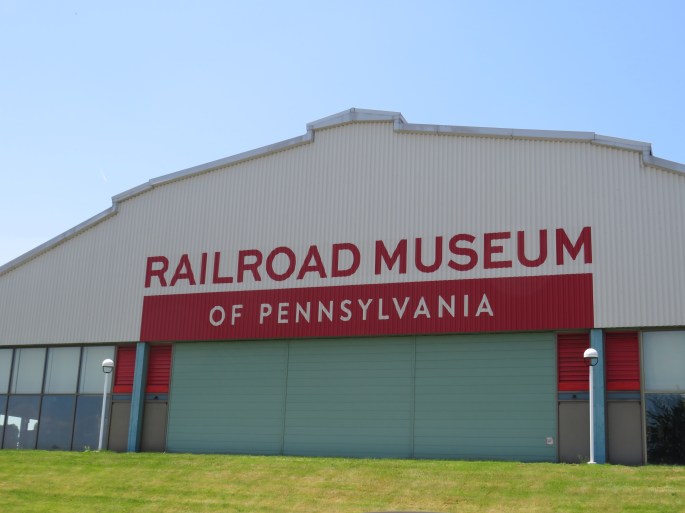
Railroad Museum of Pennsylvania, Ronks, Pennsylvania

When you think about railroads and the state of Pennsylvania, there are so many famous rail sites and railroad excursions that you can bring up.  The railroad is a major part of the history of the state of Pennsylvania.  The Railroad Museum of Pennsylvania encompasses all of that history under one roof.

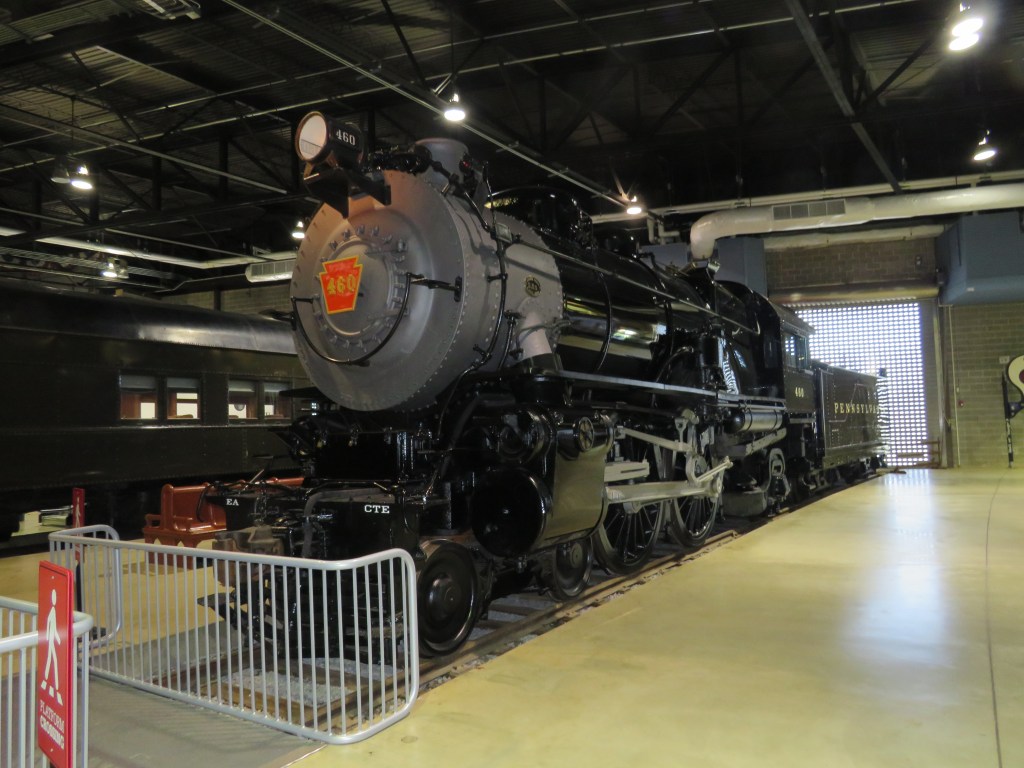
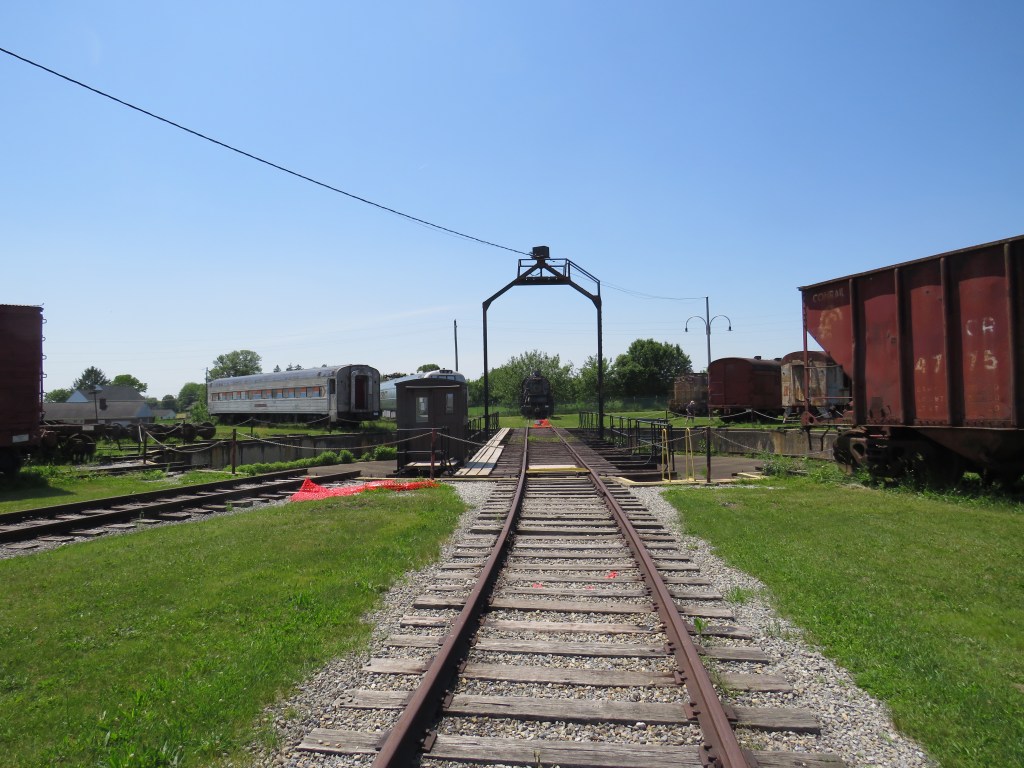
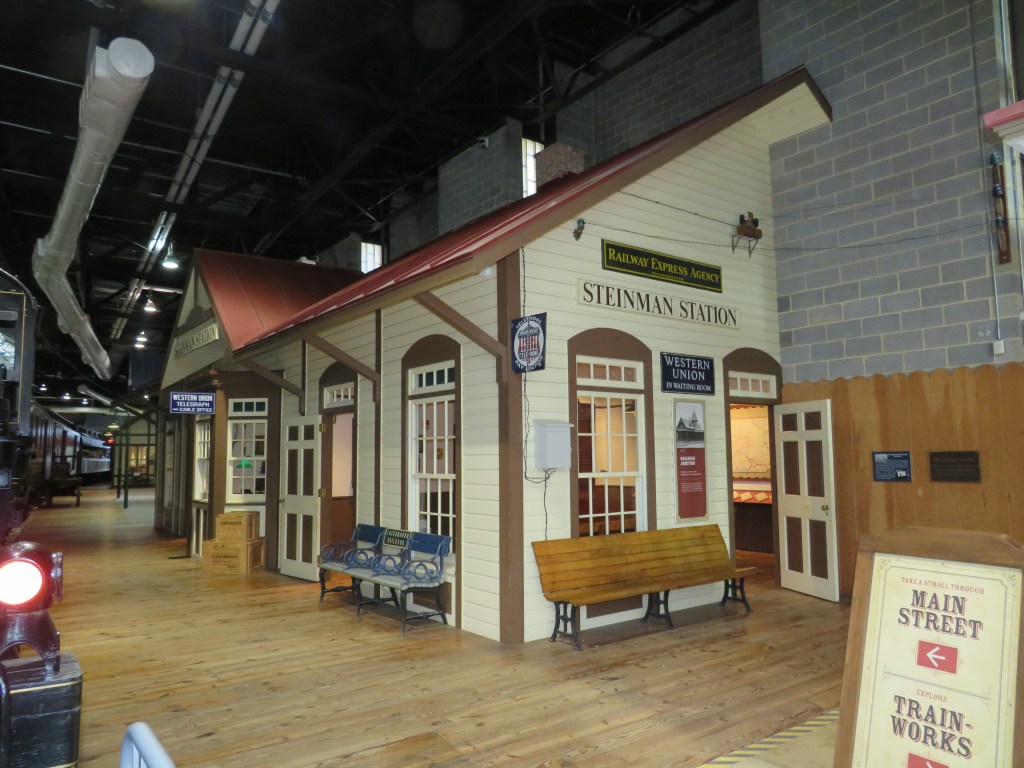
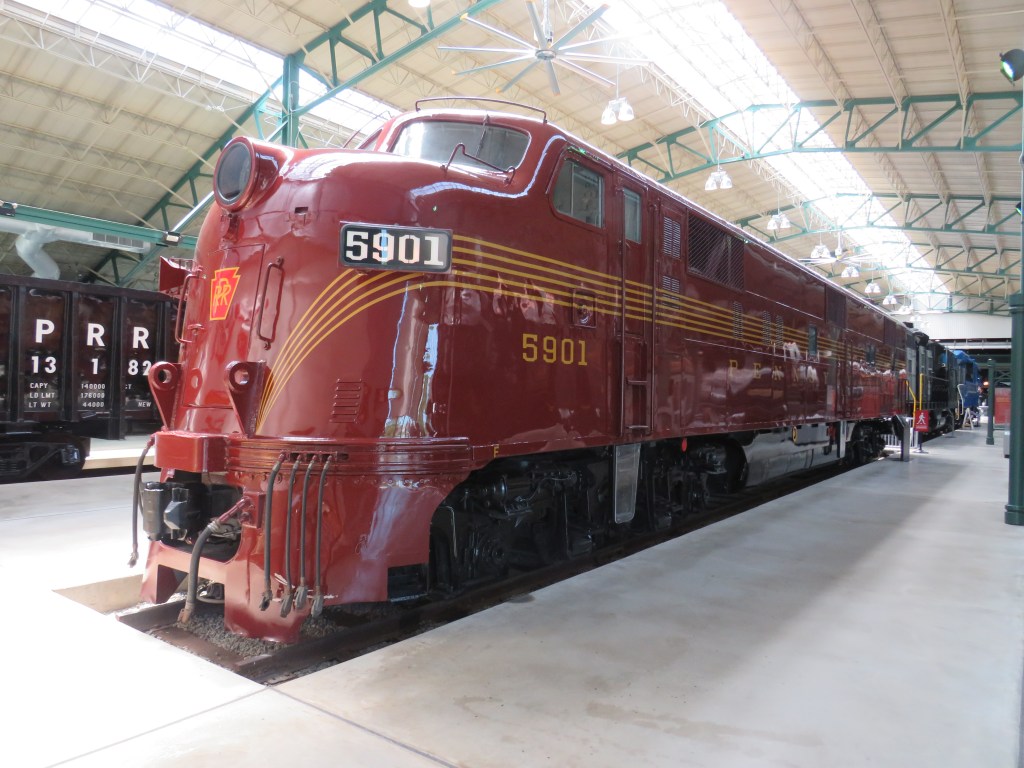
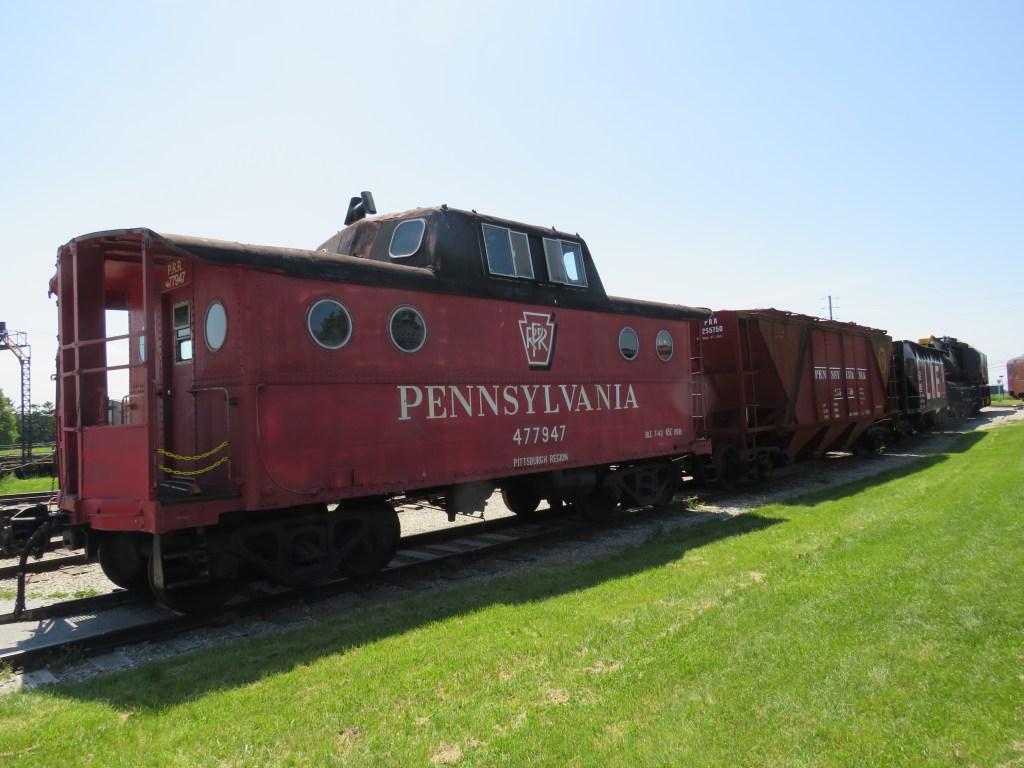
The Railroad Museum of Pennsylvania has one of the largest collections of locomotives, rail cars, and artifacts in the United States.  You will notice this is before you approach the museum from the east or the south.  The collection includes steam locomotives including the Lindbergh locomotive that raced a plane, electric locomotives, diesel locomotives to include the last E7 in the world, historic box cars, plus many others under one big climate controlled roof or outside where there is also an old turntable.

Among the huge collection you will also find model train displays, an honor roll, a kids play area, a train simulator, and a gift shop just to name a few.  Be advised that when you come to this museum, you will need to give yourself plenty of time to see everything.

If that is not enough, the Strasburg Railroad, the oldest short line railroad in the United States, is across the street where there is plenty more to do.

The Railroad Museum of Pennsylvania is located in the Pennsylvania Dutch Country in the Lancaster suburb of Strasburg, Pennsylvania on Pennsylvania Route 741 (300 Gap Road) just east of Pennsylvania Route 896.  It is open all year round.  General admission is $10.00 for adults, $9.00 for seniors and $8.00 for children 3 to 11.  (Rates many vary due to specific events.)  Go to www.rrmuseumpa.org for more information on museum hours, to learn about the history of the museum, to read about their numerous restorations and to look up special events hosted by the museum.  For the rail fan, this place will fail to disappoint you.

The Omni Homestead Resort and Spa, Hot Springs, Virginia

The U.S. state of Virginia is a state loaded with historic cities and towns and historic sites.  From Alexandria to Williamsburg and Jamestown to Mount Vernon to Montpelier and Monticello to the historic battlefields of Richmond and Manassas.  It is one of the most visited of the United States of America.  Many people do not think about the state being a place of hot springs.  In the western region of the state is a town called Hot Springs.  Although the local Native Americas originally discovered the springs, it was later found by three men who were surveying the land during the French and Indian War.  They later bought the land and moved their families here.  They built and wooden hotel here in 1766.  Today, the Omni Homestead Resort and Spa continues to welcome visitor from around the world.  From a small homestead hotel to a massive resort with the spring and golf courses that produced golfer Samuel Snead, the Omni Homestead Resort and Spa is an amazing place to relax and enjoy.

Some of you are saying, “Wow!  This place is amazing.  This is one incredible place.  It sure beats a night at your normal hotel.  The hot springs must be very relaxing.  There is a very big problem.  What is the big problem?  There is no railroad here.  Therefore, you will not see me resorting to this place.”

So, you refuse to come here because there is no railroad here.  Why would someone who loves railroad want to visit a place where there is no railroad?

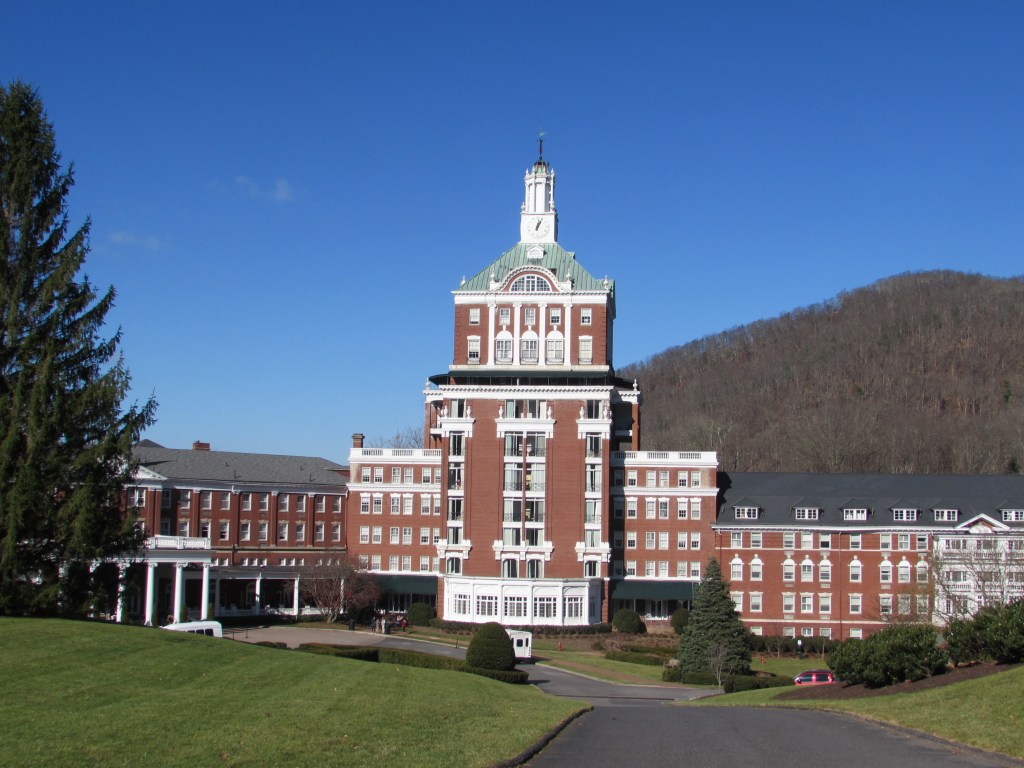
As you arrive at the Omni Homestead Resort and Spa, you will see a brick structure with its iconic brick tower.  You will see a great view of the surrounding mountains and golf courses.  What you will not see is a railroad.  You will not see a railroad bed or even a caboose.  The nearest railroad line to the resort is in the town of Covington, which is nineteen miles south of here, and the nearest Amtrak station is in the town of Clifton Forge which is thirty miles away and in White Sulphur Springs in the U.S. state of West Virginia.  So why would you want to visit here?

A resort that was opened in 1766 that is still open today obviously had numerous owners.  In 1881, a prominent lawyer named M. E. Ingalls came to the town of Hot Springs from Cincinnati, Ohio.  Why was he here?  He was doing research for the Chesapeake and Ohio Railway.  The railway was looking to bring a spur railroad line to the resort.  Mr. Ingalls and other investors to include a man named J. P. Morgan, bought the resort, and the railroad line was built.  The railroad brought many people to the resort.  A newer hotel was built.  The railroad served the resort until people began using the automobile.  The railroad was discontinued, and the tracks were taken up.

Some of you are saying, “The tracks are gone, and there is no signs of the train here.”

Actually, you are wrong.  The original train platform remains, and where the terminal tracks are located is now a small field.  Much of the old railroad bed is on private property, but the main railroad line where the spur ran from is still in service and is now owned by CSX Transportation.  The old train platform can be seen from U.S. Route 220.

As you can see, one of the finest places to relax was once served by the railroad.  You can take a tour of the hotel.  The tours are free, and you do not have to stay here to take the tour.  You are also free to walk the grounds but be warned.  You will be tempted to spend a night here.

The Omni Homestead Resort and Spa is owned by Omni Hotels that own hotels and resorts around the world.  It is located at 7696 Sam Snead Highway (U.S. Route 220) in Hot Springs, Virginia.  You can read more into the history of this resort to include the 1901 fire that burned down the hotel and book a room by going to https://www.omnihotels.com/hotels/homestead-virginia?utm_source=yextlisting&utm_medium=organic.

Come and spend some time at the Omni Homestead Resort and Spa.  Enjoy the springs.  Enjoy a night in a nice room.  Enjoy a great meal at one of their restaurants.  Enjoy a place where the Chesapeake and Ohio Railway once brought passengers to.

Fort Belvoir, Virginia

Many people who live in the Washington D.C. Metropolitan Area are very familiar with a place called Fort Belvoir.  It is a United States Army military base located in the U.S. state of Virginia on the Potomac River near Mount Vernon, the home of George Washington, the first President of the United States of America.  The military base was built on the site of the Belvoir Mansion.  (The mansion was destroyed many years ago.)  The base is not open to public visitors and is under very tight security, but U.S. Route 1 goes through the base as it leaves Washington D.C. and Alexandria, Virginia and continues south into Virginia and the U.S. states south.  As you pass by Fort Belvoir, you pass by a place that employs many people who work for the United States Army.

Some of you are saying, “That is nice.  I have never heard of Fort Belvoir.  I am a great supporter of the United States Armed Forces.  Sadly, this is not a railroad site.  Therefore, there is nothing really special about this base.”

Ladies and gentlemen, you are about to learn something about a Washington D.C. area United States Military base.

As mentioned, Fort Belvoir is a base for the United States Army in the southern region of the Washington-Baltimore Metropolitan Area.  It was erected on the site of an old mansion of the same name in a region where there were many plantations of which many are still standing.  (Nearby Woodlawn and Mount Vernon are two of those mansions.)  As you drive along U.S. Route 1, you see the fences that protect the base from unwanted visitors.  What you will not notice is anything that has anything to do with the railroad.  Most people are unaware of the fact that the railroad was a big part of Fort Belvoir.

Before it was called Fort Belvoir, it was called Camp A. A. Humphreys named after General Andrew Atkinson Humphreys.  The camp was erected in 1918 to train soldiers to fight during World War I.  The soldiers were taught to build roads, bridges, trenches, and… railroads.  Twenty miles of a narrow gauge railroad was built in the camp.  Sadly, it was a short lived railroad as the tracks were taken up in 1920, and the locomotives were bought by mining companies who used them to transport coal around the mines.  (It is unknown if any of these locomotives exist today.)

The base was renamed Fort Belvoir in the 1930’s.  About four miles west of the base was a major railroad line that was owned by the Richmond, Fredericksburg, and Potomac Railroad.  The Fort Belvoir Military Railroad was born connecting the base to a major railroad line.  (The main railroad line is owned by CSX Transportation today.)  The railroad supplied the base with supplies and even had passenger service.  Passenger service ceased after the Korean War, but the railroad continued to run until 1993.

Today, the railroad bridge that crossed U.S. Route 1 is long gone and replaced with a street bridge.  Although much of the old railroad bed remains, it is either part of the military base or is on private property and is not open for the public to be walked upon, but sections of the old railroad bed called be viewed from the old Backlick Road and from Virginia Route 286.  (Please note that much of the original Backlick Road has been rerouted or dismantled by Virginia Route 286 and the interchange with Interstate 95.)  One of the original bridges can be viewed from Backlick Road between U.S. Route 1 and Virginia Route 286.  (It must be viewed from Backlick Road as it is behind a fence.)  You can also drive under one of the original railroad bridges on Cinder Bed Road north of Backlick Road and Virginia Route 286.

The next time you are driving along U.S. Route 1 or along Interstate 95 and see signs for Fort Belvoir, do not think of it as another military base.  Think of it as a military base with a railroad past.

Batesville, Indiana

The small town of Batesville in the southeast region of the U.S. state of Indiana.  It is not a famous town as it is centrally located between the major cities of Indianapolis, Indiana, Cincinnati in the U.S. state of Ohio, and Louisville in the U.S. state of Kentucky.  Its historic district is on the National Register of Historic Places.  As you drive through the town, it looks like any other small town.  It has its town hall town parks.  It is truly what small town America is about.

Some of you are saying, “It is nice to visit a small town.  I enjoy small town America.  However, there is a problem with this town.  What is the problem?  This is not a railroad town.  Therefore, I will not be stopping by to visit.”

So, the reason that you will not visit the town of Batesville, Indiana is because it is not a railroad town.  As you drive through the town and historic district, you do not see any railroad tracks or old train station of rail trails.  The only railroad line in the town runs through the south side, but there is no railroad yard or train station here.  Trains mainly just pass through.  Why visit this town?

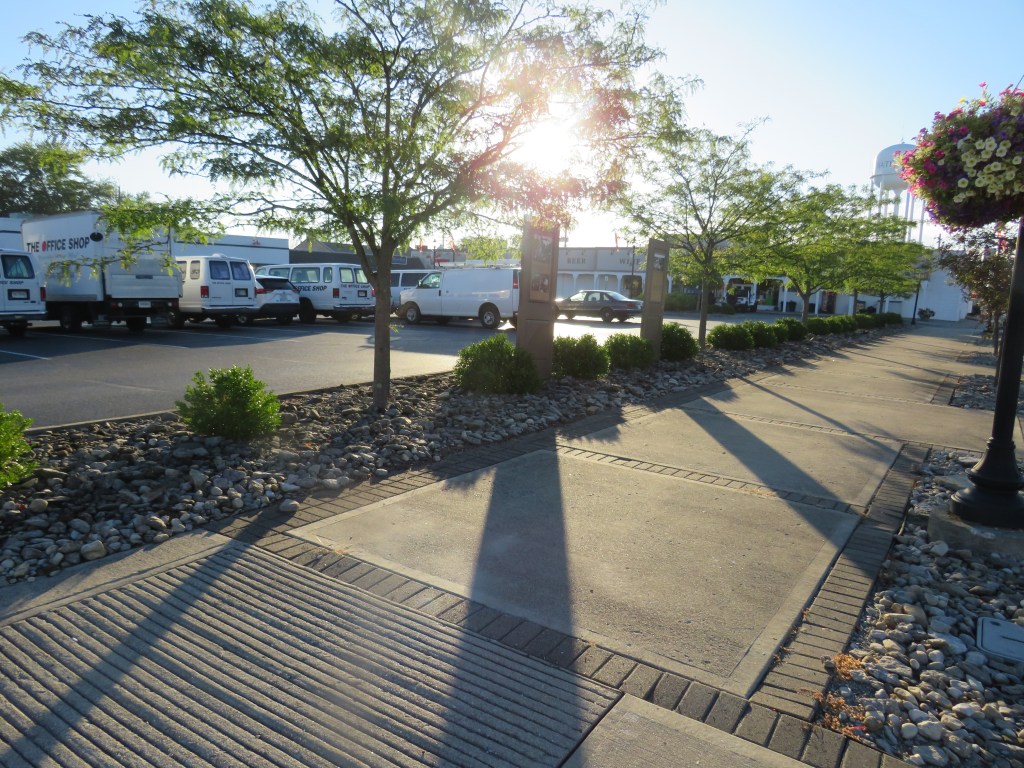
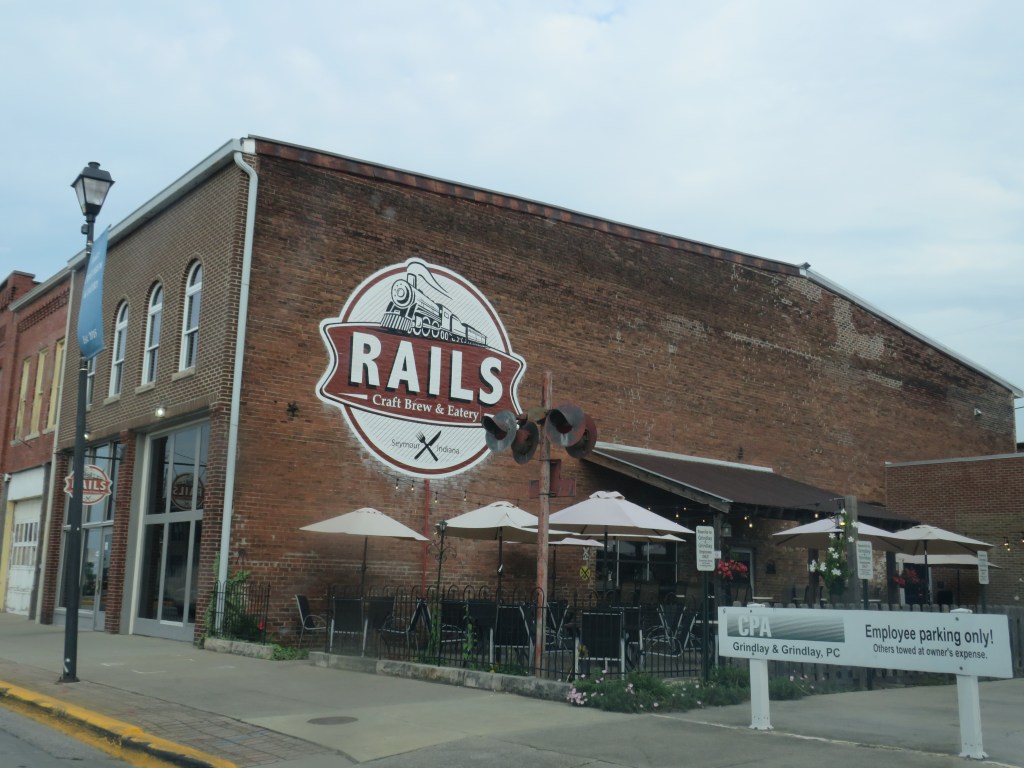
You enter into the historic district of the town.  You see the old buildings.  You see the town hall.  You see the Sherman Inn, and German style hotel and restaurant.  What you do not see is railroad tracks nor do you see any sign of the railroad ever being here.  Then you come upon Depot Square.  Wait a minute.  Where are the railroad tracks?  You see an old railroad crossing sign.  Where are the railroad tracks?  You see no signs of railroad tracks.

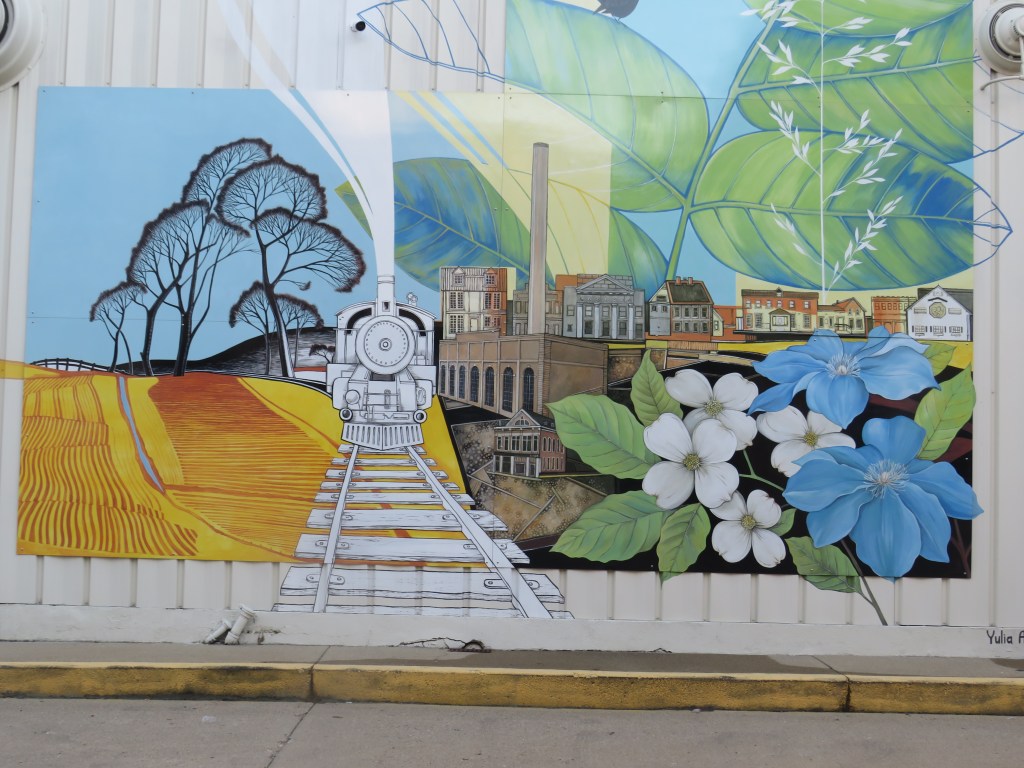
You walk towards the town center, and you see doors.  Doors?  They are just doors that are just there, but they have pictures on them.  What are they pictures of?  They are pictures of the old town.  Then you see pictures of the railroad.  You look behind the door, but you just see a street or a lot.

In the early years, a railroad line ran along what is now E. Pearl Street.  There was also a freight depot and a passenger depot.  Along these tracks was once a Buick car dealership where, in 1910, Buicks were brought to the dealership by train.

Some of you are saying, “Alright!  Batesville was a railroad town, but it is no longer a railroad town.”

True, but there is more to the story.  How much more?  Let us start at the beginning.

Before there was the town of Batesville, Indiana, it was just empty land.  The early settlers came and settled the land.  A man named Teunis Amack brought land from the government hoping to make it into a farm, but he later sold it to a man named George H. Dunn.  Who is George H. Dunn?  He was the owner of the John Callahan Trust Company.  Why did Teunis Amack sell the land?  George H. Dunn was also the president of the Cincinnati and Indianapolis Railroad.  The land was bought to be used for a railroad line.  The railroad line was built, and the town of Batesville, Indiana was built around the railroad.  The first train arrived on November 1, 1853, and passed through the center of the town.  The last passenger train served the town in 1906.  Through the years, the tracks were removed, and the train depot was demolished.

Now you have a reason to visit the town of Batesville, Indiana.  The trains may be gone, but the ghosts of the trains remain.

Valley Falls State Park, Fairmont, West Virginia

The U.S. state of West Virginia is a state known for its natural beauty and its mountains.  The state has many state parks.  One of those state parks is Valley Falls State Park near the city of Fairmont.  The park is mainly famous for its waterfalls, but it has many hiking trails as well.  A visit to Valley Falls State Park is a place you will cherish.
Some of you are saying, “Wow!  This must be a beautiful place.  I enjoy seeing waterfalls.  There is a big problem.  This park has no connection with the railroad.  Therefore, this park is not a place I will fall for visiting.”
Why visit Valley Falls State Park?  It has very beautiful waterfalls.  There is beauty surrounding you.  Why visit Valley Falls State Park?

You enter the park, and you drive down to the main parking lot.  You park your car, and you make your way to the waterfalls, but you cross a bridge.  What are you crossing?  You are crossing a railroad line.

Some of you are saying, “Yeah, but there are many railroad lines that pass through parks and towns but have no history with the parks or towns.”

You do have a point.  So, what is special about Valley Falls State Park?

Well, you arrive at the waterfalls, and you are amazed at its beauty.  As you walk around, you notice some ruins.  What was here?

What you are seeing is the ruins of a sawmill and a grist mill.  The water was used to power these mills.  The property was acquired by a trader in the 1830’s, and he built the mills on the site.  A town was erected around the mills, and it was named Valley Falls after, of course, the waterfalls.  Although the mills were the centerpiece of the town, something that arrived in 1853 caused the town to boom.  What came to the town?

In 1853, the Baltimore and Ohio Railroad was built between the town of Grafton to the east and the city of Wheeling located in what is called the Northern Panhandle of the state, and the railroad passed right past the mills.  Sadly, in 1886, the town was destroyed by fire and floods.  The town was never rebuilt although the grist mill itself remained in operation until 1905.

Today, you can see the waterfalls, but you can also see the same railroad line that served the town, but, today, CSX trains pass by the falls.  How great would it be to enjoy the waterfalls and be rewarded by a passing train?

Valley Falls State Park is located at 720 Valley Falls Road southeast of the city of Fairmont, West Virginia off of West Virginia Route 310.  The park is open year round from 7:00am to sunset, but please note that the park will close due to snow and ice.  (If you are adventurous, they do allow you to walk through the park on snowy and icy days.  You just have to park at the entrance and hike in.)  Please note that the walk to the falls is on uneven terrain, which may be difficult for wheelchairs, but much of the falls are viewable from the parking area.  Please also note that the railroad line is an active line.  (No trespassing on the railroad tracks.)

Valley Falls State Park was once the site of a bustling town made possible by the railroad.  Today, the only thing that is bustling is the waterfall and the surrounding natural beauty.  Visit Valley Falls State Park.  You may find it hard to leave.