This is a text widget, which allows you to add text or HTML to your sidebar. You can use them to display text, links, images, HTML, or a combination of these. Edit them in the Widget section of the Customizer.
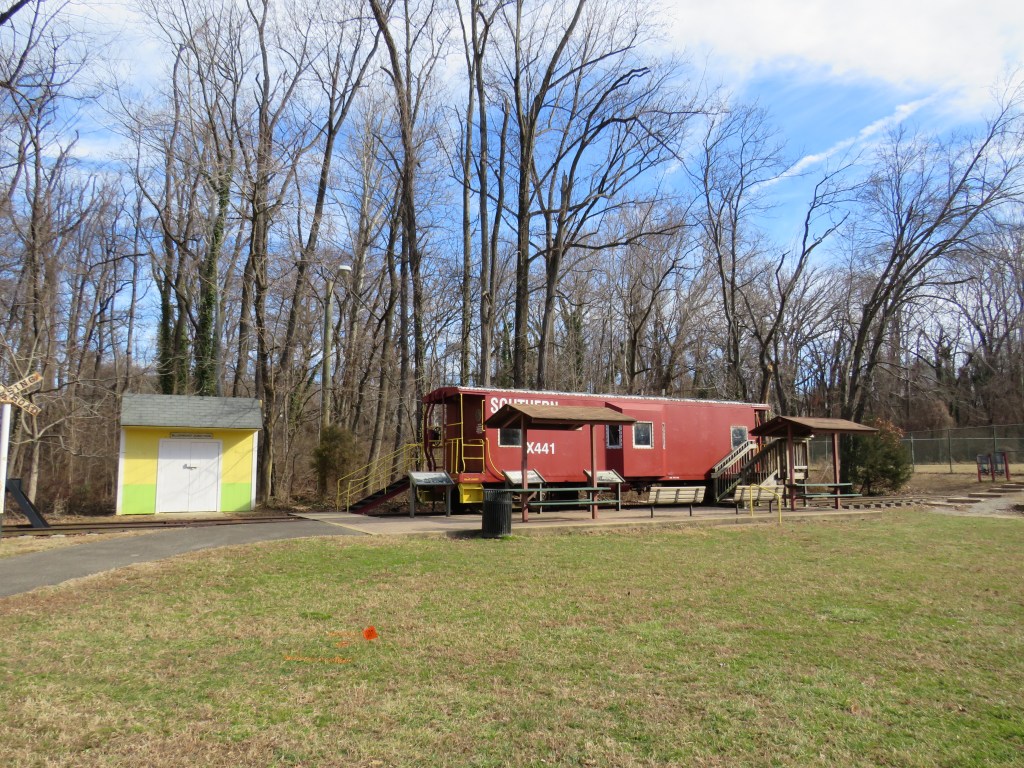
The small town of Alberta is located in the southern region of the U.S. state of Virginia. Yes, the name of the town is Alberta. (Whether it is named after the Canadian province is unknown.) In this small town in the center of the town is a caboose. How is the caboose here? This town has no railroad. Well, the town was once served by two railroads, and there was heavy rail traffic in its heyday. Like many small towns, service declined, and the railroads were forced to abandon the town.
Some of you are saying, “This is nice, but many small towns in the United States of America have declined from the lack of the railroad.”
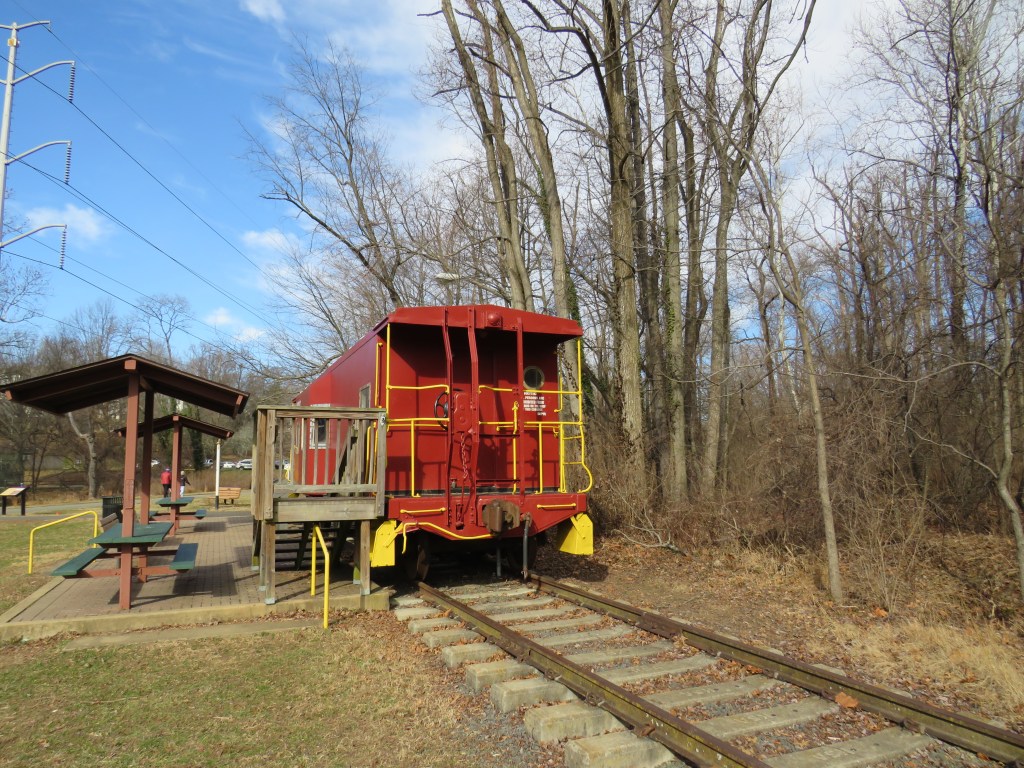
Even though Alberta, Virginia looks like a ghost town today, the Alberta Caboose reminds everyone about the railroad heritage. The caboose is from the Virginian Railway and sits near the old railroad bed of the Virginian Railway which is now the Tobacco Heritage Trail which runs across the southern region of Virginia as a reminder of how the Virginian Railway and, later, the Norfolk and Western Railway was a big part of the tobacco industry.
What about the caboose itself? As mentioned, it was used by the Virginia Railway. It was donated to the town in memory of Earl Walter Wilkinson. Who is Earl Walter Wilkinson? He was a devoted employee of the Norfolk and Western Railway. Like many cabooses that you once saw on the end of freight trains, it was preserved and put on display.
The Alberta Caboose is located in the Town Square in Alberta, Virginia at 123 First Avenue. It is one block from Virginia Route 136 and minutes from U.S. Route 1 and Interstate 85. There is a small parking lot for parking.
If you ever visit the town of Alberta, Virginia, it may appear to be a ghost town, but it comes alive with the memory of the railroad.
Do enjoy time in the garden? You enjoy the peace and serenity. You enjoy the flowers in bloom. You enjoy the trees over your head. This is what you will feel as you stroll through Airlie Gardens in the city of Wilmington in the U.S. state of North Carolina. Built around a mansion that sadly is not open to the public, Airlie Gardens is a refreshing place to enjoy. The ponds, the groves, and even the views of Bradley Creek, Airlie Gardens is truly an oasis in a very busy beach city.
Some of you are saying, “Wow! I love gardens. They are so beautiful. However, there is a very big problem. You see. These are gardens, and these gardens have no railroads. Therefore, I will not be taking a stroll through here.”
You do have a point. There is no railroad here, and no railroad has ever run through these gardens. So, what does the railroad have to do with Airlie Gardens?
The history of Airlie Gardens begin long before the United States of America was established, but in 1835, a man named Thomas Henry Wright built Mount Lebanon Chapel on the property, and the church remains on the property today. Who is Thomas Henry Wright? He was a physician, a bank president, a merchant, an Episcopal minister, and he was also a railroad director of the Wilmington and Weldon Railroad.
However, this is just a tiny piece of a bigger story.
Then comes Henry Walters. Who is Henry Walters? He is famous for being an art collector and a philanthropist. He was the son of William Thompson Walters. Who is William Thompson Walters? He was the president of the Atlantic Coast Line Railroad of which the headquarters was moved to Wilmington, North Carolina in 1884. When William died in 1894, Henry took over the railroad. While here, Henry started other railroads. Among them was the Atlantic Beach Car. What is the Atlantic Beach Car? It began in 1902 at the Wilmington Seacoast Railroad using steam locomotives to pull passenger cars from Wilmington to Wrightsville Beach, but it was later converted to an electric railroad using trolleys, and the ‘Beach Car’ was born. Among the stops along the line was a stop at Airlie.
Henry was a frequent guest of Pembroke and Sarah Jones, the owners of the Airlie Mansion of which Airlie Gardens was built around. Pembroke was also a director on the Atlantic Coast Line Railroad. Among the guests were Stuyvesant Fish, owner of the Illinois Central Railroad, members of the Vanderbilt family, tycoon Henry Flagler, and socialite Henry Lehr. Henry had a sister named Jennie who Married Warren Delano III, the uncle of U.S. President Franklin Delano Roosevelt. When Pembroke died, Henry married Sarah, and they lived at a home in Manhattan in New York City, New York. His other accomplishments include the establishment of the Walters Art Museum in Baltimore, Maryland where he made few visits. Henry remained the president of the Atlantic Coast Line Railroad until his death in 1931. Sarah transforms the gardens and eventually opens the gardens to the public.
The Airlie Gardens is a great treasure to see. Regardless of what time of the year, Airlie Gardens is a great place to take a stroll.
Airlie Gardens is located at 300 Airlie Road in Wilmington, North Carolina just off of U.S. Route 17. It is open year round from 9:00am to 5:00pm. The great part is that is it mostly wheelchair accessible. You can get more information on admission and read more into the history of the gardens at https://airliegardens.org/.
No, you will not see the railroad here, but you can take a stroll through a place that has a connection to the railroad. Visit Airlie Gardens. Pembroke and Sarah Jones and Henry Walters will be glad that you did.
It is the afternoon. She is sitting on her couch watching her favorite show television. She knows that when the show ends, it is time to go out. Where? She turns off the television. She walks out of her house locking the door. She takes a walk down the street and makes her way to the train station. Walks onto the platform and sits down on the first bench she sees. She sits there waiting, waiting and waiting. It should happen at any time. She gets a little impatient, but she still has a few minutes. She checks the time. She is hoping that there are no delays. She just cannot wait. She hears a sound of what could be a locomotive. Her phone rings. She looks at her phone and sees someone important.
“Hello,” she speaks. “I am here waiting.”
The horn toots. It is almost here. She looks down the tracks. The train is coming. She is so excited not just to see the train, but she is excited for what the train is bringing to her. The train pulls up and stops. People get off, but she is looking for the most important person… her man. He gets off. She goes to him, and they embrace. It is her love brought to her by the train.
Many people ride the train either for vacation or to commute to and from the workplace. To those who have that someone waiting at the station for your arrival, we would like to wish you a Happy Valentine’s Day. If you are one of those who ride together, we wish you a Happy Valentine’s Day as well. May you spend your time on the train with the very one that you love, and may your ride be very, very long.
When you think about Savannah in the U.S. state of Georgia, you think about a city rich with history. You see its many historic structures to include the birthplace of Juliette Gordon-Low, the founder of the Girls Scouts of America. You see the many city squares. You walk by the moss trees. You cannot overlook the great waterfront. Considering that this is the oldest city in the state of Georgia, it has many historic sites to see here. It will take you more than a week to see everything.
Now some of you are saying, “Wow! That is so cool to see how there is so much to do in Savannah. The only problem is that the city of Savannah has no railroad history whatsoever. Therefore, there is no reason for rail fans to visit Savannah.”
To those who just said that quote, you are so sadly mistaken. Savannah does have many historic sites, and some of those sites… are railroad sites.
Welcome to the Georgia State Railroad Museum. As you make your way to downtown from Interstate 16, it will be the very first site you see. Yes, it is that easy to find. The museum is housed in one of the oldest still standing roundhouses in the United States, and it has a working turntable.
Now some of you want to mention that there are many working turntables in the country. That is true, but this turntable is very interesting. There will be more on that later. To answer your question, there is rolling stock on display to include many box cars, cabooses, locomotives, and a Pullman Car. You can also tour the old shops where the workers worked to maintain the rolling stock. Oh, if you have a little time, you can even operate a hand car.
Now some of you are saying, “That is so nice. We get to go to a railroad museum and see rolling stock and run a hand car. What would make this place worth visiting is if they had train rides.”
Ladies and gentlemen, they do have train rides. They are short rides, but these rides are special. How often do you get to take a train ride through an operating turntable? You have read correctly. You ride through the actual turntable. It is a great experience for any rail fan.
The Georgia Railroad Museum is located at 303 Martin Luther King Jr. Boulevard just blocks from all of the historic area, and it is across the street from the Visitor Center which was once a passenger train station. You can learn more at www.chsgeorgia.org.
The next time you think about Savannah, Georgia and its history, you will now have a new historic place to think of: the Georgia Railroad Museum.
The U.S. state of North Carolina is one of the original states in the United States of America. The state is famous for its coastline to include Kitty Hawk where two brothers from Ohio who worked on bicycles successfully made the first successful airplane flight. It is also the home of the eastern half of the Smoky Mountains National Park, one of the most visited national parks in the nation. The state has some of the most successful college basketball teams in the nation from Duke University, the University of North Carolina, and North Carolina State University. In Ashville, you have Biltmore, one of the finest mansions in the nation. When it comes to railroad history, the state has some great railroad sites. You have the Great Smoky Mountains Railway in Bryson City, and you have the North Carolina Museum of Transportation in Salisbury that was erected in an old railroad roundhouse, and it is here where the Norfolk and Western Railway’s Number 611, the most photographed steam locomotive in the world, is often serviced. It is also home to the National Railroad Hall of Fame in Hamlet. There is a small town that has a little treasure of its own.
Welcome to the town of Selma, North Carolina. What is in Selma, North Carolina? It was in this town where Vicks Vaporub was invented in a local drug store. When you enter the town, you will see that it is a definitely a railroad town. Mitchner Station, built in 1855, is the oldest surviving train station in North Carolina. As you arrive at the station, you will see that it is currently not in use. It was spared from demolition by locals. You then look down the tracks and see another treasure of the town.
Welcome to Union Station in Selma, North Carolina.
Some of you are saying, “Wait a minute. Union Station? This is a small town.”
Selma is a small town, but it is a railroad town, and Union Station, built in 1924, is located at a cross track with a single track line crossing a double track line with a connecting track. Did any famous people visit here? If the name “Lady Bird Johnson”, the wife of Lyndon Johnson sounds familiar, she came here to campaign for her husband in 1964 after the Democratic National Convention to campaign for her husband. During its heyday, this station saw much passenger traffic, but as railroad passenger service declined, service at this station ceased.
Some of you are saying, “And now this train station rots into ruin.”
It did, but a restoration of the station gave it new life. It houses a museum that tells the story of the town of Selma and the rich history of the town as a major railroad town.
Some of you are saying, “Sadly, it is a museum, and it is no longer an active train station.”
You are wrong. When the train station was restored, Amtrak restored passenger service to Selma with the Carolinian Route and the Palmetto Route serving the station. An actual station attendant is in the ticket office on hour before the trains arrive.
No more excuses. You now have a reason to visit the town of Selma, North Carolina.
The Historic Union Station of Selma, North Carolina is located at 500 Railroad Street, just minutes from Interstate 95 and U.S. Route 301. The passenger waiting room that houses the museum is open daily from 10:00 a.m. to 5:00pm. Parking is available on Railroad Street. The museum and the old passenger platforms is completely wheelchair accessible. Most important, admission is free. Plus, you many be rewarded with a passing train.
The American Civil War was fought throughout the southeast region of the United States of America. You hear about the Battles of Manassas and Gettysburg, but you very seldom hear about the battles that took place in the northern region of the U.S. state of Georgia. There are numerous stories of the American Civil War, and a great number of those stories took place in Georgia.
Welcome to the Atlantic and Western Railroad Tunnel and Museum in Tunnel Hill, Georgia. What is special about this tunnel. Built in 1850 by the Atlantic and Western Railroad, it was the first railroad tunnel in the South with a railroad line connecting Atlanta with Chattanooga, Tennessee. It may be a simple tunnel, but this tunnel became a very important part of the history of the United States of America, and it played a big role in the America Civil War.
Your visit begins when you arrive in the parking lot. Yes. It really does begin with the parking lot. What is special about the parking lot. Well, it is not the parking lot that is special, but it is what you see when you arrive. You see the railroad line that is still active and under the ownership of the Norfolk Southern Railway of which was built by the Atlantic and Western Railroad. (The line was originally single track but was later double tracked and no longer passes through the tunnel. You see an old train station on the other side of the tracks. (Sadly, it is not open to the public.) You have old baggage carts on display. Then you see Sherman Neckties. No. Men did not wear these around their necks. Major General William T. Sherman would order soldiers to destroy the tracks to either stop or derail the trains. The rails were melted and twisted. The term comes from the fact that some of the rails were sometimes twisted to look like actual neckties.
From here, you enter the visitor center which also houses a small museum. The artifacts on display include guns used during the war, the clothing, and small trains plus the history of the Atlantic and Western Railroad and the history of the tunnel. There is also a small gift shop.
Even though you see the story in the museum, you came to see the tunnel. The guided tour begins.
You first go to the General Store. What is special about the General Store. This store is a recreated store to tell the stories of how the stores operated. Some stores also served as the post office.
Just a short walk is the Clisby Austin House. Who is Clisby Austin? He was a reverend who was also a business owner who owned the original general store, and he was also a farmer. To you, it looks like a house. During the war, it was a hospital for Confederate soldiers, and it was also the headquarters for Major General Sherman, and it was here where he planned his attack on Atlanta. The house is displayed as a hospital. Originally called Meadowlawn and part of a large farm, the house changed ownership numerous times after the war and was finally donated to be open for tours. Two movies were filmed here: ‘From a Whisper to a Scream’ and ‘My Brother’s War’.
From here, you go to the main attraction, the tunnel. You arrive at the entrance of the tunnel that was blasted through Chetoogeta Mountain. The railroad line passed next to the tunnel, but you can see the inside without having to worry about a train. The tour guide points out the holes where dynamite was planted. It may look like your average railroad tunnel, but it is not. The Great Locomotive Chase, a chase where a locomotive called ‘The General’ was chased by ‘The Texas’ through this tunnel in April of 1862. Scenes from ‘Godzilla: King of Monsters’ was filmed here. In 1926, a larger tunnel was constructed parallel to the Atlantic and Western Railroad Tunnel and remains in use today by Northern Southern Railway.
The Atlantic and Western Railroad Tunnel is an engineering marvel. It is a must see place for railroad enthusiasts, history lovers, and engineering people or anybody who enjoys visiting historical places.
The Atlantic and Western Railroad Tunnel and Museum is located at 215 Clisby Austin Drive in Tunnel Hill, Georgia. It is just a short drive from U.S. Route 41 and Interstate 75. It is open Monday through Saturday from 10:00am to 4:00pm. (Closed on Sunday.) Admission is required. The museum is self-guided, but the Clisby Austin House, General Store, and tunnel require a tour guide. Although a golf cart takes you to each site and drives you through the tunnel, the Clisby Austin House requires walking and climbing stairs and is not wheelchair accessible. The tunnel is, of course, a tunnel which is very narrow and closed in. Those who are not good in underground enclosed places may have problems as you pass through. You can read more into the Atlantic and Western Railroad Tunnel and Museum including the history and dimensions of the tunnel at https://www.civilwarrailroadtunnel.com/.
Visit the Atlantic and Western Railroad Tunnel. No. You will not see a locomotive chase, but you will see a place where American history took place.
When people think about the U.S. state of South Carolina, they mainly think about the beaches. You have Charleston and Fort Sumpter where the first shot of the American Civil War was fired. You have the beach towns of Myrtle Beach and Hilton Head. As many treasure the beaches, this state has a history with the railroad as well.
Welcome to the South Carolina Railroad Museum in Winnsboro, South Carolina. Yes. It has railroad cars on display. As you arrive, the first thing you will notice is the train with steam locomotive number 44 on the front, freight cars, a baggage car, rail post office, and the ‘Norfolk’ parlor car. There is also a caboose. Yes, many railroad museums have that, but there is also a gallery with railroad artifacts and model trains.
I know. Many railroad museums have all of this. Oh, they have train rides.
You have all of this at a museum that is listed on the National Register of Historic Places. Yes, it is a National Historic Site. Therefore, if you think that this is just another railroad museum, you will discover that it is not.
The South Carolina Railroad Museum is located at 110 Industrial Park Road in Winnsboro, South Carolina just off of U.S. Route 321 and South Carolina Route 34. It is open from Wednesday to Saturday from 10:00am to 4:00pm. Trains rides take places from June to September plus on Easter, Halloween, and Christmas. The museum is free, but there is a cost to ride the train. Parking is on site.
Next time you think of South Carolina, do not just see the beach. May your way to the South Carolina Railroad Museum, another state treasure.
The United States of America began with thirteen states. Among those states is Georgia, the largest state east of the Mississippi River. The state is famous for some of its cities like Atlanta and Savannah, both of which are big railroad cities, but the state has small towns that were shaped by the railroad. Among these towns is a town in the northern region of the state known as Cornelia.
Some of you are saying, “Here we go again. It is another one of those small towns that has this old train station that just sits there and it not used anymore, or it has a tiny little museum to let everyone know that trains came to the station. This is just what these small train stations are. They are nothing special. I will not waste my time visiting here.”
Ladies and Gentlemen, welcome to the town of Cornelia, Georgia, the home of the Cornelia Depot Railroad Museum. Be advised. If you enjoy boring typical railroad station museums that do not have much to see or have any history to them, then this museum is not for you.
So what is special about the Cornelia Depot Railroad Museum? When the town was established as a settlement in 1860 and became a town in 1865, there was no railroad here. The railroad came to the town in 1872 bringing passenger and freight service to the town. In 1882, another railroad line was built that took passengers to the Tallulah Falls, and it became known as the Tallulah Railway as it passed through the Tallulah Gorge in the northern region of the state. The town grew around the two railroads. Sadly, the Tallulah Railway ceased service after World War II, but the original line that brought service to the town remained, and it remains in service today under ownership of the Norfolk Southern Railway.
Today, the train station is no longer active but now houses the museum. As you arrive, the first thing you will see is a big red apple on an eight foot high pedestal.
Some of you are saying, “Well, it is an apple on a pedestal. There is nothing special about it.”
Oh, there is something special about this apple. The town of Cornelia is known as ‘The Home of the Big Red Apple’. Where does this name come from? The town is the center of a region where apples are grown, but that is only part of the story. The apple itself was designed in Winchester, Virginia. It was brought to the town by way of the Southern Railway who donated the Big Red Apple to the town.
The next thing you will see is a red caboose. Well, there are two red cabooses, but this one is resting on a track under an overhang. What is special about this caboose? It has Tallulah Falls one the side of it. The caboose is on the old railroad bed of the Tallulah Railway. A small monument was erected by the caboose showing the route of the Tallulah Railway all the way to Franklin, North Carolina. The second caboose sits next to the main railroad line.
Enough about seeing the outside. It is time to go into the train depot itself. You enter the museum and look ahead at the ticket window where the ticket master sat and looked for trains and sold tickets to passengers. As you look around, you notice that on October 20, 1992, a famous visitor visited the town. He said to the people, “You made my day.” Who was this visitor? His name was George Herbert Walker Bush, the President of the United States of America who came to Cornelia by train.
The passenger waiting room and the freight room are full of artifacts from the Southern Railway and the Tallulah Railway. Among the artifacts is the original switchboard used to switch tracks in the region.
So you think that the Cornelia Depot Railroad Museum is just another small town museum? You will be surprised when you visit here.
The Cornelia Depot Railroad Museum is located in downtown Cornelia at 102 Grant Street just minutes from U.S. Routes 23 and 441. Parking is located at the museum, and the museum is wheelchair accessible. Most important is that admission is free, but they gladly accept donations. You can get more information about the museum, the museum hours, the history of the town, the other attractions in the region at https://www.corneliageorgia.org/living-visiting/places-of-interest/cornelia-depot-railroad-museum/.
If you are ever in the northern region of the state of Georgia, you will sure want to have Cornelia, Georgia on your mind. You will be glad you visited. Maybe get some apple pie or apple juice at ‘The Home of the Big Red Apple’.
In the glory days of the passenger railroad, you had the grand train stations in the big cities, and you had the train station in the small town. As fewer people took the train, the train made fewer stops. Many of the small towns were served by the passenger train. In those small towns, the train stations were abandoned. Some were demolished, but some were spared. In some towns, the train no longer goes there.
You visit the small town, and you see the old train station. It is a visitor center or museum or a business. Some that are within major metropolitan areas are used as commuter train stations. Some were kept in their place while some were relocated to be preserved. Some that are next to an active rail line have had a fence between the depot and the tracks. You have stations that have remained next to rail trails. Regardless, you feel the need to see the train station.
As you walk around, it appears lonely. As you look through the windows, you see the waiting room. You can imagine the people sitting on the benches waiting for their train to come. You look into what was the ticket office. You imagine the ticket master selling tickets. You see him collecting the mail to send to citizens of the town. You see him sending a telegraph. He is at the window watching for the trains. You look into the freight room and imagine the freight being prepared to be put on the next train and the freight that had arrived to be sent somewhere in the region. You walk out to the empty platform. The tracks are currently empty but wait. You imagine the passengers standing awaiting for their train to come. The train comes, and the passengers board and deboard the train. Their loved ones hug them and take their luggage to the car, or horse pending on the time period. Then, you are back to the present as a train, an actual train comes and rolls by the station. You stand, and you watch.
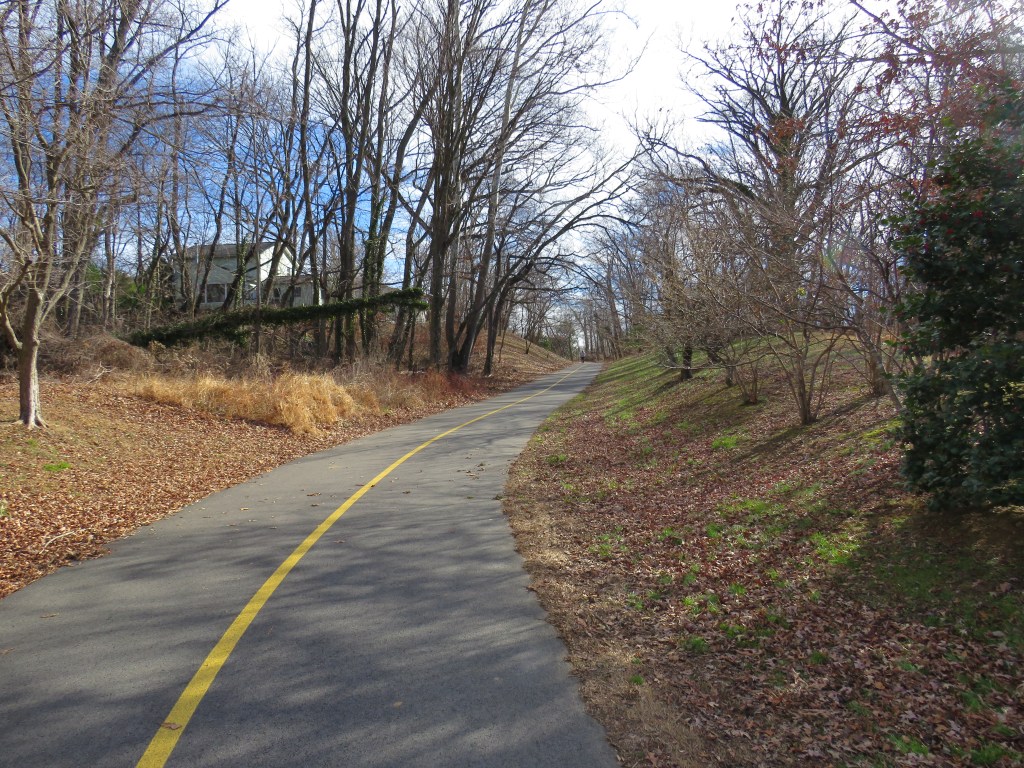
But you are at a station where the tracks are no longer there. You see a rail trail, or you just see the old railroad bed. You set your mind back in time, and you see the trains coming. You watch each hiker and biker, and you think of them as a passenger on a train.
The old train station may still be used as a train station or not. As you see the station, it will remind of how the railroad was a part of the town and how it made many towns what they are today.
It is just a few days before Christmas. You are at the station waiting and waiting and waiting. Then, the train finally arrives. You climb aboard, and you get into your seat. You are on your way to spend Christmas with the ones you love, and you are going there using your favorite mode of transportation, the train. Sure, you could have driven your car and be on your own time, but you will have to stop for gas and sit in traffic. You could have taken the bus, but you would not have your own comfy seat. You could have taken a plane and have gotten to your destination in quick time, but you do not like getting to the airport hours early to finally get on a plane and sit in a cramped seat seeing nothing but the inside of a plane on the entire journey. Instead, you like your comfy seat where you can stretch out and see the scenery outside. The only sound is the grinding on the rails beneath you. The porter comes by to check up on you. You eat your meals at a nice table, and, if you have a sleeping room, you sleep in a nice bed. What a great way to go home.
As you are making your way to your destination, think of all of those who do the work necessary to get you there. The engineers, mechanics, baggage handlers, conductors, track workers, porters, waiters and chefs just to name a few. Without them, your Christmas journey would not happen. Because of them, your Christmas journey will be very Merry.
So, have yourself a very Merry Christmas and a very Happy New Year. Have a very Merry Christmas Journey. Most important of all, have a Happy Railroad Journey.