
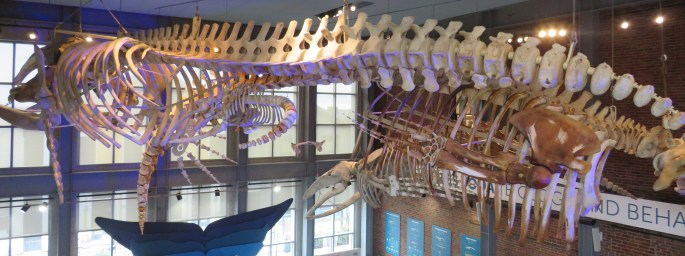
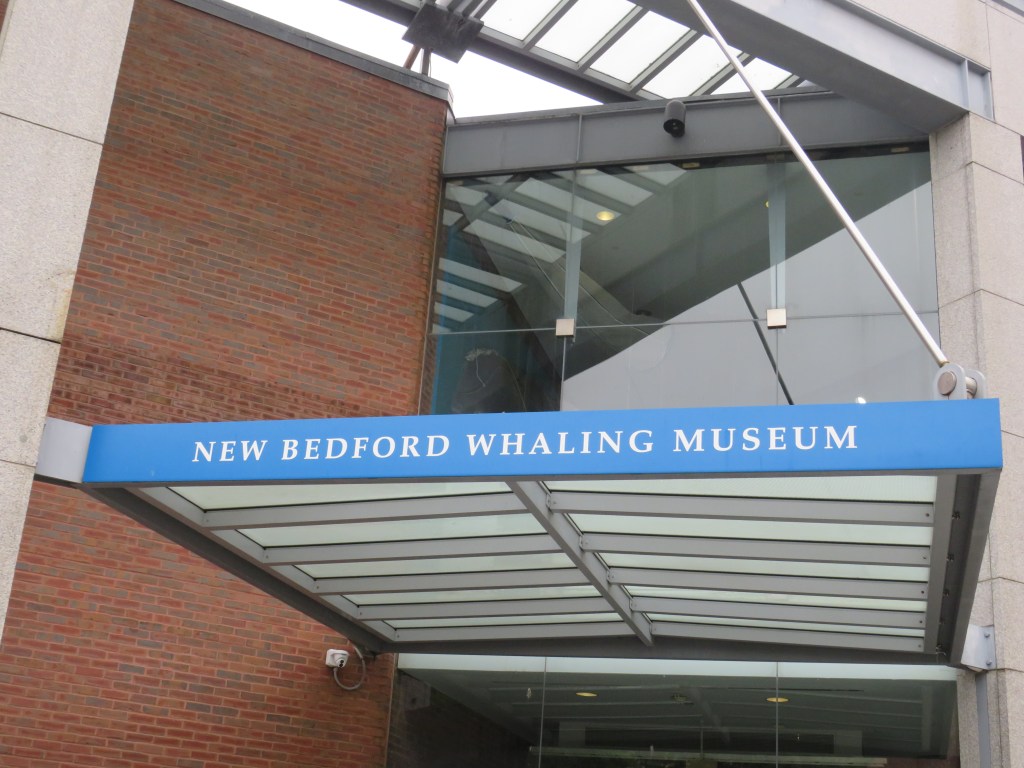
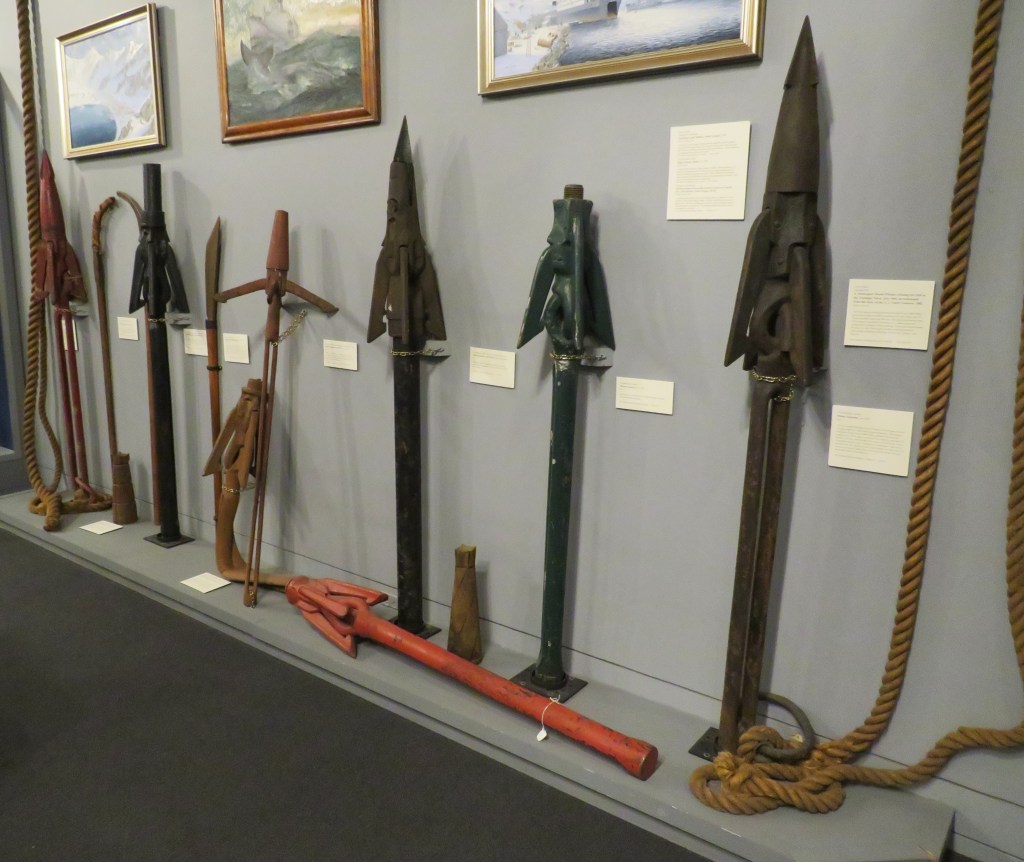
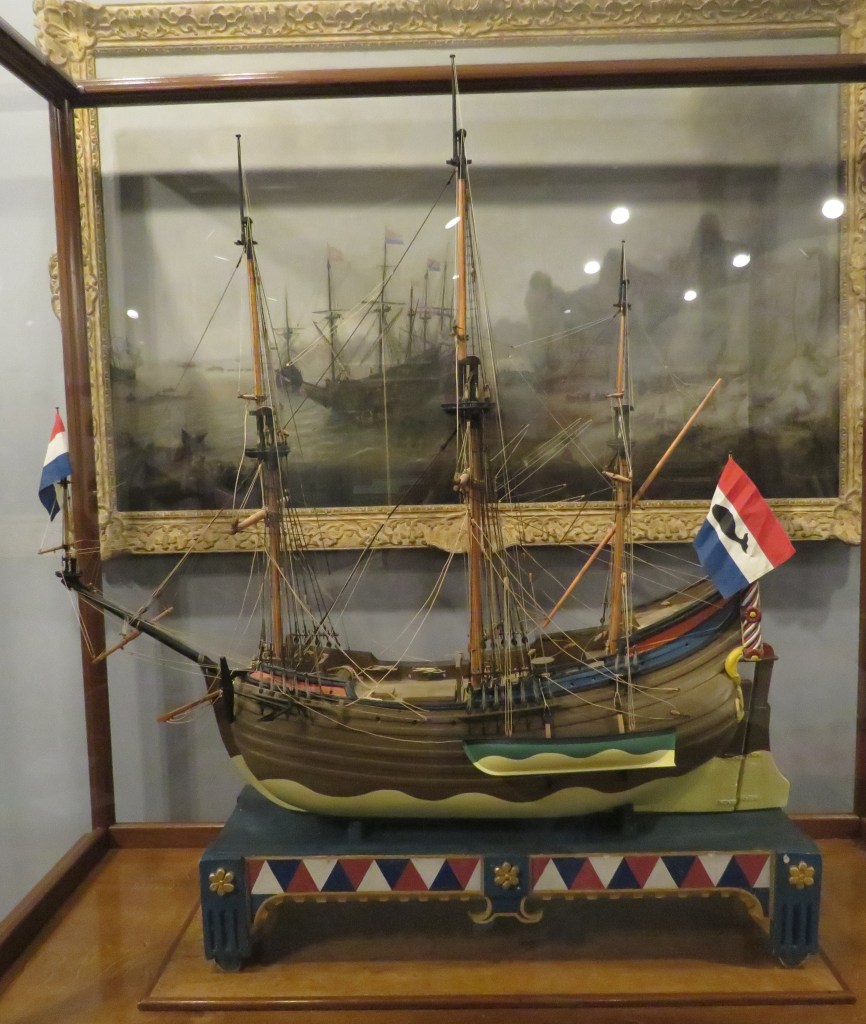
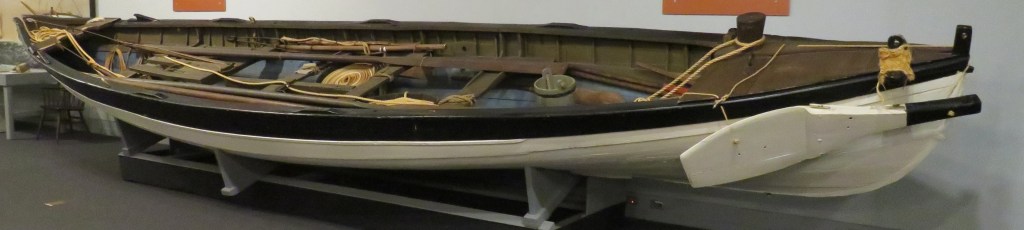
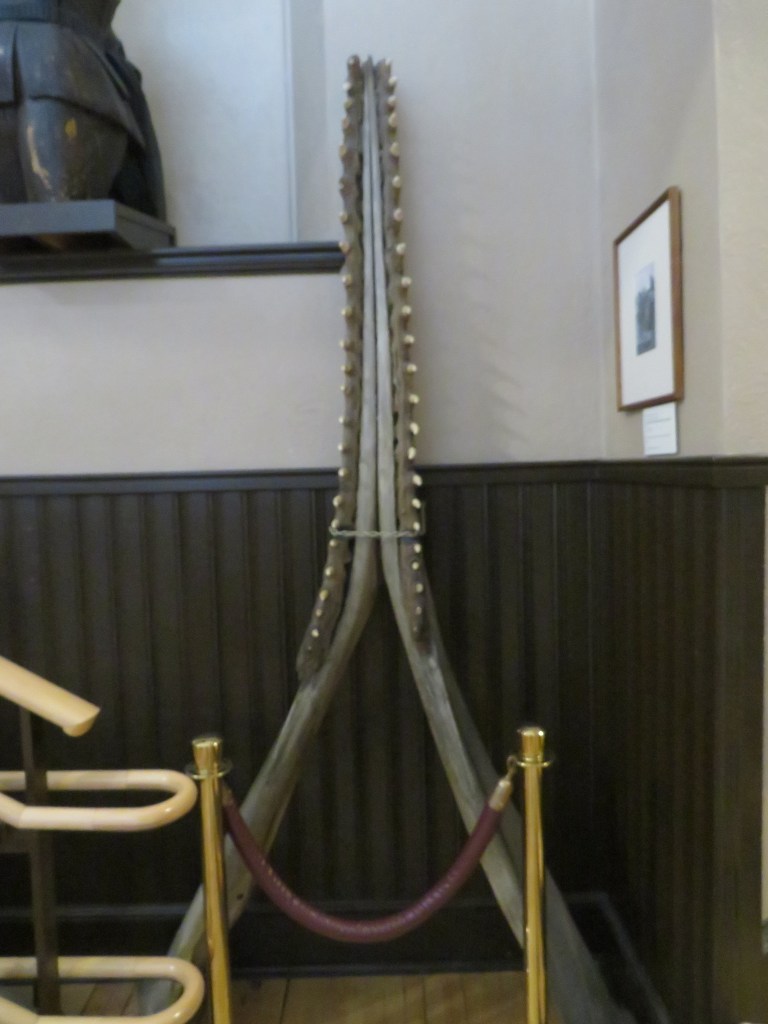
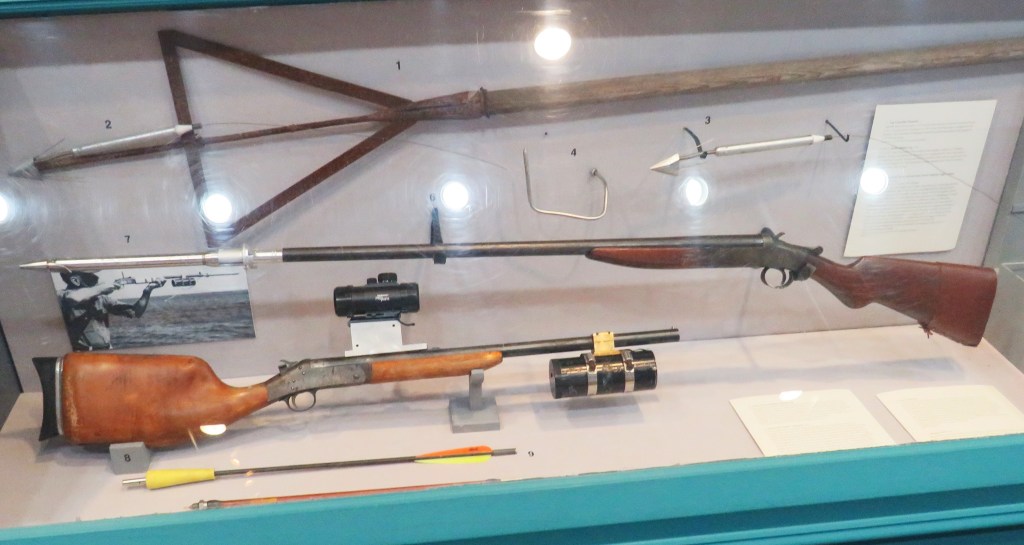
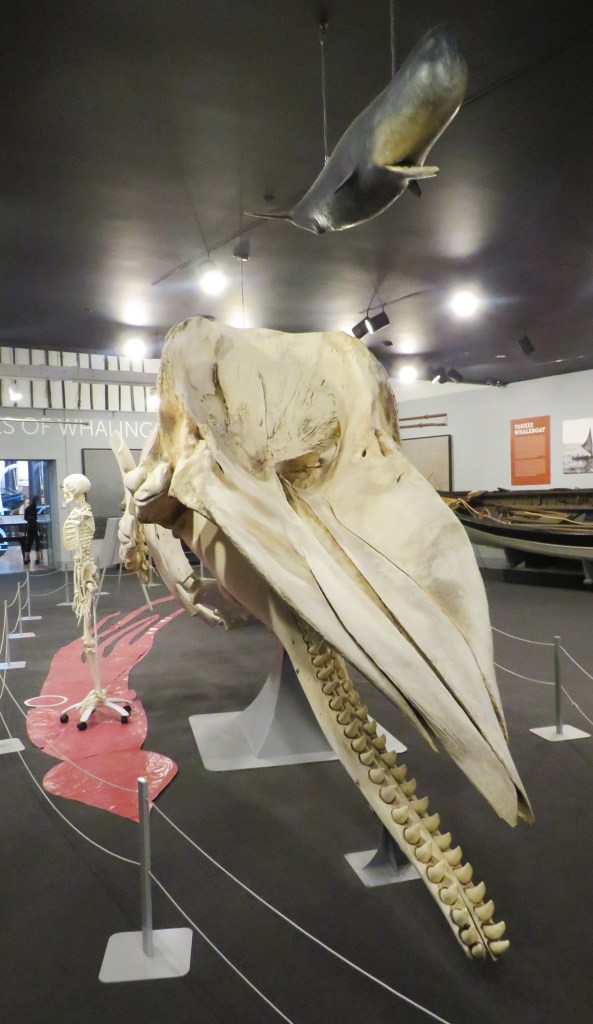
In the early years of the United States of America, whaling was a way of life. What is whaling? Men would step aboard ships, and they would head out to sea. Why? They were hunting whales. They would take harpoons and throw them at the whales. (Harpoons are basically a specific kind of spear mainly used to pierce the thick skin of animals.) The whales were pulled onto the ship, and they were processed at sea and turned into lubrication and oil used for lighting. Back in the day, it was the main source of income particularly in the New England States. The story of Moby Dick is a story that was inspired by the whaling industry. (Moby Dick was the name of a fictional whale.) Today, the hunting of whales has been banned in the United States of America. (It is still legal in some countries but with limitations.) Although the whaling industry is no more, you can learn more about the industry at the New Bedford Whaling Museum in the city of New Bedford in the U.S. state of Massachusetts. In the heyday of the whaling industry, New Bedford was an international port city. Today, you can see the waterways where the whalers (whale hunters) would depart and return each day. The New Bedford Whaling Museum tells the story of the whalers, the industry, and the life of a whaling town.
Some of you are saying, “Wow! This is great. There is a museum that is dedicated to whaling. I do have a problem with this museum. What is the problem? This is a whaling museum, not a railroad museum. Therefore, I will not have a whale of a time visiting this place.”
You do have a point. It is called the New Bedford Whaling Museum. It is about the whaling industry and not a railroad museum. Why should somebody who is a railroad fan visit this museum?

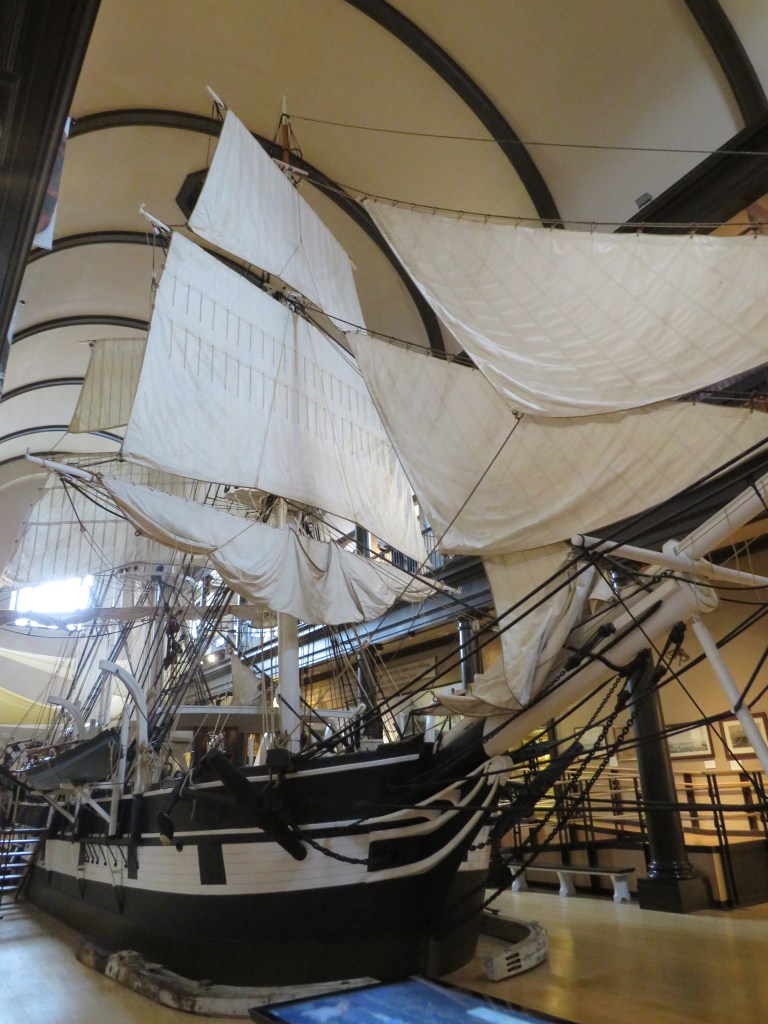
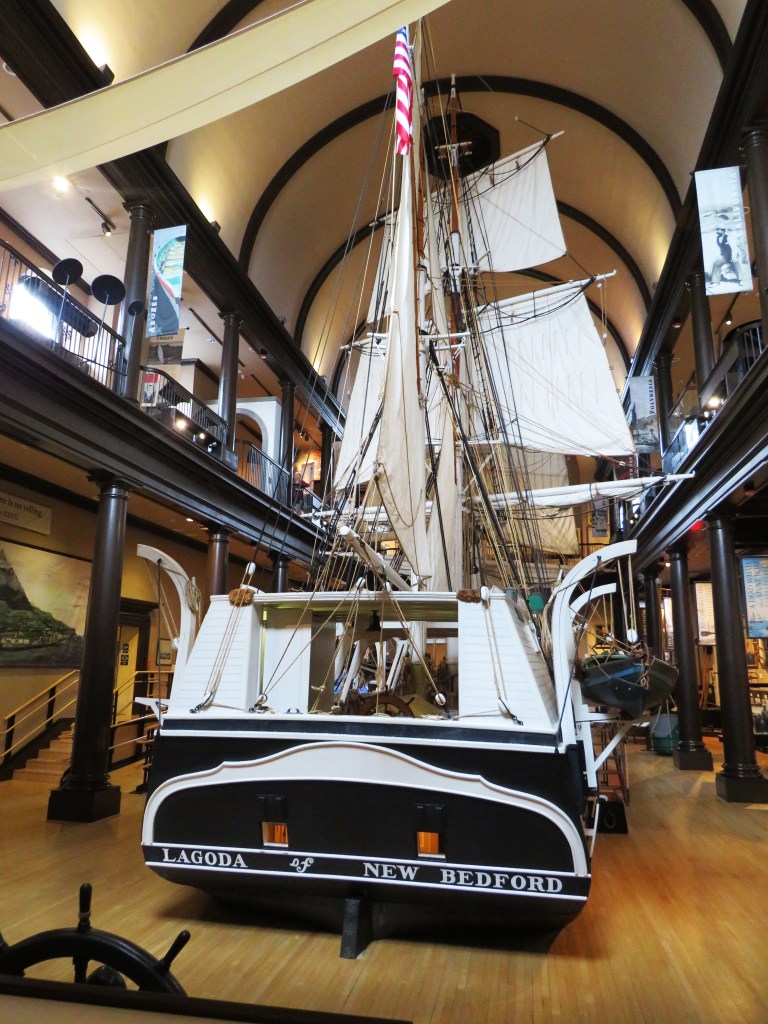
The museum, founded in 1903 as the Old Dartmouth Historical Society but operates under the name ‘New Bedford Whaling Museum’, features different galleries and exhibits exhibiting the life in the whaling industry. One exhibit displays a half scale model of a whaling ship called the ‘Lagoda’. What is special about this ship? It is the largest scale model ship in the world.
Some of you are saying, “That is nice. However, there is nothing about the railroad here.”
What does this have to do with the railroad? Well, there is no connection with the railroad and the whaling industry. Why visit this museum?
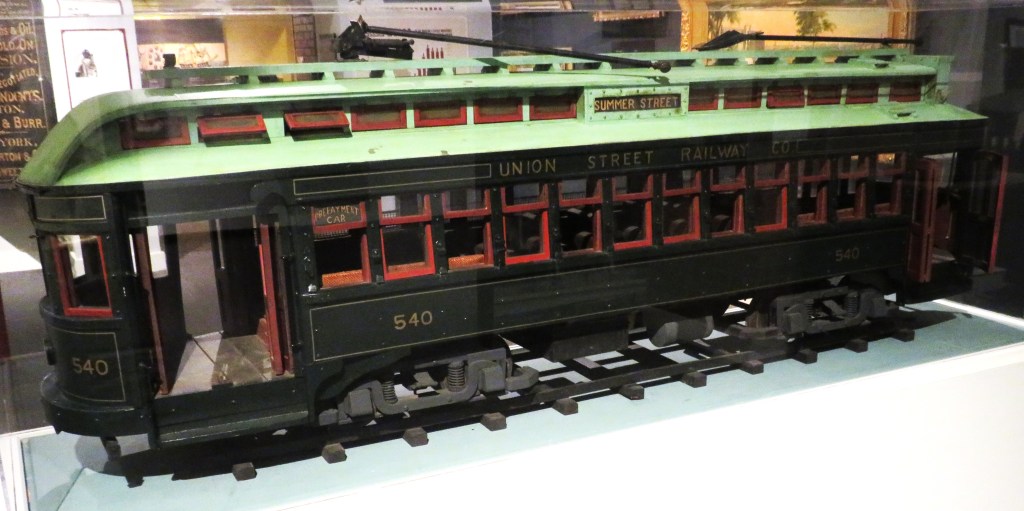
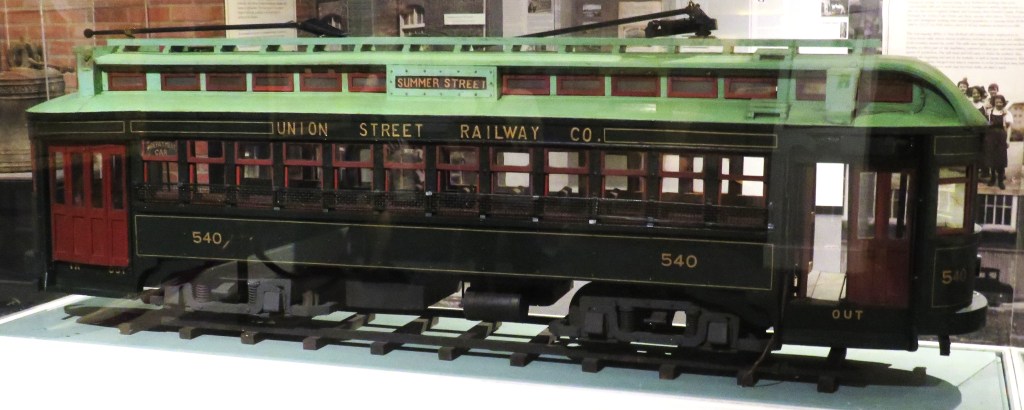
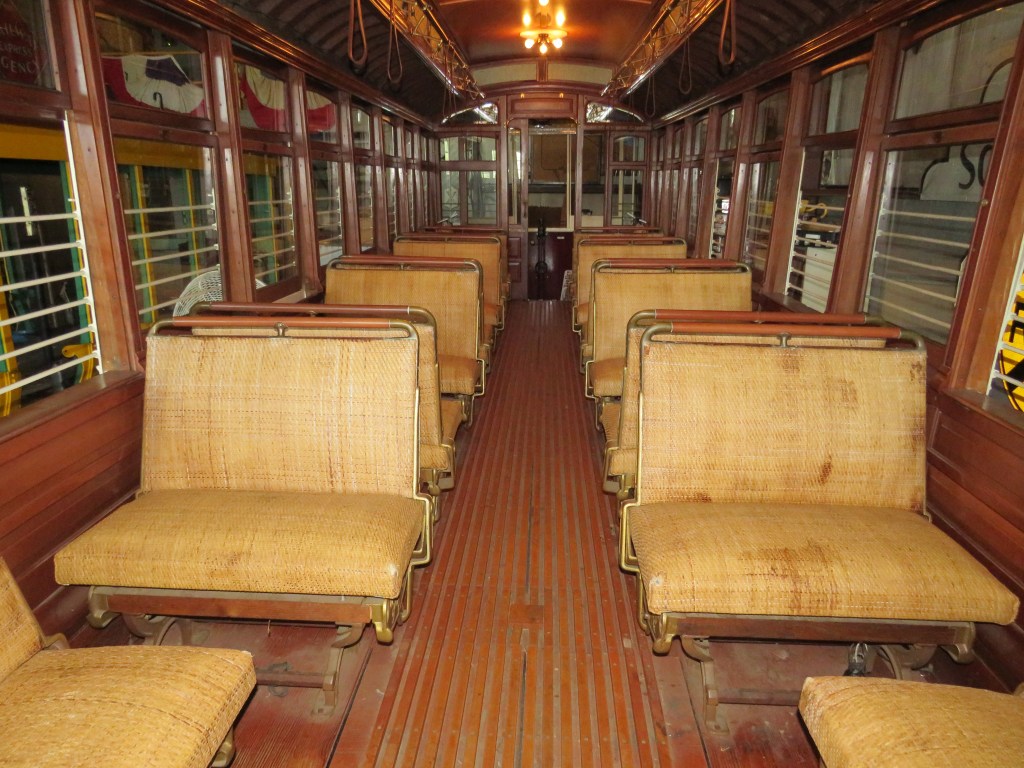
The museum tells the story of the whaling industry in New Bedford, but New Bedford also had other industries like glass and textiles and other industries in the town. One of the exhibit halls is the ‘Energy and Enterprise’ exhibit. Yes, it displays the industries in the city. As you look around, you see a model of a streetcar. Streetcars began in New Bedford from 1872 by the New Bedford and Fairhaven Street Railway Company. The Union Street Railway Company took over in 1887, and it ran until 1947. A model of Streetcar Number 540 is in a glass display.
Is that all? No.
Another display tells the story of how the railroad connected the city of New Bedford to the rest of the nation. In 1840, the railroad came to town. Being a major international port at the time, items were transported from the ships onto railroad cars and transported to various towns throughout the United States of America.
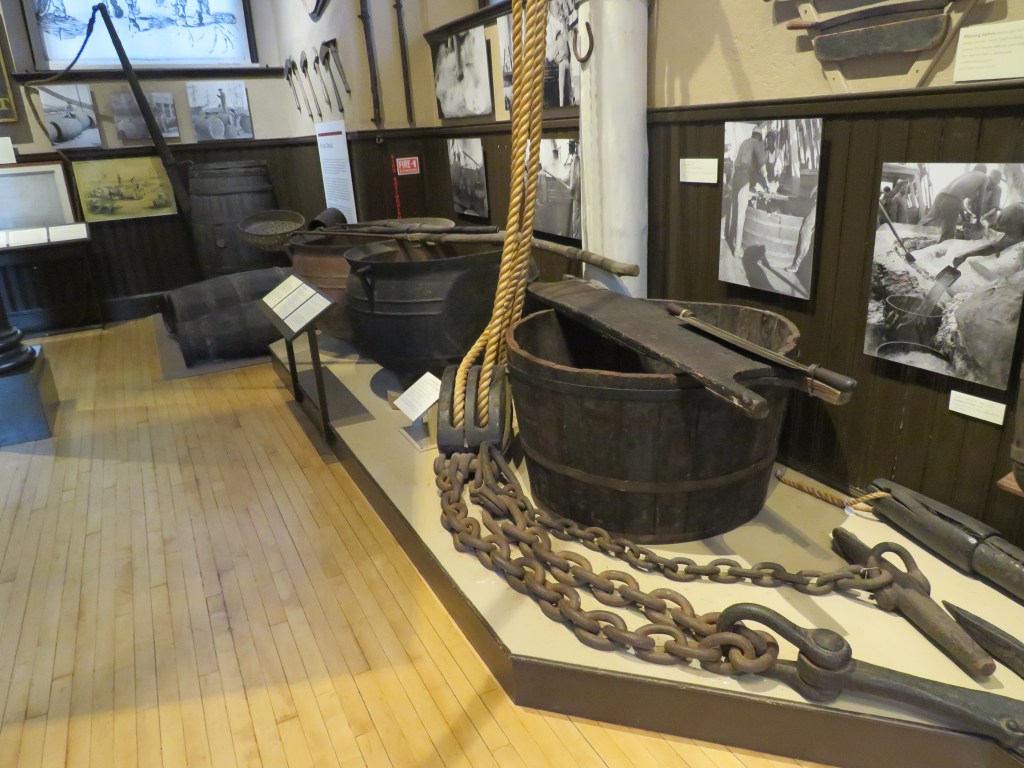
Yes, it is called the New Bedford Whaling Museum, but it also tells the history of the city and how the railroad was a big part of the city. The museum also has collections that are related to the Old Colony Line, the New Bedford Railroad Company, and the Union Street Railway Company.
The New Bedford Whaling Museum is located at 18 Johnny Cake Hill in New Bedford, Massachusetts. It is located off of Interstate 195, U.S. Route 6, and Massachusetts Route 18. It is open Tuesday to Sunday (closed Monday) from 9:00am to 5:00pm. The museum is fully wheelchair accessible. Please note that the museum does not have its own parking. You can get information on parking, buy tickets, look more into their intensive collection to include those about the railroads and streetcars, and get more information at Home – New Bedford Whaling Museum.
Yes, it is called the New Bedford Whaling Museum. It is a whaling museum that also tells the story of how the railroad was a major contributor to the industry of this town.



 John Cowgill: Stories of the Railroad