West Virginia Northern Community College, Wheeling, West Virginia

The U.S. state of West Virginia is a state that was once part of Virginia.  It is known as the Mountain State because the typography of the state is 100% mountains, and it is the only state with that kind of typography.  The state has no major cities although parts of the state are in the Washington D.C. and Pittsburgh, Pennsylvania metro areas.  It does have a few cities like Charleston, the state capital and largest city, Morgantown, the home of West Virginia University, and Huntington, the home of Marshall University where the movie We Are Marshall featured the tragedy of the university’s football team.  The state has many engineering feats like the New River Gorge Bridge.  What the state is really known for is its coal mines and its natural beauty.  One unpopular place in the state is the city of Wheeling.  Located in the northern panhandle region of the state nestled between the U.S. states of Pennsylvania and Ohio, the city of Wheeling is located on the Ohio River and is on the National Road (present day U.S. Route 40).  If Wheeling, West Virginia is unpopular, why visit?  While in Wheeling, you can visit the West Virginia Northern Community College.  Located in the Downtown section of the city, West Virginia Northern Community College welcomes students from the region to get an education.  When in Wheeling, make a visit to the West Virginia Northern Community College.

Some of you are saying, “That is nice.  You know.  Wheeling, West Virginia has never been on my list of places to visit.  I either pass through on Interstate 70 or take the Interstate 470 bypass.  With Wheeling not being a railroad city, I will not be visiting Wheeling, and I will not be getting an education here.”

You do have a point.  Why visit the West Virginia Northern Community College?

The state of West Virginia has a lot of history, and it is a state that has many railroad sites and much railroad history.  In Cass, you will find the Cass Scenic Railroad and the Durbin Rocket.  You have the railroad town of Thurmond and Prince.  In Elkins, you have the Cheat Mountain Salamander, the Mountain Explorer, and the Tygart Flyer, and it is the home of the West Virginia Railroad Museum.  In Martinsburg, you have the oldest surviving steel truss roundhouse in the nation.  There are numerous rail trails throughout the state.  When it comes to the city of Wheeling, well, it is not a famous railroad city with many railroad sites.

So why visit Wheeling, West Virginia?
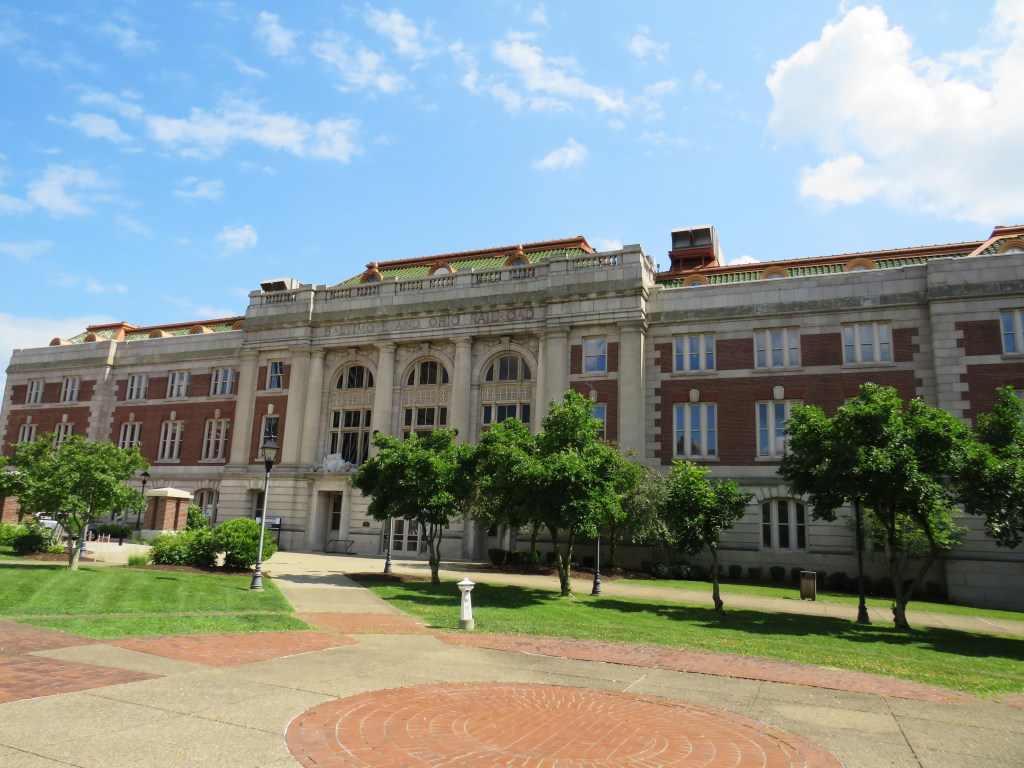
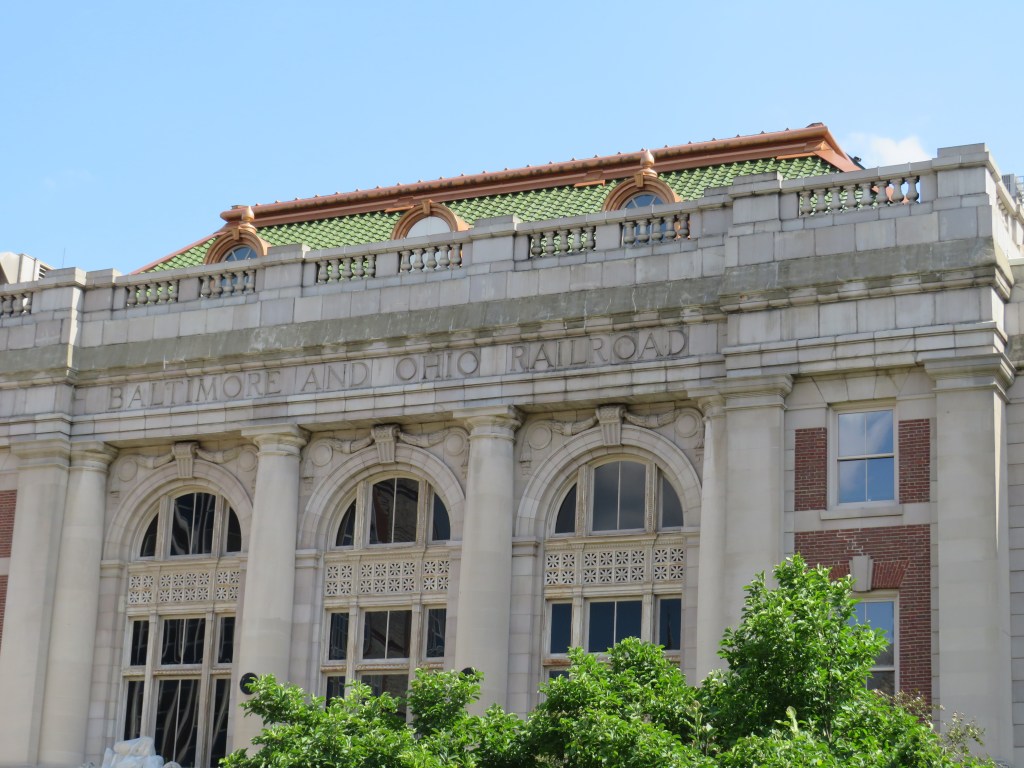
As mentioned, Wheeling, West Virginia is the home of the West Virginia Northern Community College.  What is so special about the West Virginia Northern Community College?  Well, before it was a college, it was a train station.  In the glory days of railroading, the Baltimore and Ohio Railroad built the terminal in 1907 to give passenger train service to the people of Wheeling, West Virginia and the surrounding region.  The four story brick and limestone train station welcomed passengers to the city as well as sent passengers to other parts of the nation.  Passenger service ceased in 1961.  The train station was remodeled and became the home of the West Virginia Northern Community College.  In 1996, the building was placed on the National Register of Historic Places.

West Virginia Northern Community College is located in Downtown Wheeling, West Virginia at the corner of Market Street, 16th Street, and Chapline Street.  Please note that the building is not open to the public but to college students and teachers only.

Next time you come upon the city of Wheeling, West Virginia, think of it as a city where you can see a train station that gives you an education.
The Lincoln Depot, Springfield, Illinois

The U.S. state of Illinois is commonly known as the ‘Land of Lincoln’.  Even though Abraham Lincoln, the sixteenth President of the United States of America, was not born in the state, (born in Kentucky) he spent much of his public life here as a lawyer and a politician.  In Springfield, the state capital of Illinois, you can visit and tour his home that is owned and operated by the National Park Service.  It is also where he is buried along with his wife and son in a tomb in a cemetery on the northwestern area of the city.  He is one of the most honored politicians in U.S. history, but when it comes to the railroad, most people would associate him with the railroad more than any other president.  Without Air Force One, the railroad was the fastest mode of travel in his day.

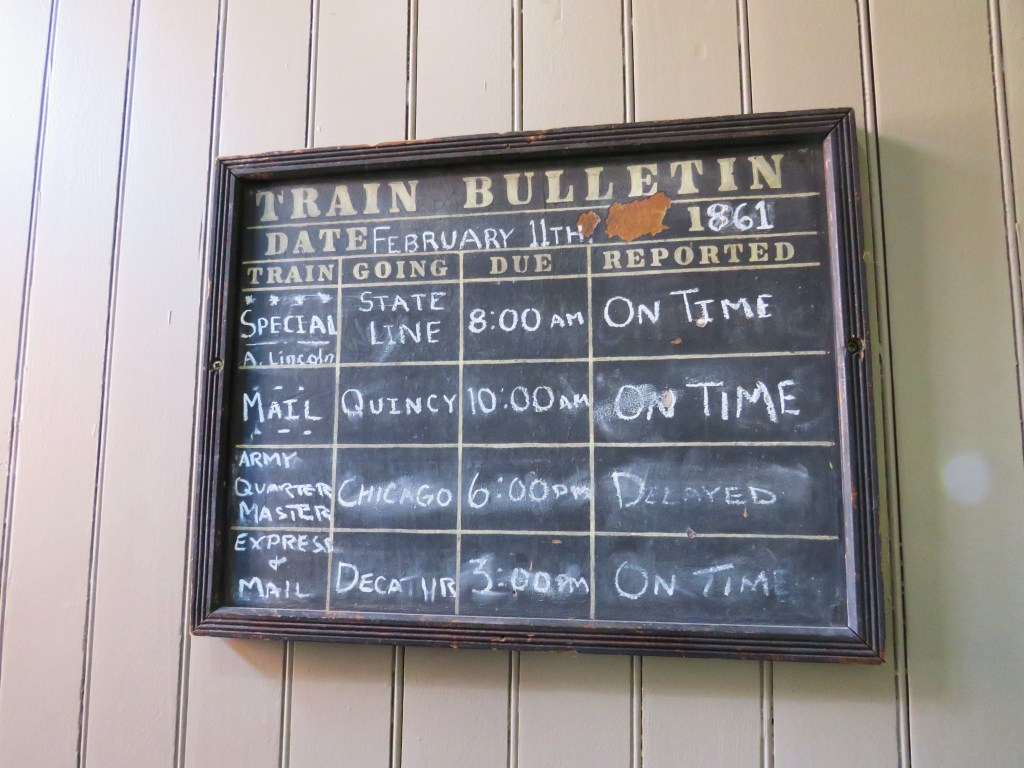
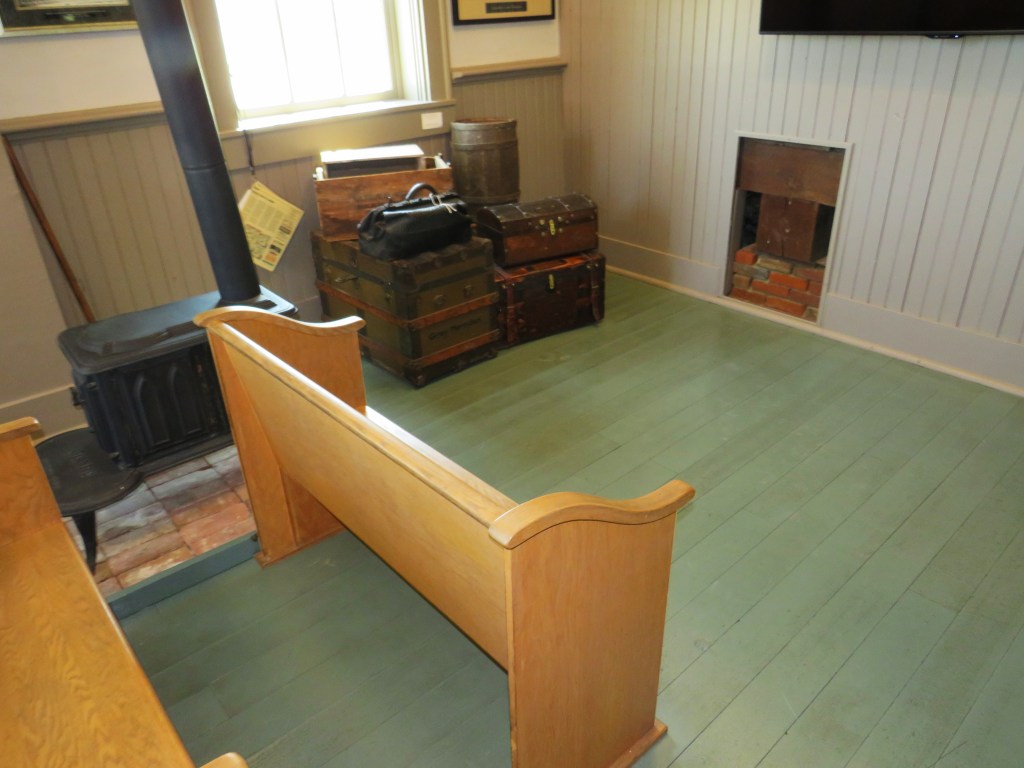
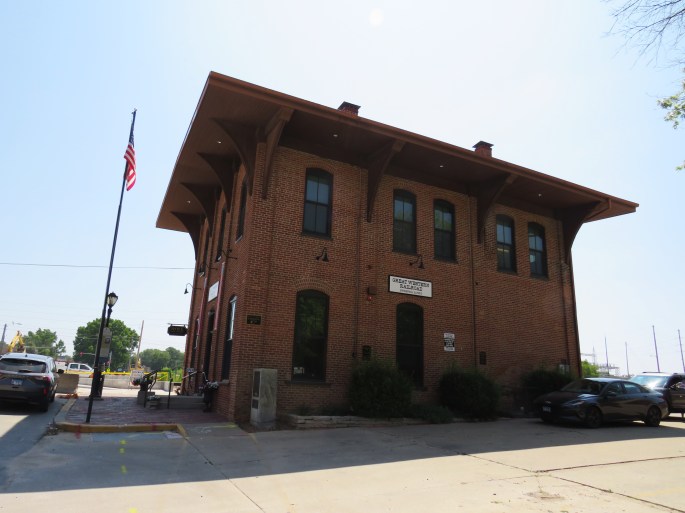
This brings us to an old train station in the capital city that is known as the Lincoln Depot.  Originally called the Great Western Depot, it was originally built in 1852, and it was repaired in 1857 after a fire destroyed parts of the station.  It was here on February 11, 1861, where Abraham Lincoln made what would be his final speech in the capital city before he departed on a train for another capital city, Washington D.C., to begin his life as the President of the United States of America.

Around 1900, passenger and freight service ceased.  The depot when through many ownerships before it was bought by a local group in 1960 to preserve the depot, and it was eventually made into a museum.  There was another fire in 1968.  (Arson was suspected but not proven.)  The museum was closed in 1977, but it was reopened as a museum in 1980 when a new owner took over.  The museum was closed in 2011, and it was sold again to be a law office, but the lawyer was a descendant of Abraham Lincoln’s law partner.  In 2014, it was a museum again, and it remains a museum today.

Today, the Lincoln Depot in Springfield, Illinois in on the National Register of Historical Places.  The trains that pass by the station are freight trains from the Norfolk Southern Railway.  (Amtrak service is in the center of the city just blocks from the State Capitol.)  It is open Monday to Friday from 10:00am to 4:00pm.  Please note that only the first floor is open to the public, and admission is free.  It is also wheelchair accessible.  The museum does not have its own parking.  There is metered parking on the street or you can park at a parking garage.  You can get more information on the depot at https://www.lincolndepot.org/.  On the website, you read Abraham Lincoln’s farewell speech, read more into the history of the train depot including a timeline, and see photos of the depot.

When in Illinois, visit the capital city of Springfield.  Visit an old train depot where the journey of a man on his way to a house called the White House, began.

Marie’s Candies, West Liberty, Ohio

The U.S. state of Ohio has many major cities like Cleveland, Cincinnati, Columbus, Akron, Dayton, and Toledo just to name a few.  It is the home of Bob Evans, the man who founded the company of the same name.  It was where the Wright Brothers, the brothers who made the first successful air flight on the beaches of North Carolina, spent most of their childhood.  The state has small towns like West Liberty in the western region of the state.  What is special about West Liberty?  It is the home of Ohio Caverns, Piatt Castle, and Marie’s Candies.

Some of you are saying, “Wait a minute.  Marie’s Candies?  What is so special about Marie’s Candies?”

You are asking what is special about Marie’s Candies.  As you already figured out, it is a place that sells candy.

Some of you are saying, “Well, we already knew that, but there are places across the country and around the world that sell candy.”

That is true, but there is something special about Marie’s Candies.  What is special about Marie’s Candies?  Let us say that many people drive great distances, past other candy shops, to buy candy here.

Some of you are saying, “That is definitely special, but who is Marie?”

That is a good question.  The answer, sadly, has a tragic beginning.

It begins with a man named Winfred King, a farmer, and he worked very hard on a farm in Ohio, but then he got polio, and the disease confined him to a wheelchair, and he was no longer able to work the farm.  Friends and neighbors stepped up to help his family.  Of course, when people help you, you want to show gratitude to those who helped you.  He and his wife, Marie, gave boxes of homemade candy.  The candy was made in their kitchen of their home.  A business began, and people traveled great distances to by their candy.  The business moved from their home to a home in the town of West Liberty, and their business continued to thrive.  Today, a trip to Marie’s Candies in West Liberty, Ohio will be rewarded with a very sweet and delicious ending.

Some of you are saying, “Well that is so sweet.  It is really sad what happened to her husband, but at least the business has been successful.  There is one problem.  As you can see.  This is a candy shop.  This candy shop has nothing to do with the railroad.  Therefore, I find nothing sweet about this place.”

Ladies and gentlemen, this story is not over.  There is more to this story.  What is special about Marie’s Candies?

The answer goes back to the Golden Age of Railroading.  What does the Golden Age of Railroading have to do with Marie’s Candies?  As passenger train service declined, many places were no longer served by passenger trains.  The small town of West Liberty, Ohio was one of those places.  When a town lost train service, the train station was no longer used by the railroad.  While some train stations were demolished or converted into museums or visitor centers, some were just abandoned like the one in West Liberty.

What is special about Marie’s Candies?

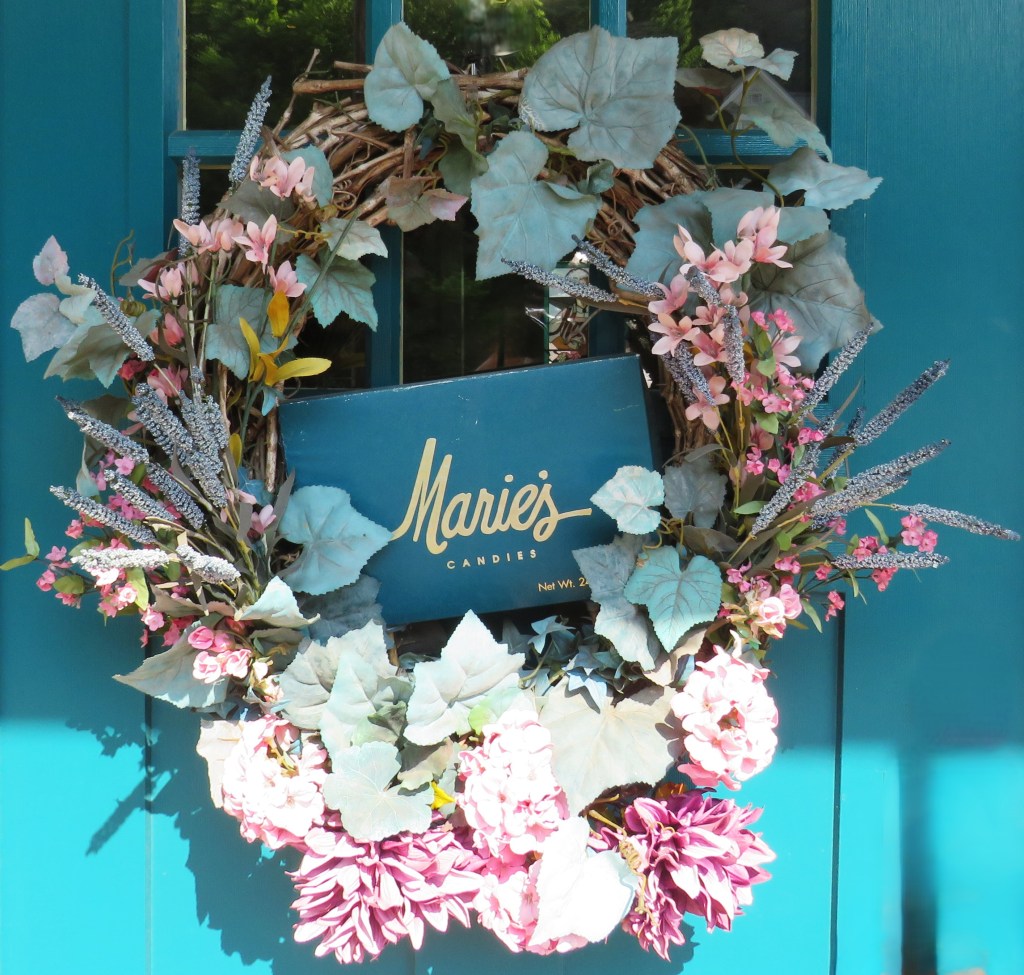
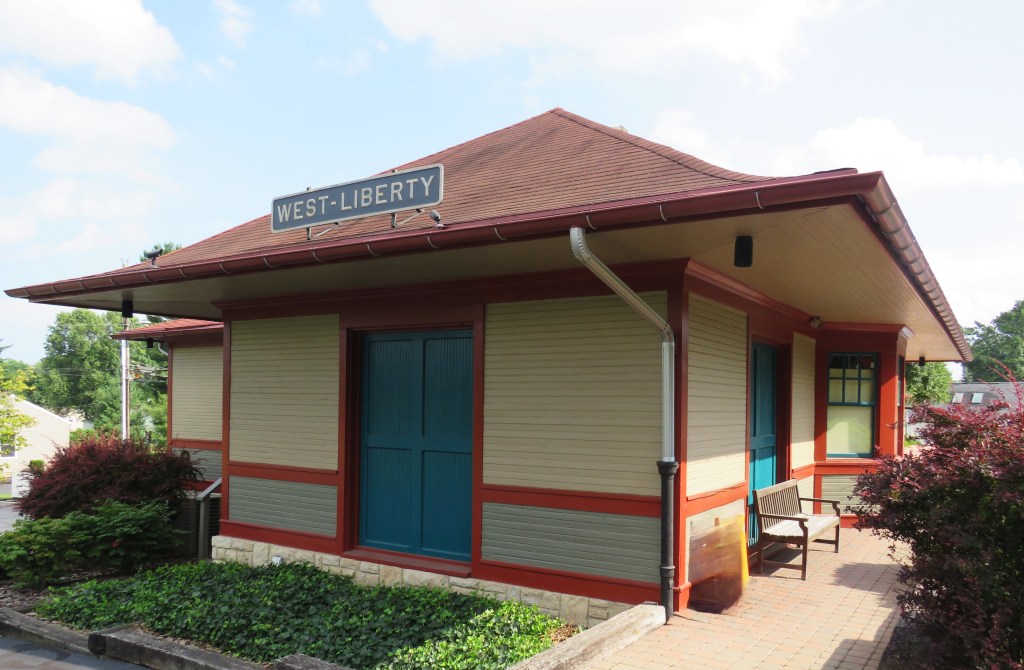
When Marie’s Candies needed a new space, they looked at the old train station that was deteriorating.  The train station was relocated from its original location to its current location on the north side of the town, and it was fully restored, and Marie’s Candies moved in, and the business continues out of there today.

Now you see what is special about Marie’s Candies.  Even though the business runs in an old train station, most people really visit for the candy.  Once you taste it, you will develop a sweet tooth and will want more.  Even though they sell candy that they make, they do sell candy from other candy makers as well.  A business that began with gratitude from Wilfred and Marie King still remains in the family today along with thirty other employees.

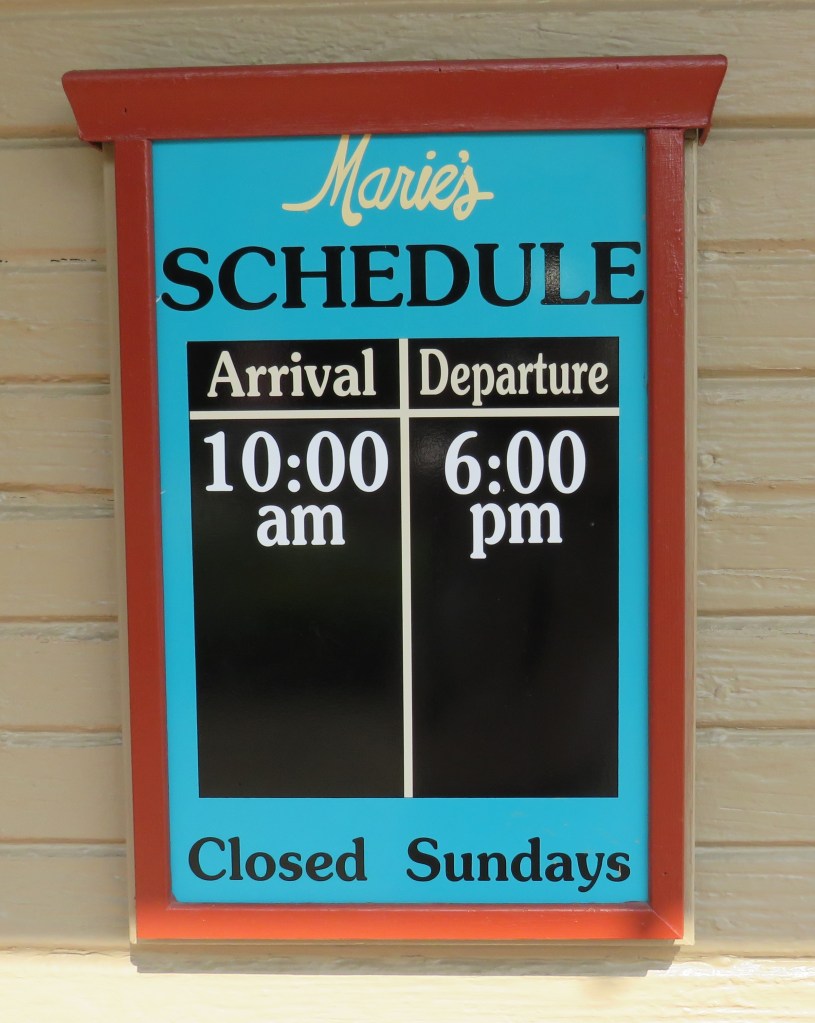
Marie’s Candies is located at 311 Zanesfield Road (U.S. Route 68) in West Liberty, Ohio.  Parking is on site.  You can get more information on store hours and read more into the family history at https://mariescandies.com/.

Marie’s Candies is a great place to visit, not for candy lovers and railroad lovers alike.  Who ever thought that railroad history could be so sweet?

Please note that the photos of the farm and barn are AI generated photos.

The Mechanicsburg Museum, Mechanicsburg, Pennsylvania

The town of Mechanicsburg in the U.S. state of Pennsylvania is a suburban town of the capital city of Harrisburg.  How did the town get its name?  The town was established before the automobile so it did not get its name from automobile mechanics.  The town got its name from the fact that it was a town were Conestoga wagons were repaired.  When the Cumberland Valley Railroad came to the town, the town became a major stop for the railroad.  Today, the Norfolk Southern Railway owns the railroad line, and the trains no longer stop here, but the old train station, the freight house, and the stationmaster’s house remain, and they are all part of the Mechanicsburg Museum.

The Passenger Train Station was built by the Cumberland Valley Railroad in 1867.  It remained a passenger station until 1952.  Today, the exhibits tell the history of the Cumberland Valley Railroad and how the town was a great benefactor to the towns growth.

The Stationmaster’s House was more than just the home of the stationmaster.  It was an office for Adams Express, a company that was one of the early companies before the Railway Express Agency, and it was also where baggage was stored.  Today, the home is furnished with furniture the way it was furnished back in the day when the train station was active.

The Freight Station is across the tracks from the Passenger Station and Stationmaster’s House.  This is the second Freight House for the town that was built in 1886 that replaced the original one built in 1874.  It was here where the locomotives received water and wood.  There was a side track here where the trains were able to stop for a long time.  The track was removed after freight and passenger serviced ceased.  Today, it houses exhibits that are about the town of Mechanicsburg itself.  The exhibits do change over time.

All three structures were to be demolished, but the Mechanicsburg Museum Association rescued the buildings, and they remain under their ownership today.

The Mechanicsburg Museum is located at 2 W. Strawberry Alley in Mechanicsburg, Pennsylvania just one block north of the intersection of Pennsylvania Routes 114 and 641.  It is open Wednesday to Saturday from 12:00pm to 3:00pm.  The complex has the three structures.  Admission is free, but they gladly accept donations.  The structures are wheelchair accessible.  You can read more into the Mechanicsburg Museum Association and read more about the museum at http://www.mechanicsburgmuseum.org/index.html.

The town of Mechanicsburg, Pennsylvania has automobile mechanics today.  It also has the Mechanicsburg Museum.  It is a great place to see the history of the town.

The Wayne Thomas Gilchrist Trail, Chestertown, Maryland

What is the Wayne Thomas Gilchrist Trail?  Commonly called the Wayne T. Gilchrist Trail that was named after a local politician that served in the U.S. state of Maryland and in Washington, the trail is on an old rail line that winds its way through the town of Chestertown located on the Chester River on the Eastern Shore Region of the U.S. state of Maryland.  It is also known as the Chestertown Rail Trail.

The history of the railroad in the town of Chestertown, Maryland is unknown as the town was much more of a port town on the Chester River than a railroad town.  It is known the railroad line was once a spur line that connected to a main railroad line in Delaware that ran south from Wilmington, Delaware down the center of the Delmarva Peninsula to the town of Pocomoke City, Maryland and then to the town of Cape Charles in the U.S. state of Virginia at the southern end of the peninsula where the Chesapeake Bay enters into the Atlantic Ocean.  A railroad ferry transported the train across the mouth of the Chesapeake Bay to Norfolk.  (Much of the track in Virginia is no longer active while the active section in Maryland and Delaware is owned by the Norfolk Southern Railway.)  Although the Pennsylvania Railroad originally built the line.  Smaller short line railroads owned the different spur routes.

Back in the glory days of railroading when the railroads ran both passenger and freight services, the passenger trains served small towns on spur lines like Chestertown.  When Amtrak service began, passenger service to small towns on spur lines ceased, and passenger service ceased on the main railroad line on the Delmarva Peninsula, and the opening of the Chesapeake Bay Bridge connecting the east and west coasts of the Chesapeake Bay aided the decline. 

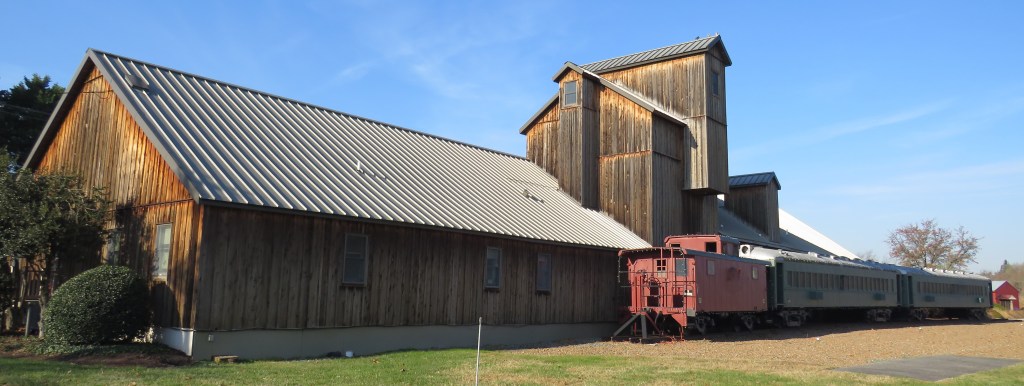
What is known about the railroad line?  At the southern end of the rail trail is an old passenger train station and an old freight house where two old passenger cars and a red caboose are on display.  Between the passenger and freight stations appear to be an area that appears to be the site of an old railroad yard.  The trail runs north from here and ends on the north side of the town. 

Today, the Wayne T. Gilchrist Trail is the only reminder of Chestertown being a railroad town.  It is a reminder of how the railroad was a big part of small town America.

Conner Prairie, Fishers, Indiana

The U.S. state of Indiana is commonly called the Crossroads of the United States of America.  How does the state get the name?  The three longest routes in the nation, U.S. Route 6 (known as the Grand Army of the Republic Highway), U.S. Route 20, and U.S. Route 30 (known as the Lincoln Highway named for Abraham Lincoln), pass through the state along with interstate route 70, 80, and 90.  Being a crossroads state, it is not a state that many travelers put on their list of must visit states, but be advised that there are many great place to visit in this state.  It is commonly known for the sport of basketball with Larry Bird being from the town of French Lick.  It is also home to one of the biggest races in the world: the Indianapolis 500.  In the early years of Indiana, it was mostly prairie with no mountains in the state.  A way to experience life in Indiana is to make your way to Conner Prairie.

What is Conner Prairie?  It is a living history museum location in the Indianapolis suburb of Fishers.  When you visit Conner Prairie, you will experience life in the early days of Indiana.

Some of you are saying, “This is nice.  It is great that they created a place where you could experience the early days of Indiana.  There is one problem.  This is not a railroad museum.  Therefore, you will not be visiting this museum.”

Why visit Conner Prairie?  You are right when you say that it is not a railroad museum, but that is not a reason for you not to visit.

Conner Prairie is a living history museum.  What is a living history museum?  It is a museum when many of the workers are dressed in period dress.  What is period dress?  It is when you dress in a particular period.  At Conner Prairie, it is mainly the nineteenth century.  As you enter, the very first thing you will notice is a hot air balloon.  Well, it is a hot air balloon that looks like a balloon from 1859, and you can take a ride in this balloon for an extra fee.  The museum grounds is divided into communities.  You have the 1816 Lenape Indian Camp displaying how the settlers lived with the local Indian tribes.  You have the 1836 Prairie Town where you can see how they lived in 1836 from the general store to the doctor to making pottery.

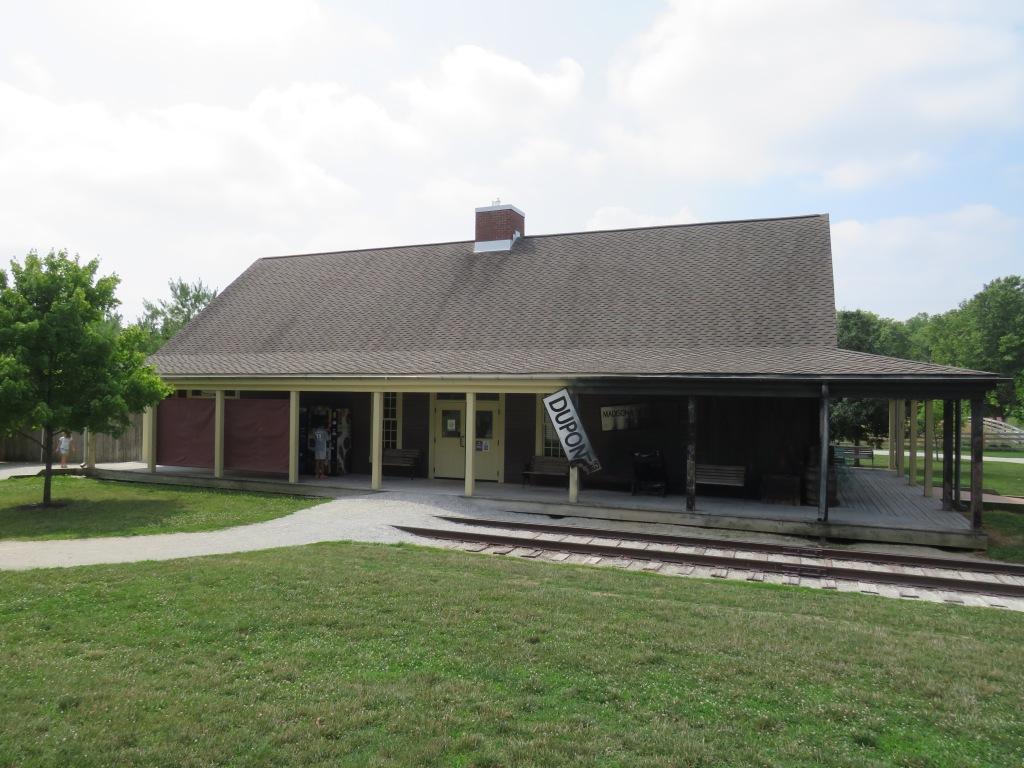
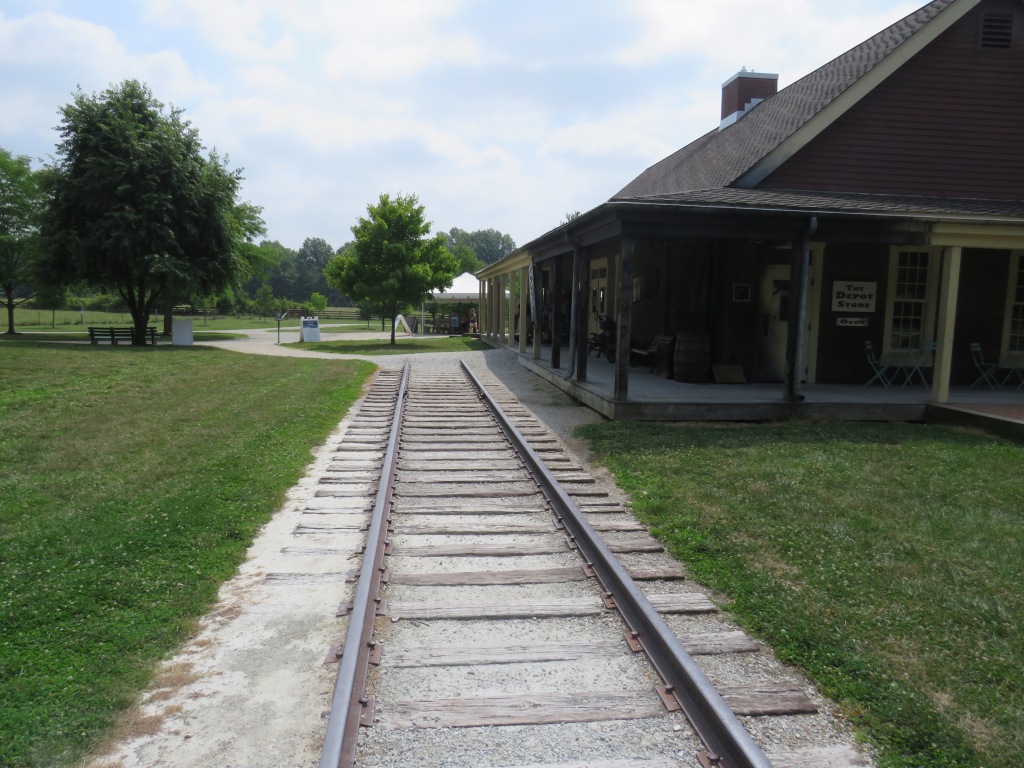
You have other areas in the museum, but then you come upon the 1863 Civil War Journey that tells the story of Indiana’s role in the American Civil War.  It is designed after the town of Dupont, Indiana.  It has a general store and a Union Army Camp that was attacked.  You have a schoolhouse and a farm.  Then you have the old train station.  Yes, you see the old train station from Dupont with a railroad line next to it.  Sadly, there is no train on the tracks, and the train station is mainly a snack shop and restrooms, but it tells the story of how the railroad played a role in Indiana’s participation in the war.

So, there you have it.  You have a reason to visit Conner Prairie.  Well, as you walk around, you will have many reasons to visit Conner Prairie other than seeing the train station.  You will need plenty of time to visit this place, and you will be doing a lot of walking.

Connie Prairie is located at 13400 Allisonville Road in Fishers, Indiana, a northern suburb of the state capital city of Indianapolis.  It is open most of the year.  Parking is on site, and, although it makes you feel like its in the 1800’s, it is completely wheelchair accessible.  You can get more information on admission, directions, events, on the history of Conner Prairie, and the museum’s future projects at https://www.connerprairie.org/.

As you think about the state of Indiana and basketball and the Indianapolis 500, think about Conner Prairie.  You will be glad that you did.

Fort James Jackson, Savannah, Georgia

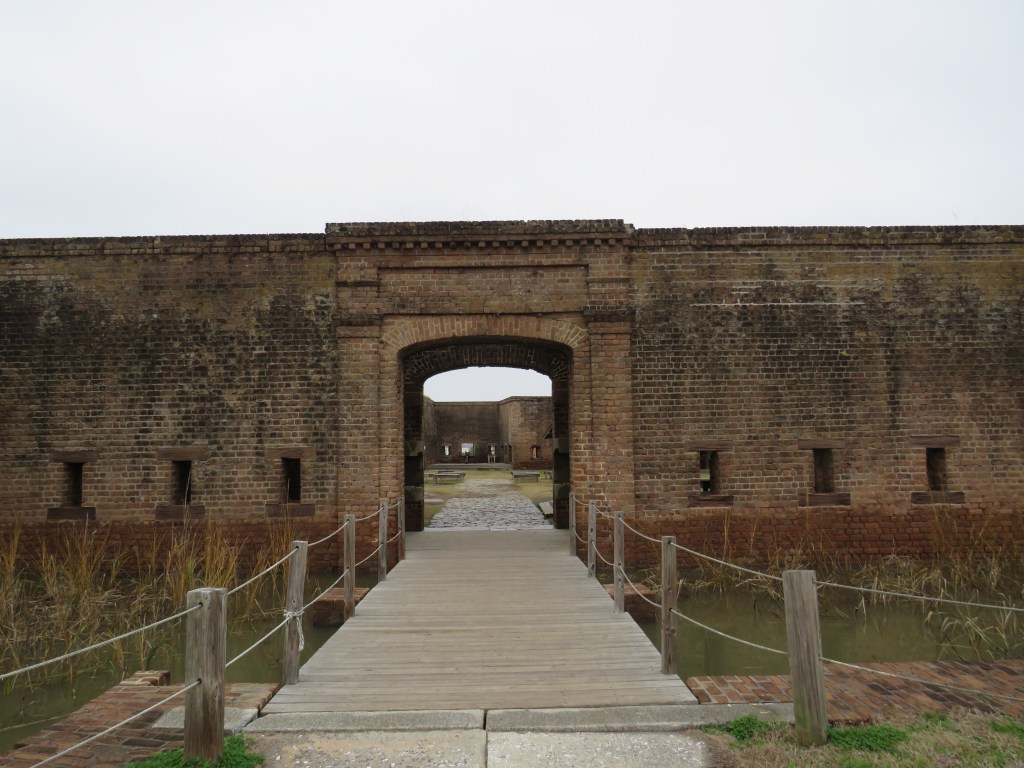
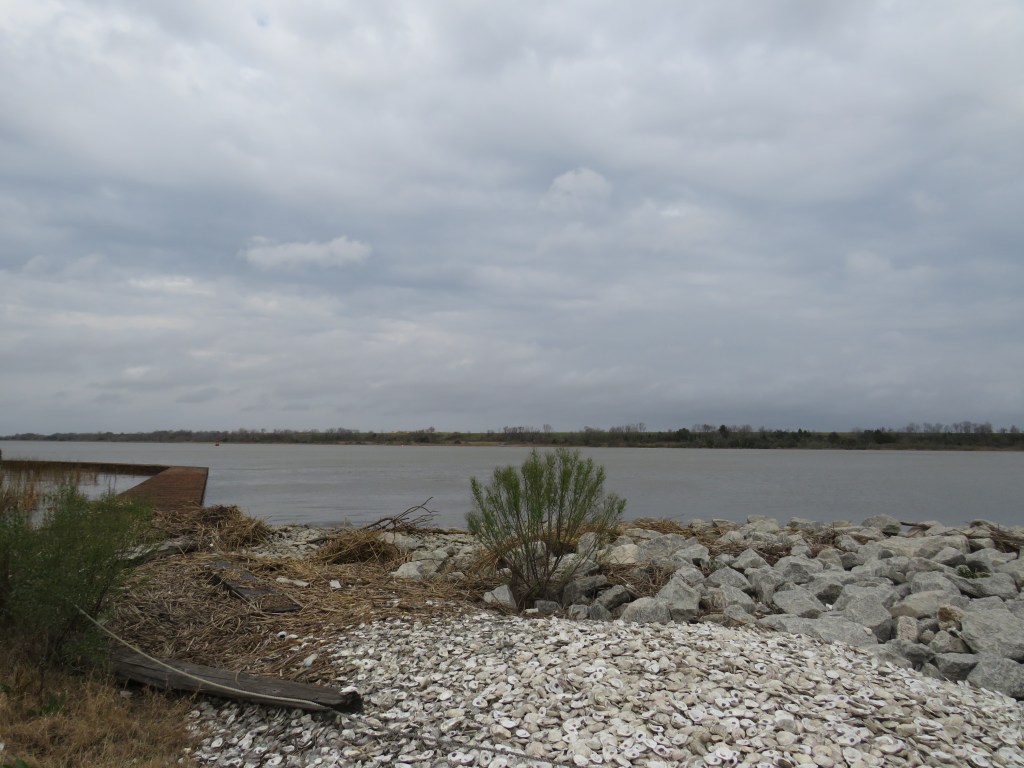
The city of Savannah in the U.S. state of Georgia is a city that has much history.  Fort Jackson, located on the Savannah River east of the historic downtown area is a big part of that history.  It was the second defense from an attack from the Savannah River after Fort Pulaski, and the fort played a role in the War of 1812.  The fort is named after, of course, James Jackson, a British born officer who served in the American Revolutionary war and was later the governor of the U.S. state of Georgia.  It is the oldest standing brick fort in the state of Georgia and one of the oldest on the East Coast of the United States.  If you are ever visiting Savannah, you will want to make some time to visit this National Historic Landmark.

Now some of you are saying, “You know.  I am amazed to hear about Fort Jackson.  You see the history of the fort as a fortification for battle, and I see how it helped defend the ships going in and out of Savannah, but I am wondering where the railroads are at this fort.”

Fort Jackson was a fort built to defend Savannah from a sea attack.  It has much history as a fort itself, but you will not find any railroad history here at all.  In matter of fact, the fort itself has no history with the railroad at all.

Why visit Fort James Jackson if it has no history with the railroad?  You will see the answer to the question as soon as you arrive.

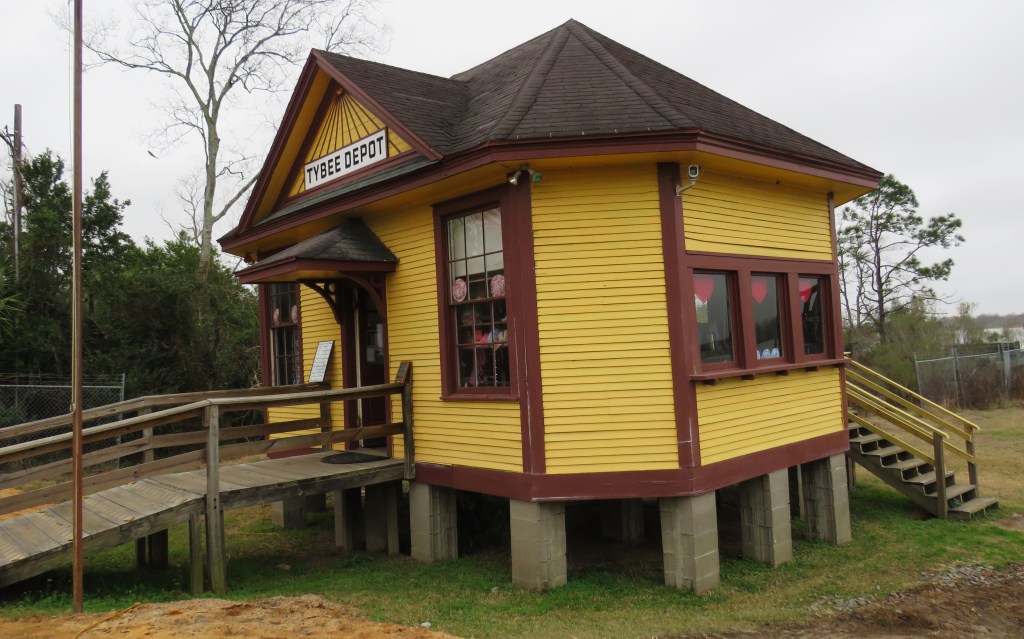
The first thing you will see when you arrive at Fort Jackson is the Visitor Center.  What is so special about the Visitor Center?  Many historic sites have visitor centers that show the history of the particular site.  What is special about the Fort Jackson Visitor Center?  The answer is that before it was the Fort Jackson Visitor Center, the structure was called the Tybee Depot.  Yes, it was located in downtown Savannah.  (This train depot was separate from the main train station that is now the Savannah Visitor Center.)  The Central of Georgia Railroad ran passenger trains from downtown Savannah to Tybee Island, an island on the Atlantic Ocean that was a resort town.  When the railroad no longer served Tybee Island, the depot was preserved and eventually brought to Fort Jackson to become the visitor center.

You now have a reason to visit Fort Jackson.  Once you see the visitor center, you will want to see the fort as well.  The fort is located at 1 Fort Jackson Road just minutes from the historic district.  It is a place worth seeing.

The Savannah History Museum, Savannah, Georgia

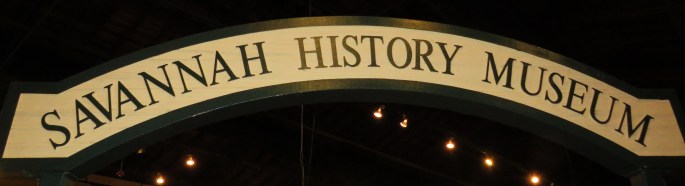
The U.S. state of Georgia is the largest state east of the Mississippi River.  It is famous for many things to include its state capital, Atlanta, and it is home to the ‘Masters’ golf tournament in Augusta.  Another treasured city in the state is Savannah.  Located a short distance inland from the Atlantic Ocean, it is a major port city with much history that includes the American Revolutionary War and the American Civil War.  The downtown area includes glorious town squares with spectacular fountains.  A visit to the Savannah History Museum tells the story of a city that has so much.  When you visit the city of Savannah, Georgia, you must make a visit to the Savannah History Museum.

Some of you are saying, “That is amazing.  I have driven down Interstate 95 many times while on my way to Florida passing by Savannah.  I have heard about the great architecture of the city.  However, there is a big problem.  It is called the Savannah History Museum.  It is not a railroad museum.  Therefore, I am not making a history of visiting this museum.”

So, that is your reason to not visiting this museum.  Ladies and gentlemen, prepare yourselves for a Savannah history lesson.

As mentioned, Savannah is a major port city.  Two forts, Fort Jackson and Fort Pulaski, were built to protect the city.  The city is home to the birth home of Juliette Gordon Lowe, the founder of the Girls Scouts of America.  The city of full of great architecture and great town squares and their fountains.  What most people do not know is that Savannah is a big railroad city.  It is the home of the Georgia State Railroad Museum.

What about the Savannah History Museum?  Well, the museum itself is part of railroad history.

What is the first thing you will see when you arrive at the Savannah History Museum?  Well, you will immediately discover… that it is located inside the Savannah Visitor Center.

Some of you are saying, “Well that is no big deal.  There is nothing special about that.”

Oh yes it is.  The Savannah Visitor Center is located in the old train station.  Yes, it is inside the old passenger train terminal that was built by the Central of Georgia Railway.  When passenger service ceased in 1971, it was eventually converted into the visitor center it is now.

Some of you are saying, “Well, that is all.”

Nope.  We now enter the Savannah History Museum.

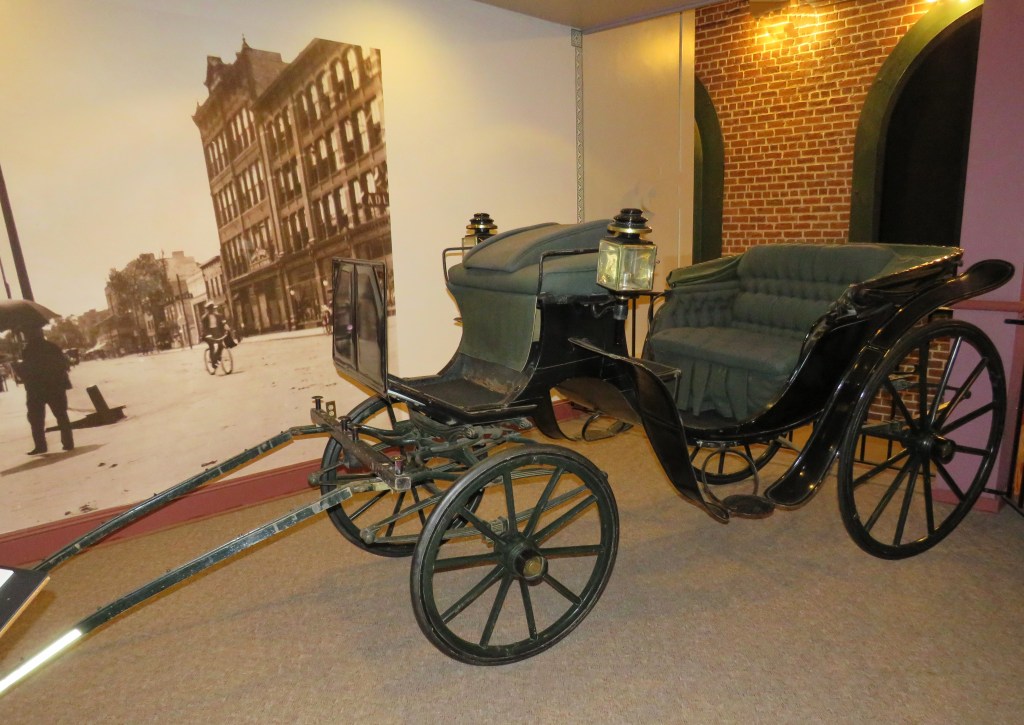
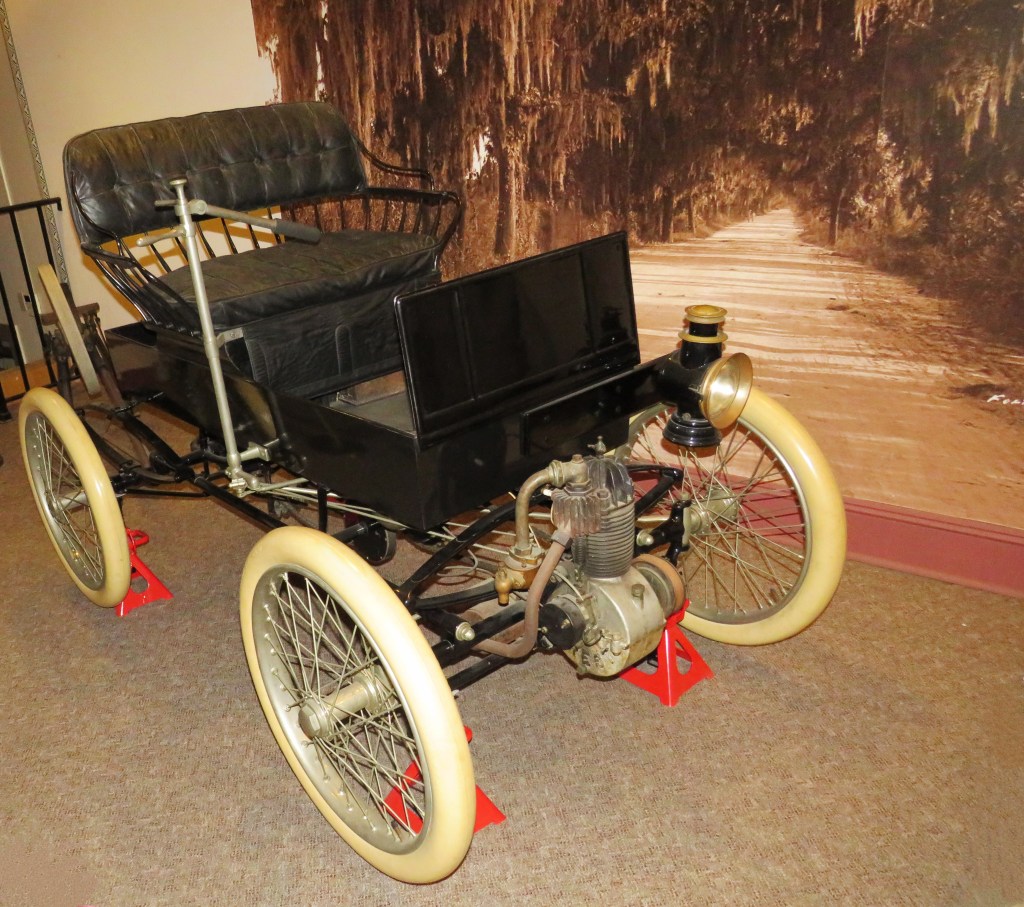
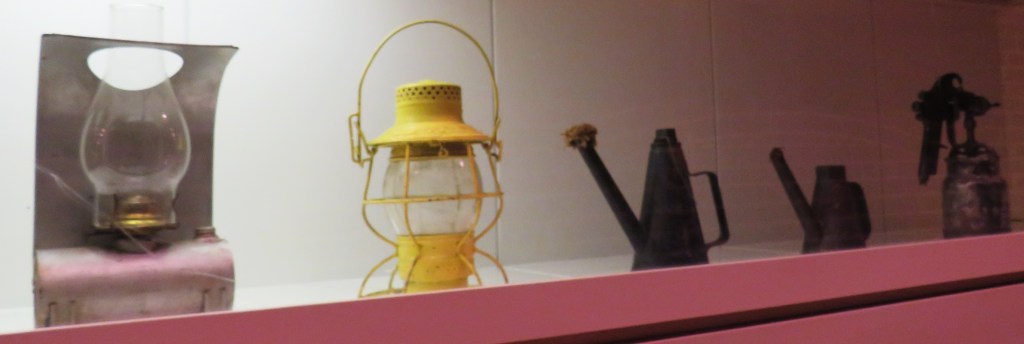
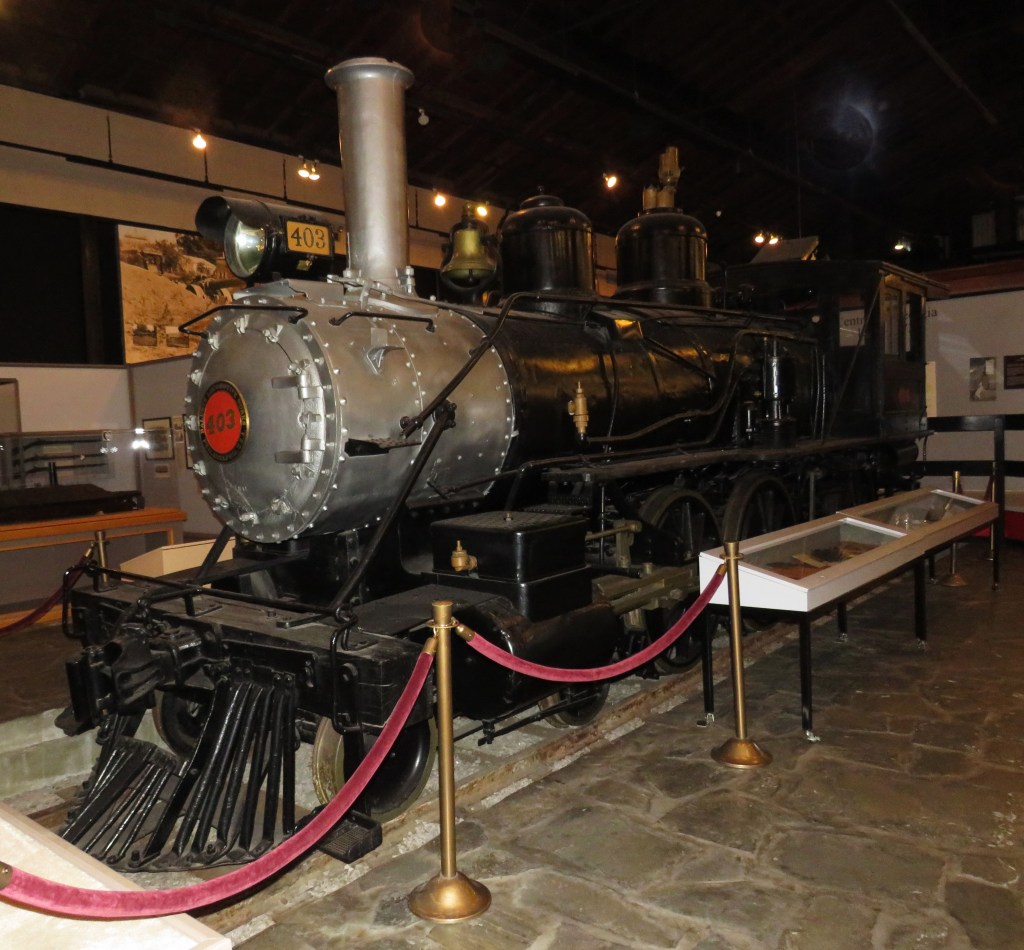
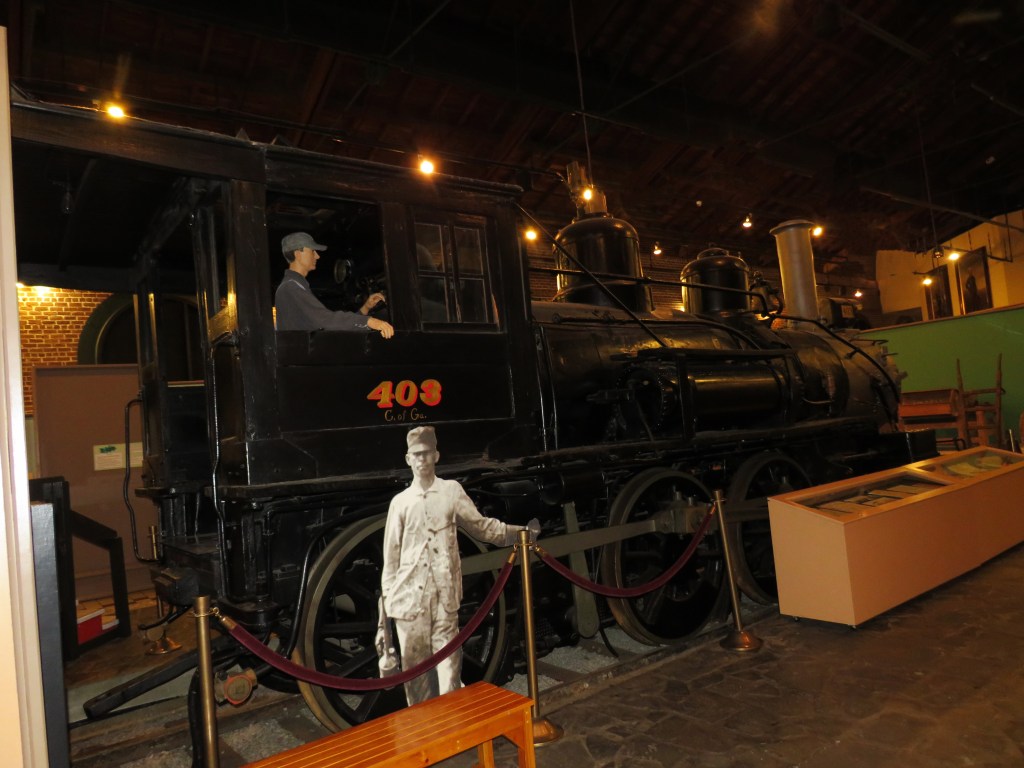
The story begins with the Indian tribes that once occupied the land to the colonial era and the American Revolutionary War to the present day, and the bench used in the famous movie ‘Forrest Gump’ which featured Tom Hanks is on display here.  (Sadly, you cannot sit on the bench.)  One of the main centerpieces of the museum is the Central of Georgia Railway Locomotive Number 403.  Yes, a steam locomotive is a centerpiece of the museum.  Other features include railroad lanterns and a model train from the Central Railroad of New Jersey on display.

Now you have a reason to visit the Savannah History Museum.  When you drive along Interstate 95, it is truly worth a detour.

The Savannah History Museum is located inside the Savannah Visitor Center, which is located at 303 Martin Luther King, Jr. Boulevard just blocks from Interstate 16 and U.S. Route 17.  Parking is on the north side of the visitor center.  It is owned and operated by the Coastal Heritage Society.  It is open seven days a week from 9:00am to 4:00pm.  Admission is $10.00 from adults.  The museum is wheelchair accessible.  You can get more information at https://chsgeorgia.org/SHM. No more excuses.  Savannah, Georgia is a town full of railroad history.  The Savannah History Museum is a history museum with the history of the railroad.