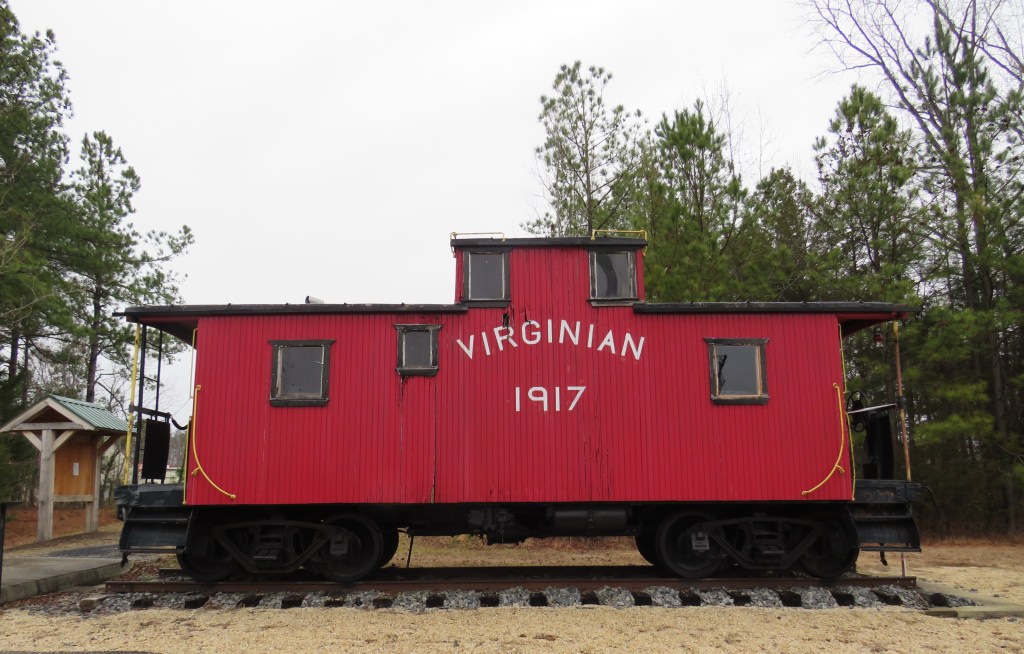
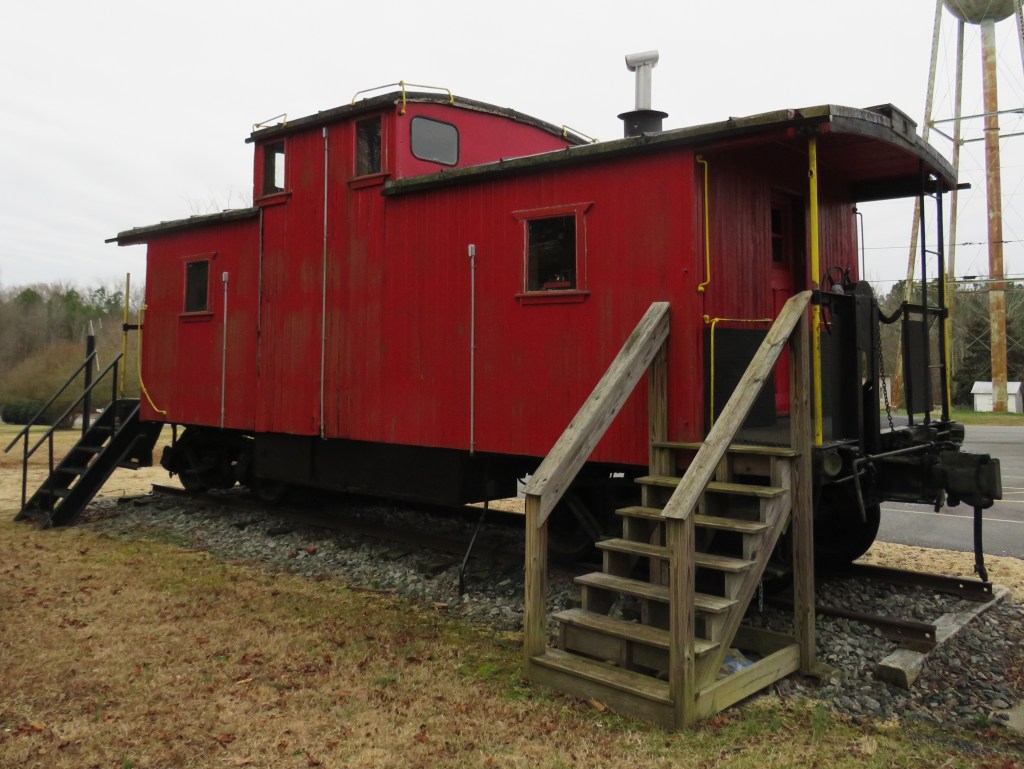
The Mechanicsburg Museum, Mechanicsburg, Pennsylvania

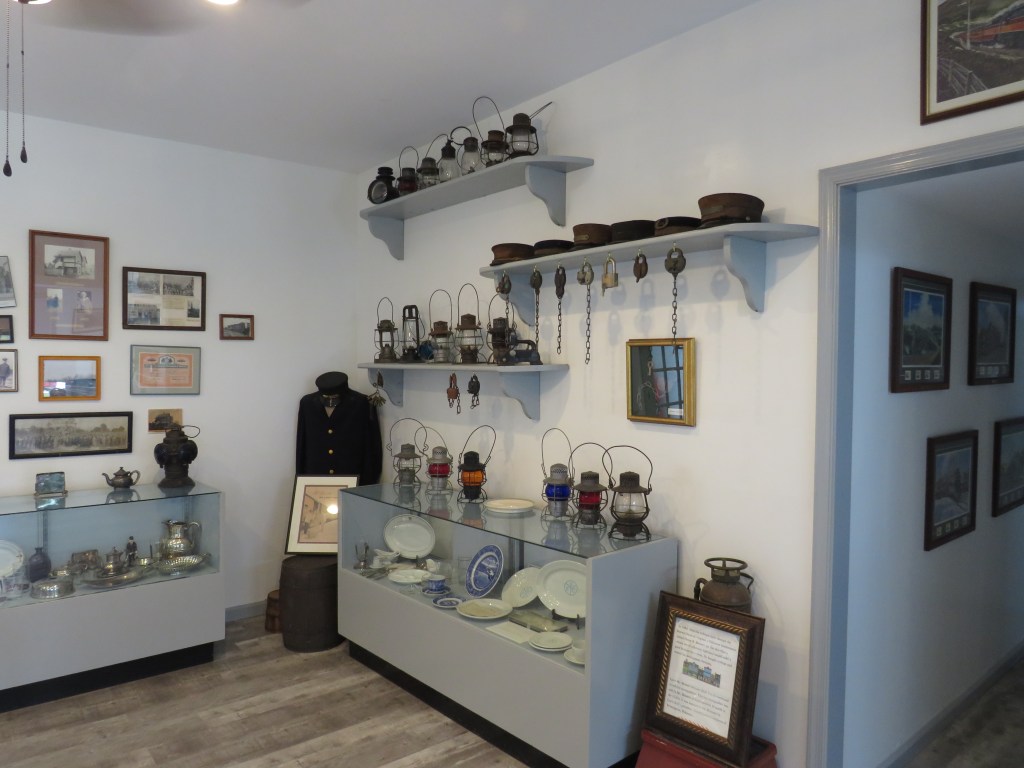
The town of Mechanicsburg in the U.S. state of Pennsylvania is a suburban town of the capital city of Harrisburg.  How did the town get its name?  The town was established before the automobile so it did not get its name from automobile mechanics.  The town got its name from the fact that it was a town were Conestoga wagons were repaired.  When the Cumberland Valley Railroad came to the town, the town became a major stop for the railroad.  Today, the Norfolk Southern Railway owns the railroad line, and the trains no longer stop here, but the old train station, the freight house, and the stationmaster’s house remain, and they are all part of the Mechanicsburg Museum.

The Passenger Train Station was built by the Cumberland Valley Railroad in 1867.  It remained a passenger station until 1952.  Today, the exhibits tell the history of the Cumberland Valley Railroad and how the town was a great benefactor to the towns growth.

The Stationmaster’s House was more than just the home of the stationmaster.  It was an office for Adams Express, a company that was one of the early companies before the Railway Express Agency, and it was also where baggage was stored.  Today, the home is furnished with furniture the way it was furnished back in the day when the train station was active.

The Freight Station is across the tracks from the Passenger Station and Stationmaster’s House.  This is the second Freight House for the town that was built in 1886 that replaced the original one built in 1874.  It was here where the locomotives received water and wood.  There was a side track here where the trains were able to stop for a long time.  The track was removed after freight and passenger serviced ceased.  Today, it houses exhibits that are about the town of Mechanicsburg itself.  The exhibits do change over time.

All three structures were to be demolished, but the Mechanicsburg Museum Association rescued the buildings, and they remain under their ownership today.

The Mechanicsburg Museum is located at 2 W. Strawberry Alley in Mechanicsburg, Pennsylvania just one block north of the intersection of Pennsylvania Routes 114 and 641.  It is open Wednesday to Saturday from 12:00pm to 3:00pm.  The complex has the three structures.  Admission is free, but they gladly accept donations.  The structures are wheelchair accessible.  You can read more into the Mechanicsburg Museum Association and read more about the museum at http://www.mechanicsburgmuseum.org/index.html.

The town of Mechanicsburg, Pennsylvania has automobile mechanics today.  It also has the Mechanicsburg Museum.  It is a great place to see the history of the town.
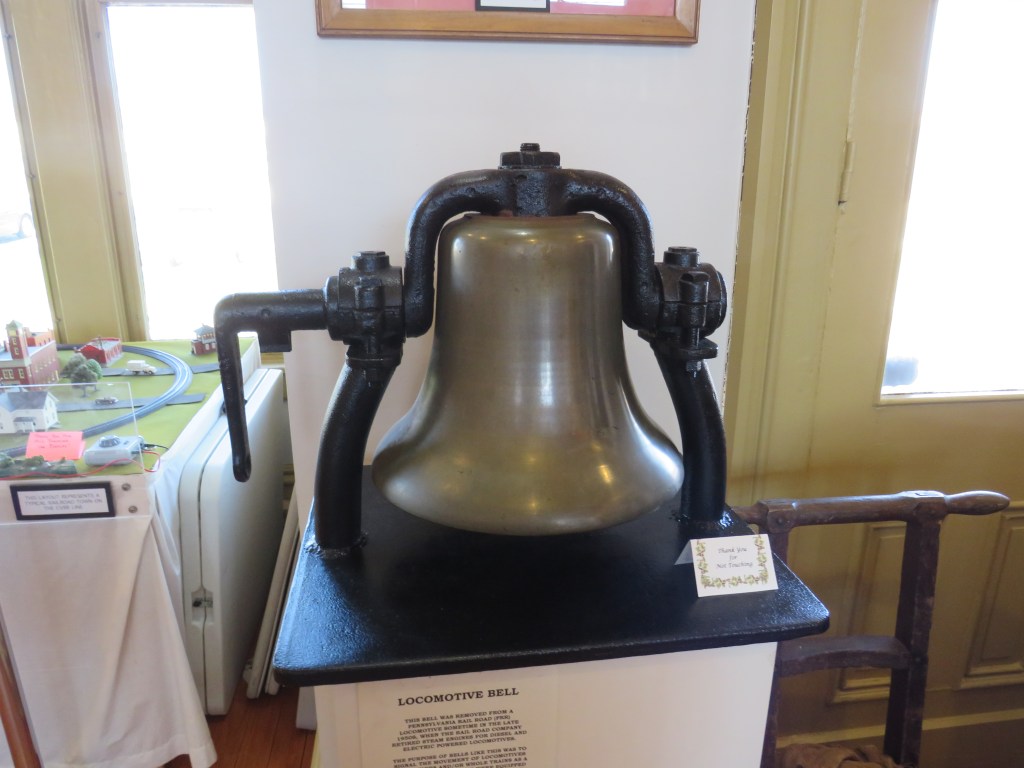
The Wayne Thomas Gilchrist Trail, Chestertown, Maryland

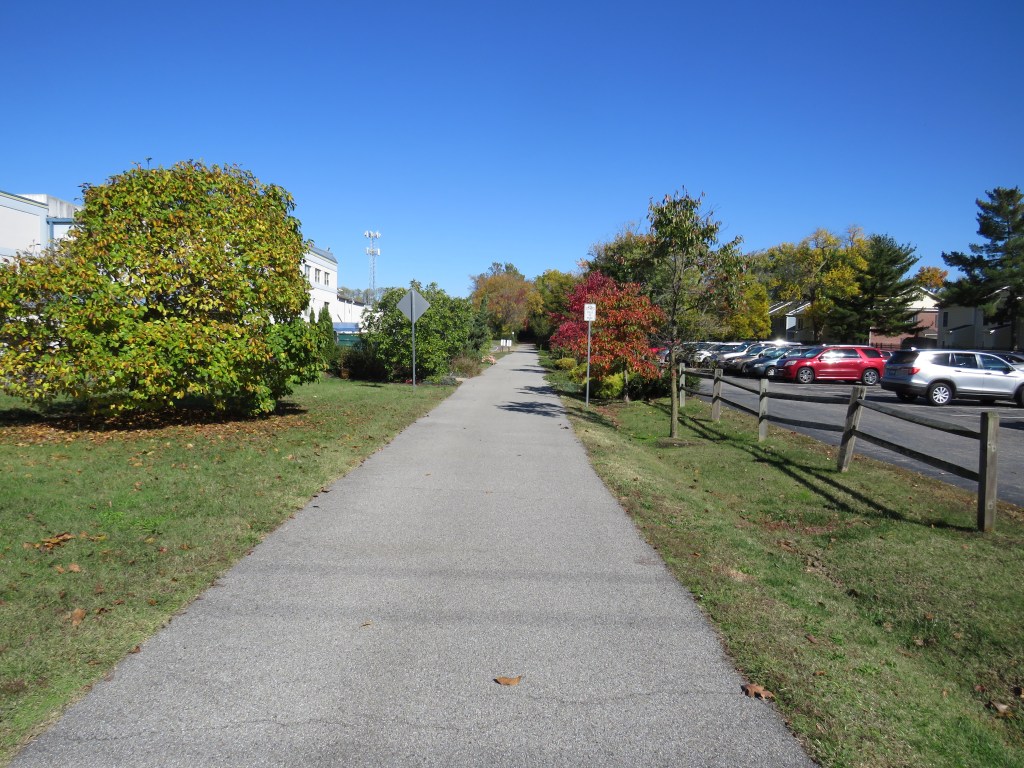
What is the Wayne Thomas Gilchrist Trail?  Commonly called the Wayne T. Gilchrist Trail that was named after a local politician that served in the U.S. state of Maryland and in Washington, the trail is on an old rail line that winds its way through the town of Chestertown located on the Chester River on the Eastern Shore Region of the U.S. state of Maryland.  It is also known as the Chestertown Rail Trail.

The history of the railroad in the town of Chestertown, Maryland is unknown as the town was much more of a port town on the Chester River than a railroad town.  It is known the railroad line was once a spur line that connected to a main railroad line in Delaware that ran south from Wilmington, Delaware down the center of the Delmarva Peninsula to the town of Pocomoke City, Maryland and then to the town of Cape Charles in the U.S. state of Virginia at the southern end of the peninsula where the Chesapeake Bay enters into the Atlantic Ocean.  A railroad ferry transported the train across the mouth of the Chesapeake Bay to Norfolk.  (Much of the track in Virginia is no longer active while the active section in Maryland and Delaware is owned by the Norfolk Southern Railway.)  Although the Pennsylvania Railroad originally built the line.  Smaller short line railroads owned the different spur routes.

Back in the glory days of railroading when the railroads ran both passenger and freight services, the passenger trains served small towns on spur lines like Chestertown.  When Amtrak service began, passenger service to small towns on spur lines ceased, and passenger service ceased on the main railroad line on the Delmarva Peninsula, and the opening of the Chesapeake Bay Bridge connecting the east and west coasts of the Chesapeake Bay aided the decline. 

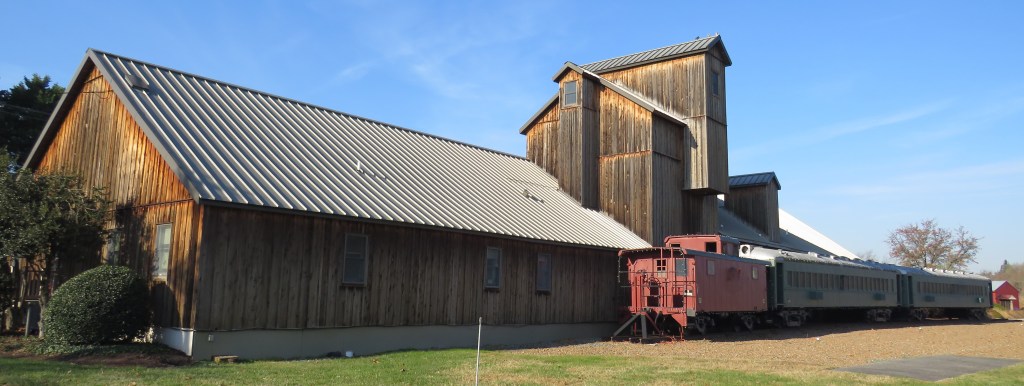
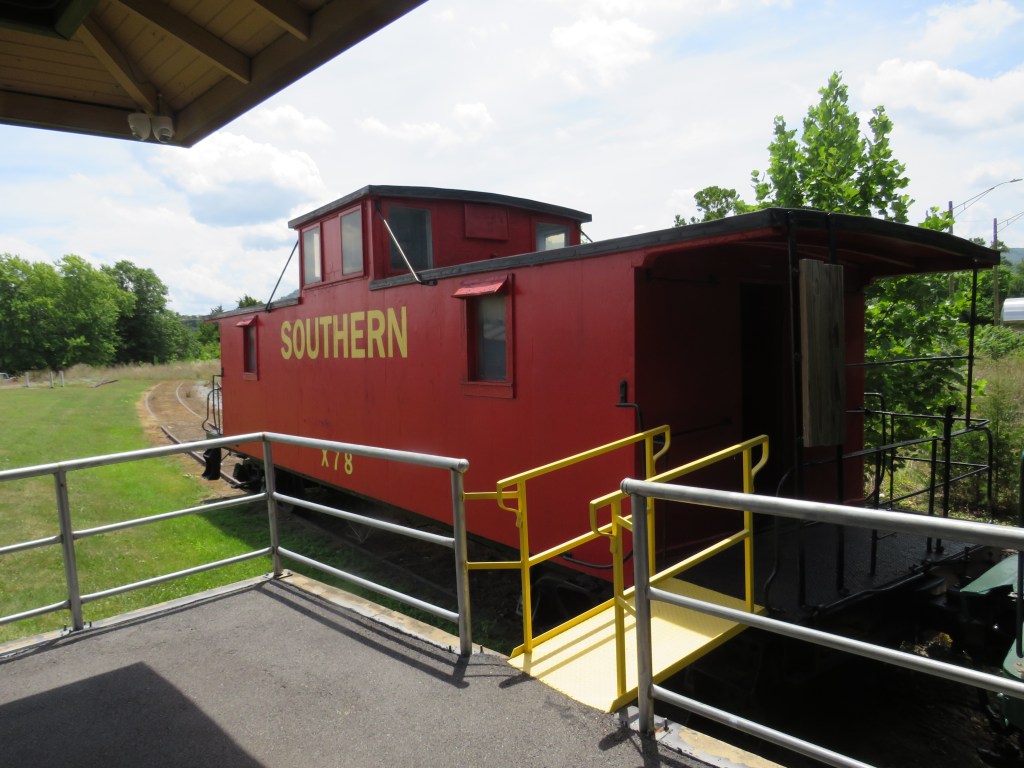
What is known about the railroad line?  At the southern end of the rail trail is an old passenger train station and an old freight house where two old passenger cars and a red caboose are on display.  Between the passenger and freight stations appear to be an area that appears to be the site of an old railroad yard.  The trail runs north from here and ends on the north side of the town. 
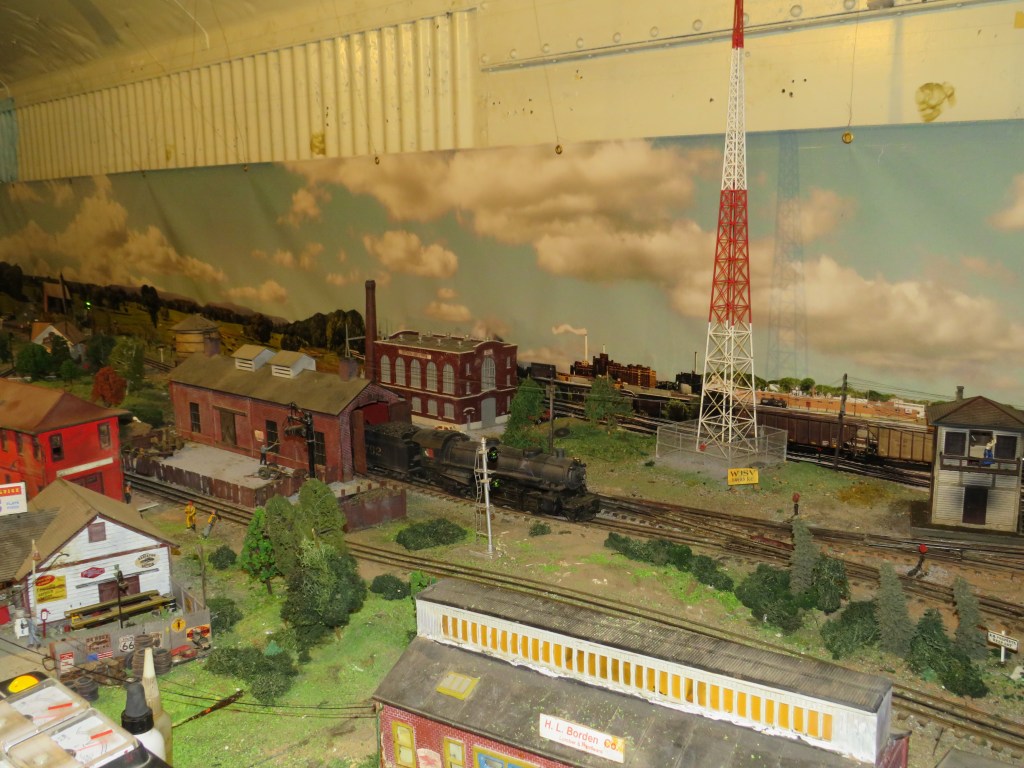
Today, the Wayne T. Gilchrist Trail is the only reminder of Chestertown being a railroad town.  It is a reminder of how the railroad was a big part of small town America.

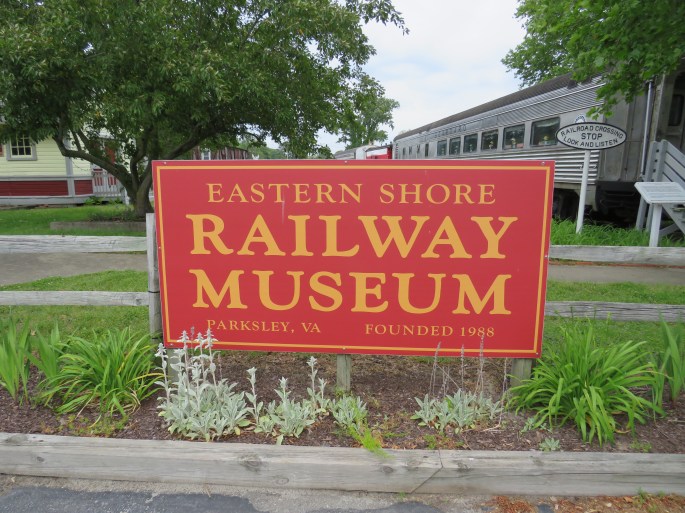
The Eastern Shore Railway Museum, Parksley, Virginia

The town of Parksley in the U.S. state of Virginia, a small town on the Delmarva Peninsula is known for its Victorian architecture.  The town was built around a railroad line that was extended south from Pocomoke City in the U.S. state of Maryland to Cape Charles, Virginia which sits at the southern tip of the peninsula. (The railroad line in the Virginia section of the peninsula is now abandoned.)  It you visit the town, the very first thing that you will notice is the numerous rails cars that are resting in this town.  This is the Eastern Shore Railway Museum which celebrates the railroad heritage of the town.

On the outside, you will see the Parksley Depot that was once used for passenger service.  The depot was originally the Depot of Hopetown, Virginia that was brought to the museum and sits on the site of the original Parksley Depot.  You will also see a section of the foundation of the old 1886 depot that was unearthed while clearing the land for the museum.  You can stand in the same spot where passengers stood to wait for the train.  The platform is made with bricks that were used at the train station in Ocean City, Maryland.  You will see a dining car from the Seaboard Airline Railroad.  You see an old maintenance shed and a guard house that was used before crossing gates came along.  You see an old Pennsylvania Railroad Box Car, the Fairfax River, a Pullman sleeper from the Richmond, Fredericksburg and Potomac Railroad, another sleeper car, a baggage car and two cabooses: one from the Nickle Plate Road and an old Wabash caboose.  There is so much to see, and you have not even gone inside yet.

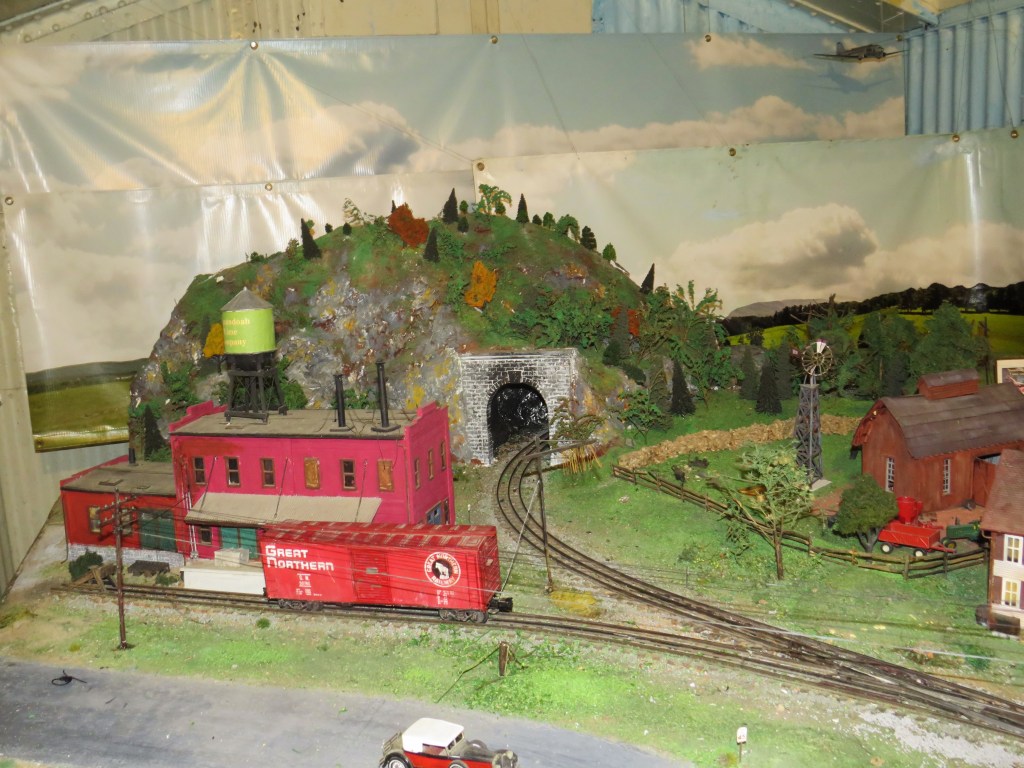
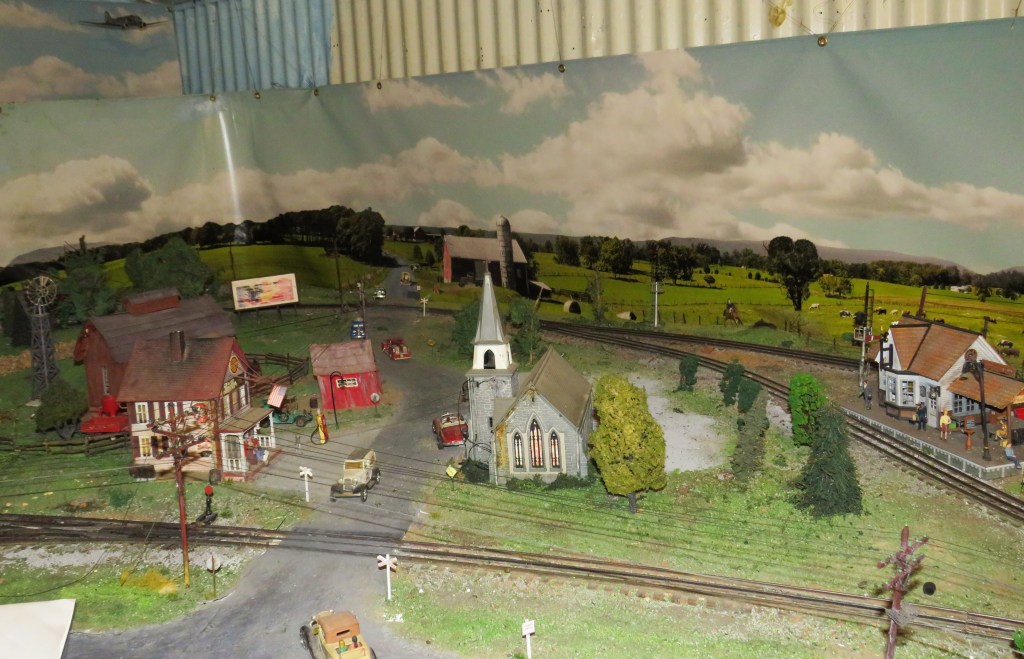
On the inside, you will see the gift shop, a small model train display, a maintenance car, a luggage carrier and artifacts from the days when regular rail service came to Parksley.

The Eastern Shore Railway Museum is located at 18468 Dunne Avenue in Parksley, Virginia, just minutes from U.S. Route 13 at the intersection of Virginia Route 176 and Virginia Route 316.  Admission is free, but donations are greatly appreciated.  The gift shop, model train display and inside areas are open from April to November, but the grounds are accessible all year round.  A drive along Virginia’s Eastern Shore would not be complete without a visit to Parksley and to the spot that the town originated from.

The Strasburg Museum, Strasburg, Virginia

Many of you have heard of the town of Strasburg in the U.S. state of Pennsylvania.  The town, a suburb of Lancaster, is famous for the Strasburg Railroad, a short line railroad that is the oldest continuously running railroad in the United States of America.  There is also a small town called Strasburg in the U.S. state of Virginia.  Located about seventy-five miles west of downtown Washington D.C. in the Shenandoah Valley, it is the home of the Strasburg Museum.  What is the Strasburg Museum?  Well, it is a museum that tells the story of life in the region around the town to include the industries like pottery and other small town industries.  If you are in the area of Strasburg, Virginia, you will want to visit the Strasburg Museum.

Some of you are saying, “This is nice.  I love the Strasburg Railroad in Pennsylvania.  As for Strasburg, Virginia, it is not as famous as being a railroad town as the Strasburg in Pennsylvania.  Therefore, you will not see me at the museum.”

So why visit the Strasburg Museum?  If you say that it is not a railroad town, you would not be telling the truth.  In 1861 during the American Civil War, General Thomas ‘Stonewall’ Jackson of the Confederate Army led the charge where he and his men hijacked the rolling stock of the Baltimore and Ohio Railroad in West Virginia.  This was known as ‘The Great Train Raid’.  What does this have to do with Strasburg, Virginia?  The rolling stock was transported to the location of the museum and set on railroad tracks and then sent to North Carolina to be repair and to be used by the Confederate Army.

Some of you are saying, “Now I have learned something new, but the museum is about the region around the town and not about trains.”

Ladies and gentlemen, you are wrong again.

Strasburg, Virginia was a railroad town that was served by the Southern Railway, The Baltimore and Ohio Railroad, and the Manassas Gap Railroad.  (All of the railroads in Strasburg are under the ownership of the Norfolk Southern Railway today.)  It may not be as famous as the town in Pennsylvania, but this town does have a deep history with the railroad.  As you approach the Strasburg Museum, there is something that you will notice.  Yes, it is next to a railroad crossing, but many places are next to a railroad crossing.  The first thing you will notice is the building.  What it special about the building?  The building is an old pottery factory that was, in 1913, converted into a train station for the Southern Railway with freight and passenger service.  You walk around the old station, you will see an old caboose and an old baggage car both from the Southern Railway.

You enter the museum through the gift shop.  You then enter the main hall.  You see the different displays on life in the region to include a room dedicated to pottery and an exhibit dedicated to the railroad history of Strasburg, Virginia.

Some of you are saying, “Is that all?”

The answer to that question is no.  You do have the caboose and baggage car.  The caboose is your typical caboose that you can walk through and climb into the cupola.  Then you have the baggage car.  In the baggage car is where you will find a model train display.

Some of you are saying, “Oh great.  Another model train display where you see the model trains go round and round and round and round.”

Ladies and gentlemen, this is not your typical model train display.  It is only operational on Saturday, and there is a timed entry.  Why?  If you only enjoy model trains that just go round and round and round, this is not for you.  If you enjoy something completely different, get ready for an experience.  You enter the baggage car, and you see the model train display set up with its buildings and other structures.  You watch the trains, but then it gets dark.  No.  It is not a power outage.  It is taking you into the display itself.  The moon even comes out for the evening, but it is really afternoon.

The Strasburg Museum is designated as a National Historic Landmark.  It is located at 440 East King Street (Virginia Route 55) in Strasburg, Virginia east of U.S. Route 11.  It is open from May to October on Friday, Saturday, and Sunday from 10:00am to 4:00pm.  Parking is on site.  Please note that the museum only accepts cash.  Also, the main hall has two floors of exhibits and the upper floor is not wheelchair accessible.  You can get more information on the museum and the history of Strasburg, Virginia at https://strasburgmuseum.org/.

Strasburg, Virginia may not have the Strasburg Railroad, but it does have the Strasburg Museum.  It has much history on display.  Make the trip.

The Harold Richard Plumley Memorial Bridge, Prince, West Virginia

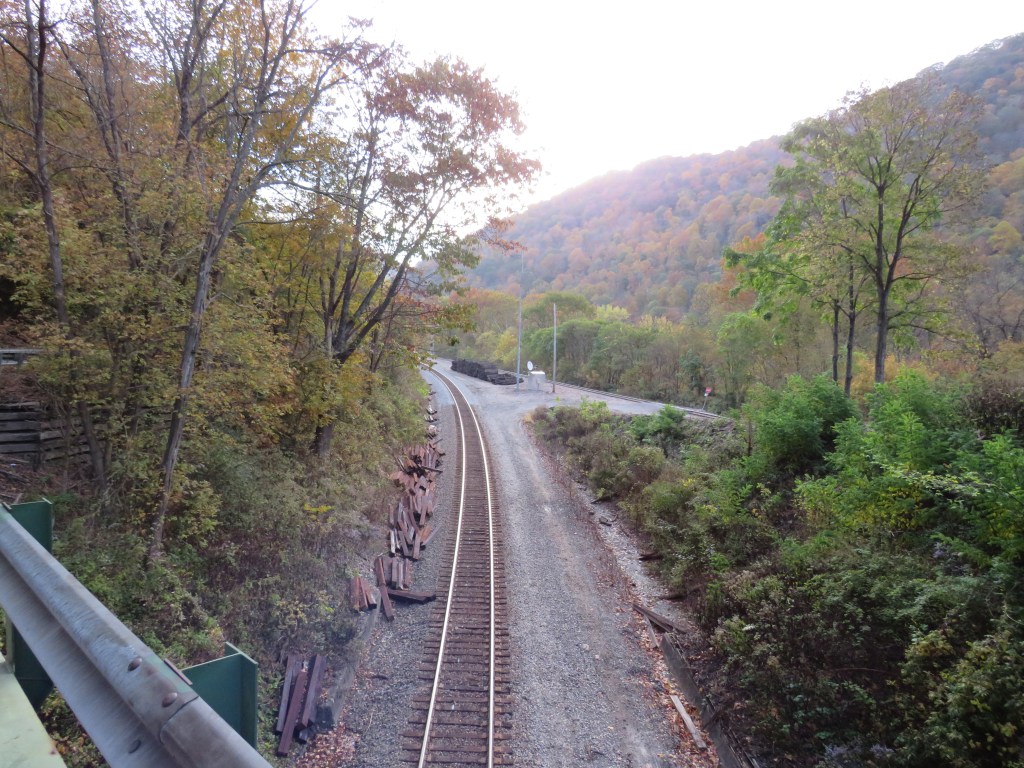
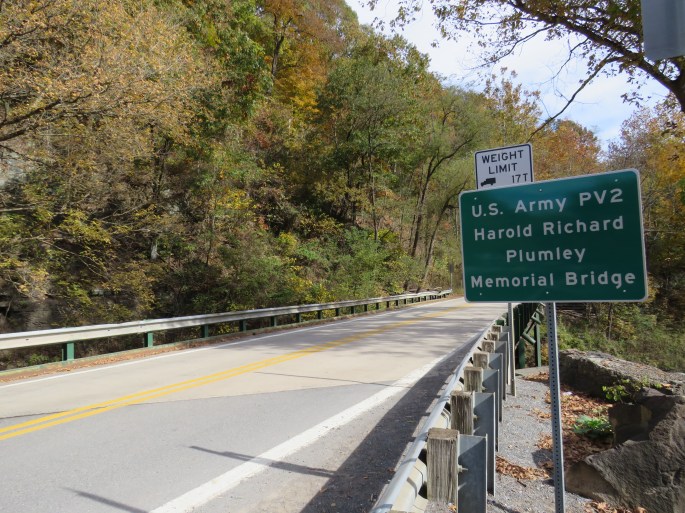
The small town of Prince in the U.S. state of West Virginia is a small town in the southern region of the state on the New River inside the New River Gorge.  This small town owes its existence to the coal industry and a passenger train station that was built by the Chesapeake and Ohio Railway, and it remains an active train station today with service from Amtrak.  As you drive through the town on West Virginia Route 41, you come upon the U.S. Army PV2 Harold Richard Plumley Memorial Bridge crossing over what is now the CSX railroad line.  Many of you are wondering who Harold Richard Plumley is, and you are wondering what is special about him that they would name a bridge after him.

Harold Richard Plumley was born on March 22, 1934, in the town of Prince, West Virginia.  As a child and a young man, he spent much of his time around the railroad.  On his way to school, he would walk through the Strecherneck Tunnel, a railroad tunnel built by the Chesapeake and Ohio Railway, and it is still in use by the CSX Railroad today.  He later became an employee of the Chesapeake and Ohio Railway working around the New River Gorge.  In 1952, he was drafted into the U.S. Army.  He would depart the town of Prince by train from the old train station.  Sadly, it was the last time his friends and family would see him… alive.

Harold Richard Plumley fought in the Korean War, and he fought in the Battle of Outpost Harry where he was killed in battle on June 11, 1953.  His remains was brought by train to the same train station that he departed from when he went to war.

Years later, efforts were organized to have the bridge named in honor of Harold Richard Plumley.  A bill to have the bridge named for Plumley was erected in Charleston, the state capitol of West Virginia, by a delegate named William Ridenour.  The bill passed unanimously in both the State House and the State Senate.

On Thursday, October 25, 2023, a ceremony was held in the town of Prince, West Virginia.  The United States Army Private Harold Richard Plumley Memorial Bridge was dedicated.  In attendance was William Ridenour, a representative of West Virginia Senator Joseph Manchin, Harold Plumley’s brother and two sisters, reporters from two local television stations, and members of the Chesapeake and Ohio Railway Historical Society.

The U.S. Army PV2 Harold Richard Plumley Memorial Bridge is located on West Virginia Route 41 in Prince, West Virginia on the west side of the town crossing the CSX rail line.  It is eight miles northeast of Beckley and U.S. Route 19 and Interstates 64 and 77, and twelve miles south of U.S. Route 60 and Babcock State Park.  (It is the home of the world famous Glade Grist Mill.)  Other than an automobile, the only other way the town can be accessed is by Amtrak.  Please note that there is no parking at the bridge itself.

Many of us wish each other a Happy Memorial Day, but to those who lost their friends and family who were serving in the United States Armed Forces, it is not a happy day as they spend the rest of their lives without them by their side.  Let us spend this day remembering those men and women who sacrificed their lives so that we could live ours.  Harold Richard Plumley was among those who gave his life for his country.  May we forever be grateful for his service.

Please note that the photograph of Private Harold Richard Plumley is courtesy of the Chesapeake and Ohio Railway Historical Society who owns the copyright and has granted permission to use this photo for the article.

The Mad River and NKP Railroad Museum, Bellevue, Ohio

The U.S. state of Ohio has many cities as well as small towns.  Among these towns is the town of Bellevue.  Located in the north central region of the state, it is not a popular town with only U.S. Route 20 being the only major route through the town and the Ohio Turnpike (Interstates 80 and 90) running north of the town, but it is a town centered on the railroad.

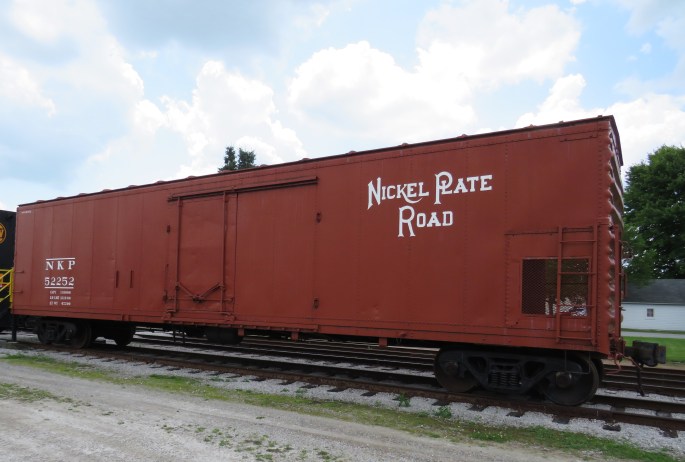
Welcome to the Mad River and NKP Railroad Museum.  (For those who are wondering, NKP stands for the Nickel Plate Road, a railroad that ran on many routes in the northern region of the United States of America.)  The mission of the museum is to preserve the heritage of the railroad in the region.

Some of you are saying, “Oh yeah!  I have been to these small town museums.  They have a caboose and a small model train display.  It is a waste of time to visit an out of the way town to see this.”

Ladies and gentlemen, be advised that the Mad River and NKP Railroad Museum is not a museum that has just a caboose and small model train.  Be warned that as soon as you arrive here, you will be totally amazed at what you will see.

Let us begin with the main building.  Well, it may be hard to go to the main building after seeing after what you see, but it is here where you will need to pay your admission before seeing the rest of the museum.  You enter the gift shop to pay your admission, and then you enter the exhibits.  The very first thing you will see is a replica of a steam locomotive called the ‘Sandusky’, the first locomotive run by the Mad River Railroad between Bellevue and the port town of Sandusky located on Lake Erie.  In the same room is a bell that was used on the Lincoln Funeral Train, the train that carried the remains of President Abraham Lincoln from Washington D.C. to his final resting place in Springfield, Illinois.  Other items include China (dishes) used on passenger cars.

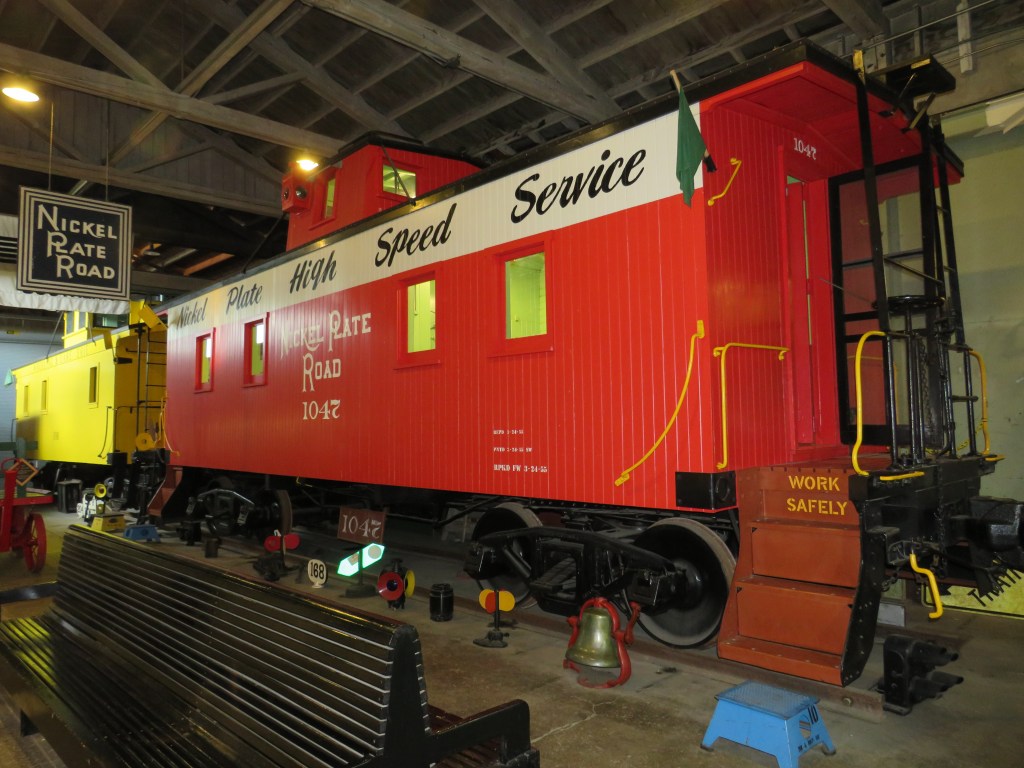
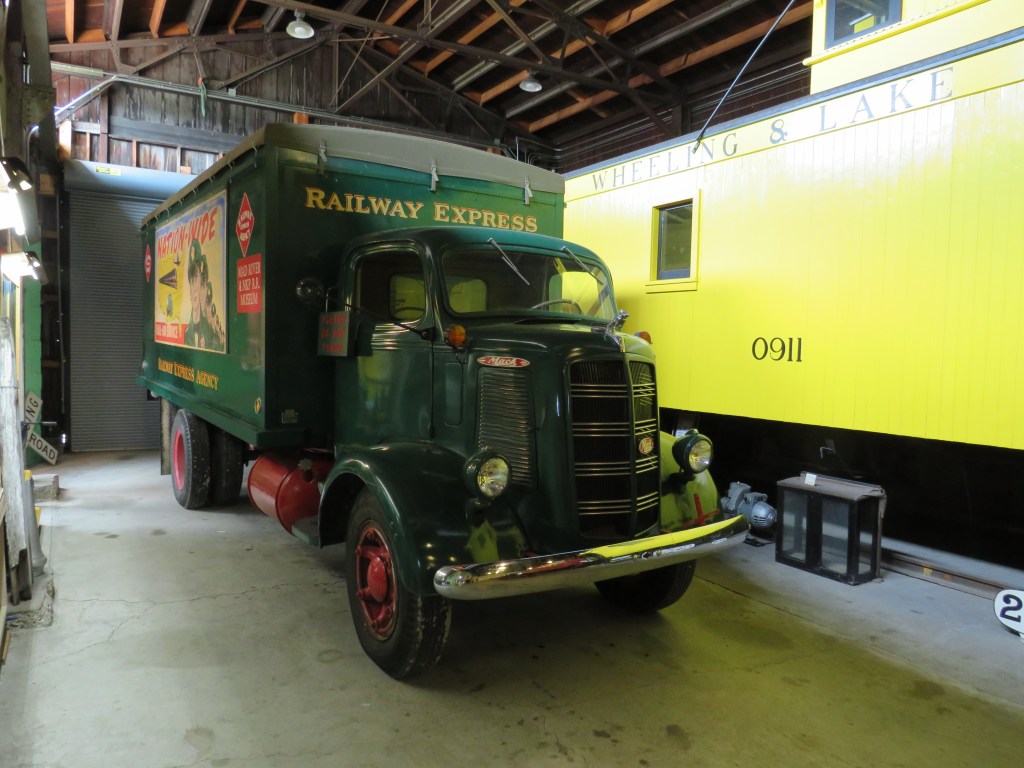
From here, you enter into the next room which has two cabooses.  The one caboose is from the Nickel Plate Road, and the other caboose is from the Wheeling and Lake Erie Railroad, another railroad that ran through the town.  There is also a Mack truck from the Railway Express and a luggage cart.
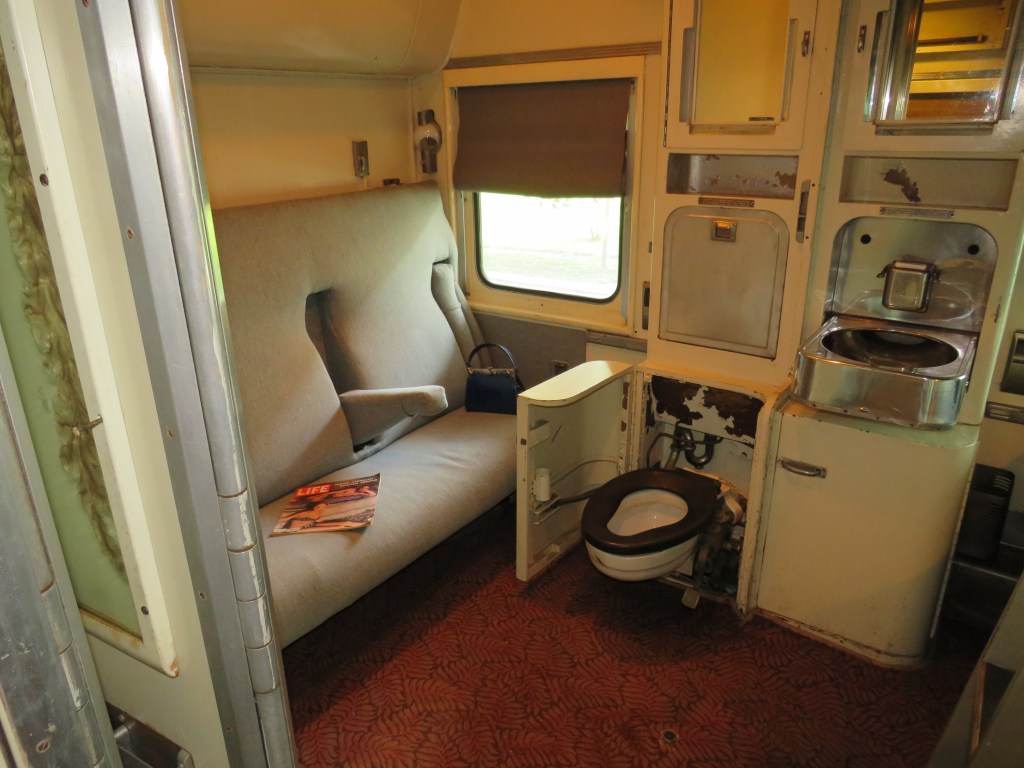
Then you have a third room.  What is in this room?  It is here where you really go back in time to the days before Amtrak.  You enter into old passenger cars.  You see the passenger seats and the private rooms and the dining area.

Ladies and gentlemen, this is only a small part of the museum.

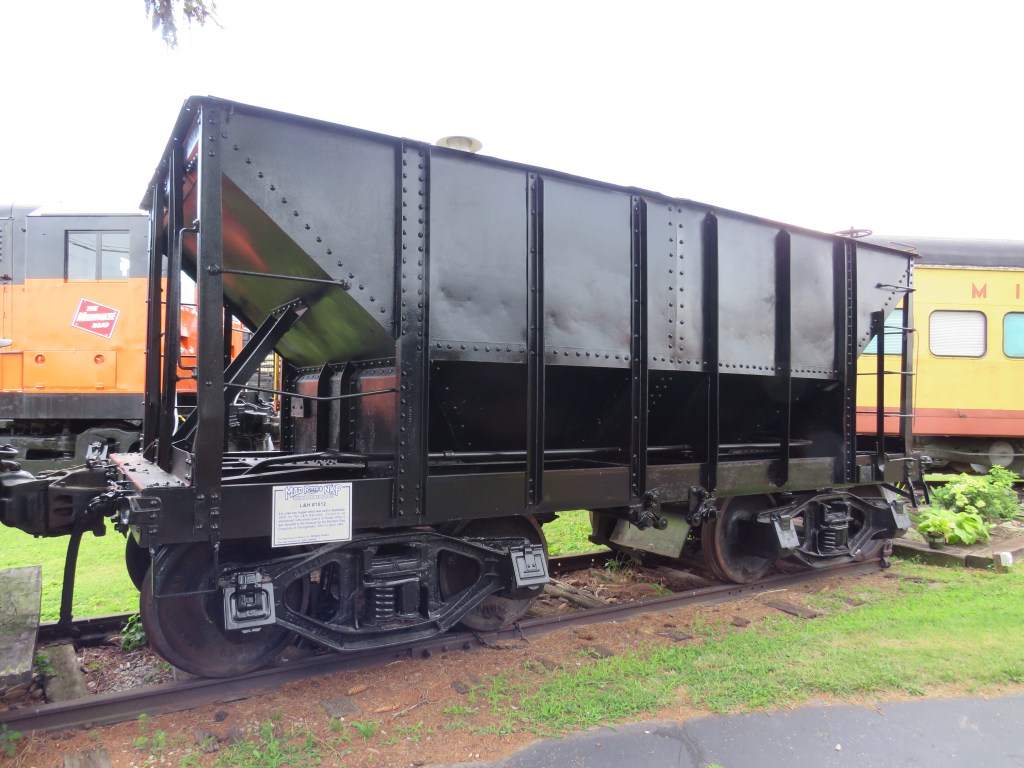
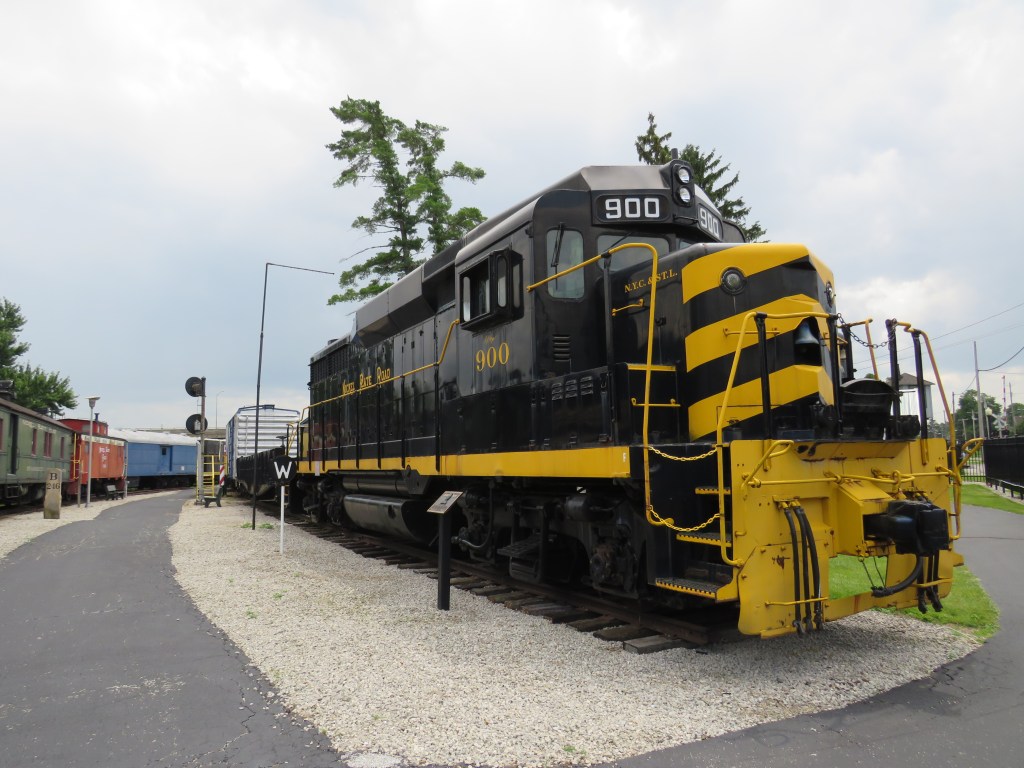
From here, you go outside and across the street to the very thing that kept you here at the museum.  You see the rolling stock.  You have the switcher locomotive.  You have a hopper.  You have a tank car and many box cars.  You have numerous diesel locomotives, cabooses, and more passenger cars and baggage cars.  Then you have the old Bellevue Train Station.

Some of you are saying, “Alright!  That is everything.”

Ladies and gentlemen, there is more.  Yes, there is more.

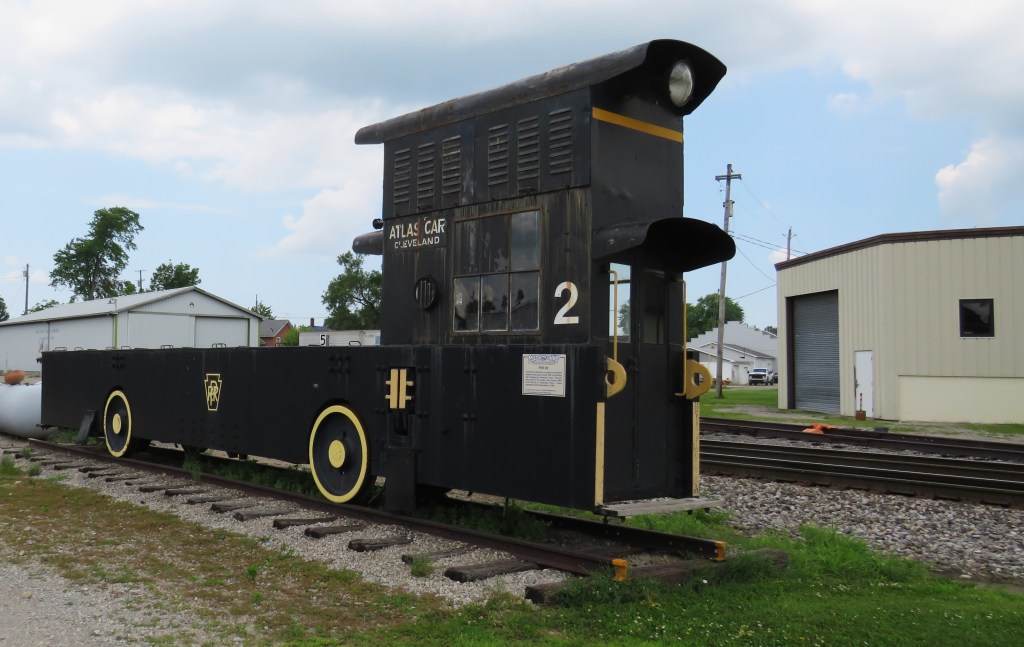
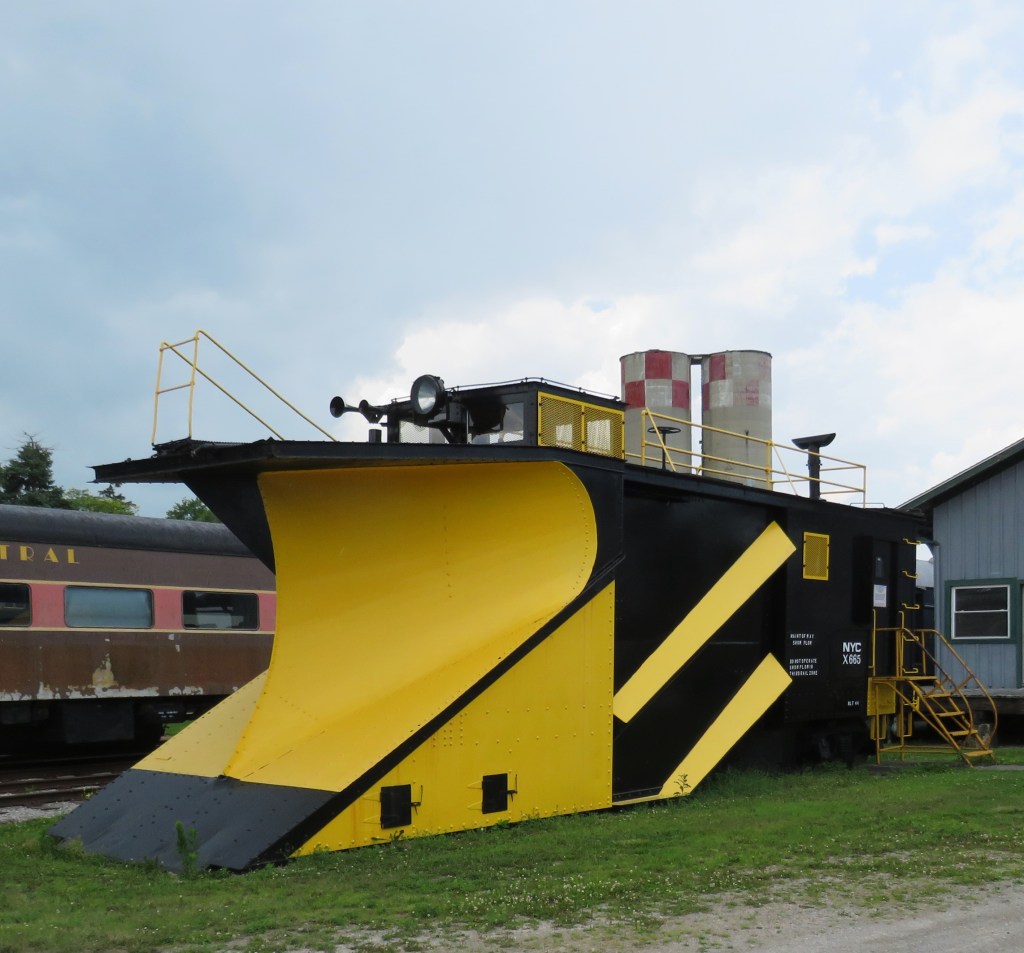
Across the main rail line from the museum is the Kemper Rail Park.  Yes, there is more things to see.  What is here?  You  have Locomotive  Number  2  from the Pennsylvania Railroad.  You have more locomotives, a crane, the freight house from the New York Central System, and you have the star attraction.  What is the star attraction?  Nickel Plate Road Locomotive Number 757 sits here in the park.

So you think that this it.  There is more.  The town of Bellevue was served by many railroads back in the day.  Today, the Norfolk Southern Railway is the only railroad in town, and, if you are fortunate enough, a freight train may pass by. 

The Mad River and NKP Railroad Museum was established by people who wanted to keep the heritage of the railroad in Bellevue alive.  It is an all-volunteer operation including restoration of old rolling stock, and the museum receives no public funding.  When you come here, be advised that it is not a waste of your time.

The Mad River and NKP Railroad Museum is located at 253 Southwest Street in Bellevue, Ohio.  It is just a few blocks from U.S. Route 20 and Ohio State Routes 18 and 269, and it is easily accessible from the Ohio Turnpike (Interstates 80 and 90).  It is open from May through October from 12:00pm to 4:00pm.  (Open weekends only in May, September, and October.  Open daily from Memorial Day to Labor Day.  The Rail Park is open year round from sunrise to sunset.)  Please note that due to the age of the structures, not all areas are wheelchair accessible, but the rail park is completely accessible.  You can get information in admission, directions, and to read more into the history of the museum and the railroad at https://madrivermuseum.org/.

The Mad River and NKP Railroad Museum is an amazing place.  There is much here.  It is definitely worth making the journey.

Memorial Park, Myersville, Maryland

Most people have never heard of the small town of Myersville in the northern region of the U.S. state of Maryland.  The only main road through this town is Maryland Route 17.  If you visit the town, the first thing you would say is, “Well, this is not a railroad town.”

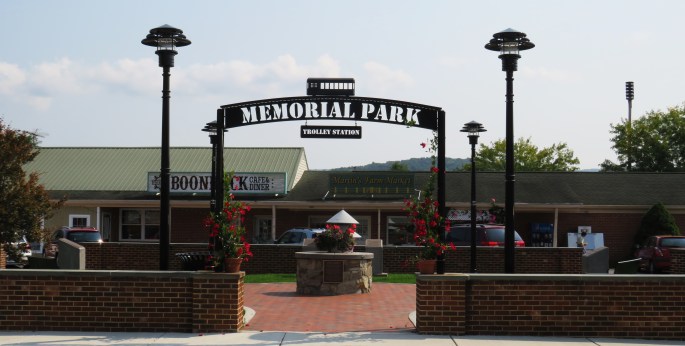
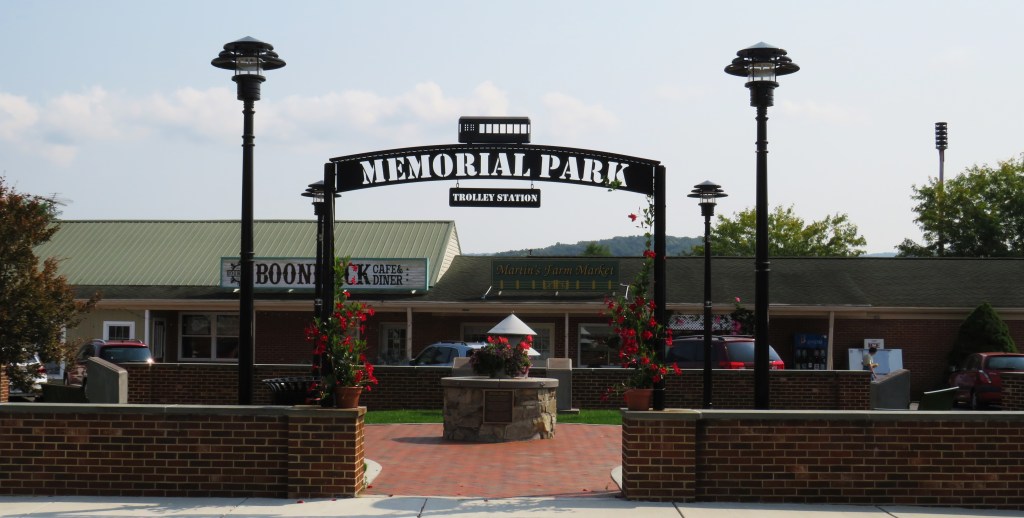
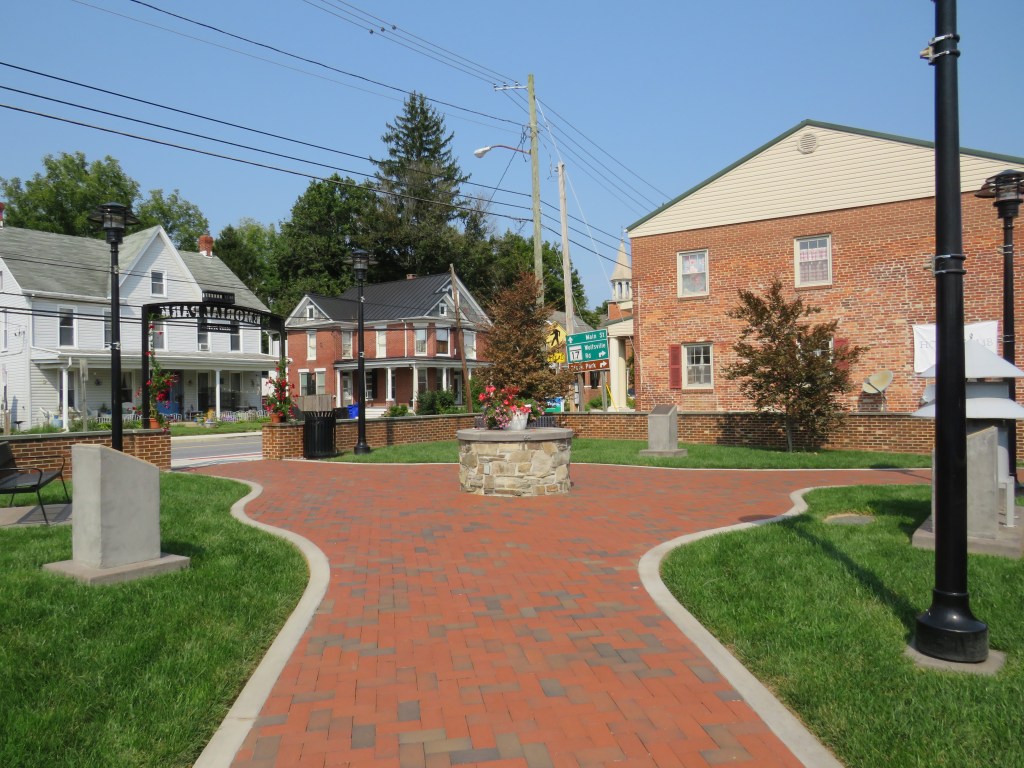
In the early years of the town, that was not the case.  Memorial Park was erected in 2016 to commemorate the volunteers, the agriculture and community organizations as well as the town being a trolley town.  The park is a reminder of how the town benefited from the Hagerstown and Frederick Railway which ran trolleys connecting the small towns with the big towns of Frederick and Hagerstown.  The town was served by the trolley and was a hub for farmers and travelers going to various parks to include Braddock Heights, an amusement park (now gone).  The trolley ran through the town until 1945, and the tracks were taken up.

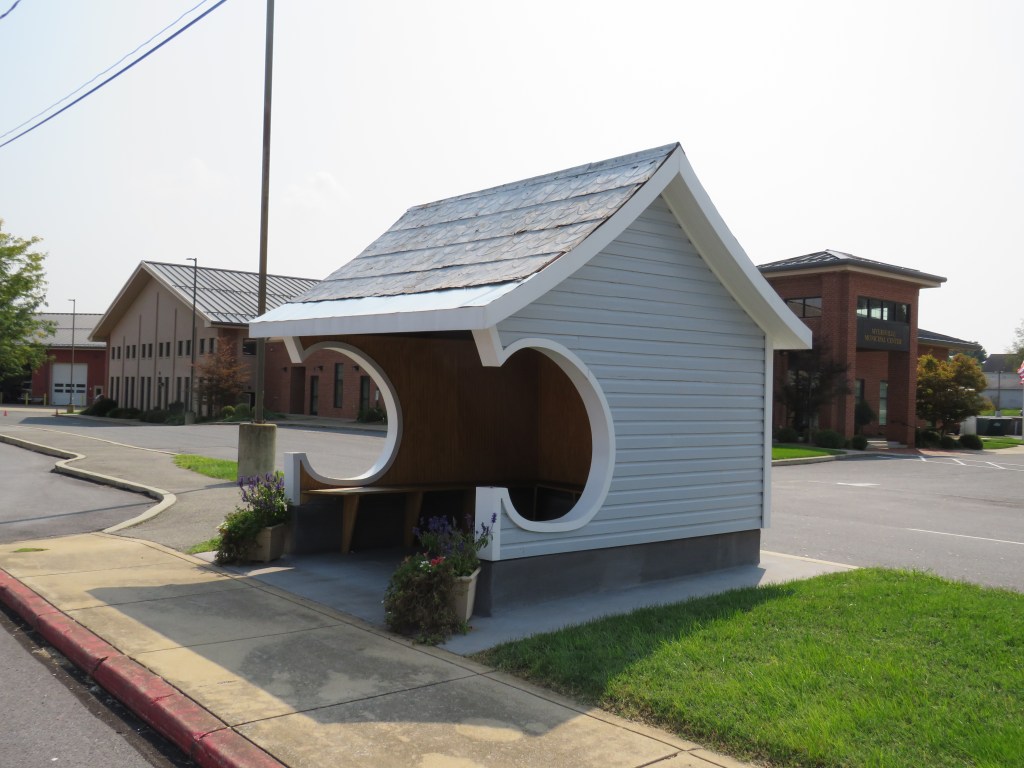
As you visit the park, you will first see the sign ‘Memorial Park Trolley Station’.  You can read a sign that tells the history of the Hagerstown and Frederick Railway’s service to the town.  You can see a trolley shelter where you can have a seat.  Next door, you can see the old sign that hung of the old trolley shelter.

Memorial Park is located on Maryland Route 17.  The park does not have its own parking, but there is plenty of parking on the street and nearby parking lots.

Alberta Caboose, Alberta, Virginia

The small town of Alberta is located in the southern region of the U.S. state of Virginia.  Yes, the name of the town is Alberta.  (Whether it is named after the Canadian province is unknown.)  In this small town in the center of the town is a caboose.  How is the caboose here?  This town has no railroad.  Well, the town was once served by two railroads, and there was heavy rail traffic in its heyday.  Like many small towns, service declined, and the railroads were forced to abandon the town.

Some of you are saying, “This is nice, but many small towns in the United States of America have declined from the lack of the railroad.”

Even though Alberta, Virginia looks like a ghost town today, the Alberta Caboose reminds everyone about the railroad heritage.  The caboose is from the Virginian Railway and sits near the old railroad bed of the Virginian Railway which is now the Tobacco Heritage Trail which runs across the southern region of Virginia as a reminder of how the Virginian Railway and, later, the Norfolk and Western Railway was a big part of the tobacco industry.

What about the caboose itself?  As mentioned, it was used by the Virginia Railway.  It was donated to the town in memory of Earl Walter Wilkinson.  Who is Earl Walter Wilkinson?  He was a devoted employee of the Norfolk and Western Railway.  Like many cabooses that you once saw on the end of freight trains, it was preserved and put on display.
The Alberta Caboose is located in the Town Square in Alberta, Virginia at 123 First Avenue.  It is one block from Virginia Route 136 and minutes from U.S. Route 1 and Interstate 85.  There is a small parking lot for parking.

If you ever visit the town of Alberta, Virginia, it may appear to be a ghost town, but it comes alive with the memory of the railroad.