This is a text widget, which allows you to add text or HTML to your sidebar. You can use them to display text, links, images, HTML, or a combination of these. Edit them in the Widget section of the Customizer.
When you think about trolleys in the United States of America, you think about the big cities particularly the city of San Francisco in the U.S. state of California, a city that is famous for its trolleys. Very few people would ever think of smaller cities like the city of Fort Smith in the U.S. state of Arkansas. When you think of Arkansas, you think of its natural areas and not its urban areas of which there are very few with the state capital of Little Rock and the metropolitan area of Memphis in the U.S. state of Tennessee. The city of Fort Smith is located in the western part of the state on the Arkansas River and across the river from the U.S. state of Oklahoma.
Some of you are saying, “Well, it is called Fort Smith, but there was never a fort here. They just named the city Fort Smith.”
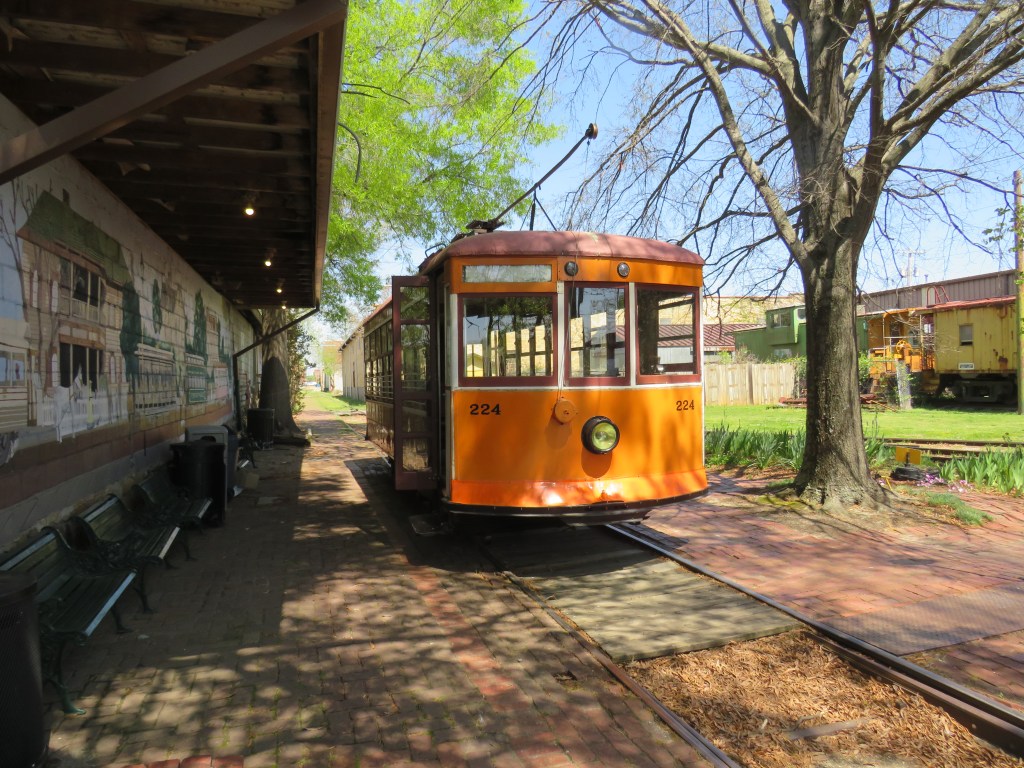
Well, you are absolutely wrong. The city of Fort Smith, Arkansas is named after Fort Smith, and you can visit the fort as it is a National Historic Site that is owned and operated by the National Park Service. Very few people think that trolleys ever ran here, but it was once a trolley town where trolleys ran on the streets. That is why you have the Fort Trolley Museum.
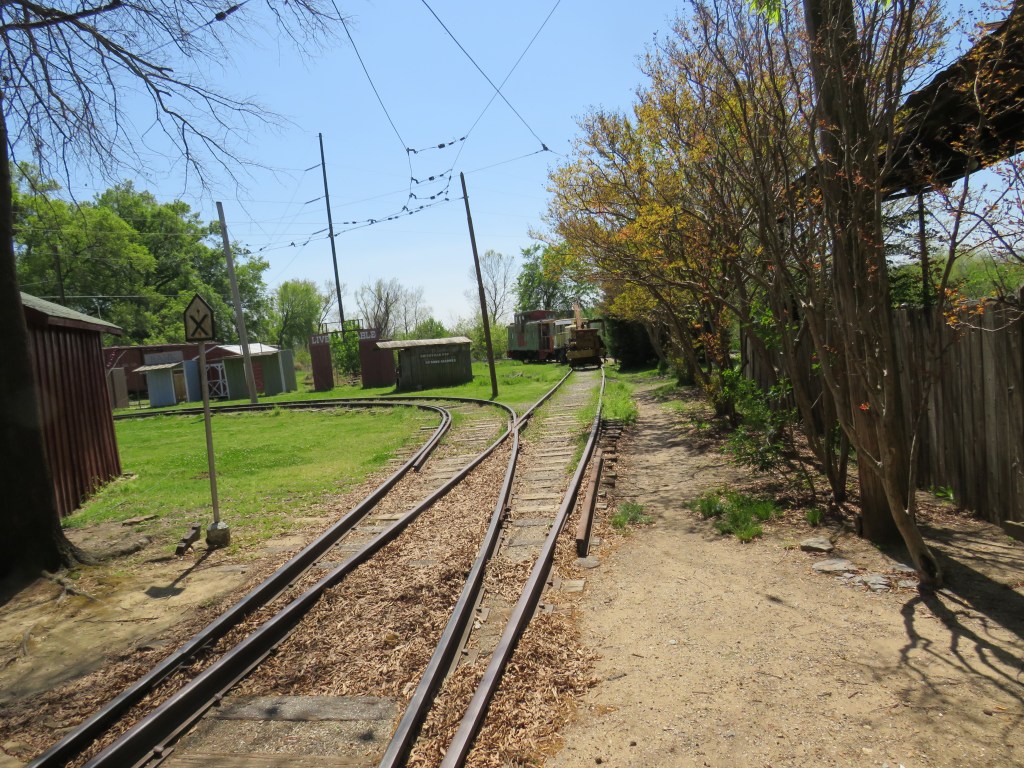
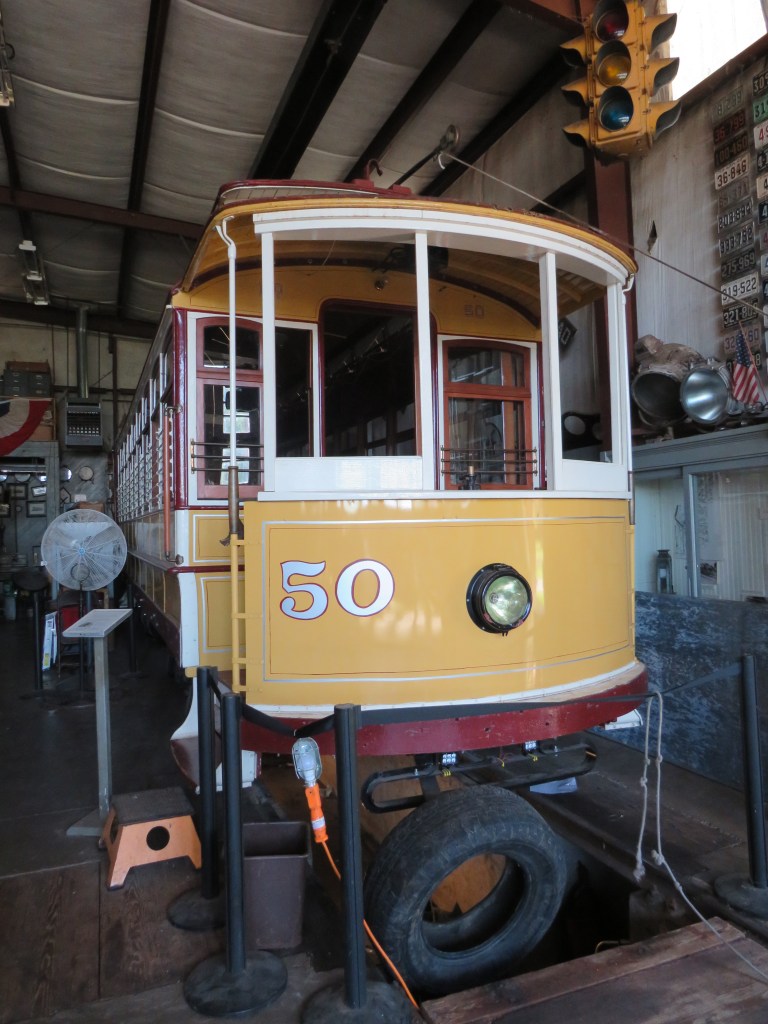
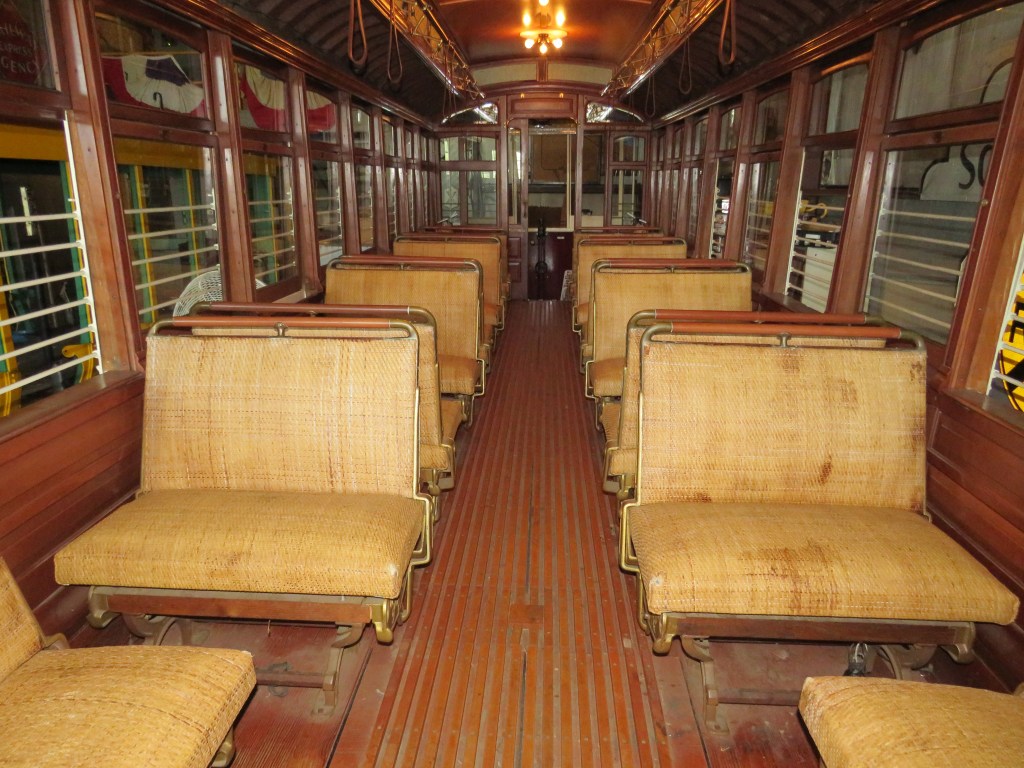
What is the Fort Smith Trolley Museum? It is a small museum that tells the history of trolleys in the city of Fort Smith. Although there are very few trolleys on display here, there is a restoration shop. The museum has artifacts to include work tools and old paintings, and, if you are fortunate enough, you can even take a trolley ride on one of the original tracks.
The Fort Smith Trolley Museum is located at 100 South Fourth Street in Fort Smith, Arkansas next to the Fort Smith Historical Park just blocks from U.S. Route 64 and the bridge crossing the Arkansas River. You can read more about the history of the trolleys and get museum hours which vary throughout the year at https://www.fstm.org/.
The city of Fort Smith, Arkansas may be named for an old fort, but it was once a trolley town. The Fort Smith Trolley Museum keeps the memory of Fort Smith Trolleys alive for many years to come.
“It’s a beautiful day in this neighborhood, a beautiful day for a neighbor, would you be mine? Could you be mine? It’s a neighborly day in this beautywood, a neighborly day for a beauty. Would you be mine? Could you be mine? I have always wanted to have a neighbor just like you. I’ve always wanted to live in a neighborhood with you. So let’s make the most of this beautiful day, since we’re together, we might as well say, would you be mine? Could you be mine? Won’t you be my neighbor? Won’t you please, won’t you please, please won’t you be my neighbor?”
For the last three decades of the twentieth century, many people young, and old, turned on their television and heard a man commonly called Mister Rogers who was a star of a television program called Mister Rogers Neighborhood. The show began with a view of the neighborhood Mister Rogers lived in. In the next scene, Mister Rogers enters his home and sang the song. Although the show was targeted to young children, many adults became a fan of the show. Although the show aired its last episode in 2001 and he passed away in 2003, the legacy of Mister Rogers and Mister Rogers Neighborhood continues on to this day. In 2018, A Beautiful Day in the Neighborhood aired in theaters telling the story of the television series with Tom Hanks playing the role of Mister Rogers whose real name was Fred Rogers. Fred Rogers may be gone, but his legacy lives on.
Some of you are saying, “Wow! Mister Rogers must have been a great man to have been loved by so many. There is one problem. The show was about Mister Rogers and was a show for children. It was not a railroad show for railroad lovers. Therefore, I have no desire to be his neighbor.”
So, you do not want to be a neighbor of Mister Fred Rogers. Why? The reason is because you had never seen the Mister Rogers Neighborhood television show.
As mentioned, the show began with a view of the neighborhood. This neighborhood was designed after his hometown of Latrobe in the U.S. state of Pennsylvania, a suburb of Pittsburgh. What is special about Latrobe, Pennsylvania? It was a town designed by a civil engineer of the Pennsylvania Railroad who named the town after a college classmate, Benjamin Henry Latrobe II who was an engineer for the Baltimore and Ohio Railroad and the son of the man who happened to be the architect responsible for rebuilding the United States Capitol in Washington D.C. after it was burned down during the War of 1812. Latrobe was also the western terminus of the Ligonier Valley Railroad, a narrow gauge railroad that ran east of Latrobe to the town of Ligonier. There were also two trolley lines that operated in the town.
Some of you are saying, “It is nice that he came from a railroad town, but what does this have to do with the television show?”
As mentioned, again, the show began with a view of the neighborhood. One of the things that you saw was a trolley. Mister Rogers entered the house and sang the famous song. Along with Mister Rogers, the show had other characters. Part of the show took place in ‘The Neighborhood of Make-Believe’. How did he get to the Neighborhood of Make-Believe? One of the characters of the show was called ‘Trolley’.
Some of you are saying, “That is a strange name. Who in the world is ‘Trolley’?”
Oh! ‘Trolley’ was an actual trolley. Well, it was a model trolley that departed from Mister Rogers’ living room to the Neighborhood of Make-Believe. ‘Trolley’ was followed as it left Mister Rogers and along its route until it arrived in the Neighborhood of Make-Believe, a neighborhood that featured puppets.
Some of you are saying, “Wow! That is interesting. I bet he enjoyed riding around in his expensive cars and never rode a train.”
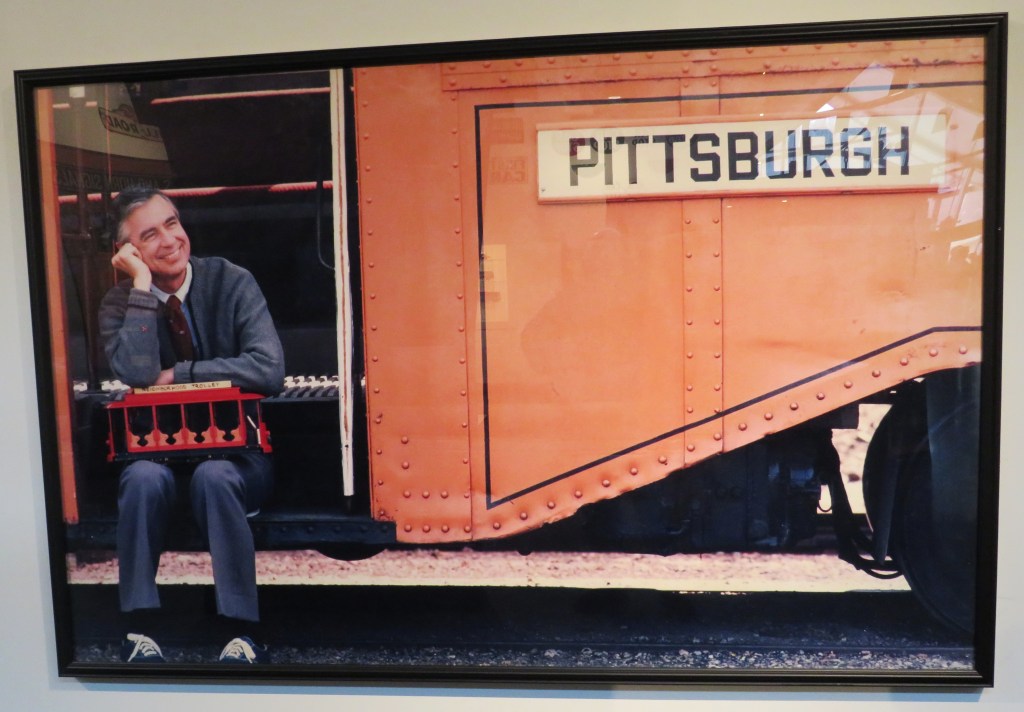
Well, you are wrong again. While he was living in New York City, New York during the filming of the television show, Fred Rogers rode around New York City on the subway. No. He did not have his own private subway car. Fred Rogers enjoyed being around people, and a ride on the subway allowed his to mingle with the regular common people. He was also a big fan of trolleys. A famous photo of Fred Rogers is a photo of him sitting on the steps of a trolley.
Some of you are saying, “That is very nice. Too bad that the trolley is now scrapped.”
Sadly, you are wrong again. The trolley, Trolley Number 3756, can be seen at the Pennsylvania Trolley Museum in Washington, Pennsylvania, like Latrobe, a suburb of Pittsburgh.
Some of you are saying, “Whew! It got spared. I am glad that they saved it. Why the Pennsylvania Trolley Museum?”
Why the Pennsylvania Trolley Museum? In honor of Fred Rogers, whose home is in the Pittsburgh Metropolis, the Pennsylvania Trolley Museum, also in the Pittsburgh Metropolis, was the perfect home for the trolley, but there is more to the story. The photo of Fred Rogers sitting on the trolley steps holding a replica of ‘Trolley’ was taken on October 3, 1983, at the Pennsylvania Trolley Museum by a museum volunteer. Fred Rogers was visiting the museum to film an episode of the television show. While he was visiting, Fred Rogers operated at trolley with help from a volunteer. Today, you can visit Trolley 3756, and you can replicate the photo of yourself. The replica trolley used in the photo can be seen inside a glass encasement inside the Visitor Center.
Now that you know that Fred Rogers is a trolley fan, you might want to move to his neighborhood. You will probably enjoy being his neighbor.
U.S. Route 30, a route that has been nicknamed the ‘Lincoln Highway’ named after Abraham Lincoln, former President of the United States of America, begins in the town of Astoria in the U.S. state of Oregon and winds its way east through many U.S. states ending in Atlantic City in the U.S. state of New Jersey. One of those states is Pennsylvania. As it passes through Pennsylvania, it passes through the major cities of Pittsburgh and Philadelphia, and it passes through the town of Gettysburg, the town famous for a great battle of the American Civil War known as the Battle of Gettysburg. Halfway between Gettysburg and Chambersburg new the town of Fayetteville is Caledonia State Park. Caledonia State Park is a park that has hiking trails, fishing, and hunting, and it has a waterfall. Yes, many parks has this, but it also has the Totem Pole Playhouse, a theater that has produced actors like John Ritter from the old television series ‘Three’s Company’, the centerpiece of the park is the Caledonia Iron Furnace.
The Caledonia Iron Furnace was built in 1837, and it was owned by Thaddeus Stevens. The name of the furnace comes from the name of the county in Vermont where Thaddeus Stevens was born. It was destroyed by Confederate General Jubal Early and his men in 1863. The furnace was rebuilt, and it continued to produce iron until it was closed in 1902, and it was then turned into a state park. When you visit Caledonia State Park, you can see the furnace, and you can see the blacksmith shop where demonstrations take place. In Caledonia State Park, every step you take in the park is a place where history took place.
Some of you are saying, “Wow. I love state parks. I love being around the trees and the streams and the waterfalls. As for the old furnace, it is nice that it is preserved although it would be great to see it working. There is one problem. What is the problem? There is no railroad here. Therefore, you will not see my company here.”
Well, as you walk around Caledonia State Park, you will not see a railroad nor do you see any sign of a railroad being here. If there is no railroad at the park, why visit?
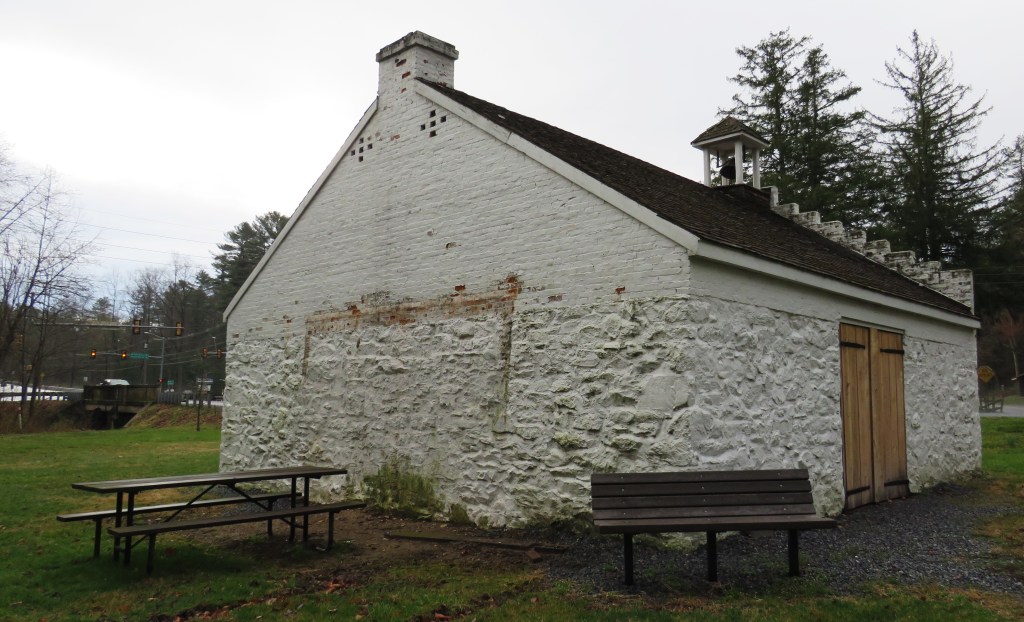
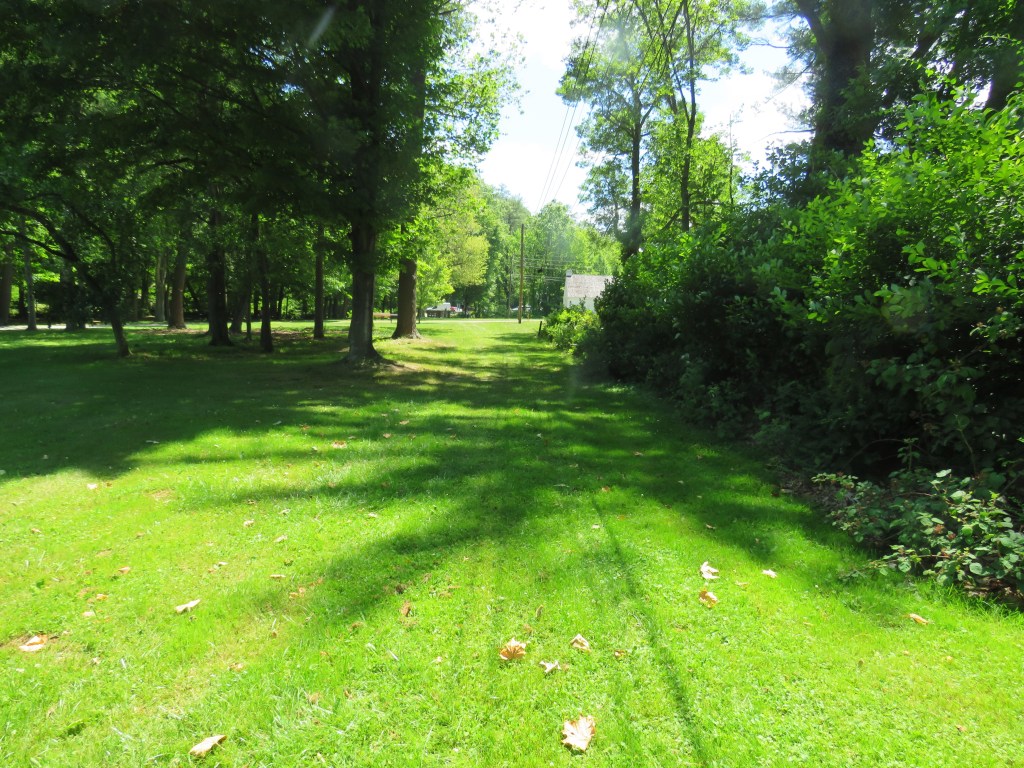
As you visit Caledonia State Park, you will notice a few structures within the park itself. Of course, you have the restrooms, and, of course, you have the old furnace. Then you have the blacksmith shop. Yes, a blacksmith does mend and heat metals here, but it was not always a blacksmith shop. If it was not always a blacksmith shop, what else could it have been. The blacksmith shop was once a trolley station. A trolley station? Yes, it was a trolley station. The Chambersburg and Gettysburg Electric Railway. Trolley service began in 1905. The Chambersburg and Gettysburg Electric Railway made a stop at Caledonia State Park, and they built a small amusement park there. The railway got its name from the fact that its purpose was to take passengers from Chambersburg, Pennsylvania to visit the Gettysburg Battlefield in Gettysburg, Pennsylvania. The trolley line was built east from Chambersburg, and it took passengers as far as… Caledonia State Park. Due to lack of funds and steep grades between Caledonia State Park, the section to Gettysburg was never built. Service ended in 1926, and the amusement rides were dismantled. Today, only the blacksmith shop and the Trolley Trail going west from the blacksmith shop are the only reminders of the trolley.
As mentioned, every step you take at Caledonia State Park in Fayetteville, Pennsylvania is a step where history happened. That includes those on the Appalachian Trail which passes through the park. If you walk along the Trolley Trail, every step you take will be a step where railroad history took place.
Caledonia State Park is located near the town of Fayetteville, Pennsylvania at the intersection of U.S. Route 30 and Pennsylvania Route 233. The park is free to visit, and it is open from sunrise to sunset. The iron furnace and the Caledonia Waterfall can be seen from the road. Although the trolley trail is flat, it is not paved making it difficult for wheelchairs. You can get more information at https://www.dcnr.pa.gov/StateParks/FindAPark/CaledoniaStatePark/Pages/default.aspx.
U.S. Route 30 has many great sites along the road. Caledonia State Park is one of them. It may be famous for the furnace, but it was also a place where a trolley line came to an end.










 John Cowgill: Stories of the Railroad