Mammoth Cave National Park, Cave City, Kentucky

There are many great things about the U.S. state of Kentucky.  Many people think about Kentucky Fried Chicken, a fast food restaurant chain.  You have the bourbon distilleries.  You have the Kentucky Derby in Louisville, the longest continuously running sporting event in the world and the first race of what is known as the Triple Crown.  Louisville is also the home of the Louisville Slugger, a company that makes baseball bats.  How about my Old Kentucky Home in Bardstown?  Then you have Mammoth Cave National Park, the home of Mammoth Cave, the largest known cave system in the entire world.  How big is the cave?  Let us say that you cannot do the entire cave in one tour.  There are many tours involved here.  How does it get the name ‘Mammoth Cave’?

Some of you are saying, “Well, duh, it was the home of a mammoth.  A mammoth lived in the cave.”

It is unclear if that is the answer but being the largest known cave system in the world, it is truly mammoth in size.  It is truly a natural marvel that you will truly want to see.  If you are ever in the south central region of Kentucky, you will want to visit Mammoth Cave.

Some of you are saying, “Wow!  That is one big cave.  However, there is one big problem.  As you can see, this is a cave.  This is not a railroad site.  Therefore, I will not be exploring this place.”

You are right.  This is not a railroad site.  Why visit Mammoth Cave National Park?

Mammoth Cave National Park, as mentioned, is centered around Mammoth Cave.  Hence the name.  It is located near Cave City, which is about eight miles from the park.

Some of you are saying, “Well, duh!  Cave City is an obvious name of a town erected around a cave.”

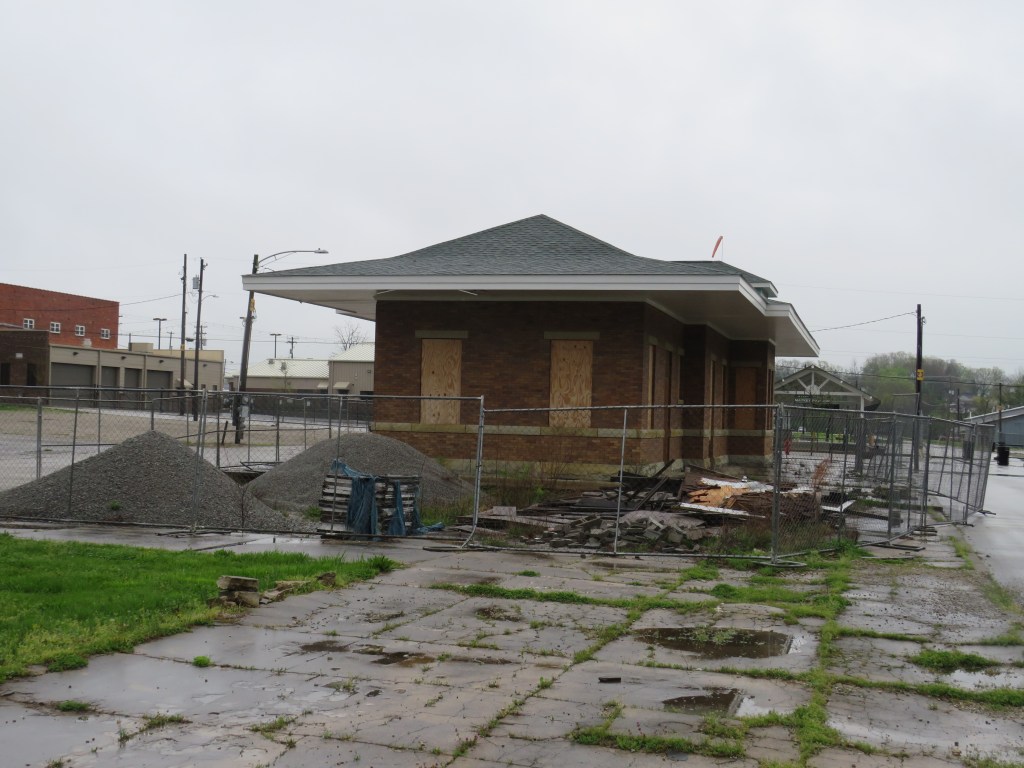
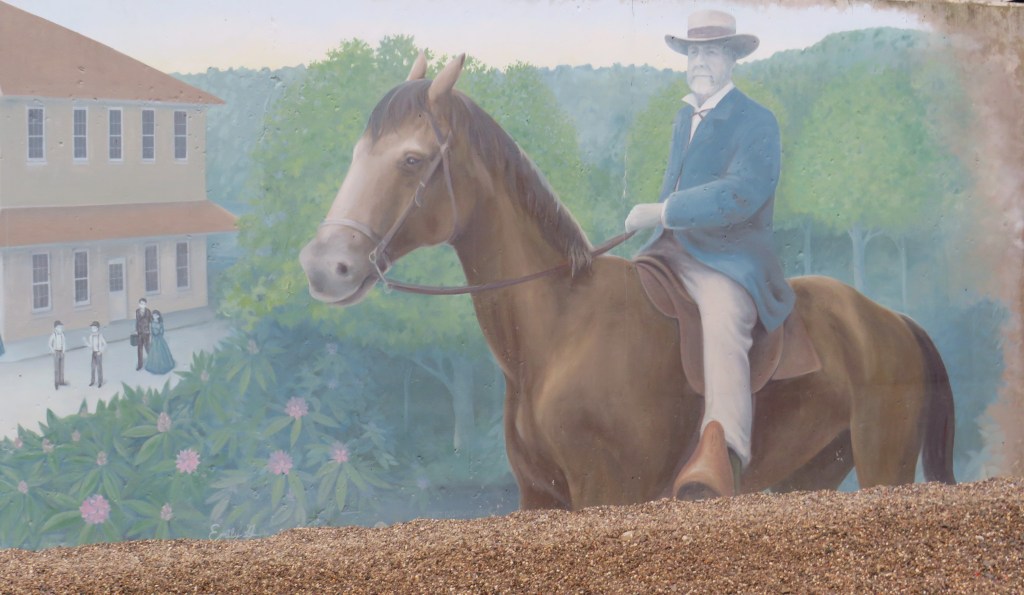
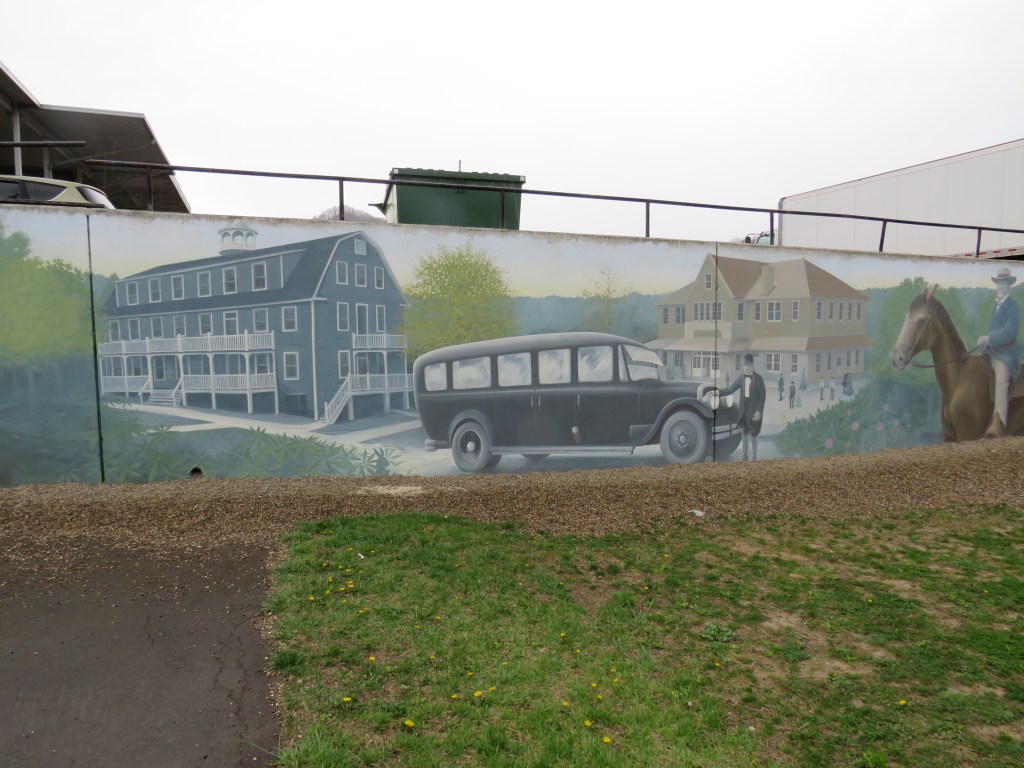
You are absolutely right, but this is where the story begins.  Cave City was not always called Cave City.  It was originally called Glasgow Junction.  If you are thinking of a railroad junction, you are thinking correctly.  The Louisville and Nashville Railroad brought people to Glasgow Junction.  Then they were brought to Mammoth Cave by a horse drawn carriage to the cave.

Some of you are saying, “It is nice that they were able to ride the train to Cave City, but then they had to take a carriage about eight miles to the cave.  That means that Mammoth Cave has nothing to do with the railroad.  This mean that there is no reason to visit this cave.”

Ladies and Gentlemen, there is more to the story.

In an automobile, eight miles is a short distance.  In a horse drawn carriage, it is a long distance.  The owners of the horse drawn carriages saw that it took time to get tourists from the train station to the cave.  They came up with an idea.  What was that idea?  In 1874, they started the Mammoth Cave Railroad, and the first train ran in 1886.  Instead of riding the train to Glasgow Junction and taking a horse and carriage to the cave, they could now ride the train to the cave.

The railroad, sadly, was only profitable in the first six years.  As more people were able to afford an automobile, fewer people took advantage of the train ride.  The last train ride to the park took place on August 31, 1931.

Now the Mammoth Cave Railroad is gone… but not forgotten.

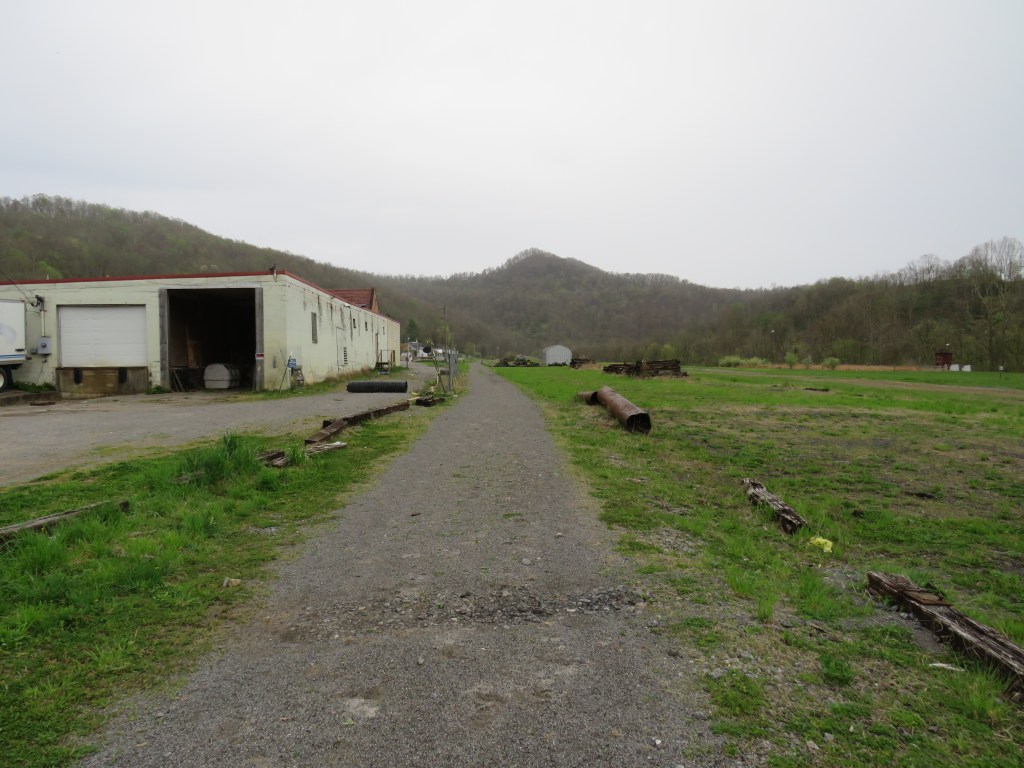
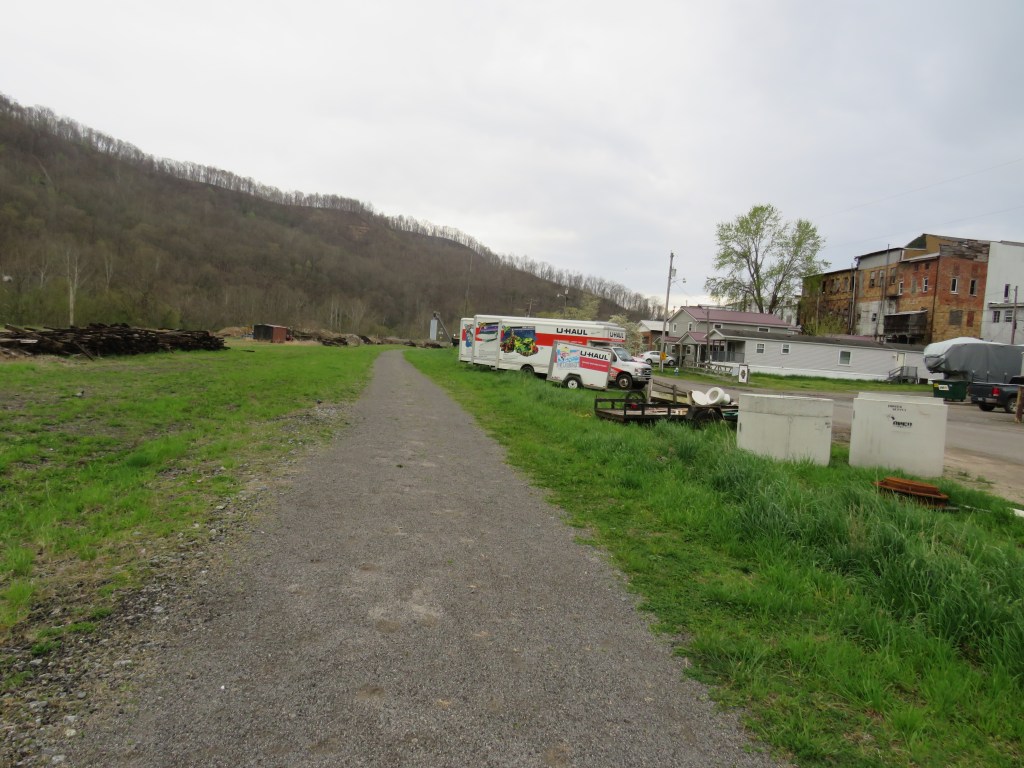
As you enter Mammoth Cave National Park, you can see the old railroad bed that the Mammoth Cave Railroad once ran on, and it is a rail trail that you can hike and bike today.  Once you arrive at the Visitor Center, you are just a short walk from Mammoth Cave Railroad Locomotive Number 4 and Mammoth Cave Railroad Car Number 2.  These two pieces of rolling stock that are covered and surrounded by a steel fence rest at the site of the terminus of the Mammoth Cave Railroad.

As you can see, Mammoth Cave it not just a big cave.  It is a big cave with railroad history.  You can hike on the original railroad bed in the park.  Along with the many cave tours and rail trail, there are also numerous trails you can tread upon.

Mammoth Cave National Park is located at 1 Mammoth Cave Parkway in Mammoth Cave, Kentucky.  It is near Interstate 65 and U.S. Routes 31W and 31E.  Please note that Mammoth Cave is not wheelchair accessible.  You will also be making a descent into the cave with no elevator and escalator.  You will need to climb steps out of the cave.  The rail trail is dirt but is wheelchair accessible.  You can get more information on directions, cave tours, the history of the cave and the Mammoth Cave Railroad at https://www.nps.gov/maca/index.htm.  (Please note that the National Park Service recommends that you do not use GPS in the area and that you follow the directions on the website.)

The next time you think about Mammoth Cave and Mammoth Cave National Park, think about a big cave that has a mammoth history with the railroad.

Tiny Town, Hot Springs, Arkansas

What is Tiny Town?

Some of you are saying, “Well, it’s a ‘tiny town’.”

Yes.  It is a tiny town.

Some of you are saying, “Yes.  It is a tiny town.  It is not a railroad town.  Therefore, I will not be shrinking myself to visit this place.”

So what is Tiny Town, and why visit Tiny Town?  Located in the city of Hot Springs that is named for its hot springs in the U.S. state of Arkansas, why would you want to take the time to visit Tiny Town?

As you approach Tiny Town, you will want to see more.  Why?

You may have heard of a place called Roadside America in a small town known as Shartlesville in the U.S. state of Pennsylvania.  It was a model train village designed by one man who handmade each structure in the village.  Then you had a place called EnterTrainment Junction, another model train village located in the city of Cincinnati in the U.S. state of Ohio.  Sadly, both of these places closed and are places that will not be seen again.

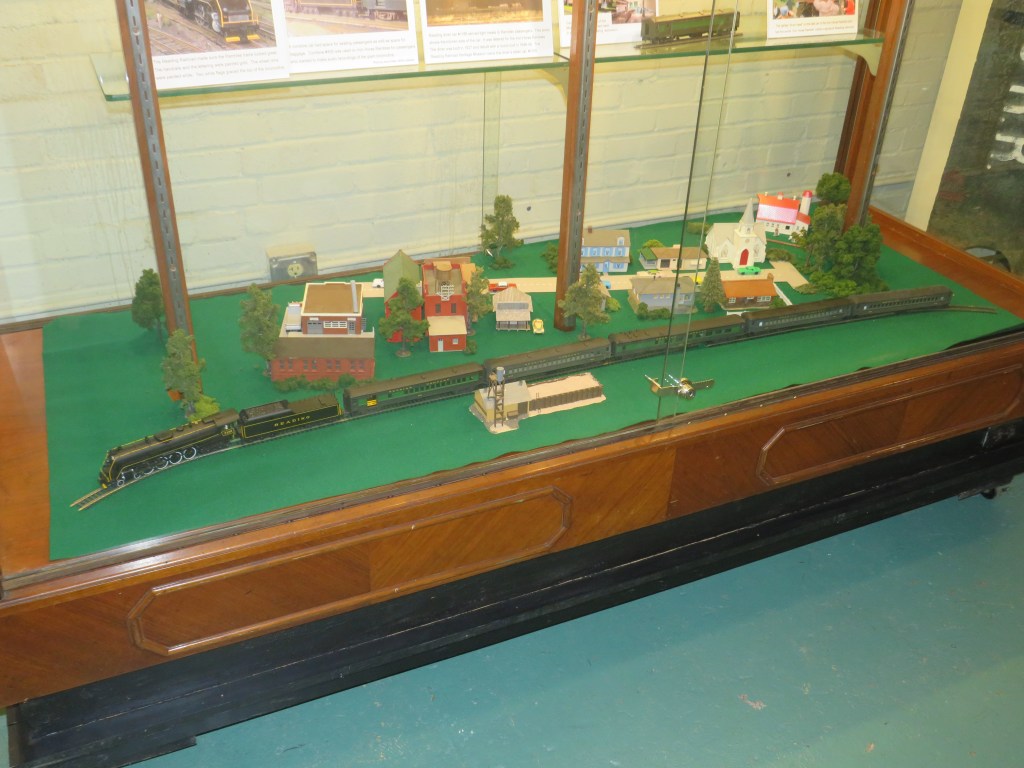
That brings us to Tiny Town in Hot Springs, Arkansas.  Like Roadside America and EnterTrainment Junction, Tiny Town is a model railroad village.  Each structure is handmade without using any kits like most model train displays.  The scenes on this display are from twenty two different U.S. states.  You have small towns and carnivals and Indian villages and wild west towns and mountains and valleys.  The Ferris wheels and other items actually move.  There are waterfalls and rivers and lakes using actual water.  Yes, real water goes over the waterfall and real water spring from the fountains.

This may be called Tiny Town, but the story behind it is not tiny nor is the excitement of visiting Tiny Town.  You do not have to be a train lover to enjoy this masterpiece in a city known for its natural masterpieces.

Tiny Town is located at 374 Whittington Avenue in Hot Springs, Arkansas.  It is just a short drive from Arkansas Route 7 and a short drive and walk from the Hot Springs National Park and the downtown area.  Please note that it is only open from March to October.  Everything is on one floor making it completely wheelchair accessible.  They do not have their own parking, but there is plenty of street parking available.  You can get more information about Tiny Town and read more into its history at https://www.tinytowntrains.com/.

It is called Tiny Town.  When you visit, you will see that there is nothing tiny about this place.

The Laura Ingalls Wilder Historic Home and Museum, Mansfield, Missouri

Who is Laura Ingalls Wilder?  She was an author who wrote many books, but she is most famous for the Little House on the Prairie which became a television series.  She was born in the U.S. state of Wisconsin and lived in a few states in the Midwest Region of the United States of America.  Her final home was in the town of Mansfield in the U.S. state of Missouri.  This is the same state that produced Samuel Clemens, commonly known by his penname of Mark Twain, who wrote the stories of Huckleberry Finn and Tom Sawyer and their adventures on the Mississippi River.  Laura Ingalls Wilder wrote Little House on the Prairie while living in Mansfield, Missouri.  When you visit the Laura Ingalls Wilder Historic Home and Museum, you can visit the museum that tells the life of Laura Ingalls Wilder and the books that she wrote.  You then have the Rocky Ridge Farmhouse and see her writing desk.  You then have the Rock House.  It was here where Laura wrote the Little House on the Prairie books.  As you visit the Laura Ingalls Wilder Historic Home and Museum, you will get the complete story of America’s greatest authors.

Some of you are saying, “Wow!  She had to be one amazing woman.  She lived in so many places in the American Midwest.  Her two homes must be beautiful.  There is a very big problem.  First, this is not a railroad site.  Second, this is not a railroad museum.  Third, Laura Ingalls Wilder wrote no stories about railroads.  Therefore, you will not see me making a visit to this place.”

You do have a point.  This is not a railroad site.  It is not a railroad museum.  There is no railroad on the property nor was there any railroad here.  She never wrote any story about the railroad.  This brings us to a very important question: why should you visit the Laura Ingalls Wilder Historic Home and Museum?

The Laura Ingalls Wilder Historic Home and Museum is a museum that features two houses where Laura Ingalls spent the last years of her life that is located just outside of the town of Mansfield, Missouri.  She is buried with her husband at a gravesite in a cemetery that is located in the town, and the public can visit the gravesite.  While she was living in Mansfield, like many people, you buy things.  When you buy things, some people have their things brought to their homes.

Some of you are saying, “This is nice, but there is no railroad at her house nor has there ever been a railroad at her house.”

That is true.  However, there is a railroad in the town of Mansfield, and there was a train station.  The train station is no longer active, but the railroad line remains active today and is owned by the Burlington Northern Santa Fe Railroad, simply known as BNSF.  The town also had a railroad yard, and it was served by a short line railroad known as the Ava Southern Railroad that went to the town of Ava.

What does this have to do with the Laura Ingalls Wilder Historic Home and Museum?

Laura Ingalls Wilder made much use of the train station in Mansfield as she had many of her things ship to the town of Mansfield by train, and then it was brought to her house.  Laura Ingalls Wilder also attended a ceremony celebrating the completion of the Ava Southern Railroad.

Laura Ingalls Wilder never wrote a story about the railroad, but while she was living in Mansfield, Missouri, the railroad was a big part of her life.

The Laura Ingalls Wilder Historic Home and Museum is located at 3060 Missouri Highway A in Mansfield, Missouri.  It is open from March 1 to November 15 from 9:00am to 5:00pm from Monday to Saturday and 12:00pm to 5:00pm on Sunday.  Parking is on site.  Please note that due to the age of the structures, the Rocky Ridge Farmhouse and the Rock House are not wheelchair accessible.  You can get more information and read more into the life of Laura Ingalls Wilder at https://lauraingallswilderhome.com/.

Come to the Laura Ingalls Wilder Historic Home and Museum.  See where the Little House on the Prairie was written.  See the place where a famous author made her home, and home that made use of the railroad.

Williamsburg, Indiana

Welcome to Williamsburg, Indiana.

Some of you are saying, “You got it wrong.  You meant to say, ‘Welcome to Williamsburg, Virginia’.”

No.  This is the small town of Williamsburg in the U.S. state of Indiana.  It is not like its Virginia counterpart of Colonial Williamsburg but a small town in the eastern part of the state just west of the U.S. state of Ohio.  When you visit the town, you will pretty much see a ghost town… but it was not always that way.

The town was named after William Johnson, the man who settled the town in 1830.  Like many small towns, it flourished, but something happened in 1901.  What happened?  The Chesapeake and Ohio Railway came to town.  Connecting the Indiana cities of Richmond to the south with Muncie, the Chesapeake and Ohio Railway brought massive growth of business and population to the town.  The town had its own train station.  Like many small towns in the United States of America, Williamsburg went into a decline and began beginning to be the ghost town it is today.

Today, the railroad line that passed through the town of Williamsburg, Indiana became a rail trail known as the Cardinal Greenway, the longest rail trail in the U.S. state of Indiana running to Richmond to the south and Marion to the north.  As you visit the rail trail, you will not notice that this was once a busy place.  Located north of the town center just a short drive of U.S. Route 35, you will experience a quiet place at a place that was once the centerpiece of the town.

Welcome to Williamsburg, Indiana.  You will not see people dress in colonial attire, but you will be in a small town where a railroad made history.

A Tale of Two Trains

Once upon a time, there was a small town that was also its own country called Livingtown.  The town was on a high bluff that was on an island in the middle of the Living Sea.  The only access to this town/country was a railroad line with two long bridges on each side.  The one railroad bridge went into the nation of Condemnburg.  The other railroad bridge went to the national of Freedomia.  The trains came together at Union Station.

One day, a family was at the edge of one of the bluffs having a picnic.  They looked at the bluffs, and they saw that the bluffs were eroding into the sea, and they were eroding fast.  They immediately went to the king and told him what was happening.  The king gathered everyone together at the square.

“People of Livingtown, the cliffs around this bluff island are beginning to erode away.  In a matter of days, the island will be no more.  Every one of you must gather all of your things and go to Union Station to leave the island.”

Everyone did as the king demanded and gathered their things and brought them to Union Station.  Two trains arrived.  The one man stepped off from the locomotive and went in from of the people.  “Hello.  My name is David Dictate.  My train is going to Condemnburg.  You need to get on my train.  Why?  Because in Condemnburg, you never need to make decisions or choices.  Why?  Because I make your choices for you.  I always know what is best for you.  Therefore, I will never make a bad choice for you.”

Three men stepped off of the other train.  “Ladies and gentlemen of Livingtown.  My name of Franklin Free.  My train is going to Freedomia.  In my country, you can choose what is best for you.  We the leaders of Freedomia believe that you can make better decisions for yourselves that the nation’s leaders can.  In Freedomia, you have freedom.”

“Come on!”  David Dictate was furious.  “You do not want freedom.  If you have freedom, you have to make the decisions and choices yourselves.  In Condemnburg, we the leaders do that for you.  You do not have to anything in my country because we do it for you.”

The people boarded each train along with their possessions.  The train to Condemnburg left the station.  The train crossed the sea and entered into the nation of Condemnburg.  The people were then put in chains.  “What is happening?”

Their possessions were thrown off of the train into a fire.

“You do not need stuff.”  David Dictate spoke.  You will keep these chains on.  If anybody complains, you will be executed.”

The train to Freedomia left the station.  They crossed the bridge and entered into the country.  They arrived in the city of Independence City.

“Ladies and gentlemen, welcome to Independence City, the capital of Freedomia.  As you deboard the train, there will be people at the station who will help you with where to live, and we have plenty of places to eat here.  Where you want to live and want to eat is up to you.  I hope that you enjoy our nation.”

The people deboarded the train.  They were enjoying life in Freedomia.

Every year, many countries around the world celebrate their Independence Day.  In the United States of America, July 4th is set aside as Independence Day.  It was on this day in 1776 where a few men signed a document called the Declaration of Independence in a small building in the city of Philadelphia in the then British colony of Pennsylvania.  This document made a declaration of independence to what would become the United States of America.  What began as thirteen colonies in 1776 grew to fifty states 249 years later.  I would like to wish everyone a HAPPY INDEPENDENCE DAY!!!

The White Oak Rail Trail, Oak Hill, West Virginia

In the heyday of America railroading, the railroad connected the small towns with the major cities.  As many railroad lines were no longer used, many of the railroad tracks and the railroad ties were taken up while some rails and ties were left to decay.  Some of the railroad beds were left to erode over time while some were covered into rail trails.  (A rail trail is a trail designed on an old railroad bed to be used for hiking, biking, horseback riding, or just plain walking.)  Many of the trails are paved while some remain dirt or have gravel.

In the U.S. state of West Virginia in the metropolitan region of Beckley, you will find the town of Oak Hill.  The town is not very famous although it is said the country music singer Hank Williams may have died at a gas station in this town while on route from Bristol, Virginia to Canton, Ohio.  (The story has not been confirmed.)  The only thing most people know about Oak Hill is that most people drive by the town on U.S. Route 19 while traveling from Beckley to the World Famous New River Gorge Bridge which is just north of the town.  One thing that is confirmed is that the town of Oak Hill was served by the railroad.

The White Oak Rail Trail is a rail trail that is slightly under eight miles that passes through the town.  Much of it is paved, but there are portions of the trail that are not paved.  The railroad line was owned by the White Oak Railway, and the rail line was later taken over by the Virginian Railway.  The main center point of the trail is the old train station.

What is special about the old train station?  It is one of the oldest structures in Oak Hill.  It is a passenger and a freight depot.  It was built by the White Oak Railway in 1903, and it was later taken over by the Virginian Railway.  Like many small towns, the railroad was a major contributor to the town’s economy.  The depot was also used by the Norfolk and Western Railway and the Chesapeake and Ohio Railway.  The train depot remained in service until 1983.  The rail line later became the rail trail it is today.

The train depot is now an art store selling locally made at.  An old railroad line that passes by the old train station is the only reminder of Oak Hill being a railroad town today.

The Oak Hill Train Depot is on the National Register of Historic Places.  It is located at the intersection of Virginia Street and Central Avenue.  The trail goes north from the depot to the community of Summerlee and south to the community of Carlisle.  Much of the trail is wheelchair accessible.

When you think of the New River Gorge region of West Virginia, think of the small town of Oak Hill.  It was once a railroad town, and an old train depot remains.

Casey Jones Village and Museum, Jackson, Tennessee

Many railroad historians are very familiar with the name Casey Jones.  Who was Casey Jones?  John Luther ‘Casey’ Jones was a famous railroad engineer who had a tragic ending to his life.  He had just taken over a train headed for New Orleans, Louisiana that had arrived at the station  in Canton, Mississippi over an hour late, he tried to get the train back on its schedule.  He was known to be on time.  As he was trying to get the train back on schedule, he was unaware that there was a stopped freight train ahead.  He did get word of the stopped train and tried to slow the train down… but it was not enough.  He was the only man in the locomotive as he had told his fireman, the man who shoveled coal from the coal car to the boiler, to jump off of the train.  Casey saw the caboose of the freight train as his train slammed hard into the caboose… and he was killed instantly.  He was the only one on the train who lost his life, but his actions in the locomotive saved the lives of the passengers and the rest of the crew.  He spent much of his life in the city of Jackson in the U.S. state of Tennessee, and it is here where you will find the Casey Jones Village and Museum.

What is the Casey Jones Village and Museum?  Well, you will see a small shopping village, but before you see the village, you will see the museum.  It is here where you can see a short film about the life of Casey Jones.  The museum has artifacts from different railroads and from Casey himself.  There is a small model of the train crash site.  The carriage that carried his casket during his funeral.  The museum has model trains and a train store.

Now that you have walked through the museum, you can go outside and see a replica of Illinois Central Railroad Number 382.  Casey was on the original locomotive that was involved in the crash.

There is also an old baggage car and a caboose.

Another part of the visit to the museum is a tour of the home of Casey Jones.  It is his original home at it original site.  You can see the different rooms with the original furniture.

Once you are finished with the museum, you can visit the Country Store.  It is not only a store, but it also has a restaurant.  The rest of the village feature shops, and there is also a farm and a church.

You do not have to be a railroad fan to appreciate the life of Casey Jones.  Many songs were written about him.  When you see more into his life, you will see him as an American railroad hero.

The Casey Jones Village and Museum is located at 56 Casey Jones Lane in Jackson, Tennessee.  It is just off of Interstate 40 and U.S. Routes 45 and 412.  Parking is on site.  The museum and village hours vary throughout the years.  The museum and house is wheelchair accessible.  You can get more information at https://www.caseyjones.com/.

Casey Jones is a hero.  He was a railroad hero who saved the lives of others.  When you visit the Casey Jones Museum, he may become your hero too.

Heritage Station, Huntington, West Virginia

The U.S. state of West Virginia is a state full of mountains.  The city of Huntington is a city in the western region of the state and located on the Ohio River and across the river from, of all places, the U.S. state of Ohio.

Some of you are saying, “Yeah!  Too bad that it happens to be a boring city with nothing to do.”

Those who see the city of Huntington, West Virginia as a boring city has obviously never visited the city.  Some of you may have heard of Marshall University which is located in this city.  The university was made famous by the movie We Are Marshall about how the university’s American football team that was tragically killed in a plane crash and, when the university wanted to end the program, the people of the university told them otherwise.

Some of you are saying, “That is nice, but this city is not a railroad city.”

Ladies and Gentlemen, you are wrong again.  One of the founders of the city of Huntington was a man named Collis Potter Huntington.  Yes, it is the same Collis Potter Huntington who had a steam locomotive named for him.  He is considered one of the “Big Four” of western railroad as he was the man who built the Central Pacific Railroad which became a part of the Transcontinental Railroad.  He founded the city to be hub for the Chesapeake and Ohio Railway.  Another railroad, the Baltimore and Ohio Railroad, also came here, and they built a passenger train station downtown.

Welcome to the Heritage Station.  What is the Heritage Station?  It was once a passenger train station for the Baltimore and Ohio Railroad.  When passenger service ceased, the old train station remained.  Also called the Heritage Village, not to be confused with the Heritage Village and Farm, a living history museum located south of the city, it houses the Cabell Huntington Convention and Visitor’s Bureau and a few shops and restaurants.  One of the shops is called the ‘Red Caboose’, which sells arts and crafts by regional artists.  There are old freight houses and an old bank that is part of the village.  What is special about the bank?  It is said that it was robbed by Jesse James, the famous outlaw.  It was the city’s first bank robbery.

As you approach the Heritage Station, the first thing you will see is not the old train station but a steam locomotive.  The locomotive was first used by a coal mine and then used to haul lumber.  You will also find an old Pullman passenger car and two boxcars.

Need a reason, to visit Huntington, West Virginia?  You actually have many reasons to visit this city.  The Heritage Station is just one of them.

The Heritage Station is located at 210 Eleventh Street at Veterans Memorial Boulevard (U.S. Route 60).  Parking is on site.  You can get more information at https://ghprd.org/index.php/heritage-station.

As mentioned, you have many reasons to visit Huntington, West Virginia.  The Heritage Station is one of many.

Historic Railpark and Museum, Bowling Green, Kentucky

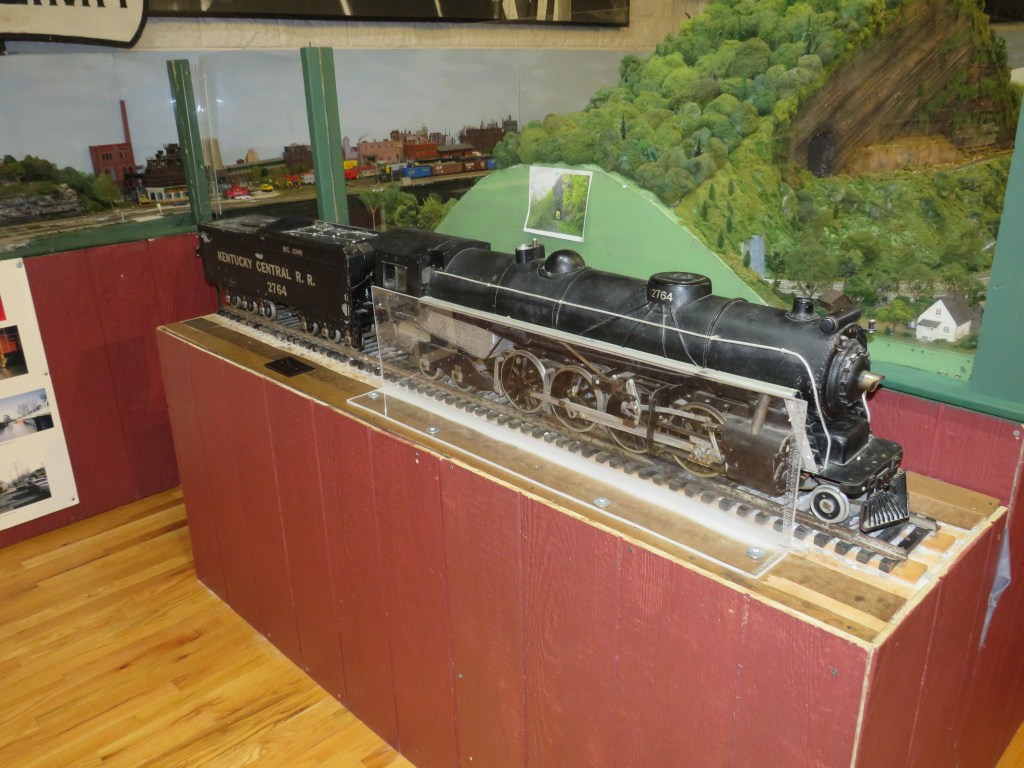
The U.S. state of Kentucky is a state known as the Bluegrass State.  Many people know about Kentucky Fried Chicken which was started by a man named Harland Sanders, commonly known as Colonel Sanders, even though he started in a restaurant in the state, the first Kentucky Fried Chicken was opened in Salt Lake City, Utah.  The state is known for its horses, and it has the continuously running sporting event in the world, the Kentucky Derby in Louisville, which is a horse race that is the first race of the Triple Crown.  The state is known for its bourbon, of which there are plenty of bourbon distilleries in the state mainly around the Frankfort and Lexington areas.  You may have heard of My Old Kentucky Home.  It is a real house in Bardstown.  In the city of Bowling Green, you will find the National Corvette Hall of Fame.  Along with Churchill Downs where the Kentucky Derby is run, the city of Louisville is known for the Louisville Slugger bat factory where many baseball bats are made and sold, and you can tour the factory and buy a bat of your own.  You have Mammoth Cave, the largest known cave system in the world.  Very few people think of the railroads in Kentucky as there of plenty of great railroad sites in the state.

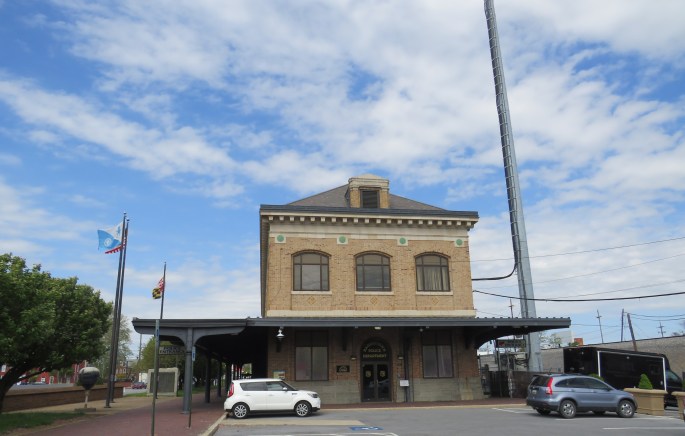
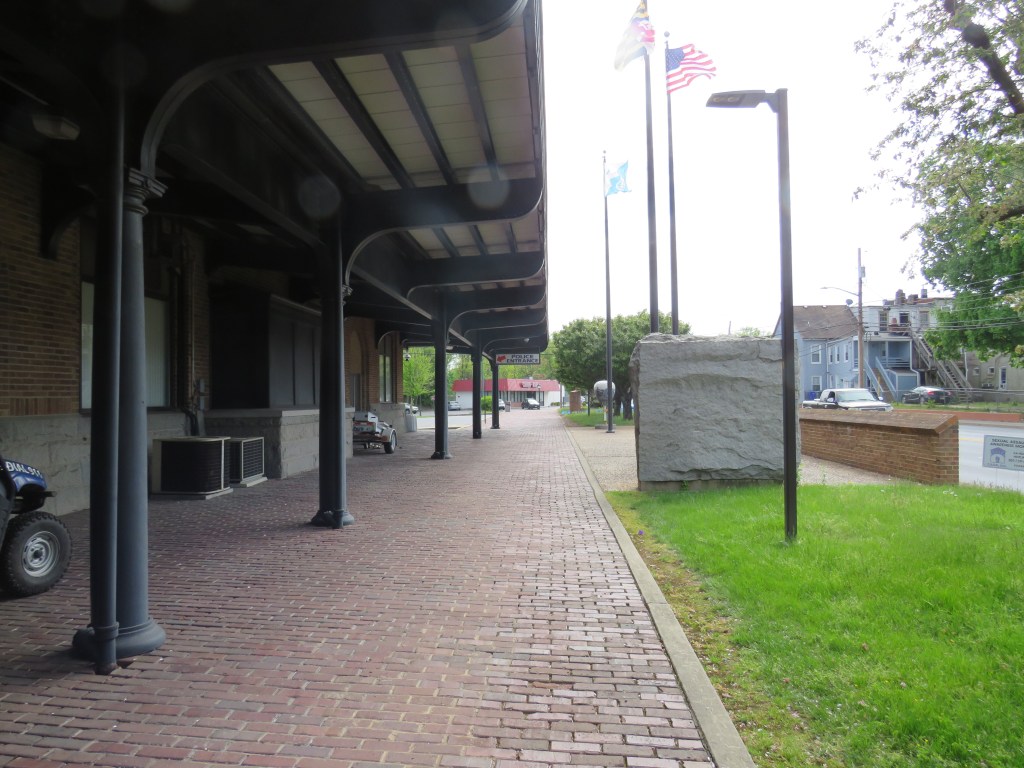
Welcome to the Historic Railpark in Bowling Green, Kentucky.  As you arrive, you will notice that it looks like an old train station.  Well, that is because before it was a museum, it was a train station.  The Louisville and Nashville Railroad built the train station in 1925, and twenty trains served the station each day.  As passenger train service decline, some smaller cities like Bowling Green, Kentucky were no longer served by the passenger train.

Fortunately, the Louisville and Nashville Railroad Depot was not demolished like many other train depots, and it eventually became the home of the Historic Railpark and Museum.

Some of you are saying, “That is nice that the train station was spared and made into a museum.  Too bad that there is not much to see here.”

Ladies and Gentlemen, if you only enjoy museums that do not have much to offer, then the Historic Railpark and Museum is not for you.  What is special about the Historic Railpark and Museum?

As mentioned, you will first notice that it was a train station.  This is just the beginning.  Yes.  It is just the beginning.

Behind the old train station, you will see a train.  No.  It is not a little model train.  It is a full size train.  Located at the original boarding platform, you will see Louisville and Nashville Railroad Locomotive Number 796.  Behind it is Railway Post Office Car Number 1107 also from the Louisville and Nashville Railroad.  It is followed by the Duncan Hines Dining Car, the Towering Pine Sleeping Car, and the Presidential Parlor Car.  Yes, you can take a guided tour of this train, but two other cars that are not open to the public is a caboose and one of the few hospital cars on display.  If you are fortunate enough, CSX may treat you with a passing freight train which runs on the same tracks that the Louisville and Nashville Railroad used as the served the station.

If you think that you have seen everything, let us say that you have not seen much yet.  It is now time to go inside.

As you enter the old train station from the old boarding platform, you enter the gift shop.

Some of you are saying, “What are they trying to do?  Are they trying to get us to buy things before we tour the museum?”

It is designed where you enter the gift shop to pay your admission.  The next thing you see the model trains.  Yes, there are a few model trains here.

The waiting rooms, the main hall, and the upstairs are filled with rotating exhibits.  As you look at the ceiling and the walls, you will think that you are in a grand train station and not a museum.

The Historic Railpark and Museum is a great Kentucky treasure.  It is a place when railroad history continues to stand still.

The Historic Railpark and Museum is located at 401 Kentucky Street (U.S. Route 68) in Bowling Green, Kentucky.  The museum is open year round, but the hours and days vary throughout the year.  Parking is on site.  Although the museum is wheelchair accessible, the train is not.  You can read more into the history of the museum, the old train station, how you can help out or donate with the restoration of some of their railroad cars, get information on admission, and get directions at https://www.historicrailpark.com/.

When you think about what is great about the U.S. state of Kentucky, think about the Kentucky Derby.  Think about the Louisville Slugger.  Think about Kentucky Fried Chicken.  Think about that glass of bourbon.  When you visit the Historic Railpark and Museum in Bowling Green, you will have a great railroad site on your mind.

Chatham Railroad Museum, Chatham, Massachusetts

The U.S. state of Massachusetts is one of the New England states that makes up the northeastern region of the United States of America.  The state began as one of the thirteen original British colonies and became a U.S. state when the United States of America won its independence from Great Britain.  It was here at a place called Plymouth Rock on the shore of Cape Cod Bay where the Pilgrims landed after a long voyage from Holland, and it was here where what was called the First Thanksgiving took place.  Even though it was not the actual First Thanksgiving as the actual one happened in the U.S. state of Virginia near the present day city of Richmond, it was the Pilgrim’s Thanksgiving that the holiday is modeled after as it involved a feast where as the in Virginia, it was a long prayer of thanking God for surviving a long and dangerous voyage across the ocean.  Massachusetts played a big role in the American Revolution with the Battle of Bunker Hill, the Boston Tea Party, the famous ride of Paul Revere, and ‘the shot heard around the world’ at the Battle at Concord Bridge.  (In case you are wondering, ‘the shot heard around the world’, was not a gunshot that was so loud that it was heard as far away as Antarctica but message that the United States of America was fighting for its independence.)  Along with the American Revolution, the city of Boston, the state capital, is a big sports town.  It is the home of the Boston Celtics, the most championed team in the National Basketball Association and the third most championed team in North American professional sports.  (The Montreal Canadiens of the National Hockey League is number two and the New York Yankees of Major League Baseball are number one.)  Also, you will find the Basketball Hall of Fame in the city of Springfield.  The state is known for its geography with a long stretch of land known as Cape Cod and its islands of Nantucket and Martha’s Vineyard, and the state has a few great lighthouses.  In the town of Provincetown at the very end of the Cape Cod peninsula is where the eastern end of U.S. Route 6, a road known as the Grand Army of the Republic Highway which honors American Civil War Veterans and is the longest route in the United States of America, is located.

Yes, the state of Massachusetts is known for many things.  When people think about the state, very few people will think about the railroads.  The railroad sites are commonly overshadowed by its other historic sites.  There is one particular place where the railroad once was.

If you visit the town of Chatham, Massachusetts, you will see a nice, charming town.  Located on the southeast corner of the state, you will get great views of the Atlantic Ocean, on old windmill, a lighthouse that is still active and own by the United States Coast Guard, and an old train station.

Some of you are saying, “Wait a minute.  There is no railroad on Cape Cod.”

Welcome to the Chatham Railroad Museum.

Some of you are saying, “Oh!  I see.  They found an old train station and brought it to this town to make it a museum.”

Actually, you are wrong.  The old train station, built in 1887 in what is called a Railroad Gothic style, is on its original site.  On what was originally the trackside is a wooden caboose from the New York Central System.  The town was the end of the line for the Chatham Railroad Company that ran between the town of Chatham and the town of Harwich.  There was also a railroad yard in Chatham.  As tourism in Chatham grew, so did the railroad.  As the roads on Cape Cod improved, the railroad declined.  Service to Chatham ended in 1937.

Today, very little evidence of the railroad remaining in Cape Cod with very few of the old railroad beds are now rail trails.  As for the old train station, it later became the home of the Chatham Railroad Museum.

Some of you are saying, “Oh yeah, and it has somebody’s old train collection.”

Well, if you had two New York Central System model locomotives that were on display at the 1939 New York World’s Fair, you can say that it is a great collection.  The exhibits display the history of the railroad to Chatham and the stations along the short railroad.

The Chatham Railroad Museum is located at 153 Depot Road in Chatham, Massachusetts, just off of Massachusetts Route 28.  It is open from June to October.  Admission is free, but they can use your donations to keep the museum open.  The museum is staffed by volunteers with no paid staff.  Although the train station is wheelchair accessible, the caboose is not.  You can read more into the history of the Chatham Train Station and get information on hours and directions at https://www.chathamrailroadmuseum.com/.

The U.S. state of Massachusetts is a state full of American history, a state of sports history, a state of natural beauty, historic sites, and an old railroad town called Chatham.  It is a town where you can enjoy a lobster roll with a little railroad history.