Blog

Turkeys on the Train

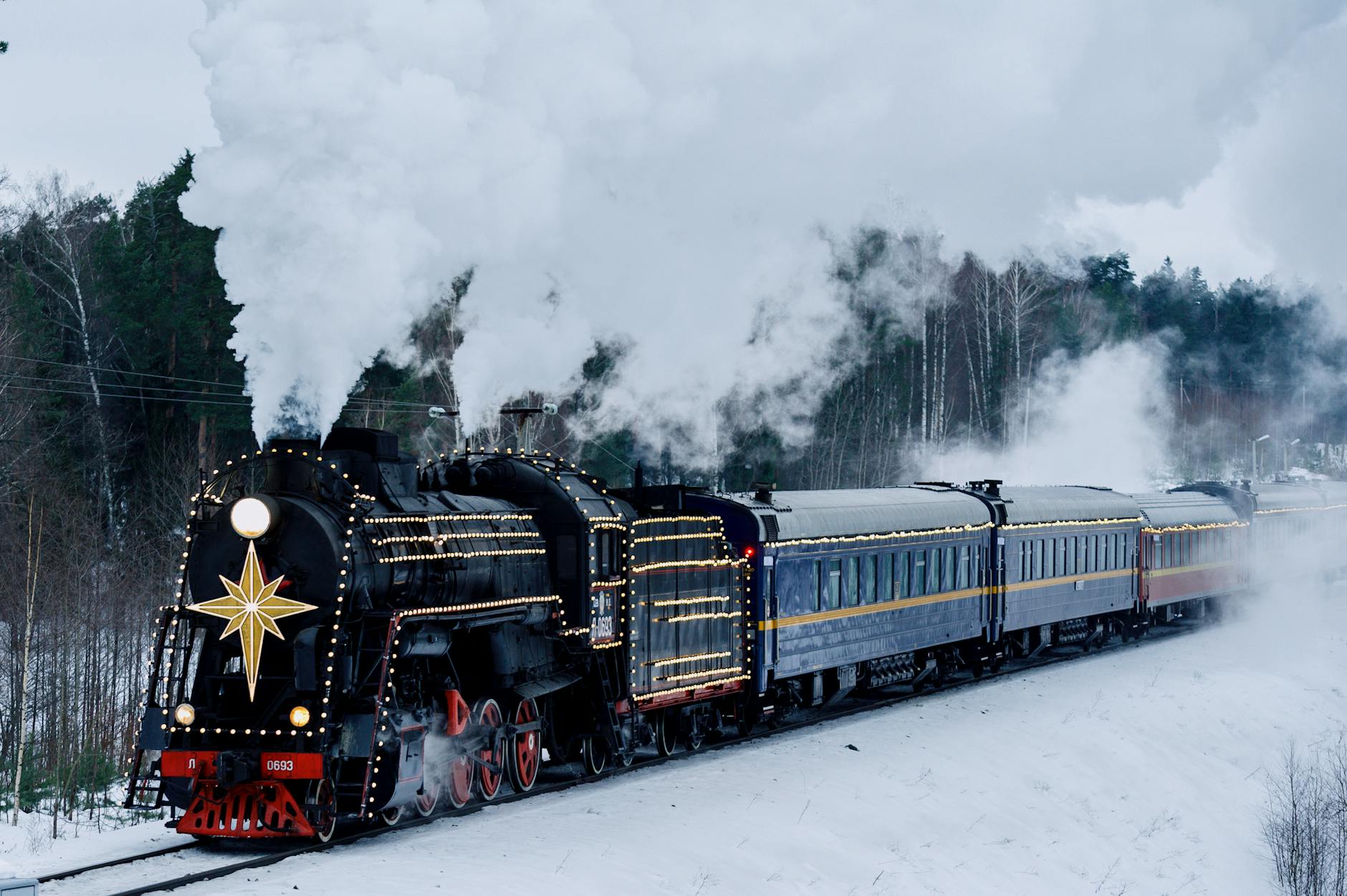
It is Thanksgiving.  Many people will be traveling to meet with others to enjoy a big feast.  Many will be traveling by train to get to that feast.  Did you know that many turkeys will be traveling by train?  This is not referring to your exes.  This is referring to the turkeys that many of you will be eating on that big day.  They come from the farms.  They are then prepared and frozen.  Some are put into a refrigeration car to be shipped to your local grocery store where you buy it, take it home, and eventually ends up on your table along with many other items.

So, on this thanksgiving, take the time to thank the engineers who drive the train that pulls the cars with the turkeys, the men and women who loaded and unloaded those refrigeration cars.

For those who will be traveling by train, take the time to thank the engineers, the conductors, the porters, the baggage handlers, mechanics and all those who make you journey to and from that feast a pleasurable one.

May everyone have a very Happy Thanksgiving, and may we always be grateful to all those who keep the trains running.

The cover photo is a harvest display at the Omni Homestead Resort in Warm Springs, Virginia, U.S.A.

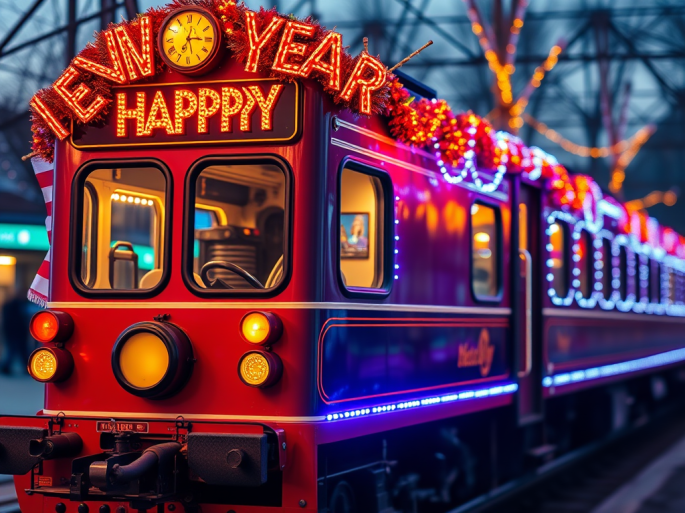
The turkeys on the train photo is an AI generated photo.

The second photo is a harvest display at a general store in Clifton, Virginia, U.S.A.

The third photo is of the train station for the Arcade and Attica Railroad in Arcade, New York, U.S.A.

The fourth photo is of the Greenbank Train Station which is owned by the Wilmington and Western Railroad in Greenbank, Delaware, U.S.A.

The final photo is the Essex Train Station which is owned by the Essex Steam Train and Riverboat in Essex, Connecticut, U.S.A.

The Kruger Street Toy and Train Museum, Wheeling, West Virginia

There are so many things about the U.S. state of West Virginia.  It is a state that has so much natural beauty.  You have the New River Gorge.  You have Dolly Sods, the largest unspoiled natural area east of the Mississippi River.  You have the many mountains and valleys.  Are you thinking about the coal mining industry?  You can visit the Beckley Exhibition Coal Mine, a once active coal mine in Beckley that is now open for public tours.  What about railroads?  You have the Cass Scenic Railroad in the town of Cass that takes you to the top of the second highest point in the state.  Also in Cass, you can take a ride on the Durbin Rocket.  You have the city of Elkins that was once a major railroad city with only excursion trains today.  Elkins is also the home of the West Virginia Railroad Museum that tells the history of the railroad in the state.  There is so much to the state of West Virginia from small towns to natural beauty to railroads to its cities with the largest city being Charleston, the state capital.  A city that is very often overlooked is the city of Wheeling.  How is it overlooked as Interstate 70 and the National Road (U.S. Route 40) passes through this city which happens to be on the Ohio River and borders Ohio?  Once known as the ‘Gateway to the West’, it was once a big railroad town with the Baltimore and Ohio Railroad having a presence here, but it has a great little treasure known as the Kruger Street Toy and Train Museum.

What is the Kruger Street Toy and Train Museum?

Some of you are saying, “Well, duh, it is a museum of toy and trains that happens to be on Kruger Street.”

You are exactly right.  It is on Kruger Street.  It is about toys and trains.  Well, it is about model trains of which there are plenty here.  Yes, there are plenty of museums about toys and about trains, but what makes this place different?

It all began with a father and son who collected toy trains.  The collection grew, and they decided to display their collection in a museum, but where?

As you arrive at the Kruger Street Toy and Train Museum, you notice that it looks like a school.  That is because it was a school.  It was bought through an auction, and the Kruger Street Toy and Train Museum was opened in September of 1998.

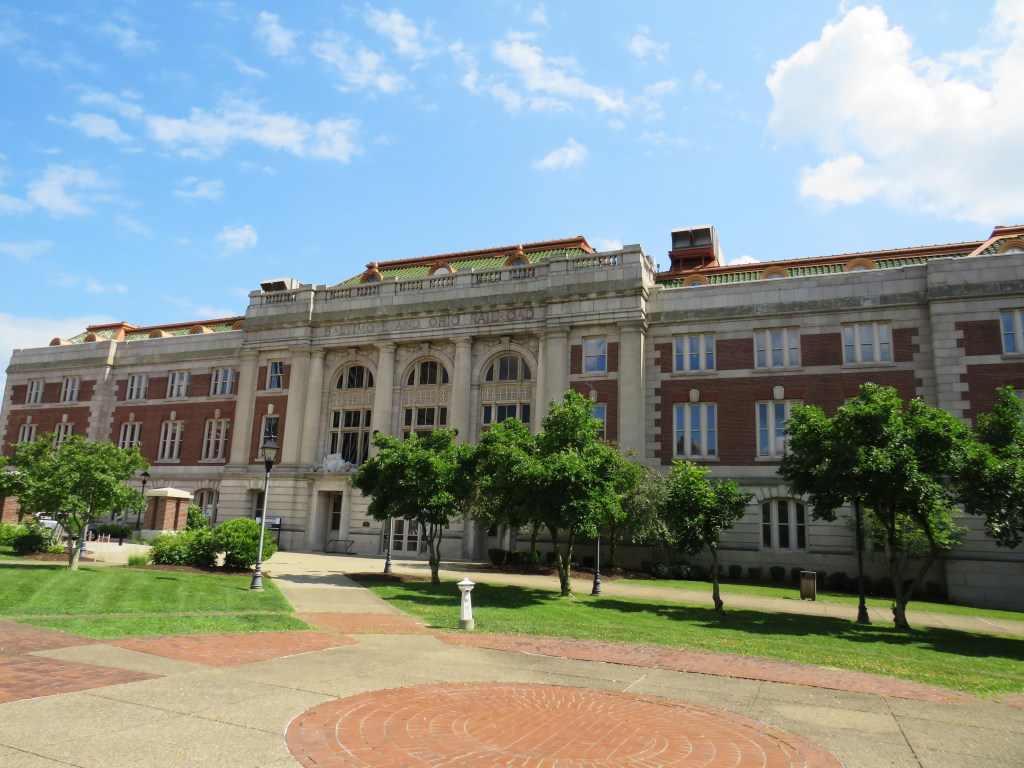
Before you enter the old school, you notice a yellow caboose.  Yes, there are cabooses everywhere, but this particular caboose is from the Baltimore and Ohio Railroad as a memorial to the Baltimore and Ohio Railroad’s influence to the city of Wheeling.

Ladies and gentlemen, this is just the beginning.

You enter the museum, the very first thing you see… is a model train, but there is much more.

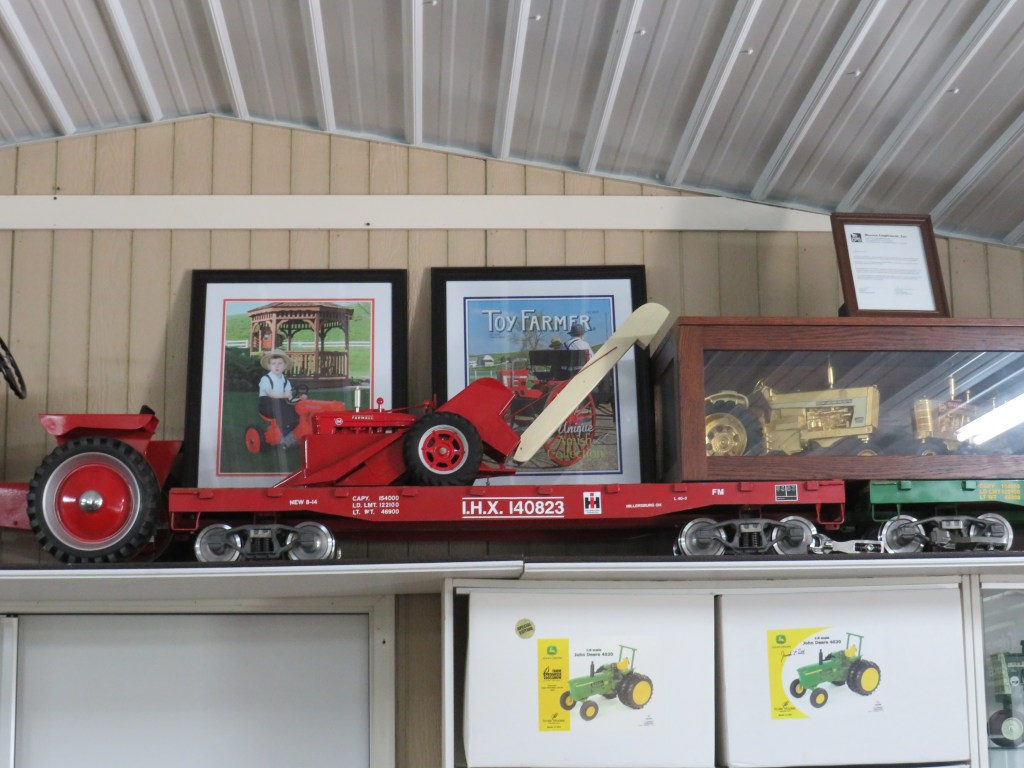
The museum features rooms dedicated to different toys, and there are rooms dedicated to different model trains.  You have the O Gauge Room.  (O Gauge is a size of the model train.)

Then there is the Ohio Valley History Room which has a model train display of the Ohio River Valley of which Wheeling is a part of, and there is a display in honor of Chuck Yeager, a famous jet pilot from the state who is famous for breaking the sound barrier.

What is a train museum without the Historic Train Room?  The room has a collection of historic model trains from Lionel.

You have the HO Gauge Room.  Yes, it features a HO Gauge model train display, but it also displays locomotives in brass and model trains from all gauges.

Yes this is a museum about toys and trains.  For those who are a fan of Peanuts (the cartoon and not the food item), the museum features a collection of Snoopy, Charlie Brown, and other Peanuts characters that was donated by a local doctor named William Mercer so that many would enjoy the collection for years to come.  Yes, it is about Peanuts, but there is also a model train display here as well.

The Kruger Street Toy and Train Museum is a very special museum in a not-so-famous part of West Virginia.  A visit here is a visit you will cherish.  For those of the older generation, it will bring back memories of your childhood.  For the younger ones, they will see the toys that the children played with before them.

The Kruger Toy and Train Museum is located at 144 Kruger Street in Wheeling, West Virginia.  It is less that a miles from Interstate 70, U.S. Route 40, and West Virginia Route 88.  The museum is open year round, but hours do vary due to the time of the year.  Parking is on site.  Due to the age of the structure, the museum is not wheelchair accessible.  You can learn more about the museum and its exhibits, the history of the museum and the building, and get information on hours and admission at https://www.toyandtrain.com/.

They call it wild and wonderful West Virginia, but the state has much to offer.  The city of Wheeling has the Kruger Toy and Train Museum.  When you visit, you will have a wonderful time.

The Falls Park, Pendleton, Indiana

Oh the U.S. state of Indiana is a state famous for the Indianapolis 500 in the capital city of Indianapolis, The University of Notre Dame in South Bend, and for basketball which inspired the movie ‘Hoosiers’ starring Gene Hackman.  Like other states in the United States of America, Indiana has great hidden treasures.  One of these treasures is the town of Pendleton, a suburb of Indianapolis.  What is the town of Pendleton, Indiana famous for?  Well, unlike Indianapolis, South Bend, Fort Wayne, and Elkhart, there is not much fame in the town of Pendleton.

Some of you are saying, “Well, it looks like I am not going to visit this town.”

Well, this town has a great treasure.  What is this great treasure?  Welcome to Falls Park in Pendleton, Indiana.  What is great about Falls Park?  Well, it does have a waterfall.  It may not be as grand as Niagara Falls or Iguazu Falls or Victoria Falls, but just like most waterfalls, it is a beauty to see.  Now you have a great reason to visit Falls Park in Pendleton, Indiana.

Some of you are saying, “Oh, I love waterfalls.  They are such a beautiful thing to see.  I also enjoy parks.  There is a big problem.  This park is not a railroad park.  Therefore, I will not ‘fall’ in love with the town of Pendleton, Indiana.”

So why visit Falls Park in Pendleton, Indiana?

The park itself has a deep history that goes deep.  As you enter the park, you will notice what appears to be railroad bridge abutments.  Why are they there?  Pendleton is not a railroad town nor was it ever a railroad town even though a railroad line does pass through the town.  The old abutments are from a railroad line that did cross over the falls.  The ‘Bee Line’ passed through the park.  Originally part of the ‘Big 4 Railway’ which came through the park in 1851.  One of the trails follows the old railroad bed.  Like many unused railroad lines, they were abandoned, and the rails were taken up leaving the remnants of the railroad today.

Falls Park is located at 460 Falls Park Drive in Pendleton, Indiana just north of Indiana Route 38 and minutes from Interstate 69 and U.S. Route 36.  The park also has a museum and a veterans memorial.  The park is open sunrise to sunset, and access to see the waterfalls is available for wheelchairs.

You now have a reason to visit Falls Park in Pendleton, Indiana.  Be warned.  You will fall in love with this place.

Winston Churchill

“We will not surrender!”

The famous words of the British Prime Minister Winston Leonard Spencer Churchill as many in the British Parliament were suggesting negotiating with the Nazis and the Germans as they march across Europe during World War II.  It was this stance that began the demise of Nazi Germany.  Throughout his life, he served in many political positions.

Before he was Prime Minister, he was a British soldier.  As a soldier, he served in many positions.  While serving in Africa, he worked with the railroads.  Yes, he worked on the railroad supplying the British army throughout Kenya and other parts of the continent.  He would ride with a few other soldiers on what is called the ‘cowcatcher’.  (The cowcatcher is located on the front of a steam locomotive at the bottom near the tracks.)  He is also known for using the Uganda Railway to travel to make speeches.

Winston Churchill, a politician, a stateman, a soldier, a family man, a Brit, and a man who worked on the railroad.

Cover photo is from Google Images. The picture of the train and flag is AI generated. The statue of Winston Churchill is from National Harbor in Oxon Hill, Maryland, U.S.A.

The Cumberland Valley Rail Trail, Shippensburg, Pennsylvania

In the heyday of the railroad, there were railroad lines all over the United States of America.  As the railroad declined, less used railroad lines were abandoned.  Although many of these railroad lines are lost forever to time, many were preserved as rail trails.  Among these rail trails is the Cumberland Valley Rail Trail that runs between the towns of Newville to Shippensburg in the U.S. state of Pennsylvania, the U.S. state that produced the Penn Central Transportation Company (simply known as the Penn Central) and the world famous Pennsylvania Railroad of which, sadly, neither of them exist today.

Why is it called the Cumberland Valley Rail Trail?  Although Conrail was the last owner of the railroad line who took over the line from the Penn Central Transportation Company, the railroad line was originally owned by the Cumberland Valley Railroad that ran railroad service throughout what is called the Cumberland Valley with railroad line through much of the south central region of Pennsylvania and in the northern parts of the U.S. state of Maryland.  Very little of the railroad lines of the Cumberland Valley Railroad were preserved.

This brings us to the Cumberland Valley Rail Trail.  As mentioned, it begins in the town of Newville and it ends in Shippensburg.  What it special about Shippensburg?  Well, although it is not a famous railroad town, the Norfolk Southern Railway does continue to pass through the town, but it was also served by the Cumberland Valley Railroad that was taken over by the Penn Central Transportation Company and, the railroad line’s last owner, Conrail, who donated the railroad line to be converted into the railroad trail.

What is special about Shippensburg?  The town’s claim to fame is that it is the home of Shippensburg University.  The west end of the Cumberland Valley Rail Trail begins at the south side of Shippensburg University.  What is special about the rail trail beginning at Shippensburg University?  It is here where the Cumberland Valley Railroad Museum is located.

Why here at Shippensburg University?  Shippensburg University was a benefactor of the Cumberland Valley Railroad.  Here, you will find the Shippensburg Station, a replica train station that serves as a restroom stop for those utilizing the rail trail and is located where a passenger stop for the university was located.

Then you have a boxcar from the Penn Central Transportation Company.  What is special about this boxcar?  Well, it was not originally owned by the Penn Central Transportation Company but the New York Central System, a railroad company that was taken over by the Penn Central Transportation Company.  The boxcar was abandoned at a warehouse in town and was spared from being scrap metal and restored to house artifacts of the Cumberland Valley Railroad and its history and impact on the region.

Then you have another boxcar.  This one is from Conrail.  Inside, you will see artifacts and the history of Conrail and its people.

You take a short walk down the trail and you see a coal car From the Baltimore and Ohio Railroad.  Why is it here if the Baltimore and Ohio Railroad never came to Shippensburg?  The coal car came from a train wreck, and it was brought here as coal was shipped to Shippensburg University, and it is a reminder of how coal impacted the region.

So, if you need a reason to visit Shippensburg, Pennsylvania, you now have one.  The rail trail is easy for wheelchairs and so are the boxcars which are open from sunrise to sunset.  Most important, the rail trail and the boxcars are free to visit.

“The Ghosts of Eckington Yard”

Washington D.C. is the capital of the United States of America.  (D.C. is an abbreviation for the District of Columbia.)  Like many cities, it has streets, and many of its avenues are named for the U.S. states.  One of its many entryways is a street known as New York Avenue.  What is special about New York Avenue?  Well, of course, it is named for the U.S. state of New York, but, before air travel, as New York City was the Gateway to North America with many ships passing by the Statue of Liberty, New York Avenue serves as a gateway into Washington D.C. for cars making the road famous for its massive traffic jams.  Before the Interstate Highway System as U.S. Routes were the way to travel across the nation, much of the traffic passing through the city came down New York Avenue as U.S. Routes 1 and 50 came down this road.  (Today, only U.S. Route 50 follows New York Avenue as U.S. Route 1 was rerouted.)  As you sit in traffic on New York Avenue, you notice that it follows an electrified railroad line.  (It was originally owned by the Pennsylvania Railroad but now owned by Amtrak.)  As you get closer to downtown, you see the railyard.  You climb a hill, you see the yard below.  Then you cross a bridge, and you do not see the yard anymore.  You see condos, high price condos.  The condos are part of the Eckington community, but what is special about those condos?

As mentioned, Washington D.C. is the capital of the United States of America.  It is one of the most visited cities in the world.  It is a city with a lot of history.  Although the city is not famous as a railroad city, there is much railroad history here.

So, what is special about those condos in Eckington?  The story begins when the Baltimore and Ohio Railroad, the nation’s first commercial railroad, came to the nation’s capital.

Until the 1970’s, New York Avenue was a roadway were there were many warehouses.  When you heard the traffic reports on New York Avenue, a warehouse was always used as a location.  The most famous warehouse was the Hecht Company warehouse.  Many of these warehouse were served by railroads.  As you travelled down New York Avenue through Eckington, you saw boxcars being loaded and unloaded.  During the Franklin Roosevelt Presidential Inaugural, you saw Pullman Cars at that site as, before airplanes, executives had their own private railcars.

That it just a small part of the story.

As the railroad lines went along New York Avenue before going south to Union Station, there were warehouses on the north side and south side of New York Avenue with many of the warehouses served by either the Pennsylvania Railroad or the Baltimore and Ohio Railroad that passed through the yard and went north.  The yard continued along the Baltimore and Ohio Railroad line about a mile north of where the Pennsylvania Railroad went south towards Union Station.  (Both the Baltimore and Ohio Railroad and the Pennsylvania Railroad served Union Station.)  In the 1970’s, the Washington Metropolitan Area Transit Authority took up a small section of the yard to build a yard for its subway trains.  Things changed as many of the warehouses either closed or began using trucks.  In the 1980’s much of the rails were removed, and much of the land was sold.

Today, as you drive along New York Avenue, you see only the Amtrak trains in the yard in what was called the Ivy City Yard.  The Baltimore and Ohio Railroad line, now owned by the Chessie Seaboard System (CSX), only pass through making no stops except to wait for an Amtrak Train going north from Union Station.  What was once Eckington Yard now has a bike path where you can walk along where railroads once ran, and you can see where the railroad spurs once were.  You can walk under New York Avenue and watch the trains going in and out of Union Station to points north to Philadelphia, New York, and Boston and points west to Pittsburgh, Columbus, and Chicago, and see the old Capital City Arena where a band called the ‘Beatles’ performed their first concert in the United States of America.  (It is no longer an arena, but the building still stands.)  Although Eckington is a completely different place than it was, as you walk through, the ‘Ghosts of Eckington Yard’ may come out to greet you.

Train Station, Niles, Michigan

As the railroad was built to connect cities and towns across the United States of America, each town and city had their own passenger station.  You have train station in the major cities that are still in use today like the Main Street Station in Richmond, the capital city of the U.S. state of Virginia, Union Stations in Washington, D.C., Chicago, Illinois, Saint Louis, Missouri, and Kansas City, Missouri, Penn Station in Baltimore, Maryland, and Grand Central Station in New York City, New York.  You have those old train stations like the terminal in Cincinnati, Ohio and the old train stations in Salt Lake City, Utah and the Reading Terminal in Philadelphia, Pennsylvania plus the old train terminal in Detroit, Michigan and the Central Railroad of New Jersey terminal in Jersey City, New Jersey.  Oh, how it would have been great to see the original Penn Station in New York City, New York.  How about those small towns?  The train stations in Point of Rocks, Maryland, Tamaqua, Pennsylvania, and Lebanon, Pennsylvania were very impressive when they were in service.

Then you have the town of Niles in the southwestern region of the U.S. state of Michigan.  The train station in Niles was built by the Michigan Central Railroad in 1892.  For a small town, it is one fancy Richardsonian Romanesque style station built with brownstone and gabled roofs with a sixty foot clock tower and a garden surrounding the station.  The station was featured in the movies Continental Divide, Midnight Run, and Only the Lonely.  If the builders were to see this station today, they would see the same train station that was built in 1892 as the exterior has not been altered.  The interior has been rearranged with the elimination of the smoking rooms.

Some of you are saying, “This is very nice.  Too bad the station is not being used.”

Do not be mistaken.  The station is still in use today except Amtrak, not the Michigan Railroad or the New York Central System who took over the Michigan Central Railroad, brings passenger service today.  As mentioned, if the builders were to see the station today, they would see little change.  The station is also on the National Register of Historical Places and the Michigan State Register.

The Niles Train Station is now owned by Amtrak.  It is located on Dey Street just east of Michigan Route 51 north of the town center.  Parking is on site.  As mentioned, it is still an active train station.

You may not have heard of the town of Niles, Michigan.  When you visit, you will see a very special town with an amazing train station.

Caledonia State Park, Fayetteville, Pennsylvania

U.S. Route 30, a route that has been nicknamed the ‘Lincoln Highway’ named after Abraham Lincoln, former President of the United States of America, begins in the town of Astoria in the U.S. state of Oregon and winds its way east through many U.S. states ending in Atlantic City in the U.S. state of New Jersey.  One of those states is Pennsylvania.  As it passes through Pennsylvania, it passes through the major cities of Pittsburgh and Philadelphia, and it passes through the town of Gettysburg, the town famous for a great battle of the American Civil War known as the Battle of Gettysburg.  Halfway between Gettysburg and Chambersburg new the town of Fayetteville is Caledonia State Park.  Caledonia State Park is a park that has hiking trails, fishing, and hunting, and it has a waterfall.  Yes, many parks has this, but it also has the Totem Pole Playhouse, a theater that has produced actors like John Ritter from the old television series ‘Three’s Company’, the centerpiece of the park is the Caledonia Iron Furnace.

The Caledonia Iron Furnace was built in 1837, and it was owned by Thaddeus Stevens.  The name of the furnace comes from the name of the county in Vermont where Thaddeus Stevens was born. It was destroyed by Confederate General Jubal Early and his men in 1863.  The furnace was rebuilt, and it continued to produce iron until it was closed in 1902, and it was then turned into a state park.  When you visit Caledonia State Park, you can see the furnace, and you can see the blacksmith shop where demonstrations take place.  In Caledonia State Park, every step you take in the park is a place where history took place.

Some of you are saying, “Wow.  I love state parks.  I love being around the trees and the streams and the waterfalls.  As for the old furnace, it is nice that it is preserved although it would be great to see it working.  There is one problem.  What is the problem?  There is no railroad here.  Therefore, you will not see my company here.”

Well, as you walk around Caledonia State Park, you will not see a railroad nor do you see any sign of a railroad being here.  If there is no railroad at the park, why visit?

As you visit Caledonia State Park, you will notice a few structures within the park itself.  Of course, you have the restrooms, and, of course, you have the old furnace.  Then you have the blacksmith shop.  Yes, a blacksmith does mend and heat metals here, but it was not always a blacksmith shop.  If it was not always a blacksmith shop, what else could it have been.  The blacksmith shop was once a trolley station.  A trolley station?  Yes, it was a trolley station.  The Chambersburg and Gettysburg Electric Railway.  Trolley service began in 1905.  The Chambersburg and Gettysburg Electric Railway made a stop at Caledonia State Park, and they built a small amusement park there.  The railway got its name from the fact that its purpose was to take passengers from Chambersburg, Pennsylvania to visit the Gettysburg Battlefield in Gettysburg, Pennsylvania.  The trolley line was built east from Chambersburg, and it took passengers as far as… Caledonia State Park.  Due to lack of funds and steep grades between Caledonia State Park, the section to Gettysburg was never built.  Service ended in 1926, and the amusement rides were dismantled.  Today, only the blacksmith shop and the Trolley Trail going west from the blacksmith shop are the only reminders of the trolley.
As mentioned, every step you take at Caledonia State Park in Fayetteville, Pennsylvania is a step where history happened.  That includes those on the Appalachian Trail which passes through the park.  If you walk along the Trolley Trail, every step you take will be a step where railroad history took place.

Caledonia State Park is located near the town of Fayetteville, Pennsylvania at the intersection of U.S. Route 30 and Pennsylvania Route 233.  The park is free to visit, and it is open from sunrise to sunset.  The iron furnace and the Caledonia Waterfall can be seen from the road.  Although the trolley trail is flat, it is not paved making it difficult for wheelchairs.  You can get more information at https://www.dcnr.pa.gov/StateParks/FindAPark/CaledoniaStatePark/Pages/default.aspx.

U.S. Route 30 has many great sites along the road.  Caledonia State Park is one of them.  It may be famous for the furnace, but it was also a place where a trolley line came to an end.

Marie’s Candies, West Liberty, Ohio

The U.S. state of Ohio has many major cities like Cleveland, Cincinnati, Columbus, Akron, Dayton, and Toledo just to name a few.  It is the home of Bob Evans, the man who founded the company of the same name.  It was where the Wright Brothers, the brothers who made the first successful air flight on the beaches of North Carolina, spent most of their childhood.  The state has small towns like West Liberty in the western region of the state.  What is special about West Liberty?  It is the home of Ohio Caverns, Piatt Castle, and Marie’s Candies.

Some of you are saying, “Wait a minute.  Marie’s Candies?  What is so special about Marie’s Candies?”

You are asking what is special about Marie’s Candies.  As you already figured out, it is a place that sells candy.

Some of you are saying, “Well, we already knew that, but there are places across the country and around the world that sell candy.”

That is true, but there is something special about Marie’s Candies.  What is special about Marie’s Candies?  Let us say that many people drive great distances, past other candy shops, to buy candy here.

Some of you are saying, “That is definitely special, but who is Marie?”

That is a good question.  The answer, sadly, has a tragic beginning.

It begins with a man named Winfred King, a farmer, and he worked very hard on a farm in Ohio, but then he got polio, and the disease confined him to a wheelchair, and he was no longer able to work the farm.  Friends and neighbors stepped up to help his family.  Of course, when people help you, you want to show gratitude to those who helped you.  He and his wife, Marie, gave boxes of homemade candy.  The candy was made in their kitchen of their home.  A business began, and people traveled great distances to by their candy.  The business moved from their home to a home in the town of West Liberty, and their business continued to thrive.  Today, a trip to Marie’s Candies in West Liberty, Ohio will be rewarded with a very sweet and delicious ending.

Some of you are saying, “Well that is so sweet.  It is really sad what happened to her husband, but at least the business has been successful.  There is one problem.  As you can see.  This is a candy shop.  This candy shop has nothing to do with the railroad.  Therefore, I find nothing sweet about this place.”

Ladies and gentlemen, this story is not over.  There is more to this story.  What is special about Marie’s Candies?

The answer goes back to the Golden Age of Railroading.  What does the Golden Age of Railroading have to do with Marie’s Candies?  As passenger train service declined, many places were no longer served by passenger trains.  The small town of West Liberty, Ohio was one of those places.  When a town lost train service, the train station was no longer used by the railroad.  While some train stations were demolished or converted into museums or visitor centers, some were just abandoned like the one in West Liberty.

What is special about Marie’s Candies?

When Marie’s Candies needed a new space, they looked at the old train station that was deteriorating.  The train station was relocated from its original location to its current location on the north side of the town, and it was fully restored, and Marie’s Candies moved in, and the business continues out of there today.

Now you see what is special about Marie’s Candies.  Even though the business runs in an old train station, most people really visit for the candy.  Once you taste it, you will develop a sweet tooth and will want more.  Even though they sell candy that they make, they do sell candy from other candy makers as well.  A business that began with gratitude from Wilfred and Marie King still remains in the family today along with thirty other employees.

Marie’s Candies is located at 311 Zanesfield Road (U.S. Route 68) in West Liberty, Ohio.  Parking is on site.  You can get more information on store hours and read more into the family history at https://mariescandies.com/.

Marie’s Candies is a great place to visit, not for candy lovers and railroad lovers alike.  Who ever thought that railroad history could be so sweet?

Please note that the photos of the farm and barn are AI generated photos.

The Red Lion Mile, Red Lion, Pennsylvania

What is the Red Lion Mile?

Some of you are saying, “I know.  It is a lion that is red and is a mile long.”

Well, that is not the correct answer.  What is the Red Lion Mile?  It is a rail trail in the town of Red Lion in the U.S. state of Pennsylvania.

Some of you are saying, “Wow.  I did not know that.  I bet the town got the name because a red lion was once here.”

Even though the ‘red lion’ is the symbol of the town, it is not named after an actual lion.  It is named after a pub when it was settled in 1852 called the Red Lion Tavern, and that tavern is still in business today.

Today, the town of Red Lion, Pennsylvania is not served by the railroad, but it was once a major railroad town on the York and Peach Bottom Railroad and later the Maryland and Pennsylvania Railroad.  (It was commonly referred to as the ‘Ma and Pa Railroad’.”)  The town was a place of industry to include furniture and cigars.  As you walk along the rail trail, you will see some of the old factory structures.  The remaining structures have been converted into housing or businesses.  The old train station also remains, and it is the home of the Red Lion Historical Society.

The Red Lion Mile mainly runs west from the old train station located on Pennsylvania Route 24, and it is mostly paved.  Parking is available along the trail.  You can learn more about the town at https://redlionareahistoricalsociety.org/area-history/red-lion/red-lion-history/.

The Red Lion Mile: you may not see any red lions, but you will see the places that was once seen by those who once ran the trains through the town.