Blog

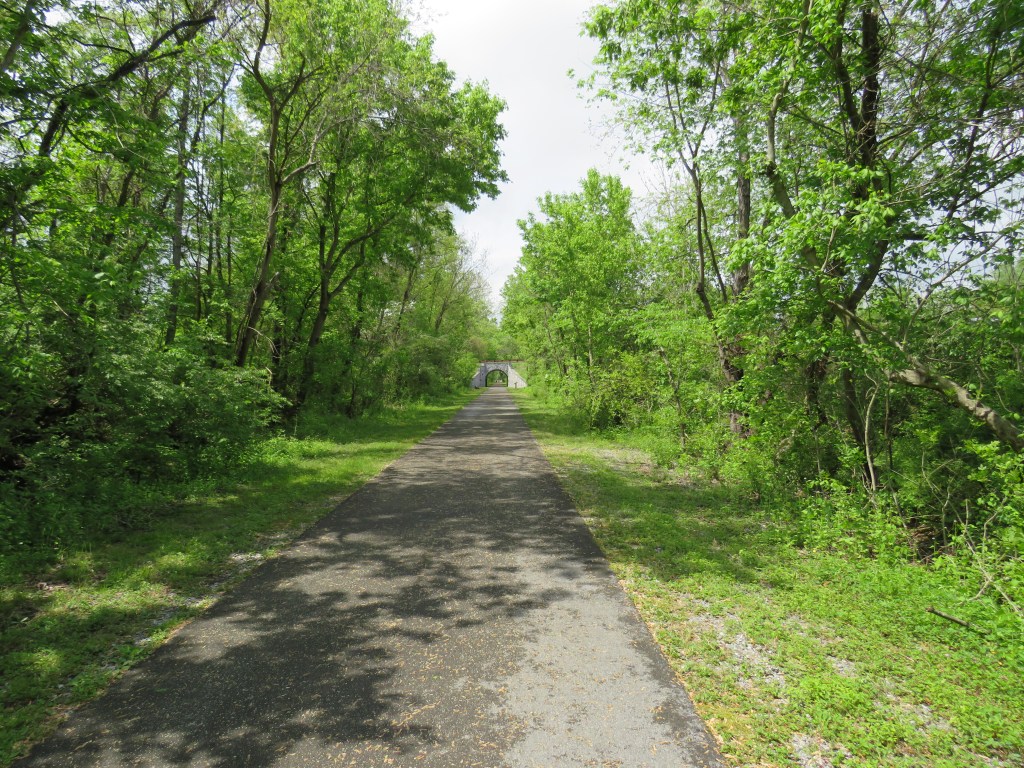
The Western Maryland Rail Trail, Big Pool, Maryland

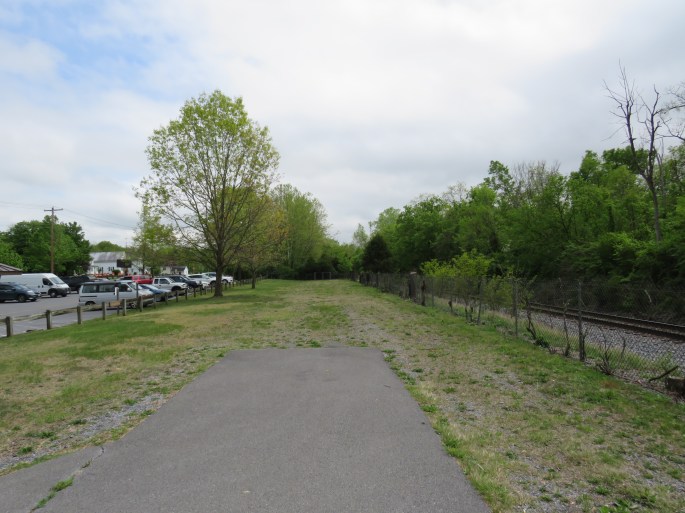
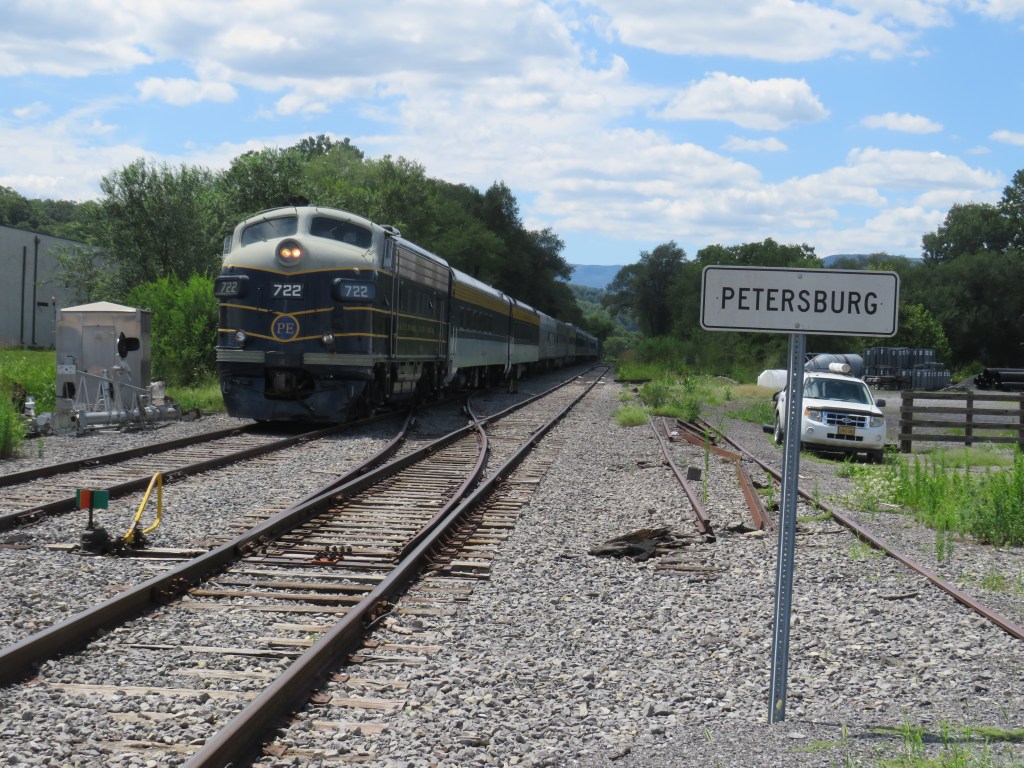
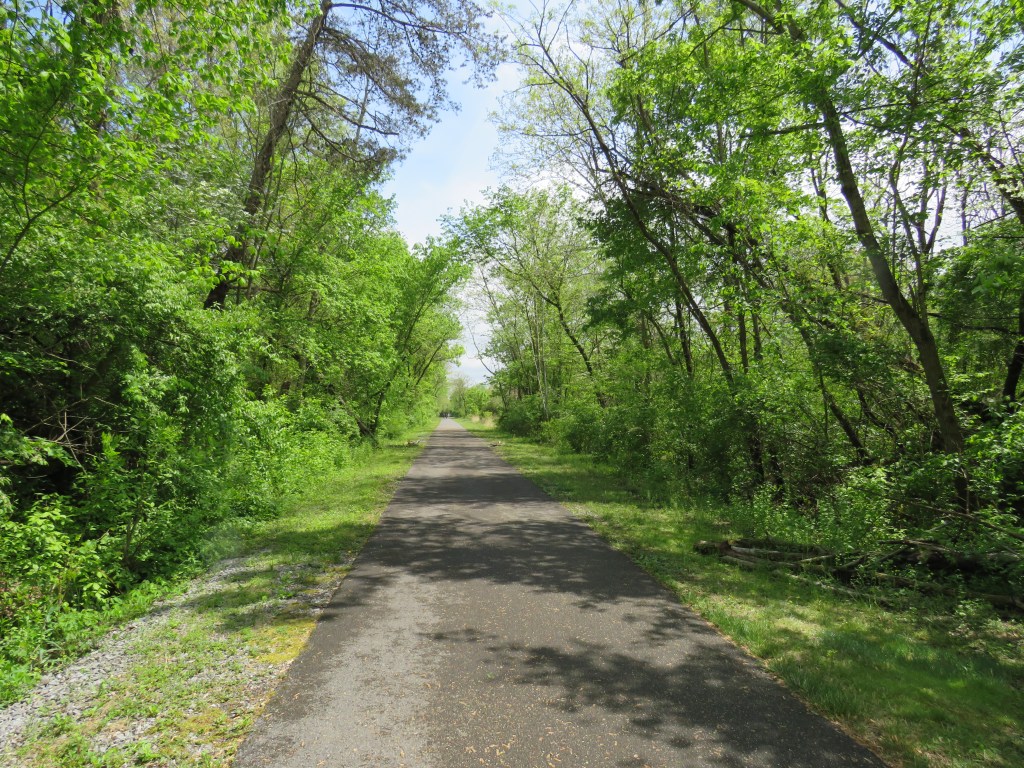
In the heyday of Railroading, railroads were built to connect small town to big cities.  When the heyday came to an end, many of the railroad lines were abandoned.  On many of the lines, the rails were removed.  Some of the abandoned routes were lost to time allow trees and plants to grow on the old railroad bed.  Some of the railroad beds eroded over time.  Some of the railroads were eventually recovered and became an excursion line.  Then there were those that were made into hiking and biking trails.  Some of the trails were paved while some were left with dirt.  Among those ‘rail trails’ is the Western Maryland Rail Trail in the western region of the U.S. state of Maryland.

What is the Western Maryland Rail Trail?  Yes, it is in the western part of Maryland beginning in the town of Big Pool near the historic Fort Frederick going west through the town of Hancock and ending eighteen miles west to the town of Little Orleans in the panhandle region of the state.  The name comes from the fact that the railroad line was part of the Western Maryland Railway.  The railroad paralleled the old Chesapeake and Ohio Canal which paralleled the Potomac River.  The canal itself was never completed as the railroad gave quicker access to points west.  With the automobile and the Baltimore and Ohio Railroad running just south of the Western Maryland Railway (now owned by CSX Transportation) and the decline of many small towns, the railroad line was no longer used.

Today, you cannot ride the train along this line, but you can hike and bike along this line.  You can feel the history of a railroad that once was.

The Mechanicsburg Museum, Mechanicsburg, Pennsylvania

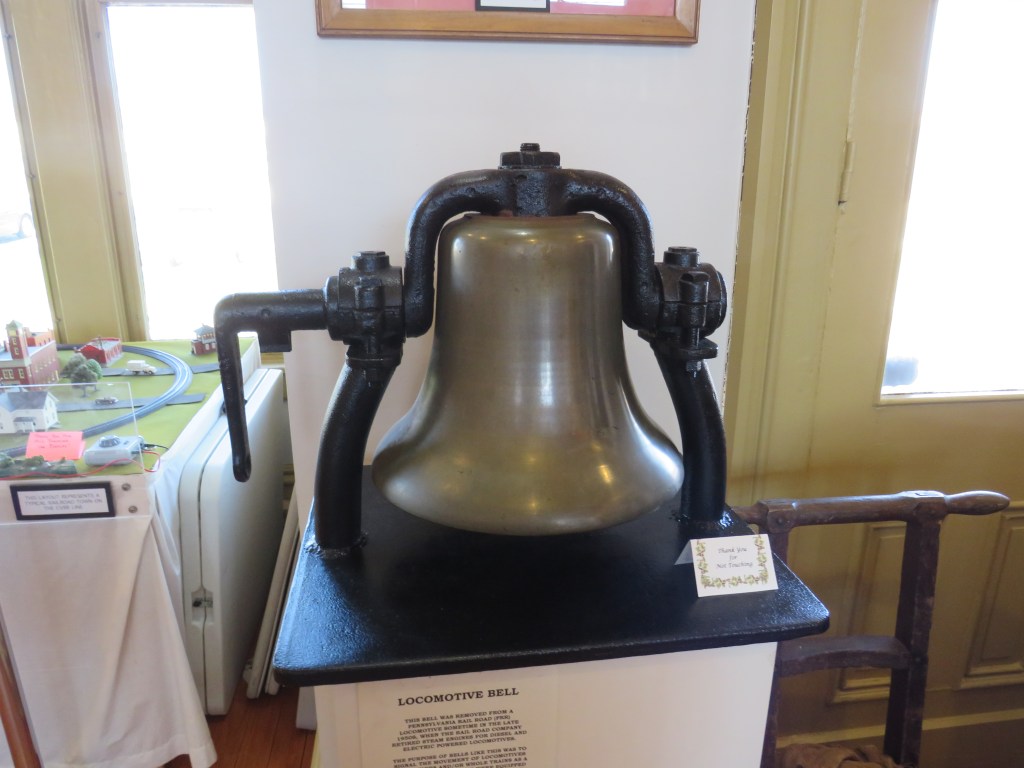
The town of Mechanicsburg in the U.S. state of Pennsylvania is a suburban town of the capital city of Harrisburg.  How did the town get its name?  The town was established before the automobile so it did not get its name from automobile mechanics.  The town got its name from the fact that it was a town were Conestoga wagons were repaired.  When the Cumberland Valley Railroad came to the town, the town became a major stop for the railroad.  Today, the Norfolk Southern Railway owns the railroad line, and the trains no longer stop here, but the old train station, the freight house, and the stationmaster’s house remain, and they are all part of the Mechanicsburg Museum.

The Passenger Train Station was built by the Cumberland Valley Railroad in 1867.  It remained a passenger station until 1952.  Today, the exhibits tell the history of the Cumberland Valley Railroad and how the town was a great benefactor to the towns growth.

The Stationmaster’s House was more than just the home of the stationmaster.  It was an office for Adams Express, a company that was one of the early companies before the Railway Express Agency, and it was also where baggage was stored.  Today, the home is furnished with furniture the way it was furnished back in the day when the train station was active.

The Freight Station is across the tracks from the Passenger Station and Stationmaster’s House.  This is the second Freight House for the town that was built in 1886 that replaced the original one built in 1874.  It was here where the locomotives received water and wood.  There was a side track here where the trains were able to stop for a long time.  The track was removed after freight and passenger serviced ceased.  Today, it houses exhibits that are about the town of Mechanicsburg itself.  The exhibits do change over time.

All three structures were to be demolished, but the Mechanicsburg Museum Association rescued the buildings, and they remain under their ownership today.

The Mechanicsburg Museum is located at 2 W. Strawberry Alley in Mechanicsburg, Pennsylvania just one block north of the intersection of Pennsylvania Routes 114 and 641.  It is open Wednesday to Saturday from 12:00pm to 3:00pm.  The complex has the three structures.  Admission is free, but they gladly accept donations.  The structures are wheelchair accessible.  You can read more into the Mechanicsburg Museum Association and read more about the museum at http://www.mechanicsburgmuseum.org/index.html.

The town of Mechanicsburg, Pennsylvania has automobile mechanics today.  It also has the Mechanicsburg Museum.  It is a great place to see the history of the town.

The Wayne Thomas Gilchrist Trail, Chestertown, Maryland

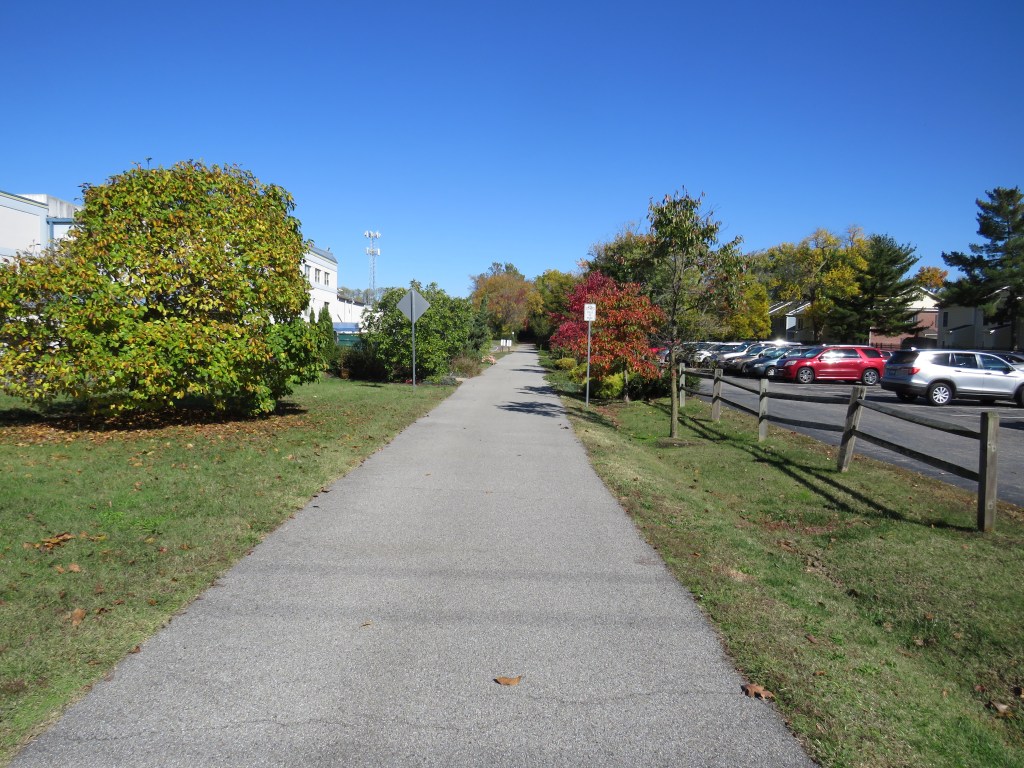
What is the Wayne Thomas Gilchrist Trail?  Commonly called the Wayne T. Gilchrist Trail that was named after a local politician that served in the U.S. state of Maryland and in Washington, the trail is on an old rail line that winds its way through the town of Chestertown located on the Chester River on the Eastern Shore Region of the U.S. state of Maryland.  It is also known as the Chestertown Rail Trail.

The history of the railroad in the town of Chestertown, Maryland is unknown as the town was much more of a port town on the Chester River than a railroad town.  It is known the railroad line was once a spur line that connected to a main railroad line in Delaware that ran south from Wilmington, Delaware down the center of the Delmarva Peninsula to the town of Pocomoke City, Maryland and then to the town of Cape Charles in the U.S. state of Virginia at the southern end of the peninsula where the Chesapeake Bay enters into the Atlantic Ocean.  A railroad ferry transported the train across the mouth of the Chesapeake Bay to Norfolk.  (Much of the track in Virginia is no longer active while the active section in Maryland and Delaware is owned by the Norfolk Southern Railway.)  Although the Pennsylvania Railroad originally built the line.  Smaller short line railroads owned the different spur routes.

Back in the glory days of railroading when the railroads ran both passenger and freight services, the passenger trains served small towns on spur lines like Chestertown.  When Amtrak service began, passenger service to small towns on spur lines ceased, and passenger service ceased on the main railroad line on the Delmarva Peninsula, and the opening of the Chesapeake Bay Bridge connecting the east and west coasts of the Chesapeake Bay aided the decline. 

What is known about the railroad line?  At the southern end of the rail trail is an old passenger train station and an old freight house where two old passenger cars and a red caboose are on display.  Between the passenger and freight stations appear to be an area that appears to be the site of an old railroad yard.  The trail runs north from here and ends on the north side of the town. 

Today, the Wayne T. Gilchrist Trail is the only reminder of Chestertown being a railroad town.  It is a reminder of how the railroad was a big part of small town America.

The Eastern Shore Railway Museum, Parksley, Virginia

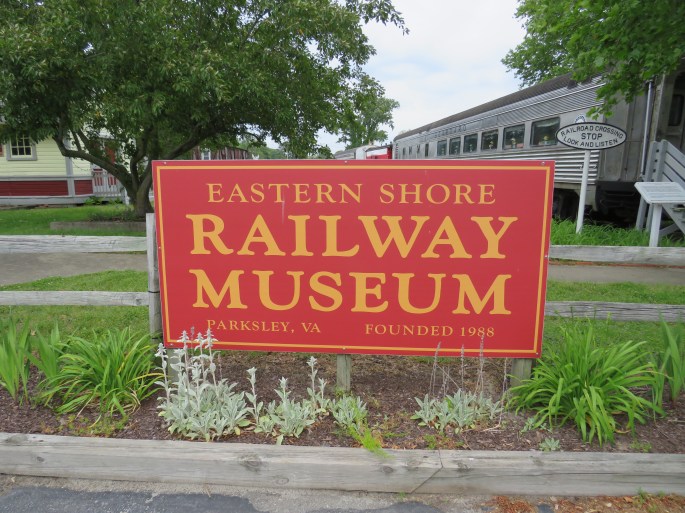
The town of Parksley in the U.S. state of Virginia, a small town on the Delmarva Peninsula is known for its Victorian architecture.  The town was built around a railroad line that was extended south from Pocomoke City in the U.S. state of Maryland to Cape Charles, Virginia which sits at the southern tip of the peninsula. (The railroad line in the Virginia section of the peninsula is now abandoned.)  It you visit the town, the very first thing that you will notice is the numerous rails cars that are resting in this town.  This is the Eastern Shore Railway Museum which celebrates the railroad heritage of the town.

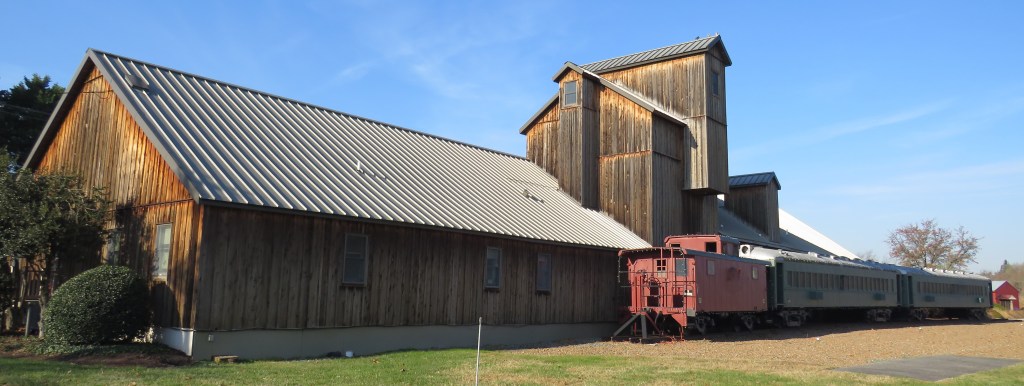
On the outside, you will see the Parksley Depot that was once used for passenger service.  The depot was originally the Depot of Hopetown, Virginia that was brought to the museum and sits on the site of the original Parksley Depot.  You will also see a section of the foundation of the old 1886 depot that was unearthed while clearing the land for the museum.  You can stand in the same spot where passengers stood to wait for the train.  The platform is made with bricks that were used at the train station in Ocean City, Maryland.  You will see a dining car from the Seaboard Airline Railroad.  You see an old maintenance shed and a guard house that was used before crossing gates came along.  You see an old Pennsylvania Railroad Box Car, the Fairfax River, a Pullman sleeper from the Richmond, Fredericksburg and Potomac Railroad, another sleeper car, a baggage car and two cabooses: one from the Nickle Plate Road and an old Wabash caboose.  There is so much to see, and you have not even gone inside yet.

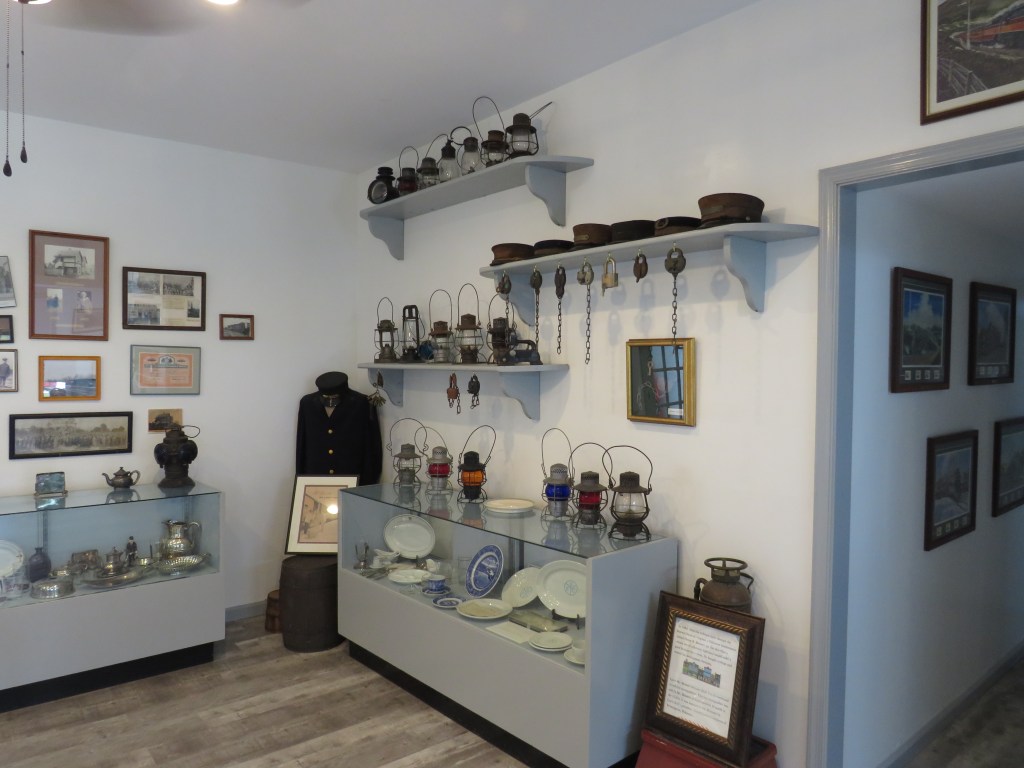
On the inside, you will see the gift shop, a small model train display, a maintenance car, a luggage carrier and artifacts from the days when regular rail service came to Parksley.

The Eastern Shore Railway Museum is located at 18468 Dunne Avenue in Parksley, Virginia, just minutes from U.S. Route 13 at the intersection of Virginia Route 176 and Virginia Route 316.  Admission is free, but donations are greatly appreciated.  The gift shop, model train display and inside areas are open from April to November, but the grounds are accessible all year round.  A drive along Virginia’s Eastern Shore would not be complete without a visit to Parksley and to the spot that the town originated from.

The Train to Independence

The people were standing on the platform at the train station in Captiville.  A man was walking by and saw all of the people standing there.  Curious, he walked up to a man carrying two suitcases.  “What is everyone waiting for?”

“Oh, the Train to Independence will be here soon. We will be leaving this crumby town.”  The man smiled.

“Why leave?  They give us goodies here.”  The man inquired.

“You also can’t go anywhere or do anything here.  You are stuck in your room all day and all night.  In Independence, they have much to do, and you can go anywhere you want.”  The man with the suitcases smiled.

The man was furious and walked away.

The train arrived, and the people boarded.  The train pulled away.

Photo by Emma Bauso on Pexels.com

Along the way, the train stopped in Bondageburg to pick up a small family, and it man another stop in Abusetown to pick up a young woman on crutches with a molten cast of her foot and scars on her face.

Photo by Vika Glitter on Pexels.com

Days later, the train arrived in Independence.  Everyone deboarded the train and was very excited to see the city.

Wishing Everyone a Happy Independence Day.
Wildlife Prairie Park, Hanna City, Illinois

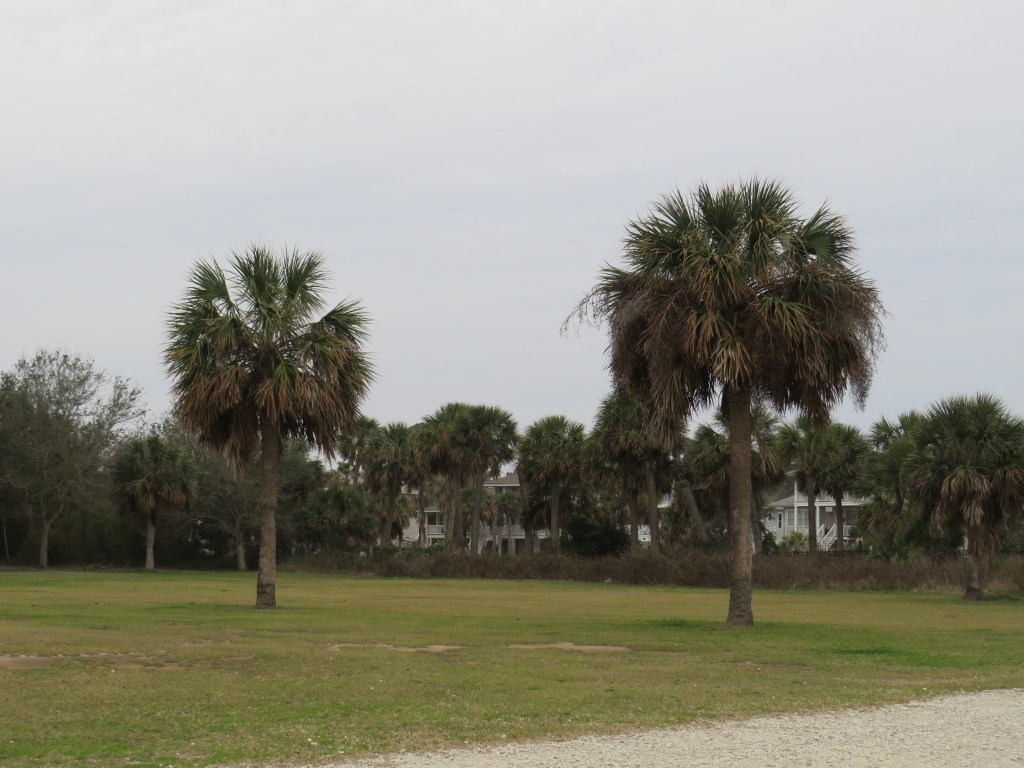
The U.S. state of Illinois is commonly called ‘The Land of Lincoln’ became it was this state where Abraham Lincoln’s rise to fame took place.  The state is also famous for the city of Chicago, but it is also a state with much farmland and open space.  West of the city of Peoria is an open space where you can watch animals roam free.  Well, there are in enclosed spaces, but they are not stuck in a case.  The Wildlife Prairie Park is a place where you can feel like you are on an open plain, but you really are in a wildlife park.  You can ride a hay ride with benches known as Adventure Trek where you can ride through the bison and elk pasture.  If that is not enough, you can even spend the night here.  Ladies and gentlemen, they do not call this place a jewel of the North American Midwest for nothing.  When you visit here, you will truly see how the park gets that name.  If you enjoy seeing wildlife in large and natural habitats, you will enjoy a day, and a night, at Wildlife Prairie Park.

Some of you are saying, “Wow!  This place sounds like it is a jewel.  I love animals, and I enjoy seeing them at the zoo.  There is a big problem.  As you can see.  This is a wildlife park.  This park is about wildlife.  This is not a railroad park.  Therefore, I will not be paying a visit to this place.”

Well, Wildlife Prairie Park is a park that specializes in wildlife and not trains.  Why visit this place?  Yes, it is a jewel of a park and a place worth your time.  As you enter the park, you will see why you want to visit.

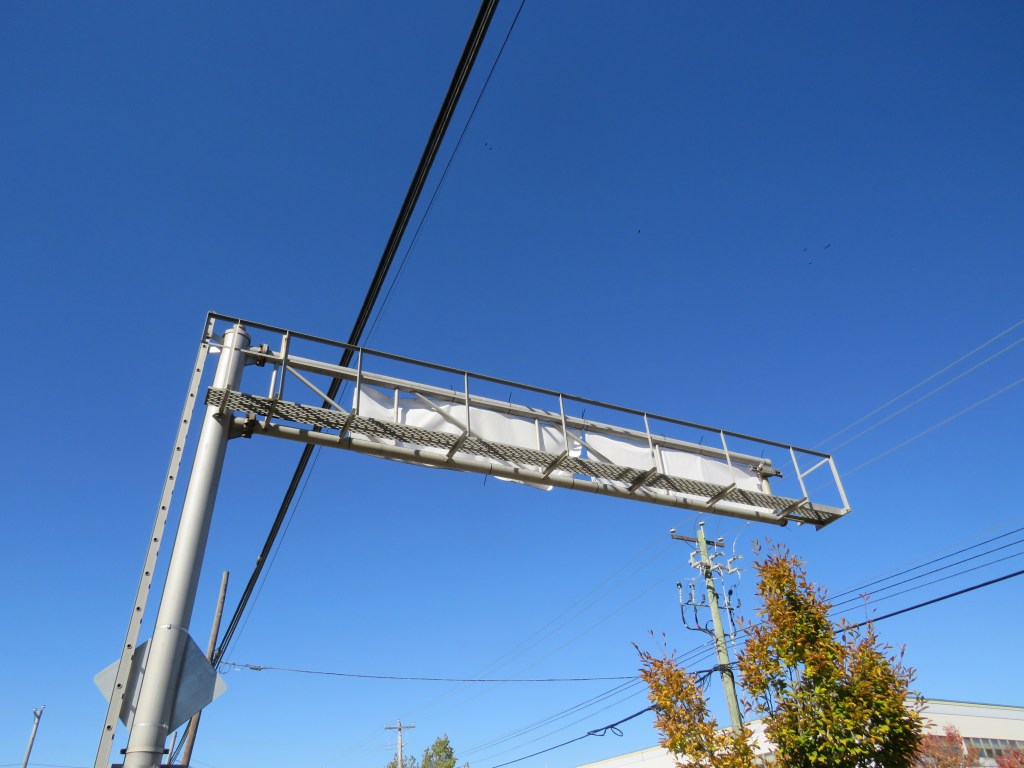
As soon as you pay your admission, the very first thing that you will see is a railroad crossing.

Some of you are saying, “I have been to many places where you have to cross train tracks to get to the attraction.  Many railroads run alongside of parks and historic sites.”

This is true, but if you are fortunate enough, you may be stopped by a train, it is not an ordinary train.  The train is the Prairie Zephyr.  You have read correctly.  This is the Prairie Zephyr, and the train station is to your right.  Well, one of the stations is to your right.  There are three stops on this line.  What are you going to do?  Well, of course, you are going to ride the train.

You enter the station, and you board the train.  The train leaves the station.  You pass by trees and see animals along the way, and then you stop at the Pioneer Homestead.  From here, you return on the same track, and you arrive back at the station.  It is the end of the ride, but it is not.  Remember.  There are three stops, and you only have been to two of them.  The passengers board and deboard, and the train continues on.  You pass by the train yard and pass through a tunnel.  You pass by more animals, and you arrive at a playground, and you have an opportunity to go down a big slide known as the Gollywhopper Slide.  After a short stop, you return to the station, and you get off the train.  By the way, your train ticket allows you to ride the train all day long.

Some of you are saying, “Well, that is it.  No more trains at the wildlife park.”

Ladies and gentlemen, you are wrong.  While at the main train station, you can visit the railroad museum.  Yes, there is a railroad museum here.  The museum has a collection of toy trains.  How often do you get to visit a wildlife park that is about wildlife that has a railroad museum?

Some of you are saying, “Well, you have a point.  I do not know of any wildlife park or zoo that has a railroad museum.  Anyway, I guess that is all of the railroads that we will see at this park.”

Not exactly.

As mentioned.  You can spend a night, or many nights, at this park.  Yes.  There are other wildlife parks that allow you to spend a night there, but how many wildlife parks let you spend a night… in a caboose.  Yes.  You have the option to spend a night in a Santa Fe Railroad Caboose.

If you think that you do not have a reason to visit Wildlife Prairie Park, you now have many.  Along with the train, the railroad museum, and the cabooses, you have a variety of wildlife you see.  There is also laser tag, hiking and biking trails, fishing, disc golf, kayaking, and events throughout the year.

Wildlife Prairie Park is located at 3826 N. Taylor Road in Hanna City, Illinois south of Illinois Route 8, Interstate 74, and U.S. Route 150.  Although the park is open year-round (open 361 days and closed only four days of the year) from 9:00am to 4:30pm (9:00am to 6:30pm from Memorial Day to Labor Day), the Prairie Zephyr runs only at certain times of the year.  Although much of the park is wheelchair accessible to include the Prairie Zephyr, there are some steep paths.  You can information about admission, lodging, activities, the history of the park, to look at the map of the park, and read more into their conservation efforts at https://wildlifeprairiepark.org/.

Wildlife Prairie Park in Hanna City, Illinois is a great place to visit.  When you visit, you will see why.  You will see why they call this place a jewel.

A special thanks to Cody Miyler, Lelonie Luft, and Calli Dicks of Wildlife Prairie Park for the pictures of the recently painted cabooses.

The Strasburg Museum, Strasburg, Virginia

Many of you have heard of the town of Strasburg in the U.S. state of Pennsylvania.  The town, a suburb of Lancaster, is famous for the Strasburg Railroad, a short line railroad that is the oldest continuously running railroad in the United States of America.  There is also a small town called Strasburg in the U.S. state of Virginia.  Located about seventy-five miles west of downtown Washington D.C. in the Shenandoah Valley, it is the home of the Strasburg Museum.  What is the Strasburg Museum?  Well, it is a museum that tells the story of life in the region around the town to include the industries like pottery and other small town industries.  If you are in the area of Strasburg, Virginia, you will want to visit the Strasburg Museum.

Some of you are saying, “This is nice.  I love the Strasburg Railroad in Pennsylvania.  As for Strasburg, Virginia, it is not as famous as being a railroad town as the Strasburg in Pennsylvania.  Therefore, you will not see me at the museum.”

So why visit the Strasburg Museum?  If you say that it is not a railroad town, you would not be telling the truth.  In 1861 during the American Civil War, General Thomas ‘Stonewall’ Jackson of the Confederate Army led the charge where he and his men hijacked the rolling stock of the Baltimore and Ohio Railroad in West Virginia.  This was known as ‘The Great Train Raid’.  What does this have to do with Strasburg, Virginia?  The rolling stock was transported to the location of the museum and set on railroad tracks and then sent to North Carolina to be repair and to be used by the Confederate Army.

Some of you are saying, “Now I have learned something new, but the museum is about the region around the town and not about trains.”

Ladies and gentlemen, you are wrong again.

Strasburg, Virginia was a railroad town that was served by the Southern Railway, The Baltimore and Ohio Railroad, and the Manassas Gap Railroad.  (All of the railroads in Strasburg are under the ownership of the Norfolk Southern Railway today.)  It may not be as famous as the town in Pennsylvania, but this town does have a deep history with the railroad.  As you approach the Strasburg Museum, there is something that you will notice.  Yes, it is next to a railroad crossing, but many places are next to a railroad crossing.  The first thing you will notice is the building.  What it special about the building?  The building is an old pottery factory that was, in 1913, converted into a train station for the Southern Railway with freight and passenger service.  You walk around the old station, you will see an old caboose and an old baggage car both from the Southern Railway.

You enter the museum through the gift shop.  You then enter the main hall.  You see the different displays on life in the region to include a room dedicated to pottery and an exhibit dedicated to the railroad history of Strasburg, Virginia.

Some of you are saying, “Is that all?”

The answer to that question is no.  You do have the caboose and baggage car.  The caboose is your typical caboose that you can walk through and climb into the cupola.  Then you have the baggage car.  In the baggage car is where you will find a model train display.

Some of you are saying, “Oh great.  Another model train display where you see the model trains go round and round and round and round.”
Ladies and gentlemen, this is not your typical model train display.  It is only operational on Saturday, and there is a timed entry.  Why?  If you only enjoy model trains that just go round and round and round, this is not for you.  If you enjoy something completely different, get ready for an experience.  You enter the baggage car, and you see the model train display set up with its buildings and other structures.  You watch the trains, but then it gets dark.  No.  It is not a power outage.  It is taking you into the display itself.  The moon even comes out for the evening, but it is really afternoon.

The Strasburg Museum is designated as a National Historic Landmark.  It is located at 440 East King Street (Virginia Route 55) in Strasburg, Virginia east of U.S. Route 11.  It is open from May to October on Friday, Saturday, and Sunday from 10:00am to 4:00pm.  Parking is on site.  Please note that the museum only accepts cash.  Also, the main hall has two floors of exhibits and the upper floor is not wheelchair accessible.  You can get more information on the museum and the history of Strasburg, Virginia at https://strasburgmuseum.org/.

Strasburg, Virginia may not have the Strasburg Railroad, but it does have the Strasburg Museum.  It has much history on display.  Make the trip.

Conner Prairie, Fishers, Indiana

The U.S. state of Indiana is commonly called the Crossroads of the United States of America.  How does the state get the name?  The three longest routes in the nation, U.S. Route 6 (known as the Grand Army of the Republic Highway), U.S. Route 20, and U.S. Route 30 (known as the Lincoln Highway named for Abraham Lincoln), pass through the state along with interstate route 70, 80, and 90.  Being a crossroads state, it is not a state that many travelers put on their list of must visit states, but be advised that there are many great place to visit in this state.  It is commonly known for the sport of basketball with Larry Bird being from the town of French Lick.  It is also home to one of the biggest races in the world: the Indianapolis 500.  In the early years of Indiana, it was mostly prairie with no mountains in the state.  A way to experience life in Indiana is to make your way to Conner Prairie.

What is Conner Prairie?  It is a living history museum location in the Indianapolis suburb of Fishers.  When you visit Conner Prairie, you will experience life in the early days of Indiana.

Some of you are saying, “This is nice.  It is great that they created a place where you could experience the early days of Indiana.  There is one problem.  This is not a railroad museum.  Therefore, you will not be visiting this museum.”

Why visit Conner Prairie?  You are right when you say that it is not a railroad museum, but that is not a reason for you not to visit.

Conner Prairie is a living history museum.  What is a living history museum?  It is a museum when many of the workers are dressed in period dress.  What is period dress?  It is when you dress in a particular period.  At Conner Prairie, it is mainly the nineteenth century.  As you enter, the very first thing you will notice is a hot air balloon.  Well, it is a hot air balloon that looks like a balloon from 1859, and you can take a ride in this balloon for an extra fee.  The museum grounds is divided into communities.  You have the 1816 Lenape Indian Camp displaying how the settlers lived with the local Indian tribes.  You have the 1836 Prairie Town where you can see how they lived in 1836 from the general store to the doctor to making pottery.

You have other areas in the museum, but then you come upon the 1863 Civil War Journey that tells the story of Indiana’s role in the American Civil War.  It is designed after the town of Dupont, Indiana.  It has a general store and a Union Army Camp that was attacked.  You have a schoolhouse and a farm.  Then you have the old train station.  Yes, you see the old train station from Dupont with a railroad line next to it.  Sadly, there is no train on the tracks, and the train station is mainly a snack shop and restrooms, but it tells the story of how the railroad played a role in Indiana’s participation in the war.

So, there you have it.  You have a reason to visit Conner Prairie.  Well, as you walk around, you will have many reasons to visit Conner Prairie other than seeing the train station.  You will need plenty of time to visit this place, and you will be doing a lot of walking.

Connie Prairie is located at 13400 Allisonville Road in Fishers, Indiana, a northern suburb of the state capital city of Indianapolis.  It is open most of the year.  Parking is on site, and, although it makes you feel like its in the 1800’s, it is completely wheelchair accessible.  You can get more information on admission, directions, events, on the history of Conner Prairie, and the museum’s future projects at https://www.connerprairie.org/.

As you think about the state of Indiana and basketball and the Indianapolis 500, think about Conner Prairie.  You will be glad that you did.

Wheels O’ Time Museum, Dunlap, Illinois

The U.S. state of Illinois is a state known for many things.  It is commonly called ‘The Land of Lincoln’ as it is the state that made Abraham Lincoln, the sixteenth President of the United States of America, famous.  Although he was born in the U.S. state of Kentucky and spent part of his childhood in the U.S. state of Indiana, it was in Illinois, particularly in the capital city of Springfield, where his rise to fame began, and it is where he is buried.  U.S. President Ronald Reagan was also born in this state.  It is famous for its largest city, Chicago, the Hub City of the continent of North America that is famous for its professional sports teams and it food like pizza and hot dogs.  One of the nation’s famous routes, U.S. Route 66 began in Chicago, and you can drive this route today across the state and see some of its iconic sites.  The John Deere Tractor Company is based in this state, and tractors are also designed here.  Beyond the Chicago Metropolitan Area, much of this state is rural with farms, but there are also other cities like Peoria, and it is in Peoria where you will find the Wheels O’ Time Museum.

What is the Wheels O’ Time Museum?  Well, the name pretty much says what the museum is about.

Some of you are saying, “Wow!  The Wheels O’ Time Museum is about wheels through time.  The problem is that this is not a railroad museum.  Therefore, I will not be bringing my wheels to this museum.”

You are right.  It is not a railroad museum, but the very first thing you will see as you arrive at this museum is Rock Island Railroad Locomotive Number 886.  What is the locomotive doing?  It is pulling a train that consists of a combine car number 2617 from the Milwaukee Road, a caboose from the Toledo, Peoria and Western Railroad, and two Pullman Cars.

In case you are wondering, there is more to see as far as the railroad fan is concerned.

The Wheels O’ Time Museum is a museum about wheels mainly from the twentieth century.  It is housed in five structures.  The first building is a building with a very specific name.  What is the building’s name?  It is called the Main Building.  The first thing you see in the Main Building is the gift shop.  It is a small gift shop, but it is here where you pay your admission.  Then you enter the main hall.  It is here on the first floor where you will see many classic cars.  Hence the name ‘Wheels O’ Time Museum’.  With all of these classic cars on display, this is just a small part of the museum.  Yes, it is just a small part of the museum.

As you see the classic cars, the first floor also have different display rooms.  One of them is called ‘Rivers and Rails of Peoria’.  In this room, you will see the history of the railroad and the riverboats of the region.  A model of Locomotive Number 80 from the Toledo, Peoria and Western Railroad is on display.

Is that all as far as the Main Building?  No.  There are more rooms on the upper level.  One of the rooms has two model train displays.  There is also a mural featuring a steam train and a race car.

The next building is ‘The Firehouse’.  It is built to look like an old firehouse.  What is the main feature of the Firehouse?  It has two fire trucks and more classic cars.  It has classic bikes, a replica of the ‘Spirit of St. Louis’, the first plane to fly across the Atlantic Ocean, and a replica of a local Peoria radio station.  It also has model trains, railroad dishes, and other railroad memorabilia encased in glass.

Then you have the ‘Generations Building’.  It is the newest building on the property, and the name comes from the World War II generation which is commonly called ‘The Greatest Generation’.  It features tractors, jeeps, and a U.S. Air Force plane from that era, but it also features two model train displays.  The display on the lower level shows a train at a construction site.  The upper level has a LEGO train display.

Then you have the Farm Building.  Yes, it features farm equipment, but it also features railroad maintenance equipment to include a hand car.

The other structures at the museum is the Ford Building which displays cars from the Ford Motor Company and the LeTourneau Steel House, a small single family home.

The Wheels O’ Time Museum is located at 1710 W. Woodside Drive in Dunlap, Illinois just off of Illinois Route 40 north of Peoria.  It is open from May to October from Wednesday to Sunday from 12:00pm to 5:00pm Central Standard Time.  Parking is on site, and most of the museum is wheelchair accessible.  You can learn more about the museum to include admission and to lean about the displays at https://wheelsotime.org/.

The state of Illinois is much more that Chicago and Abraham Lincoln and John Deere.  It is the home of the Wheels O’ Time Museum.  When you arrive, it may take you back in time.

The Age of Steam Roundhouse, Sugarcreek, Ohio

What is the Age of Steam Roundhouse?  In the early years of railroading, roundhouses were needed to service the steam locomotives.  From the first roundhouse in Baltimore in the U.S. state of Maryland, now the home of the Baltimore and Ohio Railroad Museum, to roundhouses across the United States of America, they were a very essential part of the movement of the railroad.  When the steam locomotives which had to be serviced after one hundred miles of operation were replaced by the diesel locomotives that could run hundreds of miles of operation before they needed maintenance, the railroad roundhouse became obsolete.  Although most of the old roundhouses were preserved like the Mount Clare Roundhouse in Baltimore, many were demolished.  With many of these roundhouses in small towns, the closure of the roundhouses meant fewer jobs in the small town causing many small towns to decline.  The era of the railroad roundhouse was no more.

With the railroad roundhouse obsolete, there will be no need to build a roundhouse ever again.  A man named Jerry Joe Jacobson did not think so.  Who is Jerry Joe Jacobson?

Originally from Lancaster in the U.S. state of Pennsylvania, a city famous for the Amish lifestyle and is home to the famous Strasburg Railroad, the oldest continuously operating railroad in the United States of America, Jerry Joe Jacobson made his way to the U.S. state of Ohio where his work on the railroad began with passenger excursions in the area around the small town of Sugarcreek.  It was here where he built a roundhouse.

Some of you are saying, “Wow!  He built a roundhouse, and that roundhouse is just a museum that just collects rolling stock, and people go and see the locomotives and old passenger and freight cars.”

Ladies and gentlemen, welcome to the Age of Steam Roundhouse.  Jerry Joe Jacobson founded the Age of Steam Roundhouse with a collection of steam locomotives.  Yes, it is a museum, but it is also an actual working roundhouse.  As mentioned, it is an actual working roundhouse.  Yes, locomotives and rolling stock are serviced here.  During your visit, you may be fortunate to see restoration of a locomotive or freight car.

There are many railroad museums across the nation.  Some of these railroad museums are housed in old roundhouses.  What makes the Age of Steam Roundhouse special is that it is a newly built roundhouse with vintage steam locomotives from different railroads as well as diesel locomotives, old passenger cars, freight cars, and cabooses.  The founder, Jerry Joe Jacobson, passed away in 2017, and he is entombed in a mausoleum just a short walk from the roundhouse.

The Age of Steam Roundhouse is located at 213 Smokey Lane Road SW south of the town of Sugarcreek, Ohio off of Ohio State Route 93.  Different guided tours are offered on Thursdays, Fridays, and Saturdays from April into November with events throughout the year.  (Please note that due to safety reasons and the fact that this is a working facility, all tours are conducted by a tour guide.  Self-guided tours are strictly prohibited.)  Parking is on site, and the facility is wheelchair accessible.  You can get more information on tours (there are different tours offered), admission, events, read more into the life of Jerry Joe Jacobson and into the Jerry and Laura Jacobson Foundation, Inc. at https://ageofsteamroundhouse.org/.

It is called the Age of Steam Roundhouse to remind everyone of the era of steam railroading and the steam locomotive.  As you are taken on the tour, you will be taken back in time.