Augusta Museum of History, Augusta, Georgia

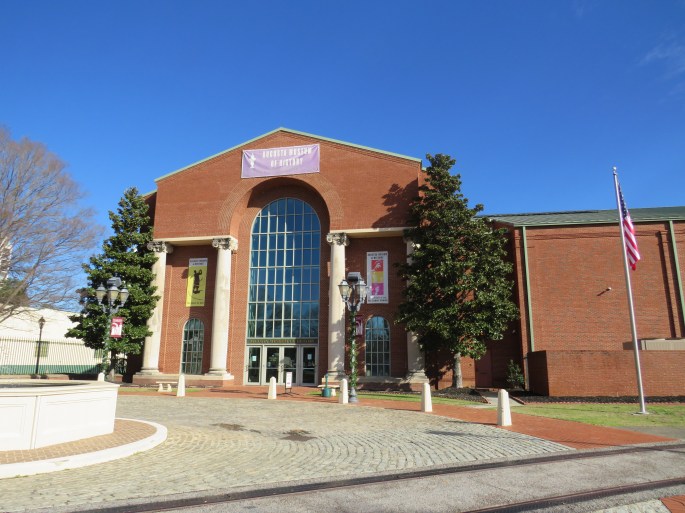
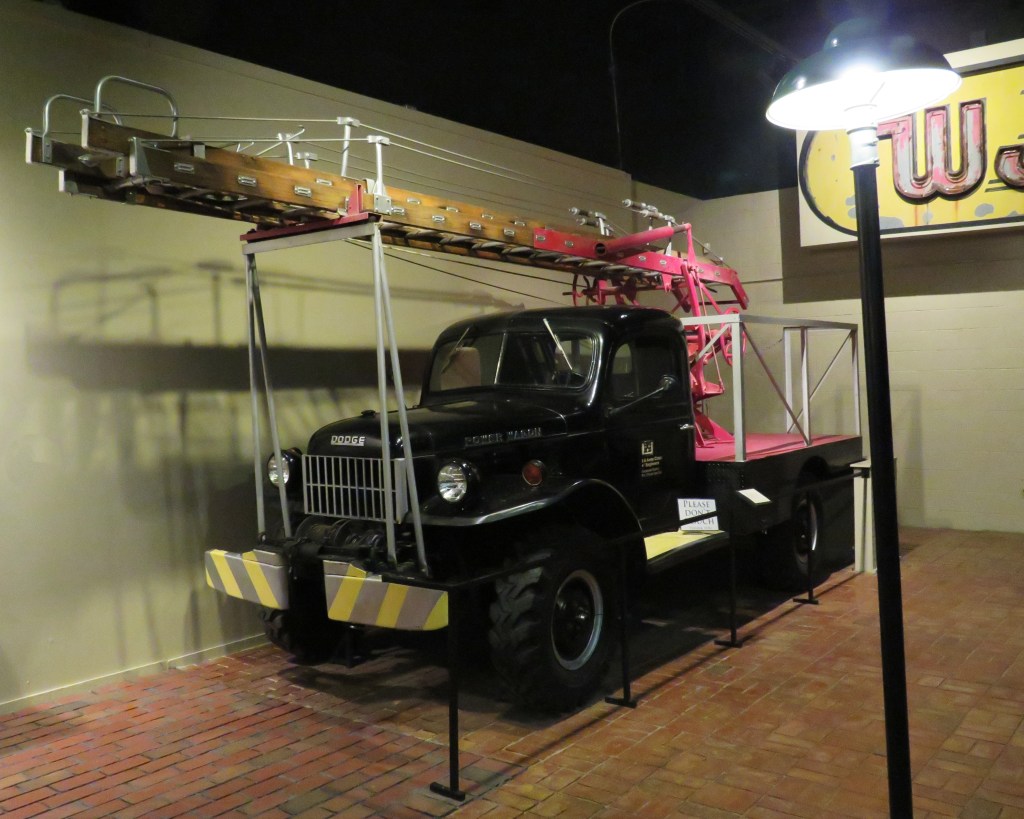
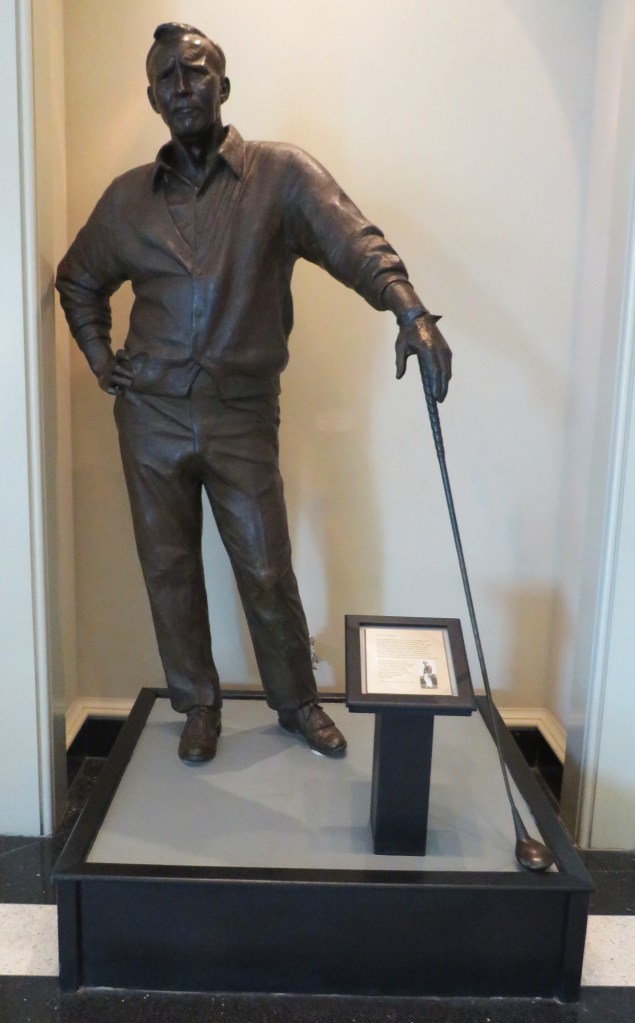
When you think about the city of Augusta in the U.S. state of Georgia, the main thing that comes to everyone’s mind is ‘The Masters’.  For those who are not familiar with the sport of golf, :Masters© is the biggest golf competition in the Professional Golf Association and the only major professional golf event played at the same location each year.  Sadly, Augusta National, the golf course where this event takes place is not open to the public, but one great place the public can visit is the Augusta Museum of History.  When you visit the Augusta Museum of History, you will see everything about the city from the famous golf competition to some of its famous residents to include James Brown, a famous musician who was born in Augusta.

Some of you are saying, “This is great.  You come to the city of Augusta, Georgia to see the golf course where :Masters© takes place, but it is not open to the public, and you expect me to visit this museum.  Well, it is not a railroad museum.  Therefore, I am not at par to visit this place.”

So why should you visit the Augusta Museum of History if it is not a railroad museum?

As mentioned, the city of Augusta, Georgia, is mainly famous for the big golf event known as :Masters©, but, like many cities, Augusta has so much more.

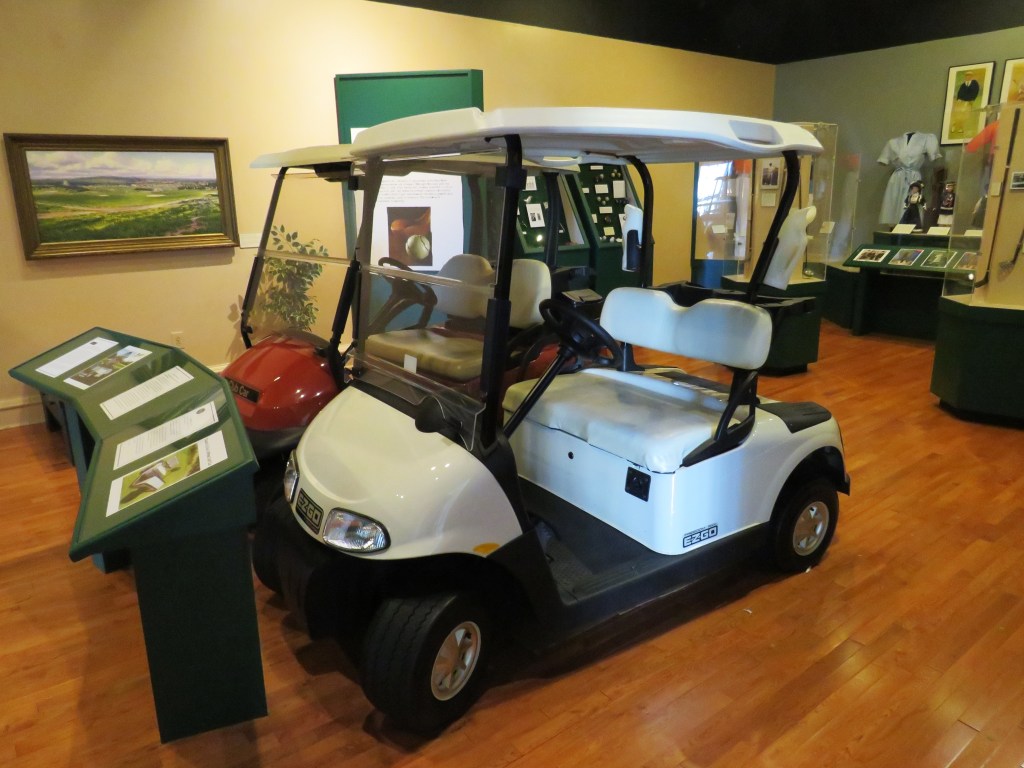
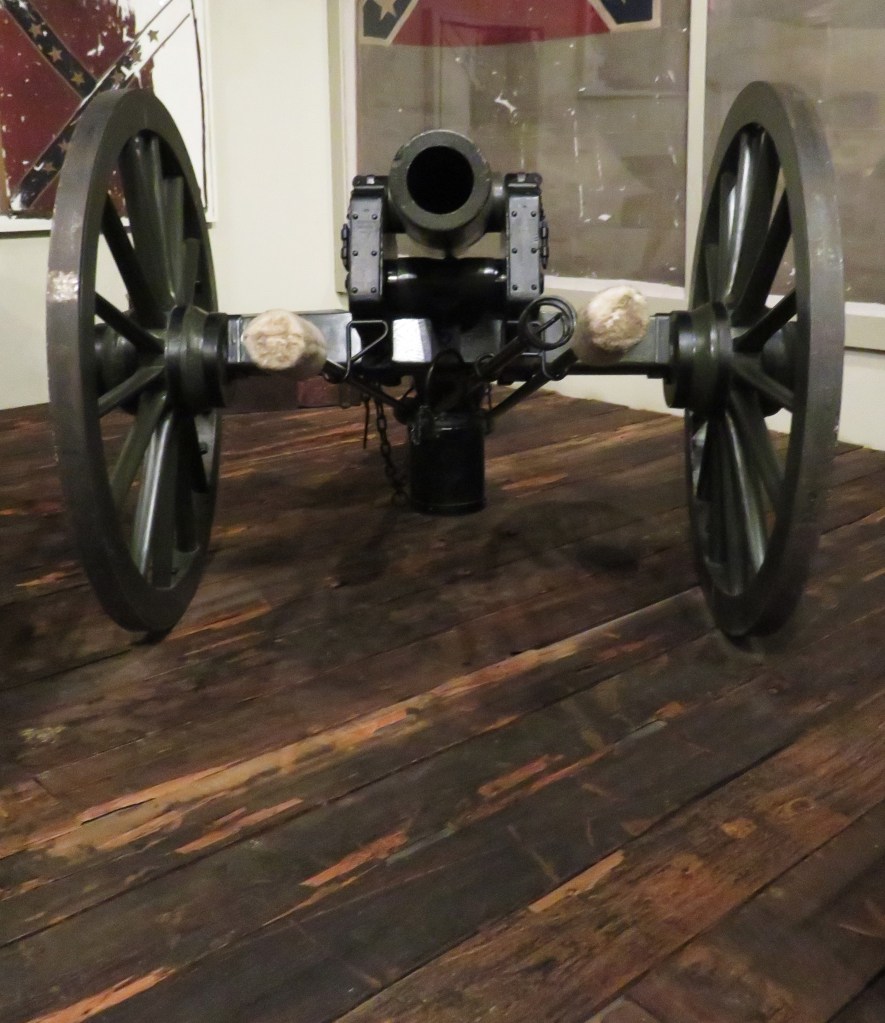
The Augusta Museum of History is a museum with many exhibits.  One, of course, is dedicated to the sport of course to include, of course, :Masters©.  Another exhibit tells the story of Augusta from the city’s beginnings to its roles in the American Revolutionary War and the American Civil War and the city’s role in a region known as ‘The South’.  Other exhibits celebrates its famous residents to include National Football League running back Emerson Boozer who won a Super Bowl with Joe Namath with the New York Jets, (The National Football League, commonly called the NFL is a sports league with teams playing American football of which the championship game is called the Super Bowl) Light Heavyweight Champion of the Ultimate Fighting Championship Forrest Griffith, (Ultimate Fighting Championship is commonly called the UFC) plus singers Brenda Lee and Amy Grant.  There is an entire exhibit dedicated to James Brown, a soul music musician who was not born in Augusta but was raised here, who has been given many names such as ‘The Godfather of Soul’, ‘The Hardest Working Man in Show Business’, Mr. Dynamite’, Soul Brother Number 1’, and ‘The Minister of Super Heavy Funk’. 

Some of you are saying, “This is nice, but this does not make this a railroad museum.”

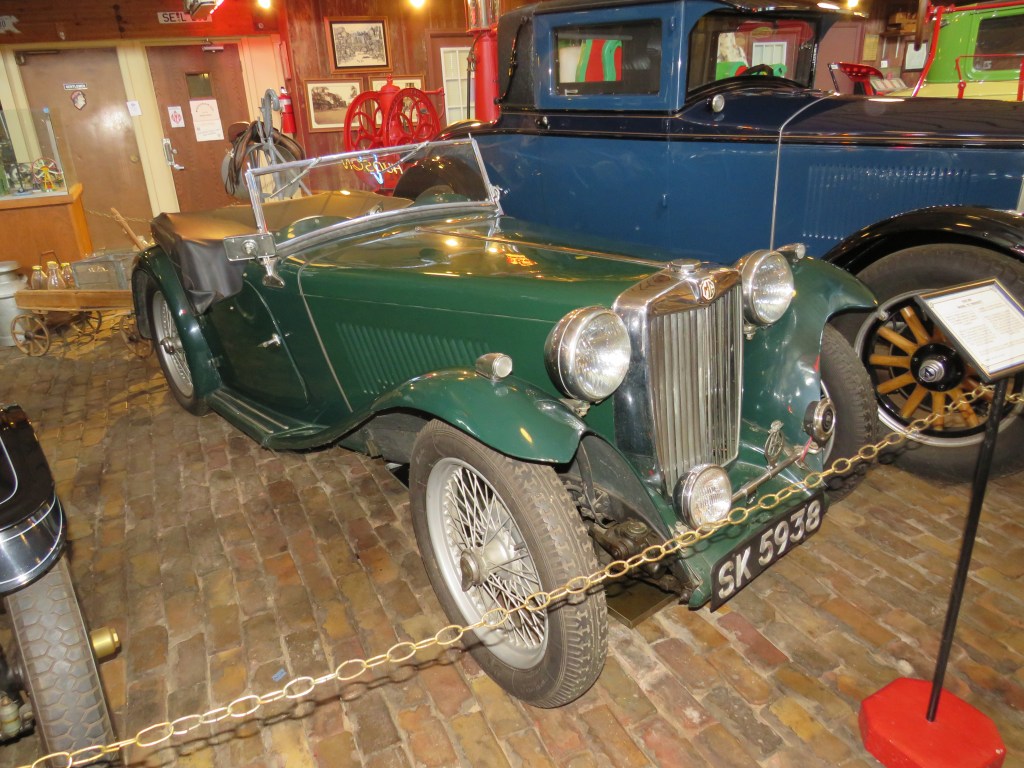
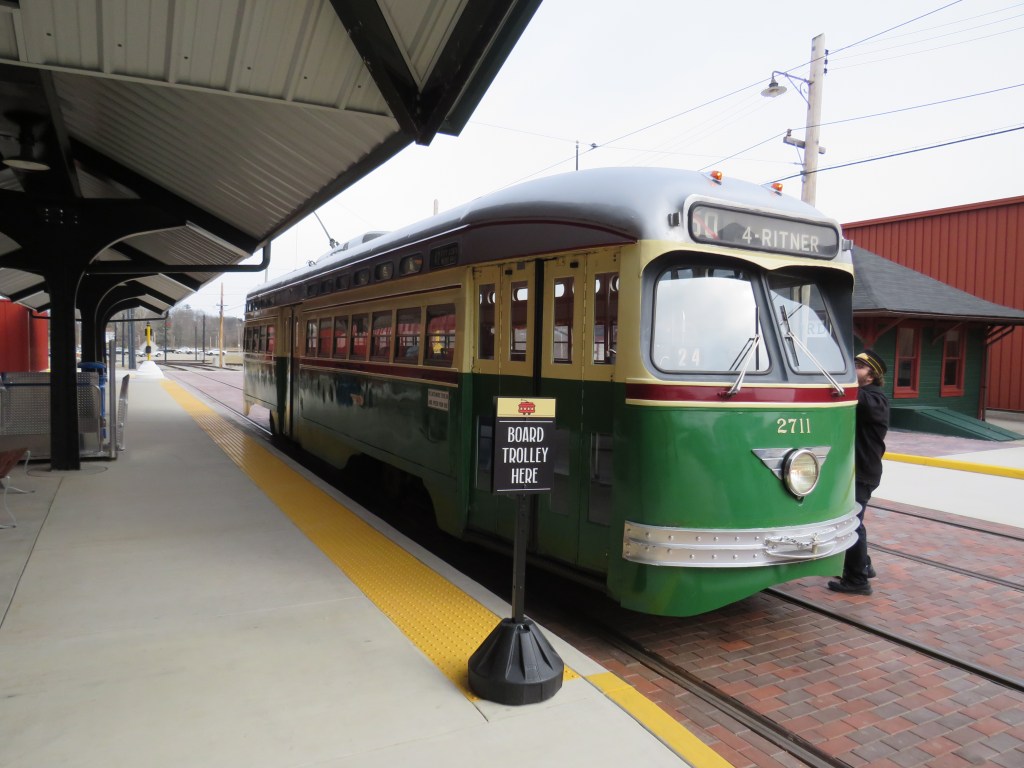
That brings us to the Transportation Gallery.  This gallery is devoted to the transportation history of Augusta which includes cars, and replica of a gas station, and the horse and buggy, but the very first thing you notice is a train.  Yes, it is a train with Locomotive Number 302 of the Georgia Railroad pulling a passenger car.  If that is not enough, there is also Trolley Number 415.

So you think that the Augusta Museum of History is all about golf and has nothing to do with the railroad, think again.  The history of the railroad in Augusta is on full display here.

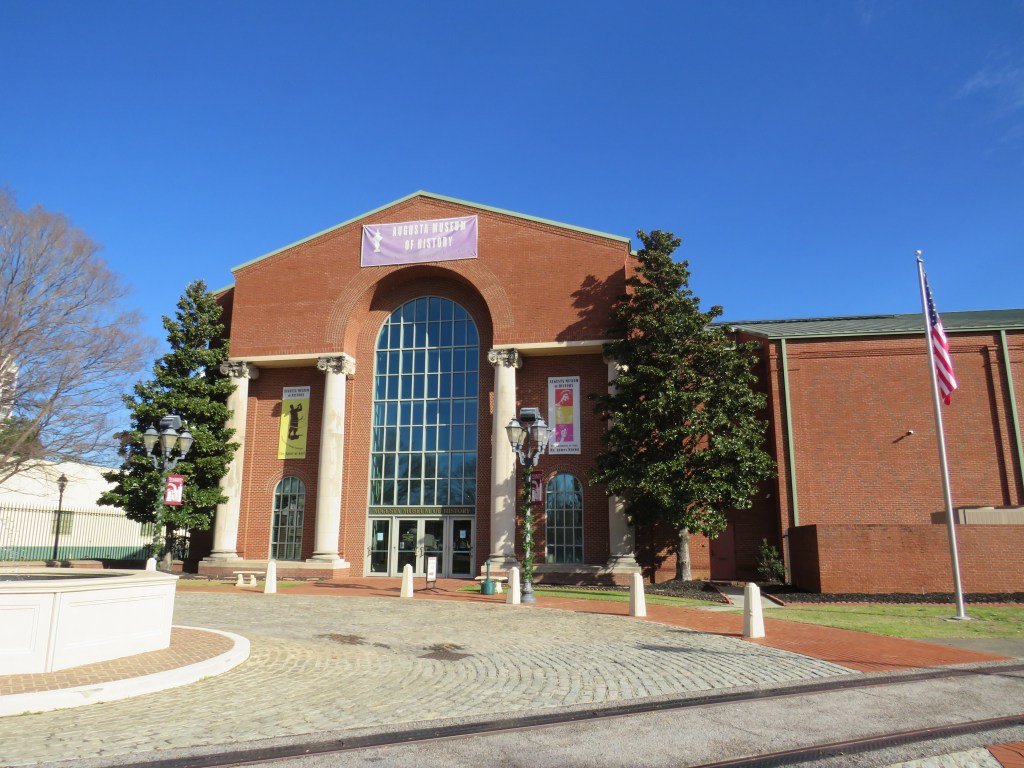
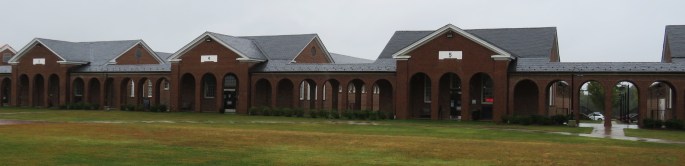
The Augusta Museum of History is located in downtown Augusta at 560 Reynolds Street one block north of U.S. Route 25.  It is open Thursday to Saturday from 10:00am to 5:00pm and Sunday from 1:00pm to 5:00pm.  (It is closed on Monday, Tuesday, and Wednesday.  However, the museum is open the entire week when the :Masters© is being played which is in April.)  Parking is on Site, and the museum is wheelchair accessible.  Admission required to enter.  You can learn more about the museum at https://www.augustamuseum.org/.

When in Augusta, Georgia, visit the Augusta Museum of History.  It may not be :Masters©, but at least you can see one of the ‘masters of city museums’.

‘The Criminals Built It’

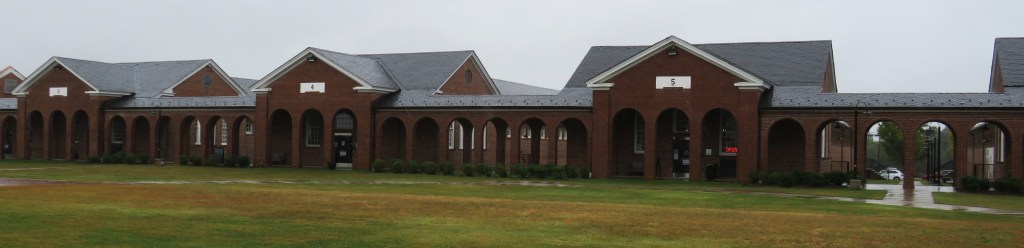
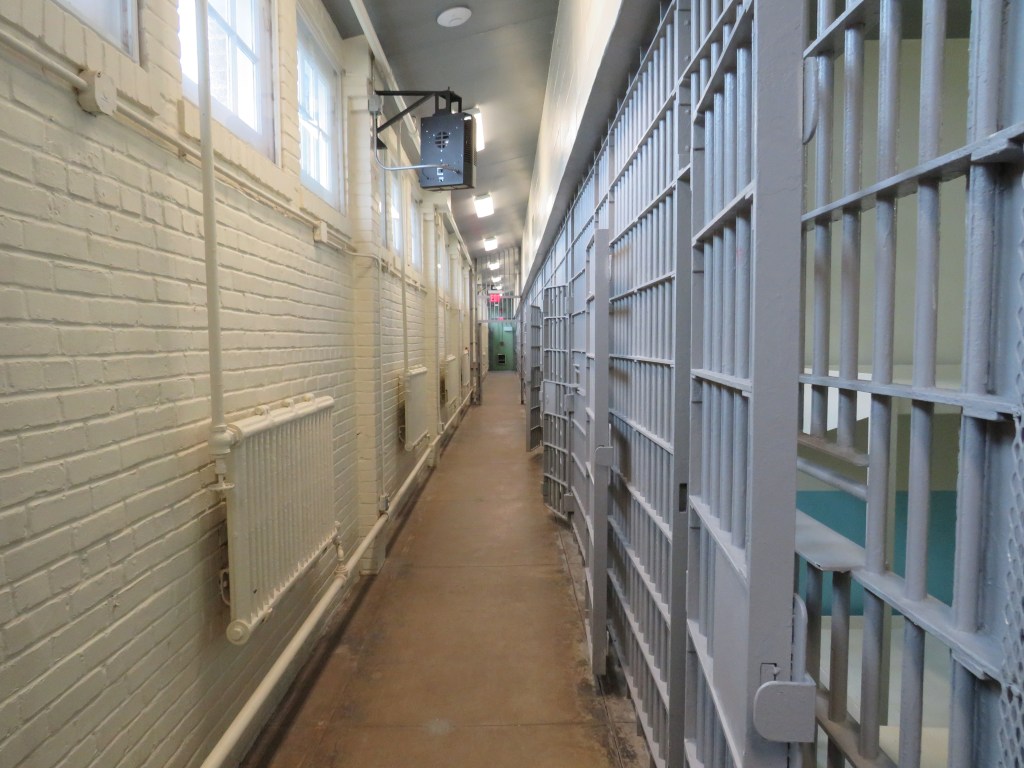
You have heard about things that criminals do.  You hear about criminals stealing and killing.  When the criminals get caught and convicted, they, of course, go to prison.  In Washington D.C., criminals were sent to either D.C. Jail, located in the District of Columbia, or they were sent to the Lorton Reformatory and Workhouse in Lorton, Virginia.  Opened in 1910 as a prison farm, the reformatory held many convicts to include the musician Chuck Brown and suffragist and women’s rights activist Lucy Burns.  While in incarceration, they were put to work.  They did farming, and they made bricks that were used to build some of the prison complex.  As they were creating products, there was a need to ship these products elsewhere.

In 1911, the Lorton and Occoquan Railroad began operations.  The narrow gauge line began at the Richmond, Fredericksburg, and Potomac Railroad near the Lorton Station, and it ran through the complex to a brick house located on the Occoquan River.  It was used to transfer criminals to and from the reformatory as well as supplies and products to its junction with the RF&P.  The railroads main line was only four miles long with a total trackage of seven miles.  What is special about the railroad is that, unlike other railroads in the U.S., the Lorton and Occoquan Railroad was completely built by inmates of the prison.  When it came to the Lorton and Occoquan, you can truly saw that ‘the criminals built it’.  Their claim to fame is that it is the only railroad in the world by entire by criminals.

Where is the railroad today?  The L&O Railroad ceased operations in 1980.  The rolling stock was sold off.  The reformatory and workhouse continued as a prison until it was closed in 2004.  Much of the property was sold off to developers.  Sections of the reformatory was converted into housing.  The main complex was converted into an arts center that features artist studios, galleries, and theater, and the Lucy Burns Museum.

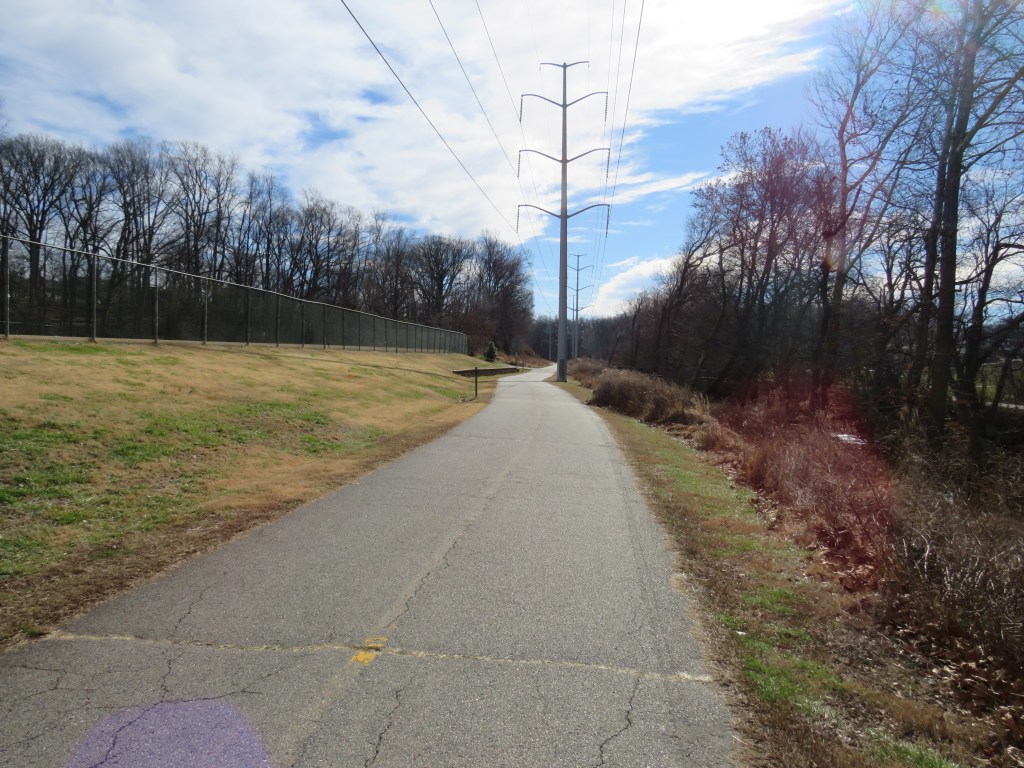
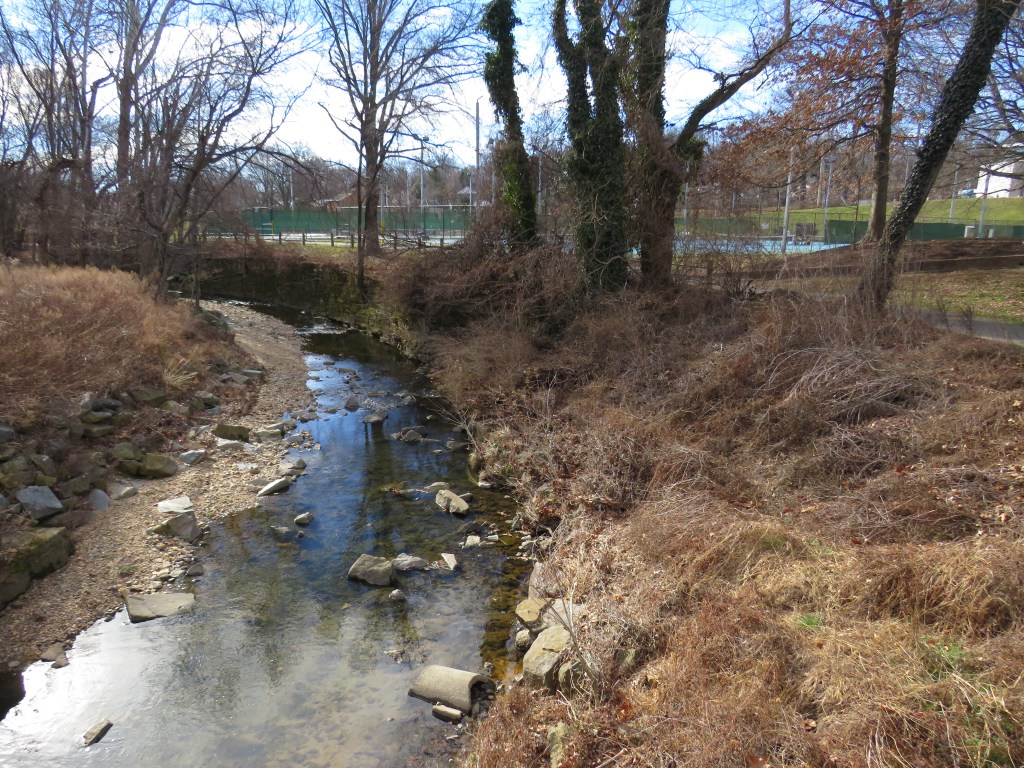
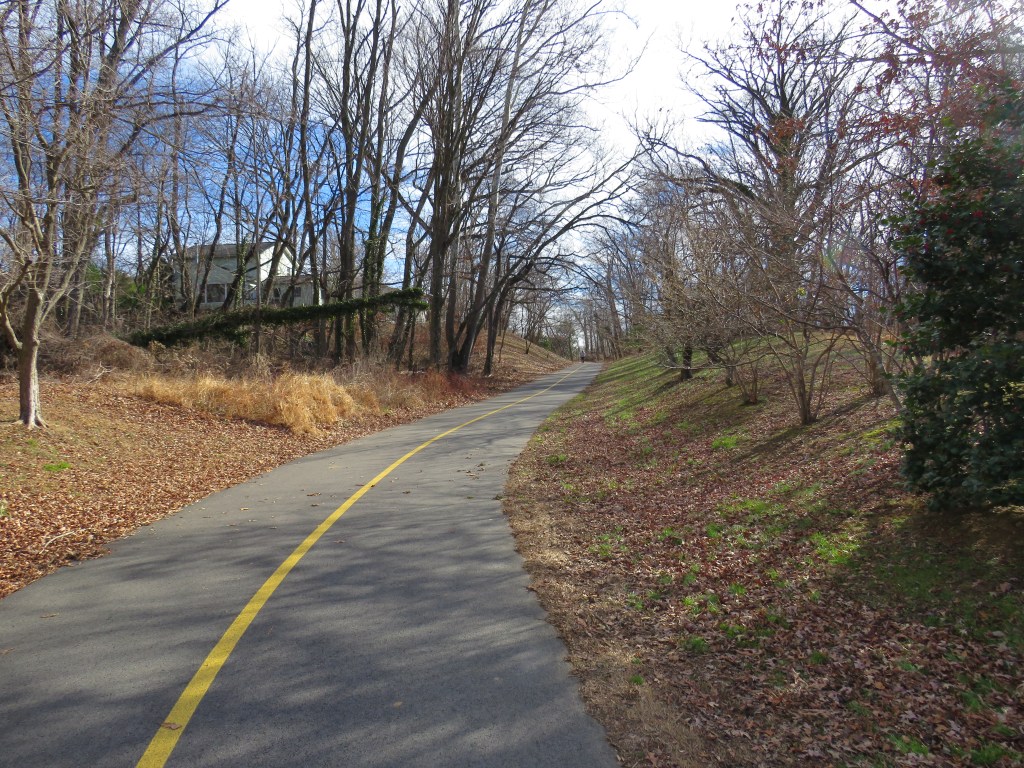
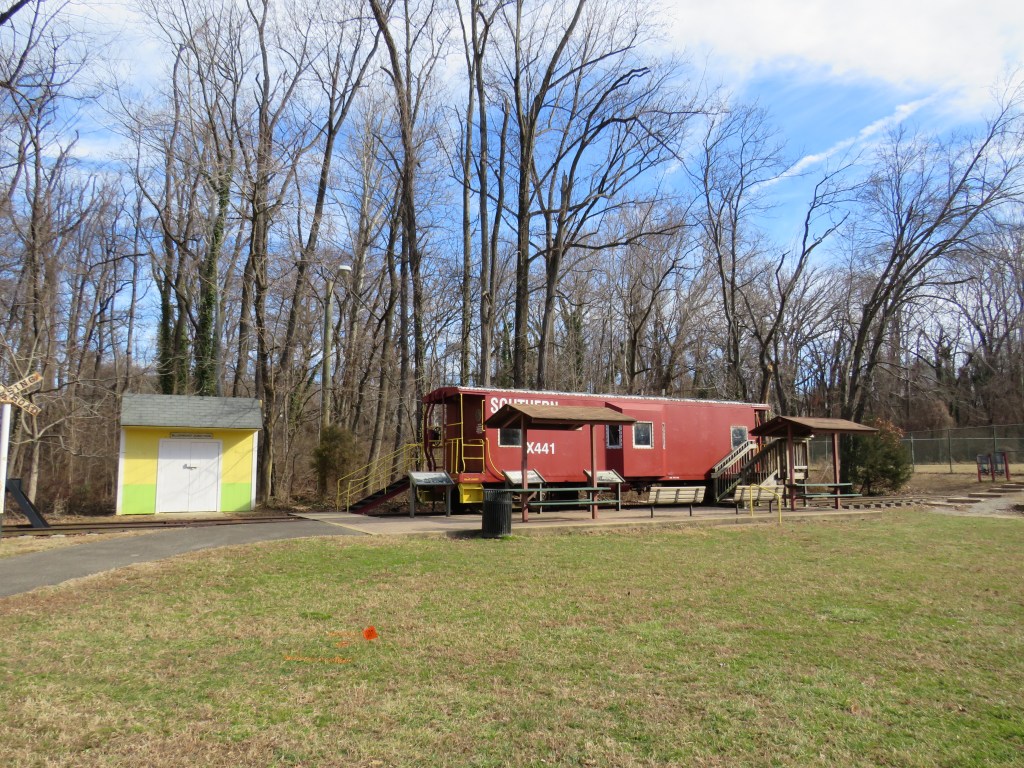
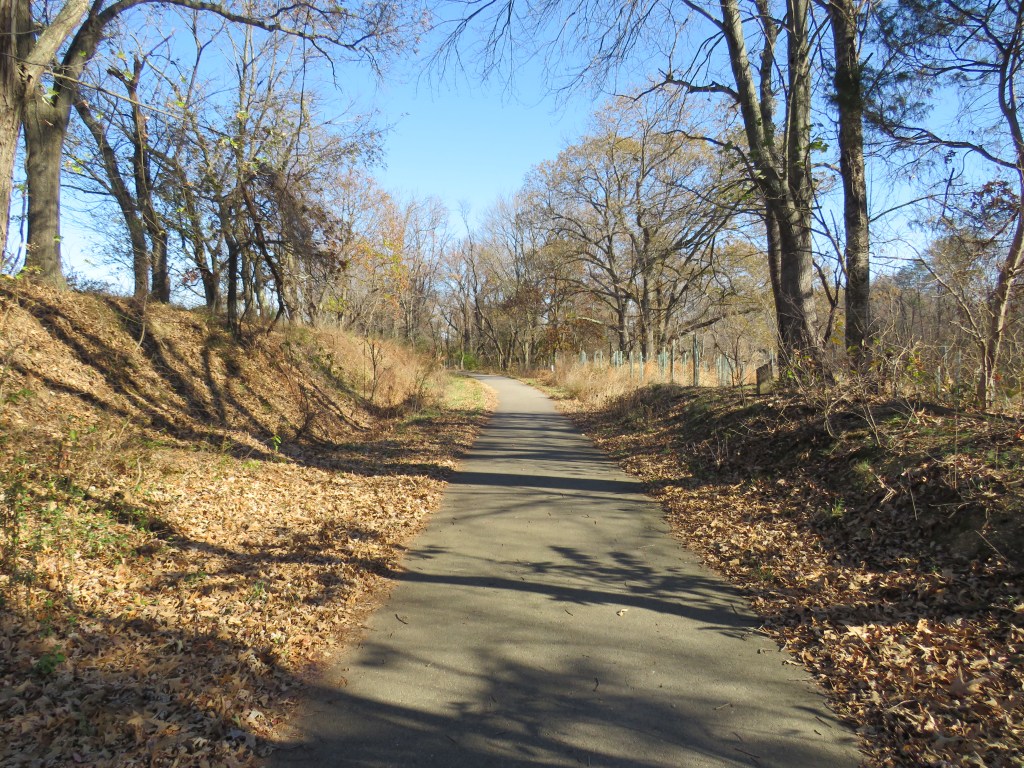
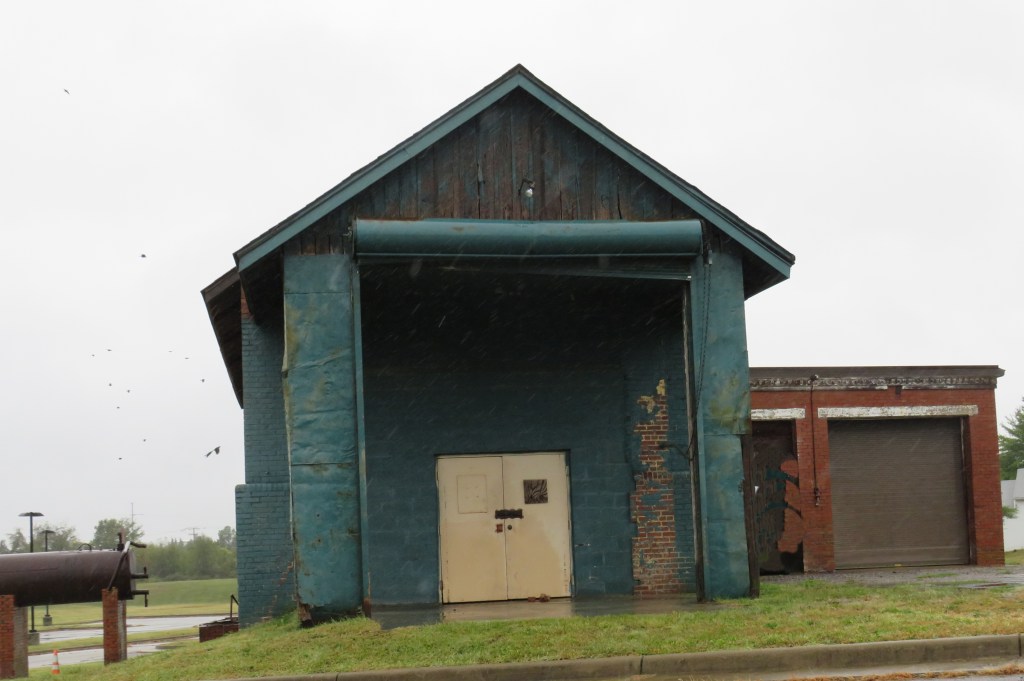
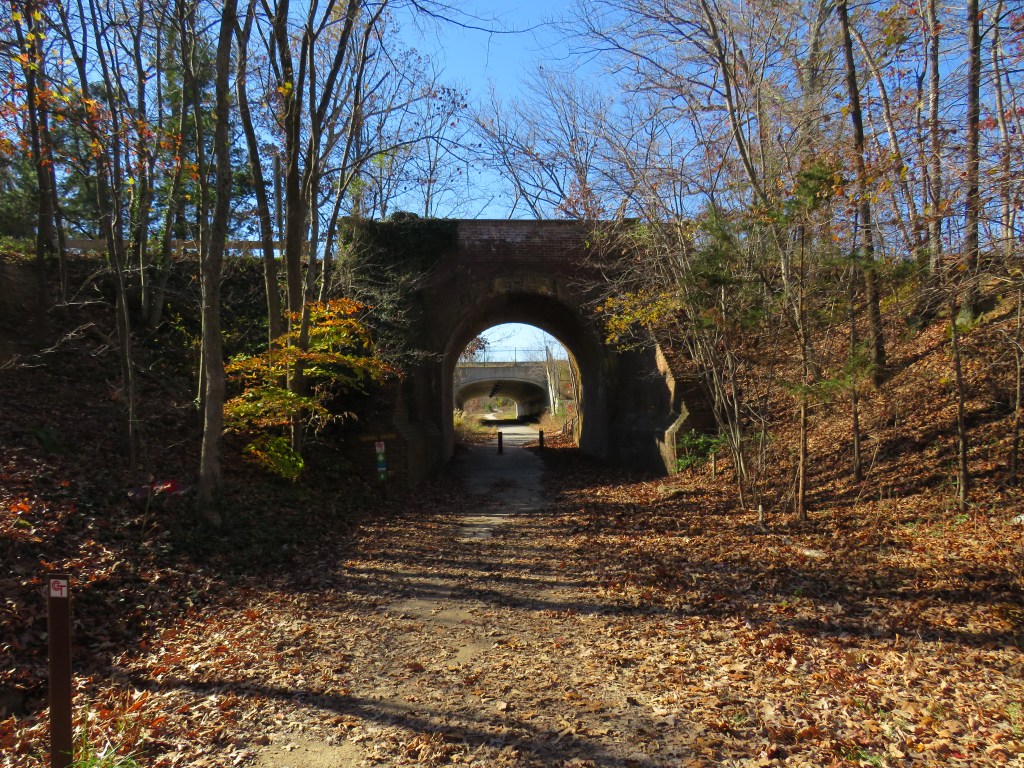
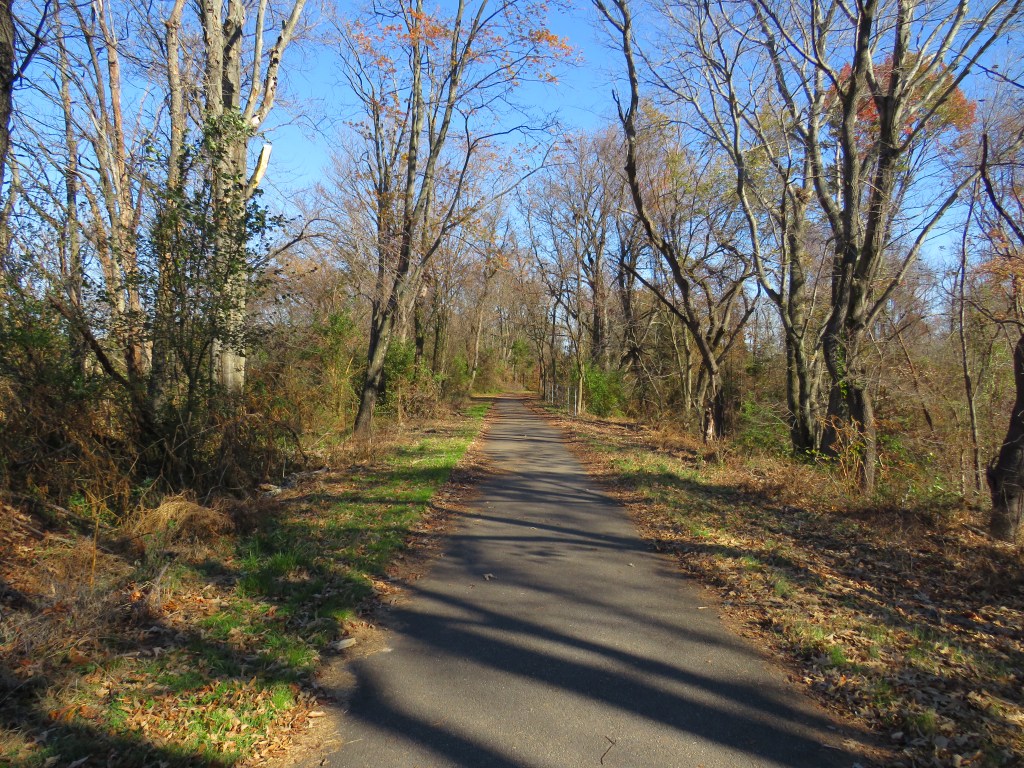
As for what remains of the Lorton and Occoquan Railroad, the some of the rail lines were converted to rail trails while other sections were paved over with roads.  Along the rail trail, you will find a brick arch bridge.  This bridge, also built by criminals, was built to allow Virginia Route 611 to cross over the railroad, and it is the only bridge of its kind in the state.  It is also one of two railroad structures that remain from the railroad.  As you continue along the trail, you will come upon the ruins of an old box car used on the railroad.  Although the original bridge over Giles Run was demolished, the current bridge was built on the old abutments.  The only other structure that remains is the old engine house behind the arts center.  It is currently in ruins.  (Plans to retore the engine house is currently unknown.)

Today, you may not be able to ride the railroad that was built by inmates, but you can walk the trails that brought the inmates in and brought products and goods they made out.  You can truly reminisce about the Lorton and Occoquan Railroad.  ‘The criminals built it’.

The Savannah History Museum, Savannah, Georgia

The U.S. state of Georgia is the largest state east of the Mississippi River.  It is famous for many things to include its state capital, Atlanta, and it is home to the ‘Masters’ golf tournament in Augusta.  Another treasured city in the state is Savannah.  Located a short distance inland from the Atlantic Ocean, it is a major port city with much history that includes the American Revolutionary War and the American Civil War.  The downtown area includes glorious town squares with spectacular fountains.  A visit to the Savannah History Museum tells the story of a city that has so much.  When you visit the city of Savannah, Georgia, you must make a visit to the Savannah History Museum.

Some of you are saying, “That is amazing.  I have driven down Interstate 95 many times while on my way to Florida passing by Savannah.  I have heard about the great architecture of the city.  However, there is a big problem.  It is called the Savannah History Museum.  It is not a railroad museum.  Therefore, I am not making a history of visiting this museum.”

So, that is your reason to not visiting this museum.  Ladies and gentlemen, prepare yourselves for a Savannah history lesson.

As mentioned, Savannah is a major port city.  Two forts, Fort Jackson and Fort Pulaski, were built to protect the city.  The city is home to the birth home of Juliette Gordon Lowe, the founder of the Girls Scouts of America.  The city of full of great architecture and great town squares and their fountains.  What most people do not know is that Savannah is a big railroad city.  It is the home of the Georgia State Railroad Museum.

What about the Savannah History Museum?  Well, the museum itself is part of railroad history.

What is the first thing you will see when you arrive at the Savannah History Museum?  Well, you will immediately discover… that it is located inside the Savannah Visitor Center.

Some of you are saying, “Well that is no big deal.  There is nothing special about that.”

Oh yes it is.  The Savannah Visitor Center is located in the old train station.  Yes, it is inside the old passenger train terminal that was built by the Central of Georgia Railway.  When passenger service ceased in 1971, it was eventually converted into the visitor center it is now.

Some of you are saying, “Well, that is all.”

Nope.  We now enter the Savannah History Museum.

The story begins with the Indian tribes that once occupied the land to the colonial era and the American Revolutionary War to the present day, and the bench used in the famous movie ‘Forrest Gump’ which featured Tom Hanks is on display here.  (Sadly, you cannot sit on the bench.)  One of the main centerpieces of the museum is the Central of Georgia Railway Locomotive Number 403.  Yes, a steam locomotive is a centerpiece of the museum.  Other features include railroad lanterns and a model train from the Central Railroad of New Jersey on display.

Now you have a reason to visit the Savannah History Museum.  When you drive along Interstate 95, it is truly worth a detour.

The Savannah History Museum is located inside the Savannah Visitor Center, which is located at 303 Martin Luther King, Jr. Boulevard just blocks from Interstate 16 and U.S. Route 17.  Parking is on the north side of the visitor center.  It is owned and operated by the Coastal Heritage Society.  It is open seven days a week from 9:00am to 4:00pm.  Admission is $10.00 from adults.  The museum is wheelchair accessible.  You can get more information at https://chsgeorgia.org/SHM. No more excuses.  Savannah, Georgia is a town full of railroad history.  The Savannah History Museum is a history museum with the history of the railroad.

Memorial Park, Myersville, Maryland

Most people have never heard of the small town of Myersville in the northern region of the U.S. state of Maryland.  The only main road through this town is Maryland Route 17.  If you visit the town, the first thing you would say is, “Well, this is not a railroad town.”

In the early years of the town, that was not the case.  Memorial Park was erected in 2016 to commemorate the volunteers, the agriculture and community organizations as well as the town being a trolley town.  The park is a reminder of how the town benefited from the Hagerstown and Frederick Railway which ran trolleys connecting the small towns with the big towns of Frederick and Hagerstown.  The town was served by the trolley and was a hub for farmers and travelers going to various parks to include Braddock Heights, an amusement park (now gone).  The trolley ran through the town until 1945, and the tracks were taken up.

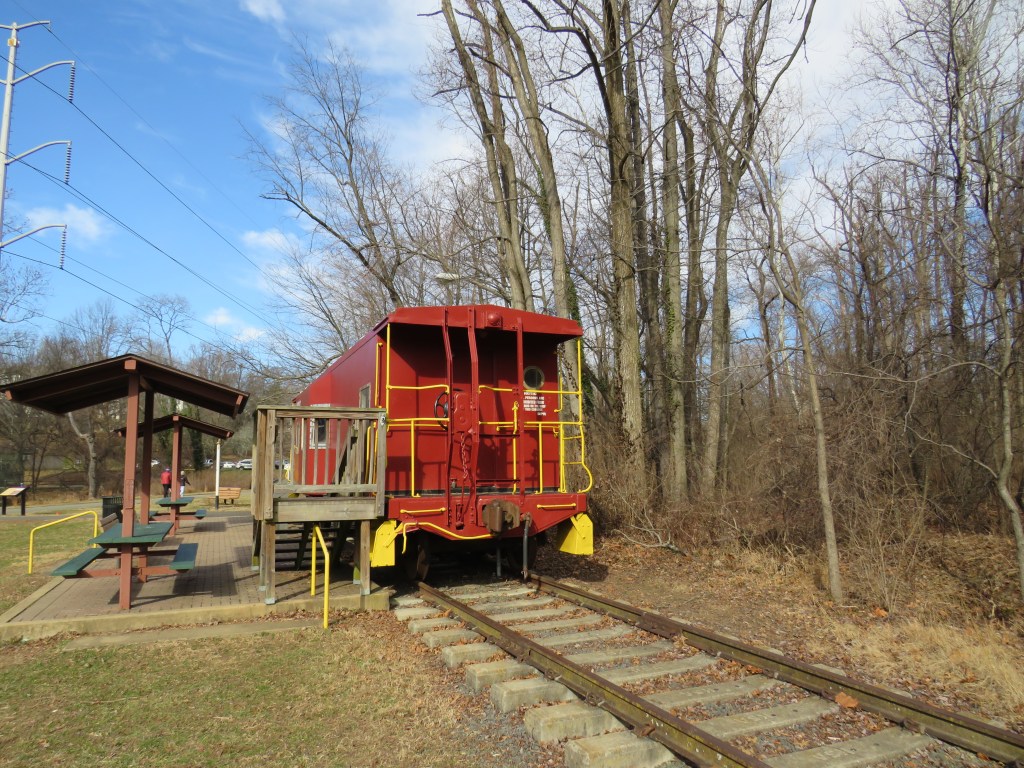
As you visit the park, you will first see the sign ‘Memorial Park Trolley Station’.  You can read a sign that tells the history of the Hagerstown and Frederick Railway’s service to the town.  You can see a trolley shelter where you can have a seat.  Next door, you can see the old sign that hung of the old trolley shelter.

Memorial Park is located on Maryland Route 17.  The park does not have its own parking, but there is plenty of parking on the street and nearby parking lots.

A Train Ride with Saint Patrick

Photo by RDNE Stock project on Pexels.com

The train arrived.  I boarded the train.  I went to my seat and sat down.  The train pulled away from the station.

“Welcome aboard!”

I looked across the aisle and saw him sitting there.

“Welcome aboard!”  Saint Patrick welcomed me.

I could not believe my eyes.  “What brings you on the train?”

“Oh, I enjoy riding the train.  I enjoy sitting back and looking at the scenery.”  He smiled at me.

“I enjoy the same thing.”  I said.

We continued to ride until I reached my stop.  “Time for me to get off.  I wish you good luck.”

“I hope you have plenty of good luck.”  He smiled.

I stepped off the train, and I waved at him as the train departed.

Wishing Everyone a HAPPY SAINT PATRICK’S DAY!

The Savannah Visitor Center, Savannah, Georgia

When you think about the city of Savannah in the U.S. state of Georgia, the last thing you will think about is the city’s railroad history.  Yet, the Savannah Visitor Center was once a railroad station.  This is not one of those tiny depots made into a visitor center.  This was a major passenger terminal for the Georgia Railway until 1972.  Today, it is the first place you will want to visit when you arrive in Savannah.

As you arrive, you can see a structure preserved with some old passenger cars and a caboose in the areas where the passengers boarded the trains.  Inside, you will see the information desk, a gift shop, a café, and the Savannah History Museum.  Across the parking lot, you will find old warehouses that were served by freight trains.  The structure is now part of the Savannah College of Art and Design.

The Savannah Visitor Center is located at 301 Martin Luther King Jr. Boulevard across the street from the Georgia Railroad Museum, and it is the first structures you will see as you arrive in Savannah from Interstate 16.  You can also park your car here and take a beautiful walk through this very his very historic and lovely city.

This is amazing.  You come to Savannah today, and you first see the Visitor Center.  This is no different that the visitors who arrived here before 1972 by train.

Mitchener Station, Selma, North Carolina

The town of Selma in the U.S. state of North Carolina is home to a train station that sits at the crossing of two major railroad lines.  The town has a history with the railroad that goes back to before Selma became an official town.  Mitchener Station, the town’s original train station, was built in 1855.  Today, it is currently abandoned as it rests just a short ways from the current Union Station where Amtrak stops today.

Some of you are saying, “If it is abandoned, why do they not just demolish it?”

It is an old train station.  Many do get demolished.  However, Mitchener Station in Selma, North Carolina is not just a rotting train station.

What is special about Mitchener Station?  As mentioned, it was built in 1855 long before the town was chartered.  It is also the oldest surviving train station in North Carolina.  Is that it?  The answer is no.  The train station was also controlled by the Confederate Army during the American Civil War.  The North Carolina Governor met with the soldiers.  They occupied the station until the Union Army attacked the station causing the Confederate Army to flee.

Today, there are attempts to restore the train station.  As for now, it is not open to the public.  It is in its original location at Railroad Street and Railford Street one block east of U.S. Route 301 and minutes from Interstate 95.

Alberta Caboose, Alberta, Virginia

The small town of Alberta is located in the southern region of the U.S. state of Virginia.  Yes, the name of the town is Alberta.  (Whether it is named after the Canadian province is unknown.)  In this small town in the center of the town is a caboose.  How is the caboose here?  This town has no railroad.  Well, the town was once served by two railroads, and there was heavy rail traffic in its heyday.  Like many small towns, service declined, and the railroads were forced to abandon the town.

Some of you are saying, “This is nice, but many small towns in the United States of America have declined from the lack of the railroad.”

Even though Alberta, Virginia looks like a ghost town today, the Alberta Caboose reminds everyone about the railroad heritage.  The caboose is from the Virginian Railway and sits near the old railroad bed of the Virginian Railway which is now the Tobacco Heritage Trail which runs across the southern region of Virginia as a reminder of how the Virginian Railway and, later, the Norfolk and Western Railway was a big part of the tobacco industry.

What about the caboose itself?  As mentioned, it was used by the Virginia Railway.  It was donated to the town in memory of Earl Walter Wilkinson.  Who is Earl Walter Wilkinson?  He was a devoted employee of the Norfolk and Western Railway.  Like many cabooses that you once saw on the end of freight trains, it was preserved and put on display.

The Alberta Caboose is located in the Town Square in Alberta, Virginia at 123 First Avenue.  It is one block from Virginia Route 136 and minutes from U.S. Route 1 and Interstate 85.  There is a small parking lot for parking.

If you ever visit the town of Alberta, Virginia, it may appear to be a ghost town, but it comes alive with the memory of the railroad.

Airlie Gardens, Wilmington, North Carolina

Do enjoy time in the garden?  You enjoy the peace and serenity.  You enjoy the flowers in bloom.  You enjoy the trees over your head.  This is what you will feel as you stroll through Airlie Gardens in the city of Wilmington in the U.S. state of North Carolina.  Built around a mansion that sadly is not open to the public, Airlie Gardens is a refreshing place to enjoy.  The ponds, the groves, and even the views of Bradley Creek, Airlie Gardens is truly an oasis in a very busy beach city.

Some of you are saying, “Wow!  I love gardens.  They are so beautiful.  However, there is a very big problem.  You see.  These are gardens, and these gardens have no railroads.  Therefore, I will not be taking a stroll through here.”

You do have a point.  There is no railroad here, and no railroad has ever run through these gardens.  So, what does the railroad have to do with Airlie Gardens?

The history of Airlie Gardens begin long before the United States of America was established, but in 1835, a man named Thomas Henry Wright built Mount Lebanon Chapel on the property, and the church remains on the property today.  Who is Thomas Henry Wright?  He was a physician, a bank president, a merchant, an Episcopal minister, and he was also a railroad director of the Wilmington and Weldon Railroad.

However, this is just a tiny piece of a bigger story.

Then comes Henry Walters.  Who is Henry Walters?  He is famous for being an art collector and a philanthropist.  He was the son of William Thompson Walters.  Who is William Thompson Walters?  He was the president of the Atlantic Coast Line Railroad of which the headquarters was moved to Wilmington, North Carolina in 1884. When William died in 1894, Henry took over the railroad.  While here, Henry started other railroads.  Among them was the Atlantic Beach Car.  What is the Atlantic Beach Car?  It began in 1902 at the Wilmington Seacoast Railroad using steam locomotives to pull passenger cars from Wilmington to Wrightsville Beach, but it was later converted to an electric railroad using trolleys, and the ‘Beach Car’ was born.  Among the stops along the line was a stop at Airlie.

Henry was a frequent guest of Pembroke and Sarah Jones, the owners of the Airlie Mansion of which Airlie Gardens was built around.  Pembroke was also a director on the Atlantic Coast Line Railroad.  Among the guests were Stuyvesant Fish, owner of the Illinois Central Railroad, members of the Vanderbilt family, tycoon Henry Flagler, and socialite Henry Lehr.  Henry had a sister named Jennie who Married Warren Delano III, the uncle of U.S. President Franklin Delano Roosevelt.  When Pembroke died, Henry married Sarah, and they lived at a home in Manhattan in New York City, New York.  His other accomplishments include the establishment of the Walters Art Museum in Baltimore, Maryland where he made few visits.  Henry remained the president of the Atlantic Coast Line Railroad until his death in 1931.  Sarah transforms the gardens and eventually opens the gardens to the public.

The Airlie Gardens is a great treasure to see.  Regardless of what time of the year, Airlie Gardens is a great place to take a stroll.

Airlie Gardens is located at 300 Airlie Road in Wilmington, North Carolina just off of U.S. Route 17.  It is open year round from 9:00am to 5:00pm.  The great part is that is it mostly wheelchair accessible.  You can get more information on admission and read more into the history of the gardens at https://airliegardens.org/.

No, you will not see the railroad here, but you can take a stroll through a place that has a connection to the railroad.  Visit Airlie Gardens.  Pembroke and Sarah Jones and Henry Walters will be glad that you did.

She Is Waiting

It is the afternoon.  She is sitting on her couch watching her favorite show television.  She knows that when the show ends, it is time to go out.  Where?  She turns off the television.  She walks out of her house locking the door.  She takes a walk down the street and makes her way to the train station.  Walks onto the platform and sits down on the first bench she sees.  She sits there waiting, waiting and waiting.  It should happen at any time.  She gets a little impatient, but she still has a few minutes.  She checks the time.  She is hoping that there are no delays.  She just cannot wait.  She hears a sound of what could be a locomotive.  Her phone rings.  She looks at her phone and sees someone important.
“Hello,” she speaks.  “I am here waiting.”

The horn toots.  It is almost here.  She looks down the tracks.  The train is coming.  She is so excited not just to see the train, but she is excited for what the train is bringing to her.  The train pulls up and stops.  People get off, but she is looking for the most important person… her man.  He gets off.  She goes to him, and they embrace.  It is her love brought to her by the train.

Photo by Anastasia Shuraeva on Pexels.com

Many people ride the train either for vacation or to commute to and from the workplace.  To those who have that someone waiting at the station for your arrival, we would like to wish you a Happy Valentine’s Day.  If you are one of those who ride together, we wish you a Happy Valentine’s Day as well.  May you spend your time on the train with the very one that you love, and may your ride be very, very long.

Photo by Mateus Souza on Pexels.com
Photo by Jonathan Borba on Pexels.com