This is a text widget, which allows you to add text or HTML to your sidebar. You can use them to display text, links, images, HTML, or a combination of these. Edit them in the Widget section of the Customizer.
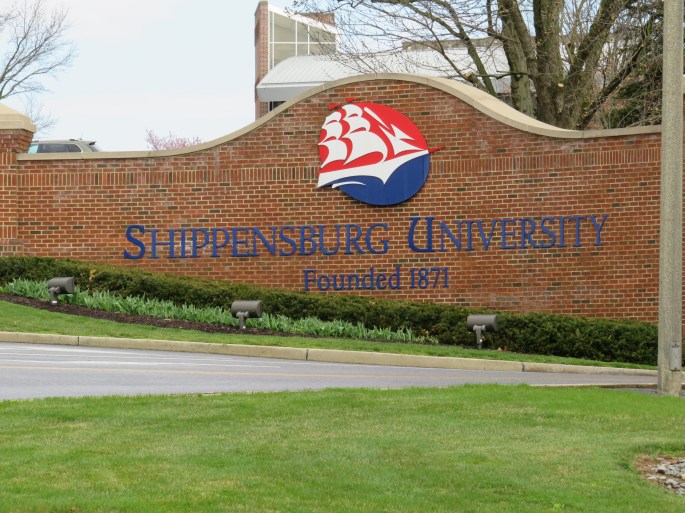
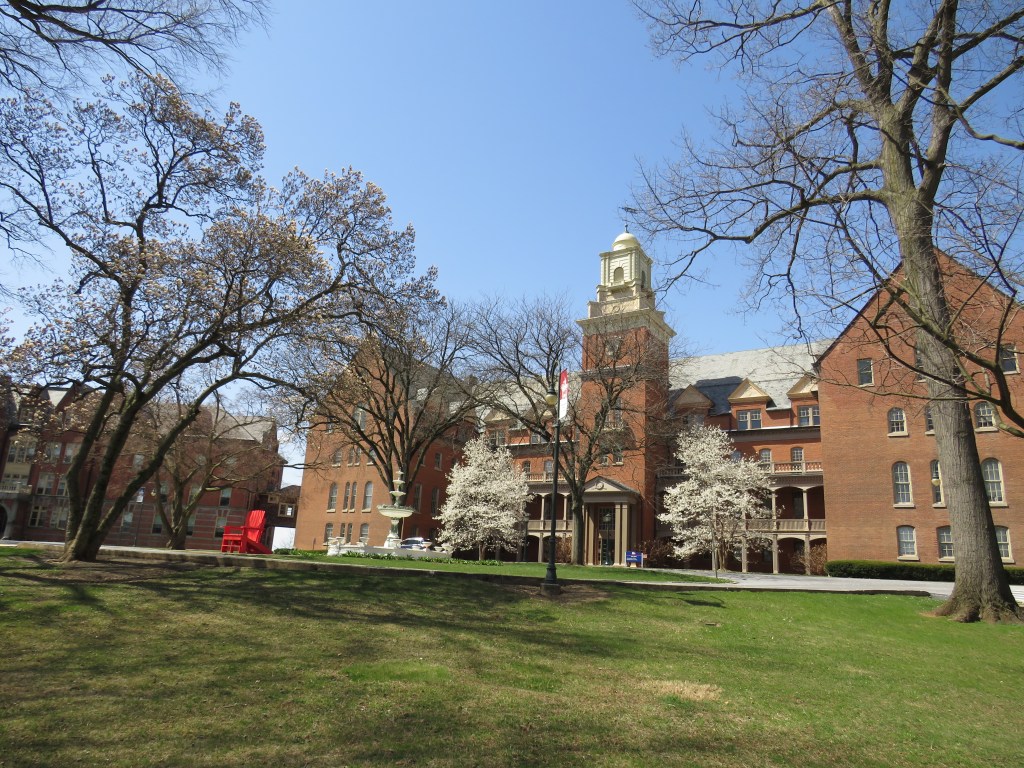
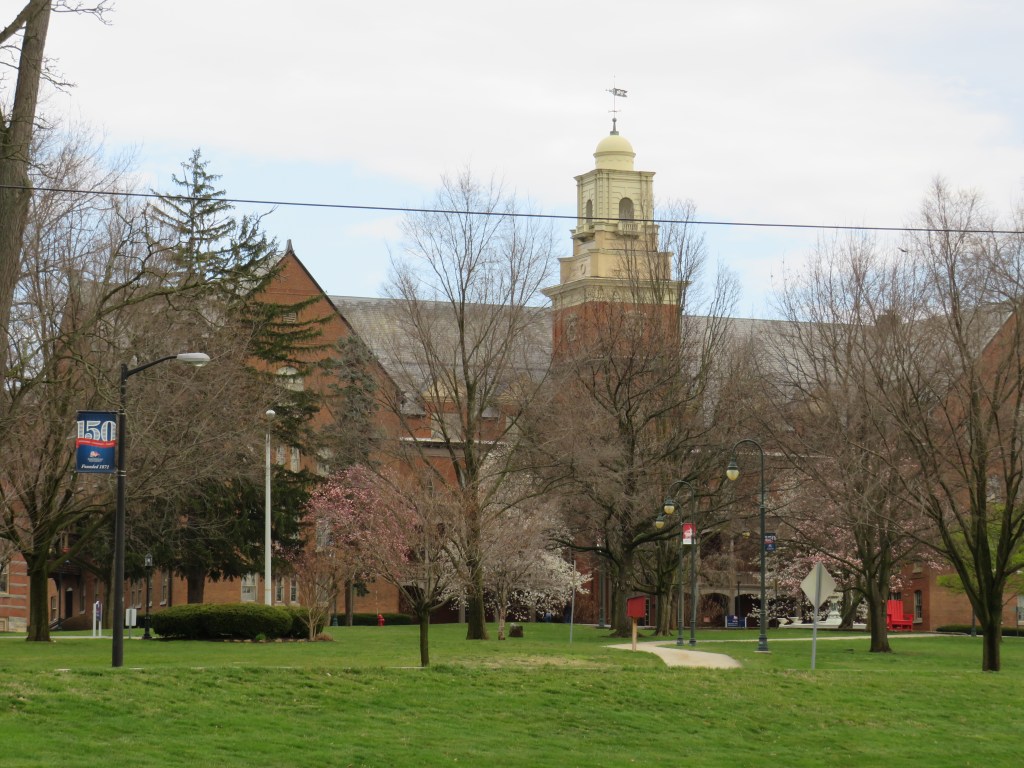
How many of you have ever heard of Shippensburg University located in the town of Shippensburg in the southern region of the U.S. state of Pennsylvania? Alright! It is not as well-known as Penn State University or Harvard or Notre Dame. It began as Shippensburg University of Pennsylvania in 1871 before it was simply named Shippensburg University. For a university that it not very well known, it has had many famous visitors like Pat Benatar, Salt and Pepa, George Carlin, and Jesse Jackson. Every semester, they have many students that attend this university. Shippensburg University is a university that has a deep history.
Some of you are saying, “Wow! This is nice. A university that has a deep history. Oh, I love Pat Benatar. She must have hit the place with her best shot. There is a very big problem. There is no railroad here. Therefore, I will not be making my best shot to visit here.”
Shippensburg University is a university that has a rich history. It is not famous for railroad history. What does Shippensburg University have to do with the railroad? Although the Norfolk Southern Railway passes through Shippensburg, it is a few miles from the university.
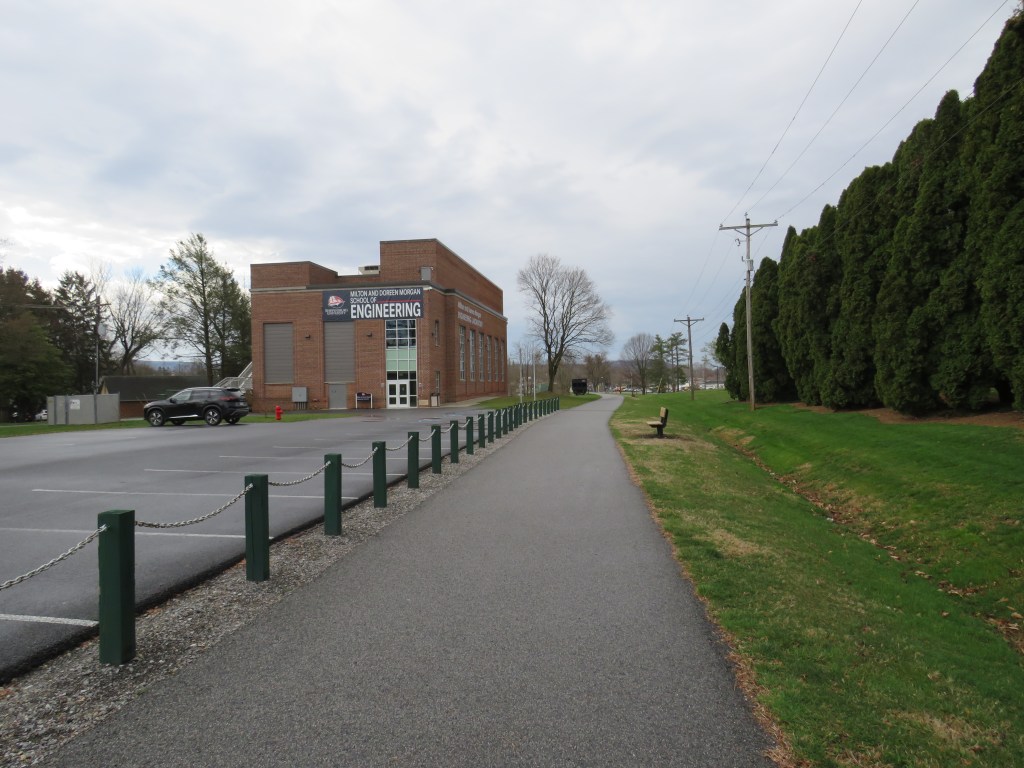
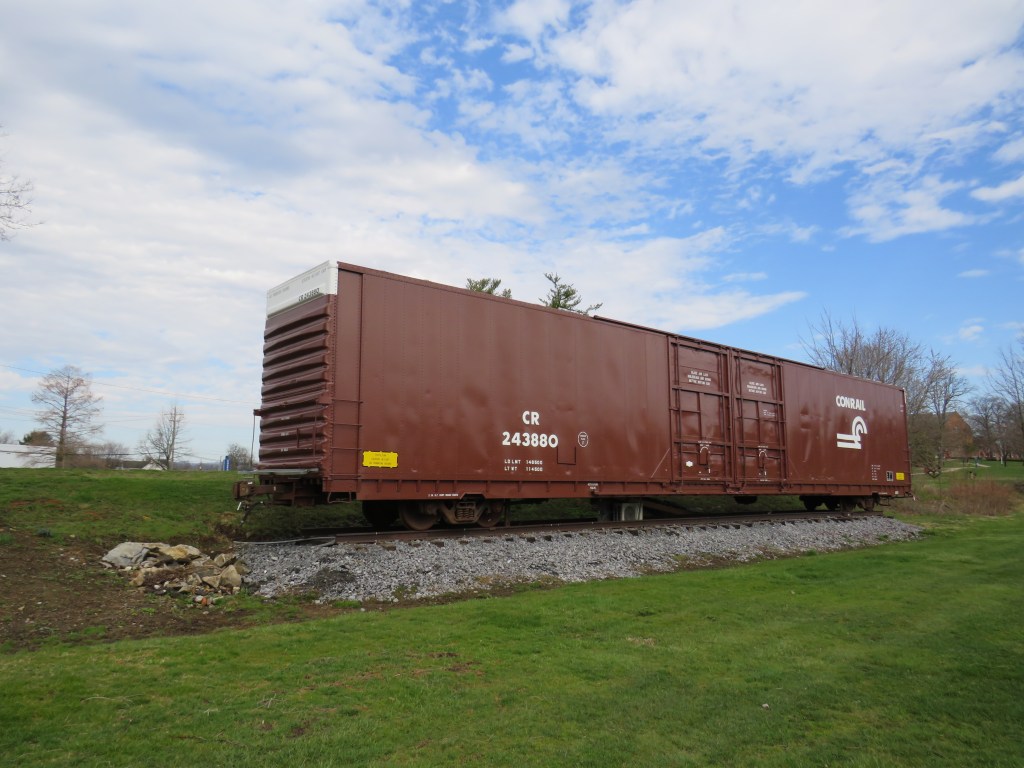
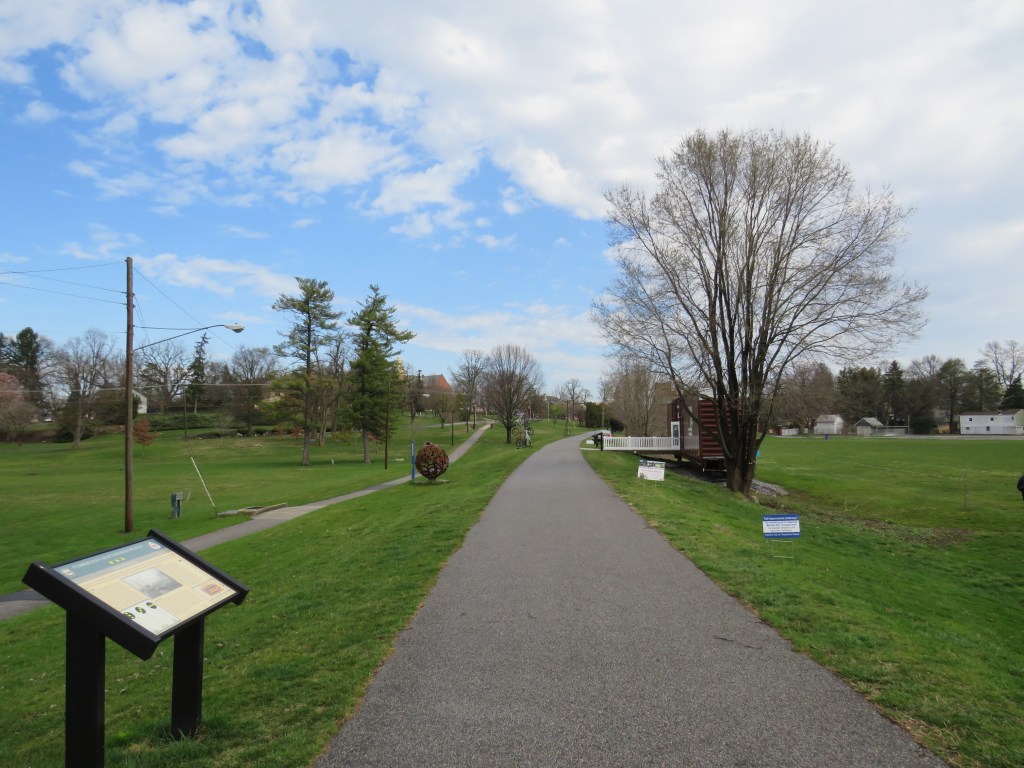
As you walk around the university, you see the various structures. You then notice what looks like a rail trail. The Cumberland Valley Rail Trail begin on the northeast side of the university, and it is here where you see two boxcars. The Penn Central boxcar houses the Cumberland Valley Railroad Museum, and the Conrail boxcar houses the Conrail Museum. The railroad line was originally built by the Cumberland Valley Railroad, but it was later taken over by the Penn Central Railroad, and Conrail was the last railroad to run on the line before railroad service ended.
What does this have to do with Shippensburg University? It was a plot of open land along the Cumberland Valley Railroad that became the determining factor for the location of the university. The railroad would bring students to and from the university and played a big role in the establishment of the school.
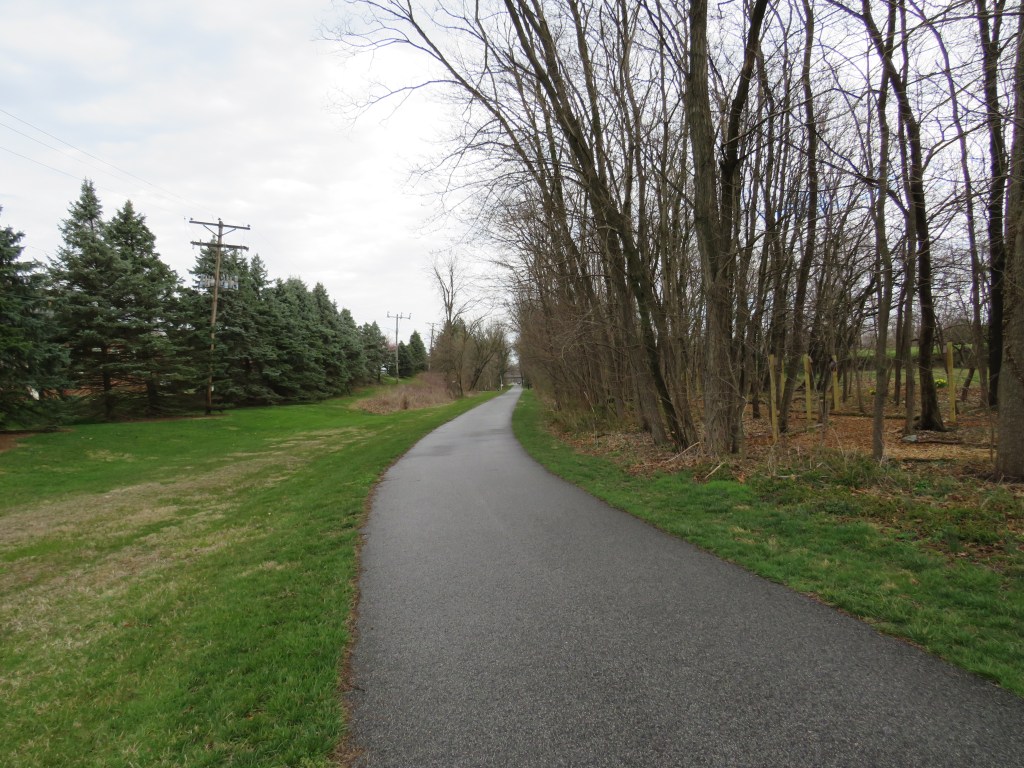
The next time you think about Shippensburg University, think about a university that had its beginning with the railroad. You can hike the Cumberland Valley Rail Trail and get a feel of how the students came to school.
The U.S. state of Virginia is a state that is so rich in history as well as natural areas. It has famous cities like Richmond, Williamsburg, Norfolk, Alexandria, and Charlottesville. It is the state that gave birth of more U.S. Presidents that any other state. This includes George Washington, the first President of the United States of America and is called the Father of the Country and Thomas Jefferson, the man that wrote the Declaration of Independence. The city of Charlottesville, famous for being the home of the University of Virginia, is also the home of Monticello, the famous home of Thomas Jefferson and the only home of a U.S. President that is a UNESCO Heritage Site, and Highland, the home of James Monroe. With all of these historic sites, there are historic sites that are overlooked. One of those places is east-northeast of Charlottesville.
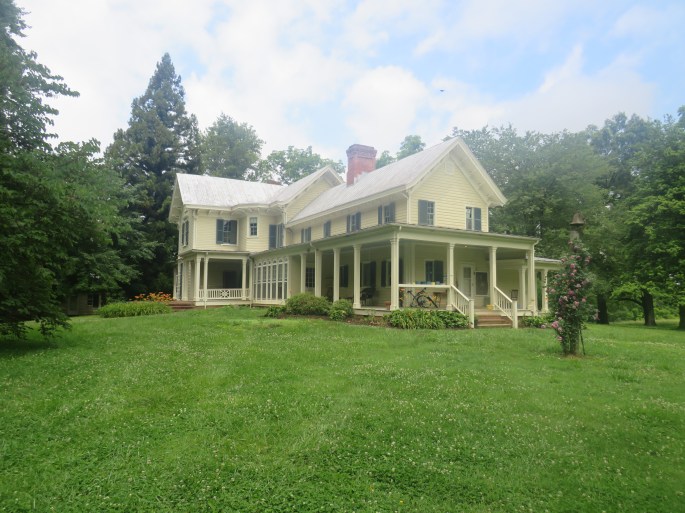
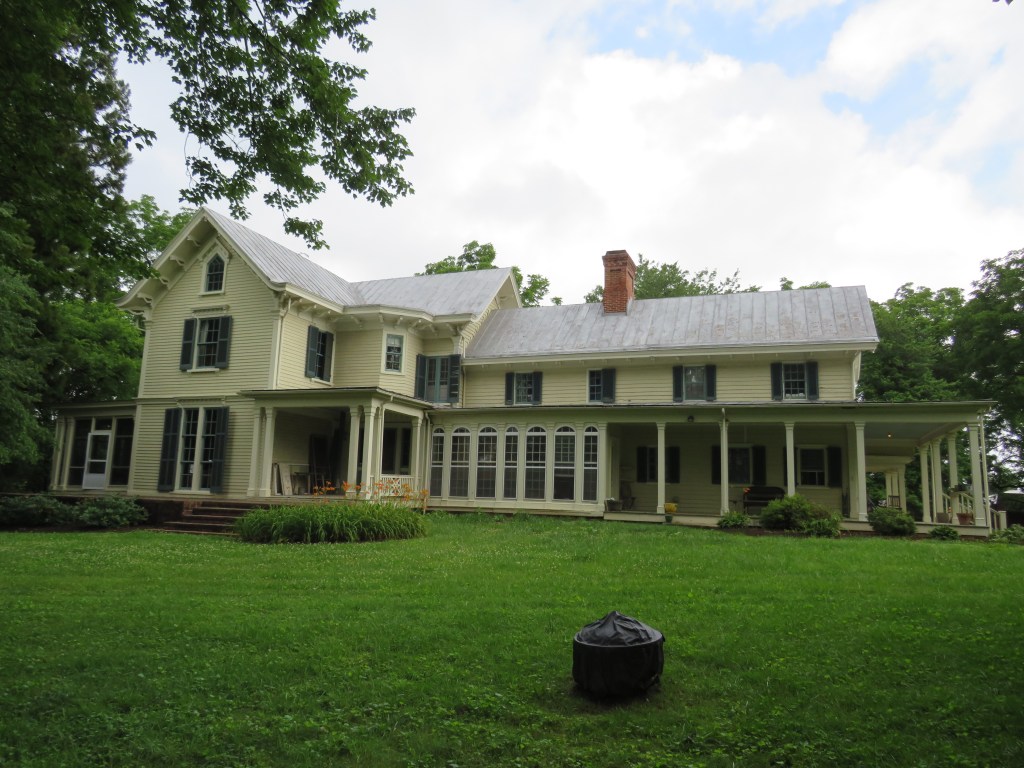
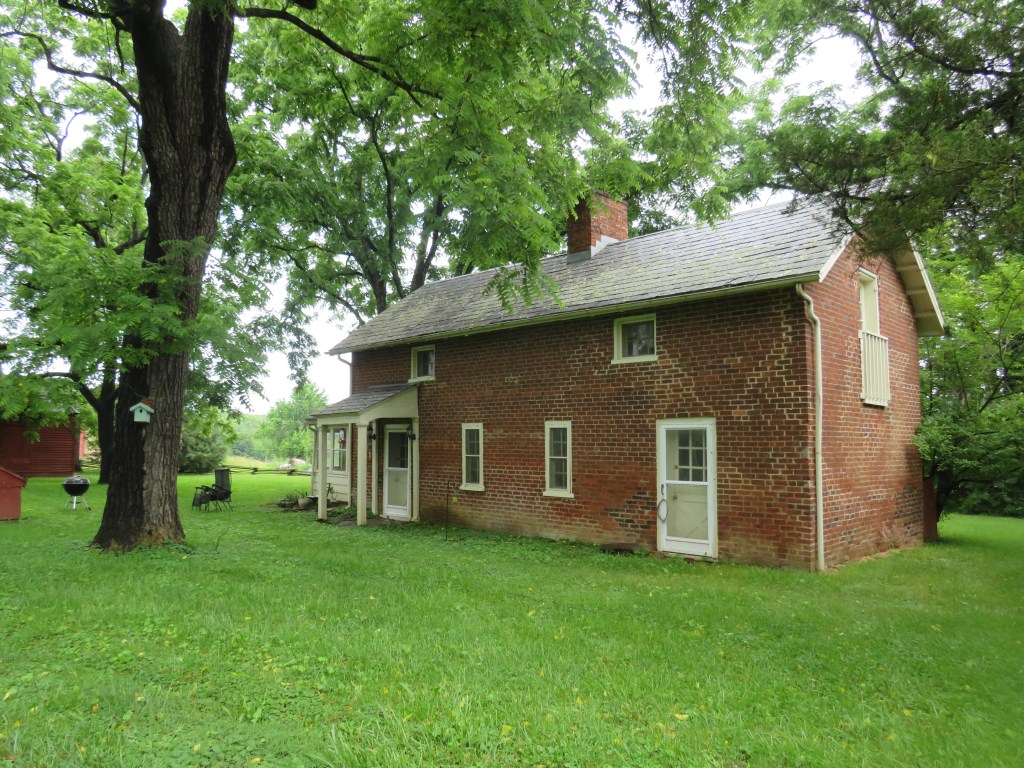
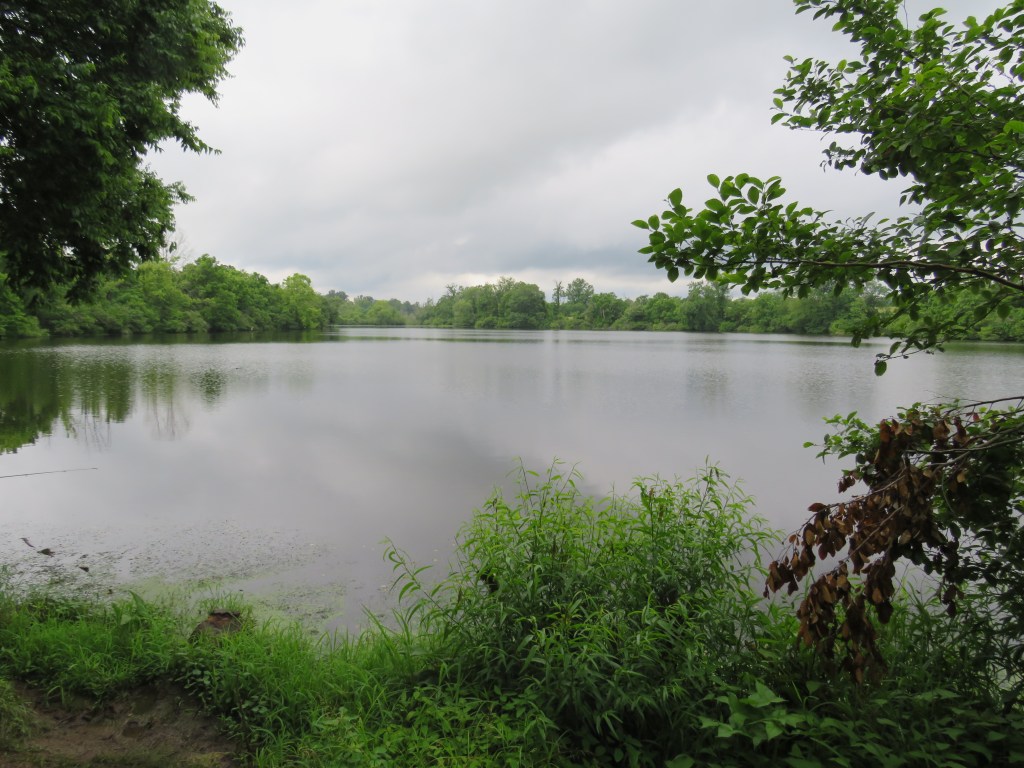
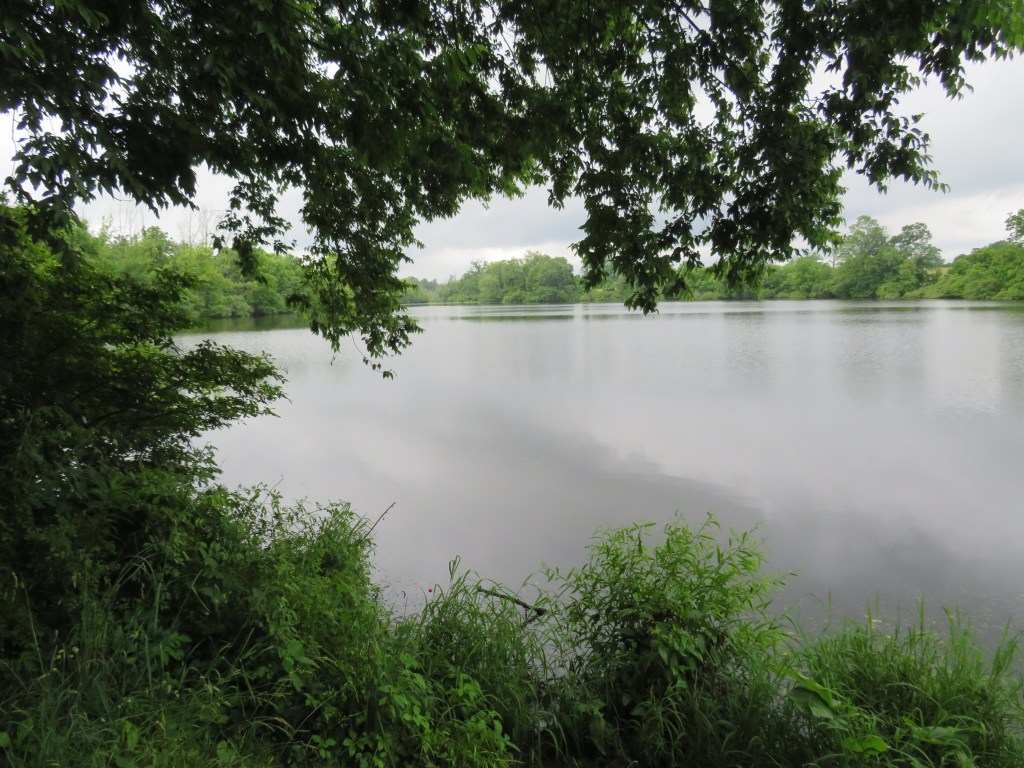
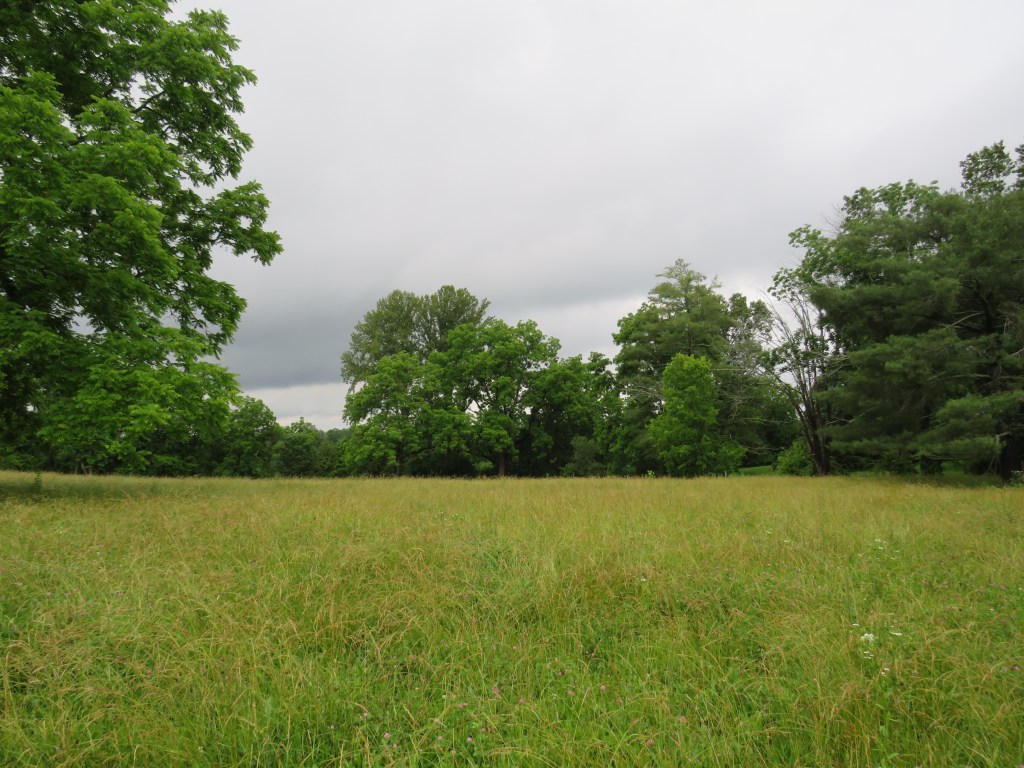
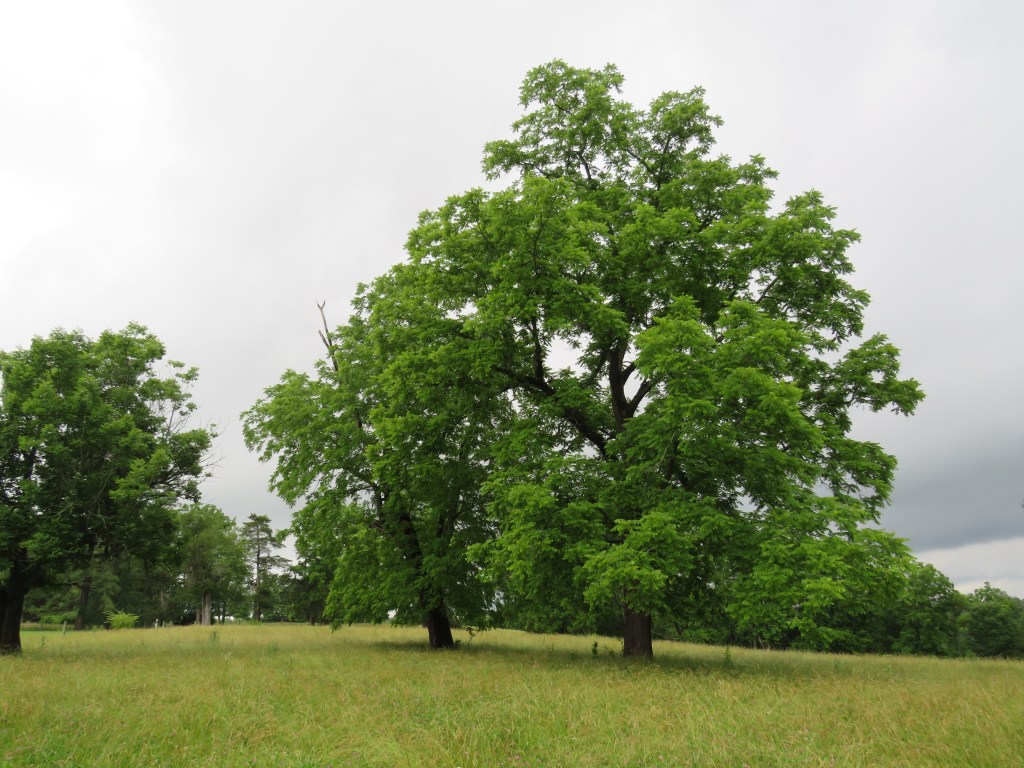
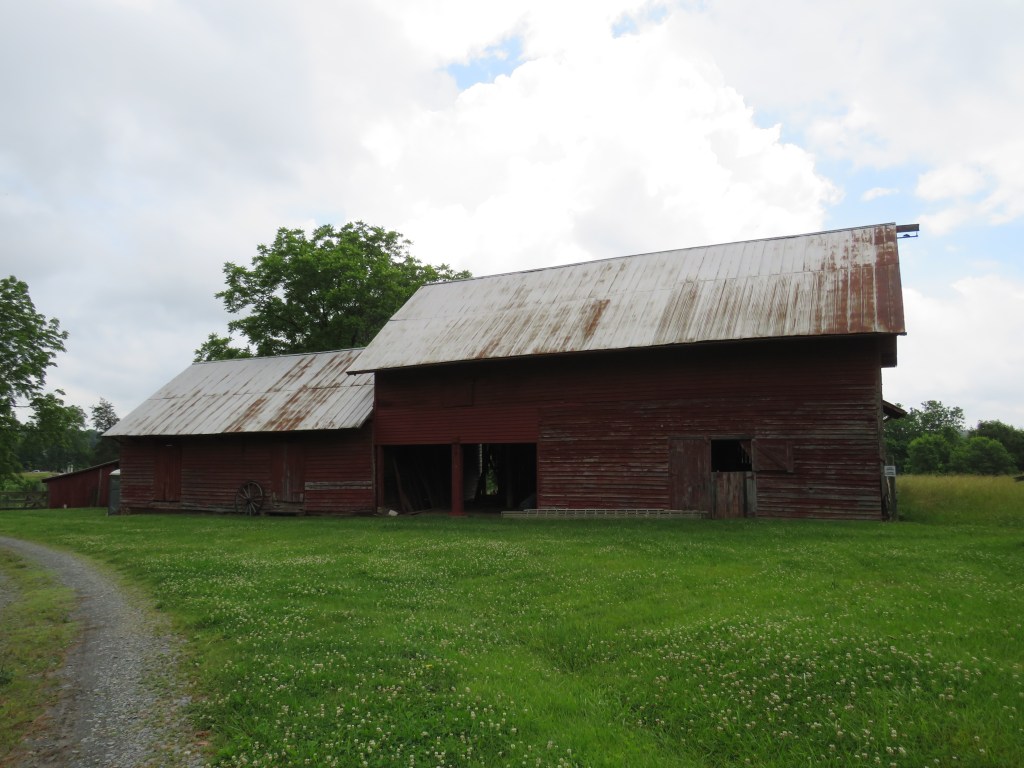
Welcome to Bracketts Farm. What is Bracketts Farm? Well, it is a farm. It is a historic farm that is also a working farm that covers 500 acres featuring a farmhouse and slave quarters as well as barns. (The farmhouse and slave quarters are private residences. Please do not trespass.) There is also a pond where you can go fishing. There are hiking trails as well. It is located in the Green Springs Historic District protecting the area from being condos and single family homes. Even though the structures are not open to the public, the farm is. As you walk around, you can see a peaceful place that is still working today.
Some of you are saying, “Wow! This is nice. It is great that this historic place has been preserved. There is a problem. What is the problem? There is no railroad here. Therefore, there will not be any history of me visiting this place.”
So why visit Bracketts Farm? The farm has no railroad history, nor does it have any history with the railroad, and, as far as it is known, no railroads have ever run through the farm or through the Green Springs Historic District. The nearest railroad is in the town of Trevilians which is east of here. Why visit Bracketts Farm?
Let us begin with the farm itself.
Bracketts Farm was established in 1790. Elisabeth Aiken Nolting was the last owner of the farm before it was sold to the Bracketts Farm Foundation, an all-volunteer foundation, who now owns the farm. As mentioned, it is a working farm that has farm animals (not owned by the foundation) that are grass fed. The public is invited to fish in the pond as well as walk a nature trail and see some of the farmland.
Some of you are saying, “That is very nice, but the farm has no railroad history.”
That is true. Why visit this farm? The answer begins in a nearby town.
Have you ever heard of the small town of Cobham, Virginia? So, you have never heard of this town. You are in the majority as most people have never heard of this town. What was special about the town of Cobham? As you drive through this town, you say to yourself, “There is not much here.”
You cross a small bridge which crosses a railroad track, but it is just a simple railroad track. There is really nothing here… but that was not always the case.
The town gets its name from an estate called Cobham Park which is located in the town that gets its name of a village in England, United Kingdom of the same. (The village is called Hanson today. The Cobham Park Estate is not open to the public.) This town, which looks as if it has no history, had one of the earliest train stations on the railroad line when the Louisa Railroad reached the town. The line was later taken over by the Chesapeake and Ohio Railway. The Chesapeake and Ohio Railway built a train station. Why? The town had a siding track. There was also the Piedmont Female Academy which made much use of the station. The train station was replaced by another train station in 1905. Today, the post office is now a private residence. Only the main railroad line remains and is owned by Chessie Seaboard Transportation. (We simply call it CSX.)
Some of you are saying, “It looks like Cobham had the fate of many small towns in the United States of America. The train station is gone forever. However, this has nothing to do with Bracketts Farm.”
Ladies and gentlemen, this is where Bracketts Farm comes to play.
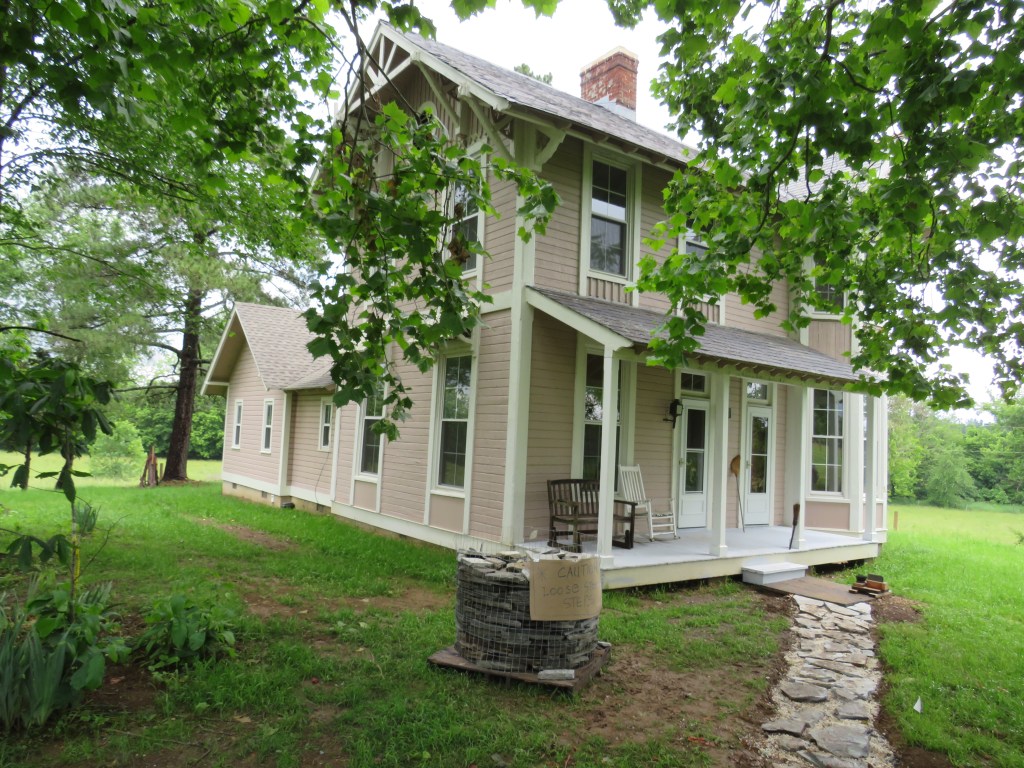
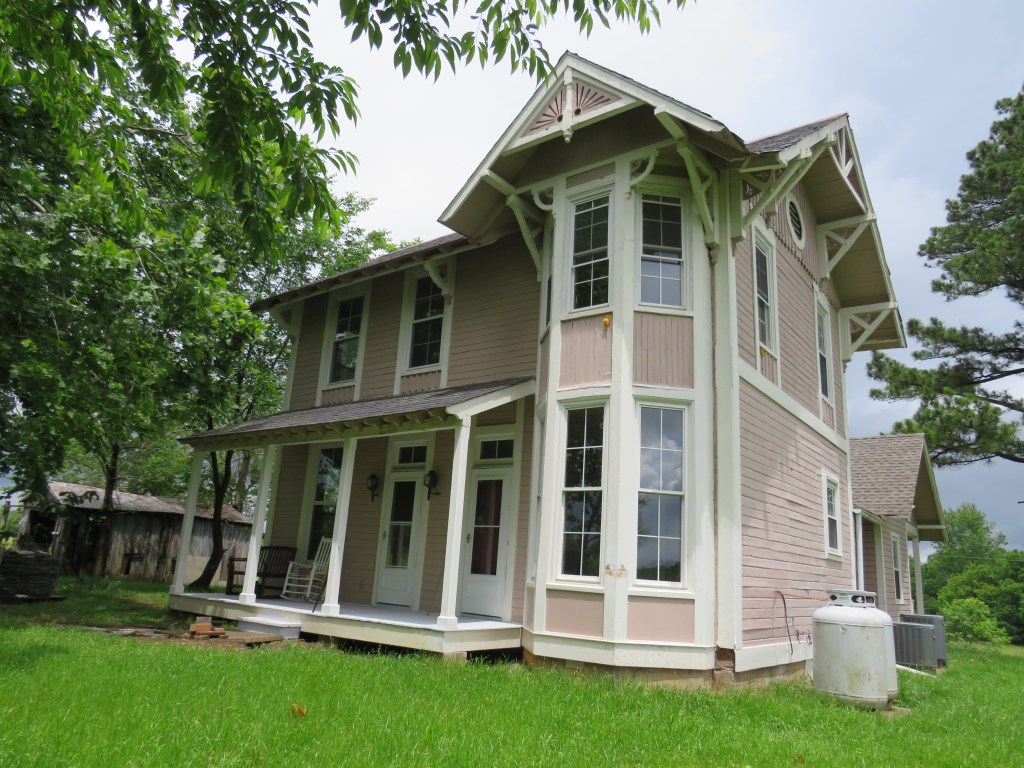
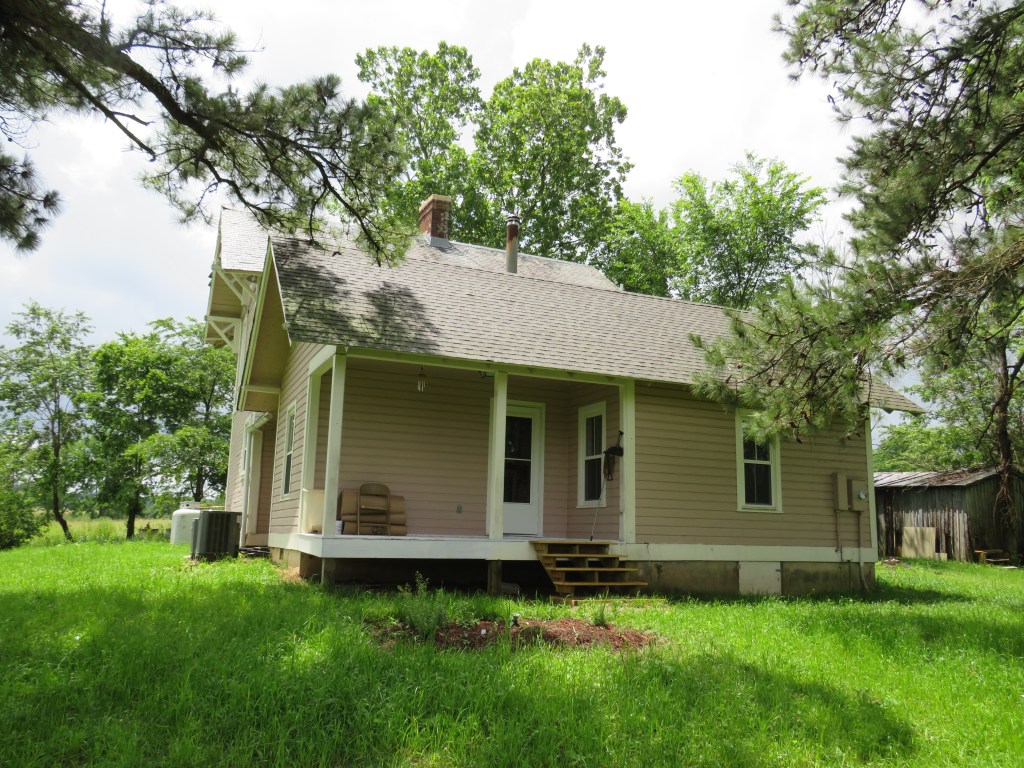
When train stations are replaced, the old train station gets demolished. As for Cobham, Virginia, the train station was spared. It was taken apart. It was then taken to Bracketts Farm and reassembled.
Some of you are saying, “It was reassembled, and it continues to rot and rot and rot.”
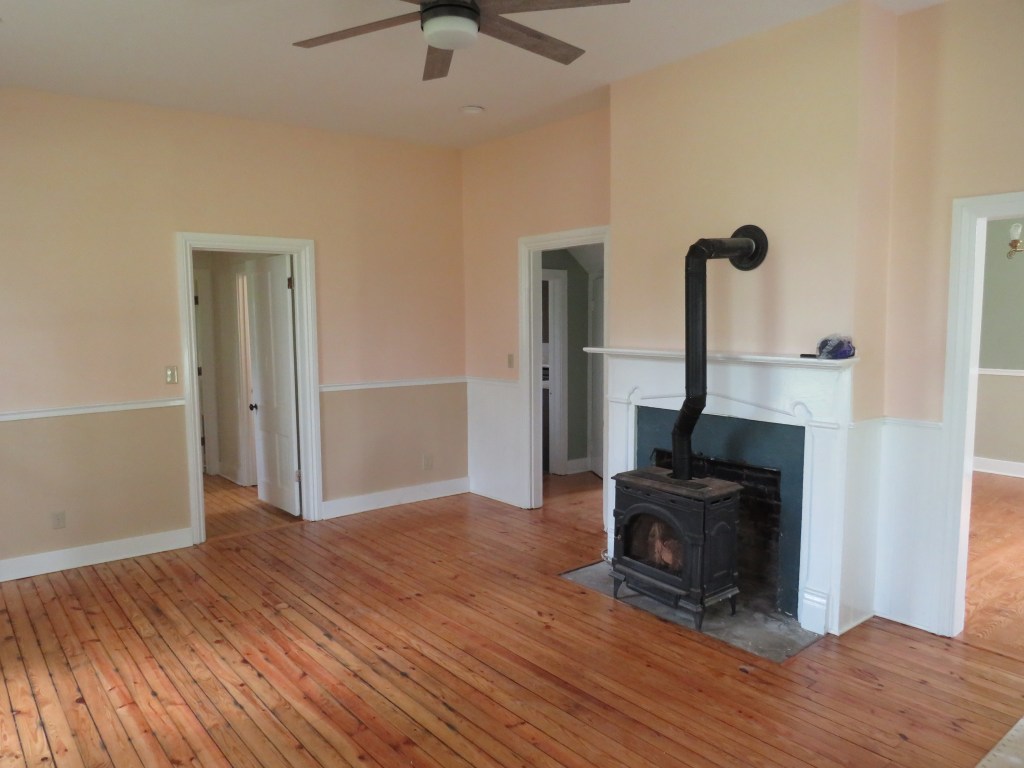
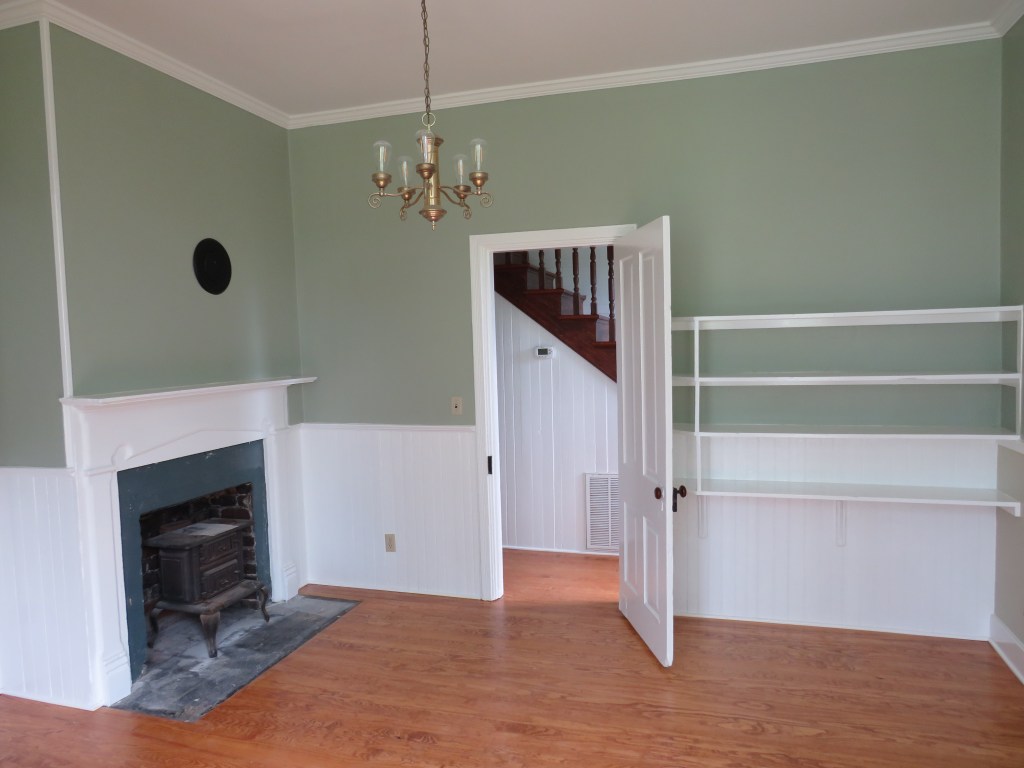
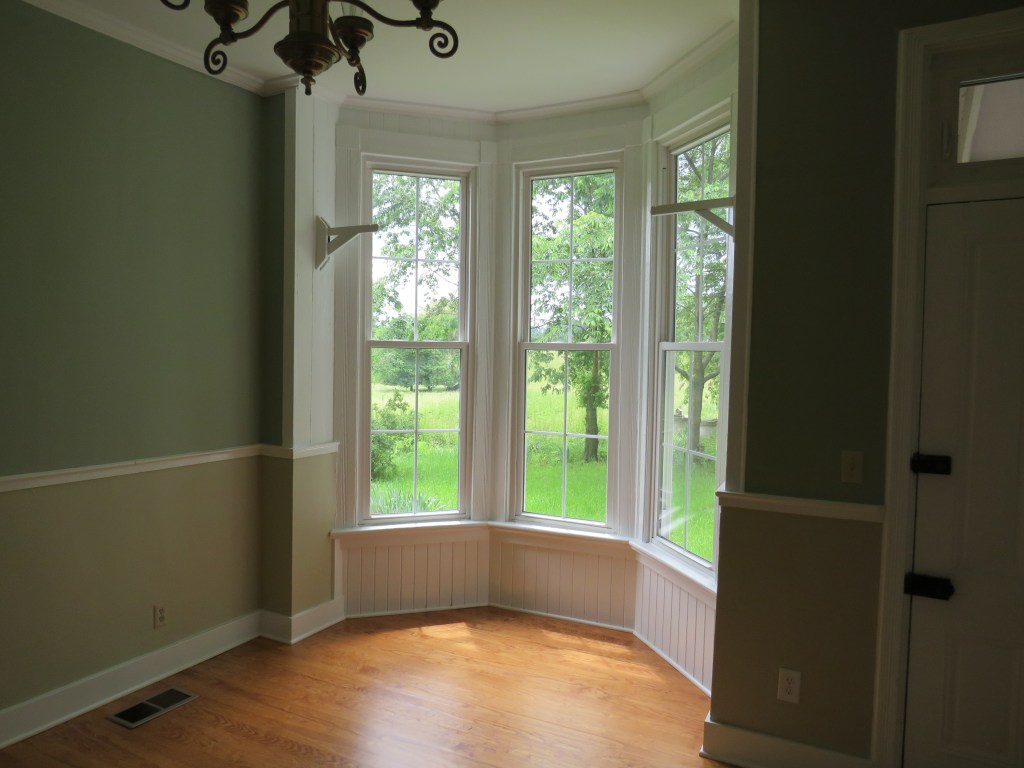
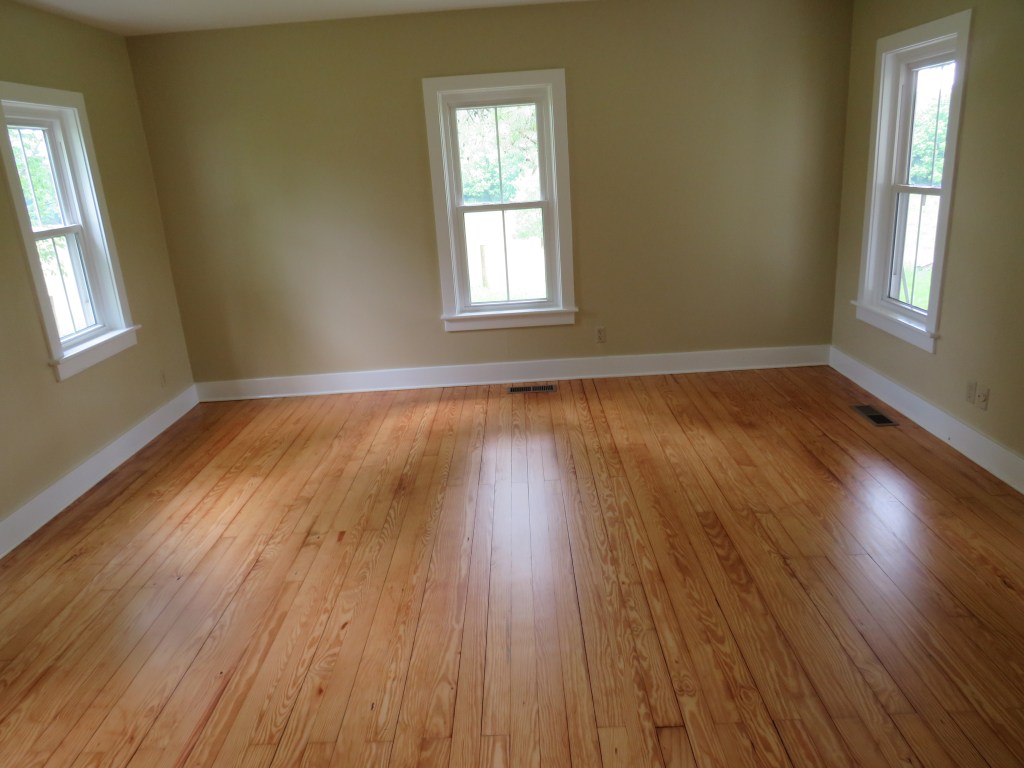
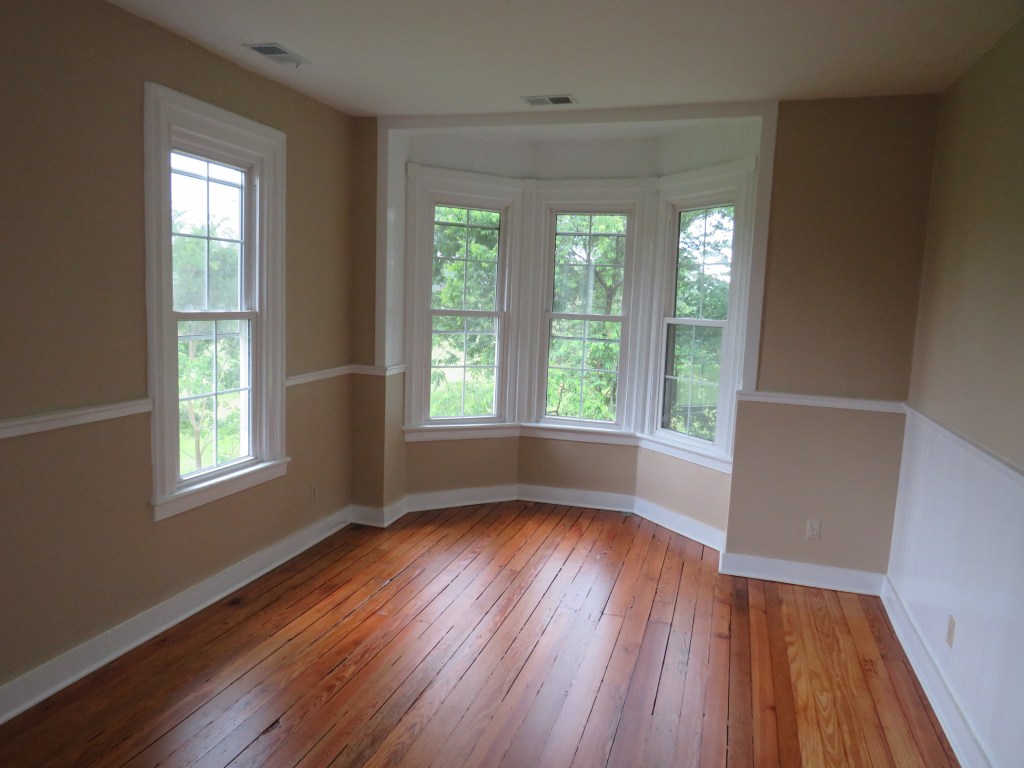
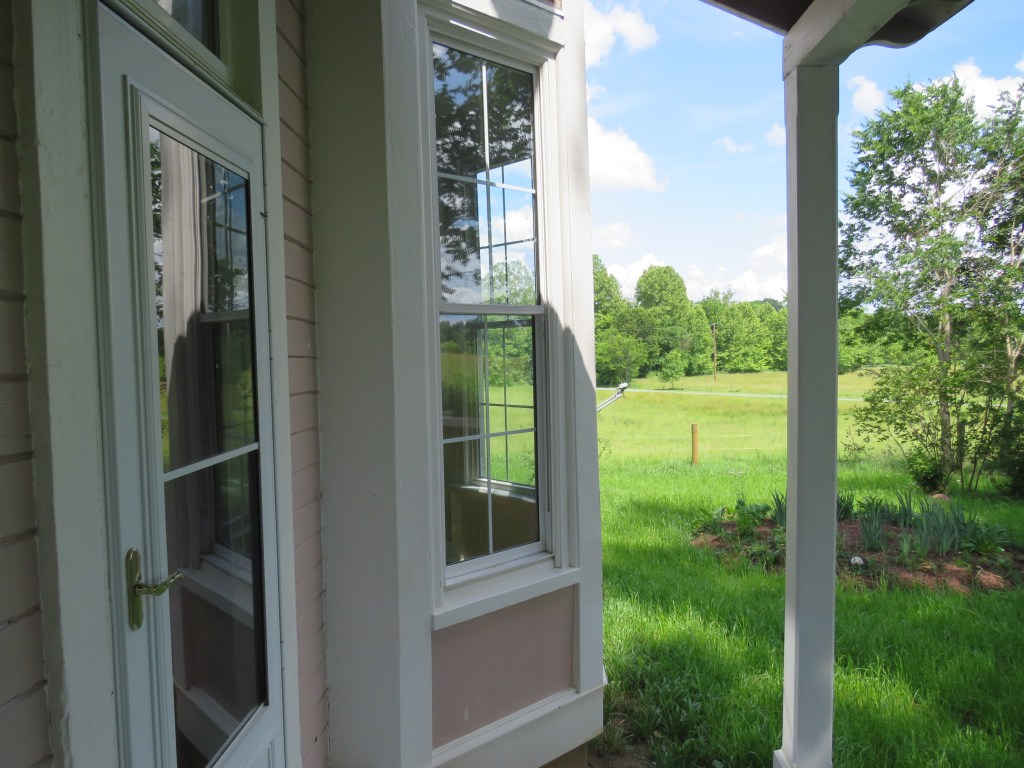
Ladies and gentlemen, if you desire to see rotting train stations, then you will want to see the old Cobham Train Station at Bracketts Farm. The Old Cobham Train Station has been fully restored. The ticket office, the living room, and the upstairs family bedrooms are fully restored. An addition was built on the rear of the station opposite of where the tracks were located to include an extra room, a second bathroom, a full kitchen and eating area. The station can be rented out for events, or you can spend a night here. The one thing that is missing is the railroad line. Sadly, you cannot see passing trains during your stay.
Now you have a reason to visit Bracketts Farm. Think of Bracketts Farm as a working farm that continues to feed the people in the United States of America and preserve a piece of railroad history.
Bracketts Farm is part of the Green Springs Historic District in Louisa, Virginia which is owned by the National Park Service. Bracketts Farm, although on National Park Service property, is run by volunteers from the Bracketts Farm Foundation who also preserves the old train station. The farm is located off of Virginia Route 22 east of U.S. Route 15 and is part of the Hallowed Ground Driving Tour. (Hallowed Ground is a region the begins in Gettysburg, Pennsylvania and ends in Charlottesville, Virginia that has more historic sites that anywhere else in the United States of America, mainly along U.S. Routes 15 and 29). You can learn more about Bracketts Farm, the Bracketts Farm Foundation, read more into the history of the farm, and see how you can visit at https://www.bracketts.org/.
When you hear about Bracketts Farm, do not think about another farm. Think about a farm that is preserving agricultural history and railroad history.
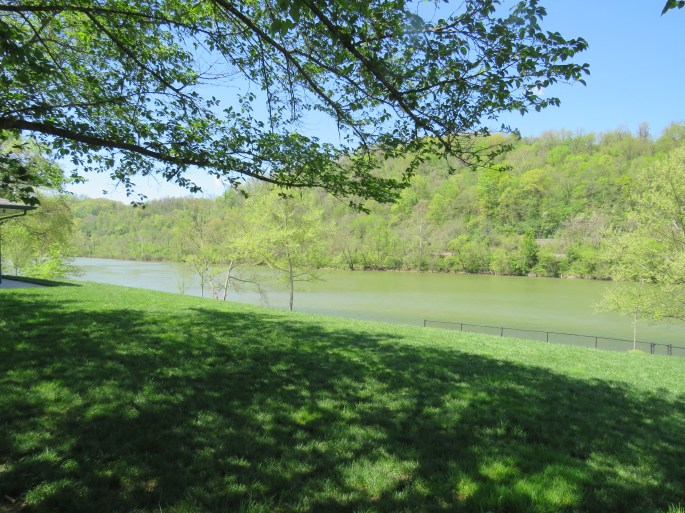
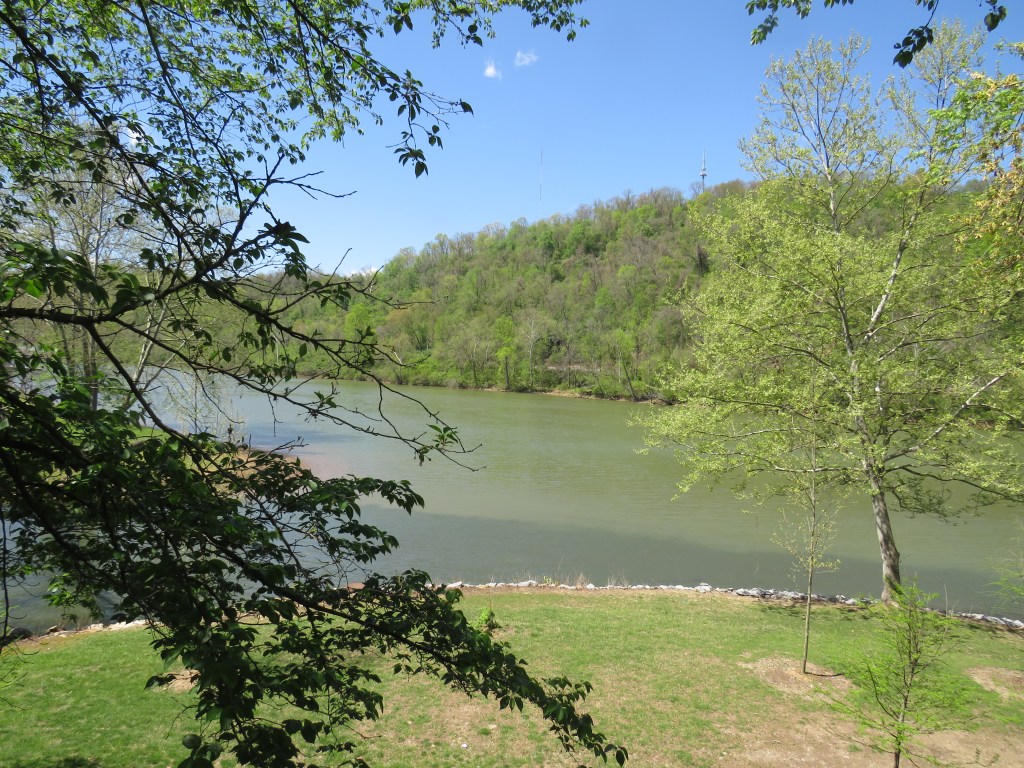
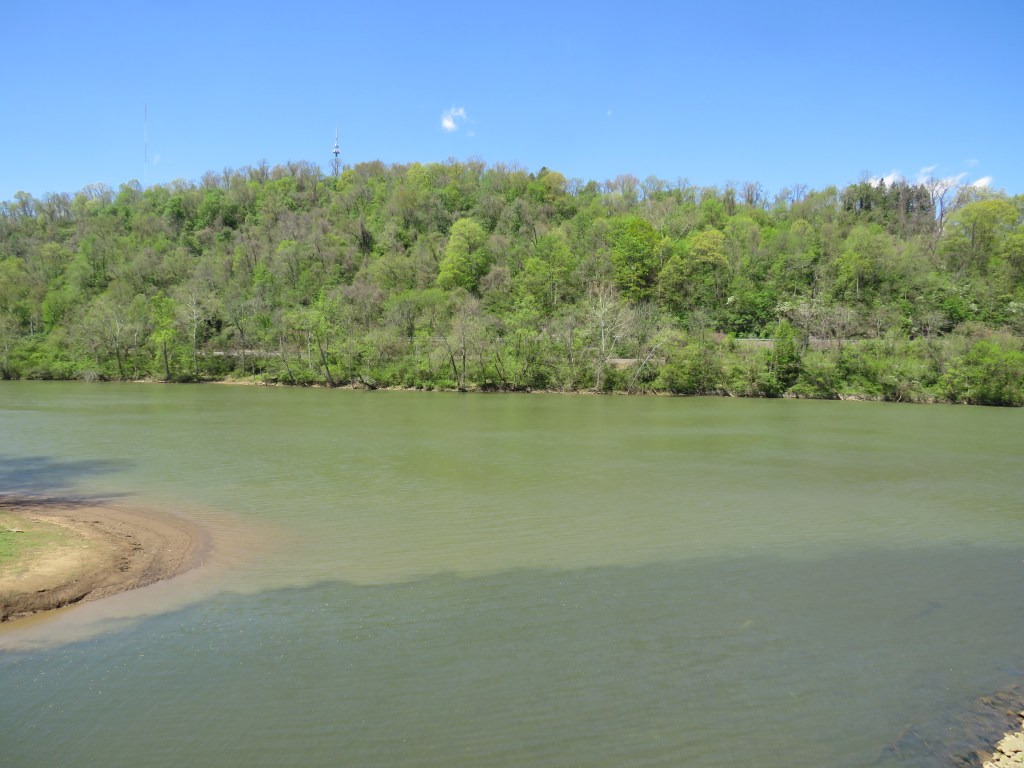
Who is Hazel Ruby McQuain? She is not famous to most people. Although she was born in the town of Coshocton in the U.S. state of Ohio, she made great contributions in the city of Morgantown in the U.S. state of West Virginia. Morgantown is famously known as the home of West Virginia University. Hazel Ruby McQuain is famous for establishing the Hazel Ruby McQuain Charitable Trust which made a donation to build the John Wesley Ruby Memorial Hospital which is located on the campus of West Virginia University. (The hospital is named after her husband.) She made other contributions throughout Morgantown. For this reason, the Hazel Ruby McQuain Park was created in her honor. Located on the Monongahela River, it features an amphitheater where concerts are played, a kayak launch for those who wish to paddle on the river, a hiking and biking trail, and a picnic area. The view of this park is a real contribution for a woman who did so much for this city.
Some of you are saying, “You know, this is very nice. It is great to honor a great woman who did great things for the city of Morgantown. Go Mountaineers! However, there are numerous problems here. The first problem is that Hazel Ruby McQuain has made no contributions nor does she have any connections to the railroad. The second problem is that Morgantown, West Virginia is not a railroad town nor is there a railroad passing through here. The third problem is that this park has nothing to do with the railroad. Therefore, I will not be contributing a visit to this town or to this park.”
Why visit the Hazel Ruby McQuain Park? She has no connection with the railroad. Why visit the park?
It is true that Morgantown, West Virginia, being famous for the University of West Virginia has no real railroad history. Other than a light rail system, there is no railroad here. However, that was not always the case.
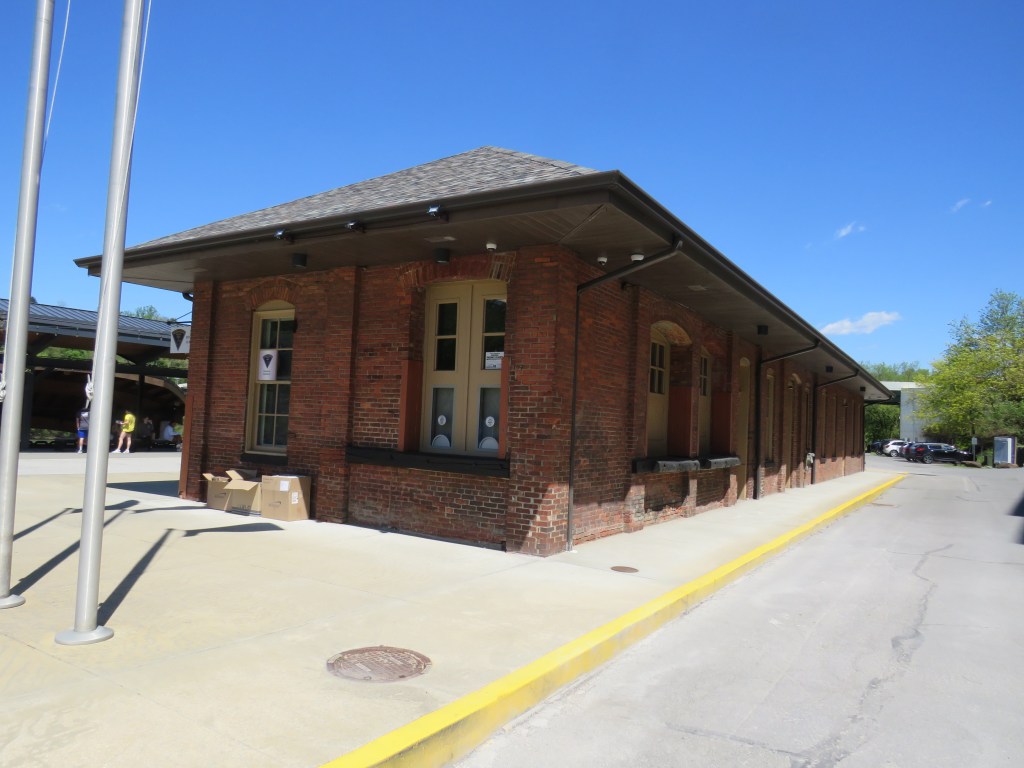
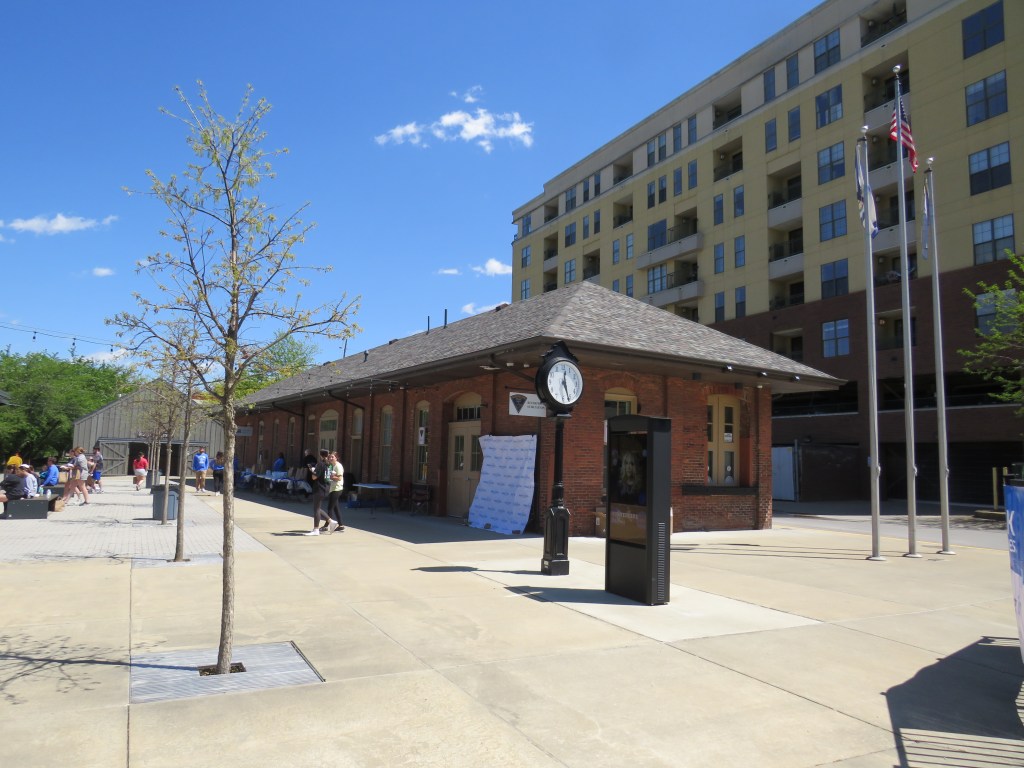
As you enter the Hazel Ruby McQuain Park, the first thing you see is an old train station. Why is there an old train station here? It is because the Caperton Trail passes through the park.
Some of you are saying, “That is great. It has the old train station, but what is special about the Caperton Trail.”
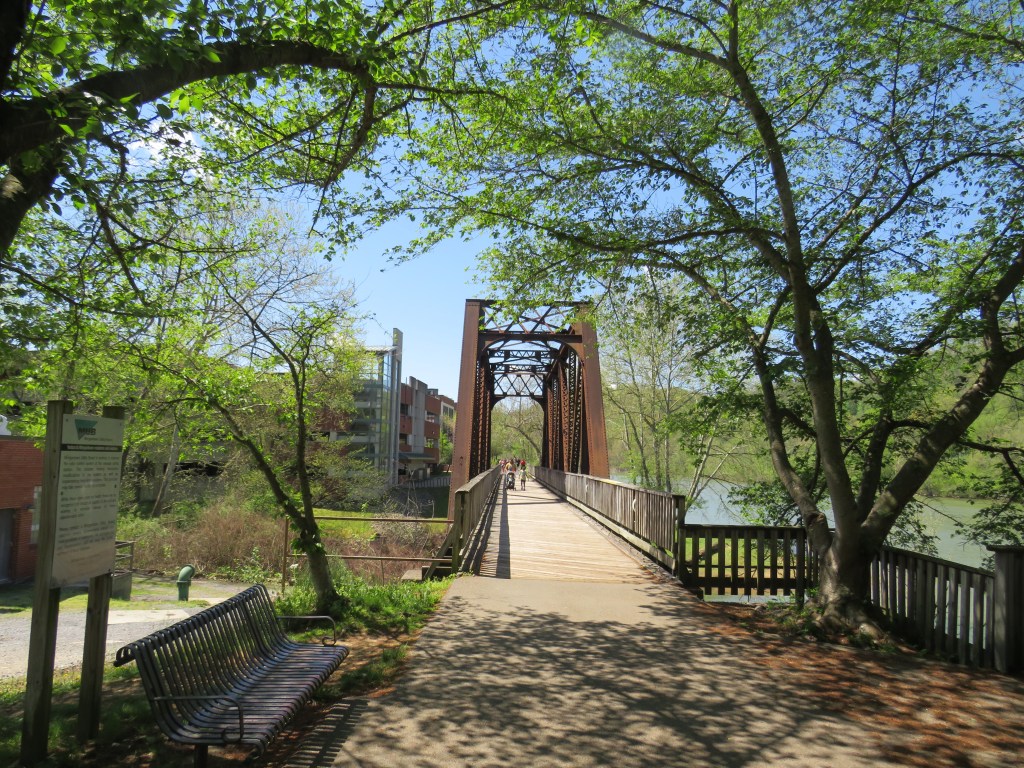
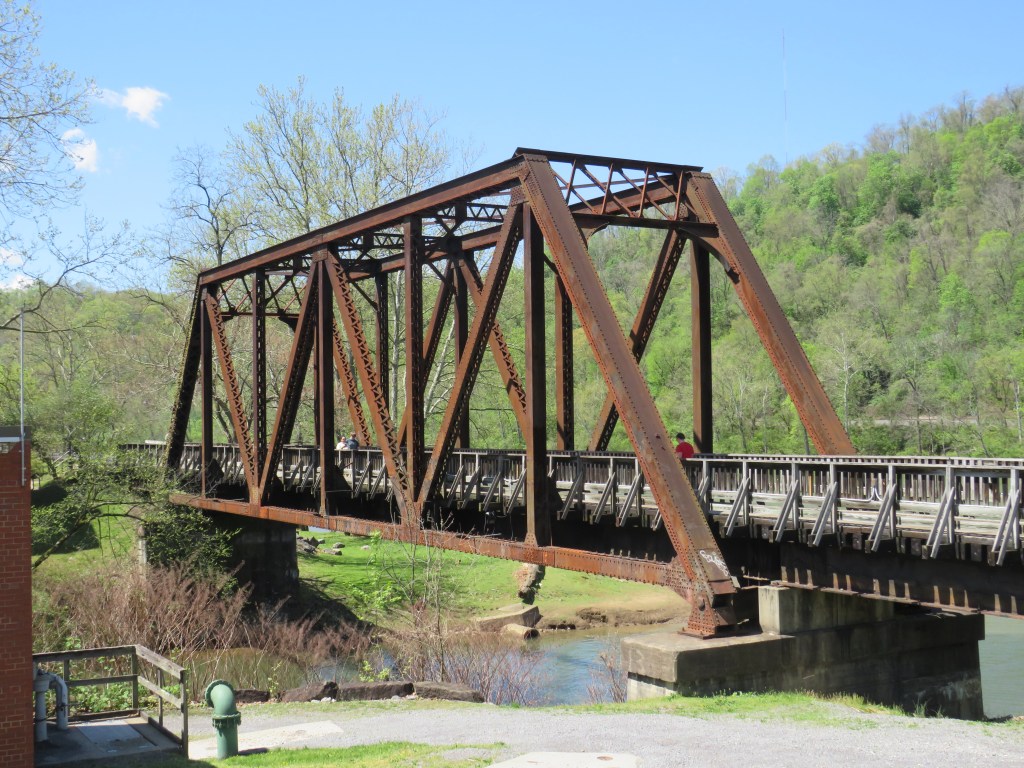
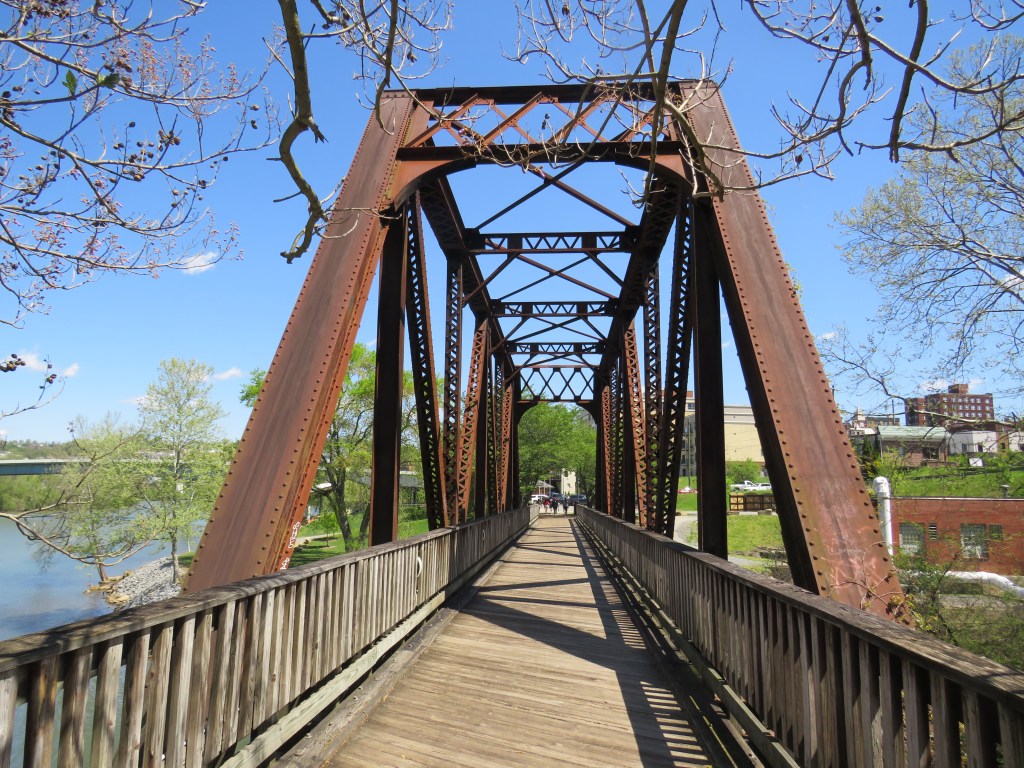
On the south side of the park is an old railroad bridge. Why is there an old train station and old railroad bridge? The Caperton Trail is a rail trail. The Deckers Creek Trail, another rail trail, begins at the old railroad bridge and continues along Deckers Creek.
As you can see, you have a reason to visit Hazel Ruby Park. Along with the concerts, you have a place where the railroad once ran. The old train station can be rented for events as well.
The Hazel Ruby Park is located at 185 Garrett Street in Morgantown, West Virginia. It is just off of U.S. Routes 19 and 119 and a short drive from Interstates 68 and 79. Parking is on site, or you can hike or bike the trails to the park.
Why visit Hazel Ruby McQuain Park? She has no connection to the railroad, but the park keeps the railroad history of Morgantown, West Virginia alive.
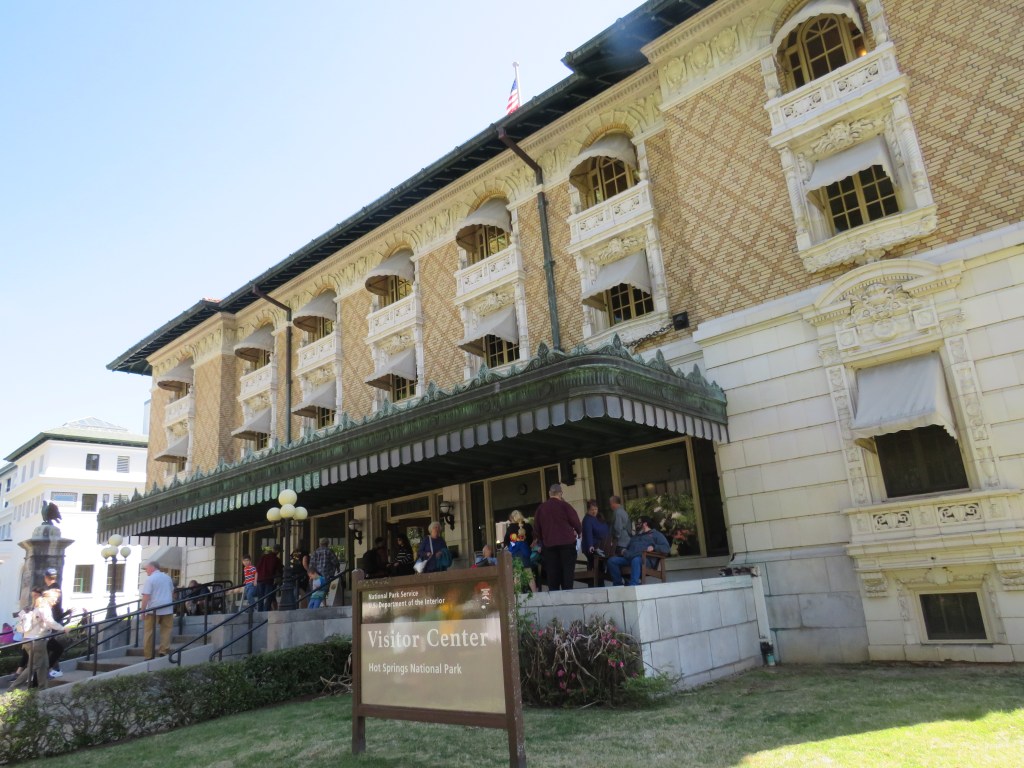
The U.S. state of Arkansas is nicknamed the ‘Natural State’. If you have driven through the state, you can see why it gets that name. There are no major cities in the state although the metropolis of Memphis in the U.S. state of Tennessee has suburbs in the eastern part of the state. Speaking of Memphis, Tennessee, the mighty Mississippi River runs on the eastern border of the state. As the ‘Natural State’, it is interesting that the state capital is Little Rock. It is also the state’s largest city. The state is also known for its hot springs. One of the places where you will find some of the state’s hot springs is in the city of Hot Springs.
Some of you are saying, “Well, duh! It is called Hot Springs because there are hot springs there.”
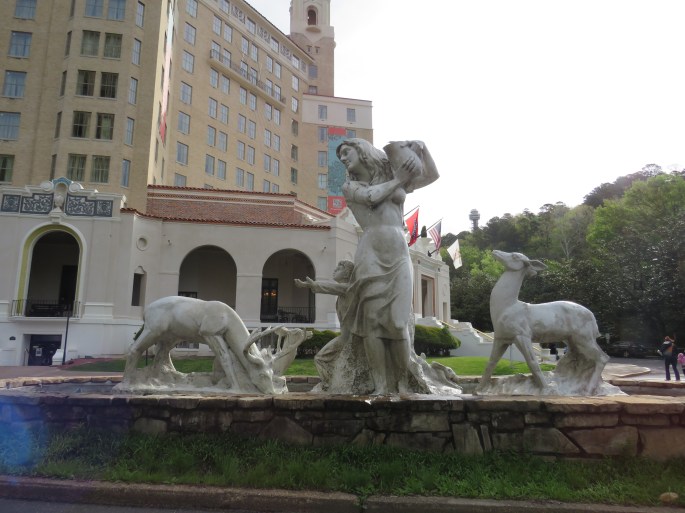
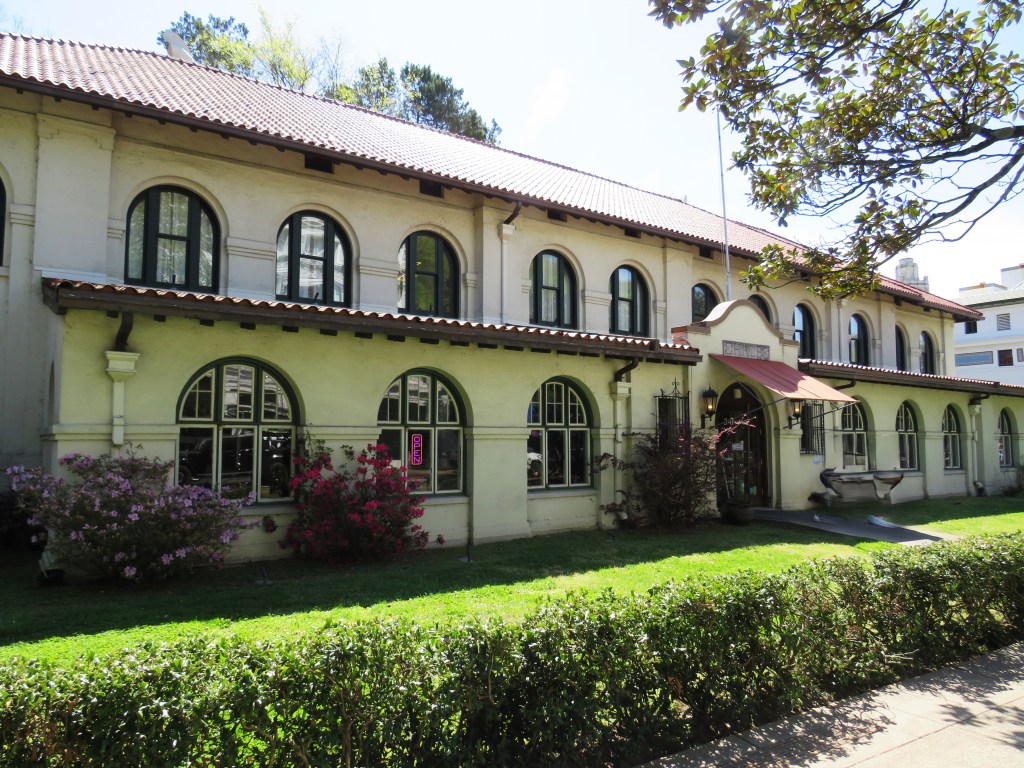
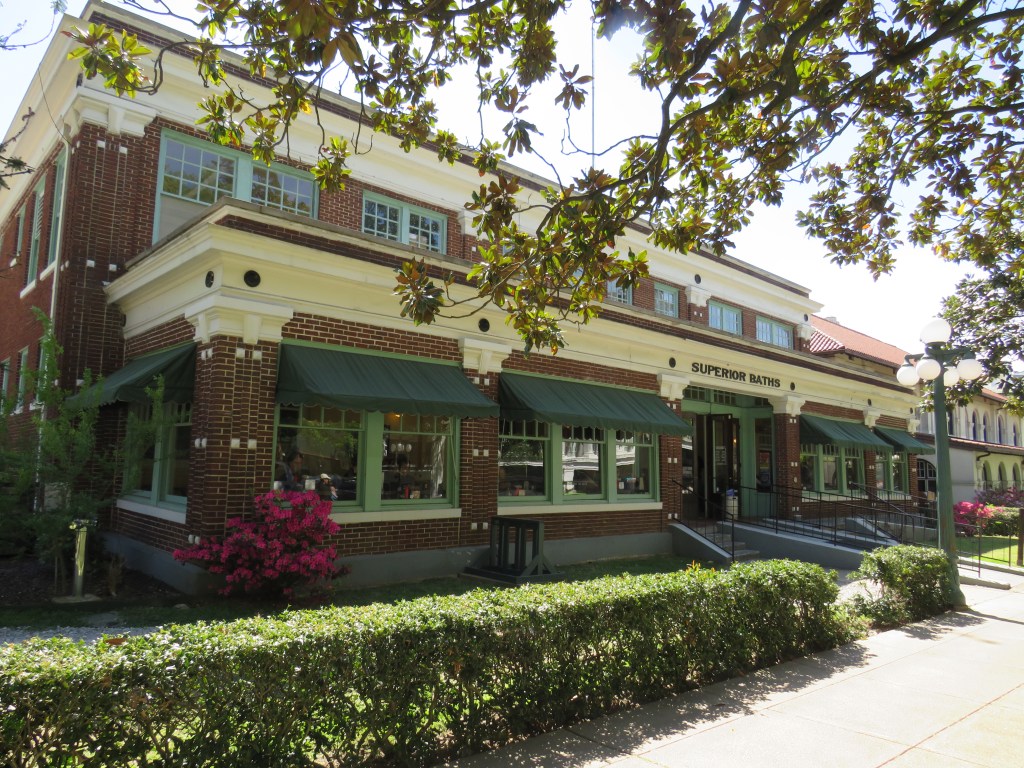
Yes. That is why it is called Hot Springs. The city was a city of spas. That is hot spring spas. Many of the spa structures remain in a section of the downtown area known as Bathhouse Row, but not all of them have working hot springs. Yes. Hot Springs, Arkansas was a place of hot springs, and Hot Springs National Park was established here. Before they went to the U.S. states of Florida and Arizona, baseball teams did their spring training here. Yes. Hot Springs is the birthplace of baseball spring training. Many famous baseball players to include Herman ‘Babe’ Ruth, Cy Young, Hank Aaron, Jackie Robinson, and Stan Musial, just to name a few. Many United States Presidents visited here. Arkansas’ own William Clinton lived here and graduated from high school here. This was a resort for celebrities, but it was also a haven for gangsters. One of the most famous gangsters, Al Capone, had a personal room at the Arlington Hotel. There is so much to Hot Springs, Arkansas. If you are ever in the central region of Arkansas, it is worth your time to visit.
Some of you are saying, “This is nice. I have heard of Hot Springs, Arkansas. I knew about the springs, but I never knew that it was the birthplace of Spring Training Baseball or a gangster haven. There is one very big problem. This city has no railroad history nor does it have anything to do with the railroad. Therefore, I will not be feeling the hot springs of this place.”
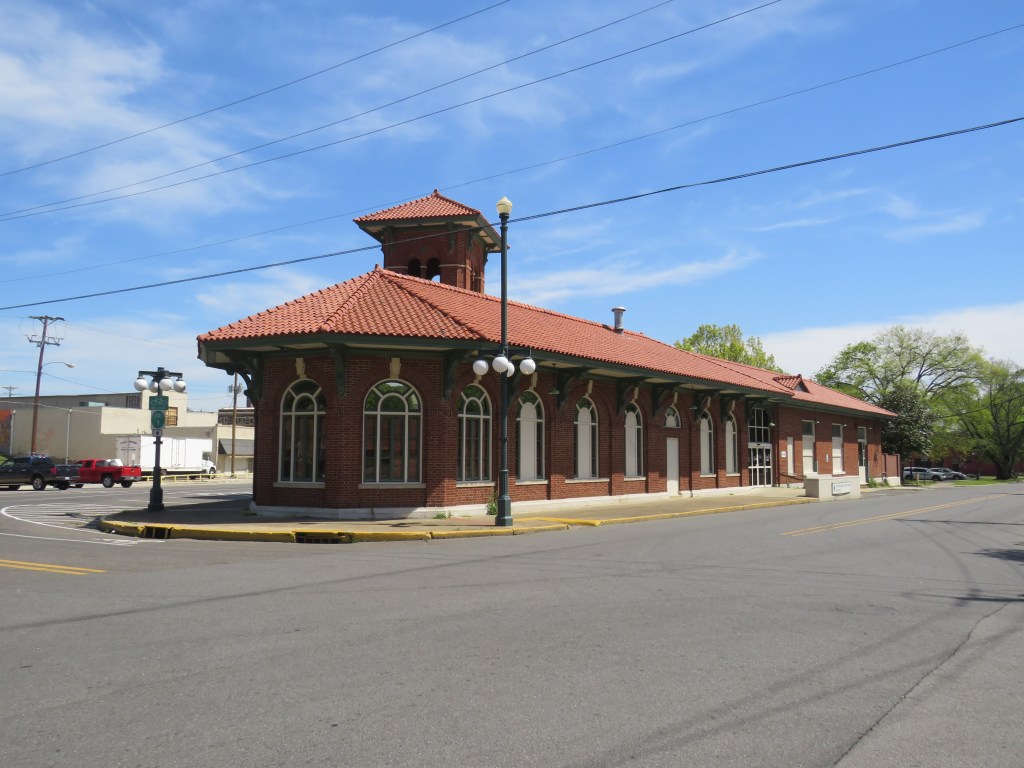
The city of Hot Springs, Arkansas has never been a railroad city. As you walk and drive around, you see no signs of a railroad ever being here. Then you come to the Greyhound and Transit Bus Station at the intersection of Broadway Street, Market Street, and Broadway Terrace. It appears to look like an old train station. Well, that is because it was an old train station. This train station was a major contributor to the growth of Hot Springs, Arkansas. It was built by the Missouri Pacific Railroad in 1917. It was a spur line that connected to the main railroad line in the town of Malvern, Arkansas.
The railroad line began as the Hot Spring Railroad in 1876. It was a narrow gauge railroad that was built by Joseph Reynolds who built the railroad line so that he could ride the train from his home in Chicago in the U.S. state of Illinois to the spas to help cure an illness he has. The railroad line was converted into a standard gauge railroad and was eventually taken over by the Missouri Pacific Railroad. Passenger service was discontinued to the town with the last train leaving in 1964, and the original railroad line is now a rail trail. Some of the old rails remain. The main railroad line in Malvern remains in service and is the closest Amtrak stop. The current train station in on the National Register of Historic Places.
The next time you think about Hot Springs, Arkansas, you can think about the hot springs, but it was once a place where the railroad once came to town.
The U.S. state of Virginia is a state loaded with historic cities and towns and historic sites. From Alexandria to Williamsburg and Jamestown to Mount Vernon to Montpelier and Monticello to the historic battlefields of Richmond and Manassas. It is one of the most visited of the United States of America. Many people do not think about the state being a place of hot springs. In the western region of the state is a town called Hot Springs. Although the local Native Americas originally discovered the springs, it was later found by three men who were surveying the land during the French and Indian War. They later bought the land and moved their families here. They built and wooden hotel here in 1766. Today, the Omni Homestead Resort and Spa continues to welcome visitor from around the world. From a small homestead hotel to a massive resort with the spring and golf courses that produced golfer Samuel Snead, the Omni Homestead Resort and Spa is an amazing place to relax and enjoy.
Some of you are saying, “Wow! This place is amazing. This is one incredible place. It sure beats a night at your normal hotel. The hot springs must be very relaxing. There is a very big problem. What is the big problem? There is no railroad here. Therefore, you will not see me resorting to this place.”
So, you refuse to come here because there is no railroad here. Why would someone who loves railroad want to visit a place where there is no railroad?
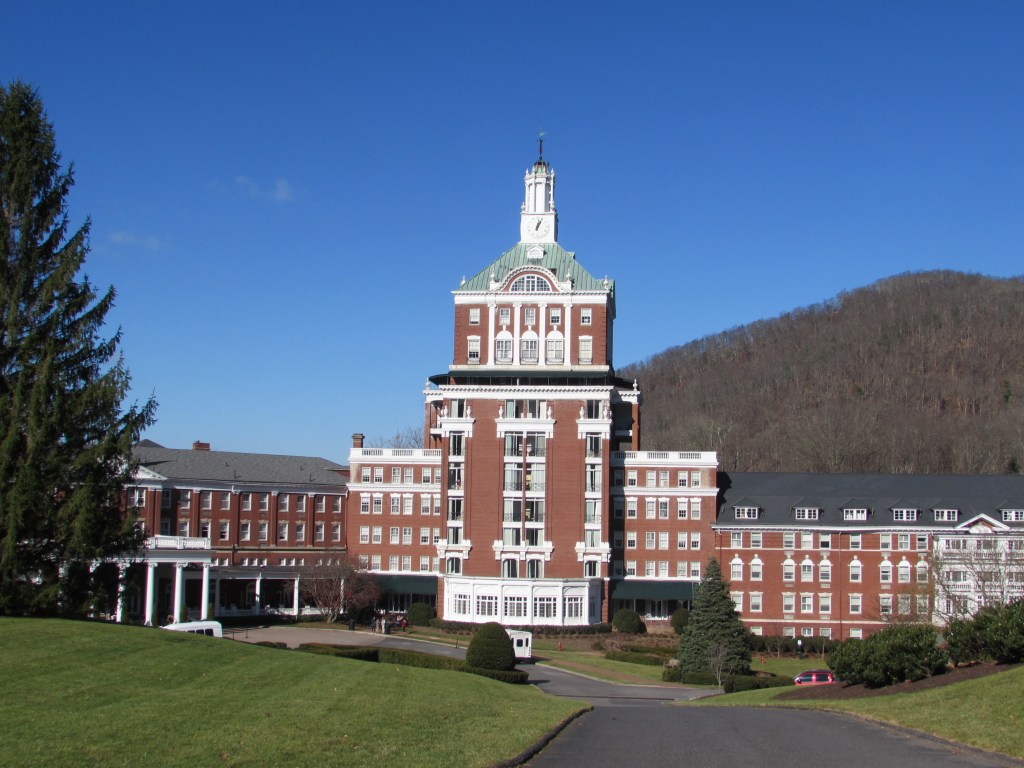
As you arrive at the Omni Homestead Resort and Spa, you will see a brick structure with its iconic brick tower. You will see a great view of the surrounding mountains and golf courses. What you will not see is a railroad. You will not see a railroad bed or even a caboose. The nearest railroad line to the resort is in the town of Covington, which is nineteen miles south of here, and the nearest Amtrak station is in the town of Clifton Forge which is thirty miles away and in White Sulphur Springs in the U.S. state of West Virginia. So why would you want to visit here?
A resort that was opened in 1766 that is still open today obviously had numerous owners. In 1881, a prominent lawyer named M. E. Ingalls came to the town of Hot Springs from Cincinnati, Ohio. Why was he here? He was doing research for the Chesapeake and Ohio Railway. The railway was looking to bring a spur railroad line to the resort. Mr. Ingalls and other investors to include a man named J. P. Morgan, bought the resort, and the railroad line was built. The railroad brought many people to the resort. A newer hotel was built. The railroad served the resort until people began using the automobile. The railroad was discontinued, and the tracks were taken up.
Some of you are saying, “The tracks are gone, and there is no signs of the train here.”
Actually, you are wrong. The original train platform remains, and where the terminal tracks are located is now a small field. Much of the old railroad bed is on private property, but the main railroad line where the spur ran from is still in service and is now owned by CSX Transportation. The old train platform can be seen from U.S. Route 220.
As you can see, one of the finest places to relax was once served by the railroad. You can take a tour of the hotel. The tours are free, and you do not have to stay here to take the tour. You are also free to walk the grounds but be warned. You will be tempted to spend a night here.
The Omni Homestead Resort and Spa is owned by Omni Hotels that own hotels and resorts around the world. It is located at 7696 Sam Snead Highway (U.S. Route 220) in Hot Springs, Virginia. You can read more into the history of this resort to include the 1901 fire that burned down the hotel and book a room by going to https://www.omnihotels.com/hotels/homestead-virginia?utm_source=yextlisting&utm_medium=organic.
Come and spend some time at the Omni Homestead Resort and Spa. Enjoy the springs. Enjoy a night in a nice room. Enjoy a great meal at one of their restaurants. Enjoy a place where the Chesapeake and Ohio Railway once brought passengers to.
The U.S. state of West Virginia is a state known for its natural beauty and its mountains. The state has many state parks. One of those state parks is Valley Falls State Park near the city of Fairmont. The park is mainly famous for its waterfalls, but it has many hiking trails as well. A visit to Valley Falls State Park is a place you will cherish.
Some of you are saying, “Wow! This must be a beautiful place. I enjoy seeing waterfalls. There is a big problem. This park has no connection with the railroad. Therefore, this park is not a place I will fall for visiting.”
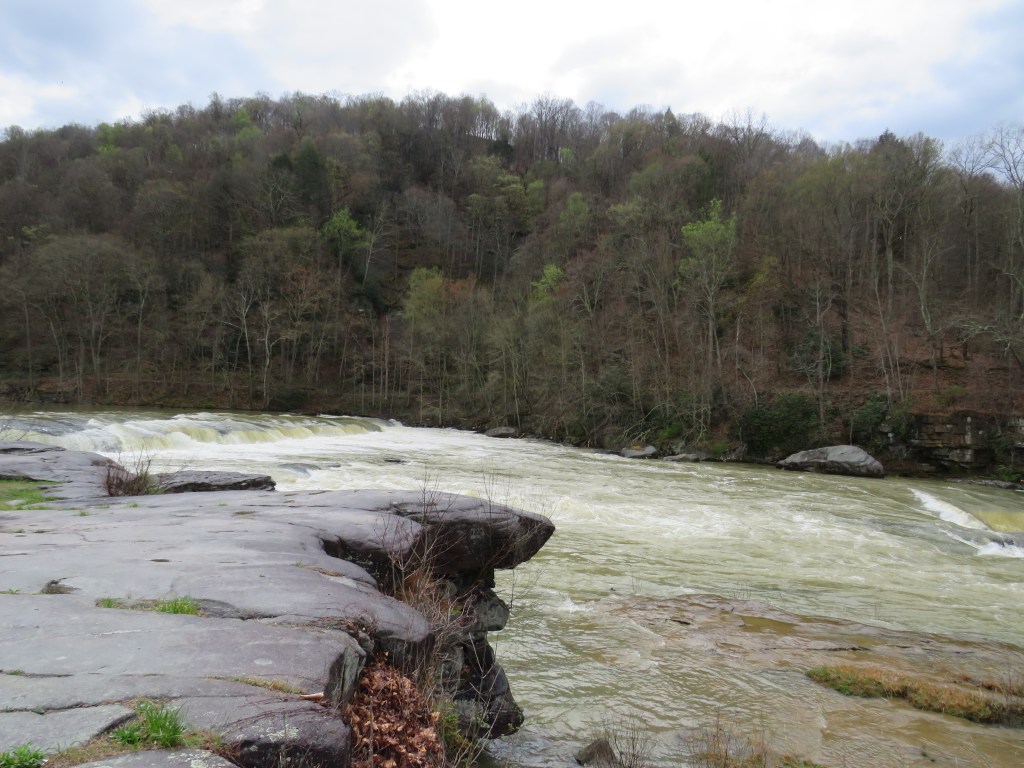
Why visit Valley Falls State Park? It has very beautiful waterfalls. There is beauty surrounding you. Why visit Valley Falls State Park?
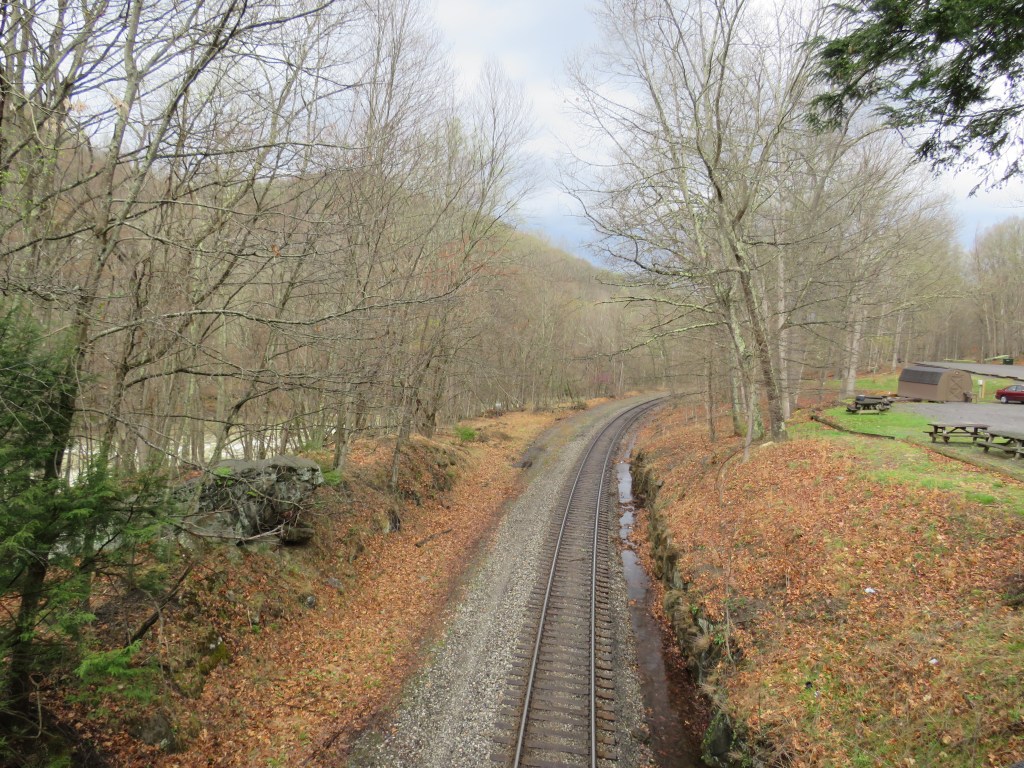
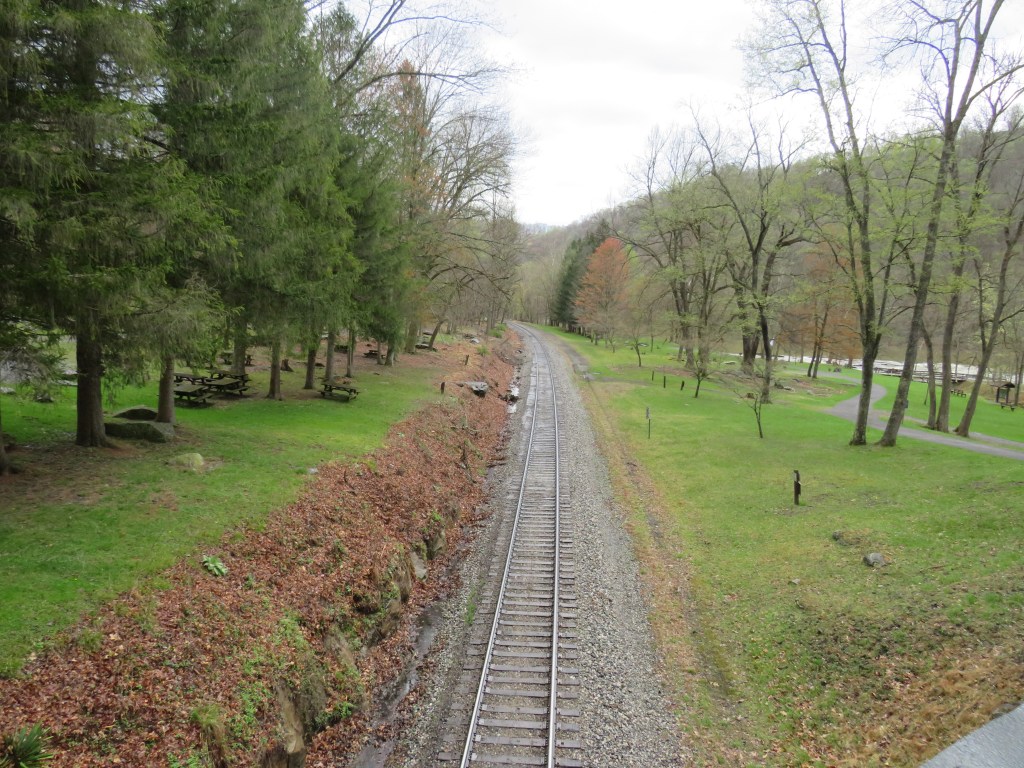
You enter the park, and you drive down to the main parking lot. You park your car, and you make your way to the waterfalls, but you cross a bridge. What are you crossing? You are crossing a railroad line.
Some of you are saying, “Yeah, but there are many railroad lines that pass through parks and towns but have no history with the parks or towns.”
You do have a point. So, what is special about Valley Falls State Park?
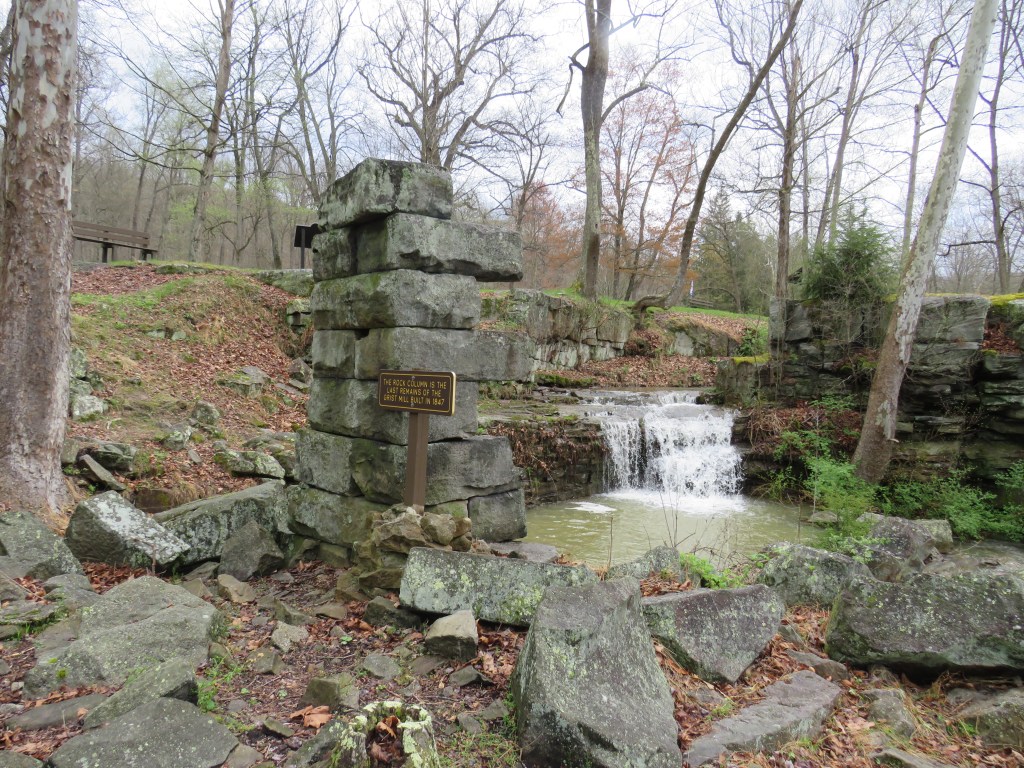
Well, you arrive at the waterfalls, and you are amazed at its beauty. As you walk around, you notice some ruins. What was here?
What you are seeing is the ruins of a sawmill and a grist mill. The water was used to power these mills. The property was acquired by a trader in the 1830’s, and he built the mills on the site. A town was erected around the mills, and it was named Valley Falls after, of course, the waterfalls. Although the mills were the centerpiece of the town, something that arrived in 1853 caused the town to boom. What came to the town?
In 1853, the Baltimore and Ohio Railroad was built between the town of Grafton to the east and the city of Wheeling located in what is called the Northern Panhandle of the state, and the railroad passed right past the mills. Sadly, in 1886, the town was destroyed by fire and floods. The town was never rebuilt although the grist mill itself remained in operation until 1905.
Today, you can see the waterfalls, but you can also see the same railroad line that served the town, but, today, CSX trains pass by the falls. How great would it be to enjoy the waterfalls and be rewarded by a passing train?
Valley Falls State Park is located at 720 Valley Falls Road southeast of the city of Fairmont, West Virginia off of West Virginia Route 310. The park is open year round from 7:00am to sunset, but please note that the park will close due to snow and ice. (If you are adventurous, they do allow you to walk through the park on snowy and icy days. You just have to park at the entrance and hike in.) Please note that the walk to the falls is on uneven terrain, which may be difficult for wheelchairs, but much of the falls are viewable from the parking area. Please also note that the railroad line is an active line. (No trespassing on the railroad tracks.)
Valley Falls State Park was once the site of a bustling town made possible by the railroad. Today, the only thing that is bustling is the waterfall and the surrounding natural beauty. Visit Valley Falls State Park. You may find it hard to leave.
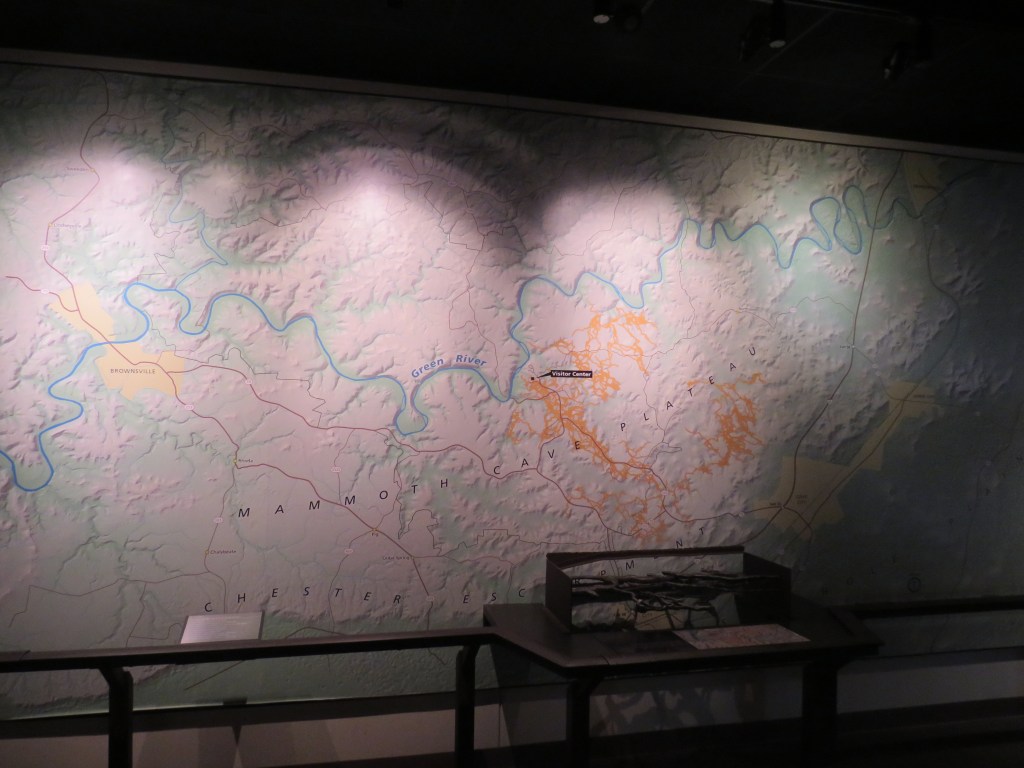
The U.S. state of Kentucky is a state known as the Bluegrass State. Many people know about Kentucky Fried Chicken which was started by a man named Harland Sanders, commonly known as Colonel Sanders, even though he started in a restaurant in the state, the first Kentucky Fried Chicken was opened in Salt Lake City, Utah. The state is known for its horses, and it has the continuously running sporting event in the world, the Kentucky Derby in Louisville, which is a horse race that is the first race of the Triple Crown. The state is known for its bourbon, of which there are plenty of bourbon distilleries in the state mainly around the Frankfort and Lexington areas. You may have heard of My Old Kentucky Home. It is a real house in Bardstown. In the city of Bowling Green, you will find the National Corvette Hall of Fame. Along with Churchill Downs where the Kentucky Derby is run, the city of Louisville is known for the Louisville Slugger bat factory where many baseball bats are made and sold, and you can tour the factory and buy a bat of your own. You have Mammoth Cave, the largest known cave system in the world.
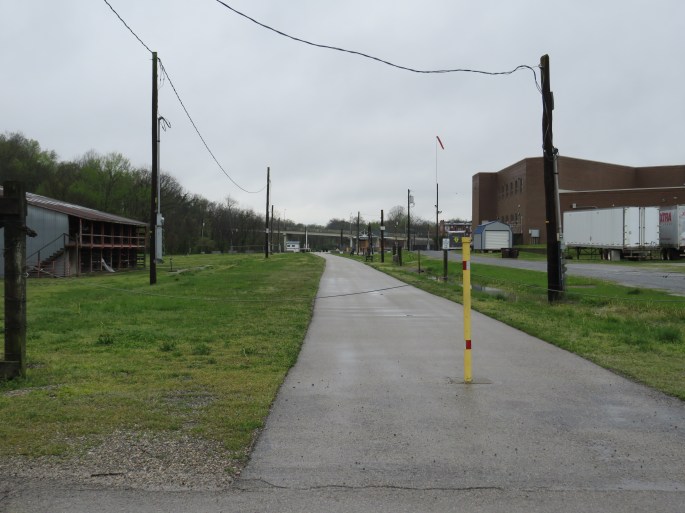
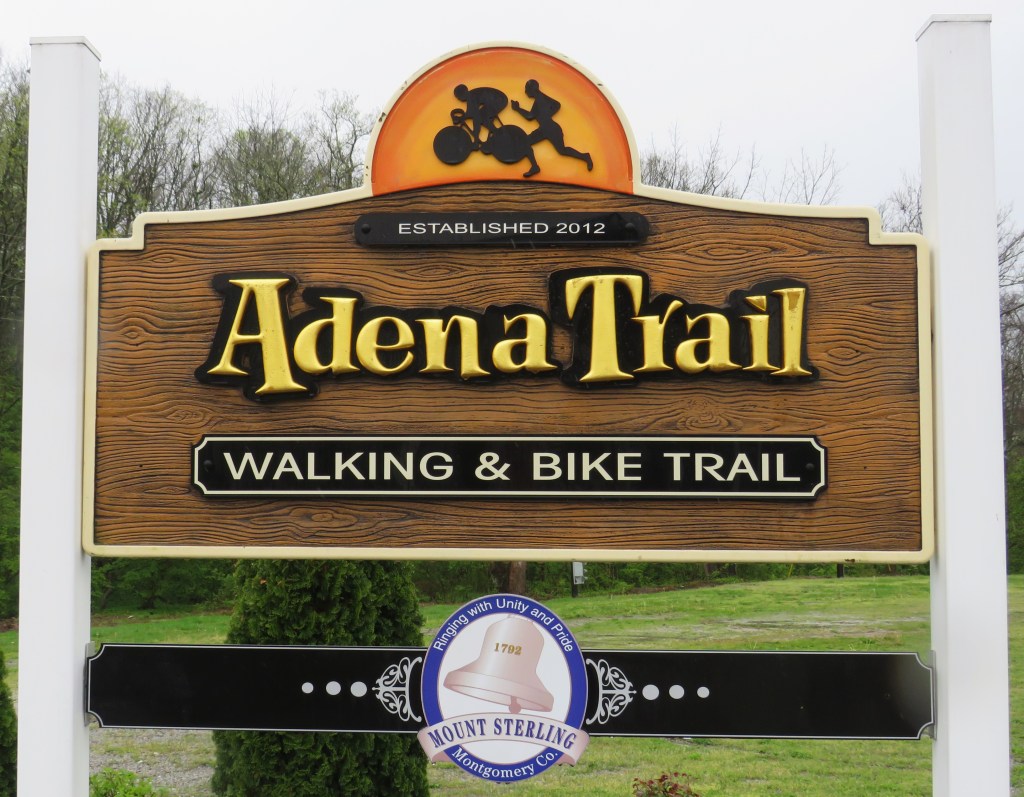
Then you have the small town of Mount Sterling. How many of you have ever heard of Mount Sterling, Kentucky? A small town that is located 34 miles (55 kilometers) east of the city of Lexington, it is named after a small burial mound. The town itself is small, but it does have the Adena Trail, a short, paved mile long trail that runs through the town south of the main historic district. The town is small, but it is a special town to visit.
Some of you are saying, “This is nice. Small towns are really special. I am sure that the town of Mount Sterling is a special town. There is a very big problem. Mount Sterling is not a railroad town. Therefore, I find no special reason to visit this town.”
You are right. Mount Sterling, Kentucky is not a railroad town, and the town has no history with the railroad. Why visit Mount Sterling, Kentucky?
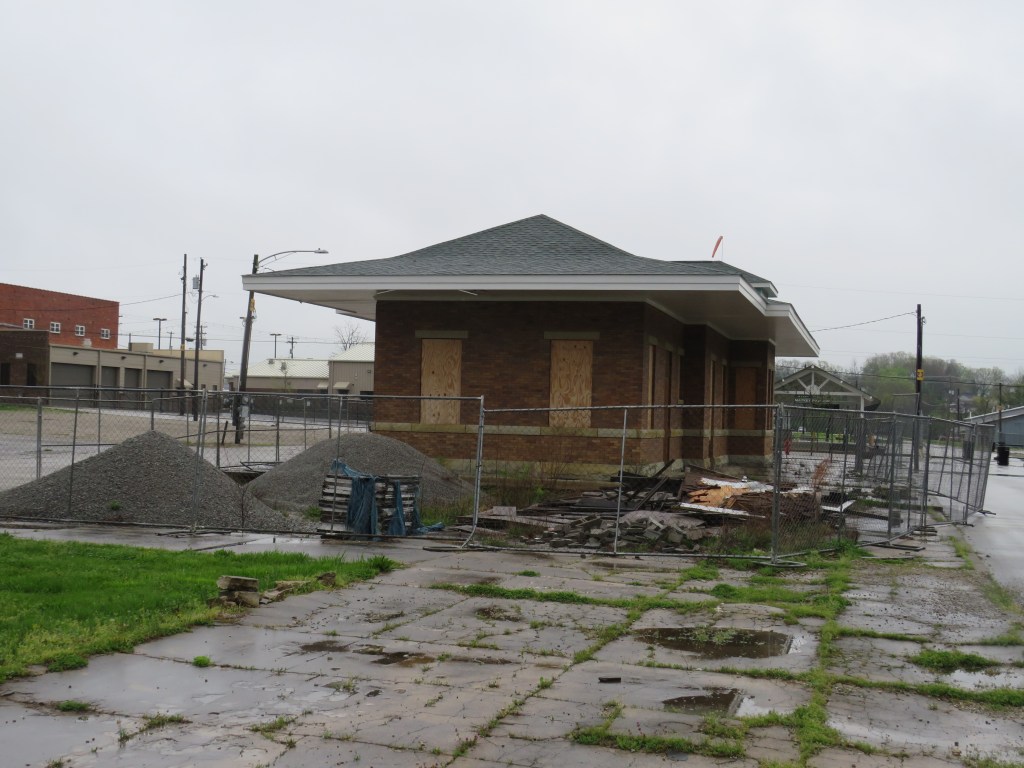
Like many small towns in the United States of America, Mount Sterling, Kentucky has something special. It has the downtown historic district where you have shops, cafes, historic architecture, and art. Just south of the historic district, as mentioned, is a paved trail known as the Adena Trail. It looks like a nice trail. You decide to take a walk around. The trail follows a small creek. You then notice a structure next to the trail. As you walk closer, you see that it looks like a train station. Wait a minute. This town has never been a railroad town. Why is this train station here?
The town of Mount Sterling, Kentucky has never been a railroad town, but that did not keep the Chesapeake and Ohio Railway from passing through here. The Adena trail was built on the old railroad bed. It is about a mile long so walking the entire trail is easy. As for the old train station, it was built in 1910 by the Chesapeake and Ohio Railway as a passenger and freight depot.
As the railroad decline, the Chesapeake and Ohio Railway was forced to abandon lesser used railroad lines. Mount Sterling, Kentucky was a victim of the decline. Railroad service ceased to the town, and the railroad tracks were eventually removed.
Today, the old train station remains, and it is on the National Register of Historical Places. As for the Adena Trail, it is a paved trail that it easily accessible for wheelchairs. The train station and Adena Trail is located at the intersection of S. Maysville Street and Railroad Street about a few blocks from U.S. Routes 60 and 460 and Kentucky Route 11.
The next time you here about the town of Mount Sterling, Kentucky, think about a special town where the railroad once served.
The U.S. state of West Virginia is a state that has so much natural beauty. It has famous sites like the New River Gorge and the New River Gorge Bridge, the Glade Creek Grist Mill at Babcock State Park, one of the most photographed mills in the United States of America, the natural spas in Berkeley Springs to include George Washington’s Bathtub where George Washington, well… you probably figured it out what he did here, plus the town of Harpers Ferry, and so much more. It has its cities like the capital city of Charleston, Beckley, and Morgantown, and its many small towns. One of these small towns located northeast of Charleston is the town of Gassaway.
Some of you are saying, “Interesting. I bet the town got its name from the fact that somebody was getting gasoline, but the gasoline got away.”
You are very wrong. The small town, established in 1905, is named after Henry Gassaway Davis, a West Virginia politician who was nominated for the Vice President of the United States of America in 1904.
Some of you are saying, “It is nice that they named a town after a politician. There is a very big problem. This is just a small town that has no railroad. Therefore, I will not be taking these country roads to this town.”
If you were to ask people if they had ever heard of the town of Gassaway, West Virginia, you would get many strange looks. The town is often overshadowed by the town of Sutton which is east of Gassaway and is famous for it Bigfoot Festival and museum.
As you approach the town of Gassaway, the very first thing you see it the ‘Welcome to Gassaway’ sign. Many towns have a welcome sign to greet you as you enter, but you see something interesting. What do you see? You see a steam locomotive on the sign. You continue to drive into the town, and you see an old railroad bridge. You drive further into the town, and you see an old train station. You drive to the old train station, and you see a mural with a steam train. What you do not see is a railroad line. Well, the railroad line is now a railroad trail. How did the train station get here? Today, the town of Gassaway, West Virginia does not look like much, but that was not always the case.
The town of Gassaway, West Virginia was a town built by the railroad. The Coal and Coke Railway, which ran between Charleston and Elkins, ran through the town of Gassaway, and, in 1914, they built the train station giving passenger train service to the town. There was also a railroad yard in the town as they changed locomotives in the town as more powerful locomotives were needed to pull the trains to Elkins while locomotives with less power could be used for trains to Charleston. During its heyday, the town had two hotels, a bank, retail stores, office buildings, and, schools, and churches. When the railroad went into decline, so did the town. Railroad service ended and was eventually converted into a rail trail.
As for the train station, it was abandoned for many years, but it was then restored and was put on National Register of Historic Places, and it now serves as an event and meeting space for the town.
The town of Gassaway, West Virginia is four miles west of Interstate 79 on West Virginia Route 4. The old train station is located on 4th Street one block west of West Virginia Route 4. It is open available for events like weddings and parties.
The small town of Gassaway may no longer be a railroad town, but the ghosts and the legacy of the railroad remain.
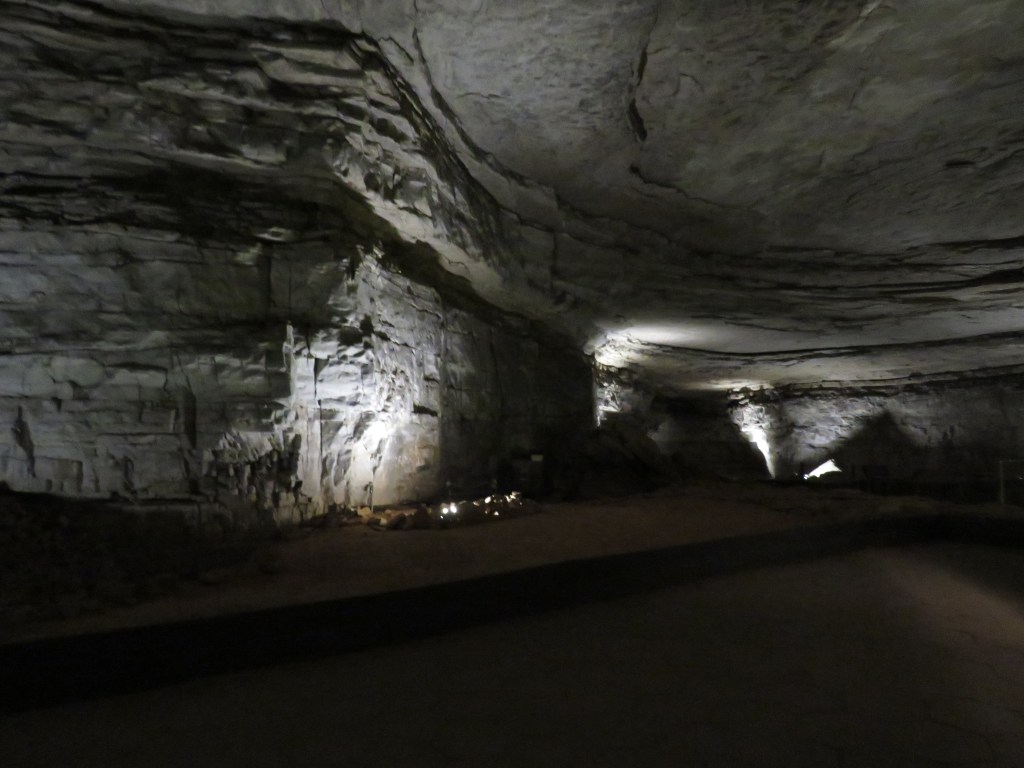
There are many great things about the U.S. state of Kentucky. Many people think about Kentucky Fried Chicken, a fast food restaurant chain. You have the bourbon distilleries. You have the Kentucky Derby in Louisville, the longest continuously running sporting event in the world and the first race of what is known as the Triple Crown. Louisville is also the home of the Louisville Slugger, a company that makes baseball bats. How about my Old Kentucky Home in Bardstown? Then you have Mammoth Cave National Park, the home of Mammoth Cave, the largest known cave system in the entire world. How big is the cave? Let us say that you cannot do the entire cave in one tour. There are many tours involved here. How does it get the name ‘Mammoth Cave’?
Some of you are saying, “Well, duh, it was the home of a mammoth. A mammoth lived in the cave.”
It is unclear if that is the answer but being the largest known cave system in the world, it is truly mammoth in size. It is truly a natural marvel that you will truly want to see. If you are ever in the south central region of Kentucky, you will want to visit Mammoth Cave.
Some of you are saying, “Wow! That is one big cave. However, there is one big problem. As you can see, this is a cave. This is not a railroad site. Therefore, I will not be exploring this place.”
You are right. This is not a railroad site. Why visit Mammoth Cave National Park?
Mammoth Cave National Park, as mentioned, is centered around Mammoth Cave. Hence the name. It is located near Cave City, which is about eight miles from the park.
Some of you are saying, “Well, duh! Cave City is an obvious name of a town erected around a cave.”
You are absolutely right, but this is where the story begins. Cave City was not always called Cave City. It was originally called Glasgow Junction. If you are thinking of a railroad junction, you are thinking correctly. The Louisville and Nashville Railroad brought people to Glasgow Junction. Then they were brought to Mammoth Cave by a horse drawn carriage to the cave.
Some of you are saying, “It is nice that they were able to ride the train to Cave City, but then they had to take a carriage about eight miles to the cave. That means that Mammoth Cave has nothing to do with the railroad. This mean that there is no reason to visit this cave.”
Ladies and Gentlemen, there is more to the story.
In an automobile, eight miles is a short distance. In a horse drawn carriage, it is a long distance. The owners of the horse drawn carriages saw that it took time to get tourists from the train station to the cave. They came up with an idea. What was that idea? In 1874, they started the Mammoth Cave Railroad, and the first train ran in 1886. Instead of riding the train to Glasgow Junction and taking a horse and carriage to the cave, they could now ride the train to the cave.
The railroad, sadly, was only profitable in the first six years. As more people were able to afford an automobile, fewer people took advantage of the train ride. The last train ride to the park took place on August 31, 1931.
Now the Mammoth Cave Railroad is gone… but not forgotten.
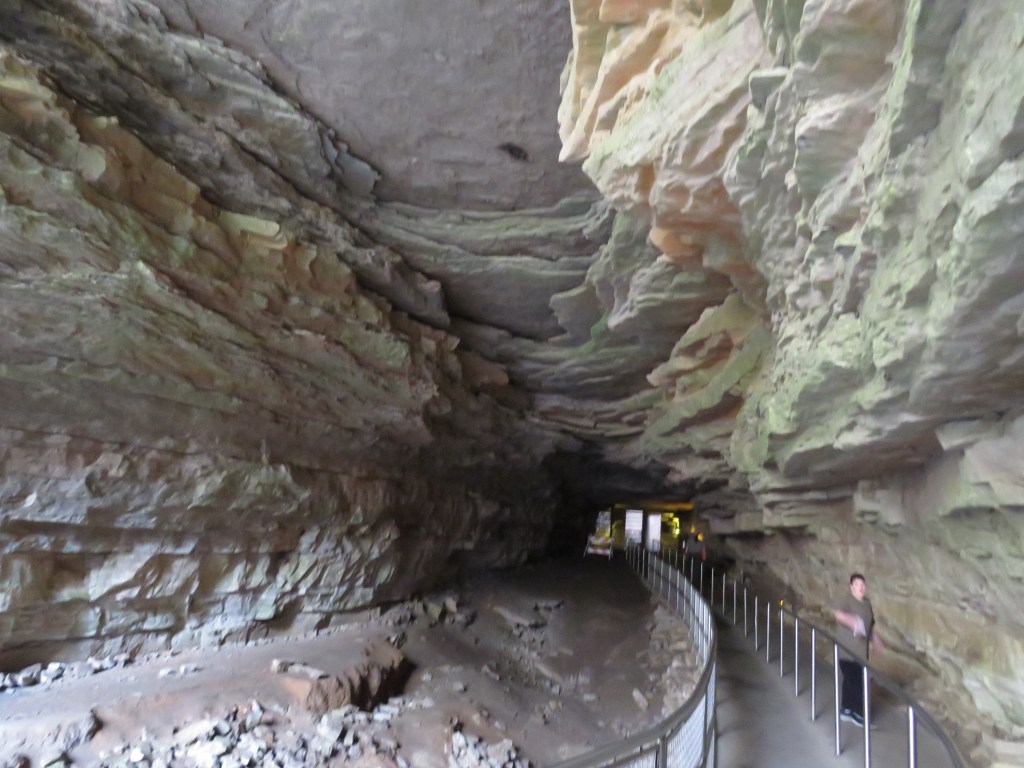
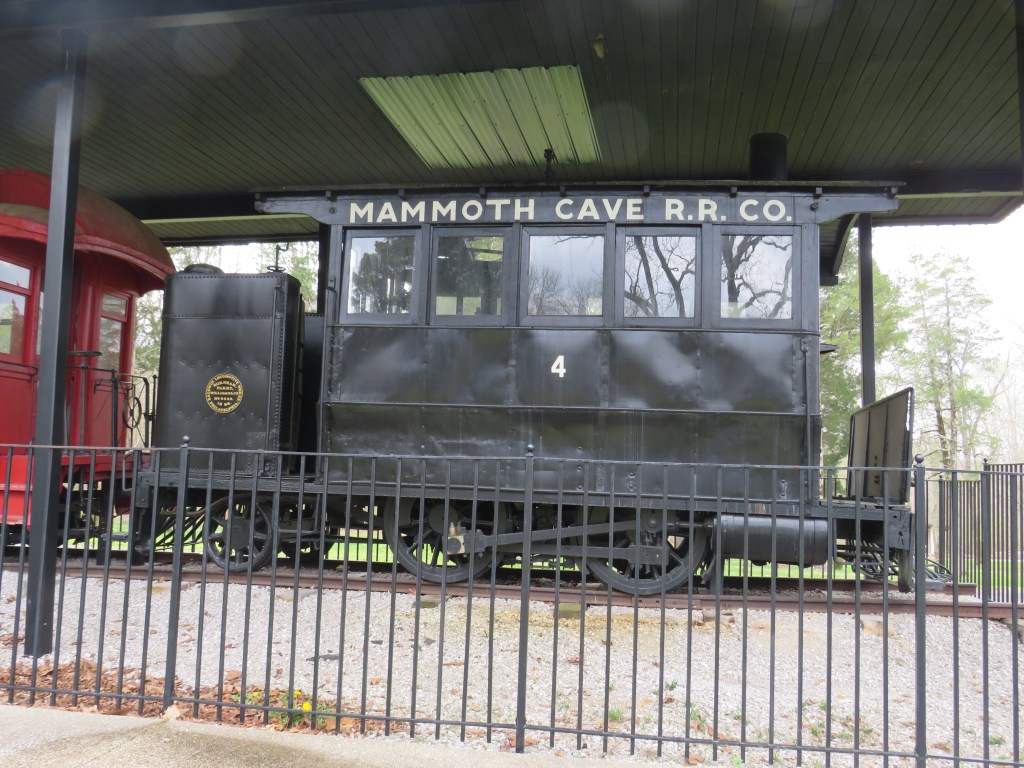
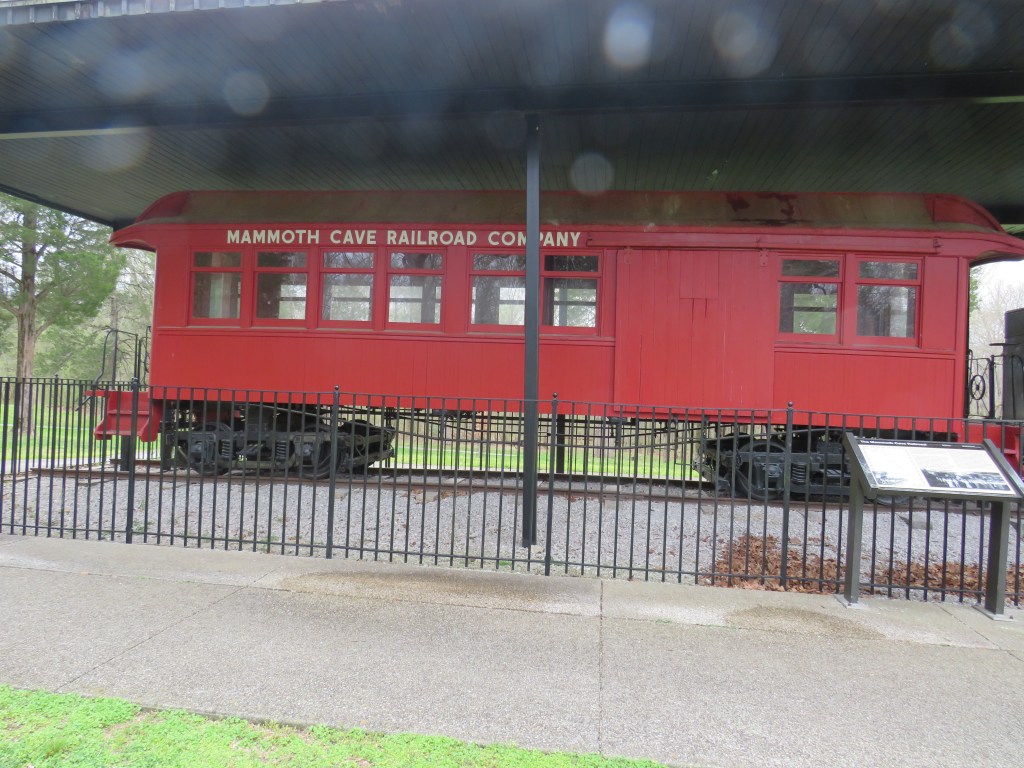
As you enter Mammoth Cave National Park, you can see the old railroad bed that the Mammoth Cave Railroad once ran on, and it is a rail trail that you can hike and bike today. Once you arrive at the Visitor Center, you are just a short walk from Mammoth Cave Railroad Locomotive Number 4 and Mammoth Cave Railroad Car Number 2. These two pieces of rolling stock that are covered and surrounded by a steel fence rest at the site of the terminus of the Mammoth Cave Railroad.
As you can see, Mammoth Cave it not just a big cave. It is a big cave with railroad history. You can hike on the original railroad bed in the park. Along with the many cave tours and rail trail, there are also numerous trails you can tread upon.
Mammoth Cave National Park is located at 1 Mammoth Cave Parkway in Mammoth Cave, Kentucky. It is near Interstate 65 and U.S. Routes 31W and 31E. Please note that Mammoth Cave is not wheelchair accessible. You will also be making a descent into the cave with no elevator and escalator. You will need to climb steps out of the cave. The rail trail is dirt but is wheelchair accessible. You can get more information on directions, cave tours, the history of the cave and the Mammoth Cave Railroad at https://www.nps.gov/maca/index.htm. (Please note that the National Park Service recommends that you do not use GPS in the area and that you follow the directions on the website.)
The next time you think about Mammoth Cave and Mammoth Cave National Park, think about a big cave that has a mammoth history with the railroad.
Some of you are saying, “You got it wrong. You meant to say, ‘Welcome to Williamsburg, Virginia’.”
No. This is the small town of Williamsburg in the U.S. state of Indiana. It is not like its Virginia counterpart of Colonial Williamsburg but a small town in the eastern part of the state just west of the U.S. state of Ohio. When you visit the town, you will pretty much see a ghost town… but it was not always that way.
The town was named after William Johnson, the man who settled the town in 1830. Like many small towns, it flourished, but something happened in 1901. What happened? The Chesapeake and Ohio Railway came to town. Connecting the Indiana cities of Richmond to the south with Muncie, the Chesapeake and Ohio Railway brought massive growth of business and population to the town. The town had its own train station. Like many small towns in the United States of America, Williamsburg went into a decline and began beginning to be the ghost town it is today.
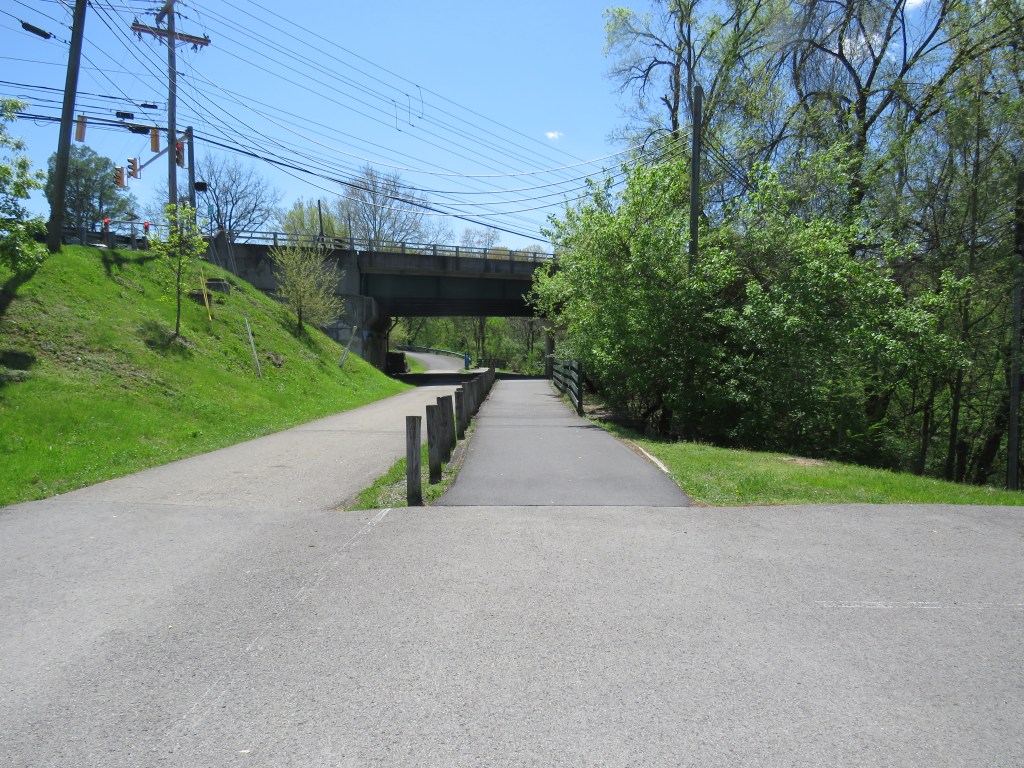
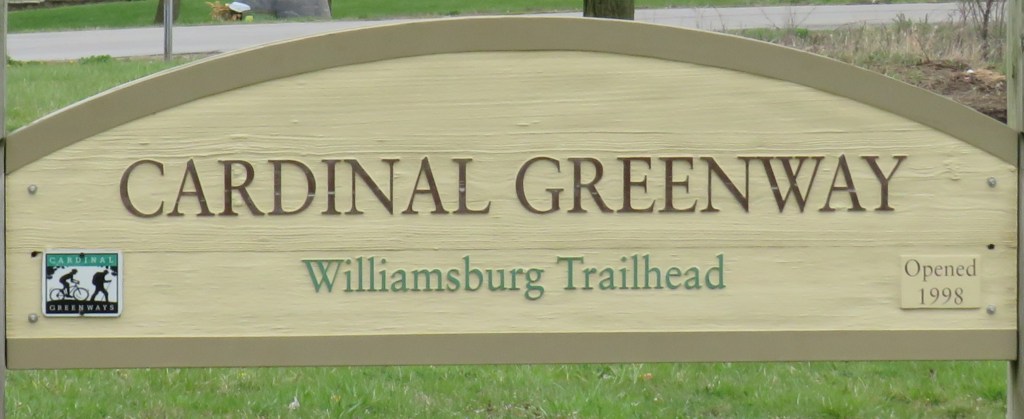
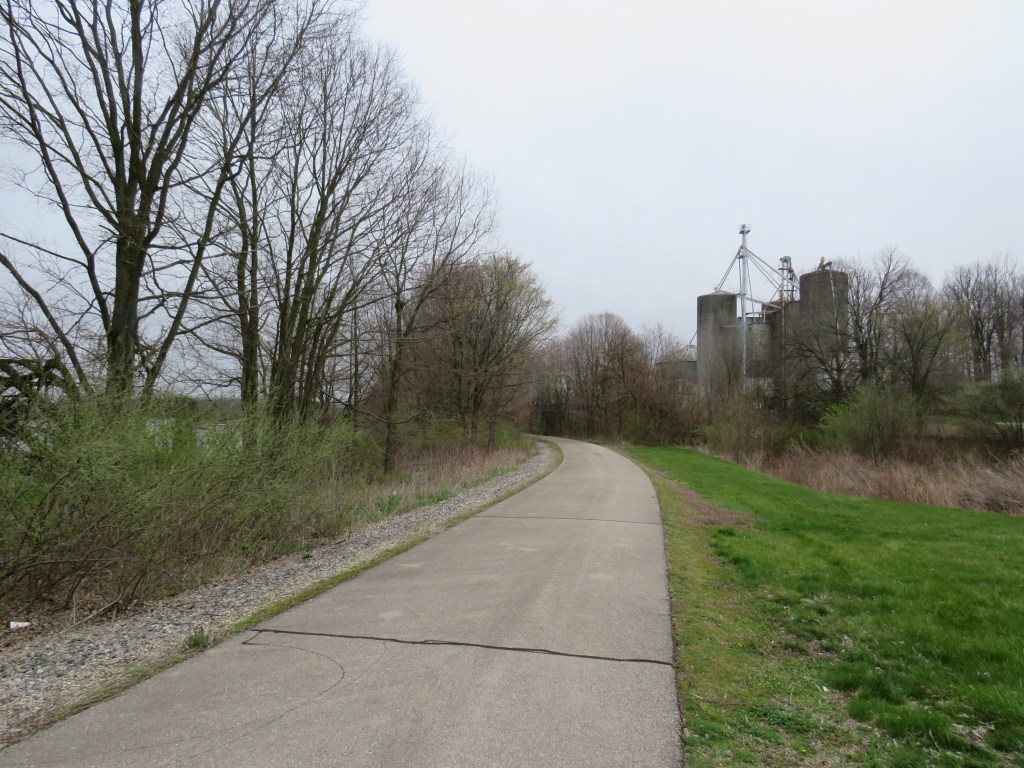
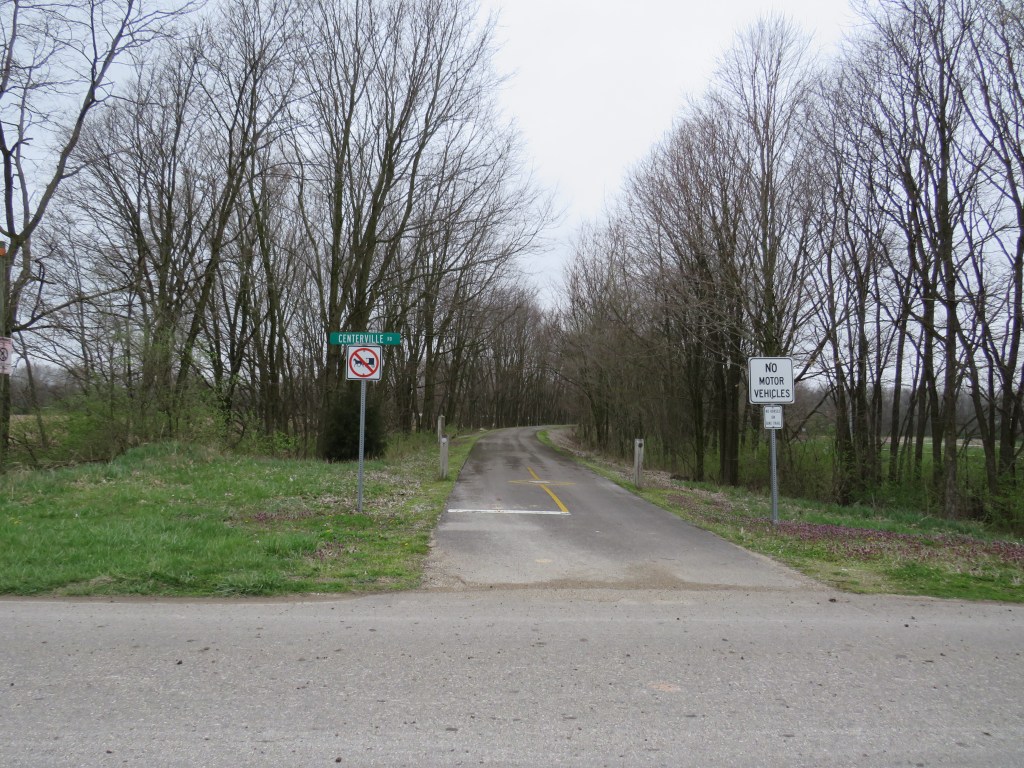
Today, the railroad line that passed through the town of Williamsburg, Indiana became a rail trail known as the Cardinal Greenway, the longest rail trail in the U.S. state of Indiana running to Richmond to the south and Marion to the north. As you visit the rail trail, you will not notice that this was once a busy place. Located north of the town center just a short drive of U.S. Route 35, you will experience a quiet place at a place that was once the centerpiece of the town.
Welcome to Williamsburg, Indiana. You will not see people dress in colonial attire, but you will be in a small town where a railroad made history.




























 John Cowgill: Stories of the Railroad