This is a text widget, which allows you to add text or HTML to your sidebar. You can use them to display text, links, images, HTML, or a combination of these. Edit them in the Widget section of the Customizer.
The U.S. state of West Virginia is called the Mountaineer State because it is a state that is completely mountainous with no plains or flatland. One of the state’s greatest natural wonders is the New River Gorge where the New River carves it way through a deep gorge through the southern region of the state. South of the New River Gorge is the river town of Hinton. Hinton is a town on the New River, and it is also a railroad town with an old Chesapeake and Ohio Railway Station that was built by the Chesapeake and Ohio Railway, and it is served by Amtrak today. The town has a railroad festival in the fall to celebrate the railroad heritage, but the town also has another railroad treasure.
Welcome to the Hinton Railroad Museum. It looks small on the outside, but it has so much on the inside. No, you will not see full size locomotives on display nor will you see old boxcars or a caboose.
Why visit the Hinton Railroad Museum? As you see the museum from the street, you will want to go inside.
Before you even enter the museum, you will see a wooden model train. Be advised that this is just the beginning.
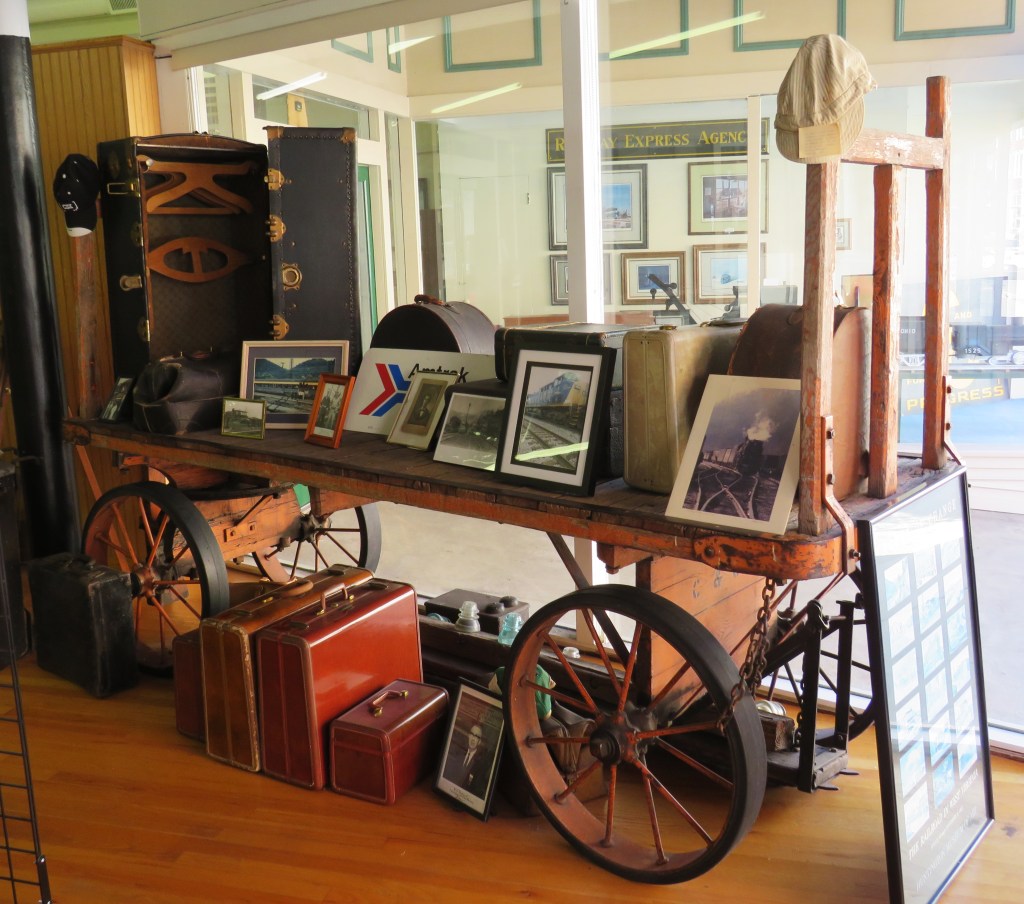
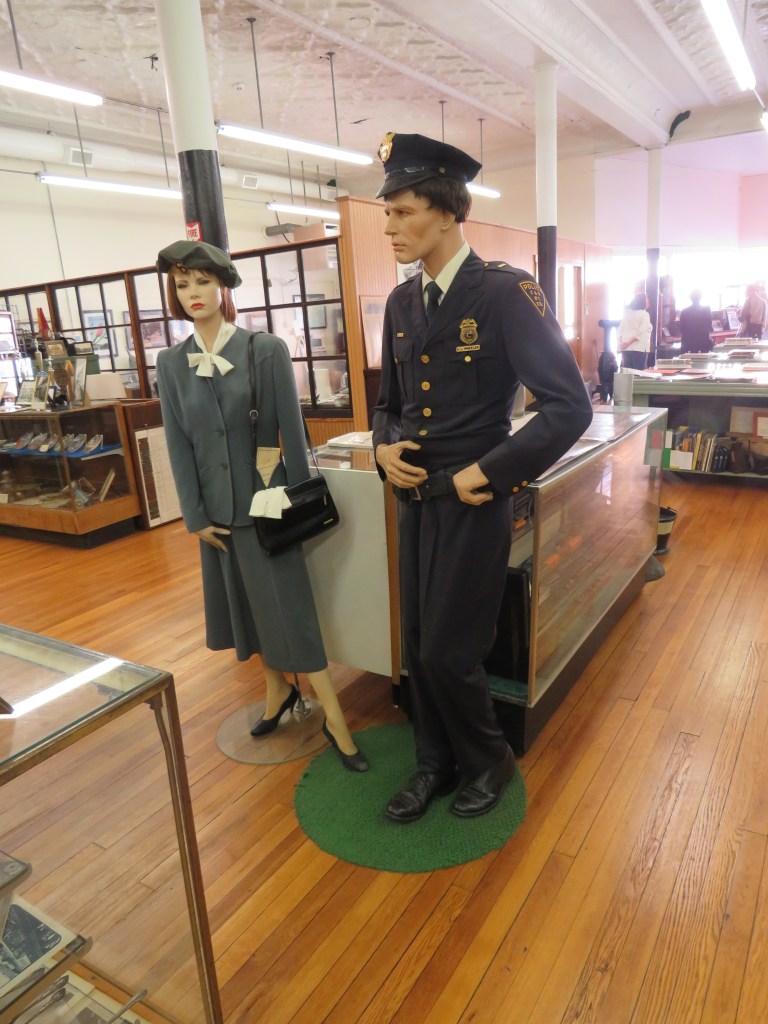
The museum is filled with artifacts mainly from the Chesapeake and Ohio Railway. The displays are full of models trains, old photos, old rail equipment, uniforms, and other items, but there is one item that will catch your eye.
The main thing that you will see is the full scale wooden display. The display is a carving by Charlie Permelia telling the story of John Henry. Who is John Henry? In the nearby town of Talcott is the Great Bend Tunnel of which the original has been replaced by a new tunnel used by CSX Transportation today. The original tunnel was built by railroad workers. One of them was John Henry, a muscular man. It was here where John Henry challenged a steel drill with his hammer. Even though he defeated the steel drill, it cost him his life. The wooden display is a memorial to the famous worker.
The Hinton Railroad Museum is located at 206 Temple Street (West Virginia Route 20 North) in the town center. Only street parking is available. Sadly, the building is not wheelchair accessible.
The town of Chambersburg in the U.S. state of Pennsylvania was a town that was established and named after Benjamin Chambers. The town has man historic sites and has a history that is older than the United States of America. Even though a railroad line passes through the town today and there were railroad structures in the town, the town has no real history with the railroad and was never a railroad town. As you walk through the downtown area, the one thing you will see is the Cumberland Valley Rail Trail.
What is the Cumberland Valley Rail Trail? It is a trail under two miles that runs through the heart of the town of Chambersburg. It was built on the railroad bed of the Cumberland Valley Railroad which ran through much of the south central part of Pennsylvania and into the U.S. state of Maryland connecting Chambersburg with the rest of the nation. The main line, owned by the Norfolk Southern Railway today, continues to serve the town. The rail trail parallels the Conococheague Creek and is next to the Fort Chambers Park.
The Cumberland Valley Rail Trail in Chambersburg, Pennsylvania is located on the west side of downtown and U.S. Route 11 crossing U.S. Route 30. It is completely paved making it easy for those in wheelchairs. Only street parking is available. It is mainly flat, and it is accessible from sunrise to sunset.
Chambersburg, Pennsylvania may not be a famous railroad town, but it does preserve a piece of railroad history for hikers, bikers, walkers, and many people for many years to come.
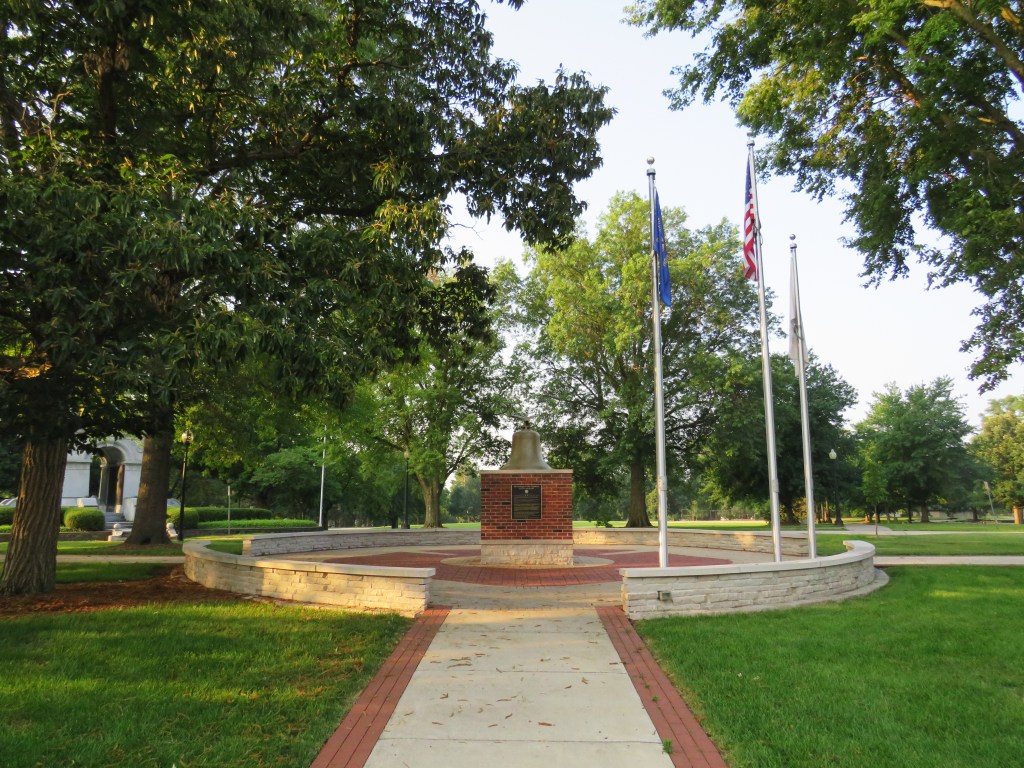
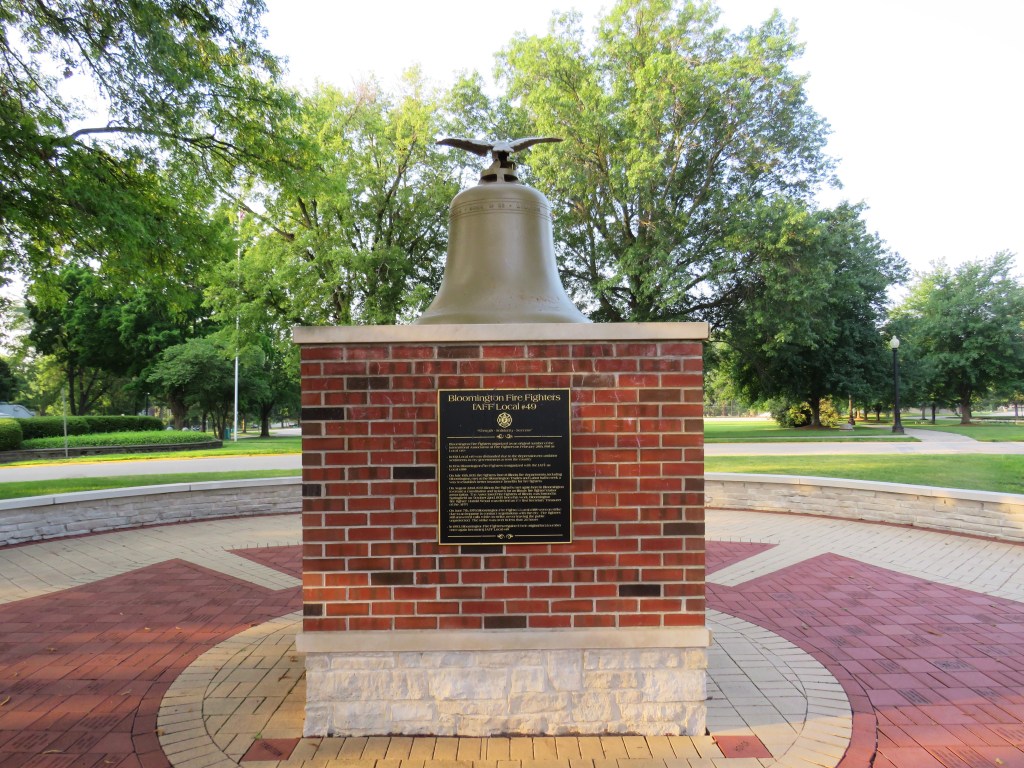
Cities big and small throughout the United States have their landmarks and city parks. Among these city parks is Miller Park in the city of Bloomington in the U.S. state of Illinois. The park has trees, a playground, a small zoo, a manmade lake, a miniature golf course, a memorial to firemen and a war veterans memorial. Located in the southwestern area of the city on the Historic U.S. Route 66, it is a park within the city that is an oasis from the urbanization.
Some of you are saying, “It is nice that these cities have parks. These parks are great. However, there is a problem. Since this park has no railroad history, I will not be taking a walk in this park.”
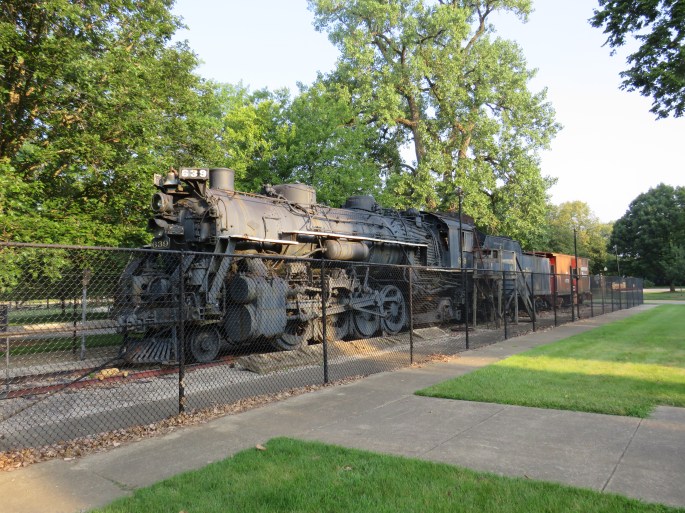
Oh, you will want to take a walk in this park. Why? One of the big features of this park is Nickel Plate Road Steam Locomotive Number 639 and its tender. Another feature is Caboose Number 4770 from the Southern Pacific Railroad. Other feature include a whistle that was on top of the shops of the Chicago and Alton Railroad and pays tribute to the workers of those shops. (The shops are now gone.) Another feature is an old semaphore. (Semaphores have been replaced by the railroad signals today.)
The locomotive was built by the Lima Locomotive Works and was used by the Nickel Plate Road. When the Nickel Plate Road decommissioned the locomotive, they donated it to the park. Today, it is on display with the Southern Pacific Railroad Caboose.
Miller Park is located at 1020 S. Morris Avenue in Bloomington, Illinois along the Historic U.S. Route 66. (It is west of U.S. Route 51 by way of Wood Street.) Parking is on side. The park is open sunrise to sunset, and the park is wheelchair accessible.
When in Bloomington, Illinois, visit Miller Park. See a locomotive that once ran on the rails of the United States of America.
The U.S. state of West Virginia is a state that was once part of Virginia. It is known as the Mountain State because the typography of the state is 100% mountains, and it is the only state with that kind of typography. The state has no major cities although parts of the state are in the Washington D.C. and Pittsburgh, Pennsylvania metro areas. It does have a few cities like Charleston, the state capital and largest city, Morgantown, the home of West Virginia University, and Huntington, the home of Marshall University where the movie We Are Marshall featured the tragedy of the university’s football team. The state has many engineering feats like the New River Gorge Bridge. What the state is really known for is its coal mines and its natural beauty. One unpopular place in the state is the city of Wheeling. Located in the northern panhandle region of the state nestled between the U.S. states of Pennsylvania and Ohio, the city of Wheeling is located on the Ohio River and is on the National Road (present day U.S. Route 40). If Wheeling, West Virginia is unpopular, why visit? While in Wheeling, you can visit the West Virginia Northern Community College. Located in the Downtown section of the city, West Virginia Northern Community College welcomes students from the region to get an education. When in Wheeling, make a visit to the West Virginia Northern Community College.
Some of you are saying, “That is nice. You know. Wheeling, West Virginia has never been on my list of places to visit. I either pass through on Interstate 70 or take the Interstate 470 bypass. With Wheeling not being a railroad city, I will not be visiting Wheeling, and I will not be getting an education here.”
You do have a point. Why visit the West Virginia Northern Community College?
The state of West Virginia has a lot of history, and it is a state that has many railroad sites and much railroad history. In Cass, you will find the Cass Scenic Railroad and the Durbin Rocket. You have the railroad town of Thurmond and Prince. In Elkins, you have the Cheat Mountain Salamander, the Mountain Explorer, and the Tygart Flyer, and it is the home of the West Virginia Railroad Museum. In Martinsburg, you have the oldest surviving steel truss roundhouse in the nation. There are numerous rail trails throughout the state. When it comes to the city of Wheeling, well, it is not a famous railroad city with many railroad sites.
So why visit Wheeling, West Virginia?
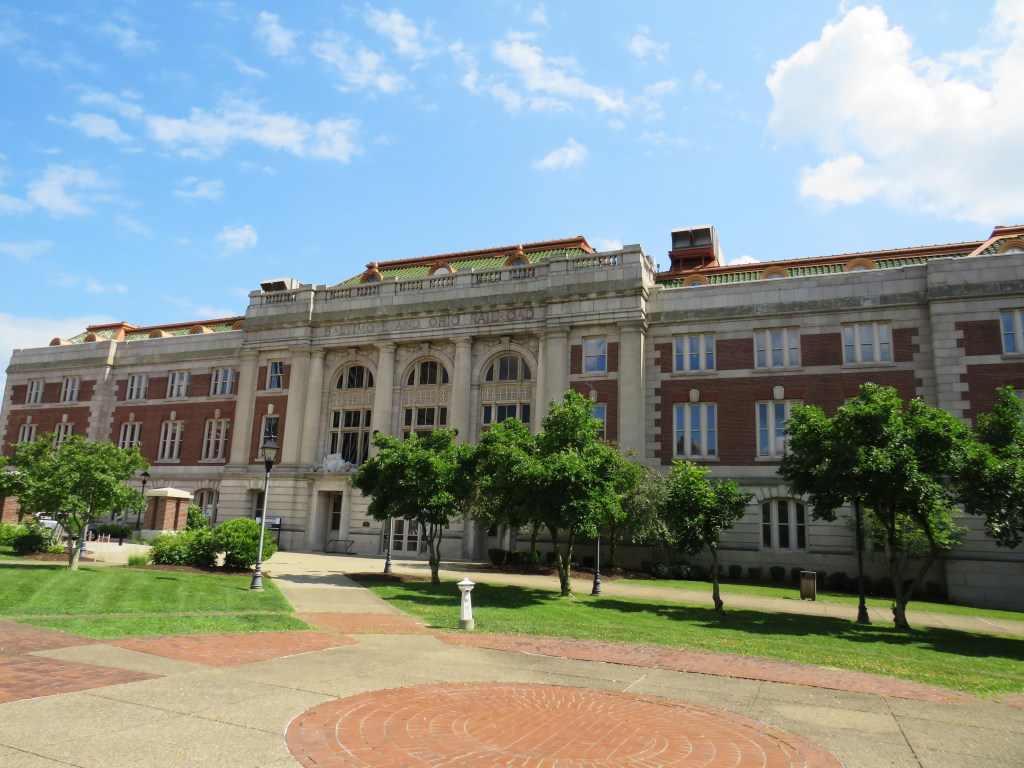
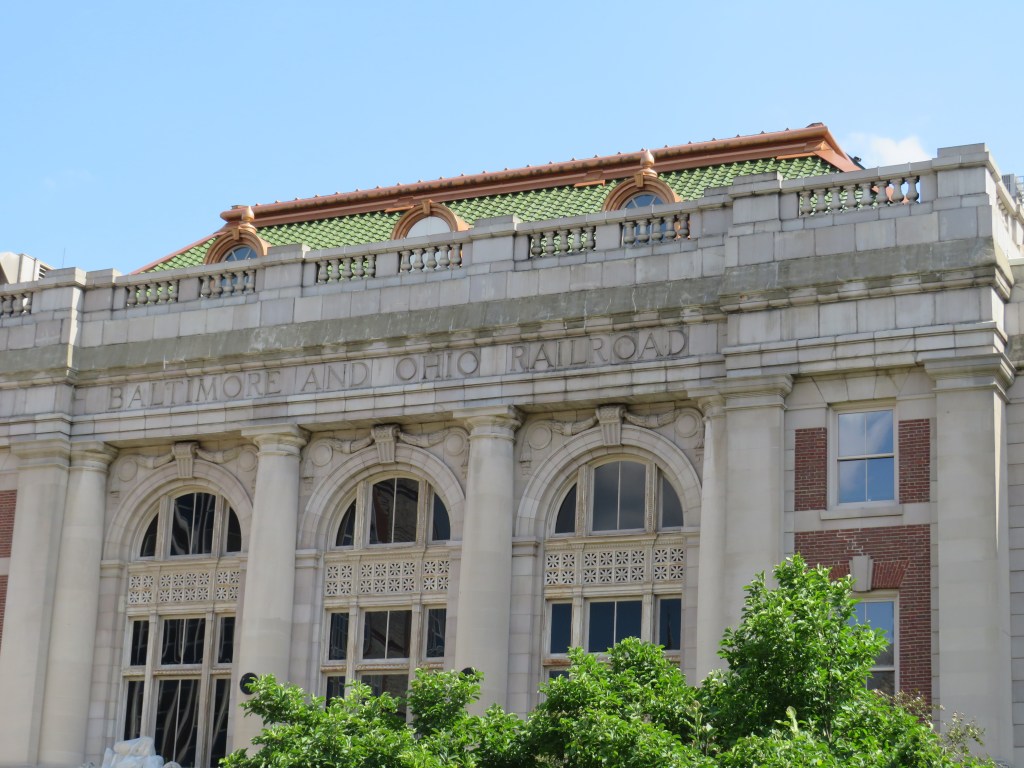
As mentioned, Wheeling, West Virginia is the home of the West Virginia Northern Community College. What is so special about the West Virginia Northern Community College? Well, before it was a college, it was a train station. In the glory days of railroading, the Baltimore and Ohio Railroad built the terminal in 1907 to give passenger train service to the people of Wheeling, West Virginia and the surrounding region. The four story brick and limestone train station welcomed passengers to the city as well as sent passengers to other parts of the nation. Passenger service ceased in 1961. The train station was remodeled and became the home of the West Virginia Northern Community College. In 1996, the building was placed on the National Register of Historic Places.
West Virginia Northern Community College is located in Downtown Wheeling, West Virginia at the corner of Market Street, 16th Street, and Chapline Street. Please note that the building is not open to the public but to college students and teachers only.
Next time you come upon the city of Wheeling, West Virginia, think of it as a city where you can see a train station that gives you an education.
The U.S. state of Ohio is a state with major cities and small towns. Among those small towns is the town of Sugarcreek. Located within the largest Amish region in the United States of America, it is famous for the World’s Largest Cuckoo Clock and the Age of Steam Roundhouse, an active railroad roundhouse that is also a museum. Just a short drive from the Age of Steam Roundhouse is Erb’s Coleman Museum. What is Erb’s Coleman Museum? It is a collection of Coleman products mainly lamps. The Coleman Company is known for camping products including lamps, coolers, tents, and other things, but there is also a collection of lamps used in homes. Once you complete you visit to the Age of Steam Roundhouse, make a short trip to Erb’s Coleman Museum.
Some of you are saying, “This is great. I love Ohio, and I definitely love the Age of Steam Roundhouse. As for Erb’s Coleman Museum, well, I am not really a camper or an outdoorsman. Since it is not a railroad place like the Age of Steam Roundhouse, you will not find me camping out here.”
You are right. It is not a railroad museum. Why visit Erb’s Coleman Museum?
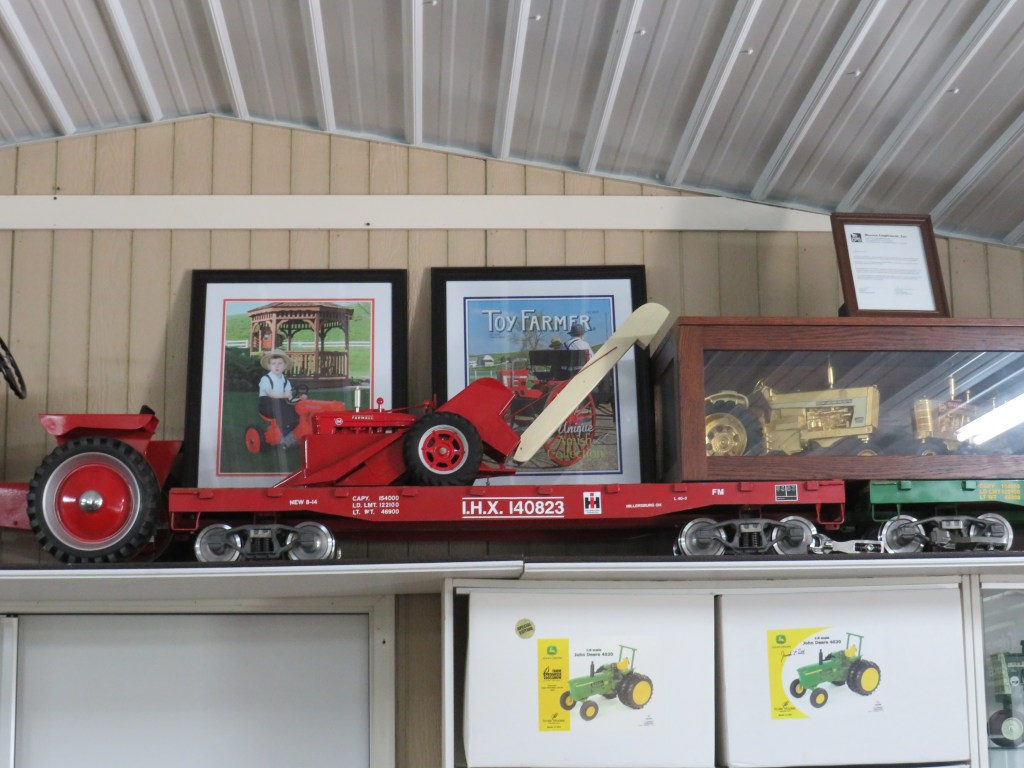
As you approach the museum, you will see a tent and maybe an Amish buggy. It is Amish Country. As you enter, you see a collection of lamps used for camping and for living and bed rooms. When you go upstairs, you see coolers, old radios, gas stoves, railroad flatcars…
Some of you are saying, “Railroad flatcars?”
You will see railroad flatcars across the tops of the exhibition cabinets. Sadly, they are not on a track, but there are plenty to see.
Whether you are an outdoors person or not, Erb’s Coleman Museum is a great place to visit, and it is a great compliment to your visit to the Age of Steam Roundhouse. It is located at 149 Seldenright Road SW south of the town of Sugarcreek. Please note that that property is not wheelchair accessible and requires that you climb a flight of stairs to the second floor. They also do not have a website, and only cash is accepted. What you will see is over 3,000 items on display.
The U.S. state of Illinois is commonly known as the ‘Land of Lincoln’. Even though Abraham Lincoln, the sixteenth President of the United States of America, was not born in the state, (born in Kentucky) he spent much of his public life here as a lawyer and a politician. In Springfield, the state capital of Illinois, you can visit and tour his home that is owned and operated by the National Park Service. It is also where he is buried along with his wife and son in a tomb in a cemetery on the northwestern area of the city. He is one of the most honored politicians in U.S. history, but when it comes to the railroad, most people would associate him with the railroad more than any other president. Without Air Force One, the railroad was the fastest mode of travel in his day.
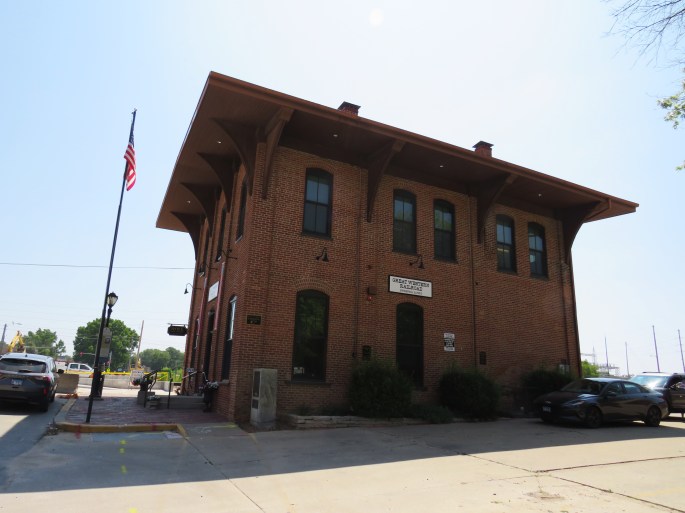
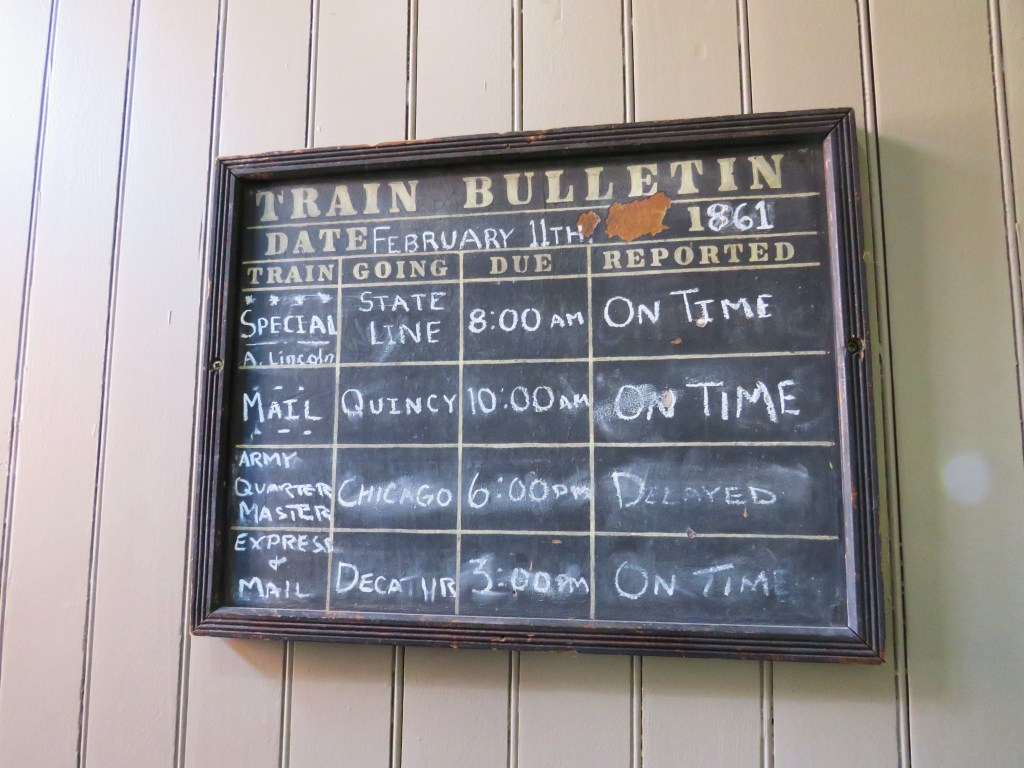
This brings us to an old train station in the capital city that is known as the Lincoln Depot. Originally called the Great Western Depot, it was originally built in 1852, and it was repaired in 1857 after a fire destroyed parts of the station. It was here on February 11, 1861, where Abraham Lincoln made what would be his final speech in the capital city before he departed on a train for another capital city, Washington D.C., to begin his life as the President of the United States of America.
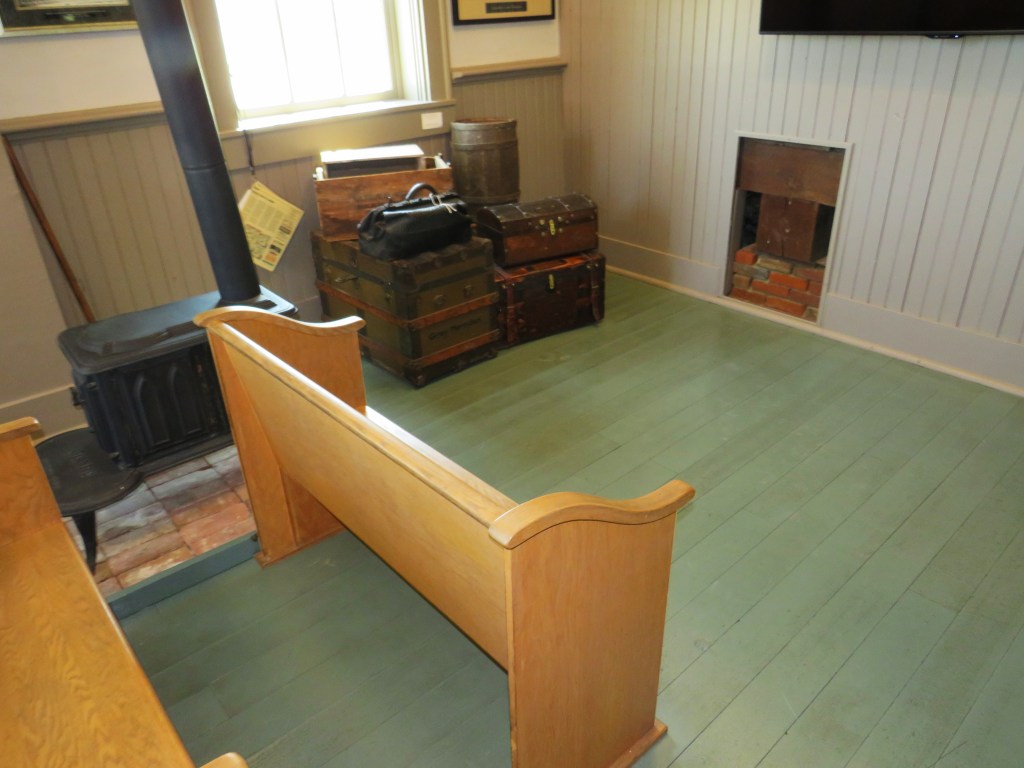
Around 1900, passenger and freight service ceased. The depot when through many ownerships before it was bought by a local group in 1960 to preserve the depot, and it was eventually made into a museum. There was another fire in 1968. (Arson was suspected but not proven.) The museum was closed in 1977, but it was reopened as a museum in 1980 when a new owner took over. The museum was closed in 2011, and it was sold again to be a law office, but the lawyer was a descendant of Abraham Lincoln’s law partner. In 2014, it was a museum again, and it remains a museum today.
Today, the Lincoln Depot in Springfield, Illinois in on the National Register of Historical Places. The trains that pass by the station are freight trains from the Norfolk Southern Railway. (Amtrak service is in the center of the city just blocks from the State Capitol.) It is open Monday to Friday from 10:00am to 4:00pm. Please note that only the first floor is open to the public, and admission is free. It is also wheelchair accessible. The museum does not have its own parking. There is metered parking on the street or you can park at a parking garage. You can get more information on the depot at https://www.lincolndepot.org/. On the website, you read Abraham Lincoln’s farewell speech, read more into the history of the train depot including a timeline, and see photos of the depot.
When in Illinois, visit the capital city of Springfield. Visit an old train depot where the journey of a man on his way to a house called the White House, began.
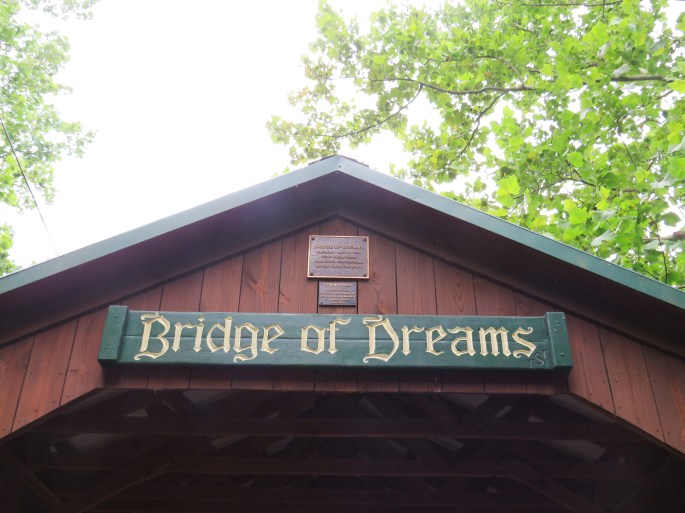
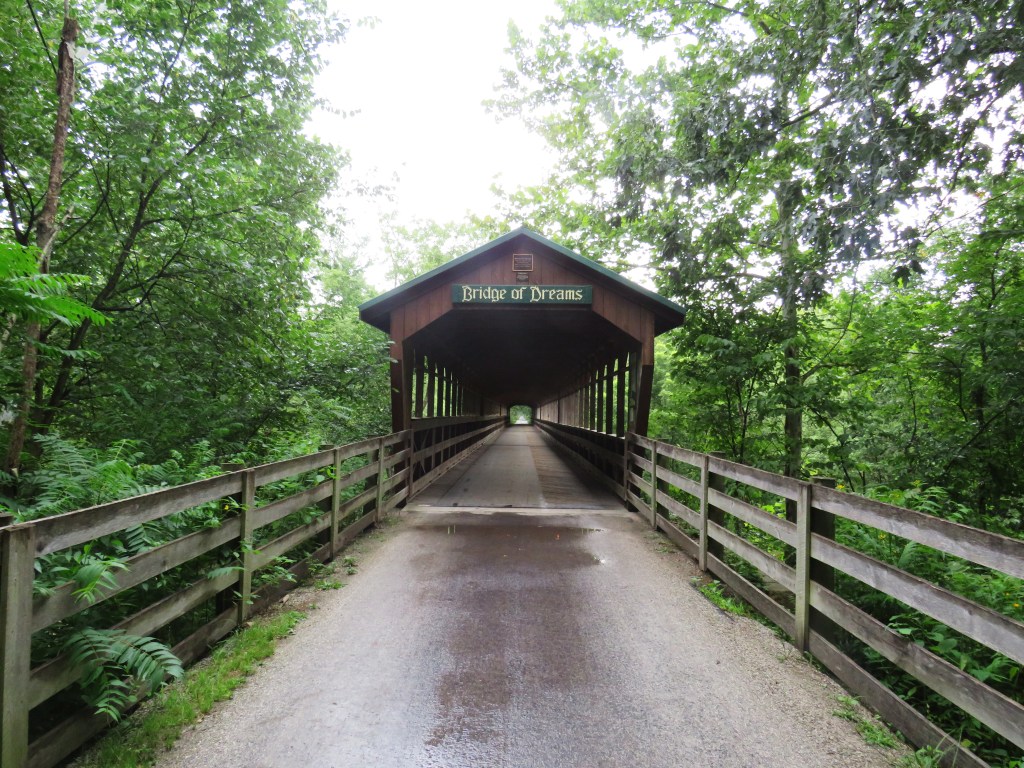
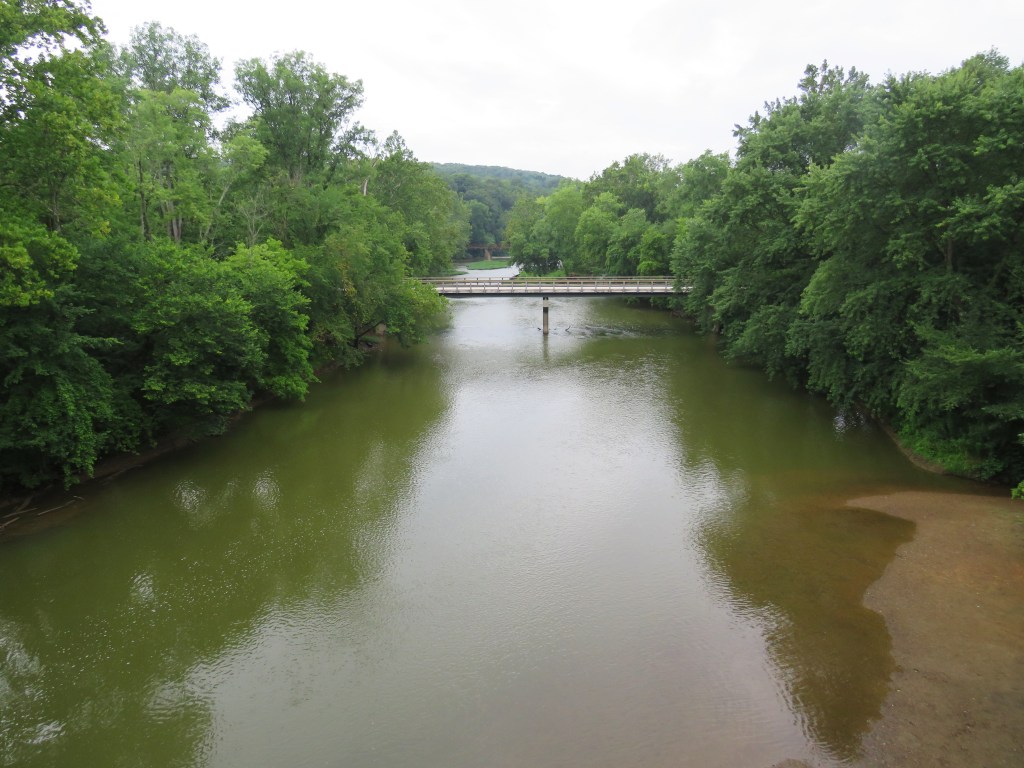
The U.S. state of Ohio has so many great sites throughout the state. It has great historic houses, museums, and parks. The state is also known for its covered bridges. One of these covered bridges is known as the ‘Bridge of Dreams’ in the small town of Brinkhaven. Unlike most covered bridges, this particular covered bridge was not an automobile bridge but is part of a hiking trail. Why is it called the ‘Bridge of Dreams’? The answer is that the bridge that crossed the Mohican River was considered to expensive to build, but money was raised, and it was built. Today, the ‘Bridge of Dreams’ is the second longest covered bridge in the state of Ohio and the third longest covered bridge in the United States of America. If you love covered bridges, you will wanted to see the ‘Bridge of Dreams’ in Brinkhaven, Ohio.
Some of you are saying, “This is nice. I love covered bridges. It is a great thing about the United States of America. The sad thing is that with this being a covered bridge, it has nothing to do with the railroad. Therefore, I will not be dreaming of seeing this covered bridge.”
What is special about the ‘Bridge of Dreams’? Yes, it is the second longest covered bridge in the state and the third longest covered bridge in the nation, but there is more to the story.
You will just see a long covered bridge if you hike, or bike, the trail. It you approach the bridge from the road, you will notice something. What do you notice from the road?
The ‘Bridge of Dreams’ is a covered bridge today, but it was not always a covered bridge.
Some of you are saying, “Wait a minute, are you saying that this was not always a covered bridge?”
You have read correctly. It was originally a railroad bridge. The trail, known as the Mohican Valley Trail, was built on an old railroad line of the Pennsylvania Railroad. What is now the ‘Bridge of Dreams’ was originally built by the Pennsylvania Railroad in the 1920’s. It was a railroad bridge until the 1990’s when the railroad line was abandoned, and it was made into a rail trail. There was an idea to convert the old railroad bridge into a covered bridge. Fighting against the skeptics, the bridge became a covered bridge, and it was dedicated in 1999.
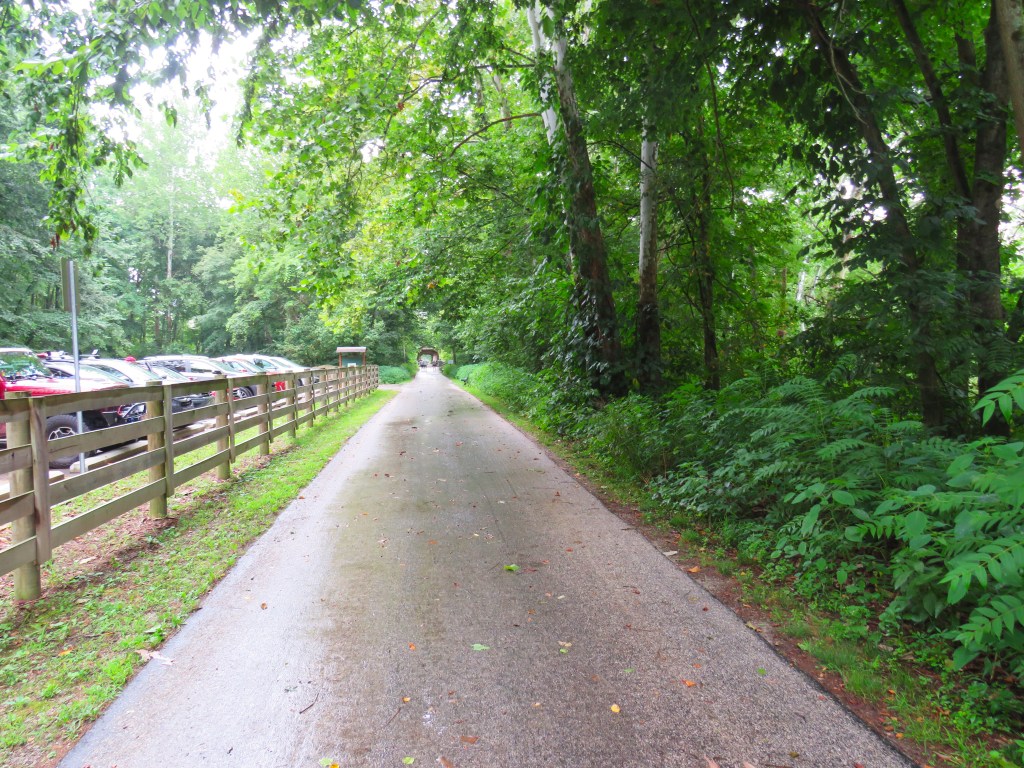
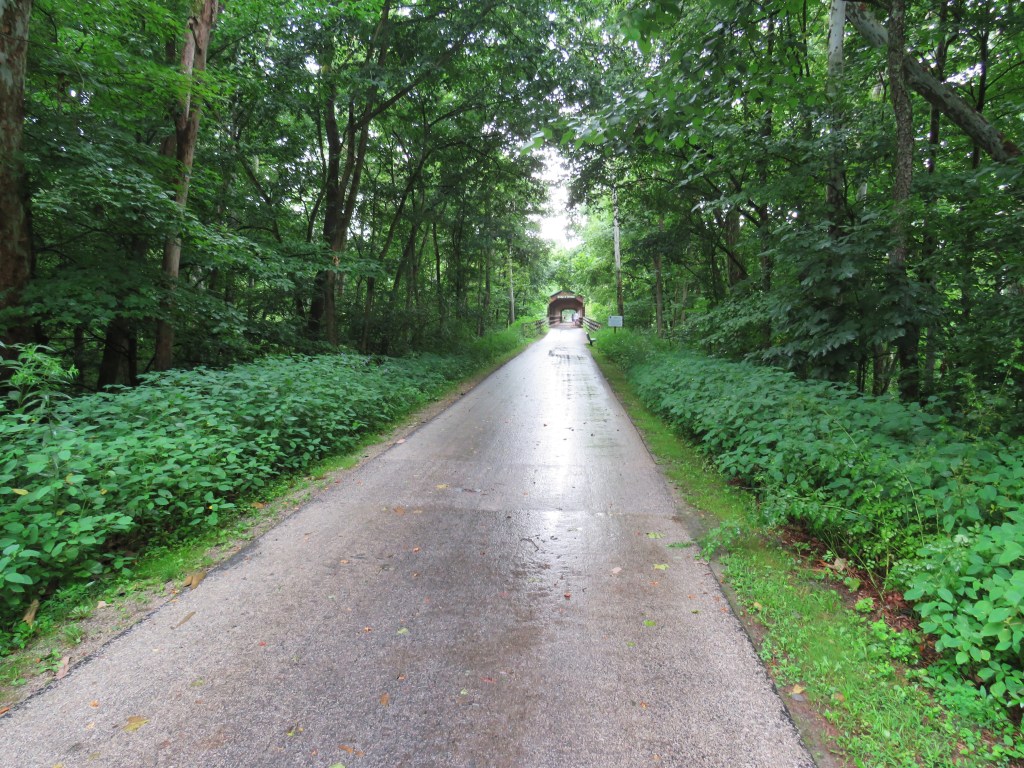
Today, you can take a walk across a bridge that was once traversed by the railroad. The bridge is a short drive from U.S. Route 62 south of Brinkhaven. You can park next to the trail and take a quarter mile walk on a paved trail that is easily accessible by wheelchairs. If you have enough energy, you can go ahead and walk the entire four and a half mile trail to the nearby town of Danville.
The next time you hear about the ‘Bridge of Dreams’, you can dream about the days when the railroad traversed the Mohican River. The railroad is long gone, but the dream still remains.
There are so many things about the U.S. state of West Virginia. It is a state that has so much natural beauty. You have the New River Gorge. You have Dolly Sods, the largest unspoiled natural area east of the Mississippi River. You have the many mountains and valleys. Are you thinking about the coal mining industry? You can visit the Beckley Exhibition Coal Mine, a once active coal mine in Beckley that is now open for public tours. What about railroads? You have the Cass Scenic Railroad in the town of Cass that takes you to the top of the second highest point in the state. Also in Cass, you can take a ride on the Durbin Rocket. You have the city of Elkins that was once a major railroad city with only excursion trains today. Elkins is also the home of the West Virginia Railroad Museum that tells the history of the railroad in the state. There is so much to the state of West Virginia from small towns to natural beauty to railroads to its cities with the largest city being Charleston, the state capital. A city that is very often overlooked is the city of Wheeling. How is it overlooked as Interstate 70 and the National Road (U.S. Route 40) passes through this city which happens to be on the Ohio River and borders Ohio? Once known as the ‘Gateway to the West’, it was once a big railroad town with the Baltimore and Ohio Railroad having a presence here, but it has a great little treasure known as the Kruger Street Toy and Train Museum.
What is the Kruger Street Toy and Train Museum?
Some of you are saying, “Well, duh, it is a museum of toy and trains that happens to be on Kruger Street.”
You are exactly right. It is on Kruger Street. It is about toys and trains. Well, it is about model trains of which there are plenty here. Yes, there are plenty of museums about toys and about trains, but what makes this place different?
It all began with a father and son who collected toy trains. The collection grew, and they decided to display their collection in a museum, but where?
As you arrive at the Kruger Street Toy and Train Museum, you notice that it looks like a school. That is because it was a school. It was bought through an auction, and the Kruger Street Toy and Train Museum was opened in September of 1998.
Before you enter the old school, you notice a yellow caboose. Yes, there are cabooses everywhere, but this particular caboose is from the Baltimore and Ohio Railroad as a memorial to the Baltimore and Ohio Railroad’s influence to the city of Wheeling.
Ladies and gentlemen, this is just the beginning.
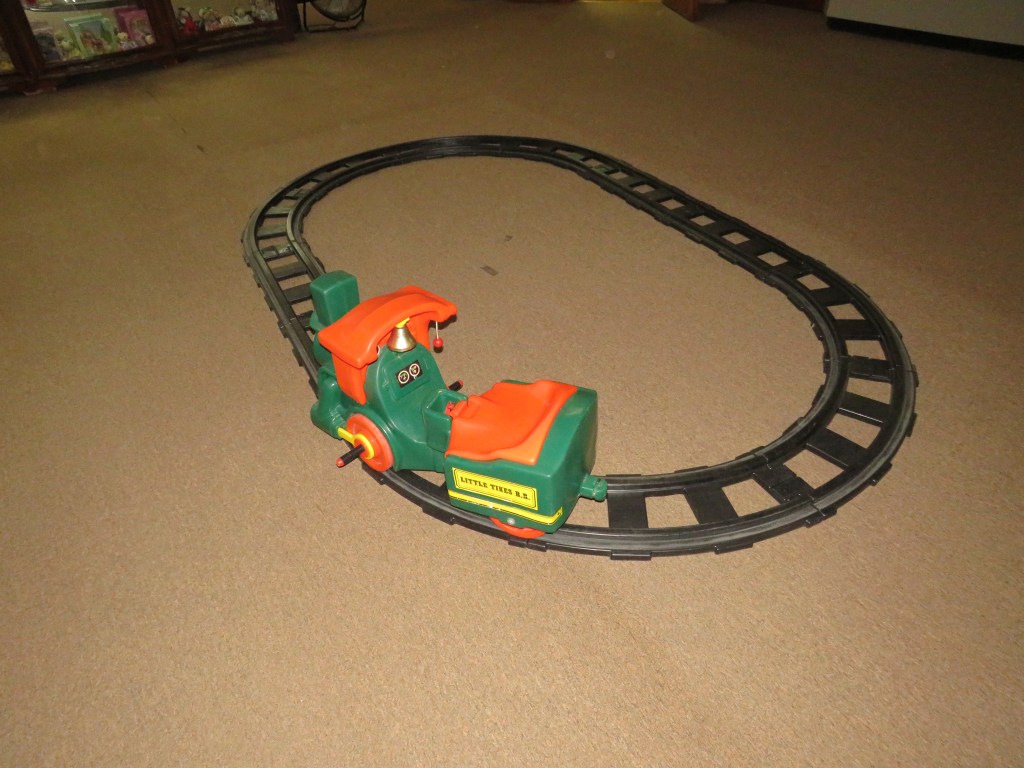
You enter the museum, the very first thing you see… is a model train, but there is much more.
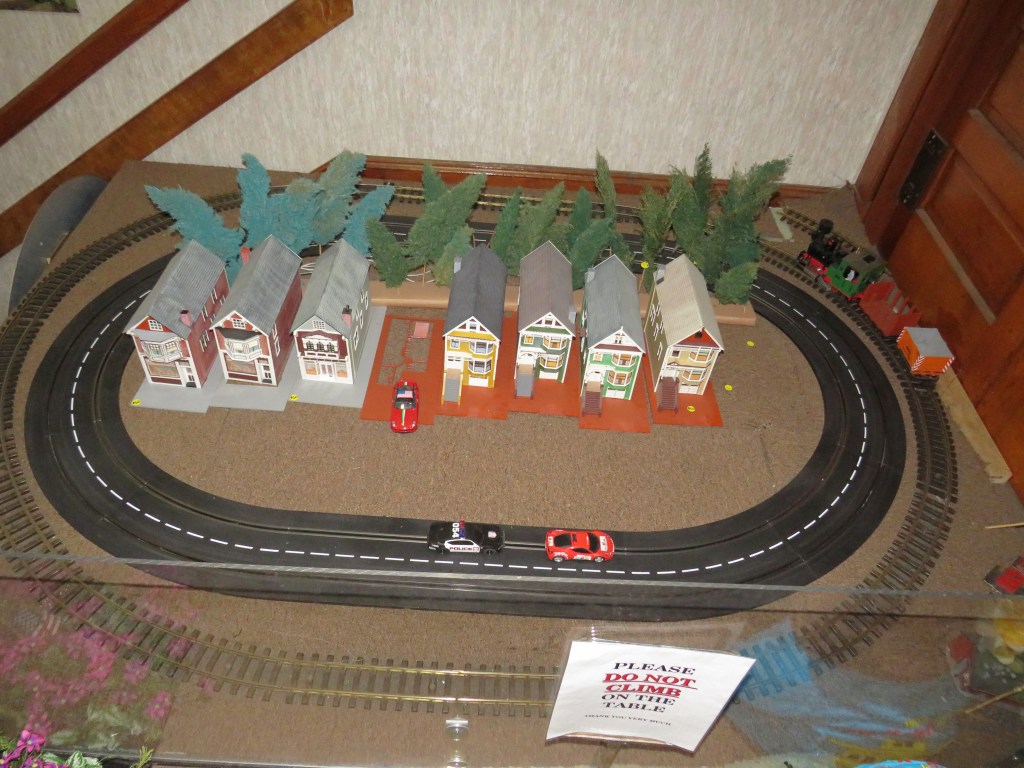
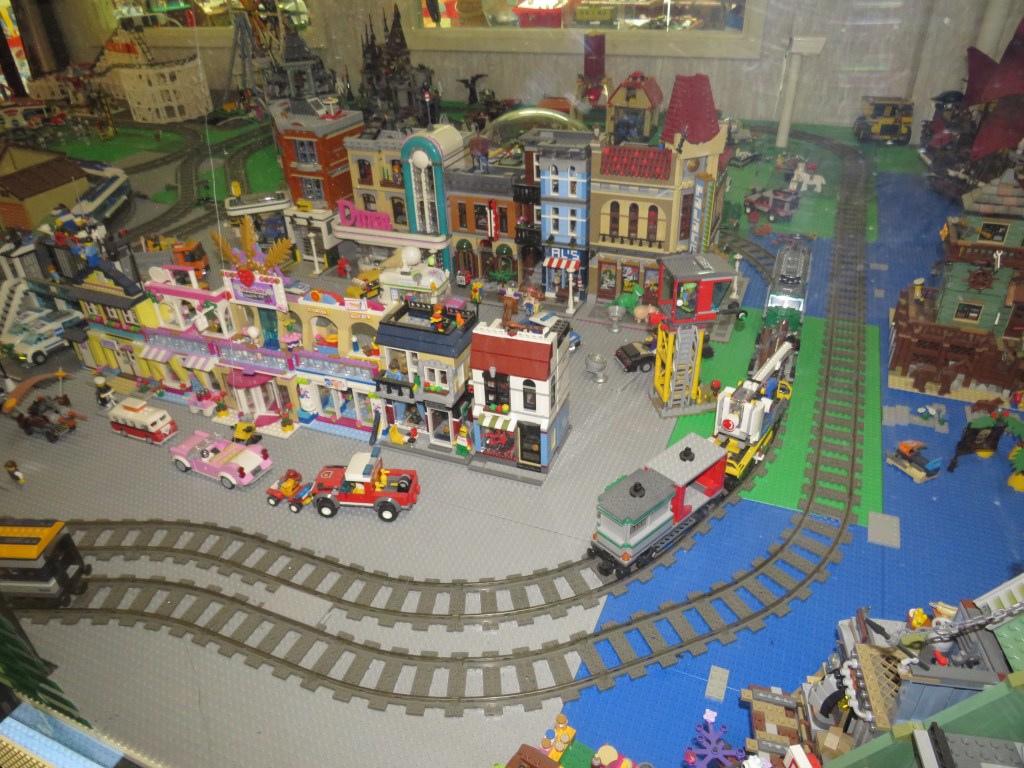
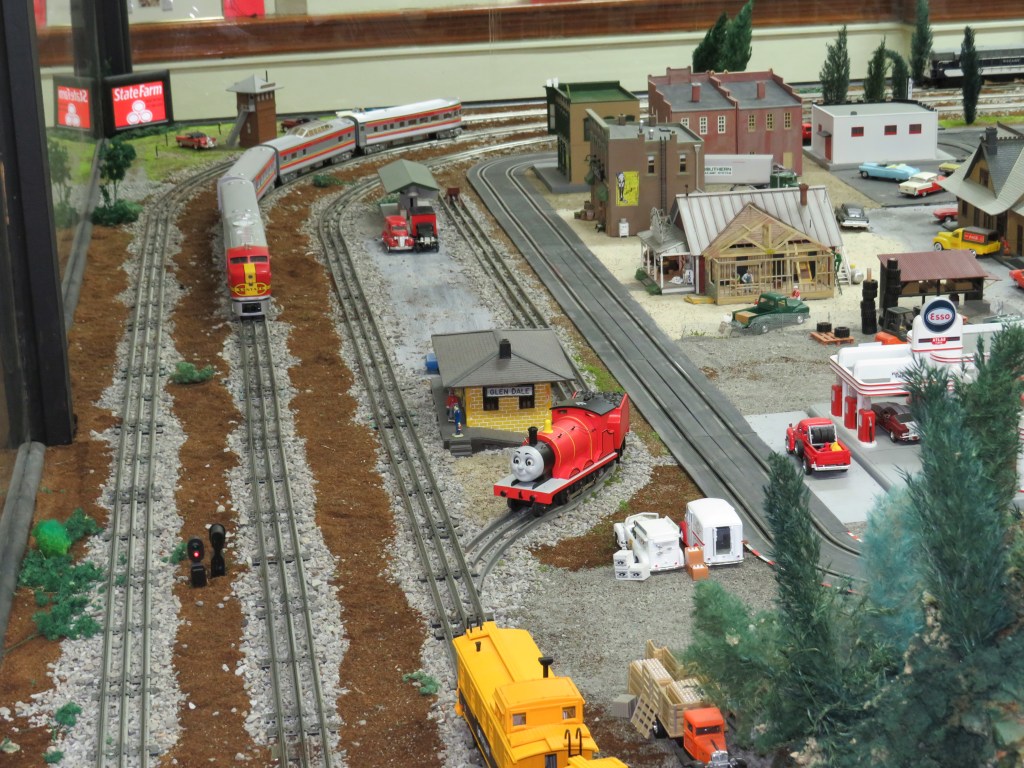
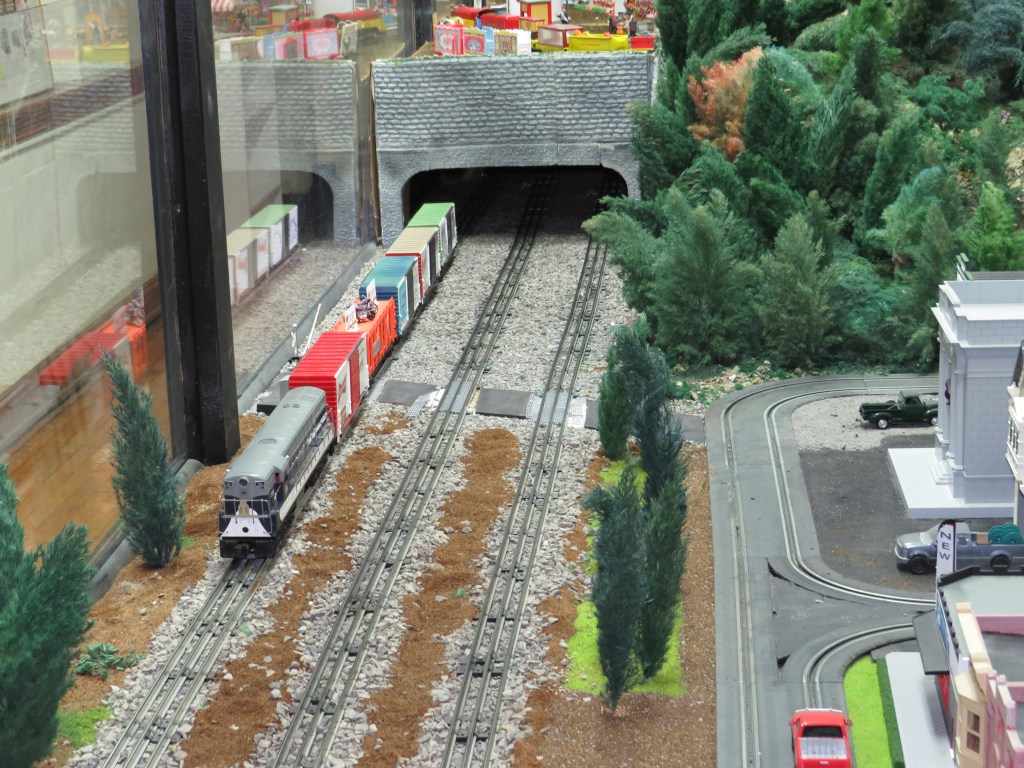
The museum features rooms dedicated to different toys, and there are rooms dedicated to different model trains. You have the O Gauge Room. (O Gauge is a size of the model train.)
Then there is the Ohio Valley History Room which has a model train display of the Ohio River Valley of which Wheeling is a part of, and there is a display in honor of Chuck Yeager, a famous jet pilot from the state who is famous for breaking the sound barrier.
What is a train museum without the Historic Train Room? The room has a collection of historic model trains from Lionel.
You have the HO Gauge Room. Yes, it features a HO Gauge model train display, but it also displays locomotives in brass and model trains from all gauges.
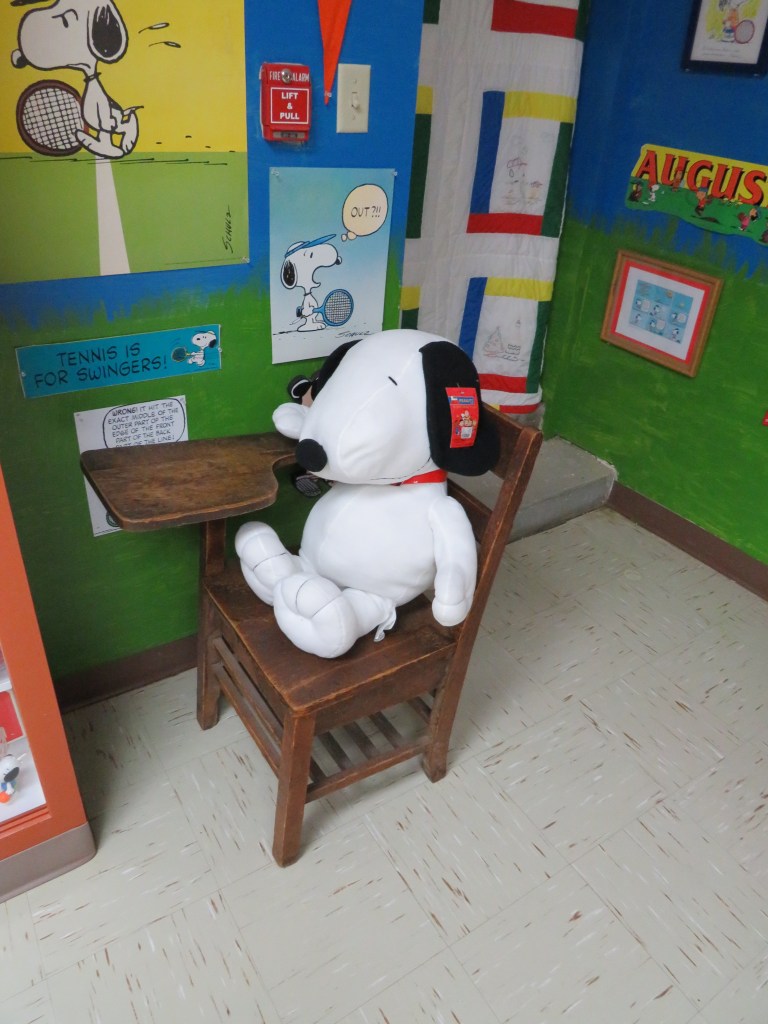
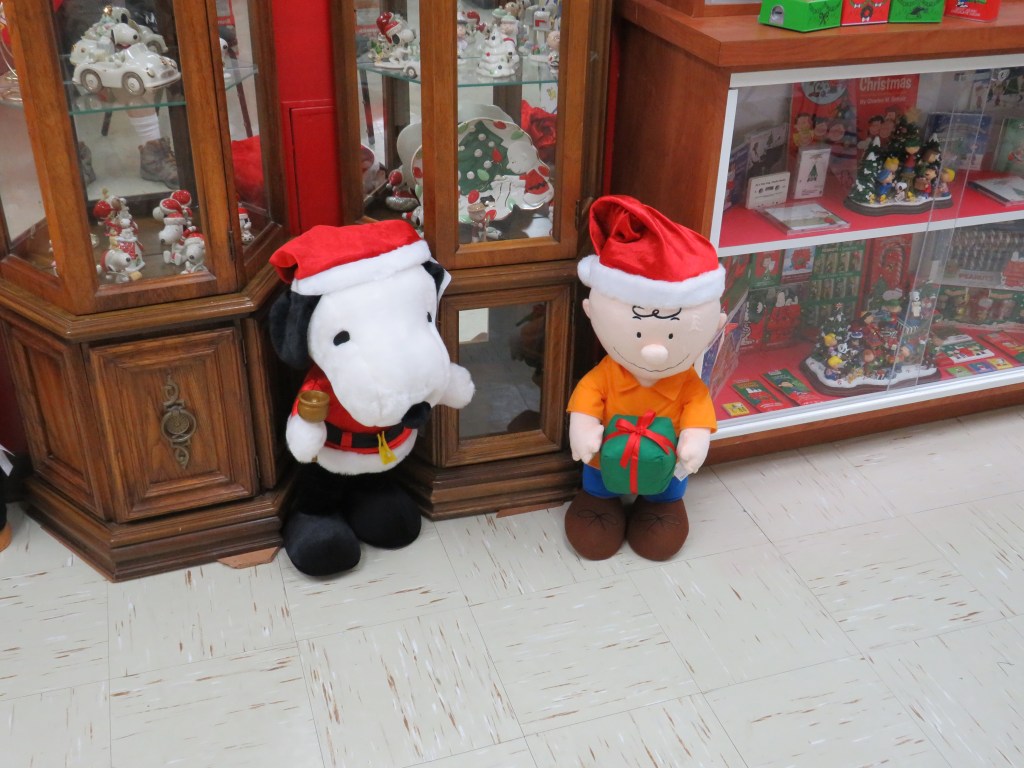
Yes this is a museum about toys and trains. For those who are a fan of Peanuts (the cartoon and not the food item), the museum features a collection of Snoopy, Charlie Brown, and other Peanuts characters that was donated by a local doctor named William Mercer so that many would enjoy the collection for years to come. Yes, it is about Peanuts, but there is also a model train display here as well.
The Kruger Street Toy and Train Museum is a very special museum in a not-so-famous part of West Virginia. A visit here is a visit you will cherish. For those of the older generation, it will bring back memories of your childhood. For the younger ones, they will see the toys that the children played with before them.
The Kruger Toy and Train Museum is located at 144 Kruger Street in Wheeling, West Virginia. It is less that a miles from Interstate 70, U.S. Route 40, and West Virginia Route 88. The museum is open year round, but hours do vary due to the time of the year. Parking is on site. Due to the age of the structure, the museum is not wheelchair accessible. You can learn more about the museum and its exhibits, the history of the museum and the building, and get information on hours and admission at https://www.toyandtrain.com/.
They call it wild and wonderful West Virginia, but the state has much to offer. The city of Wheeling has the Kruger Toy and Train Museum. When you visit, you will have a wonderful time.
Oh the U.S. state of Indiana is a state famous for the Indianapolis 500 in the capital city of Indianapolis, The University of Notre Dame in South Bend, and for basketball which inspired the movie ‘Hoosiers’ starring Gene Hackman. Like other states in the United States of America, Indiana has great hidden treasures. One of these treasures is the town of Pendleton, a suburb of Indianapolis. What is the town of Pendleton, Indiana famous for? Well, unlike Indianapolis, South Bend, Fort Wayne, and Elkhart, there is not much fame in the town of Pendleton.
Some of you are saying, “Well, it looks like I am not going to visit this town.”
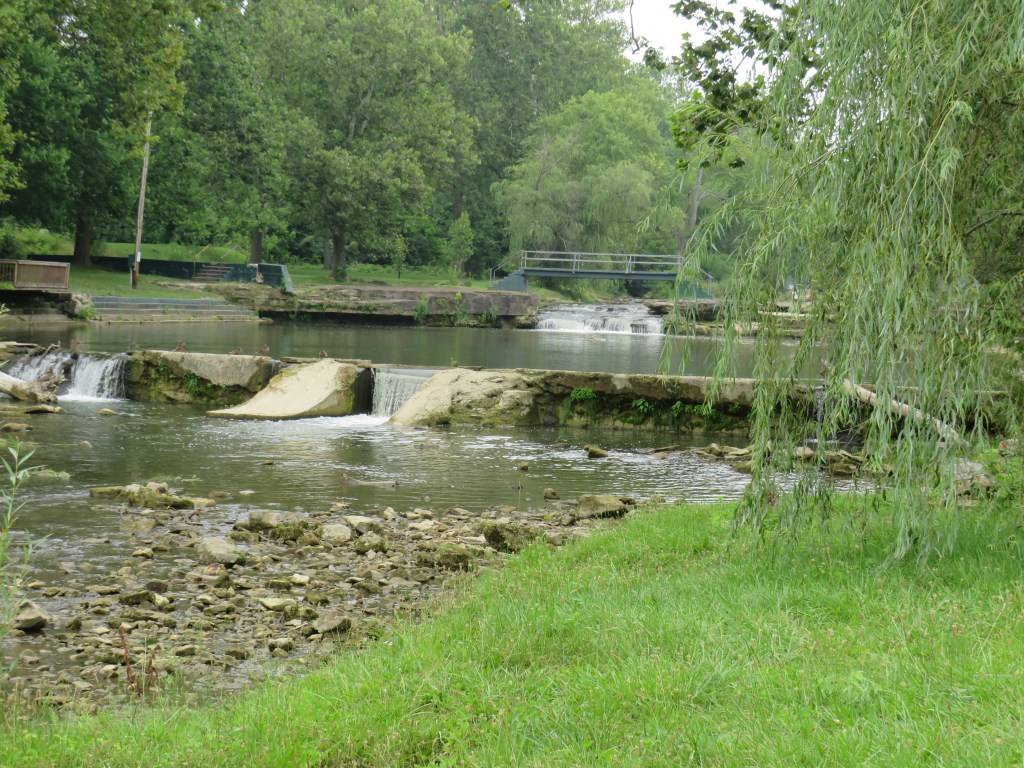
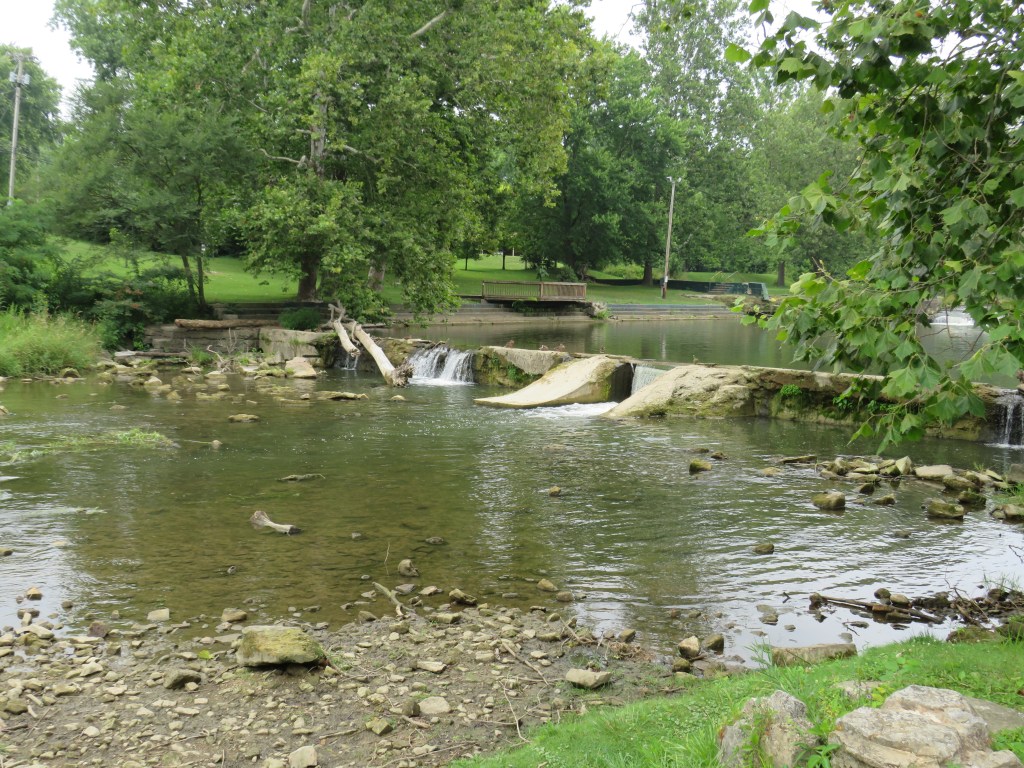
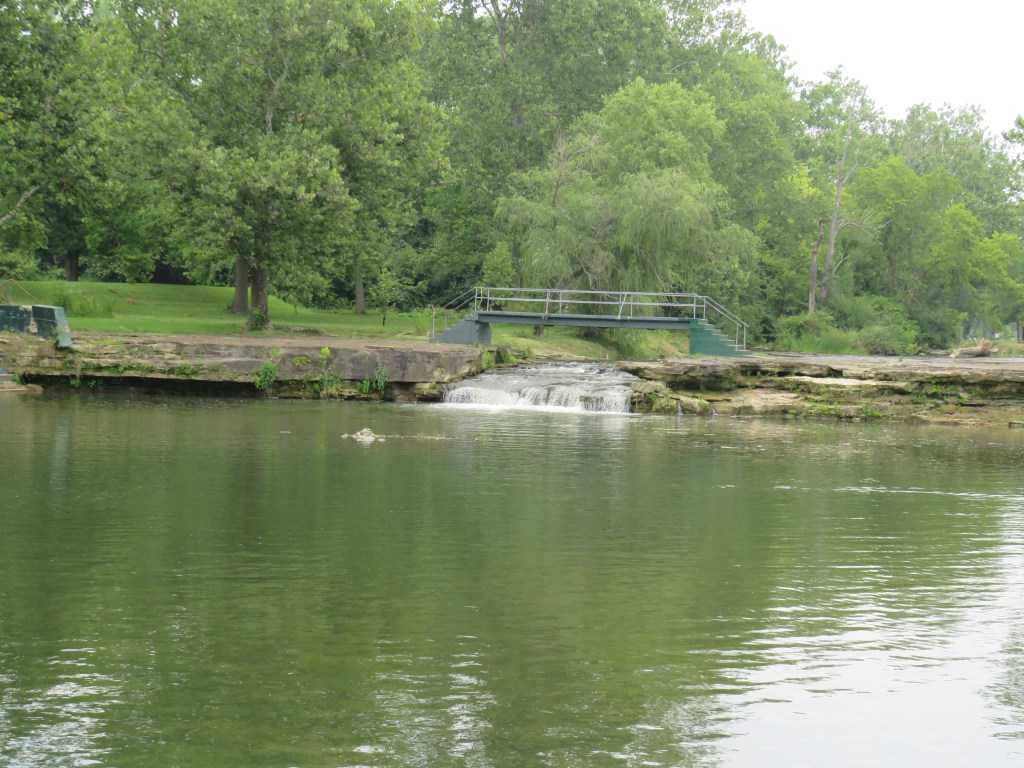
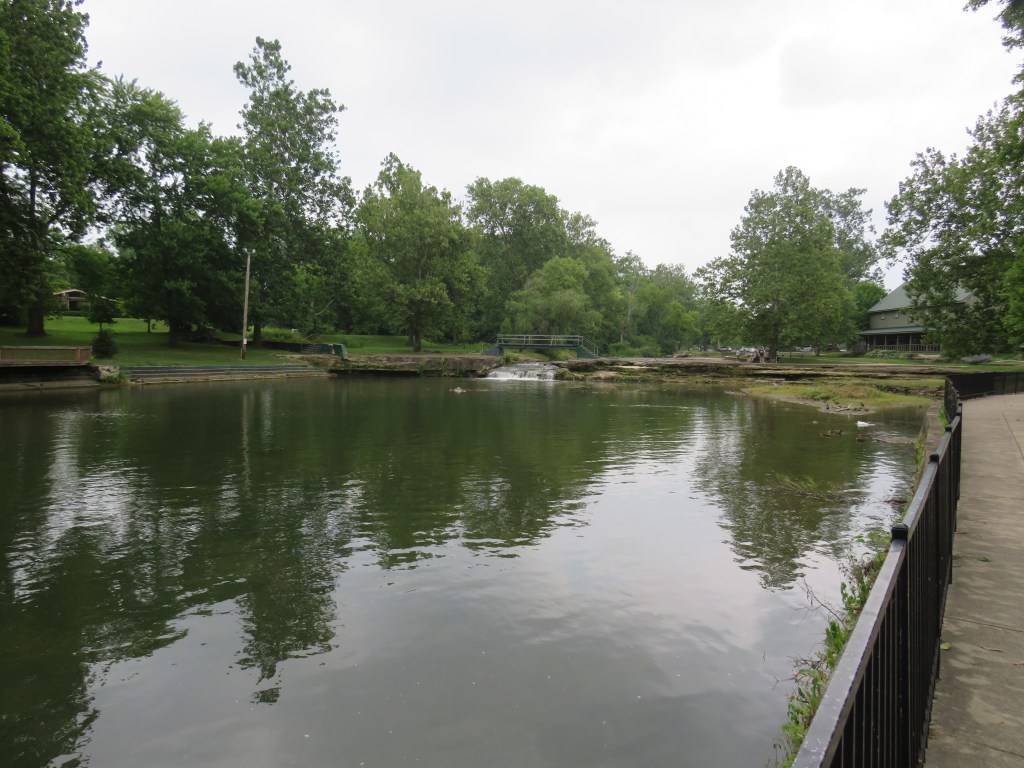
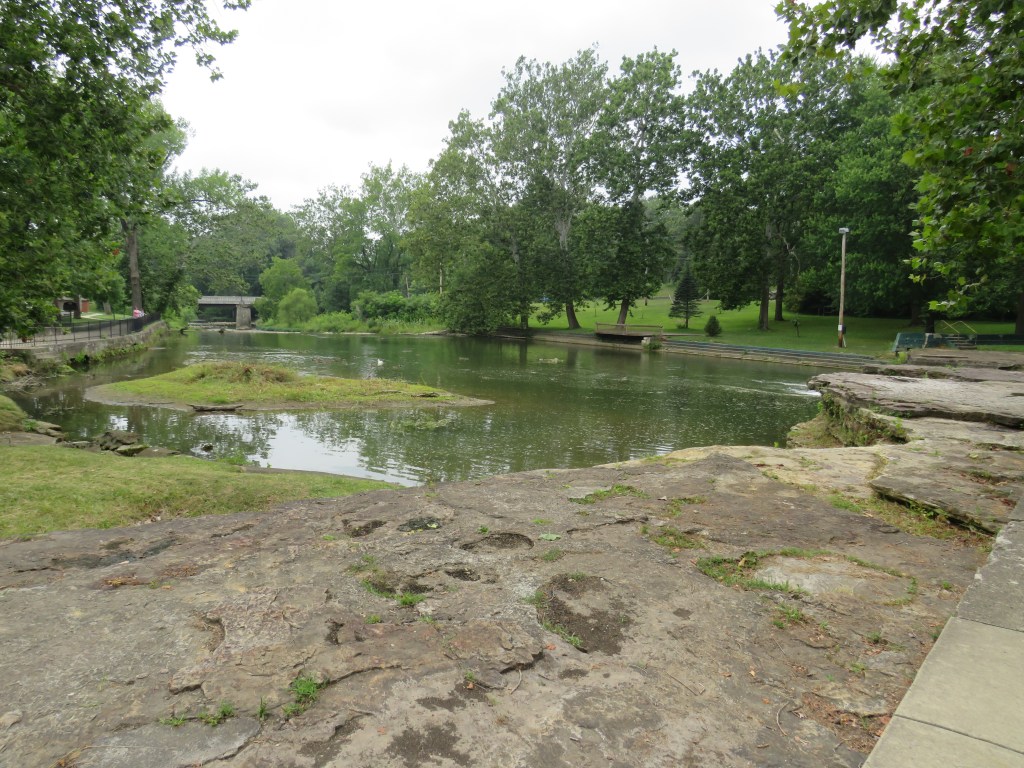
Well, this town has a great treasure. What is this great treasure? Welcome to Falls Park in Pendleton, Indiana. What is great about Falls Park? Well, it does have a waterfall. It may not be as grand as Niagara Falls or Iguazu Falls or Victoria Falls, but just like most waterfalls, it is a beauty to see. Now you have a great reason to visit Falls Park in Pendleton, Indiana.
Some of you are saying, “Oh, I love waterfalls. They are such a beautiful thing to see. I also enjoy parks. There is a big problem. This park is not a railroad park. Therefore, I will not ‘fall’ in love with the town of Pendleton, Indiana.”
So why visit Falls Park in Pendleton, Indiana?
The park itself has a deep history that goes deep. As you enter the park, you will notice what appears to be railroad bridge abutments. Why are they there? Pendleton is not a railroad town nor was it ever a railroad town even though a railroad line does pass through the town. The old abutments are from a railroad line that did cross over the falls. The ‘Bee Line’ passed through the park. Originally part of the ‘Big 4 Railway’ which came through the park in 1851. One of the trails follows the old railroad bed. Like many unused railroad lines, they were abandoned, and the rails were taken up leaving the remnants of the railroad today.
Falls Park is located at 460 Falls Park Drive in Pendleton, Indiana just north of Indiana Route 38 and minutes from Interstate 69 and U.S. Route 36. The park also has a museum and a veterans memorial. The park is open sunrise to sunset, and access to see the waterfalls is available for wheelchairs.
You now have a reason to visit Falls Park in Pendleton, Indiana. Be warned. You will fall in love with this place.
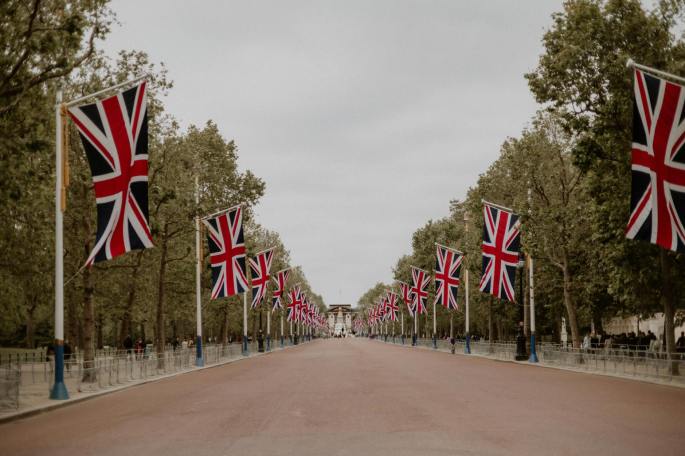
The famous words of the British Prime Minister Winston Leonard Spencer Churchill as many in the British Parliament were suggesting negotiating with the Nazis and the Germans as they march across Europe during World War II. It was this stance that began the demise of Nazi Germany. Throughout his life, he served in many political positions.
Before he was Prime Minister, he was a British soldier. As a soldier, he served in many positions. While serving in Africa, he worked with the railroads. Yes, he worked on the railroad supplying the British army throughout Kenya and other parts of the continent. He would ride with a few other soldiers on what is called the ‘cowcatcher’. (The cowcatcher is located on the front of a steam locomotive at the bottom near the tracks.) He is also known for using the Uganda Railway to travel to make speeches.
Winston Churchill, a politician, a stateman, a soldier, a family man, a Brit, and a man who worked on the railroad.
Cover photo is from Google Images. The picture of the train and flag is AI generated. The statue of Winston Churchill is from National Harbor in Oxon Hill, Maryland, U.S.A.





























 John Cowgill: Stories of the Railroad