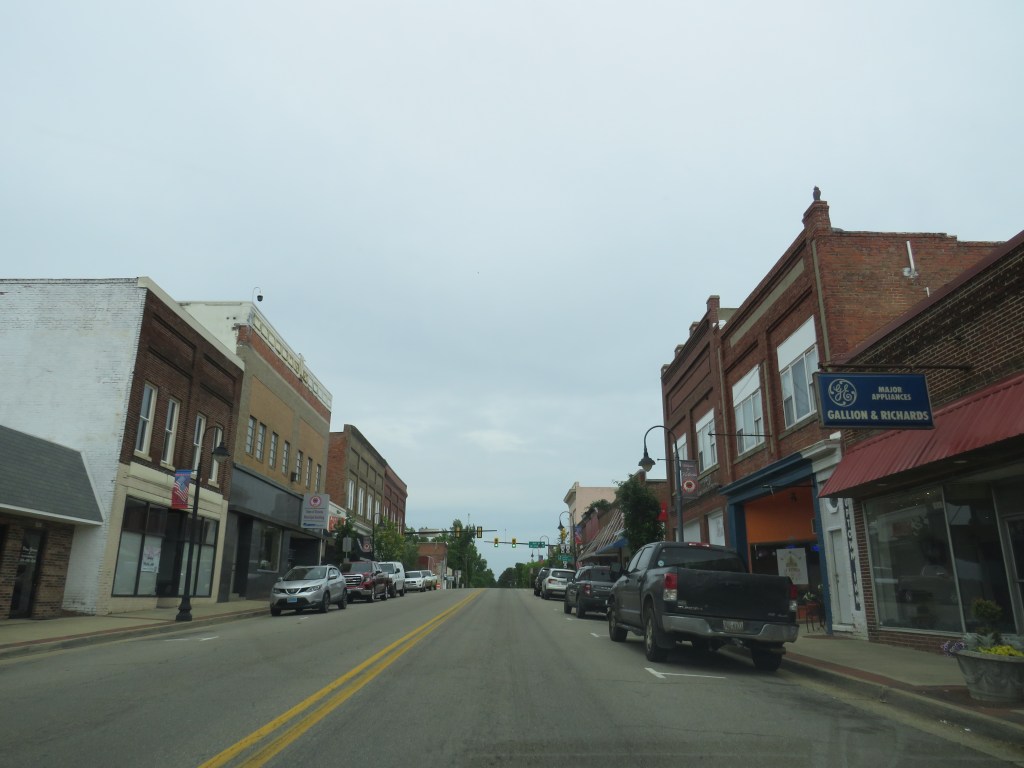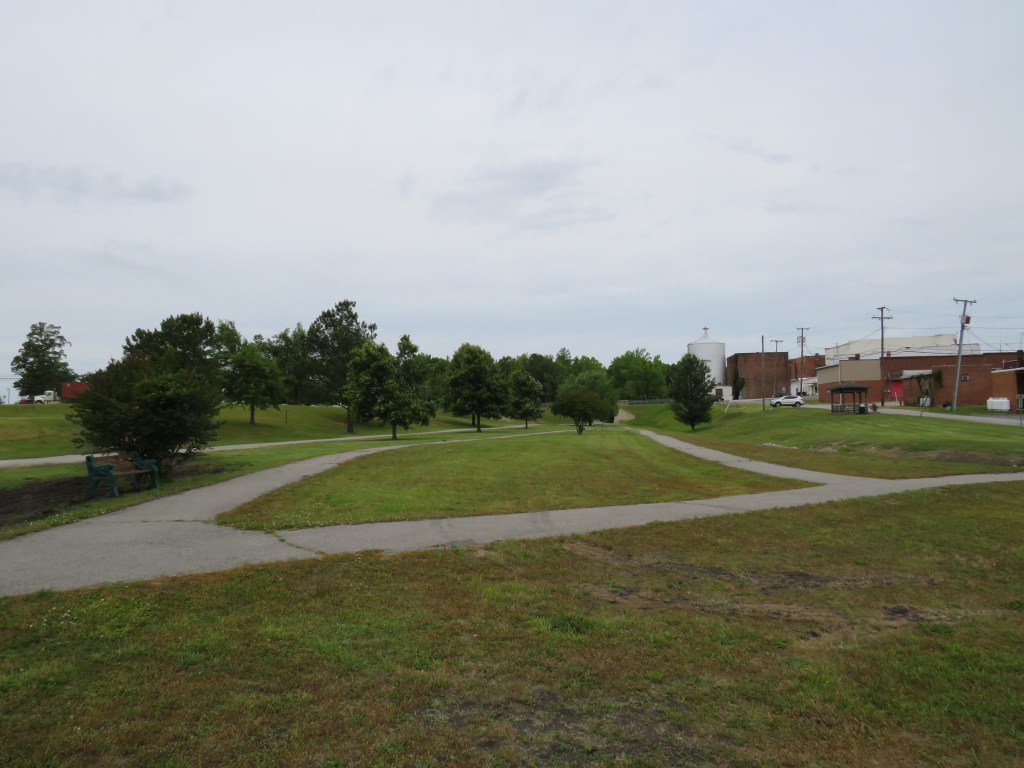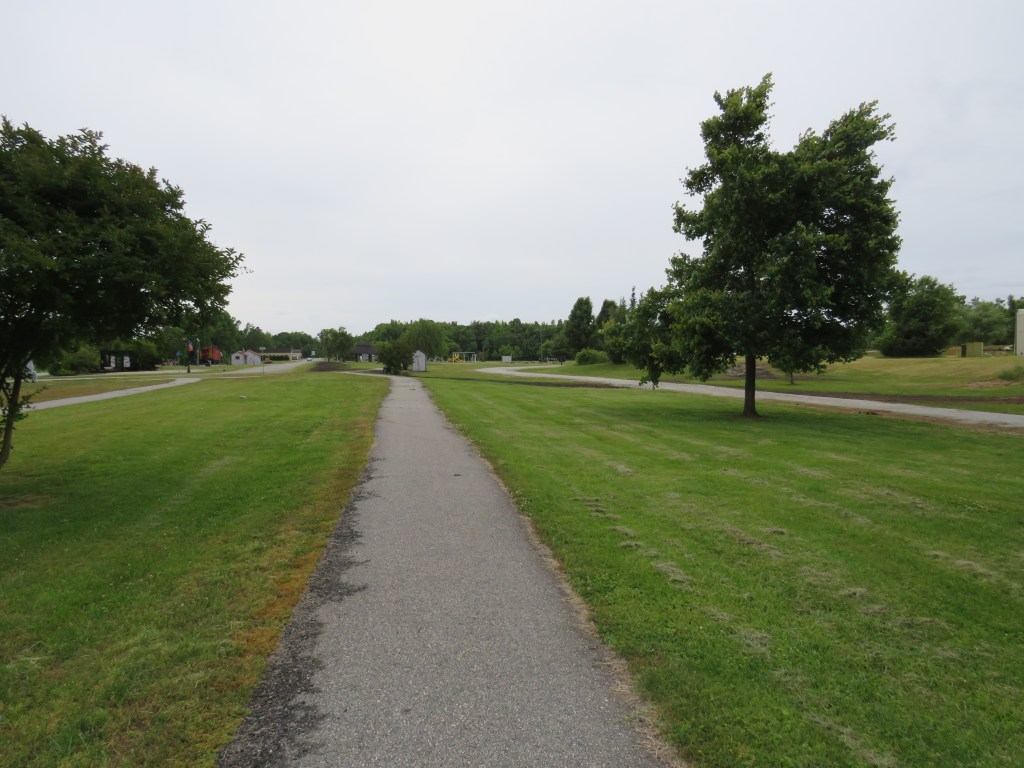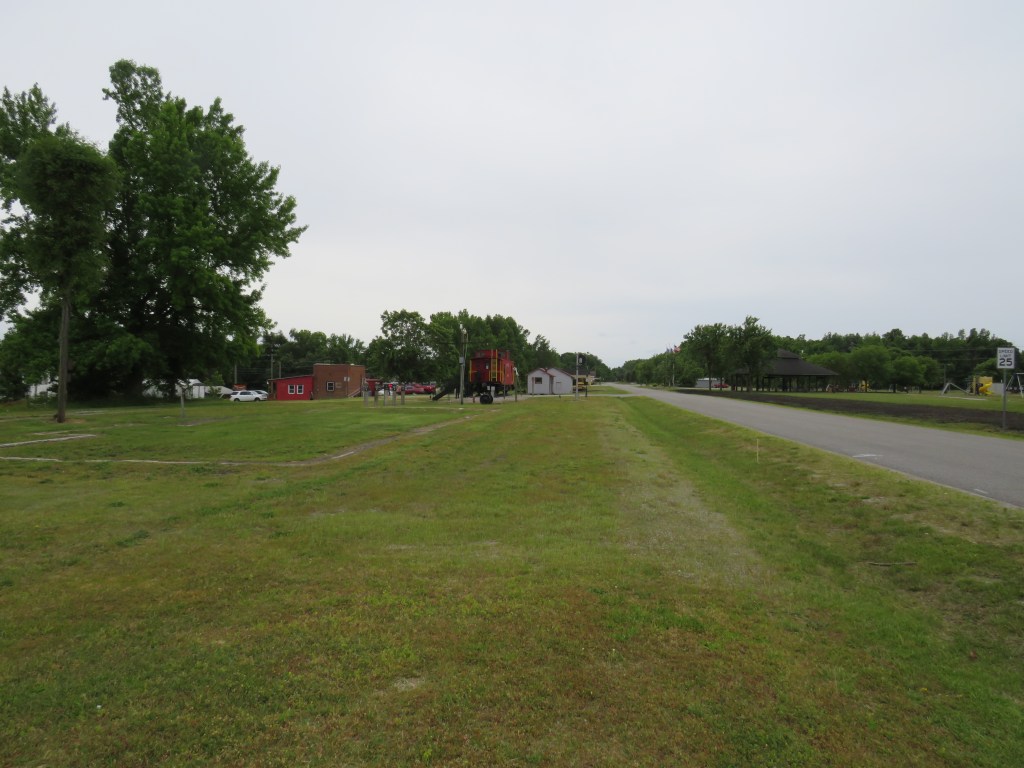
The Red Lion Mile, Red Lion, Pennsylvania

What is the Red Lion Mile?

Some of you are saying, “I know.  It is a lion that is red and is a mile long.”

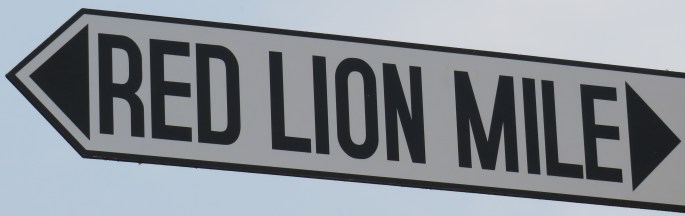
Well, that is not the correct answer.  What is the Red Lion Mile?  It is a rail trail in the town of Red Lion in the U.S. state of Pennsylvania.

Some of you are saying, “Wow.  I did not know that.  I bet the town got the name because a red lion was once here.”

Even though the ‘red lion’ is the symbol of the town, it is not named after an actual lion.  It is named after a pub when it was settled in 1852 called the Red Lion Tavern, and that tavern is still in business today.

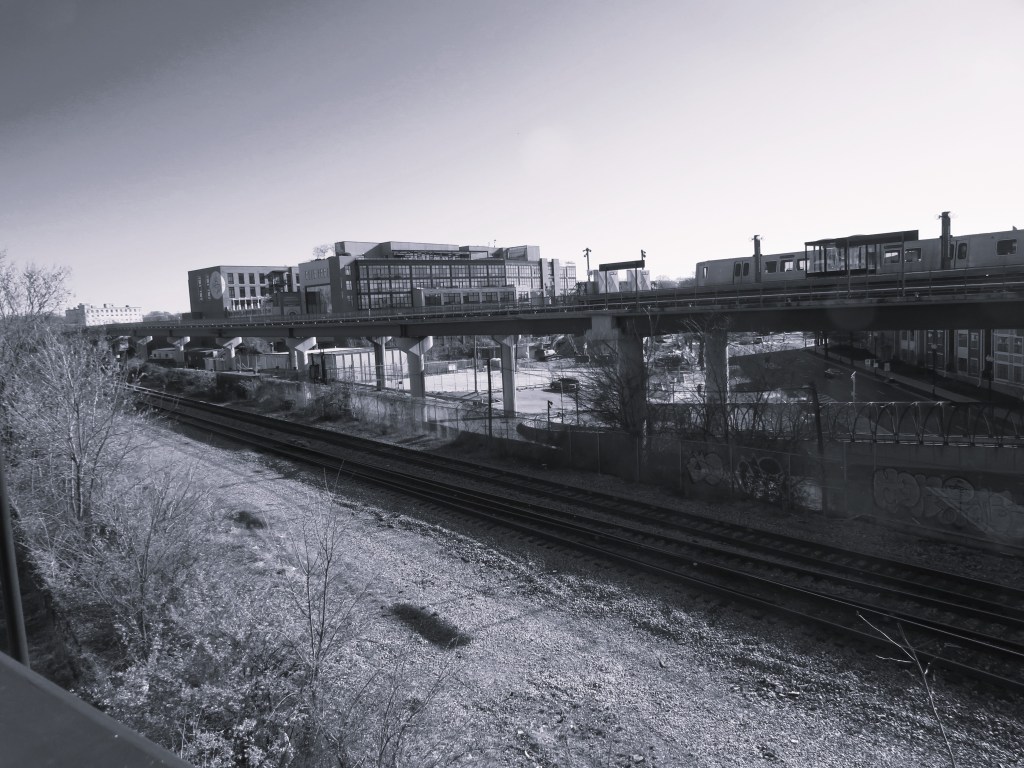
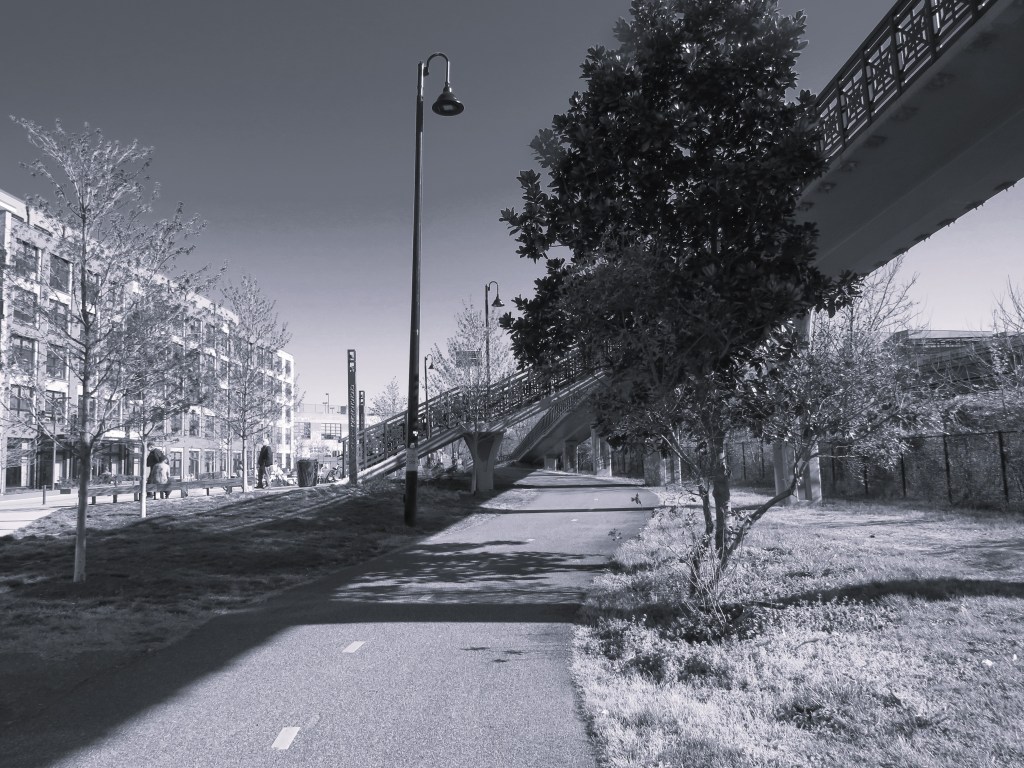
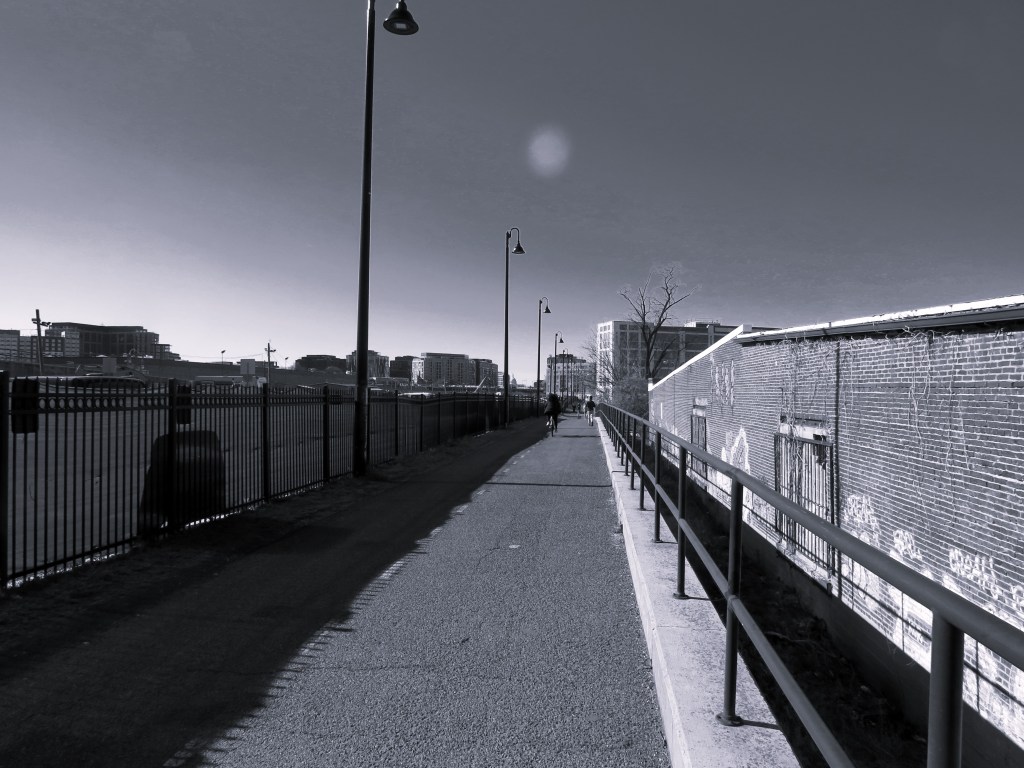
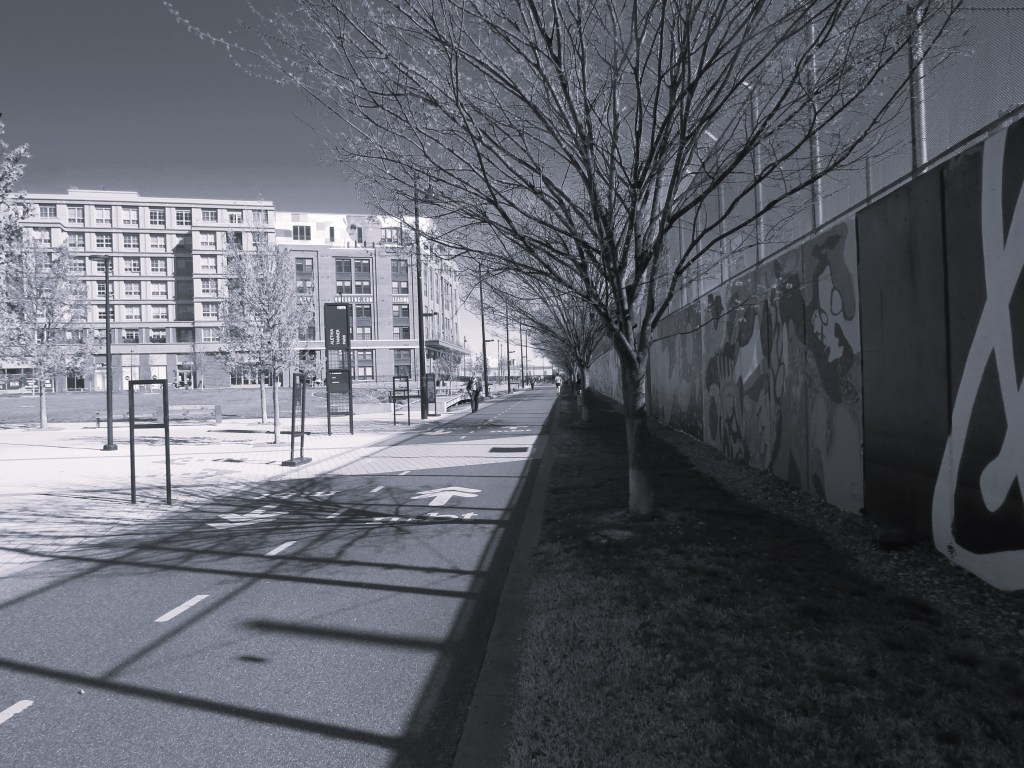
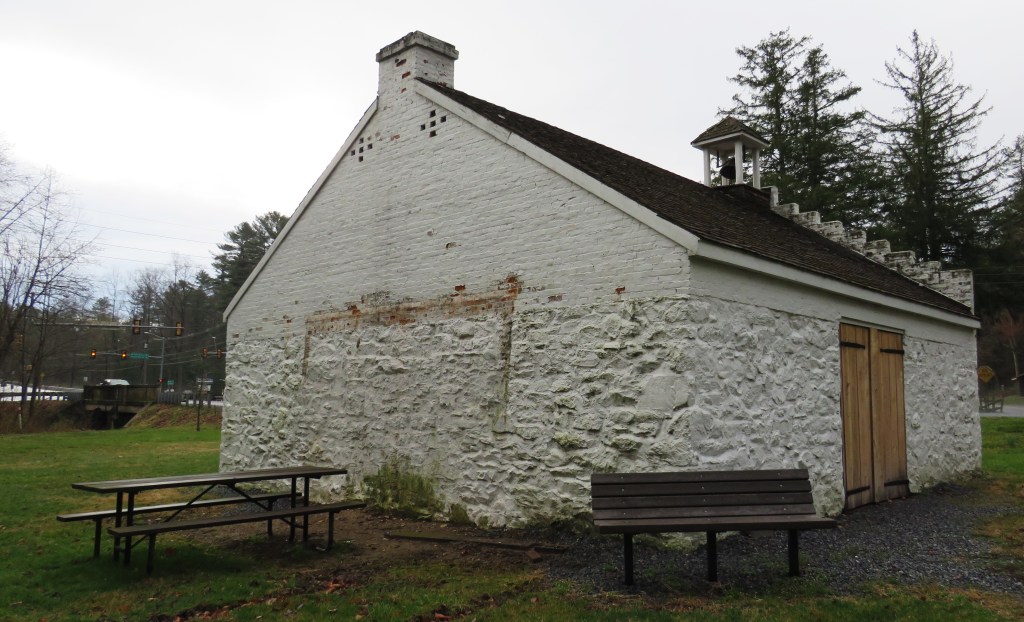
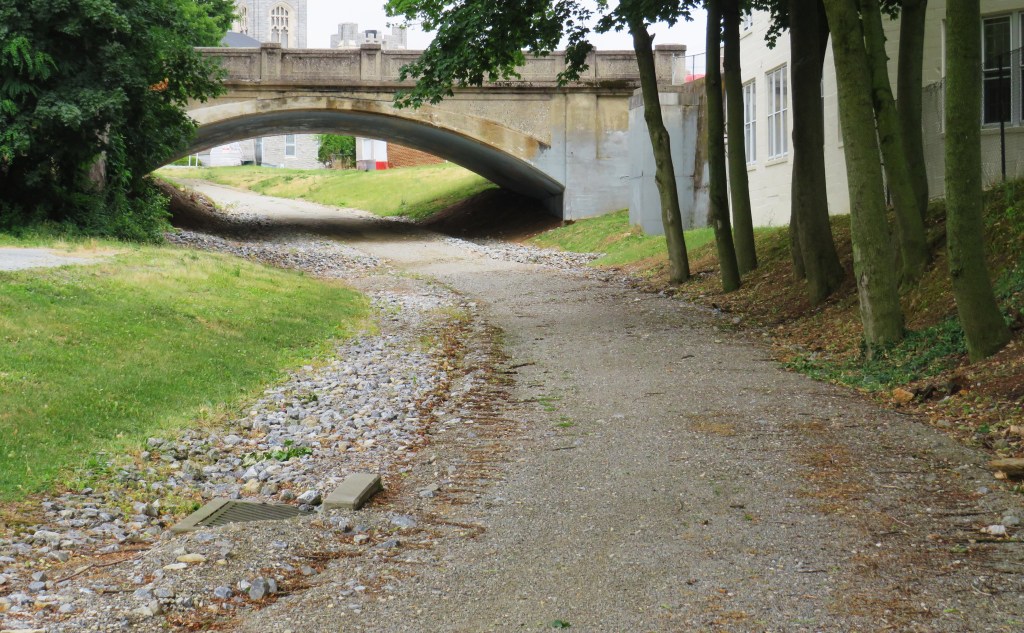
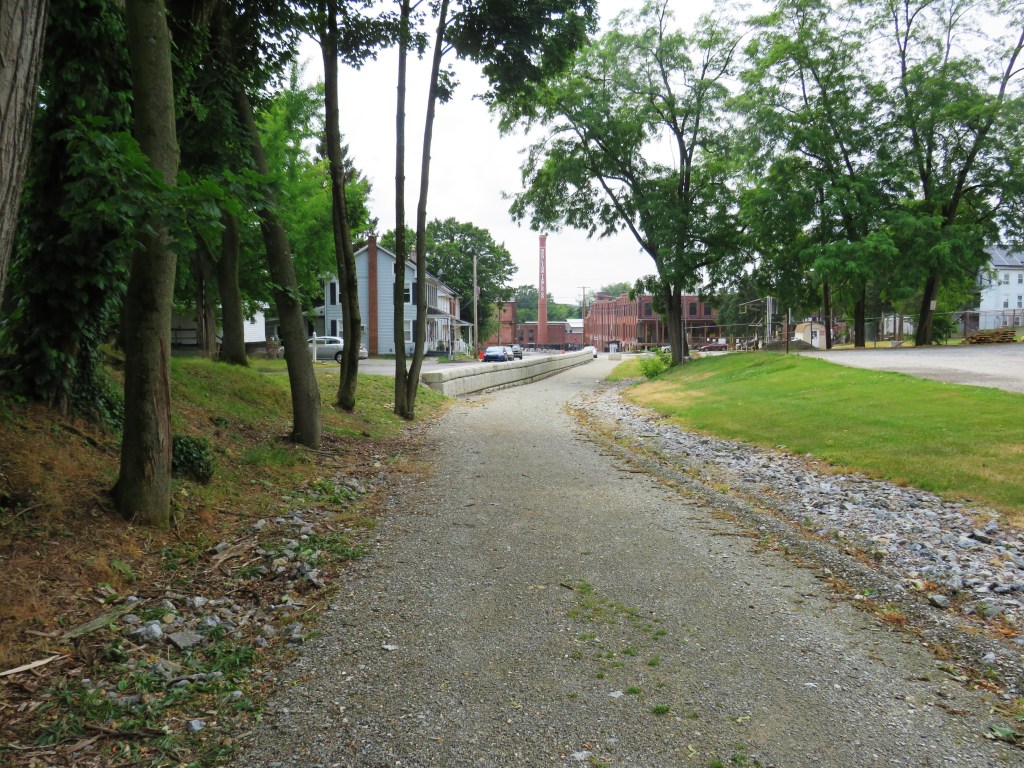
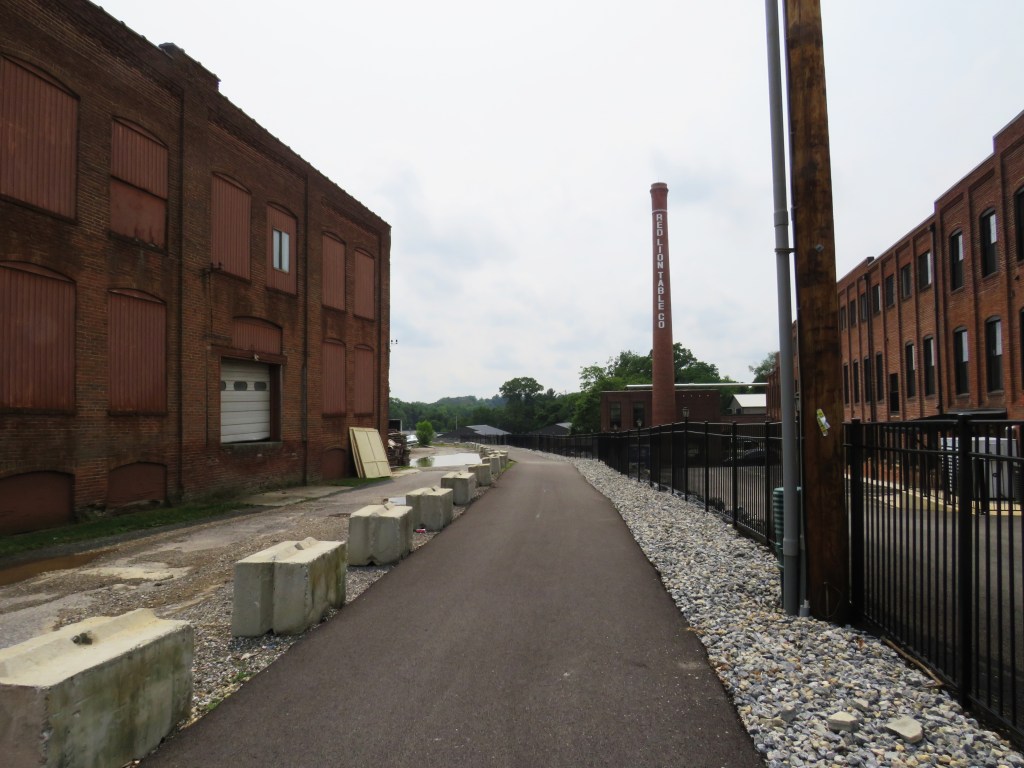
Today, the town of Red Lion, Pennsylvania is not served by the railroad, but it was once a major railroad town on the York and Peach Bottom Railroad and later the Maryland and Pennsylvania Railroad.  (It was commonly referred to as the ‘Ma and Pa Railroad’.”)  The town was a place of industry to include furniture and cigars.  As you walk along the rail trail, you will see some of the old factory structures.  The remaining structures have been converted into housing or businesses.  The old train station also remains, and it is the home of the Red Lion Historical Society.

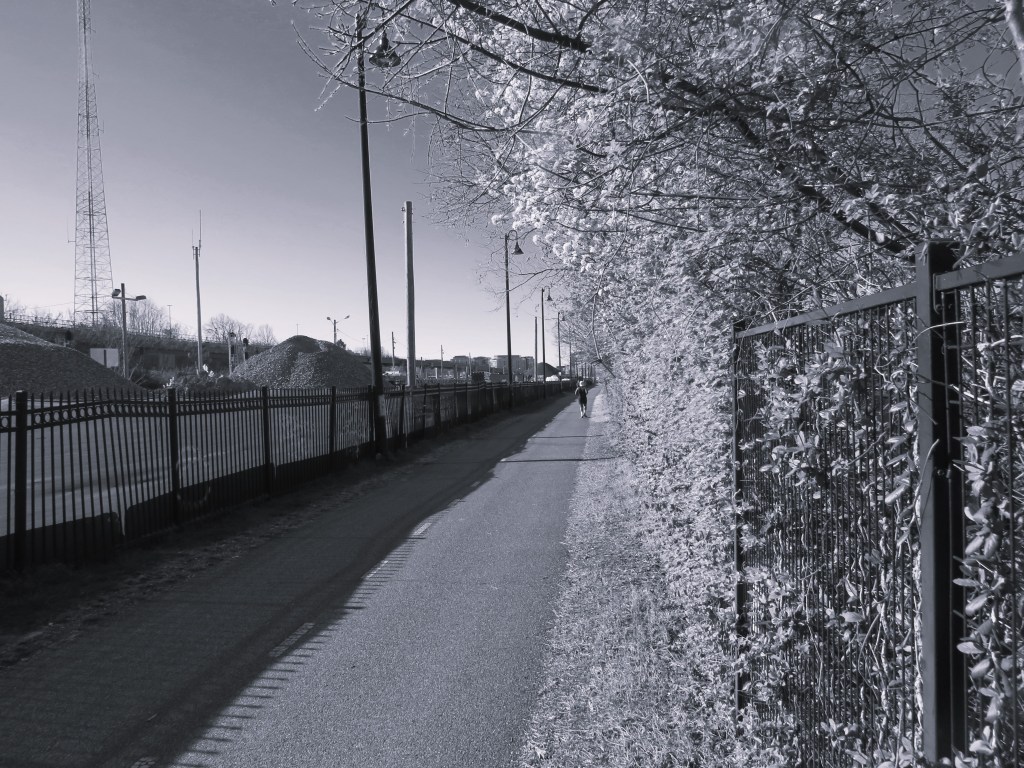
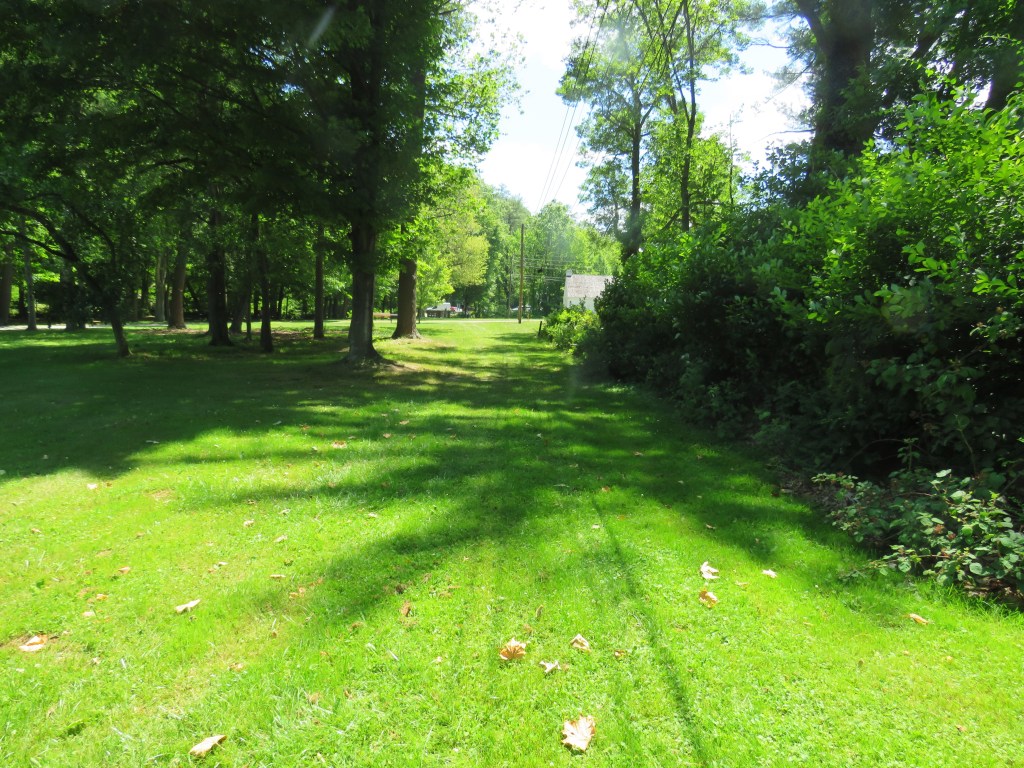
The Red Lion Mile mainly runs west from the old train station located on Pennsylvania Route 24, and it is mostly paved.  Parking is available along the trail.  You can learn more about the town at https://redlionareahistoricalsociety.org/area-history/red-lion/red-lion-history/.

The Red Lion Mile: you may not see any red lions, but you will see the places that was once seen by those who once ran the trains through the town.

Victoria, Virginia

Have you ever heard of the small town of Victoria in the southern region of the U.S. state of Virginia?  If you have never heard of this town, do not feel sad as very few people even know that this town even exists.  The town, located halfway between the port city of Norfolk at the mouth of the Chesapeake Bay and the city of Roanoke, has no famous historic sites or landmarks.  It is your typical small town with a main street with stores.  The only routes through the town is Virginia State Routes 40 and 49.

Some of you are saying, “Well, that is not much.  With a name like Victoria, it would be funny if the town is named after some famous queen.”

Ladies and gentlemen, start laughing.  This small one-horse town is named after Queen Victoria.  Yes, it is named after the British Queen Victoria.  The county the town is located in, Lunenburg County, is named for a German Duke.  As you can see, the town of Victoria is a small town that has much European royalty.

Now some of you are saying, “Amazing.  Queen Victoria would be very proud to have a town named in her honor.  Being a small town with no castles or palaces, she would probably never visit here.  What is really bad is that there is no railroad in this town.  Therefore, I will not accept the royalty of visiting this town.”

So, you do not want to visit this town because of the fact that it is not a railroad town.  Ladies and gentlemen, you are about to learn about a small town in southern Virginia.

The U.S. state of Virginia is a state that has much history, and the history begins long before the state was established.  Before it was a state, it was a British colony, one of the original thirteen colonies.  It has the oldest continuous American city in the United States of America which is the site of the first English settlement in the nation, Jamestown.  (Yes, Taos, New Mexico and Saint Augustine, Florida are older establishments, but they were not part of the United States of America until years later.)  The state has many great historical cities like the state capitol, Richmond, a city that served as the Confederate capital during the American Civil War, and Williamsburg, a city that was once the state capital of Virginia, and Yorktown where a great victory over the British and where they surrendered during the American Revolutionary War, and, as mentioned, Jamestown, the oldest continuous American city, and Charlottesville, the home of Thomas Jefferson, and Manassas where the first major battle of the American Civil War took place and it the only place that was the site of two major battles during that war, and Alexandria, a city with deep history, and Bristol, a town that is partly in Virginia and partly in Tennessee where it is said that country music began here.  The state has produce more U.S. presidents than any other state.  The father of the nation, George Washington, and the man who drafted the Declaration of Independence, Thomas Jefferson, two U.S. presidents, were born here and had their homes here.  Speaking of Thomas Jefferson, his home, Monticello, located in Charlottesville, is the only U.S. presidential home that is a UNESCO World Heritage Site.  The state is one of the most visited states in the nation.

That brings us to the town of Victoria, a town that very few have heard of.

Some of you are saying, “If nobody has ever heard of this town, then the town most likely had no significance.”

What is special about the town of Victoria, Virginia?  When you arrive here, you with see a town just like any other small town, but then you notice something.  You see a park with a caboose.  What caboose?  It is from the Virginian Railway.  What is it doing here in this town?  You notice what appears to be a trail, but it is not an ordinary trail, but what appears to be a rail trail.

What is special about the town of Victoria, Virginia?  It was a planned community.  As mentioned, the town is halfway between Roanoke and Norfolk.  What is so important about that?  Norfolk, as mentioned, is a major port city, and it is the largest natural port in the world.  Both Roanoke and Norfolk were major railroad cities, and they are major railroad cities today.  Why is Norfolk a major port?  The Port of Norfolk is a major coal city, and the port is served by many coal trains bringing coal from the mines in Kentucky, Virginia, and West Virginia to the ships in Norfolk.

Some of you are saying, “That is nice, but what does Victoria have to do with it?”

As mentioned, Victoria, Virginia was a planned community.  What was the plan?  The town was planned around the railroad.  The Tidewater Railway came to town.  The Tidewater Railway was then taken over by the Virginian Railway.  The steam locomotive, after one hundred miles of operation, had to be serviced.  What is special about the town of Victoria, Virginia?  It was the site of a roundhouse and a railroad yard.  The town flourished.  As the steam locomotive was replaced by the diesel locomotive that required less maintenance and could go farther before needing maintenance, the roundhouse became obsolete.  The Virginian Railway was taken over by the Norfolk and Western Railway which became the last railroad to serve the town.  (The Norfolk and Western Railway was later taken over by the Norfolk Southern Railway.)  Like with many takeovers of railroads, certain railroad lines are abandoned.  Sadly, the railroad line through Victoria was one of those lines.  The tracks were taken up, and it was eventually turned into a rail trail.

The railroad in Victoria, Virginia is now gone… but it is not forgotten.

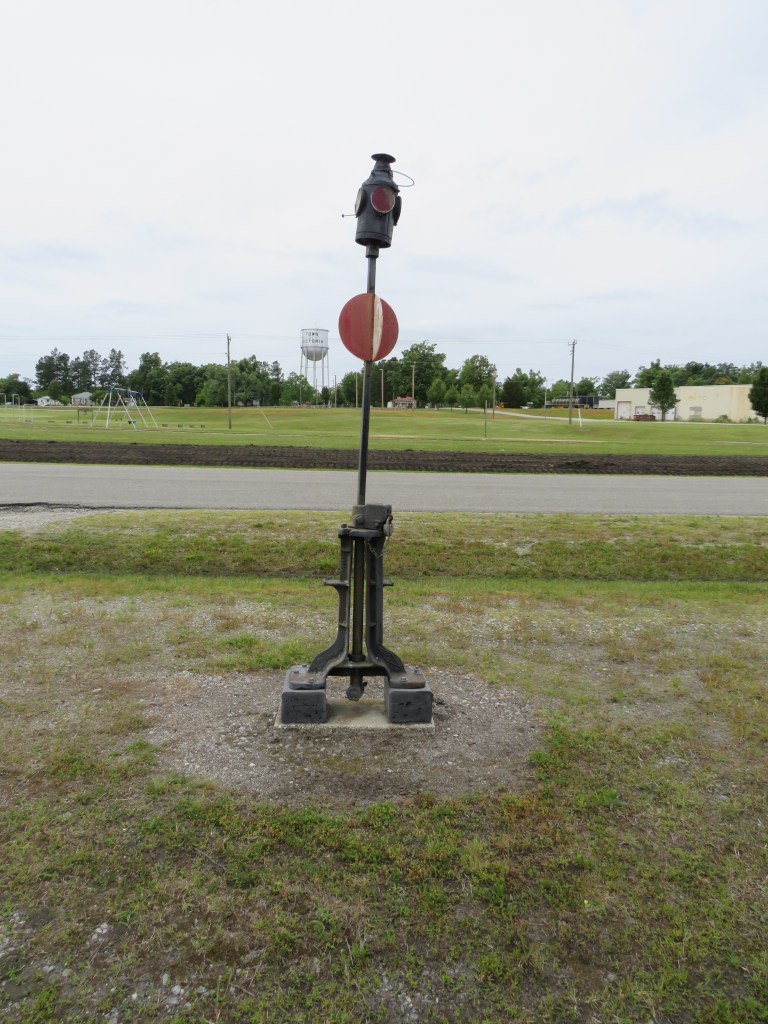
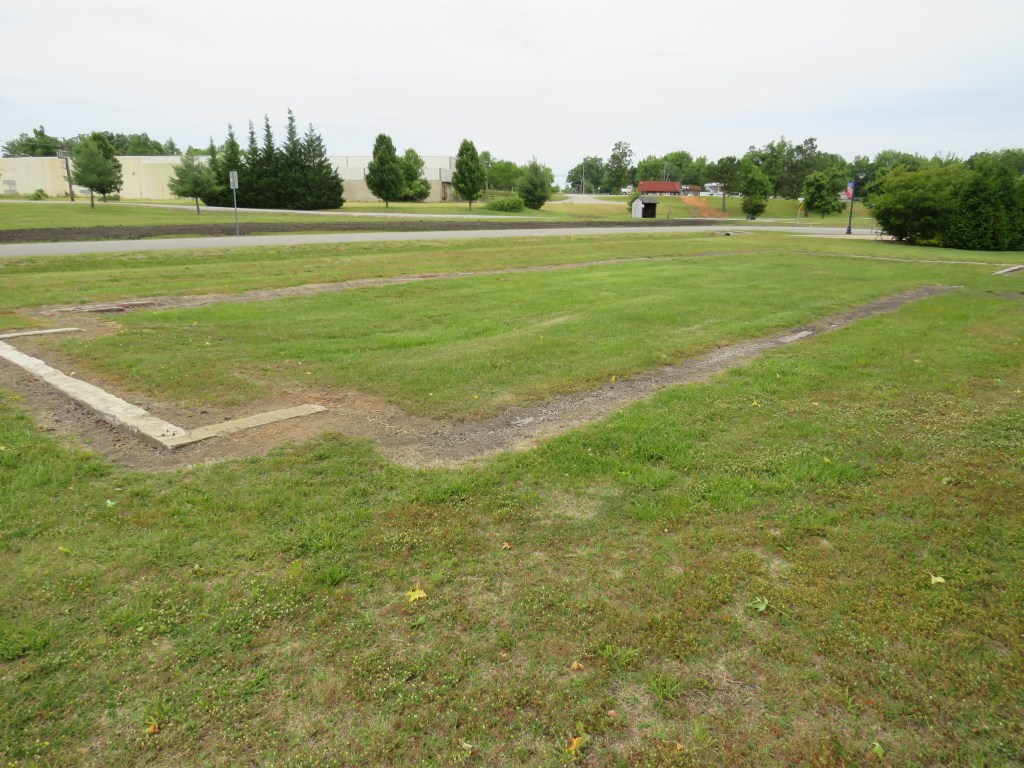
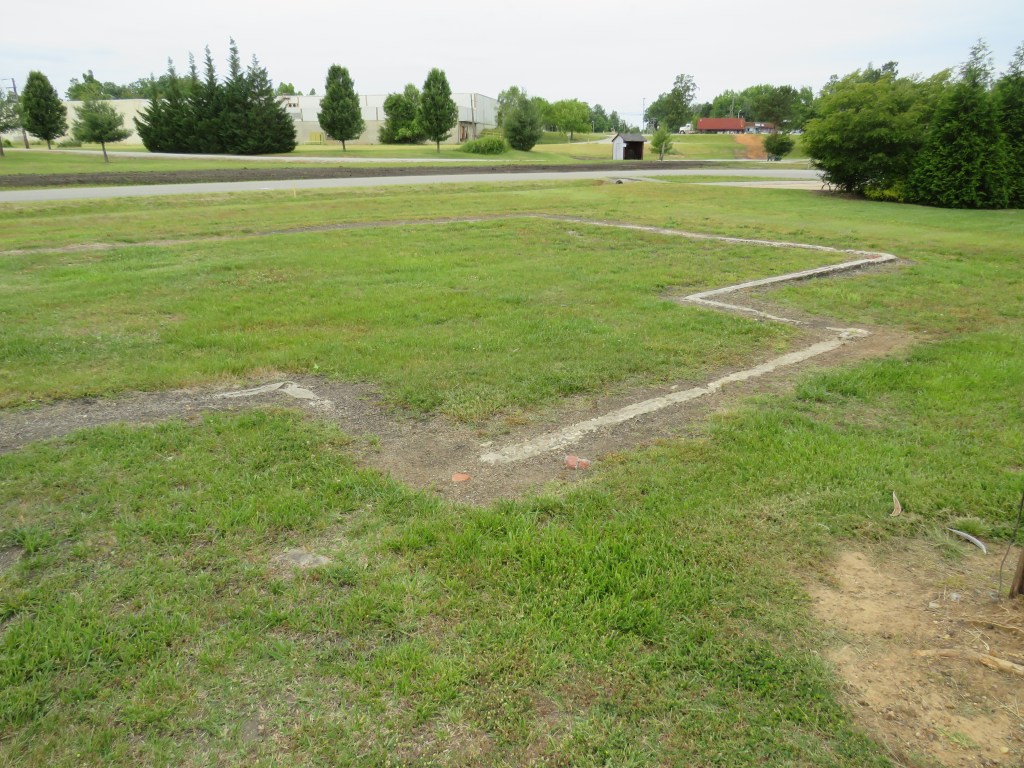
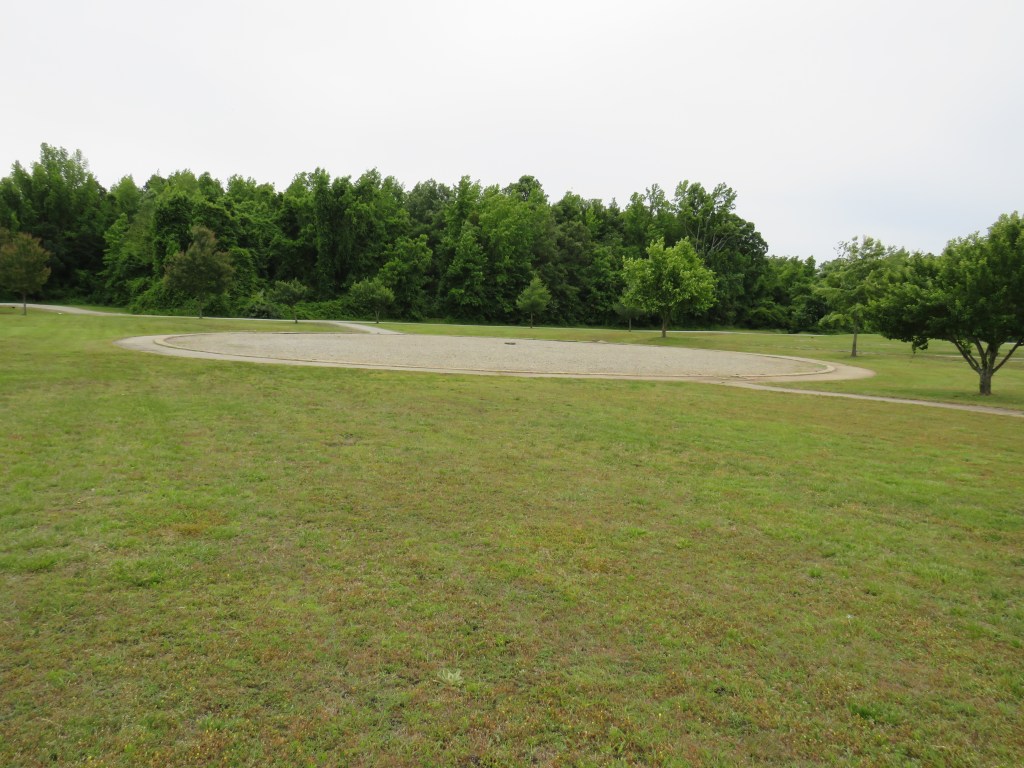
Virginian Railway Caboose Number 342 sits in the place where the railroad yard and main railroad line once was.  Next to the caboose, you will see the foundation of the passenger station.  What about the roundhouse?  Across the street from the caboose is the Victoria Railroad Park.  Like the passenger station, only the foundation of the roundhouse and a Virginian Railway gondola car remain.  You can walk and see where a roundhouse once stood.  What is now a quiet park was once a bustling place.  When the railroad left town, the town became what it is today.

The town of Victoria, Virginia is located in southern Virginia served only by states routes 40 and 49.  The railroad park is located off of Main Street (Virginia Route 40).  The rail trail, part of the Tabacco Heritage Trail, is paved.  The Victoria Railroad Park is open sunrise to sunset, and it is free.  Parking is on site.  The park is flat, but it is not completely paved.  Wheelchairs may have difficulty getting around.

The town of Victoria, Virginia, may not be as famous as other cities in Virginia, but it has a place in state, national, and international history.  It may be a small town, but it has much railroad royalty.

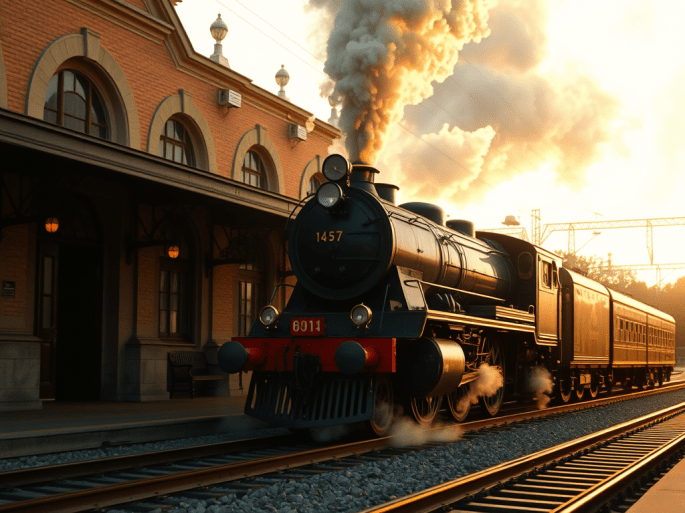
The Cover Photo is an AI generated photo.

The Statue of Liberty, Dauphin, Pennsylvania

Some of you are saying, “Wait a minute.  Something is wrong here.  The Statue of Liberty is in New York, not Pennsylvania.”

Well, the most famous statue was erected in 1886 by New York City locals in New York Harbor and welcomed people who arrived by ship into the harbor.  Yes, it is the most famous Statue of Liberty in spite of the fact that the original Statue of Liberty is located in Paris, France.  What made the New York statue more famous?  Location.  Although the original statue is on an island on the Seine River in the middle of the city, the most famous one on an island in New York Harbor welcomed people entering into the United States of America.  When France wanted to bring the statue to New York, the United States government was opposed to it.  That is when New York City area locals stepped in to fund the bringing of the statue to New York City, and it has been a symbol of American freedom welcoming people into the Land of Freedom one of the world’s top iconic sites ever since.

Other Statue of Liberty’s were erected across the United States of America.  One of these statue was erected in the middle of the Susquehanna River in the town of Dauphin in the U.S. state of Pennsylvania, a suburb of Harrisburg, the state capital.  Why the Susquehanna River?  The Susquehanna River is the longest unnavigable river in the United States of America which means that no ships pass by here.  The only traffic is that on U.S. Routes 22 and 322.  A statue was erected here in 1986 to commemorate the one hundredth anniversary of the one in New York Harbor, but it was later destroyed.  Locals saw how significant that statue was and erected a new statue, and that statue stands today.  Now, drivers along U.S. Routes 22 and 322 can see a great icon along their journey through Pennsylvania.

Some of you are saying, “This is nice.  It is great that the people of France gave the Statue of Liberty to New York City, and it is great that the Statue of Liberty is a great icon not just for New York City and the United States of America, but for the entire world.  As for this one in the Susquehanna River, it is just a replica of the famous one.  Since this is just a replica of the famous one, I will not be using my liberty to see this replica statue.”

What is special about the Statue of Liberty in Dauphin, Pennsylvania?  As you drive along the highway and look out at the statue, you will notice what the statue was erected on.  What is it on?  The statue was erected on a piling of an old railroad bridge.  There was once a railroad bridge where the current statue stands.  Which railroad crossed the bridge is unknown at this point although it is upriver from the world famous Rockville Bridge, the longest stone arch bridge in the world and now owned by the Norfolk Southern Railway.

Now you can see that the Statue of Liberty in Dauphin, Pennsylvania is not just a replica of the famous statue and a symbol of American freedom, but the statue has a little bit of railroad history attached to it.

As mentioned, the original statue made with plywood and Venetian blinds was erected in 1986, but it was blown off the piling by strong winds and destroyed in 1992.  Locals later erected the current statue you see today, and it was made with steel.  The man who erected the original replica remained silent for many years until 2011.  He happened to be a local lawyer who erected the statue as a prank.  He had no idea that it would be a permanent and famous icon in the Susquehanna River Valley of Pennsylvania.

The Statue of Liberty of the Susquehanna Valley is located in the middle of the Susquehanna River west of the city of Harrisburg, and it can be seen from U.S. Routes 22 and 322.  Be advised that there is no pull-off on the highway to view the statue so you will need to be mindful as you drive on the highway.  (We do not want to see anyone getting stuck in the rear bumper while seeing the statue.)

The Statue of Liberty stands for American freedom.  Near Harrisburg, Pennsylvania, the Statue of Liberty stands on a piece of railroad history.

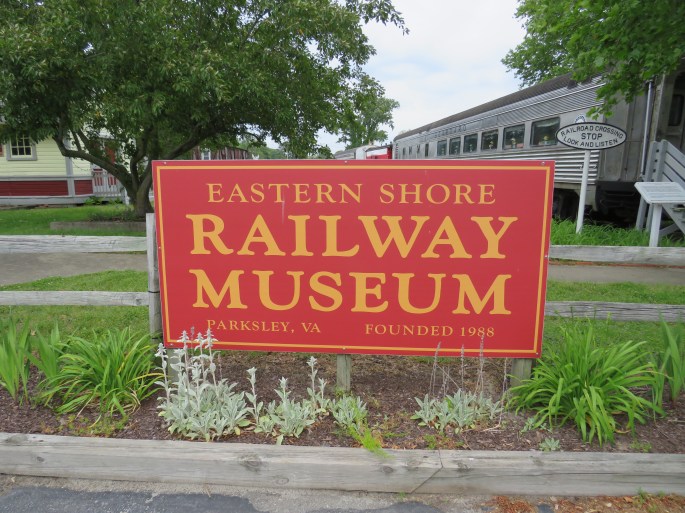
The Eastern Shore Railway Museum, Parksley, Virginia

The town of Parksley in the U.S. state of Virginia, a small town on the Delmarva Peninsula is known for its Victorian architecture.  The town was built around a railroad line that was extended south from Pocomoke City in the U.S. state of Maryland to Cape Charles, Virginia which sits at the southern tip of the peninsula. (The railroad line in the Virginia section of the peninsula is now abandoned.)  It you visit the town, the very first thing that you will notice is the numerous rails cars that are resting in this town.  This is the Eastern Shore Railway Museum which celebrates the railroad heritage of the town.

On the outside, you will see the Parksley Depot that was once used for passenger service.  The depot was originally the Depot of Hopetown, Virginia that was brought to the museum and sits on the site of the original Parksley Depot.  You will also see a section of the foundation of the old 1886 depot that was unearthed while clearing the land for the museum.  You can stand in the same spot where passengers stood to wait for the train.  The platform is made with bricks that were used at the train station in Ocean City, Maryland.  You will see a dining car from the Seaboard Airline Railroad.  You see an old maintenance shed and a guard house that was used before crossing gates came along.  You see an old Pennsylvania Railroad Box Car, the Fairfax River, a Pullman sleeper from the Richmond, Fredericksburg and Potomac Railroad, another sleeper car, a baggage car and two cabooses: one from the Nickle Plate Road and an old Wabash caboose.  There is so much to see, and you have not even gone inside yet.

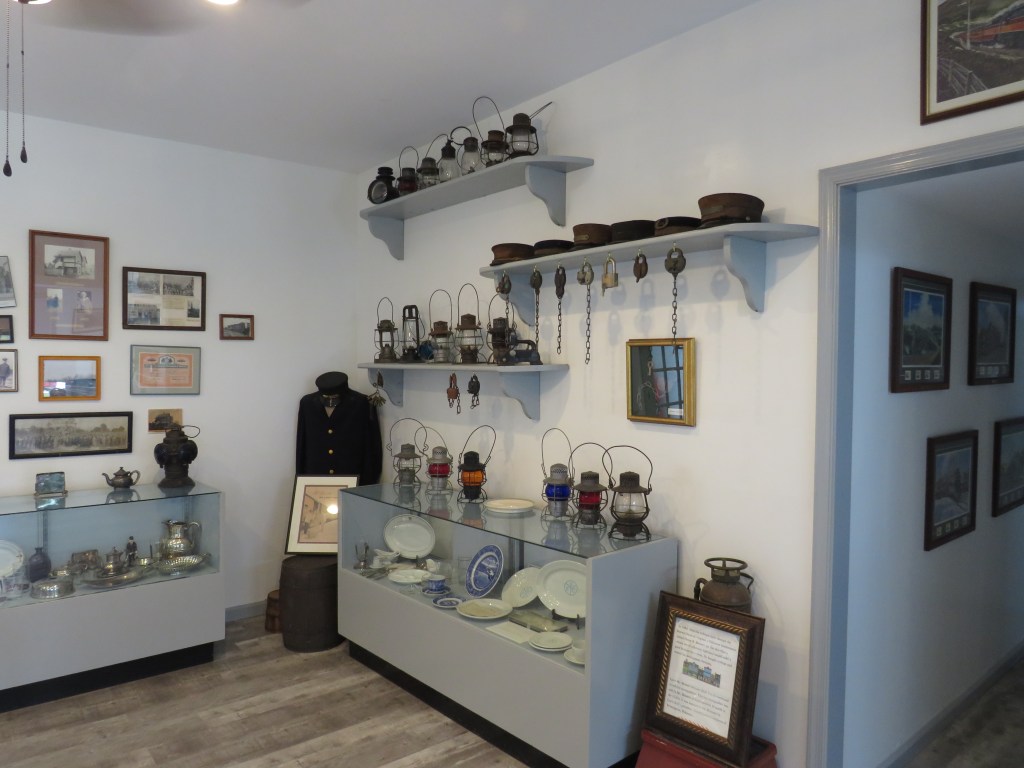
On the inside, you will see the gift shop, a small model train display, a maintenance car, a luggage carrier and artifacts from the days when regular rail service came to Parksley.

The Eastern Shore Railway Museum is located at 18468 Dunne Avenue in Parksley, Virginia, just minutes from U.S. Route 13 at the intersection of Virginia Route 176 and Virginia Route 316.  Admission is free, but donations are greatly appreciated.  The gift shop, model train display and inside areas are open from April to November, but the grounds are accessible all year round.  A drive along Virginia’s Eastern Shore would not be complete without a visit to Parksley and to the spot that the town originated from.

Fort James Jackson, Savannah, Georgia

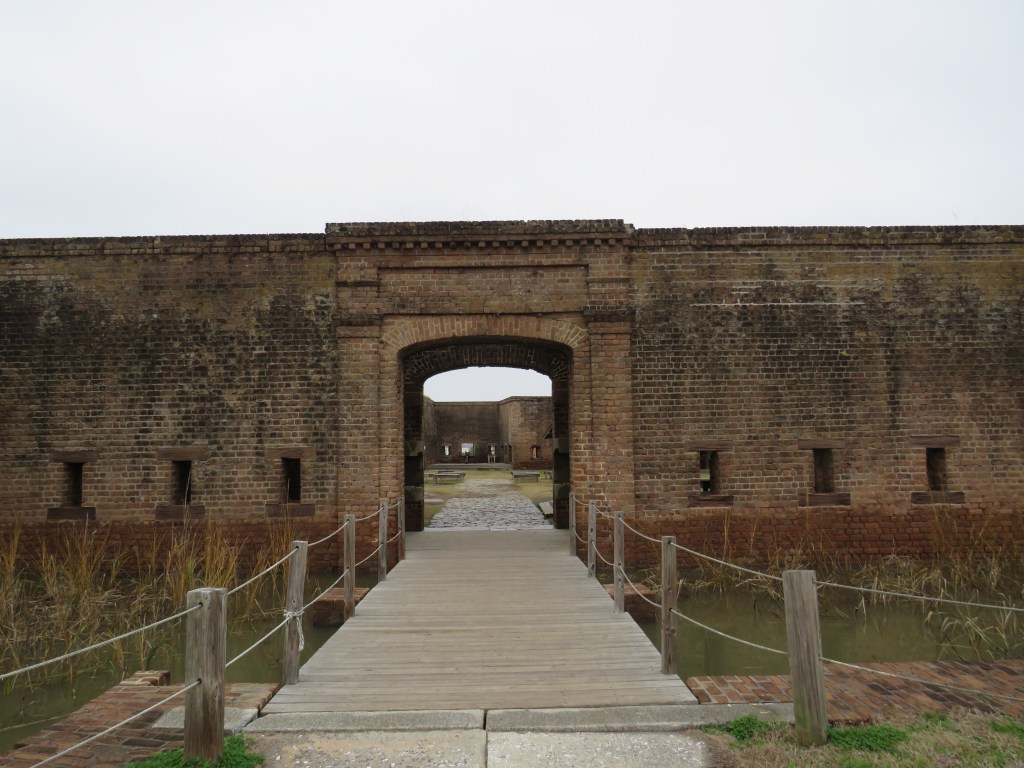
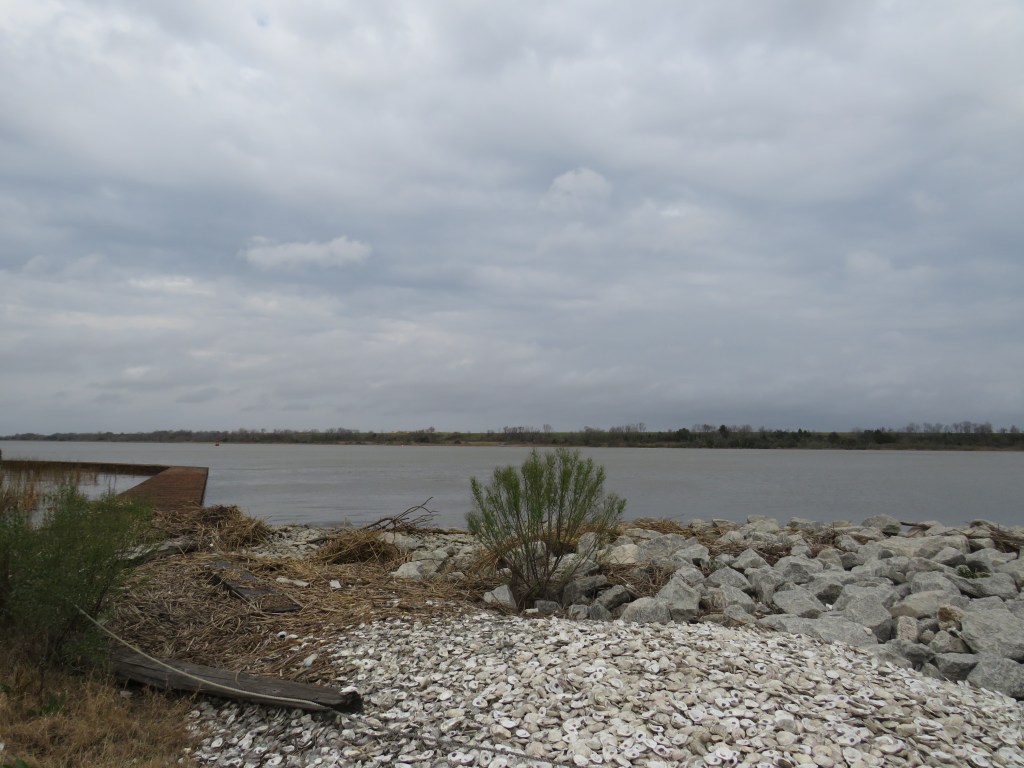
The city of Savannah in the U.S. state of Georgia is a city that has much history.  Fort Jackson, located on the Savannah River east of the historic downtown area is a big part of that history.  It was the second defense from an attack from the Savannah River after Fort Pulaski, and the fort played a role in the War of 1812.  The fort is named after, of course, James Jackson, a British born officer who served in the American Revolutionary war and was later the governor of the U.S. state of Georgia.  It is the oldest standing brick fort in the state of Georgia and one of the oldest on the East Coast of the United States.  If you are ever visiting Savannah, you will want to make some time to visit this National Historic Landmark.

Now some of you are saying, “You know.  I am amazed to hear about Fort Jackson.  You see the history of the fort as a fortification for battle, and I see how it helped defend the ships going in and out of Savannah, but I am wondering where the railroads are at this fort.”

Fort Jackson was a fort built to defend Savannah from a sea attack.  It has much history as a fort itself, but you will not find any railroad history here at all.  In matter of fact, the fort itself has no history with the railroad at all.

Why visit Fort James Jackson if it has no history with the railroad?  You will see the answer to the question as soon as you arrive.

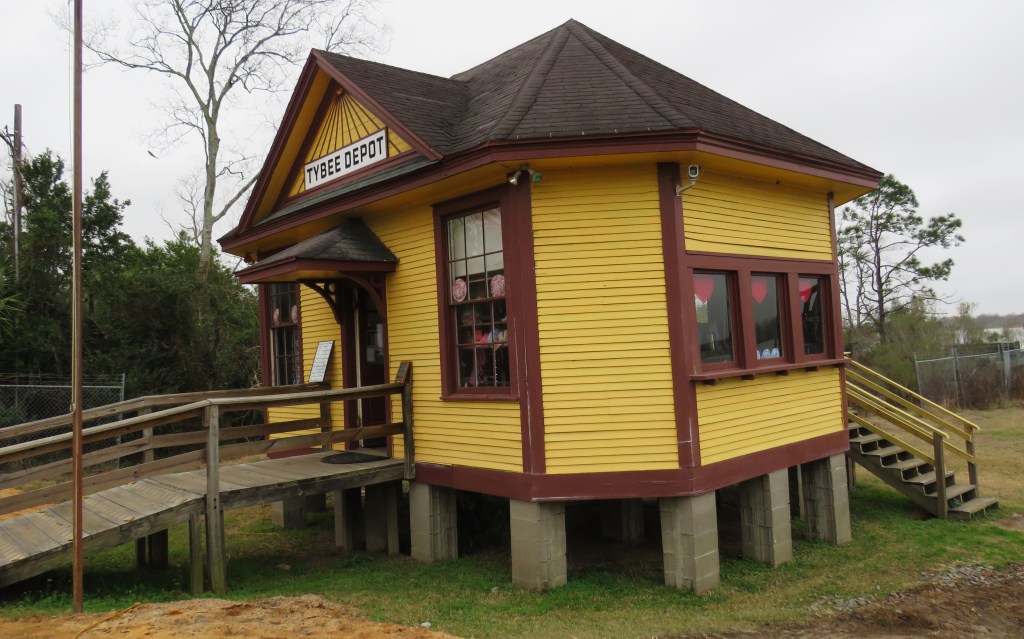
The first thing you will see when you arrive at Fort Jackson is the Visitor Center.  What is so special about the Visitor Center?  Many historic sites have visitor centers that show the history of the particular site.  What is special about the Fort Jackson Visitor Center?  The answer is that before it was the Fort Jackson Visitor Center, the structure was called the Tybee Depot.  Yes, it was located in downtown Savannah.  (This train depot was separate from the main train station that is now the Savannah Visitor Center.)  The Central of Georgia Railroad ran passenger trains from downtown Savannah to Tybee Island, an island on the Atlantic Ocean that was a resort town.  When the railroad no longer served Tybee Island, the depot was preserved and eventually brought to Fort Jackson to become the visitor center.

You now have a reason to visit Fort Jackson.  Once you see the visitor center, you will want to see the fort as well.  The fort is located at 1 Fort Jackson Road just minutes from the historic district.  It is a place worth seeing.

Airlie Gardens, Wilmington, North Carolina

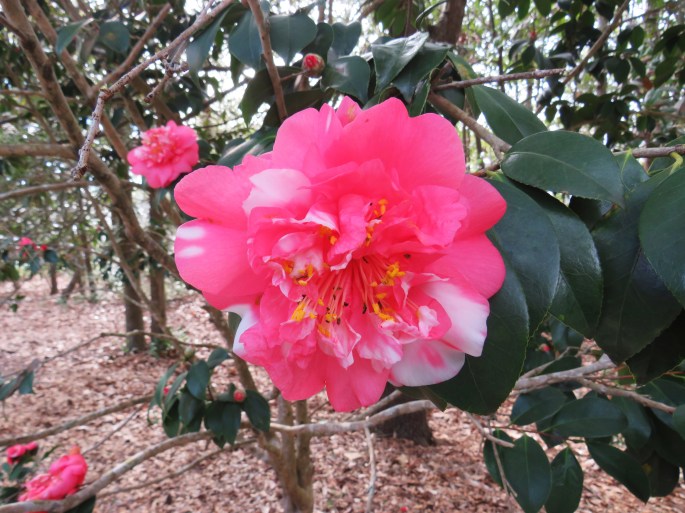
Do enjoy time in the garden?  You enjoy the peace and serenity.  You enjoy the flowers in bloom.  You enjoy the trees over your head.  This is what you will feel as you stroll through Airlie Gardens in the city of Wilmington in the U.S. state of North Carolina.  Built around a mansion that sadly is not open to the public, Airlie Gardens is a refreshing place to enjoy.  The ponds, the groves, and even the views of Bradley Creek, Airlie Gardens is truly an oasis in a very busy beach city.

Some of you are saying, “Wow!  I love gardens.  They are so beautiful.  However, there is a very big problem.  You see.  These are gardens, and these gardens have no railroads.  Therefore, I will not be taking a stroll through here.”

You do have a point.  There is no railroad here, and no railroad has ever run through these gardens.  So, what does the railroad have to do with Airlie Gardens?

The history of Airlie Gardens begin long before the United States of America was established, but in 1835, a man named Thomas Henry Wright built Mount Lebanon Chapel on the property, and the church remains on the property today.  Who is Thomas Henry Wright?  He was a physician, a bank president, a merchant, an Episcopal minister, and he was also a railroad director of the Wilmington and Weldon Railroad.

However, this is just a tiny piece of a bigger story.

Then comes Henry Walters.  Who is Henry Walters?  He is famous for being an art collector and a philanthropist.  He was the son of William Thompson Walters.  Who is William Thompson Walters?  He was the president of the Atlantic Coast Line Railroad of which the headquarters was moved to Wilmington, North Carolina in 1884. When William died in 1894, Henry took over the railroad.  While here, Henry started other railroads.  Among them was the Atlantic Beach Car.  What is the Atlantic Beach Car?  It began in 1902 at the Wilmington Seacoast Railroad using steam locomotives to pull passenger cars from Wilmington to Wrightsville Beach, but it was later converted to an electric railroad using trolleys, and the ‘Beach Car’ was born.  Among the stops along the line was a stop at Airlie.

Henry was a frequent guest of Pembroke and Sarah Jones, the owners of the Airlie Mansion of which Airlie Gardens was built around.  Pembroke was also a director on the Atlantic Coast Line Railroad.  Among the guests were Stuyvesant Fish, owner of the Illinois Central Railroad, members of the Vanderbilt family, tycoon Henry Flagler, and socialite Henry Lehr.  Henry had a sister named Jennie who Married Warren Delano III, the uncle of U.S. President Franklin Delano Roosevelt.  When Pembroke died, Henry married Sarah, and they lived at a home in Manhattan in New York City, New York.  His other accomplishments include the establishment of the Walters Art Museum in Baltimore, Maryland where he made few visits.  Henry remained the president of the Atlantic Coast Line Railroad until his death in 1931.  Sarah transforms the gardens and eventually opens the gardens to the public.

The Airlie Gardens is a great treasure to see.  Regardless of what time of the year, Airlie Gardens is a great place to take a stroll.

Airlie Gardens is located at 300 Airlie Road in Wilmington, North Carolina just off of U.S. Route 17.  It is open year round from 9:00am to 5:00pm.  The great part is that is it mostly wheelchair accessible.  You can get more information on admission and read more into the history of the gardens at https://airliegardens.org/.

No, you will not see the railroad here, but you can take a stroll through a place that has a connection to the railroad.  Visit Airlie Gardens.  Pembroke and Sarah Jones and Henry Walters will be glad that you did.