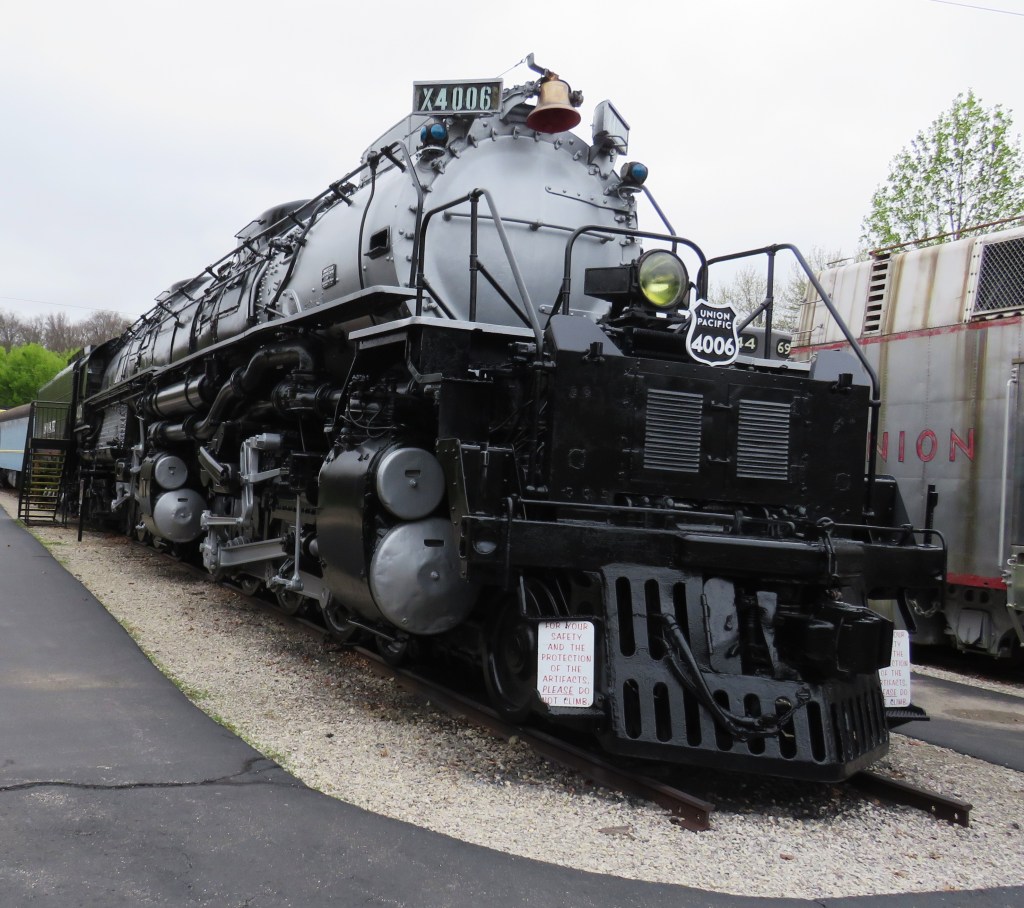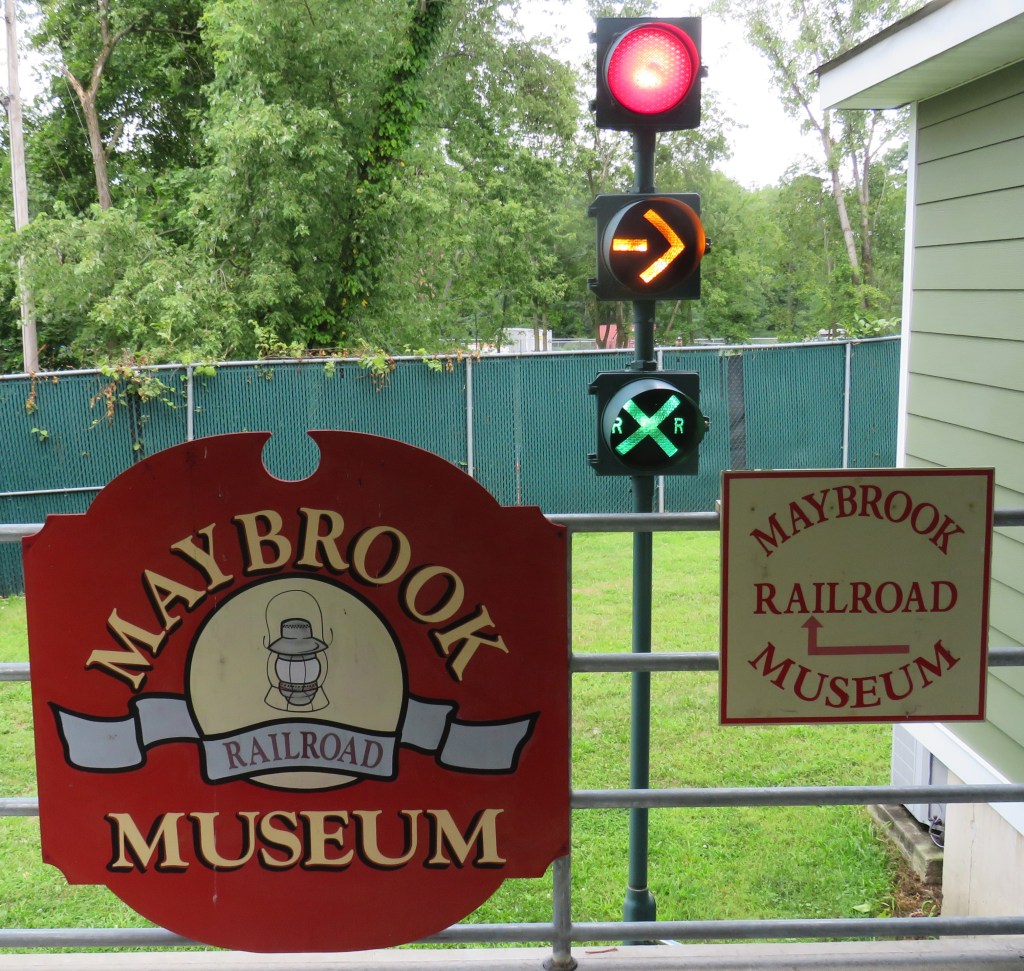
Maybrook Railroad Museum, Maybrook, New York

The U.S. state of New York is known as the Empire State.  Why?  Most people would think that it is because of the World Famous Empire State Building located in New York City, but the name was actually coined by George Washington, a General in the Continental Army during the American Revolutionary War because of the role the U.S. state played in the war to include the Battle of Saratoga which was the turning point of the War, and the name stuck as New York City remains the financial capital of the world, and, in the early years of the twentieth century, was called the Gateway to North America with the influx of immigrants entering the city.  Most people think about New York City as it is the most populated city in the United States of America and is one of the largest metropolitan areas in the world, but there are other famous cities in the state like Rochester and Buffalo where, in the suburbs, you will find one of the most famous waterfalls in the world, Niagara Falls.  The state has many great small villages.  One of this villages is Maybrook.  Located in the southeast region of the state about seventy miles north of New York City, the small village of Maybrook is a small, charming village that makes the state of New York special.

Some of you are saying, “I love New York.  There is so much great history and nature area in the state.  I enjoy the skyline of New York City with the high rise buildings to include the Empire State Building.  I love Niagara Falls.  There is so much in this state.  As for Maybrook, there is really nothing to see there.  Therefore, I will not be visiting this village of Maybrook.”

So, you do not see a reason to visit the small village of Maybrook.  What is special about this small village?

As you exit Interstate 84 and drive south on New York Route 208, you come upon a caboose from the New York, New Haven, and Hartford Railroad.  I know.  There are many lonely cabooses on display across the country, but this is not your average lonely caboose.  What makes the village of Maybrook so important?  It was here where the largest railroad yard in the state of New York where the town saw the largest number of trains, about fifty two trains a day, during the height of World War II which had to move quickly to supply the troops.  Sadly, the yard nor the Maybrook Railroad Line no longer exists.  The old railroad line crossed the Hudson River going towards Connecticut.  The bridge, called the Walkway over the Hudson, is now a pedestrian bridge where you can get exceptional view of the Hudson River.

Some of you are saying, “Well then.  If the railroad yard is no longer there, there is no reason to visit Maybrook.”

Ladies and gentlemen, there is more to the story.

Drive one mile south on New York Route 208 into the village of Maybrook, and you will see the Government Center.  Yes, it is where the government of the village of Maybrook meets, but there is also another important place here.  What is this important place?

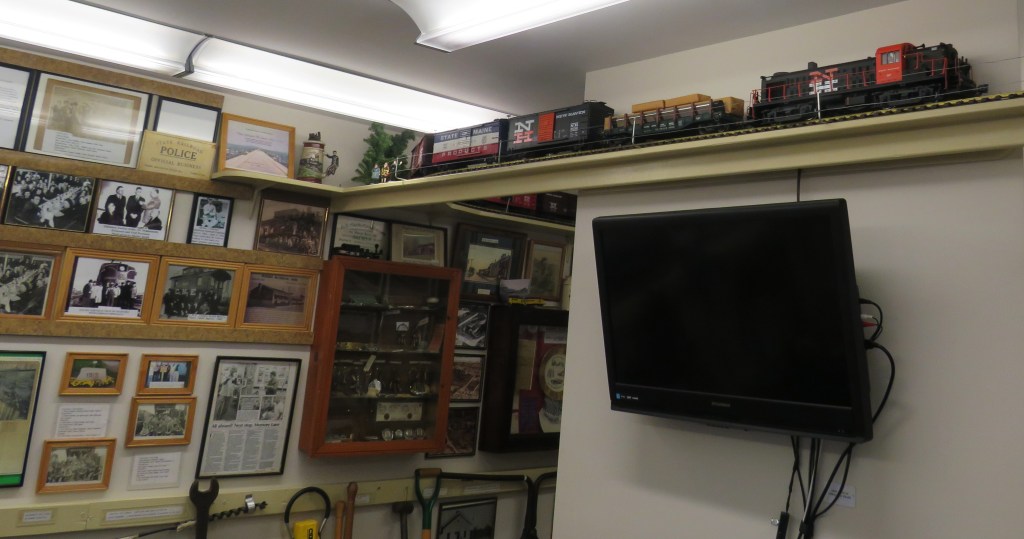
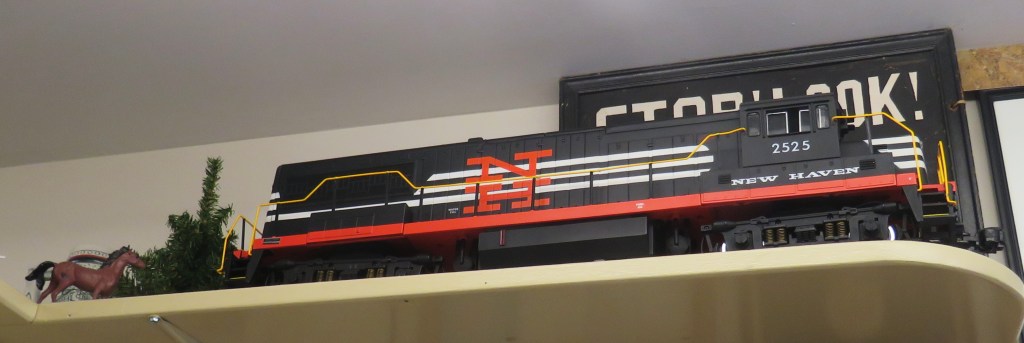
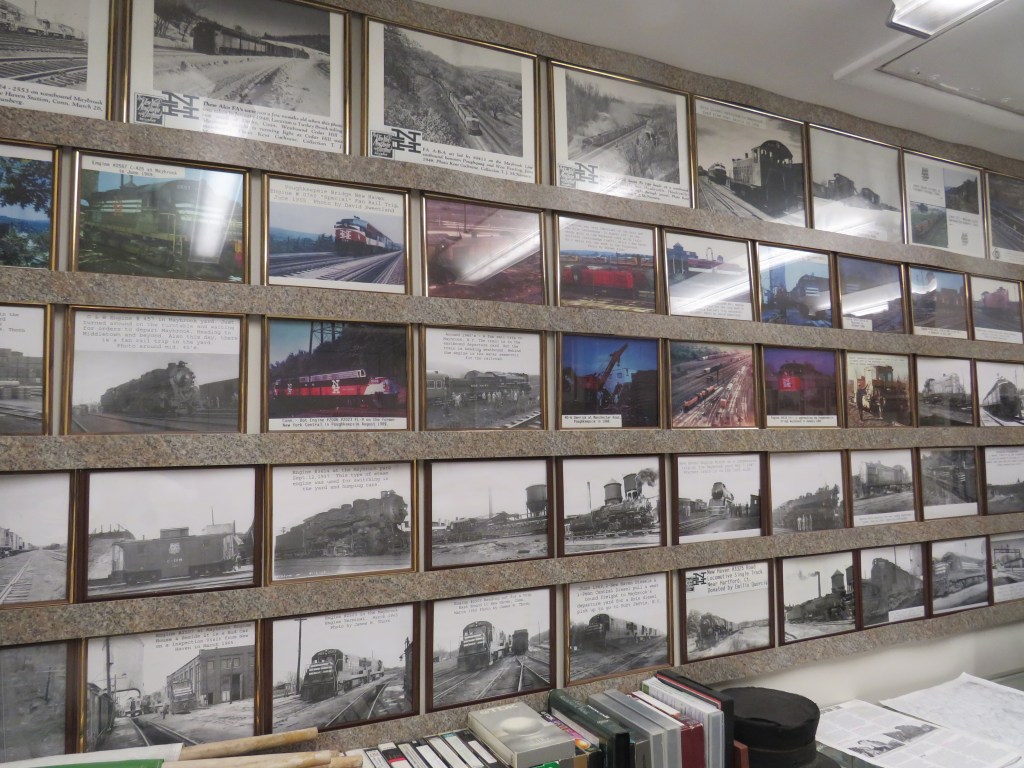
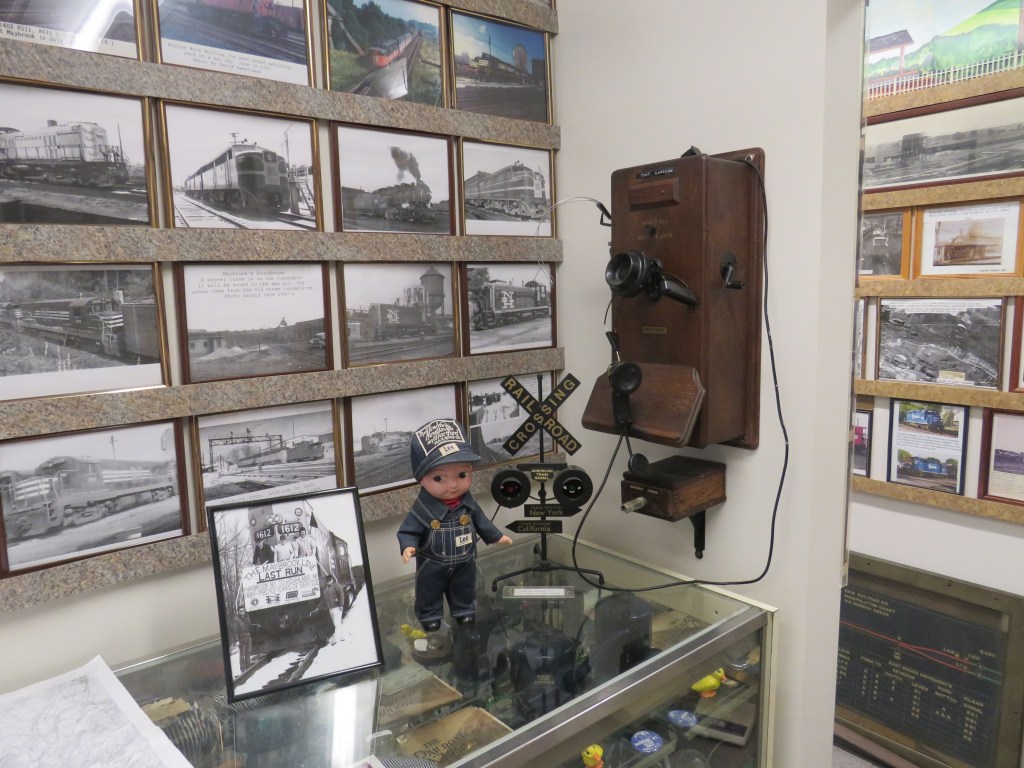
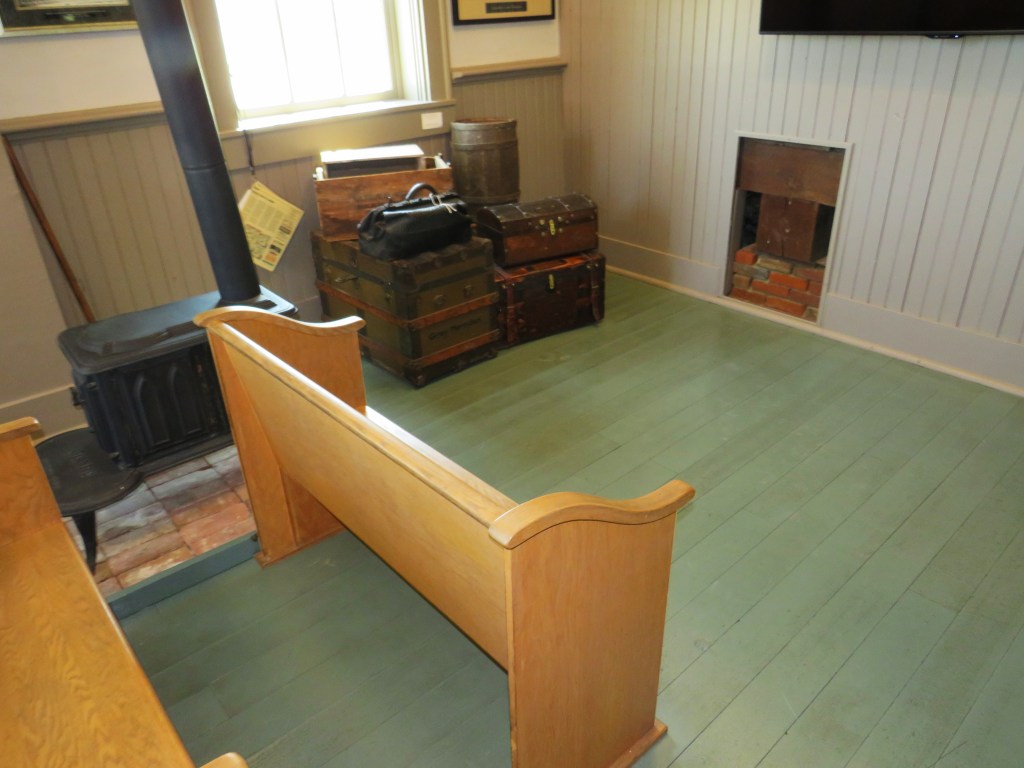
Welcome to the Maybrook Railroad Museum.  When you arrive, you will not see a locomotive or a caboose or any kind of rolling stock.  Why visit the museum?  As a place where the largest railroad yard in eastern America was once located, the small museum tells the story of how this small village played a big role in the railroad history of the United States of America.  Although you cannot see the actual railroad yard itself, you can see pictures and artifacts and books of the railroad yard.  Yes, it is a small museum, but there is much railroad history inside, and for a little excitement, there is a model train that runs road above you.

The Maybrook Railroad Museum is owned by the Maybrook Railroad Historical Society, and it is operated by volunteers, and they are open to anyone who is willing to volunteer.  It is located inside the Maybrook Government Center located at 111 Schipps Lane just off of New York Route 208 and a short drive south of Interstate 84.  It is open seasonally from the first Sunday after Easter April to the Last Sunday in October from 1:00pm to 4:00pm.  Admission is free, but they gladly accept any donation to keep the museum open for many generations to come.  Parking is on site, and the museum is wheelchair accessible.  You can read more about the Village of Maybrook and it role in the region at https://www.villageofmaybrook.com/.

Maybrook, New York is a small village with a big railroad past.  The Maybrook Railroad Museum preserves and honors that past.  You love New York, and you will love the Maybrook Railroad Museum.

Hawks Nest State Park, Ansted, West Virginia

Some of you may have heard of a place called Hawks Nest State Park in the U.S. state of West Virginia.  What is Hawks Nest State Park?

Some of you are saying, “Well, it is a nest that was created by a hawk, and the great people of West Virginia made a state park out of it.”

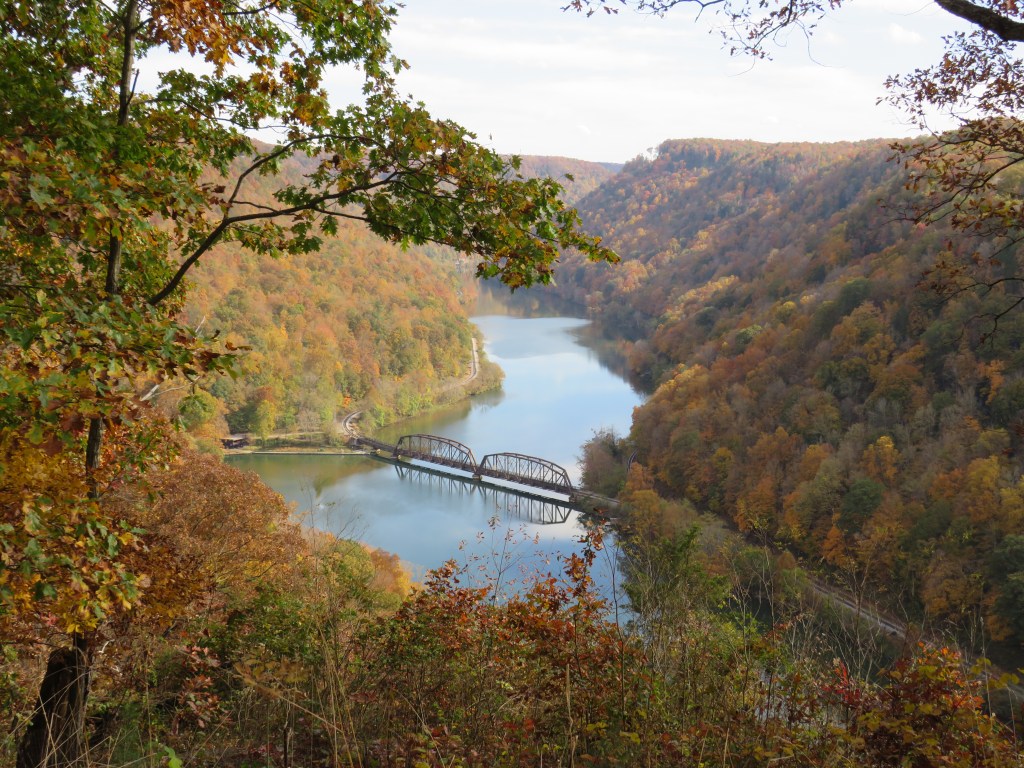
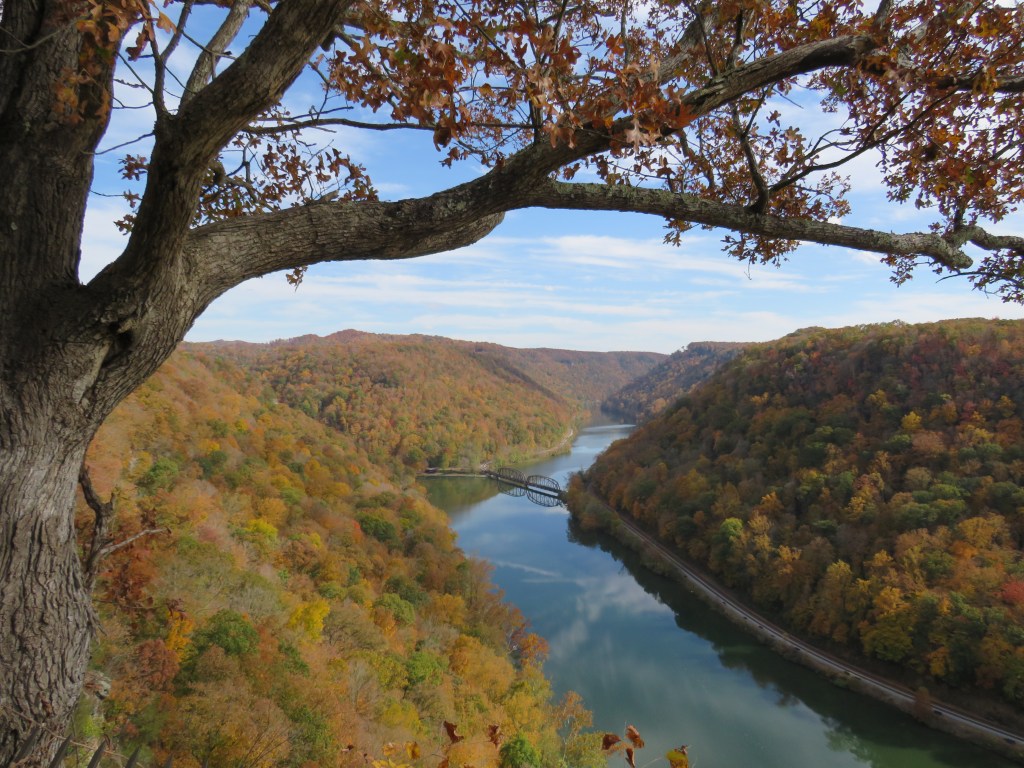
How the park got the name is unknown at this point, and there may be a hawks nest here, but when you come here, you get a hawk’s view into the New River Gorge.  You stand at the overlook and lookout over the gorge and see an amazing view.  A visit to Hawks Nest State Park is a place you will want to see again and again.

Some of you are saying, “That is nice.  I have heard great things about the state of West Virginia, and I am aware of the natural beauty of this state.  I am pretty sure that there is a lot of beauty here, but because this park has no railroad, I will not be making my nest here.”

Why visit Hawks Nest State Park?

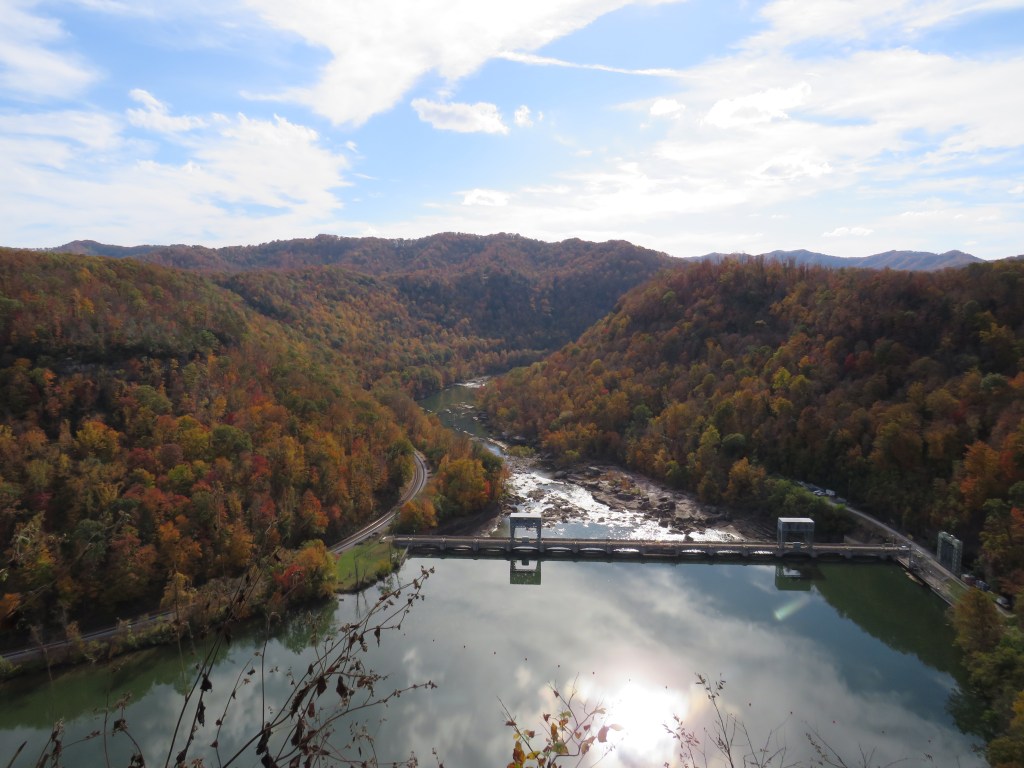
As you arrive and walk to the overlook and look down into the New River Gorge, you see the great gorge with the New River flowing through the bottom.  You see a dam of which, sadly, was a site of the worst industrial disaster in the state’s history during the construction of a water tunnel.  As you look into the New River Gorge, you see a railroad line.  The Chesapeake and Ohio Railway built the railroad through the gorge to mainly transport coal from the coal mines to the ports of Norfolk in the U.S. state of Virginia, but that is not that main reason for visiting the park.  The main thing you will see has been the number one view in the park.  As you look into the gorge, the number one view is the view of the railroad bridge crossing the New River.  Originally built by the Chesapeake and Ohio Railway and now owned by the Chessie Seaboard Transportation Company (commonly known as CSX), it is still in use today.

Now you have a reason to visit Hawks Next State Park.  When you come here, you may have a problem leaving.

Hawks Nest State Park is located in Ansted, West Virginia on U.S. Route 60 ten miles west of U.S. Route 19 and the World Famous New River Gorge Bridge and the New River Gorge National Park.  The overlook is open from sunrise to sunset, and it is completely wheelchair accessible.

Hawks Nest State Park in Ansted, West Virginia is a great park to visit.  You may not see any hawks or hawk’s nest, but you will get a great view of the New River Gorge and a railroad bridge crossing the New River in the gorge below.

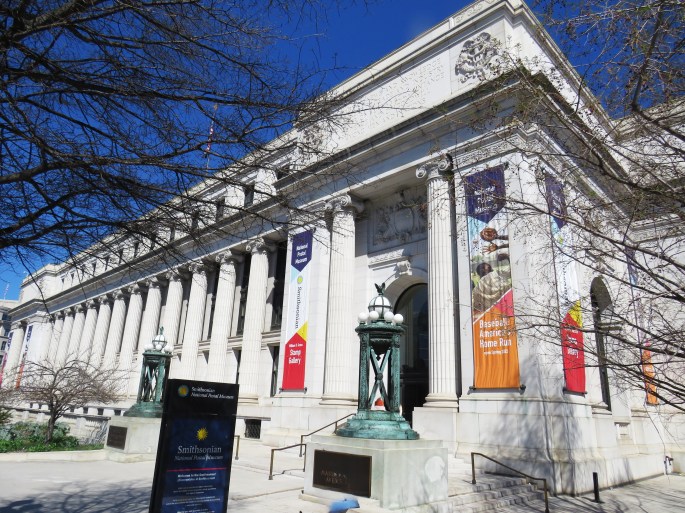
The National Postal Museum, Washington D.C.

Here comes the mailman bringing the mail.  Regardless of the weather (except during dangerous conditions), the mailman has delivered the mail to every address in the United States of America.  Although technology has changed, the mailman continues to deliver the mail.  The United States Postal Service which has been delivering the mail in the United States of America since the nation’s beginning employs the mailman.  Today, you can see the entire process of mail delivery in the United States of America by simply visiting the National Postal Museum in Washington D.C.

Some of you are saying, “Wow!  I tip my hat to the mailman and the work that he, or she, does.  As for the National Postal Museum in Washington D.C., well there is a problem.  The museum is about the United States Postal Service in the United States of America.  In this museum, you see things about the post office.  This is not a museum about the railroad.  Therefore, I will not be delivering myself to this museum.”

Yes, this is that National Postal Museum.  Yes, this museum is about the United States Postal Service.  No, this is not a railroad museum.  So you are wondering why a railroad fan would want to visit this museum.

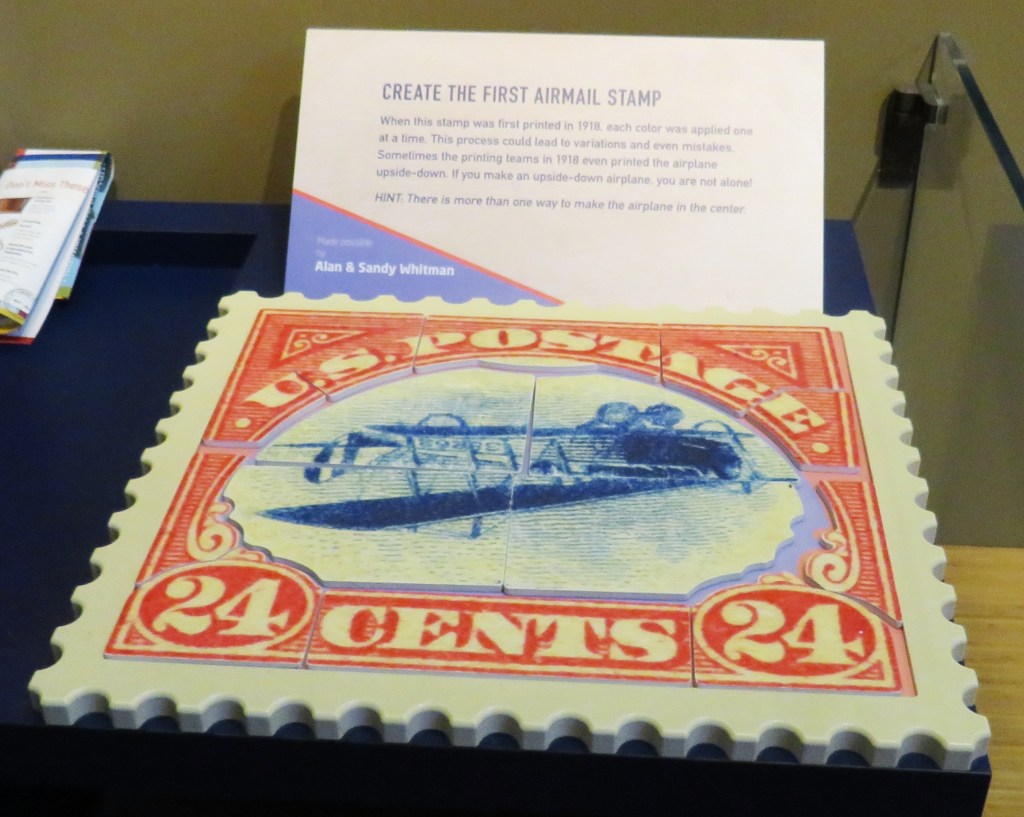
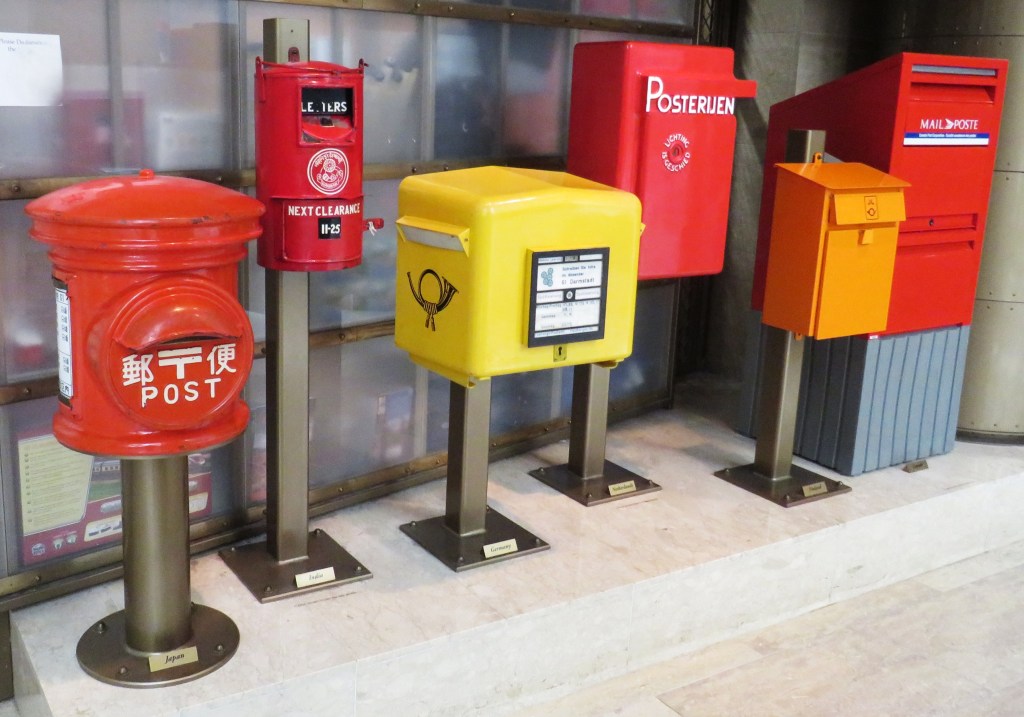
The National Postal Museum is, of course, about the United States Postal Service.  The museum has exhibits on every factor on the United States Postal Service from the beginning to the present day.  From the very beginning of the United States of America, the mail was delivered by a person called the mailman or the mailwoman.

Some of you are saying, “That is nice, but how could they deliver the mail if they did not have a mail truck?  The automobile was not invented until the late nineteenth century.”

When mail delivery began, the mailman rode a horse, or if they were in a town, they walked to each address similar to what they do today.  So, not much has changed.  The mailman went from a horse to a horse and buggy between the different towns.  As many of you know, it took many days to ride from town to town.  In 1927, something began in the United States of America.  It had been running in Great Britain, but it made its way to the city of Baltimore in the U.S. state of Maryland.  What was it?  The railroad had come to the Western Hemisphere.  The railroad started with horsepower.  How much horse power?  One horse power.  Well, it was one horse pulling a car on a set of railroad tracks.  When the steam locomotive arrived, cars were no longer pulled by an actual horse but by an invention that had the power of many horses.  Instead of taking days to get from one town to another, it just took a few hours.  After the American Civil War where the railroad was used to transport soldiers and supplies, the United States Postal Service took advantage of the railroad, and the Railway Post Office was born.  What was the Railway Post Office?  It was simply a Post Office in a railroad car.  You can see an old Railway Post Office car at the Baltimore and Ohio Railroad Museum in Baltimore, Maryland and at other railroad museums in the United States of America.

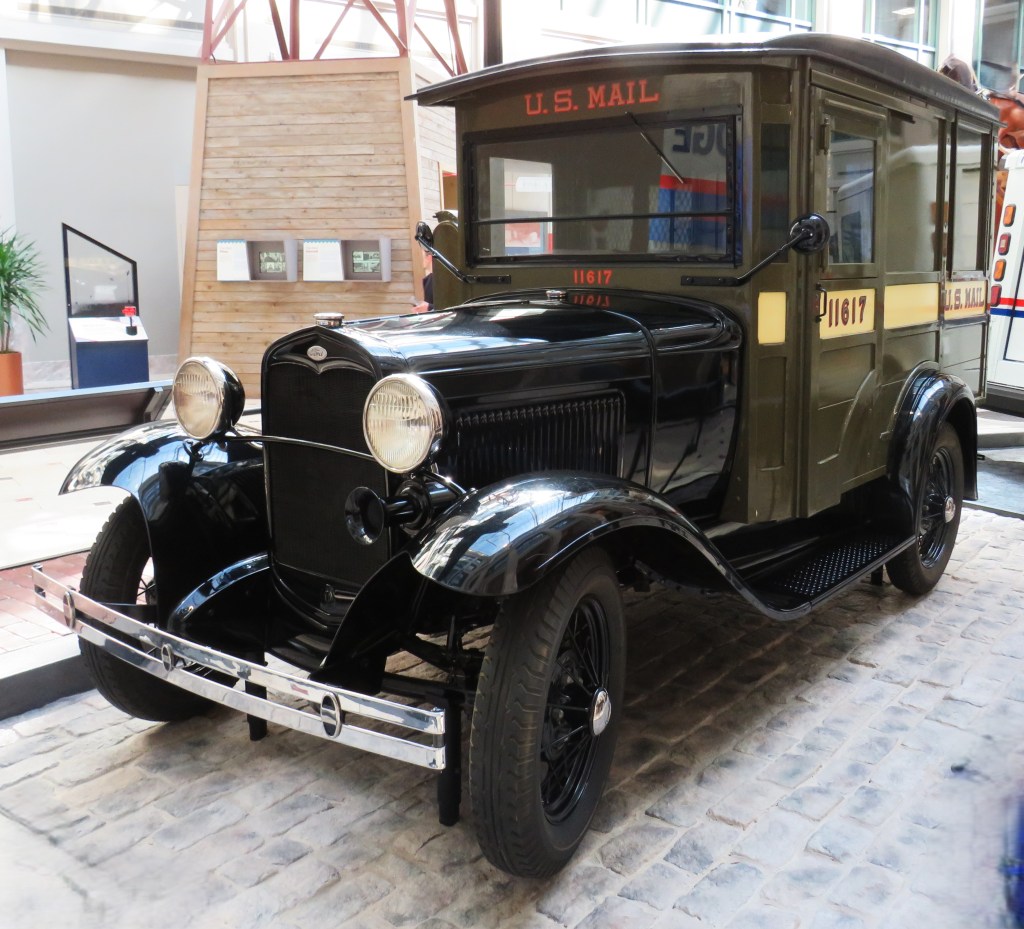
One of the exhibits at the National Postal Museum in Washington D.C. features the ways the United States Mail was transported.  You see the common mail truck.  You see an old carriage.  Then you see a replica of a Railway Post Office Car without the wheels below, and you walk in on floor level.  (Great for those in wheelchairs at the old post office cars were not wheelchair accessible.)  On the inside, you see exactly what you would have seen in a real post office car.  You will see the old mail slots and replica mail bags.

Is that all?  Nope.

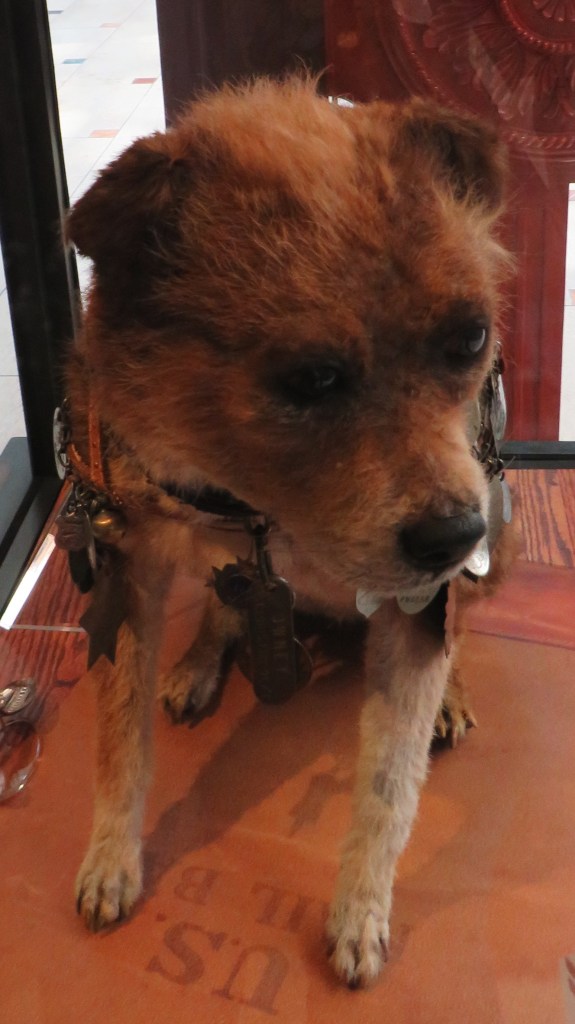
The Railway Post Office had a mascot.  Who was their mascot?  Meet Owney, the mascot of the Railway Mail Service.  He lived from 1888 to 1897, but during his life, he was a very famous dog as he rode along in the postal car across the nation with different mail carriers.  When you visit the museum, you can see Owney, the actual dog, inside a glass enclosure.

Now you have a reason to visit the National Postal Museum.  It is owned and operated by the Smithsonian.  It is located at 2 Massachusetts Avenue across the street from Union Station.  It is open every day from 10:00am to 5:30pm, and admission is free.  However, you will have to pass through a security checkpoint.  Please note that that museum does not have its own parking, and the street parking is very restricted with meters with limited hours and permit only parking, but the Union Station Parking Garage is within walking distance.  There is plenty of transit buses that pass by the museum and the Greyhound Station is nearby, and you can also arrive by the Metrorail subway, Amtrak, the Marc Commuter Train, and the Virginia Railway Express.  (Yes, you can take the train to the museum.)  You can learn more about the museum and the current exhibits at https://postalmuseum.si.edu/.

So, visit the National Postal Museum.  See the history of mail delivery in the United States of America.  See how the railroad played a role in the delivery of the United States Mail.

The Cumberland Valley Rail Trail, Chambersburg, Pennsylvania

The town of Chambersburg in the U.S. state of Pennsylvania was a town that was established and named after Benjamin Chambers.  The town has man historic sites and has a history that is older than the United States of America.  Even though a railroad line passes through the town today and there were railroad structures in the town, the town has no real history with the railroad and was never a railroad town.  As you walk through the downtown area, the one thing you will see is the Cumberland Valley Rail Trail.

What is the Cumberland Valley Rail Trail?  It is a trail under two miles that runs through the heart of the town of Chambersburg.  It was built on the railroad bed of the Cumberland Valley Railroad which ran through much of the south central part of Pennsylvania and into the U.S. state of Maryland connecting Chambersburg with the rest of the nation.  The main line, owned by the Norfolk Southern Railway today, continues to serve the town.  The rail trail parallels the Conococheague Creek and is next to the Fort Chambers Park.

The Cumberland Valley Rail Trail in Chambersburg, Pennsylvania is located on the west side of downtown and U.S. Route 11 crossing U.S. Route 30.  It is completely paved making it easy for those in wheelchairs.  Only street parking is available.  It is mainly flat, and it is accessible from sunrise to sunset.

Chambersburg, Pennsylvania may not be a famous railroad town, but it does preserve a piece of railroad history for hikers, bikers, walkers, and many people for many years to come.

West Virginia Northern Community College, Wheeling, West Virginia

The U.S. state of West Virginia is a state that was once part of Virginia.  It is known as the Mountain State because the typography of the state is 100% mountains, and it is the only state with that kind of typography.  The state has no major cities although parts of the state are in the Washington D.C. and Pittsburgh, Pennsylvania metro areas.  It does have a few cities like Charleston, the state capital and largest city, Morgantown, the home of West Virginia University, and Huntington, the home of Marshall University where the movie We Are Marshall featured the tragedy of the university’s football team.  The state has many engineering feats like the New River Gorge Bridge.  What the state is really known for is its coal mines and its natural beauty.  One unpopular place in the state is the city of Wheeling.  Located in the northern panhandle region of the state nestled between the U.S. states of Pennsylvania and Ohio, the city of Wheeling is located on the Ohio River and is on the National Road (present day U.S. Route 40).  If Wheeling, West Virginia is unpopular, why visit?  While in Wheeling, you can visit the West Virginia Northern Community College.  Located in the Downtown section of the city, West Virginia Northern Community College welcomes students from the region to get an education.  When in Wheeling, make a visit to the West Virginia Northern Community College.

Some of you are saying, “That is nice.  You know.  Wheeling, West Virginia has never been on my list of places to visit.  I either pass through on Interstate 70 or take the Interstate 470 bypass.  With Wheeling not being a railroad city, I will not be visiting Wheeling, and I will not be getting an education here.”

You do have a point.  Why visit the West Virginia Northern Community College?

The state of West Virginia has a lot of history, and it is a state that has many railroad sites and much railroad history.  In Cass, you will find the Cass Scenic Railroad and the Durbin Rocket.  You have the railroad town of Thurmond and Prince.  In Elkins, you have the Cheat Mountain Salamander, the Mountain Explorer, and the Tygart Flyer, and it is the home of the West Virginia Railroad Museum.  In Martinsburg, you have the oldest surviving steel truss roundhouse in the nation.  There are numerous rail trails throughout the state.  When it comes to the city of Wheeling, well, it is not a famous railroad city with many railroad sites.

So why visit Wheeling, West Virginia?

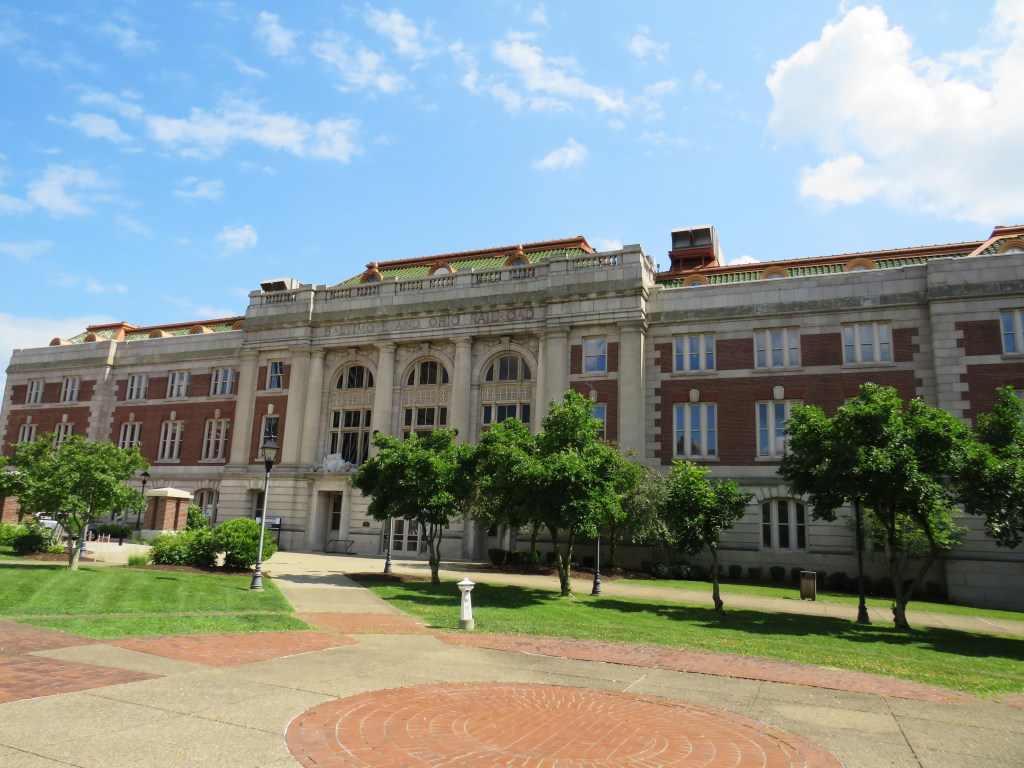
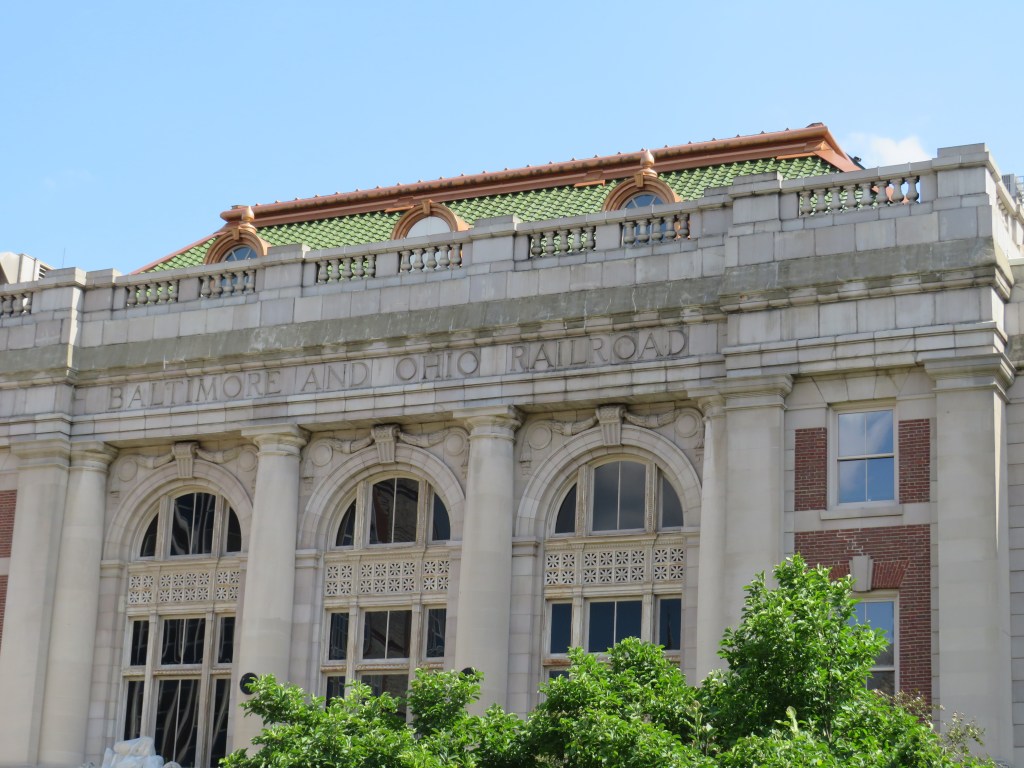
As mentioned, Wheeling, West Virginia is the home of the West Virginia Northern Community College.  What is so special about the West Virginia Northern Community College?  Well, before it was a college, it was a train station.  In the glory days of railroading, the Baltimore and Ohio Railroad built the terminal in 1907 to give passenger train service to the people of Wheeling, West Virginia and the surrounding region.  The four story brick and limestone train station welcomed passengers to the city as well as sent passengers to other parts of the nation.  Passenger service ceased in 1961.  The train station was remodeled and became the home of the West Virginia Northern Community College.  In 1996, the building was placed on the National Register of Historic Places.

West Virginia Northern Community College is located in Downtown Wheeling, West Virginia at the corner of Market Street, 16th Street, and Chapline Street.  Please note that the building is not open to the public but to college students and teachers only.

Next time you come upon the city of Wheeling, West Virginia, think of it as a city where you can see a train station that gives you an education.
The Lincoln Depot, Springfield, Illinois

The U.S. state of Illinois is commonly known as the ‘Land of Lincoln’.  Even though Abraham Lincoln, the sixteenth President of the United States of America, was not born in the state, (born in Kentucky) he spent much of his public life here as a lawyer and a politician.  In Springfield, the state capital of Illinois, you can visit and tour his home that is owned and operated by the National Park Service.  It is also where he is buried along with his wife and son in a tomb in a cemetery on the northwestern area of the city.  He is one of the most honored politicians in U.S. history, but when it comes to the railroad, most people would associate him with the railroad more than any other president.  Without Air Force One, the railroad was the fastest mode of travel in his day.

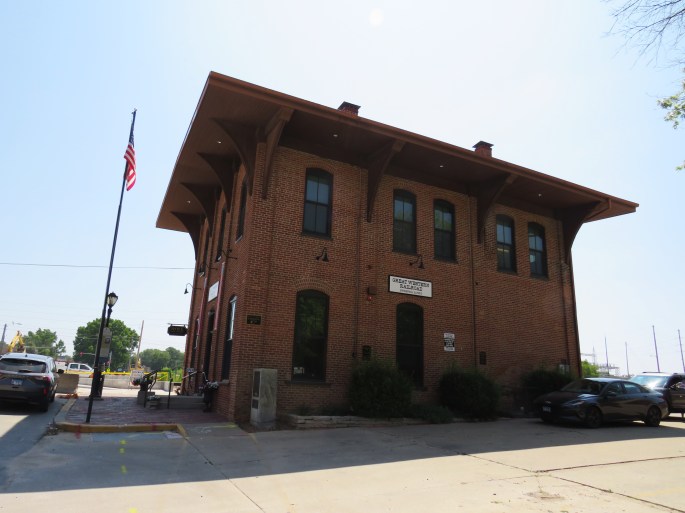
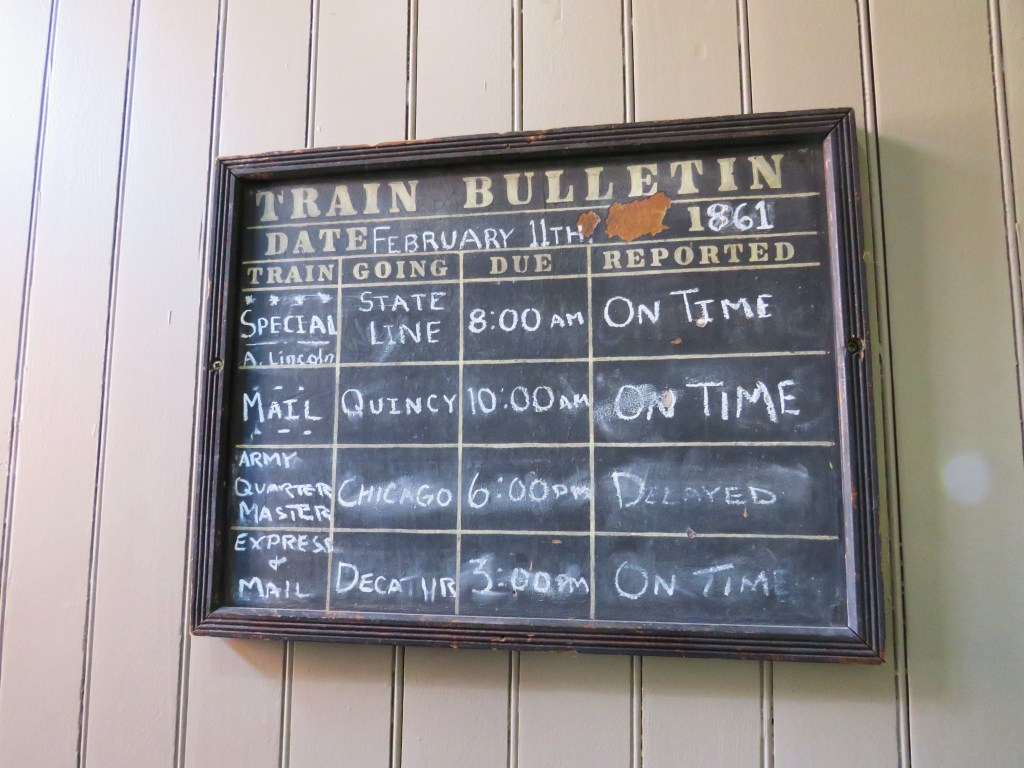
This brings us to an old train station in the capital city that is known as the Lincoln Depot.  Originally called the Great Western Depot, it was originally built in 1852, and it was repaired in 1857 after a fire destroyed parts of the station.  It was here on February 11, 1861, where Abraham Lincoln made what would be his final speech in the capital city before he departed on a train for another capital city, Washington D.C., to begin his life as the President of the United States of America.

Around 1900, passenger and freight service ceased.  The depot when through many ownerships before it was bought by a local group in 1960 to preserve the depot, and it was eventually made into a museum.  There was another fire in 1968.  (Arson was suspected but not proven.)  The museum was closed in 1977, but it was reopened as a museum in 1980 when a new owner took over.  The museum was closed in 2011, and it was sold again to be a law office, but the lawyer was a descendant of Abraham Lincoln’s law partner.  In 2014, it was a museum again, and it remains a museum today.

Today, the Lincoln Depot in Springfield, Illinois in on the National Register of Historical Places.  The trains that pass by the station are freight trains from the Norfolk Southern Railway.  (Amtrak service is in the center of the city just blocks from the State Capitol.)  It is open Monday to Friday from 10:00am to 4:00pm.  Please note that only the first floor is open to the public, and admission is free.  It is also wheelchair accessible.  The museum does not have its own parking.  There is metered parking on the street or you can park at a parking garage.  You can get more information on the depot at https://www.lincolndepot.org/.  On the website, you read Abraham Lincoln’s farewell speech, read more into the history of the train depot including a timeline, and see photos of the depot.

When in Illinois, visit the capital city of Springfield.  Visit an old train depot where the journey of a man on his way to a house called the White House, began.

‘Bridge of Dreams’, Brinkhaven, Ohio

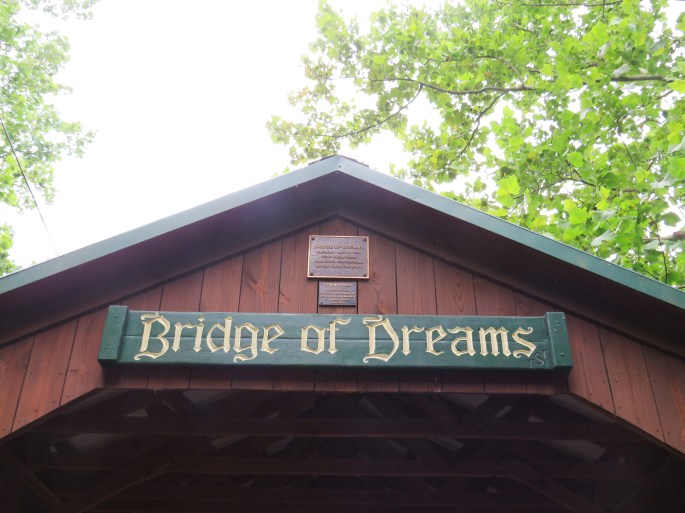
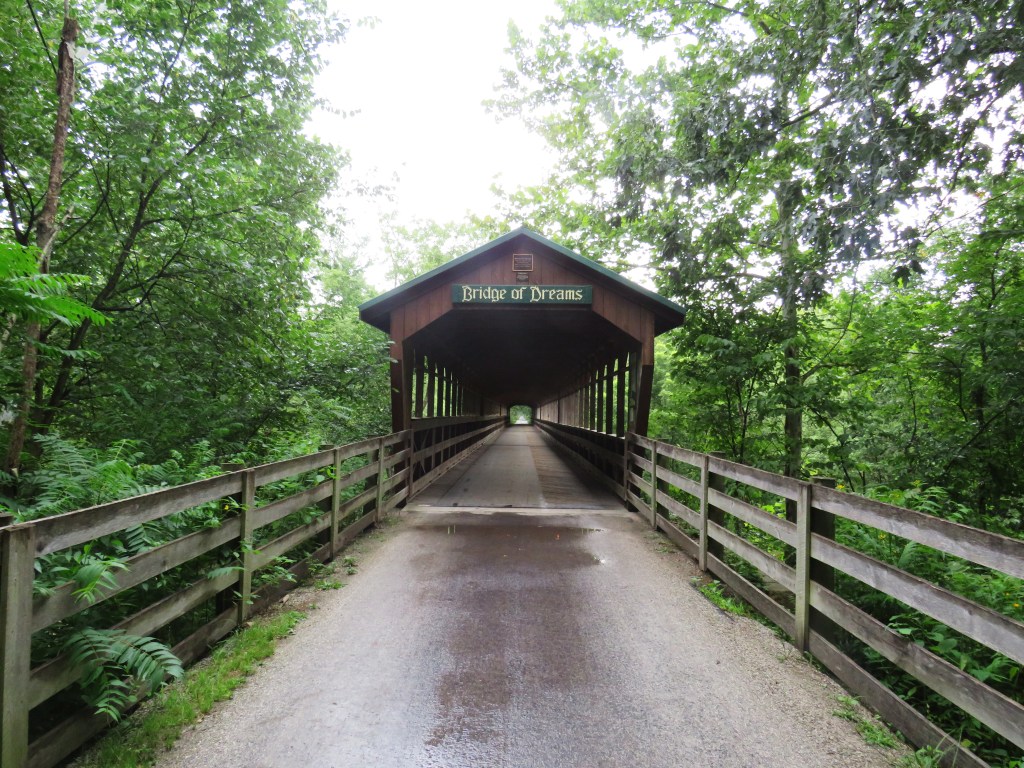
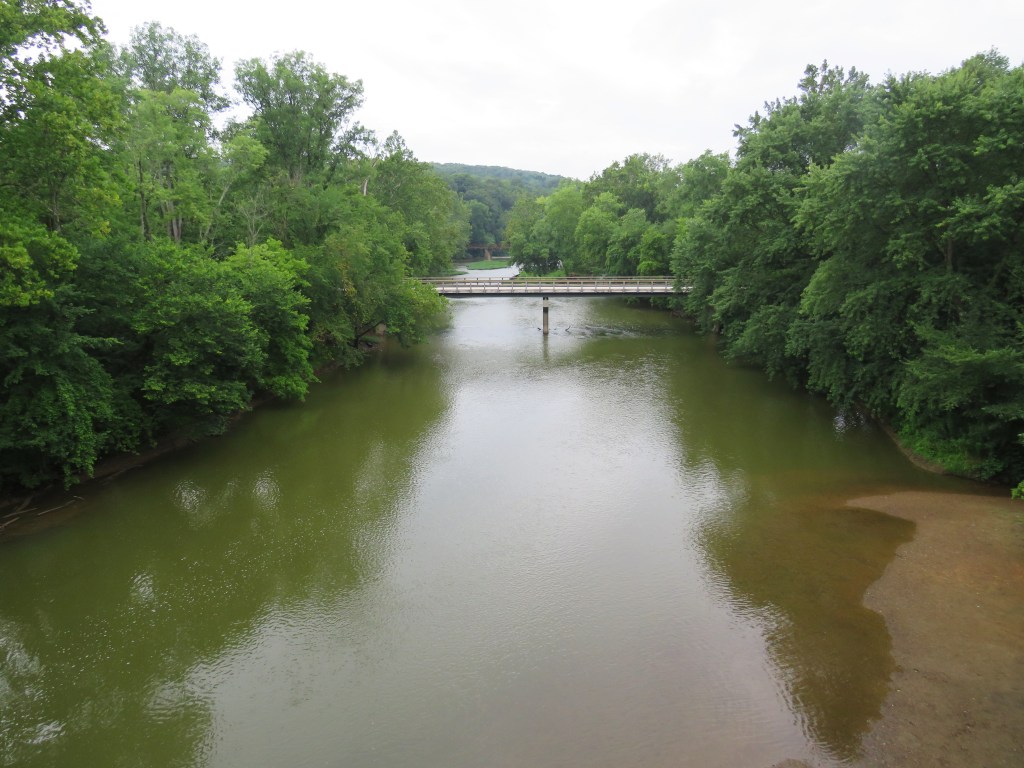
The U.S. state of Ohio has so many great sites throughout the state.  It has great historic houses, museums, and parks.  The state is also known for its covered bridges.  One of these covered bridges is known as the ‘Bridge of Dreams’ in the small town of Brinkhaven.  Unlike most covered bridges, this particular covered bridge was not an automobile bridge but is part of a hiking trail.  Why is it called the ‘Bridge of Dreams’?  The answer is that the bridge that crossed the Mohican River was considered to expensive to build, but money was raised, and it was built.  Today, the ‘Bridge of Dreams’ is the second longest covered bridge in the state of Ohio and the third longest covered bridge in the United States of America.  If you love covered bridges, you will wanted to see the ‘Bridge of Dreams’ in Brinkhaven, Ohio.

Some of you are saying, “This is nice.  I love covered bridges.  It is a great thing about the United States of America.  The sad thing is that with this being a covered bridge, it has nothing to do with the railroad.  Therefore, I will not be dreaming of seeing this covered bridge.”

What is special about the ‘Bridge of Dreams’?  Yes, it is the second longest covered bridge in the state and the third longest covered bridge in the nation, but there is more to the story.

You will just see a long covered bridge if you hike, or bike, the trail.  It you approach the bridge from the road, you will notice something.  What do you notice from the road?

The ‘Bridge of Dreams’ is a covered bridge today, but it was not always a covered bridge.

Some of you are saying, “Wait a minute, are you saying that this was not always a covered bridge?”

You have read correctly.  It was originally a railroad bridge.  The trail, known as the Mohican Valley Trail, was built on an old railroad line of the Pennsylvania Railroad.  What is now the ‘Bridge of Dreams’ was originally built by the Pennsylvania Railroad in the 1920’s.  It was a railroad bridge until the 1990’s when the railroad line was abandoned, and it was made into a rail trail.  There was an idea to convert the old railroad bridge into a covered bridge.  Fighting against the skeptics, the bridge became a covered bridge, and it was dedicated in 1999.

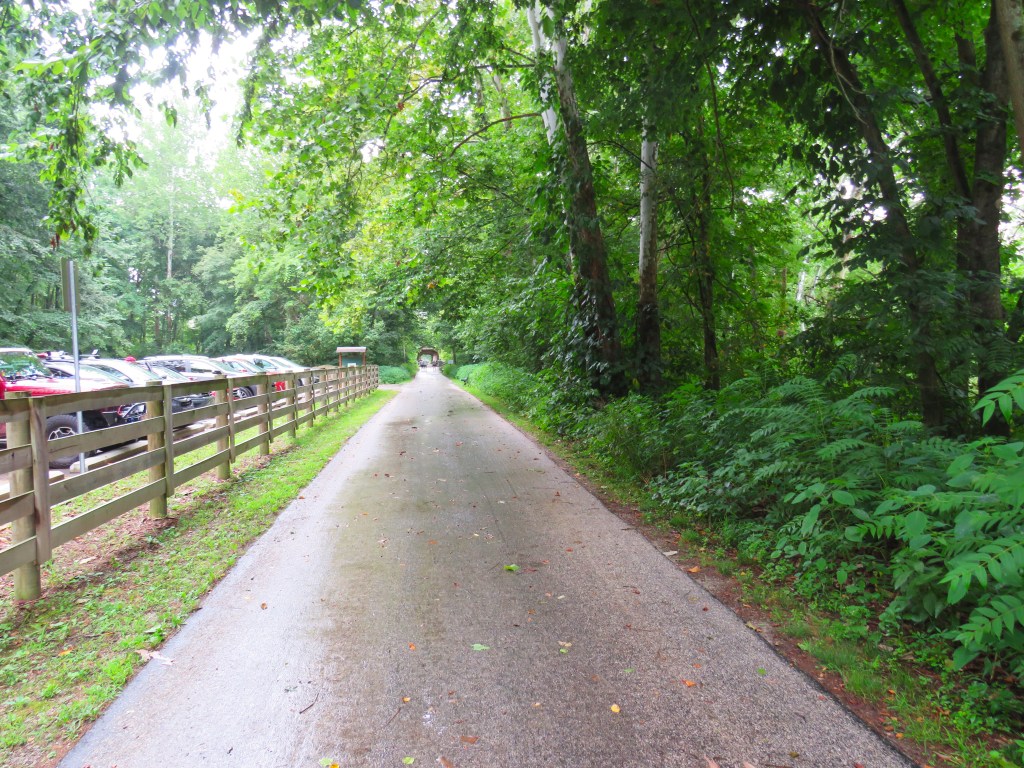
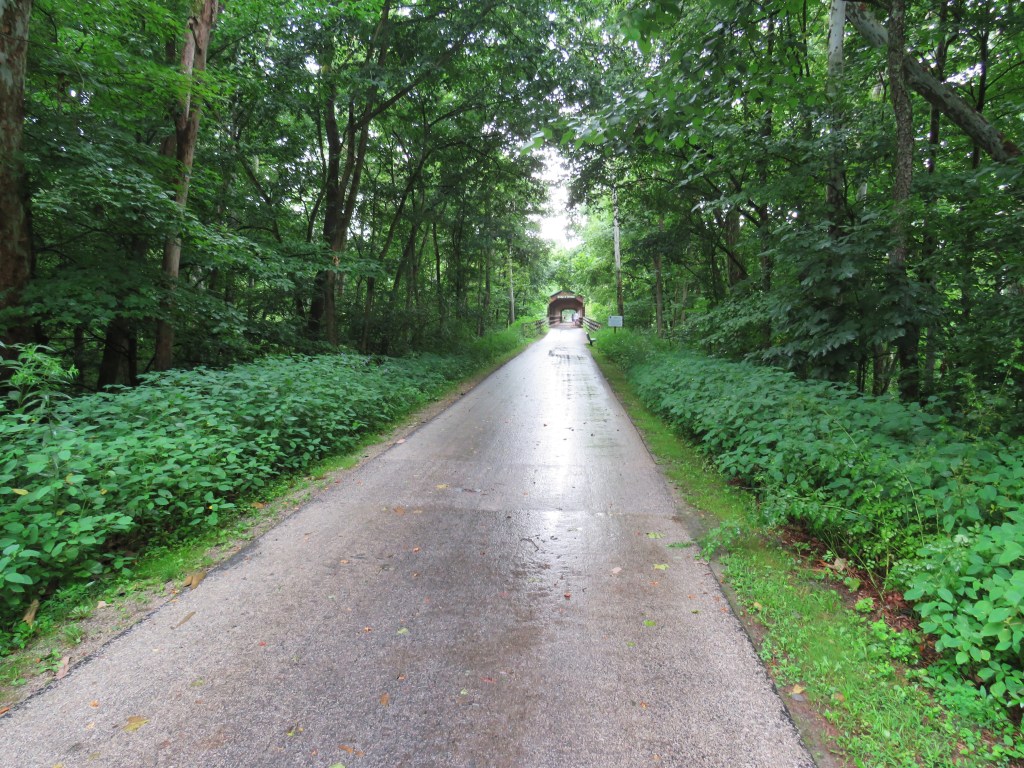
Today, you can take a walk across a bridge that was once traversed by the railroad.  The bridge is a short drive from U.S. Route 62 south of Brinkhaven.  You can park next to the trail and take a quarter mile walk on a paved trail that is easily accessible by wheelchairs.  If you have enough energy, you can go ahead and walk the entire four and a half mile trail to the nearby town of Danville.

The next time you hear about the ‘Bridge of Dreams’, you can dream about the days when the railroad traversed the Mohican River.  The railroad is long gone, but the dream still remains.

The Falls Park, Pendleton, Indiana

Oh the U.S. state of Indiana is a state famous for the Indianapolis 500 in the capital city of Indianapolis, The University of Notre Dame in South Bend, and for basketball which inspired the movie ‘Hoosiers’ starring Gene Hackman.  Like other states in the United States of America, Indiana has great hidden treasures.  One of these treasures is the town of Pendleton, a suburb of Indianapolis.  What is the town of Pendleton, Indiana famous for?  Well, unlike Indianapolis, South Bend, Fort Wayne, and Elkhart, there is not much fame in the town of Pendleton.

Some of you are saying, “Well, it looks like I am not going to visit this town.”

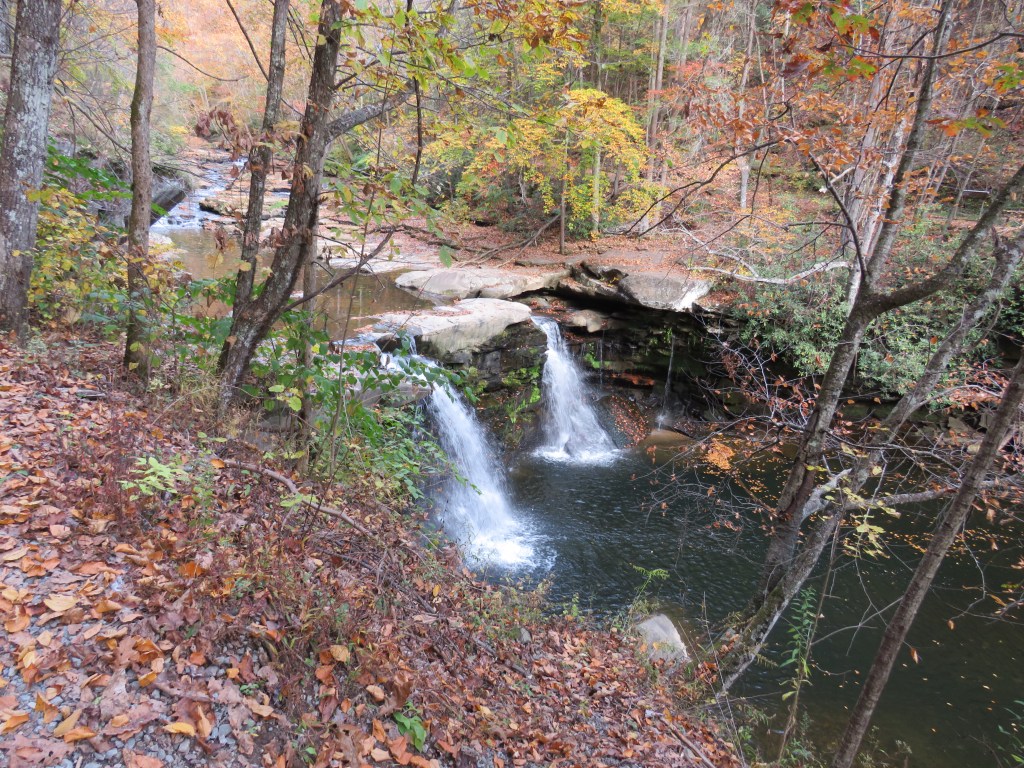
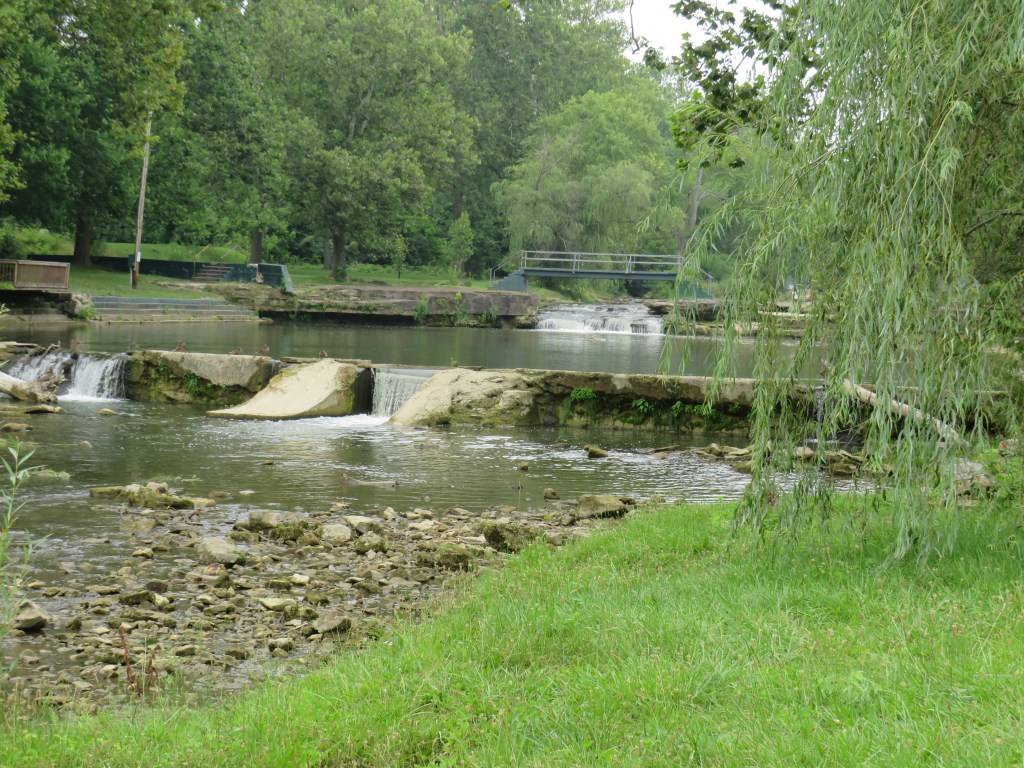
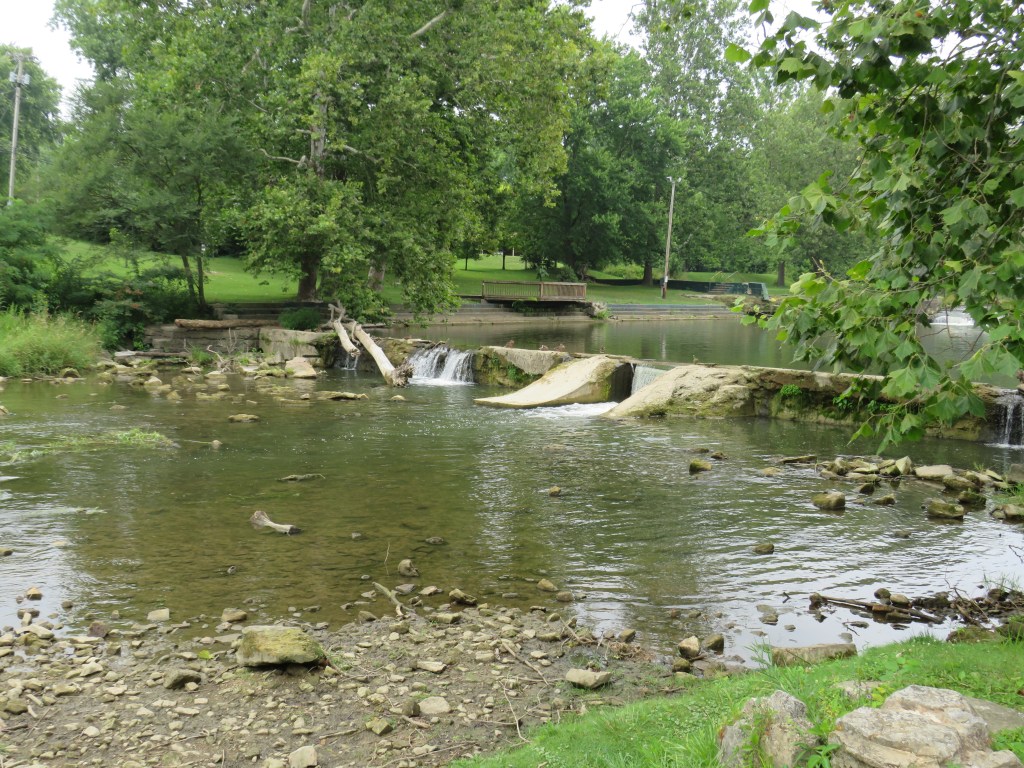
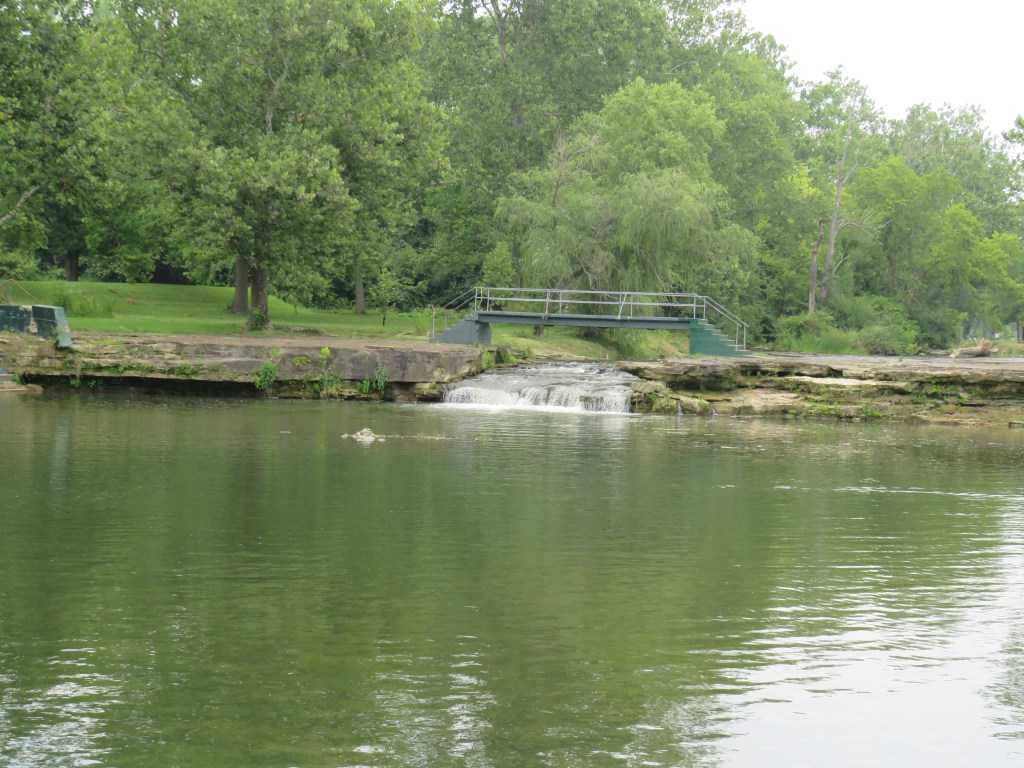
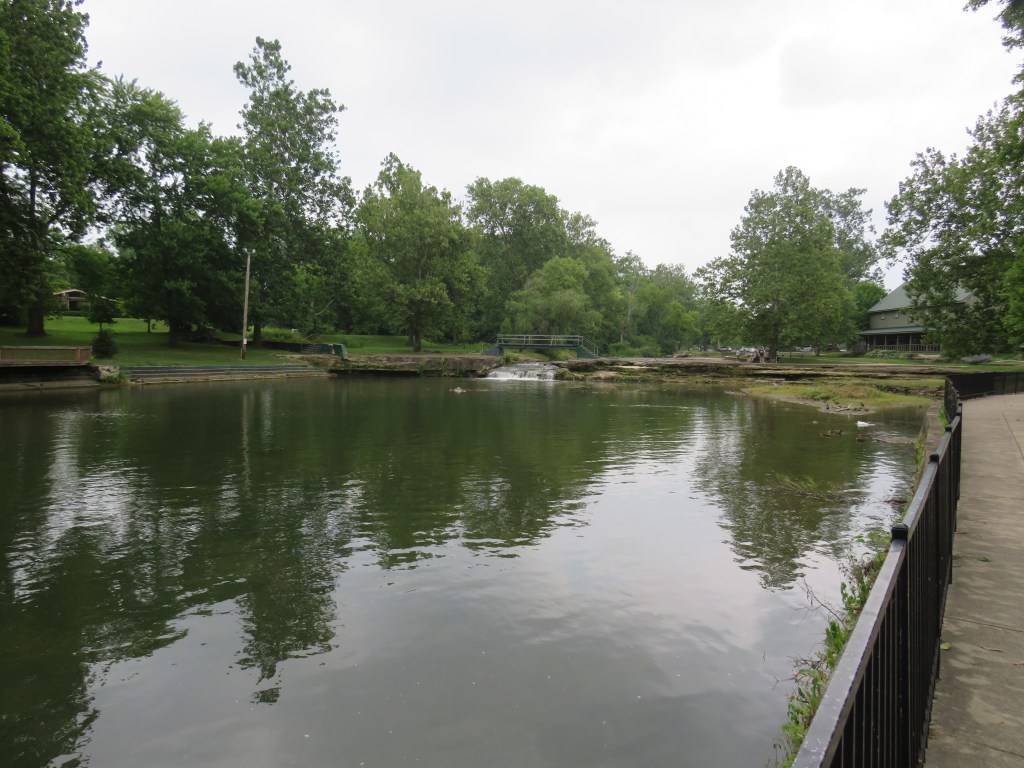
Well, this town has a great treasure.  What is this great treasure?  Welcome to Falls Park in Pendleton, Indiana.  What is great about Falls Park?  Well, it does have a waterfall.  It may not be as grand as Niagara Falls or Iguazu Falls or Victoria Falls, but just like most waterfalls, it is a beauty to see.  Now you have a great reason to visit Falls Park in Pendleton, Indiana.

Some of you are saying, “Oh, I love waterfalls.  They are such a beautiful thing to see.  I also enjoy parks.  There is a big problem.  This park is not a railroad park.  Therefore, I will not ‘fall’ in love with the town of Pendleton, Indiana.”

So why visit Falls Park in Pendleton, Indiana?

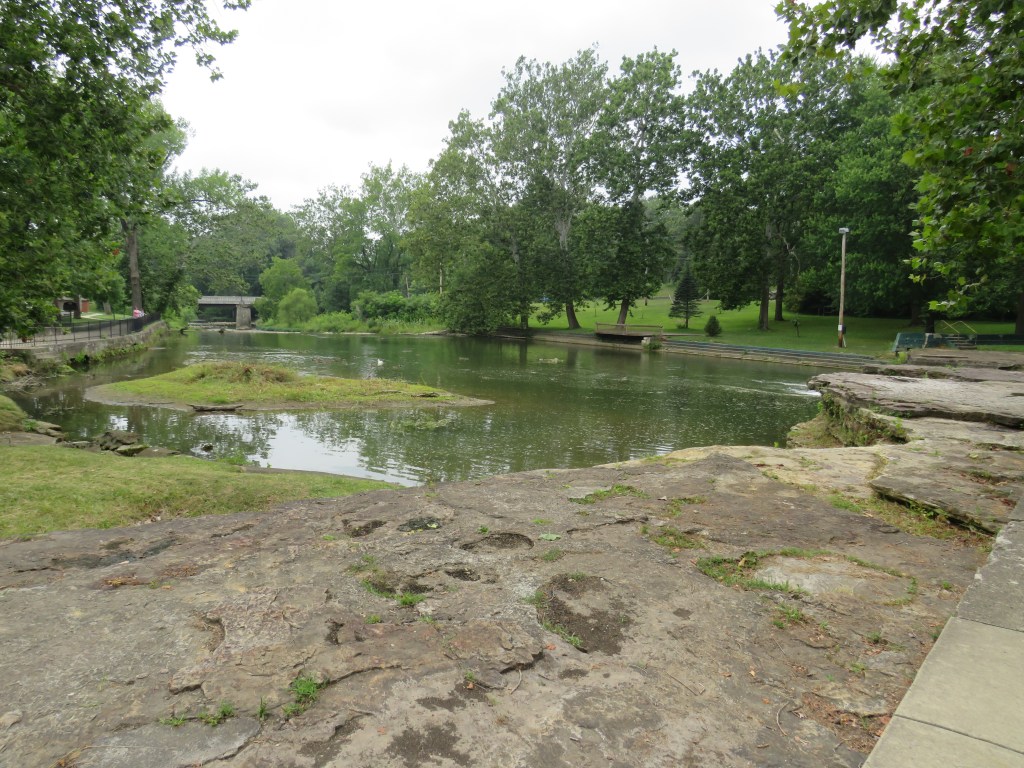
The park itself has a deep history that goes deep.  As you enter the park, you will notice what appears to be railroad bridge abutments.  Why are they there?  Pendleton is not a railroad town nor was it ever a railroad town even though a railroad line does pass through the town.  The old abutments are from a railroad line that did cross over the falls.  The ‘Bee Line’ passed through the park.  Originally part of the ‘Big 4 Railway’ which came through the park in 1851.  One of the trails follows the old railroad bed.  Like many unused railroad lines, they were abandoned, and the rails were taken up leaving the remnants of the railroad today.

Falls Park is located at 460 Falls Park Drive in Pendleton, Indiana just north of Indiana Route 38 and minutes from Interstate 69 and U.S. Route 36.  The park also has a museum and a veterans memorial.  The park is open sunrise to sunset, and access to see the waterfalls is available for wheelchairs.

You now have a reason to visit Falls Park in Pendleton, Indiana.  Be warned.  You will fall in love with this place.

“The Ghosts of Eckington Yard”

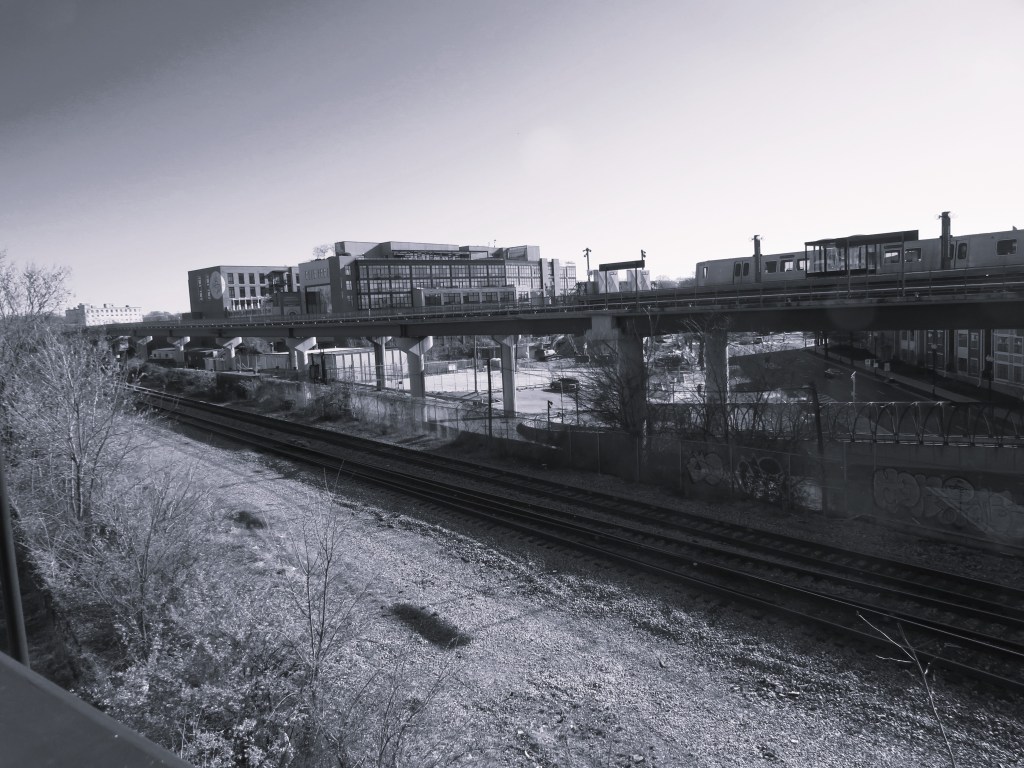
Washington D.C. is the capital of the United States of America.  (D.C. is an abbreviation for the District of Columbia.)  Like many cities, it has streets, and many of its avenues are named for the U.S. states.  One of its many entryways is a street known as New York Avenue.  What is special about New York Avenue?  Well, of course, it is named for the U.S. state of New York, but, before air travel, as New York City was the Gateway to North America with many ships passing by the Statue of Liberty, New York Avenue serves as a gateway into Washington D.C. for cars making the road famous for its massive traffic jams.  Before the Interstate Highway System as U.S. Routes were the way to travel across the nation, much of the traffic passing through the city came down New York Avenue as U.S. Routes 1 and 50 came down this road.  (Today, only U.S. Route 50 follows New York Avenue as U.S. Route 1 was rerouted.)  As you sit in traffic on New York Avenue, you notice that it follows an electrified railroad line.  (It was originally owned by the Pennsylvania Railroad but now owned by Amtrak.)  As you get closer to downtown, you see the railyard.  You climb a hill, you see the yard below.  Then you cross a bridge, and you do not see the yard anymore.  You see condos, high price condos.  The condos are part of the Eckington community, but what is special about those condos?

As mentioned, Washington D.C. is the capital of the United States of America.  It is one of the most visited cities in the world.  It is a city with a lot of history.  Although the city is not famous as a railroad city, there is much railroad history here.

So, what is special about those condos in Eckington?  The story begins when the Baltimore and Ohio Railroad, the nation’s first commercial railroad, came to the nation’s capital.

Until the 1970’s, New York Avenue was a roadway were there were many warehouses.  When you heard the traffic reports on New York Avenue, a warehouse was always used as a location.  The most famous warehouse was the Hecht Company warehouse.  Many of these warehouse were served by railroads.  As you travelled down New York Avenue through Eckington, you saw boxcars being loaded and unloaded.  During the Franklin Roosevelt Presidential Inaugural, you saw Pullman Cars at that site as, before airplanes, executives had their own private railcars.

That it just a small part of the story.

As the railroad lines went along New York Avenue before going south to Union Station, there were warehouses on the north side and south side of New York Avenue with many of the warehouses served by either the Pennsylvania Railroad or the Baltimore and Ohio Railroad that passed through the yard and went north.  The yard continued along the Baltimore and Ohio Railroad line about a mile north of where the Pennsylvania Railroad went south towards Union Station.  (Both the Baltimore and Ohio Railroad and the Pennsylvania Railroad served Union Station.)  In the 1970’s, the Washington Metropolitan Area Transit Authority took up a small section of the yard to build a yard for its subway trains.  Things changed as many of the warehouses either closed or began using trucks.  In the 1980’s much of the rails were removed, and much of the land was sold.

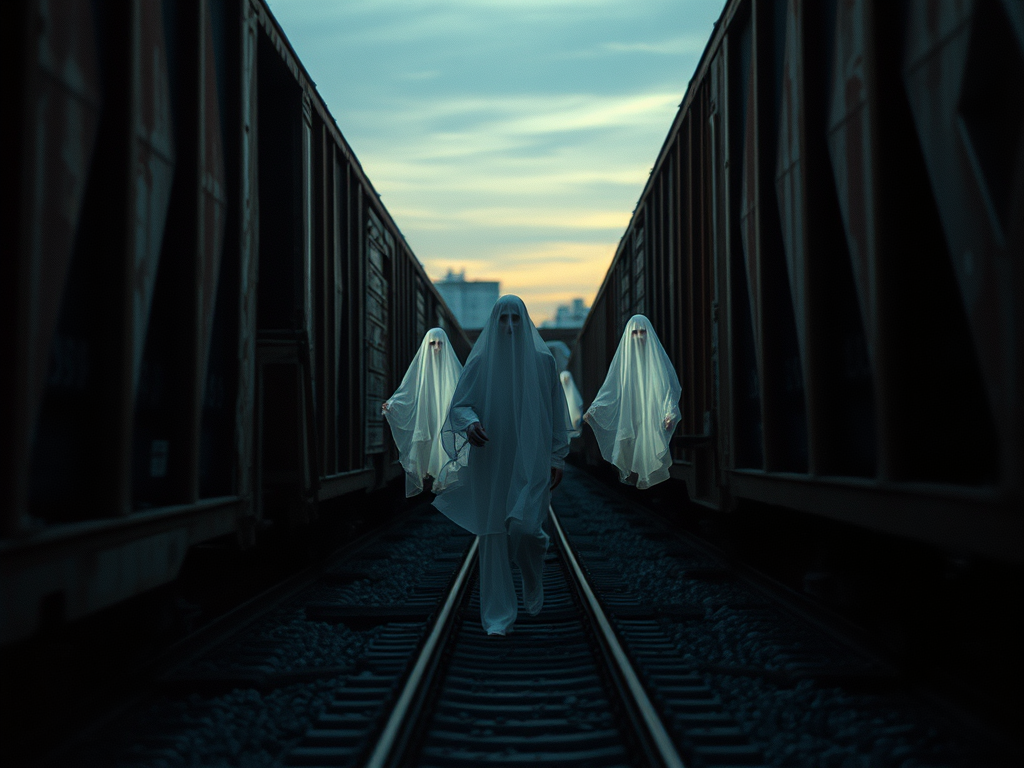
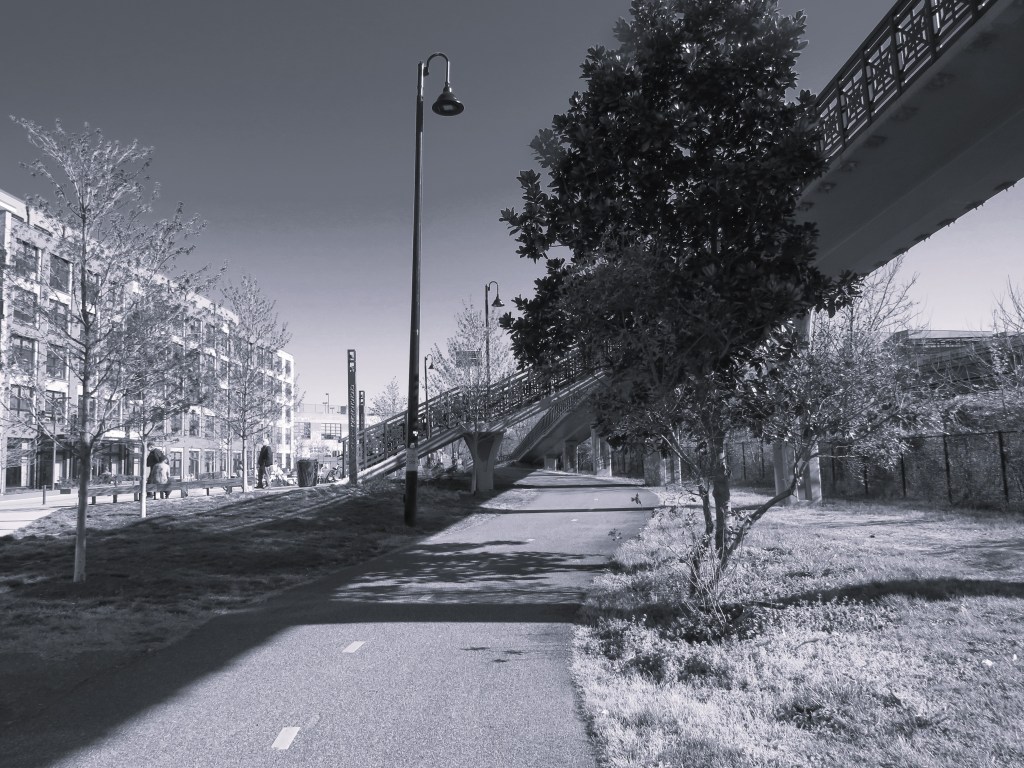
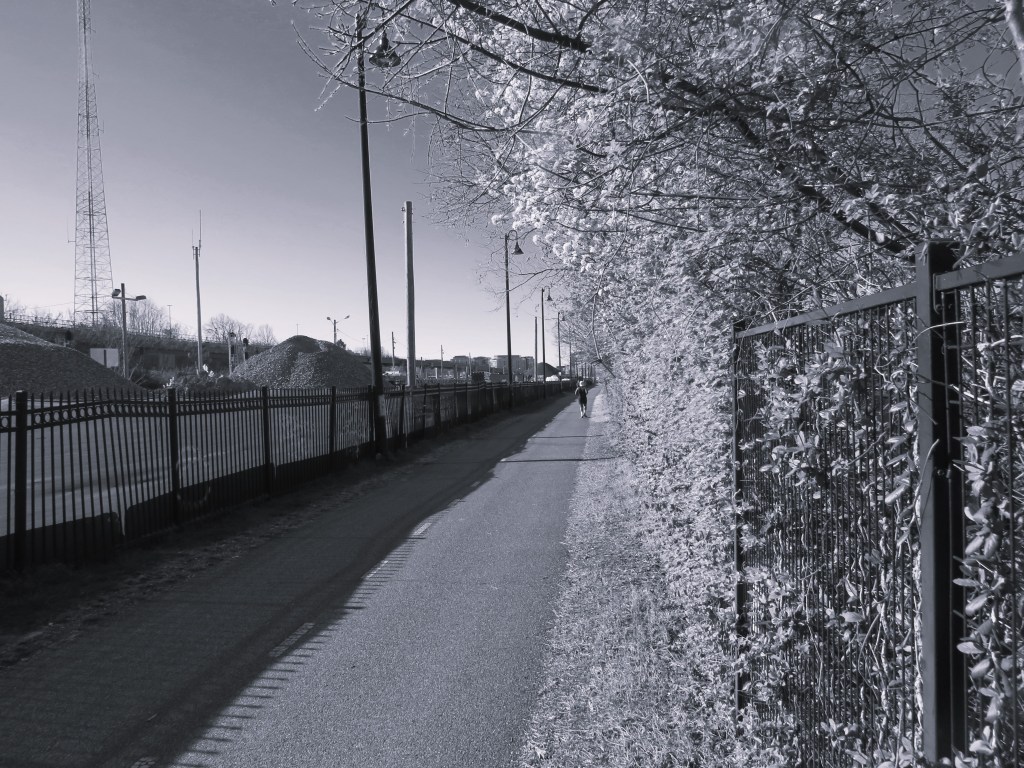
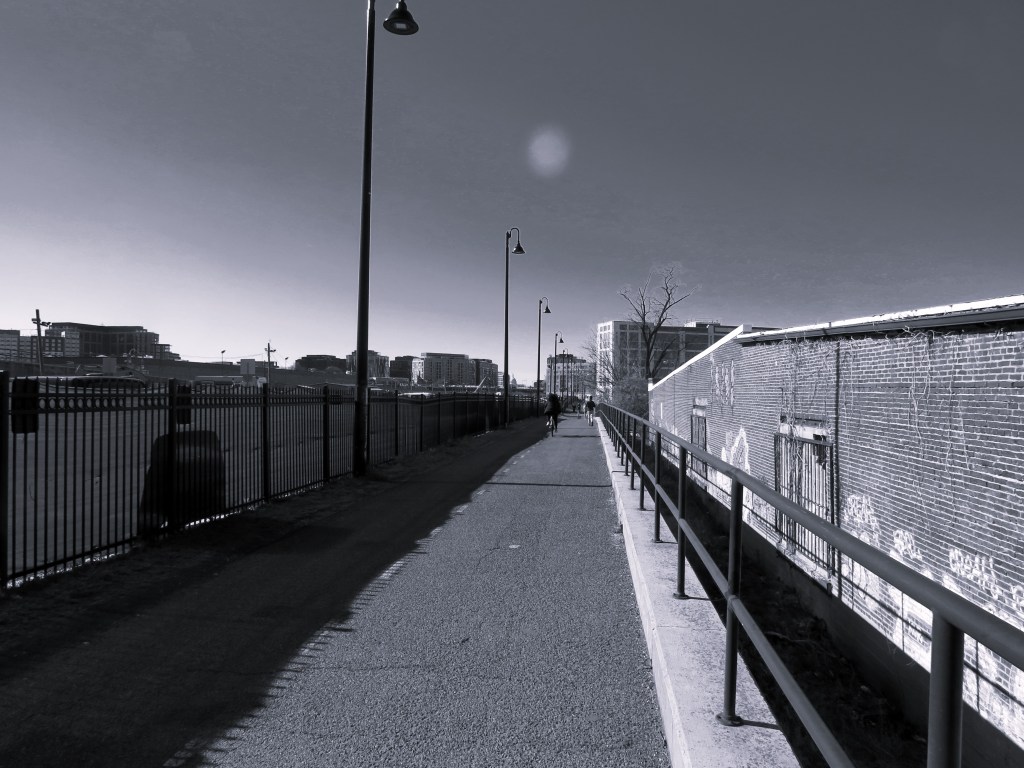
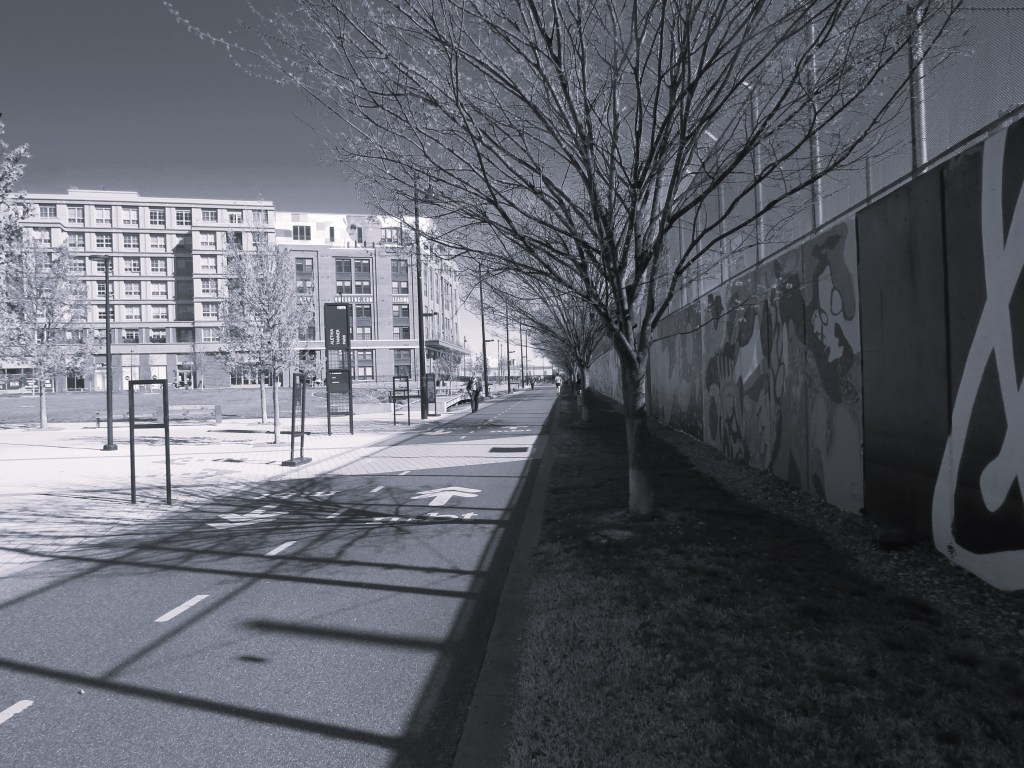
Today, as you drive along New York Avenue, you see only the Amtrak trains in the yard in what was called the Ivy City Yard.  The Baltimore and Ohio Railroad line, now owned by the Chessie Seaboard System (CSX), only pass through making no stops except to wait for an Amtrak Train going north from Union Station.  What was once Eckington Yard now has a bike path where you can walk along where railroads once ran, and you can see where the railroad spurs once were.  You can walk under New York Avenue and watch the trains going in and out of Union Station to points north to Philadelphia, New York, and Boston and points west to Pittsburgh, Columbus, and Chicago, and see the old Capital City Arena where a band called the ‘Beatles’ performed their first concert in the United States of America.  (It is no longer an arena, but the building still stands.)  Although Eckington is a completely different place than it was, as you walk through, the ‘Ghosts of Eckington Yard’ may come out to greet you.

Caledonia State Park, Fayetteville, Pennsylvania

U.S. Route 30, a route that has been nicknamed the ‘Lincoln Highway’ named after Abraham Lincoln, former President of the United States of America, begins in the town of Astoria in the U.S. state of Oregon and winds its way east through many U.S. states ending in Atlantic City in the U.S. state of New Jersey.  One of those states is Pennsylvania.  As it passes through Pennsylvania, it passes through the major cities of Pittsburgh and Philadelphia, and it passes through the town of Gettysburg, the town famous for a great battle of the American Civil War known as the Battle of Gettysburg.  Halfway between Gettysburg and Chambersburg new the town of Fayetteville is Caledonia State Park.  Caledonia State Park is a park that has hiking trails, fishing, and hunting, and it has a waterfall.  Yes, many parks has this, but it also has the Totem Pole Playhouse, a theater that has produced actors like John Ritter from the old television series ‘Three’s Company’, the centerpiece of the park is the Caledonia Iron Furnace.

The Caledonia Iron Furnace was built in 1837, and it was owned by Thaddeus Stevens.  The name of the furnace comes from the name of the county in Vermont where Thaddeus Stevens was born. It was destroyed by Confederate General Jubal Early and his men in 1863.  The furnace was rebuilt, and it continued to produce iron until it was closed in 1902, and it was then turned into a state park.  When you visit Caledonia State Park, you can see the furnace, and you can see the blacksmith shop where demonstrations take place.  In Caledonia State Park, every step you take in the park is a place where history took place.

Some of you are saying, “Wow.  I love state parks.  I love being around the trees and the streams and the waterfalls.  As for the old furnace, it is nice that it is preserved although it would be great to see it working.  There is one problem.  What is the problem?  There is no railroad here.  Therefore, you will not see my company here.”

Well, as you walk around Caledonia State Park, you will not see a railroad nor do you see any sign of a railroad being here.  If there is no railroad at the park, why visit?

As you visit Caledonia State Park, you will notice a few structures within the park itself.  Of course, you have the restrooms, and, of course, you have the old furnace.  Then you have the blacksmith shop.  Yes, a blacksmith does mend and heat metals here, but it was not always a blacksmith shop.  If it was not always a blacksmith shop, what else could it have been.  The blacksmith shop was once a trolley station.  A trolley station?  Yes, it was a trolley station.  The Chambersburg and Gettysburg Electric Railway.  Trolley service began in 1905.  The Chambersburg and Gettysburg Electric Railway made a stop at Caledonia State Park, and they built a small amusement park there.  The railway got its name from the fact that its purpose was to take passengers from Chambersburg, Pennsylvania to visit the Gettysburg Battlefield in Gettysburg, Pennsylvania.  The trolley line was built east from Chambersburg, and it took passengers as far as… Caledonia State Park.  Due to lack of funds and steep grades between Caledonia State Park, the section to Gettysburg was never built.  Service ended in 1926, and the amusement rides were dismantled.  Today, only the blacksmith shop and the Trolley Trail going west from the blacksmith shop are the only reminders of the trolley.

As mentioned, every step you take at Caledonia State Park in Fayetteville, Pennsylvania is a step where history happened.  That includes those on the Appalachian Trail which passes through the park.  If you walk along the Trolley Trail, every step you take will be a step where railroad history took place.

Caledonia State Park is located near the town of Fayetteville, Pennsylvania at the intersection of U.S. Route 30 and Pennsylvania Route 233.  The park is free to visit, and it is open from sunrise to sunset.  The iron furnace and the Caledonia Waterfall can be seen from the road.  Although the trolley trail is flat, it is not paved making it difficult for wheelchairs.  You can get more information at https://www.dcnr.pa.gov/StateParks/FindAPark/CaledoniaStatePark/Pages/default.aspx.

U.S. Route 30 has many great sites along the road.  Caledonia State Park is one of them.  It may be famous for the furnace, but it was also a place where a trolley line came to an end.