The Laura Ingalls Wilder Historic Home and Museum, Mansfield, Missouri

Who is Laura Ingalls Wilder?  She was an author who wrote many books, but she is most famous for the Little House on the Prairie which became a television series.  She was born in the U.S. state of Wisconsin and lived in a few states in the Midwest Region of the United States of America.  Her final home was in the town of Mansfield in the U.S. state of Missouri.  This is the same state that produced Samuel Clemens, commonly known by his penname of Mark Twain, who wrote the stories of Huckleberry Finn and Tom Sawyer and their adventures on the Mississippi River.  Laura Ingalls Wilder wrote Little House on the Prairie while living in Mansfield, Missouri.  When you visit the Laura Ingalls Wilder Historic Home and Museum, you can visit the museum that tells the life of Laura Ingalls Wilder and the books that she wrote.  You then have the Rocky Ridge Farmhouse and see her writing desk.  You then have the Rock House.  It was here where Laura wrote the Little House on the Prairie books.  As you visit the Laura Ingalls Wilder Historic Home and Museum, you will get the complete story of America’s greatest authors.

Some of you are saying, “Wow!  She had to be one amazing woman.  She lived in so many places in the American Midwest.  Her two homes must be beautiful.  There is a very big problem.  First, this is not a railroad site.  Second, this is not a railroad museum.  Third, Laura Ingalls Wilder wrote no stories about railroads.  Therefore, you will not see me making a visit to this place.”

You do have a point.  This is not a railroad site.  It is not a railroad museum.  There is no railroad on the property nor was there any railroad here.  She never wrote any story about the railroad.  This brings us to a very important question: why should you visit the Laura Ingalls Wilder Historic Home and Museum?

The Laura Ingalls Wilder Historic Home and Museum is a museum that features two houses where Laura Ingalls spent the last years of her life that is located just outside of the town of Mansfield, Missouri.  She is buried with her husband at a gravesite in a cemetery that is located in the town, and the public can visit the gravesite.  While she was living in Mansfield, like many people, you buy things.  When you buy things, some people have their things brought to their homes.

Some of you are saying, “This is nice, but there is no railroad at her house nor has there ever been a railroad at her house.”

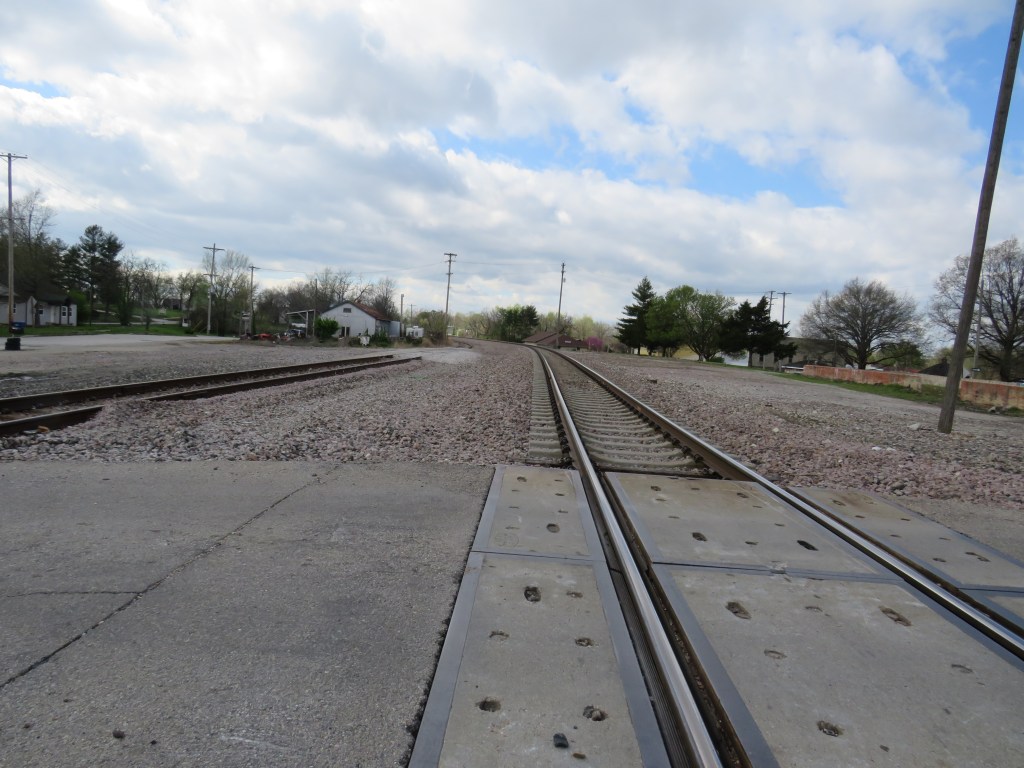
That is true.  However, there is a railroad in the town of Mansfield, and there was a train station.  The train station is no longer active, but the railroad line remains active today and is owned by the Burlington Northern Santa Fe Railroad, simply known as BNSF.  The town also had a railroad yard, and it was served by a short line railroad known as the Ava Southern Railroad that went to the town of Ava.

What does this have to do with the Laura Ingalls Wilder Historic Home and Museum?

Laura Ingalls Wilder made much use of the train station in Mansfield as she had many of her things ship to the town of Mansfield by train, and then it was brought to her house.  Laura Ingalls Wilder also attended a ceremony celebrating the completion of the Ava Southern Railroad.

Laura Ingalls Wilder never wrote a story about the railroad, but while she was living in Mansfield, Missouri, the railroad was a big part of her life.

The Laura Ingalls Wilder Historic Home and Museum is located at 3060 Missouri Highway A in Mansfield, Missouri.  It is open from March 1 to November 15 from 9:00am to 5:00pm from Monday to Saturday and 12:00pm to 5:00pm on Sunday.  Parking is on site.  Please note that due to the age of the structures, the Rocky Ridge Farmhouse and the Rock House are not wheelchair accessible.  You can get more information and read more into the life of Laura Ingalls Wilder at https://lauraingallswilderhome.com/.

Come to the Laura Ingalls Wilder Historic Home and Museum.  See where the Little House on the Prairie was written.  See the place where a famous author made her home, and home that made use of the railroad.

Williamsburg, Indiana

Welcome to Williamsburg, Indiana.

Some of you are saying, “You got it wrong.  You meant to say, ‘Welcome to Williamsburg, Virginia’.”

No.  This is the small town of Williamsburg in the U.S. state of Indiana.  It is not like its Virginia counterpart of Colonial Williamsburg but a small town in the eastern part of the state just west of the U.S. state of Ohio.  When you visit the town, you will pretty much see a ghost town… but it was not always that way.

The town was named after William Johnson, the man who settled the town in 1830.  Like many small towns, it flourished, but something happened in 1901.  What happened?  The Chesapeake and Ohio Railway came to town.  Connecting the Indiana cities of Richmond to the south with Muncie, the Chesapeake and Ohio Railway brought massive growth of business and population to the town.  The town had its own train station.  Like many small towns in the United States of America, Williamsburg went into a decline and began beginning to be the ghost town it is today.

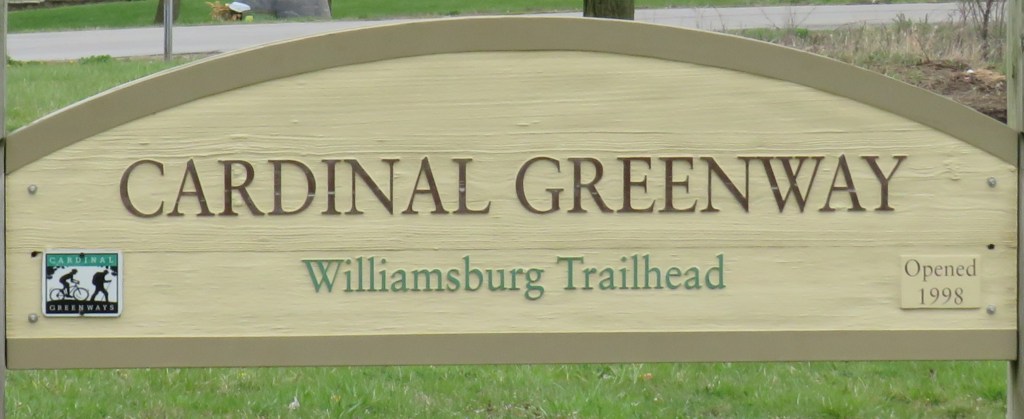
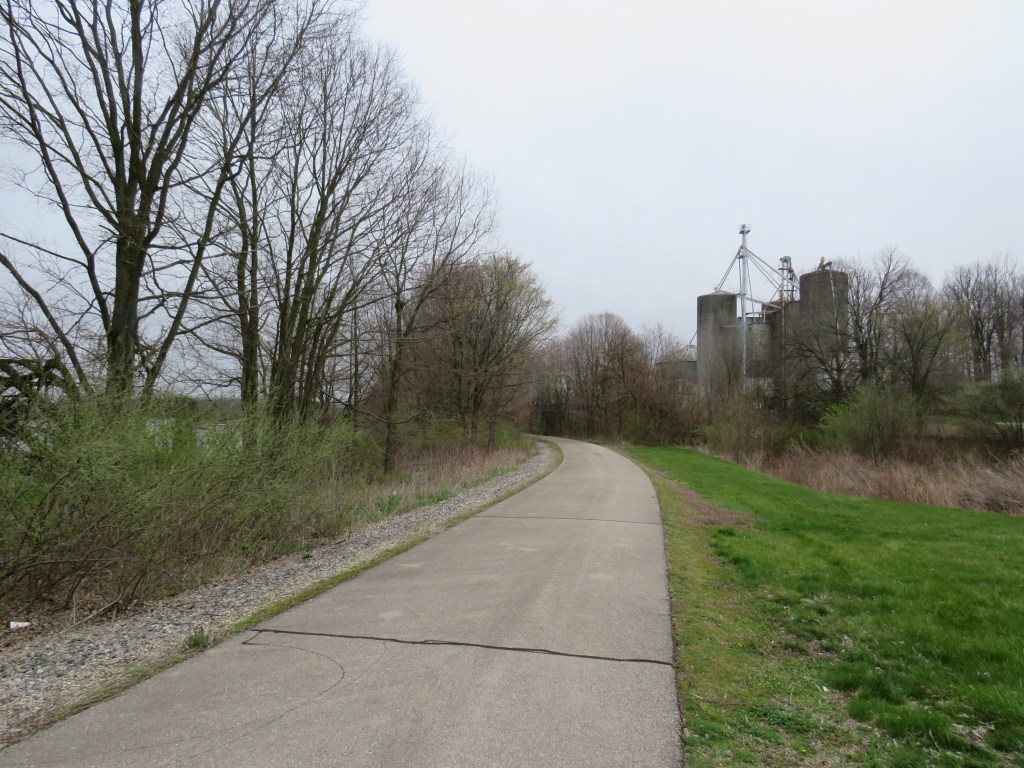
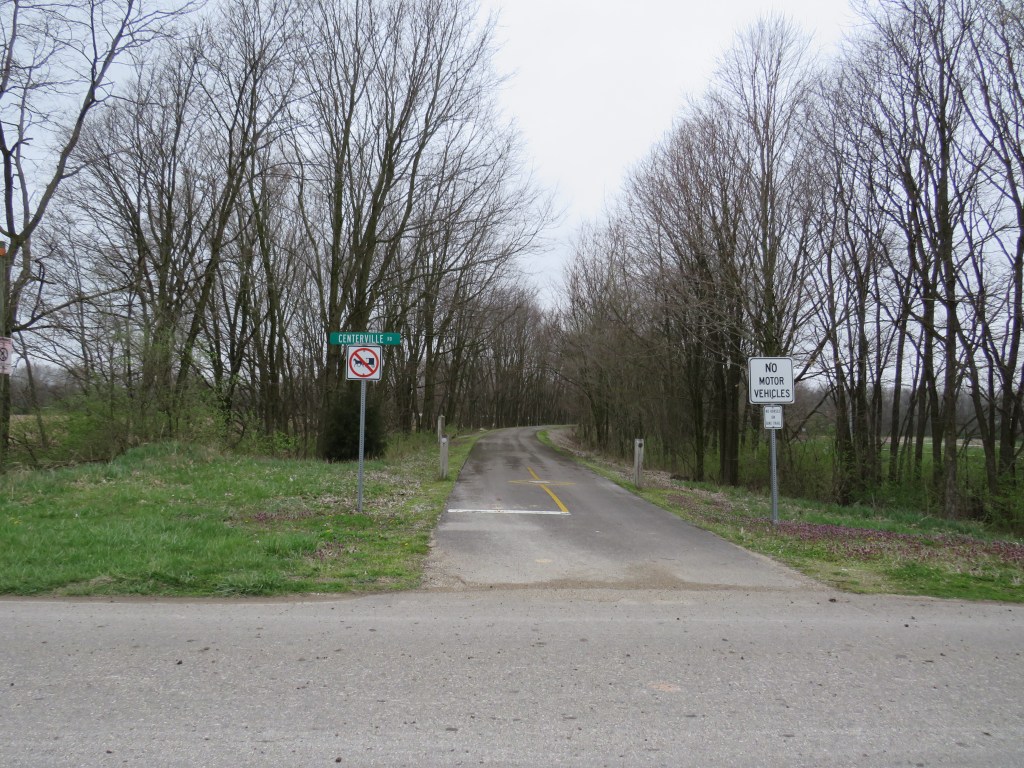
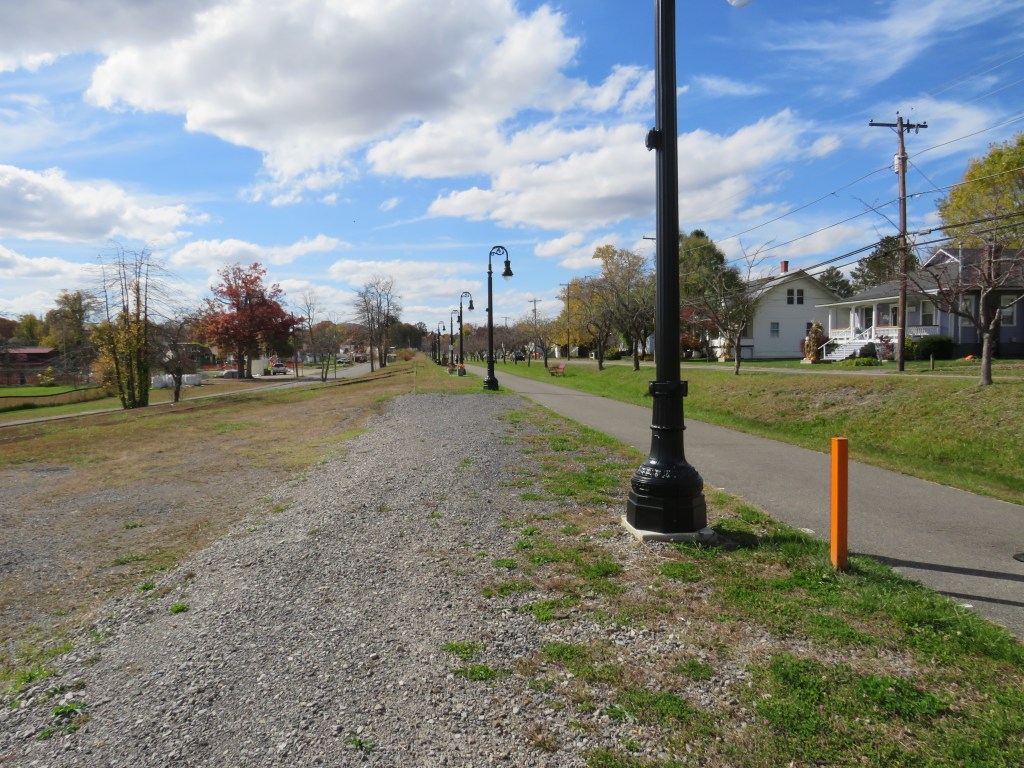
Today, the railroad line that passed through the town of Williamsburg, Indiana became a rail trail known as the Cardinal Greenway, the longest rail trail in the U.S. state of Indiana running to Richmond to the south and Marion to the north.  As you visit the rail trail, you will not notice that this was once a busy place.  Located north of the town center just a short drive of U.S. Route 35, you will experience a quiet place at a place that was once the centerpiece of the town.

Welcome to Williamsburg, Indiana.  You will not see people dress in colonial attire, but you will be in a small town where a railroad made history.

The White Oak Rail Trail, Oak Hill, West Virginia

In the heyday of America railroading, the railroad connected the small towns with the major cities.  As many railroad lines were no longer used, many of the railroad tracks and the railroad ties were taken up while some rails and ties were left to decay.  Some of the railroad beds were left to erode over time while some were covered into rail trails.  (A rail trail is a trail designed on an old railroad bed to be used for hiking, biking, horseback riding, or just plain walking.)  Many of the trails are paved while some remain dirt or have gravel.

In the U.S. state of West Virginia in the metropolitan region of Beckley, you will find the town of Oak Hill.  The town is not very famous although it is said the country music singer Hank Williams may have died at a gas station in this town while on route from Bristol, Virginia to Canton, Ohio.  (The story has not been confirmed.)  The only thing most people know about Oak Hill is that most people drive by the town on U.S. Route 19 while traveling from Beckley to the World Famous New River Gorge Bridge which is just north of the town.  One thing that is confirmed is that the town of Oak Hill was served by the railroad.

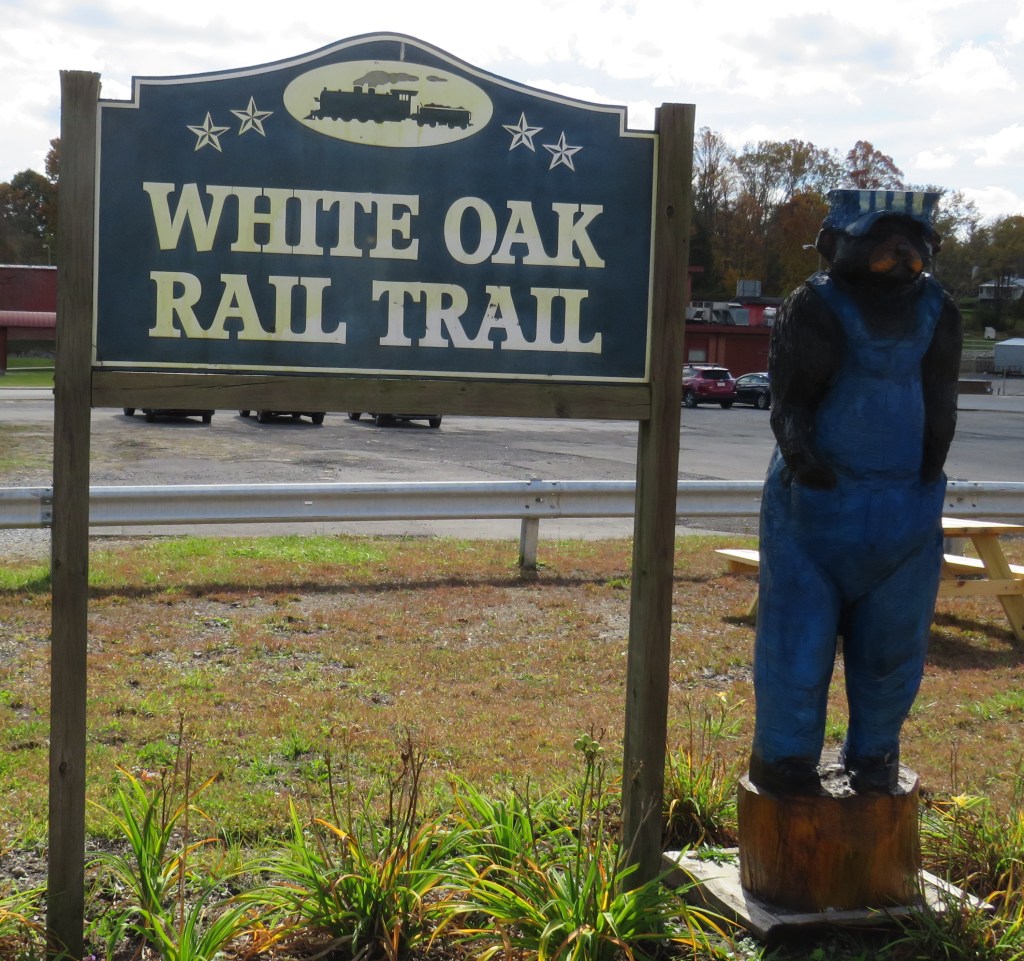
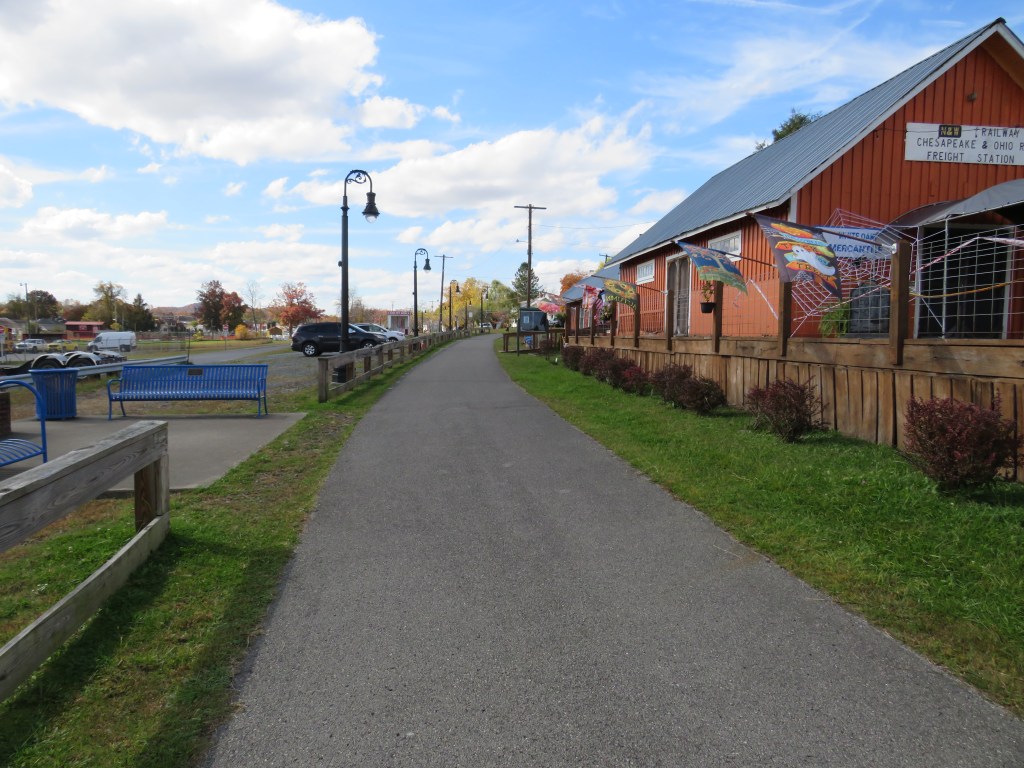
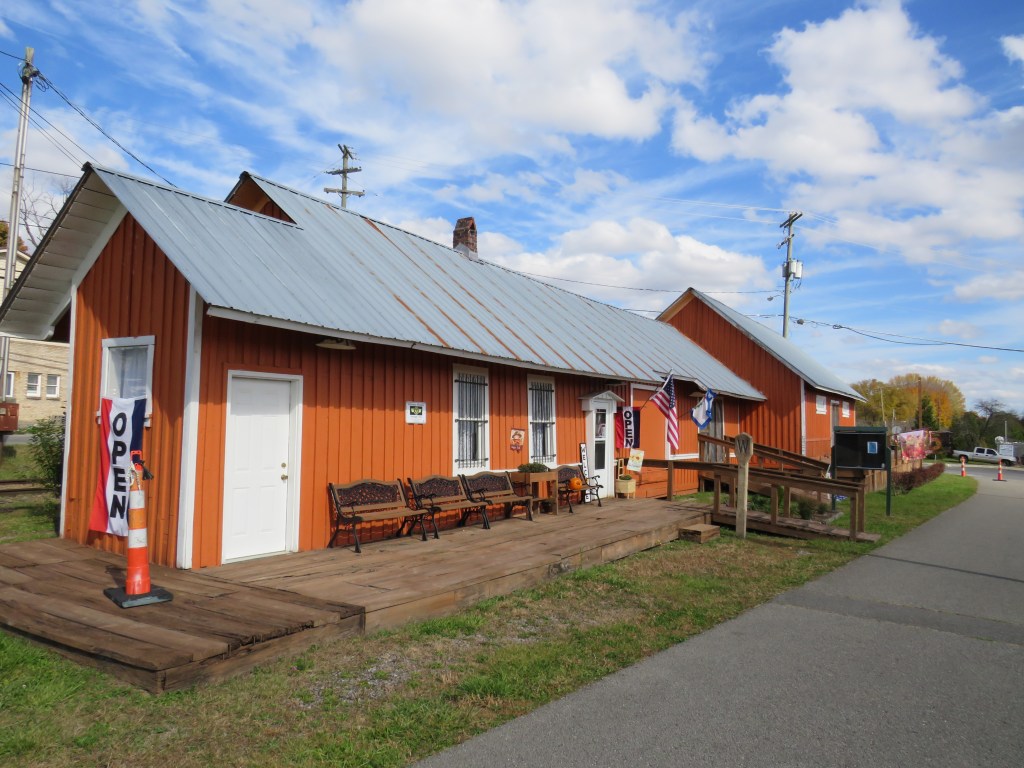
The White Oak Rail Trail is a rail trail that is slightly under eight miles that passes through the town.  Much of it is paved, but there are portions of the trail that are not paved.  The railroad line was owned by the White Oak Railway, and the rail line was later taken over by the Virginian Railway.  The main center point of the trail is the old train station.

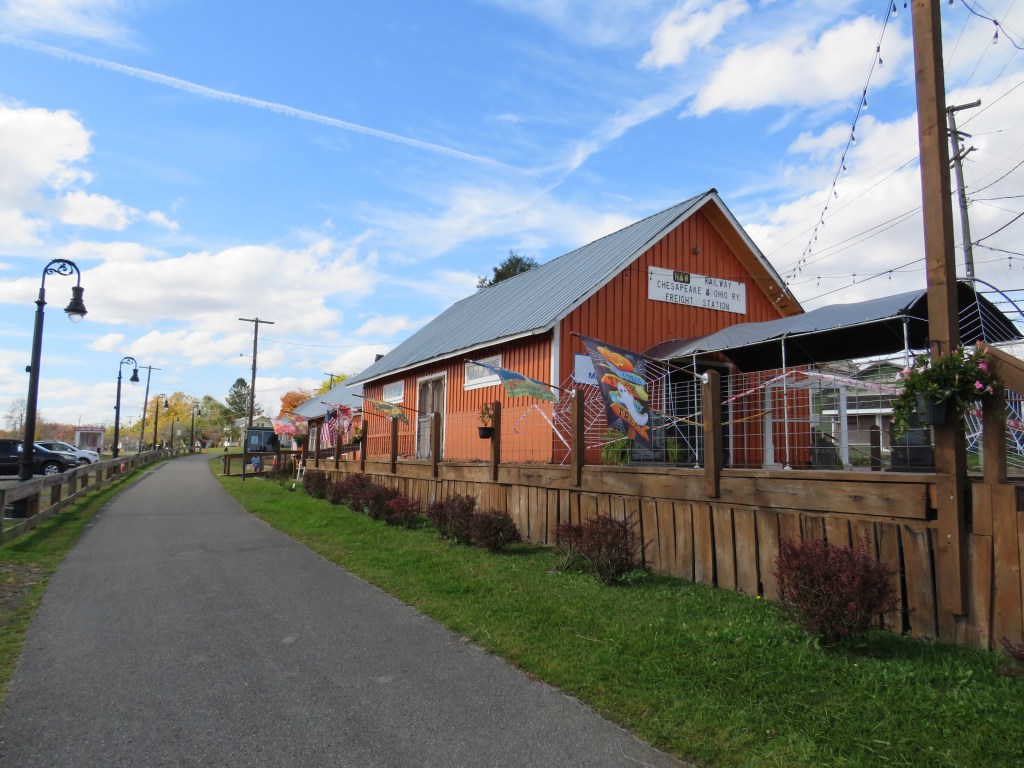
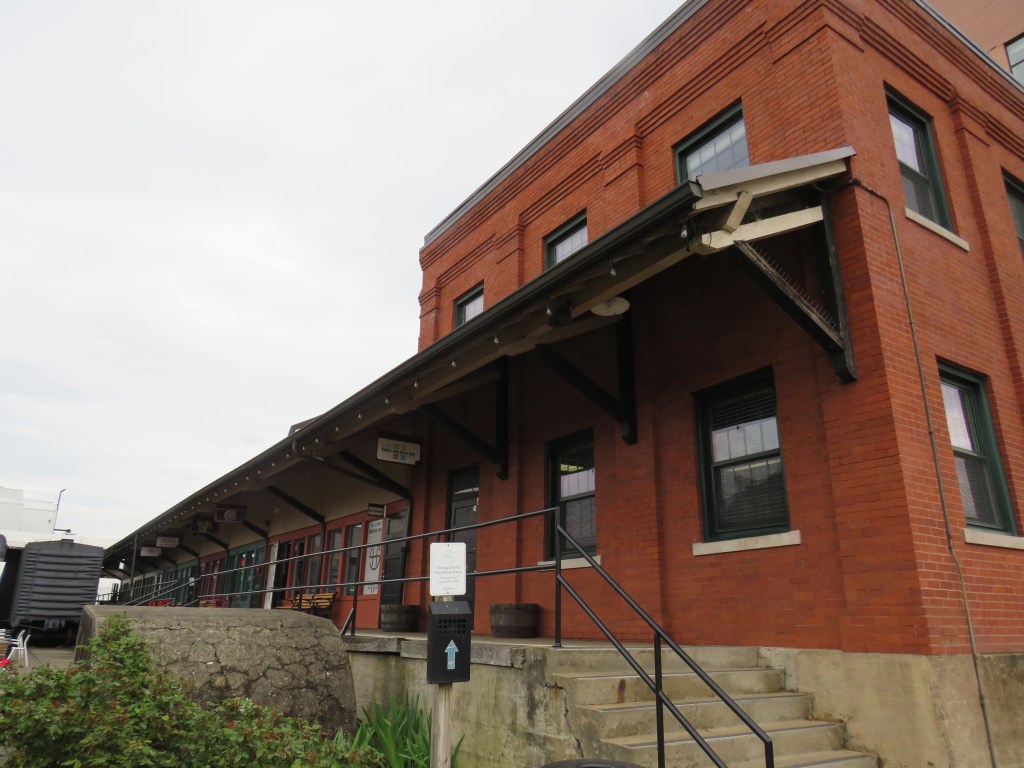
What is special about the old train station?  It is one of the oldest structures in Oak Hill.  It is a passenger and a freight depot.  It was built by the White Oak Railway in 1903, and it was later taken over by the Virginian Railway.  Like many small towns, the railroad was a major contributor to the town’s economy.  The depot was also used by the Norfolk and Western Railway and the Chesapeake and Ohio Railway.  The train depot remained in service until 1983.  The rail line later became the rail trail it is today.

The train depot is now an art store selling locally made at.  An old railroad line that passes by the old train station is the only reminder of Oak Hill being a railroad town today.

The Oak Hill Train Depot is on the National Register of Historic Places.  It is located at the intersection of Virginia Street and Central Avenue.  The trail goes north from the depot to the community of Summerlee and south to the community of Carlisle.  Much of the trail is wheelchair accessible.

When you think of the New River Gorge region of West Virginia, think of the small town of Oak Hill.  It was once a railroad town, and an old train depot remains.

Heritage Station, Huntington, West Virginia

The U.S. state of West Virginia is a state full of mountains.  The city of Huntington is a city in the western region of the state and located on the Ohio River and across the river from, of all places, the U.S. state of Ohio.

Some of you are saying, “Yeah!  Too bad that it happens to be a boring city with nothing to do.”

Those who see the city of Huntington, West Virginia as a boring city has obviously never visited the city.  Some of you may have heard of Marshall University which is located in this city.  The university was made famous by the movie We Are Marshall about how the university’s American football team that was tragically killed in a plane crash and, when the university wanted to end the program, the people of the university told them otherwise.

Some of you are saying, “That is nice, but this city is not a railroad city.”

Ladies and Gentlemen, you are wrong again.  One of the founders of the city of Huntington was a man named Collis Potter Huntington.  Yes, it is the same Collis Potter Huntington who had a steam locomotive named for him.  He is considered one of the “Big Four” of western railroad as he was the man who built the Central Pacific Railroad which became a part of the Transcontinental Railroad.  He founded the city to be hub for the Chesapeake and Ohio Railway.  Another railroad, the Baltimore and Ohio Railroad, also came here, and they built a passenger train station downtown.

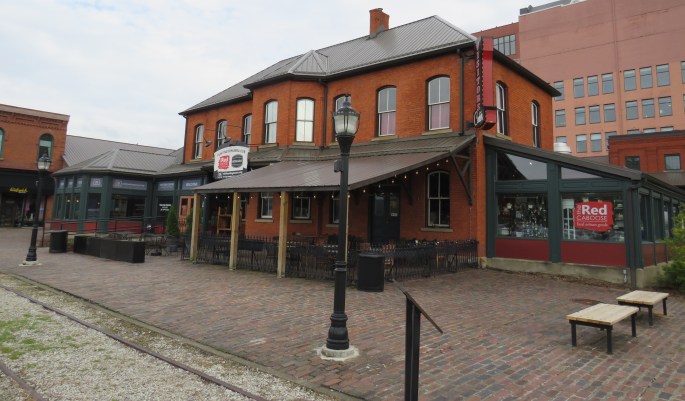
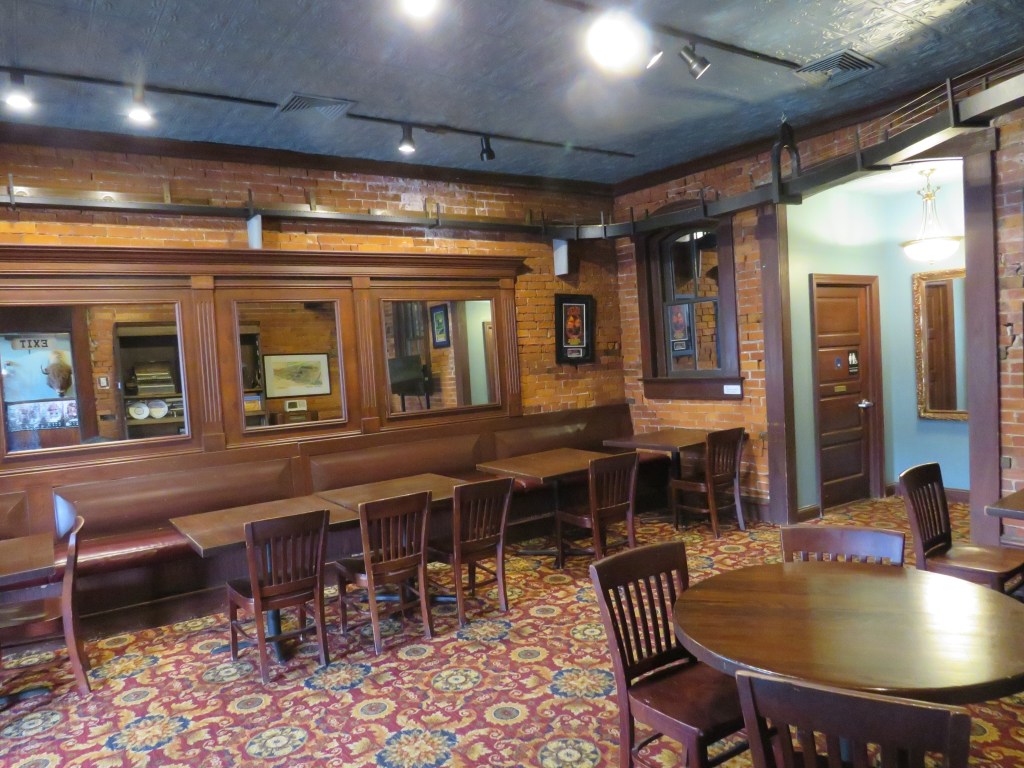
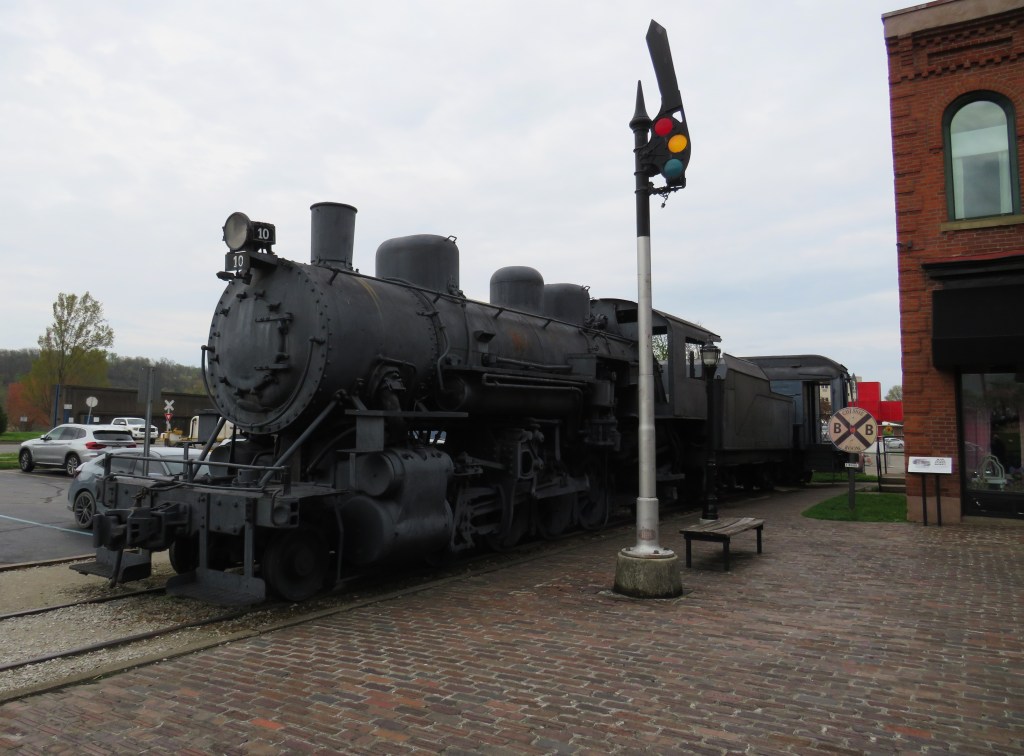
Welcome to the Heritage Station.  What is the Heritage Station?  It was once a passenger train station for the Baltimore and Ohio Railroad.  When passenger service ceased, the old train station remained.  Also called the Heritage Village, not to be confused with the Heritage Village and Farm, a living history museum located south of the city, it houses the Cabell Huntington Convention and Visitor’s Bureau and a few shops and restaurants.  One of the shops is called the ‘Red Caboose’, which sells arts and crafts by regional artists.  There are old freight houses and an old bank that is part of the village.  What is special about the bank?  It is said that it was robbed by Jesse James, the famous outlaw.  It was the city’s first bank robbery.

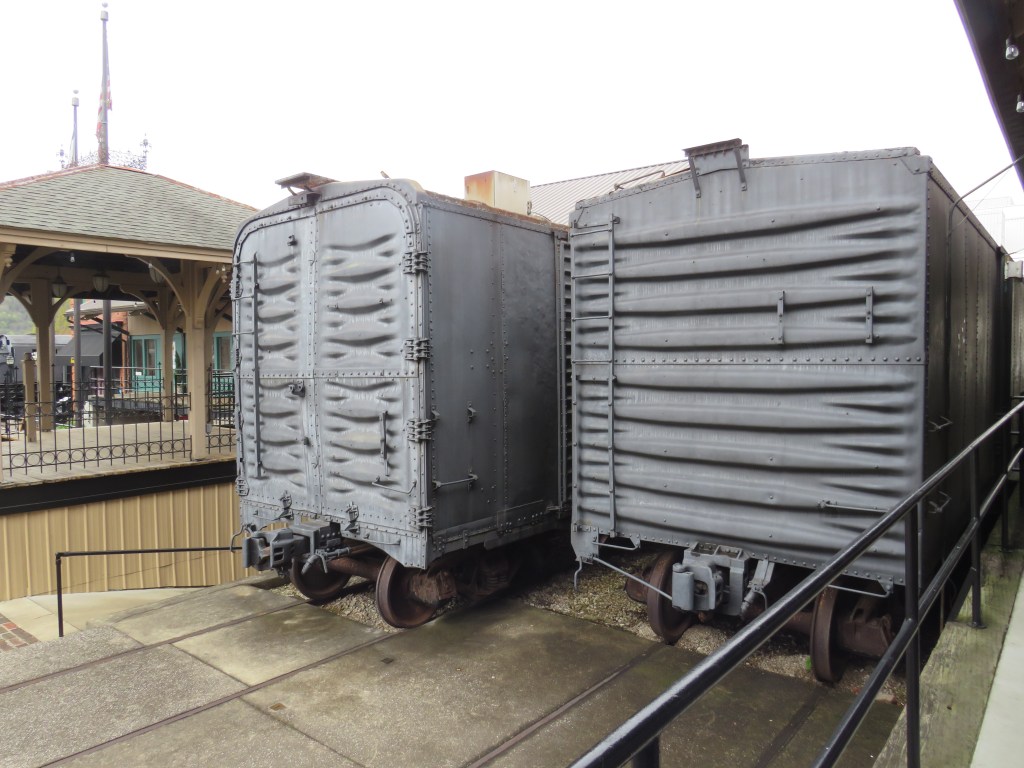
As you approach the Heritage Station, the first thing you will see is not the old train station but a steam locomotive.  The locomotive was first used by a coal mine and then used to haul lumber.  You will also find an old Pullman passenger car and two boxcars.

Need a reason, to visit Huntington, West Virginia?  You actually have many reasons to visit this city.  The Heritage Station is just one of them.

The Heritage Station is located at 210 Eleventh Street at Veterans Memorial Boulevard (U.S. Route 60).  Parking is on site.  You can get more information at https://ghprd.org/index.php/heritage-station.

As mentioned, you have many reasons to visit Huntington, West Virginia.  The Heritage Station is one of many.

Chatham Railroad Museum, Chatham, Massachusetts

The U.S. state of Massachusetts is one of the New England states that makes up the northeastern region of the United States of America.  The state began as one of the thirteen original British colonies and became a U.S. state when the United States of America won its independence from Great Britain.  It was here at a place called Plymouth Rock on the shore of Cape Cod Bay where the Pilgrims landed after a long voyage from Holland, and it was here where what was called the First Thanksgiving took place.  Even though it was not the actual First Thanksgiving as the actual one happened in the U.S. state of Virginia near the present day city of Richmond, it was the Pilgrim’s Thanksgiving that the holiday is modeled after as it involved a feast where as the in Virginia, it was a long prayer of thanking God for surviving a long and dangerous voyage across the ocean.  Massachusetts played a big role in the American Revolution with the Battle of Bunker Hill, the Boston Tea Party, the famous ride of Paul Revere, and ‘the shot heard around the world’ at the Battle at Concord Bridge.  (In case you are wondering, ‘the shot heard around the world’, was not a gunshot that was so loud that it was heard as far away as Antarctica but message that the United States of America was fighting for its independence.)  Along with the American Revolution, the city of Boston, the state capital, is a big sports town.  It is the home of the Boston Celtics, the most championed team in the National Basketball Association and the third most championed team in North American professional sports.  (The Montreal Canadiens of the National Hockey League is number two and the New York Yankees of Major League Baseball are number one.)  Also, you will find the Basketball Hall of Fame in the city of Springfield.  The state is known for its geography with a long stretch of land known as Cape Cod and its islands of Nantucket and Martha’s Vineyard, and the state has a few great lighthouses.  In the town of Provincetown at the very end of the Cape Cod peninsula is where the eastern end of U.S. Route 6, a road known as the Grand Army of the Republic Highway which honors American Civil War Veterans and is the longest route in the United States of America, is located.

Yes, the state of Massachusetts is known for many things.  When people think about the state, very few people will think about the railroads.  The railroad sites are commonly overshadowed by its other historic sites.  There is one particular place where the railroad once was.

If you visit the town of Chatham, Massachusetts, you will see a nice, charming town.  Located on the southeast corner of the state, you will get great views of the Atlantic Ocean, on old windmill, a lighthouse that is still active and own by the United States Coast Guard, and an old train station.

Some of you are saying, “Wait a minute.  There is no railroad on Cape Cod.”

Welcome to the Chatham Railroad Museum.

Some of you are saying, “Oh!  I see.  They found an old train station and brought it to this town to make it a museum.”

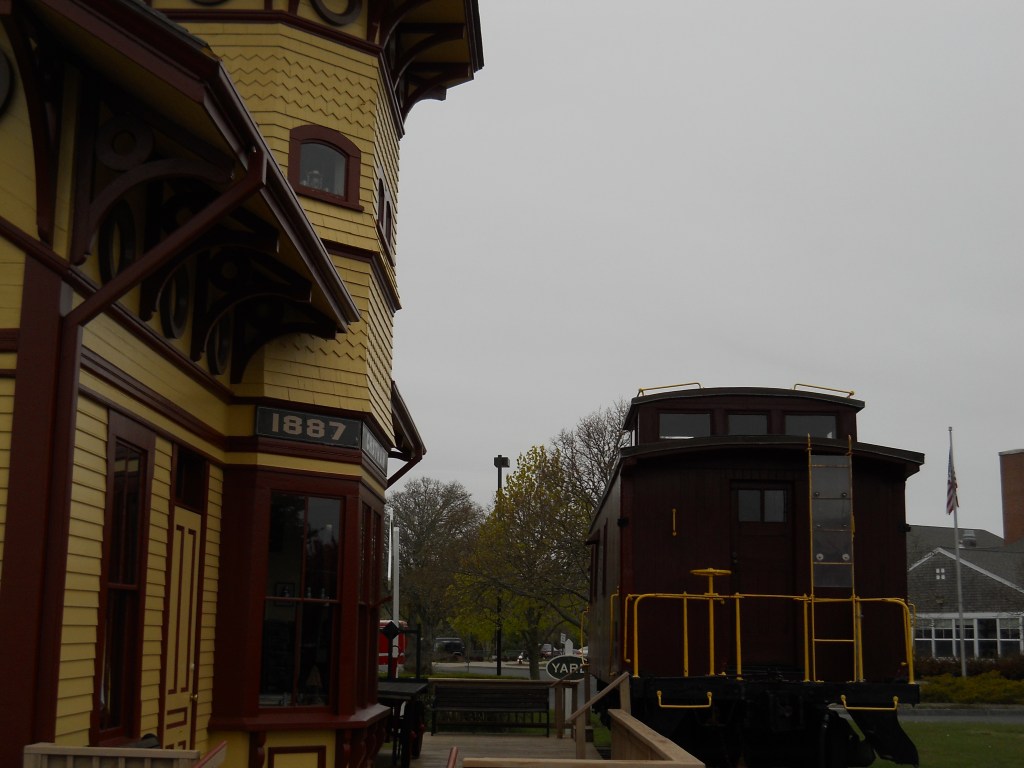
Actually, you are wrong.  The old train station, built in 1887 in what is called a Railroad Gothic style, is on its original site.  On what was originally the trackside is a wooden caboose from the New York Central System.  The town was the end of the line for the Chatham Railroad Company that ran between the town of Chatham and the town of Harwich.  There was also a railroad yard in Chatham.  As tourism in Chatham grew, so did the railroad.  As the roads on Cape Cod improved, the railroad declined.  Service to Chatham ended in 1937.

Today, very little evidence of the railroad remaining in Cape Cod with very few of the old railroad beds are now rail trails.  As for the old train station, it later became the home of the Chatham Railroad Museum.

Some of you are saying, “Oh yeah, and it has somebody’s old train collection.”

Well, if you had two New York Central System model locomotives that were on display at the 1939 New York World’s Fair, you can say that it is a great collection.  The exhibits display the history of the railroad to Chatham and the stations along the short railroad.

The Chatham Railroad Museum is located at 153 Depot Road in Chatham, Massachusetts, just off of Massachusetts Route 28.  It is open from June to October.  Admission is free, but they can use your donations to keep the museum open.  The museum is staffed by volunteers with no paid staff.  Although the train station is wheelchair accessible, the caboose is not.  You can read more into the history of the Chatham Train Station and get information on hours and directions at https://www.chathamrailroadmuseum.com/.

The U.S. state of Massachusetts is a state full of American history, a state of sports history, a state of natural beauty, historic sites, and an old railroad town called Chatham.  It is a town where you can enjoy a lobster roll with a little railroad history.

The J. H. Hawes Grain Elevator and Agriculture Museum, Atlanta, Illinois

Before the Interstate Highway System, people drove across the United States of America by way of the United States Route simply called the U.S. Route.  The first route ever established was U.S. Route 1 which has its north end at the Canadian Border in the town of Fort Kent in the U.S. state of Maine and its south end in the city of Key West in the U.S. state of Florida passing through the major cities of Boston in the U.S. state of Massachusetts,  New York City in the U.S. State of New York, Philadelphia in the U.S. state of Pennsylvania, Baltimore in the U.S. state of Maryland, Washington D.C., Richmond in the U.S. state of Virginia, and the cities of Jacksonville and Miami in the U.S. state of Florida plus many smaller cities in between.  Other U.S. Routes were later laid out.  One of those routes is the famous route U.S. Route 66 which had a television series named for it as well as a gasoline station.  The route went from the city of Chicago in the U.S. state of Illinois to the city of Santa Monica in the U.S. state of California.  Today, much of the route was replaced by Interstate Routes, but much of the roads that U.S. Route 66 ran have been preserved.  It passed through major cities and small towns.  One of those small towns is the town of Atlanta, Illinois.  No.  You will not find the Coca-Cola Company here nor did the town ever host the Olympics, and it does not have one of the busiest airports in the world.  Being a small town, it has numerous sites like the American Giants Museum housed in an old Texaco gas station, the Bunyan Giant, and it is the home of the J. H. Hawes Grain Elevator and Agriculture Museum.  It is a museum that was erected in the only fully restored wooden grain elevator in the state of Illinois.  When you visit the museum, you will be seeing history.

Some of you are saying, “Wow!  A fully restored grain elevator.  This is very nice.  There is a big problem.  This is a museum about a grain elevator and not a railroad museum.  Therefore, I am not elevating myself to visit this museum.”

Yes.  You are right.  This is not a railroad museum.  Why should you visit the J. H. Hawes Grain Elevator and Agriculture Museum?

As you drive from U.S. Route 66, you cross a railroad line.  Atlanta, Illinois was never a railroad town, but the railroad does pass through here and it owned by the Union Pacific Railroad.

Some of you are saying, “It is nice that the railroad passes through the town, but what does the railroad have to do with the museum?”

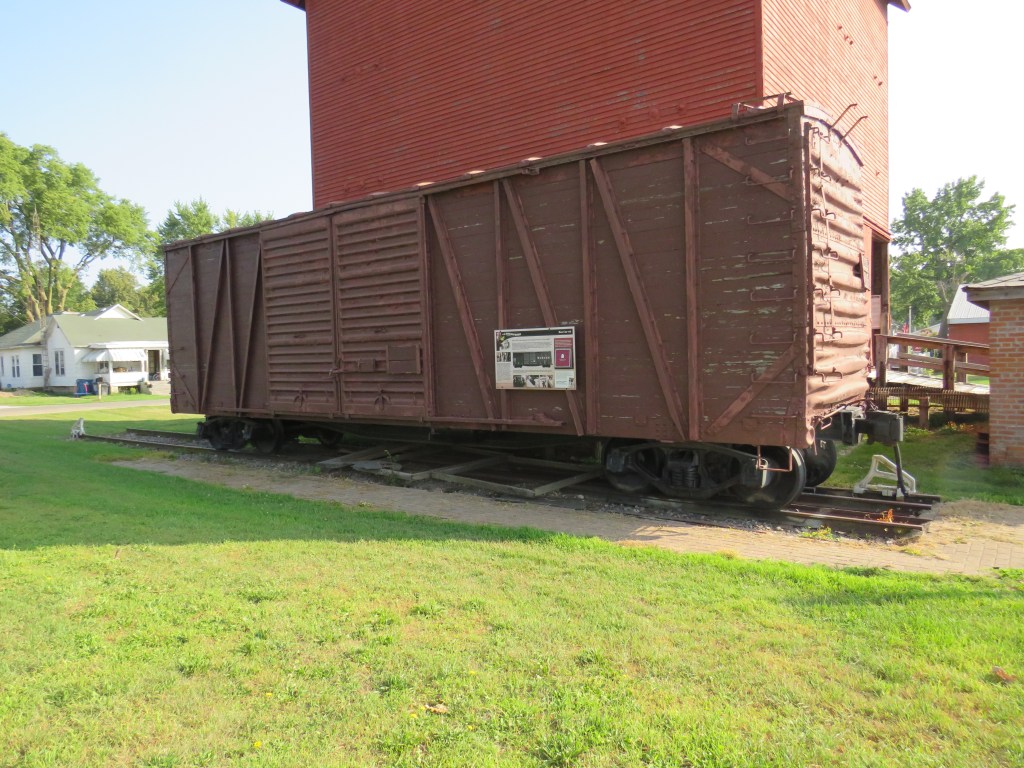
Before it was the J. H. Hawes Grain Elevator and Agriculture Museum, it was… a working grain elevator that was built in 1903.  When you arrive at the museum, the first thing that you will notice is the old grain elevator.  Then you notice something that is next to the old grain elevator.  What is next to the old grain elevator?  You will see an old railroad boxcar from the Wabash Railroad.  As farmers brought their grain to the old grain elevator, it was then put on boxcars and shipped across the nation.

It there another reason to visit the museum?  Yes, there is.

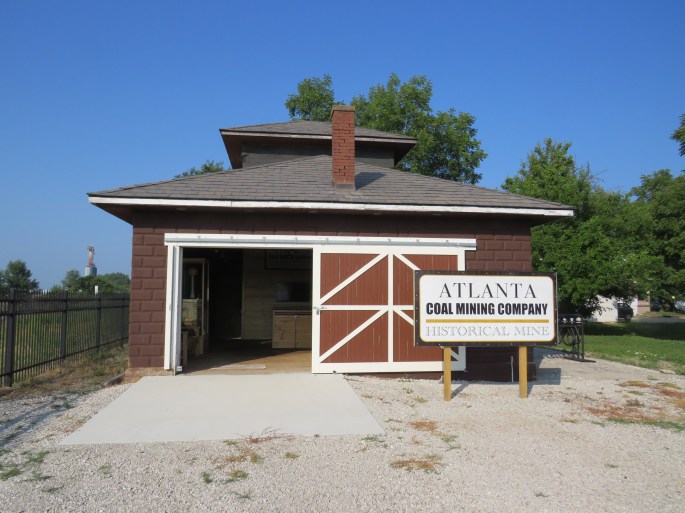
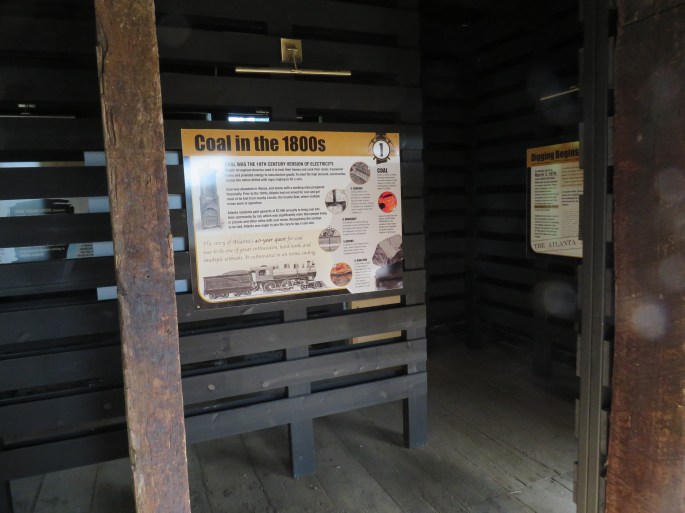
One of the exhibits here is the Atlanta Coal Mining Company Historical Mine.  The town had its own coal mine, but before the town had its own mine, coal was brought to the town by the railroad.

The J. H. Hawes Grain Elevator and Agriculture Museum is on the National Register of Historical Places.  It is located 301 SW Second Street in Atlanta, Illinois.  Parking is on site.  Tours are self-guided and can but done at any time, but you can get a guided tour of the museum by going to https://www.destinationlogancountyil.com/grain-elevator-museum.

Visit Atlanta, Illinois.  You will not see the Coca-Cola Company or the Olympics, but you will see the J. H. Hawes Grain Elevator and Agriculture Museum.

The Conway Scenic Railroad, North Conway, New Hampshire

The U.S. state of New Hampshire is one of the six states that make up the region known as New England.  It is a state that has much natural beauty.  Its most famous site was a rock formation that, when seen from a particular direction, had the shape of an old man.  Sadly, the rock face eroded years ago, but you can still visit the site where the rock face once was.  Then you have the world famous Mount Washington, the highest point in the state and it known to have the world’s worst weather.  Another popular thing in the state happens to be… a train ride.

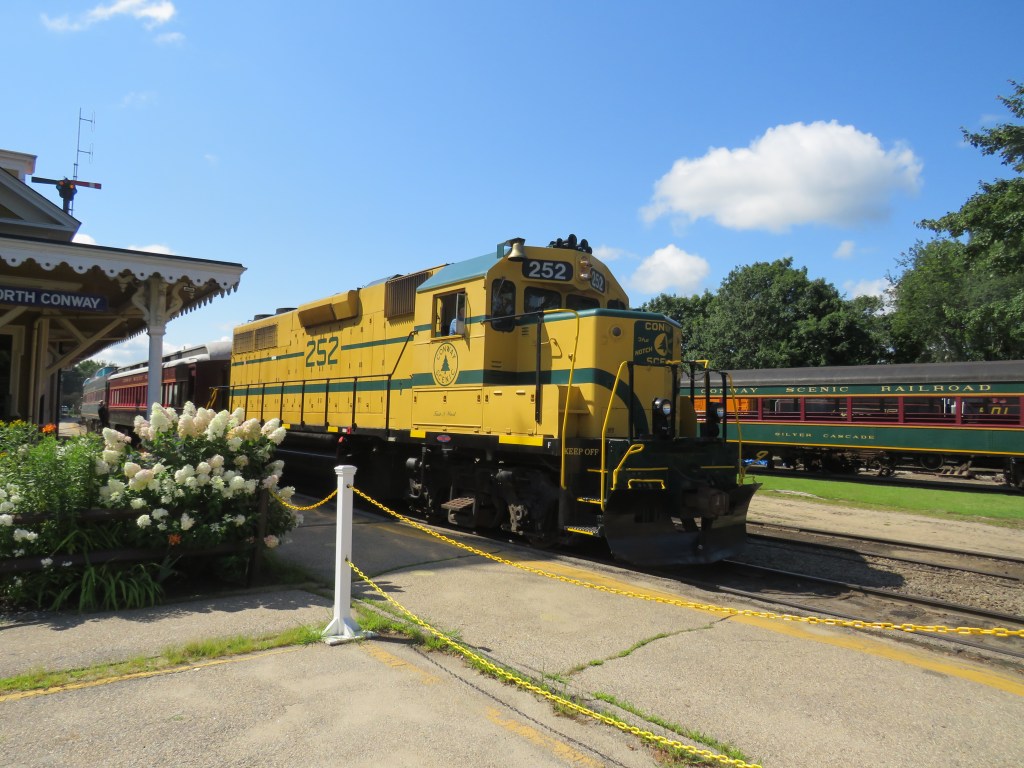
Welcome to the Conway Scenic Railroad, one of the most popular train rides in the United States of America.  Why is it called the Conway Scenic Railroad?  As you drive to the town of North Conway, you will begin to see the answer to the question.  The scenery will amaze you, and you will be amazed as you see it from the seat of a train.

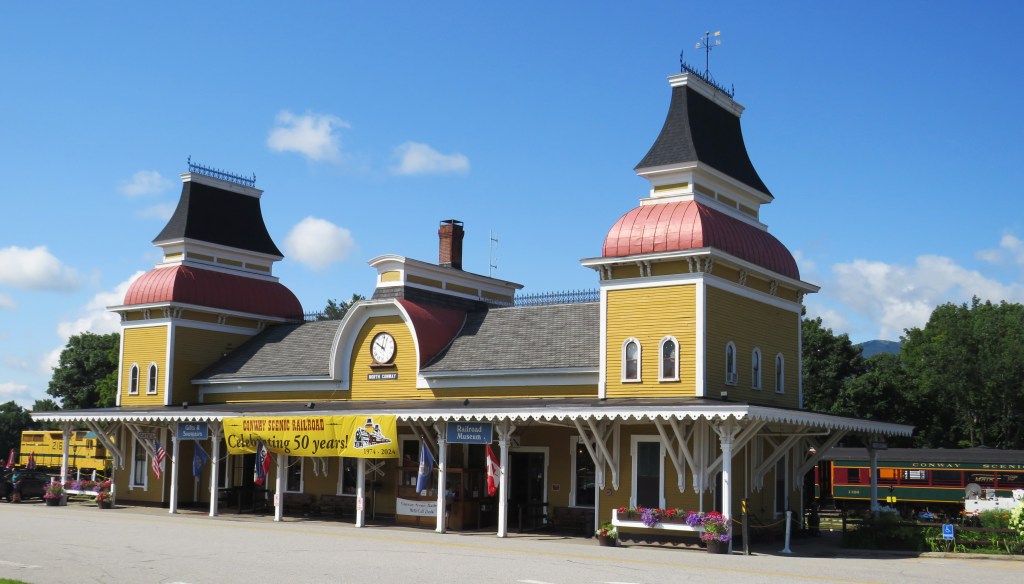
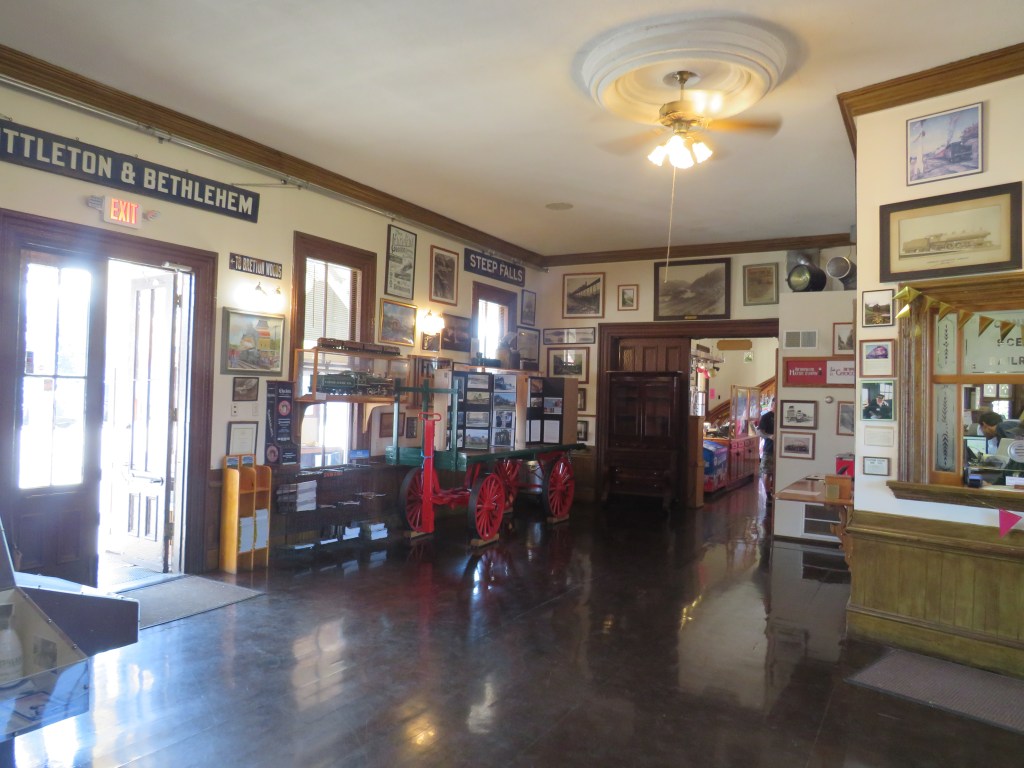
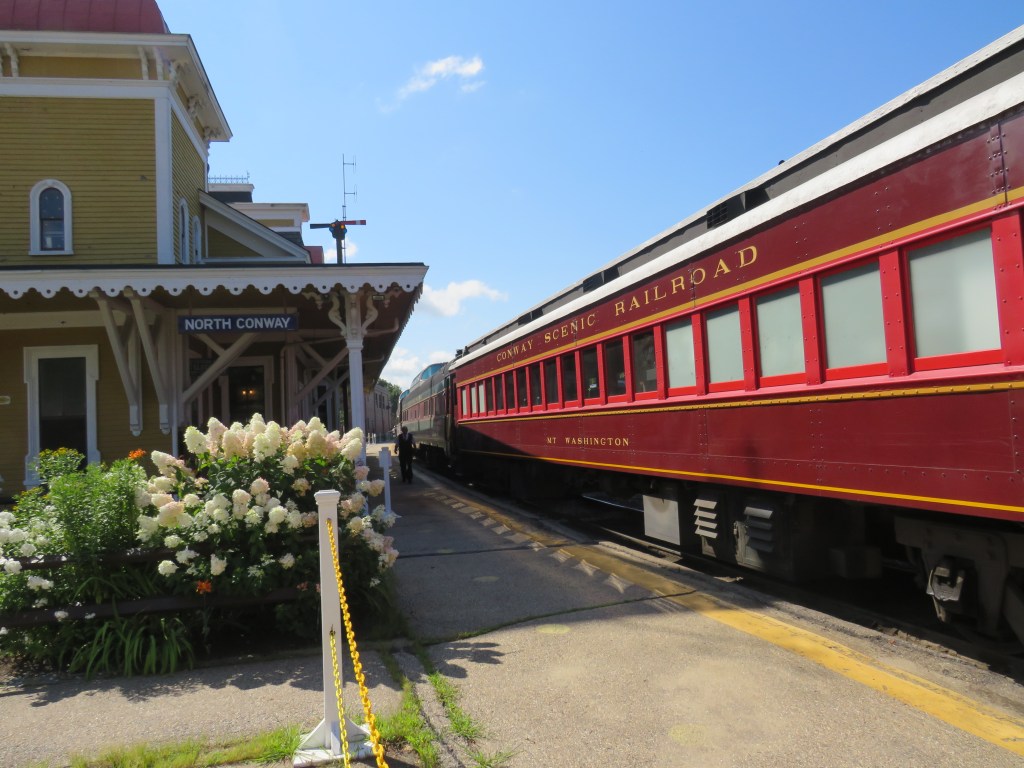
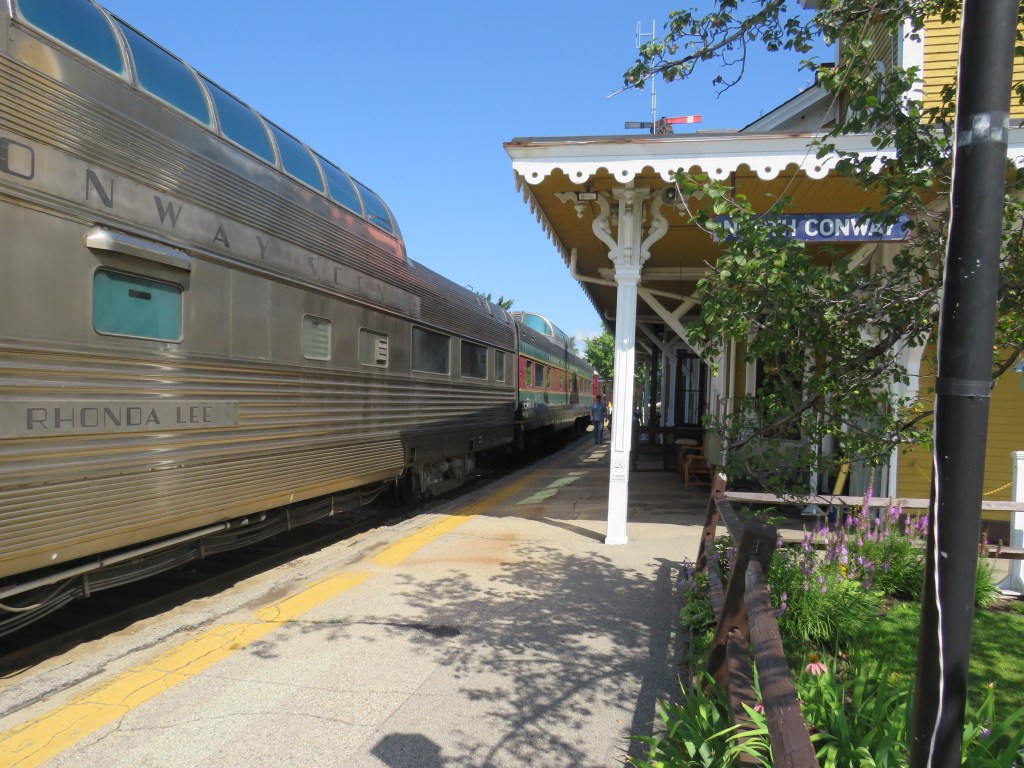
You arrive in the town of North Conway, and it is an impressive small town.  Then you arrive at the Conway Scenic Railroad, and you are totally amazed.  What is amazing you?  The first thing you see when you arrive at the Conway Scenic Railroad is the train station.  Yes.  Most train excursions leave from train stations, but the North Conway Train Station was built in 1874.  As you look at the old train station, you may find yourself in a different time.  You enter the ticket office to buy your tickets, and you walk through the small museum that tells the history of the railroad in the region and the gift shop.

The train station is amazing, but you did not come to the town of North Conway, New Hampshire to just see the old train station.  You came here to ride the train.  This is not just any train.  This is the Conway Scenic Railroad, one of the most popular train rides in the nation.

The time has come.  The vintage train pulls into the station, and you board one of the vintage train cars.  From your seat, you are already seeing the beauty of New Hampshire.  The train begins to pull out of the station, and you are shortly out of the town.  You cross over rivers and streams and see fields and mountains to include the world famous Mount Washington.  You ride to the end, and you return to the station.

The Conway Scenic Railroad has numerous excursion routes.  This means that you will need to return again.  After your first train ride, you will want to come back to ride the other excursion trains.

The Conway Scenic Railroad is located in North Conway, New Hampshire at 30 Norcross Circle which is just off of U.S. Route 302 and New Hampshire Route 16.  Parking is on site.  Please note that due to the age of the facility and the trains, they are not wheelchair accessible, but they are happy to assist those with mobility issue in any way they can so that they can enjoy the ride.  Learn more about the excursions, the train schedules, buy tickets, and read more into the railroad at https://www.conwayscenic.com/.

Why is the Conway Scenic Railroad one of the most popular train rides in the United States of America?  The best way to answer this question is to make your way to the small New Hampshire town of North Conway and to ride the train.  Once you ride the train, your question will be answered.

The Fort Smith Trolley Museum, Fort Smith, Arkansas

When you think about trolleys in the United States of America, you think about the big cities particularly the city of San Francisco in the U.S. state of California, a city that is famous for its trolleys.  Very few people would ever think of smaller cities like the city of Fort Smith in the U.S. state of Arkansas.  When you think of Arkansas, you think of its natural areas and not its urban areas of which there are very few with the state capital of Little Rock and the metropolitan area of Memphis in the U.S. state of Tennessee.  The city of Fort Smith is located in the western part of the state on the Arkansas River and across the river from the U.S. state of Oklahoma.

Some of you are saying, “Well, it is called Fort Smith, but there was never a fort here.  They just named the city Fort Smith.”

Well, you are absolutely wrong.  The city of Fort Smith, Arkansas is named after Fort Smith, and you can visit the fort as it is a National Historic Site that is owned and operated by the National Park Service.  Very few people think that trolleys ever ran here, but it was once a trolley town where trolleys ran on the streets.  That is why you have the Fort Trolley Museum.

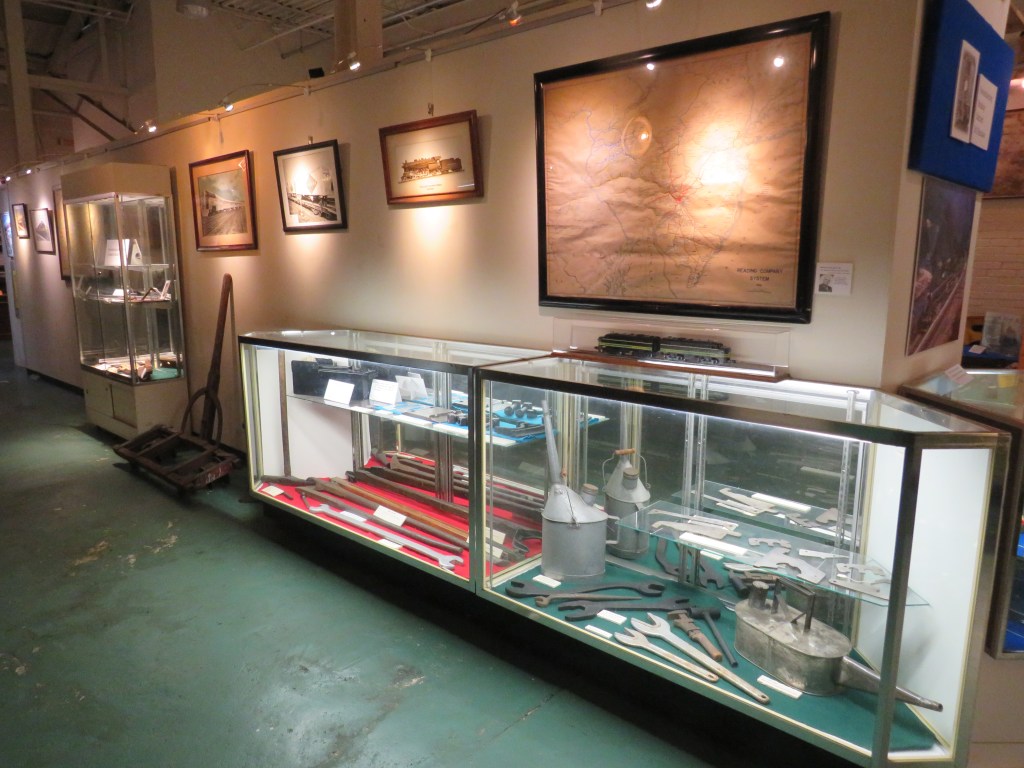
What is the Fort Smith Trolley Museum?  It is a small museum that tells the history of trolleys in the city of Fort Smith.  Although there are very few trolleys on display here, there is a restoration shop.  The museum has artifacts to include work tools and old paintings, and, if you are fortunate enough, you can even take a trolley ride on one of the original tracks.

The Fort Smith Trolley Museum is located at 100 South Fourth Street in Fort Smith, Arkansas next to the Fort Smith Historical Park just blocks from U.S. Route 64 and the bridge crossing the Arkansas River.  You can read more about the history of the trolleys and get museum hours which vary throughout the year at https://www.fstm.org/.

The city of Fort Smith, Arkansas may be named for an old fort, but it was once a trolley town.  The Fort Smith Trolley Museum keeps the memory of Fort Smith Trolleys alive for many years to come.

Calvin B. Taylor House, Berlin, Maryland

The U.S. state of Maryland is a state that is famous for many things.  It has the Chesapeake Bay which splits the state in two parts.  Baltimore, the state’s largest city, is famous for the National Anthem of the United States of America, known as the ‘Star Spangled Banner’, which was written by Francis Scott Key as he was a prisoner of war as he watched the British Navy bombard Fort McHenry during the War of 1812 only to see the flag still waving.  Baltimore is where the oldest Catholic Church in the nation, and it was here where the first railroad began operation in the Western Hemisphere.  In College Park, the home of the University of Maryland, is also the home of College Park Airport, the oldest continuous operating airport in the world.  You have Annapolis, the state capital, the home of the Naval Academy and the only capitol dome made with wood and has no marble or stone like most capitols.  The state of Maryland is loaded with historic sites, and it has small towns.  One of these small towns is the town of Berlin.  Located on the Delmarva Peninsula near the coastline, the town is considered as one of the best small towns in the nation.  The movie ‘Runaway Bride’ starring Richard Gere and Julia Roberts was filmed here, and Seabiscuit, a famous racehorse who won the Triple Crown (meaning that he won the Kentucky Derby, the Preakness Stakes, and the Belmont Stakes in the same year), was raised in a barn in the area.  (The barn is now on a golf course and houses a restaurant.)  One thing you will not see in this town is the Berlin Wall, but you will find the Calvin B. Taylor House.  What is the Calvin B. Taylor House?  Yes, it was the home of Calvin B. Taylor who was the second owner of the home.  After Calvin B. Taylor’s ownership, the house was divided into apartments.  It was saved from demolition, restored, and made into a museum which is seasonally open for tours.

Who is Calvin B. Taylor?  That is a good question.  Calvin B. Taylor made a big influence on the town of Berlin.  He was an educator and a lawyer, and he was the founder of the Calvin B. Taylor Banking Company in the town of Berlin.  Today, his home is a museum that tells the story of the town of Berlin.  If you want to learn more about an amazing small town, you must visit the Calvin B. Taylor Museum.

Some of you are saying, “This is nice.  Every time I think about Berlin, I think about Germany and the Berlin Wall.  I would not think about a small town in Maryland.  As for the Calvin B. Taylor House, well, it is nice to see that he was a great man who did great things for the town.  There is a very big problem.  Calvin B. Taylor is not a railroad man and has nothing to do with the railroad, and the Calvin B. Taylor House is not a railroad museum.  Therefore, I will not be running away to the town of Berlin, Maryland to visit this house.”

Calvin B. Taylor was not a railroad man, and the Calvin B. Taylor House is not a railroad museum.  Why visit the Calvin B. Taylor House in Berlin, Maryland?

What is now the Calvin B. Taylor House was built in 1832.  Before it was called the Calvin B. Taylor House, the home had former owners.  One of the former owners is a man named Robert J. Henry.  Who is Robert J. Henry?

When you visit the town of Berlin, Maryland, you see a charming small town with historic buildings.  Although a railroad line passes through the town, the town has never been a big railroad town nor does the town have a big history of the railroad.

So what is the big deal?

In the early days of railroading, the railroad served many cities and towns.  Robert J. Henry was the man who was instrumental in bringing the railroad to the town of Berlin.  Being on a large peninsula between the Atlantic Ocean and the Chesapeake Bay, you wonder if anybody rode the train here.

Well, they did.  Where did they come from, and where did they go?

The town had a train station that was called Berlin Union Station.  Why the name Union Station?  It was located at a junction of another railroad line.  People came from Baltimore by way of a ferry that went across the Chesapeake Bay between Baltimore Harbor and Love Point, a point on the east side of the bay near where the Chesapeake Bay Bridge.  Others came from Philadelphia, Pennsylvania and rode a train down the peninsula.  The Baltimore, Chesapeake, and Atlantic Coast Railroad and the Baltimore and Eastern Railroad had passenger service to the town.  Today, the train station is long gone, and there is no passenger railroad service on the Delmarva Peninsula. Only freight service by Norfolk Southern and smaller railroads today.  Today, you can ride a rail bike along the tracks through the town.

Some of you are saying, “It is nice that the man who brought the railroad to the town once owned the house, but that is not a reason to visit.”

Why visit the Calvin B. Taylor House?  The home is left in the way it is as the second owner, Calvin B. Tayler, left it as he added additions to the home.  With a tour of the house, there is an exhibit gallery that displays artifacts and items from the town of Berlin.  There is a small exhibit on the old train station to include a sign from the station, the only surviving part of the station, and pictures of the train station.  There are also old train schedules on display.

You see.  You do have a reason to visit the Calvin B. Taylor House.  While you are here, you will find other reasons to walk around the town and maybe visit the Mermaid Museum and the Old Atlantic Hotel where many of the railroad passengers spent the night.

The Calvin B. Taylor House is located in the town of Berlin, Maryland at 208 N. Main Street (Maryland Route 818) just north of the town center and one mile south of U.S. Route 50.  It is open seasonally from April to October on Monday, Wednesday, Friday, and Saturday from 11:00am to 3:00pm.  Only street parking is available.  Due to the age of the home, it is not wheelchair accessible.  You can read more into the history of the house and checkout the events at https://www.taylorhousemuseum.org/.

Now you have a reason to visit the Calvin B. Taylor House in Berlin, Maryland.  It is a great place to runaway to.

The National Museum of Transportation, Saint Louis, Missouri

The city of Saint Louis in the U.S. state of Missouri, a city located on the Mississippi River, is commonly known as the ‘Gateway to the West’.  The city’s most famous landmark, the Gateway Arch, is a monument to those who went west to seek opportunities.  It is here in this city that you will find the National Museum of Transportation.

What is the National Museum of Transportation?  Well, of course, it is a museum of transportation from automobiles to planes to boats, but the majority of what you will see here is trains.  As you enter the museum parking lot, you must cross a set of railroad tracks.  This is just the beginning.

You park your car and walk to the Visitor Center where a Wabash Railroad Caboose sits outside.  You enter the museum, and you see automobiles on display.  Yes, it is a transportation museum.  As you walk around, you see a model train display, and you see model trains encased in glass.

Be warned.  You have not seen anything yet.

Remember when you crossed the railroad tracks as you entered the parking lot?  Well, you can take a ride on the miniature train that circles that parking lot.  You see aircraft on display and a tanker truck.  As you take a ride, the narrator tells you of each locomotive, mining equipment, and rolling stock you pass by.

In case you are wondering, there is much more to see.

You walk through the Earl C. Lindberg Automotive Center seeing the old cars, and then you see an old train station.  On the outside, you see a model train display.  On the inside, you see models of locomotives and rolling stock to include a model of the ‘General’, a steam locomotive that was part of a chase in the U.S. state of Georgia during the American Civil War.

Now you think that you have seen a lot of trains so far.  At this point, you have not seen much.

Why should you visit the National Museum of Transportation?  Ladies and gentlemen, this museum boasts a large collection of railroad rolling stock.  No, it is not just from the railroads that are particulate to the Saint Louis region.  You have rolling stock from the Missouri Pacific Railroad, the Georgia Railroad, the Northern Pacific Railway, the Burlington Route, the Baltimore and Ohio Railroad, the Union Pacific Railroad, the Norfolk and Western Railway to include Locomotive Number 2156, a locomotive that was originally at the Virginia Museum of Transportation in Roanoke, Virginia, and the Santa Fe Railroad just to name a few.  The collection includes locomotives, boxcars, passenger cars, trolleys, and other rolling stock.

The National Museum of Transportation is located at 2933 Barrett Station Road in Saint Louis, Missouri.  It is open year round, but the miniature train only runs seasonally.  The entire museum is wheelchair accessible.  You can get more information about admission, hours, and events at https://tnmot.org/.

The city of Saint Louis, Missouri is the Gateway to the West, and it is the home of a great museum known as the National Museum of Transportation.  Let us say that it is a gateway to transportation in the nation.